In Court, Trump Is Losing More Than He’s Winning
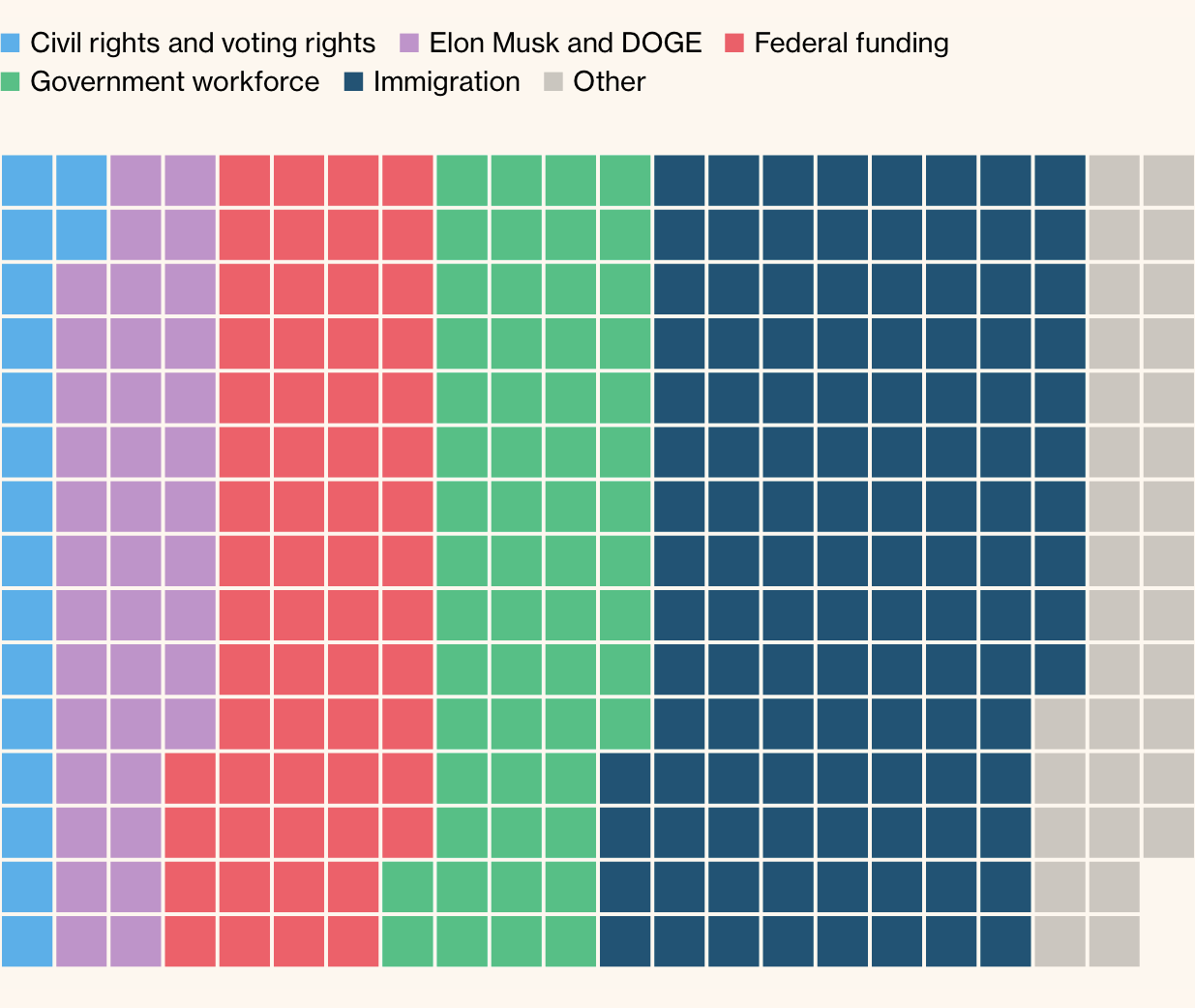
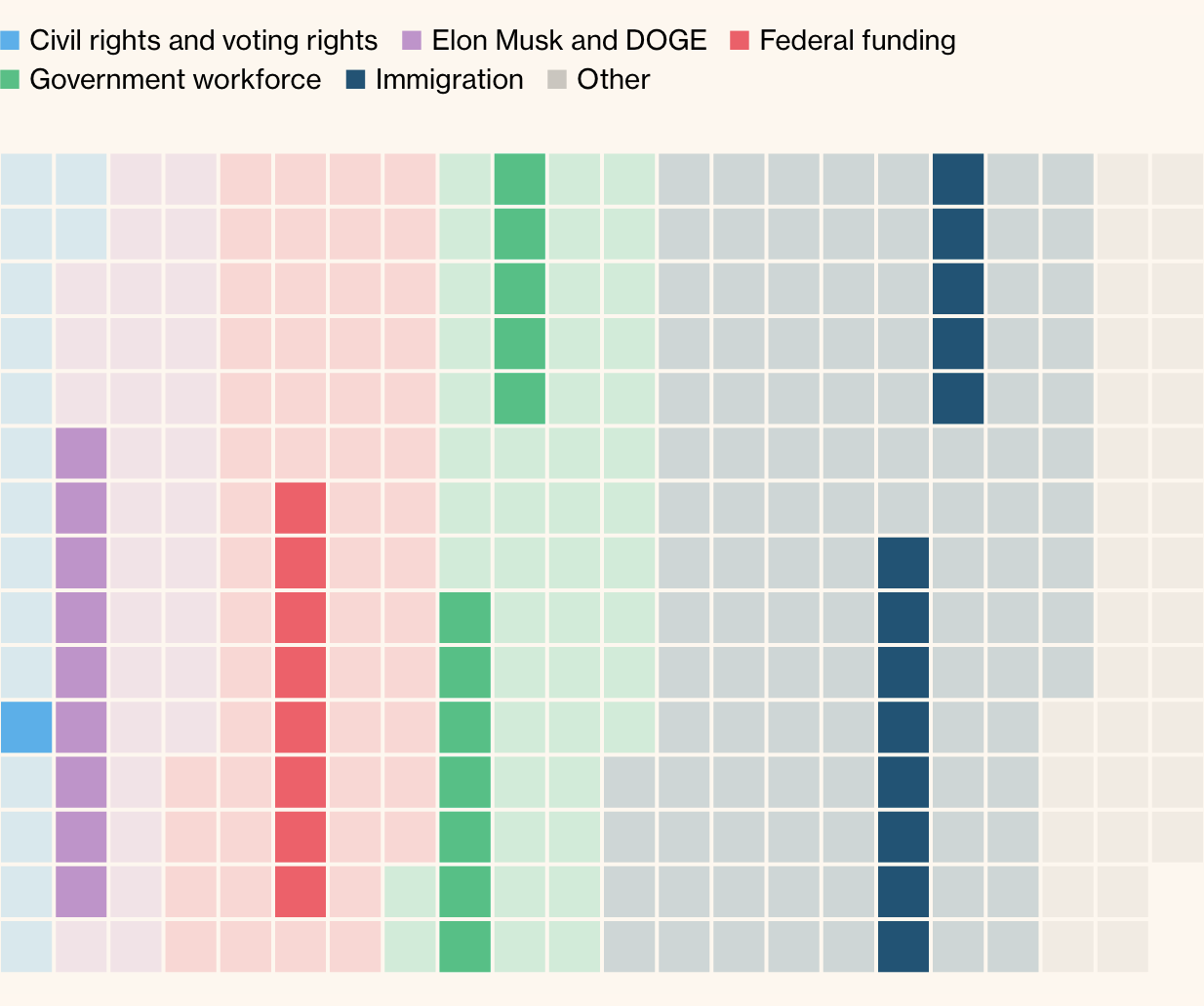
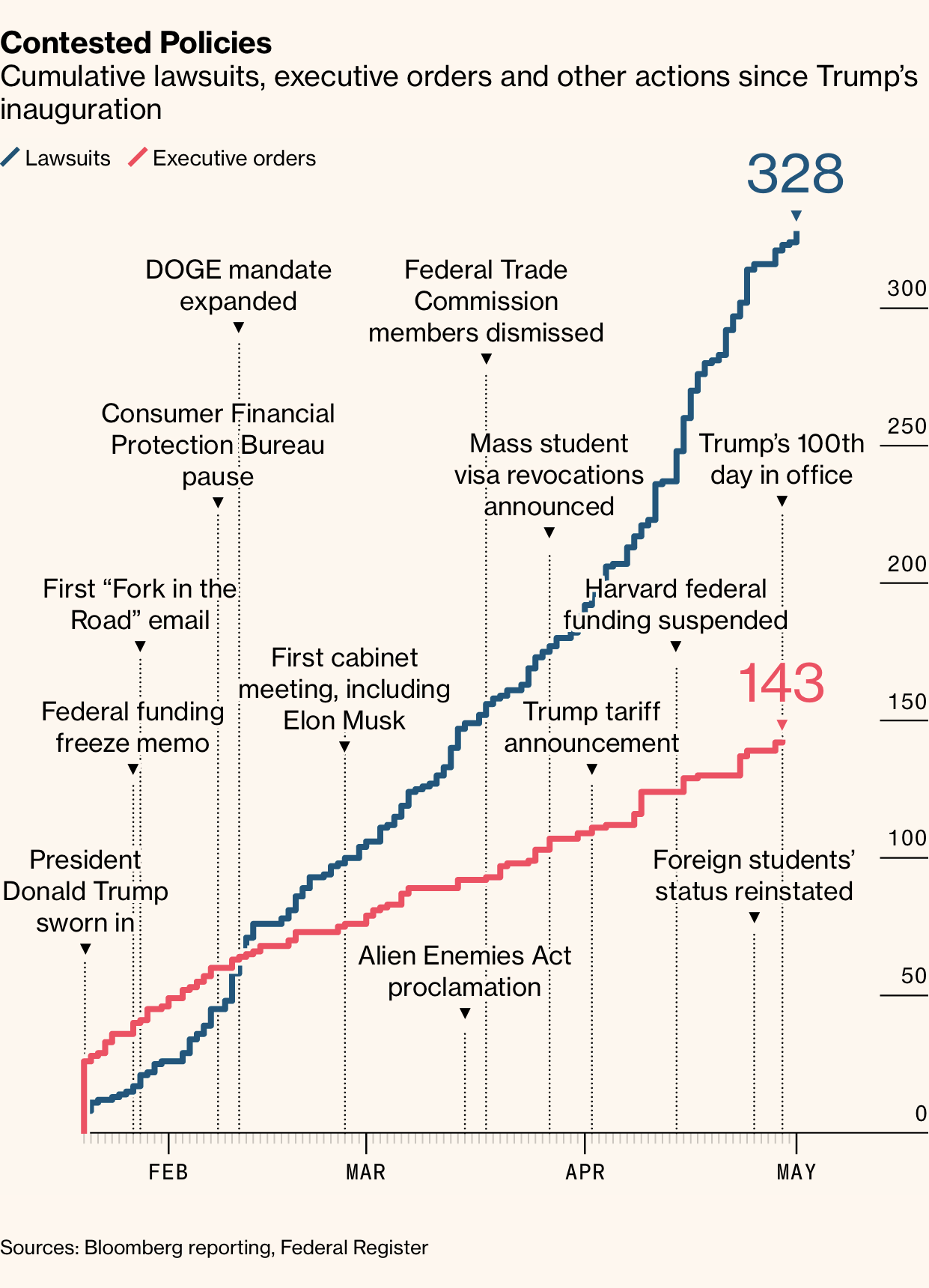
President Donald Trump’s expansive use of executive power faced at least 328 lawsuits as of May 1 — with judges halting his policies far more often than they allowed them.
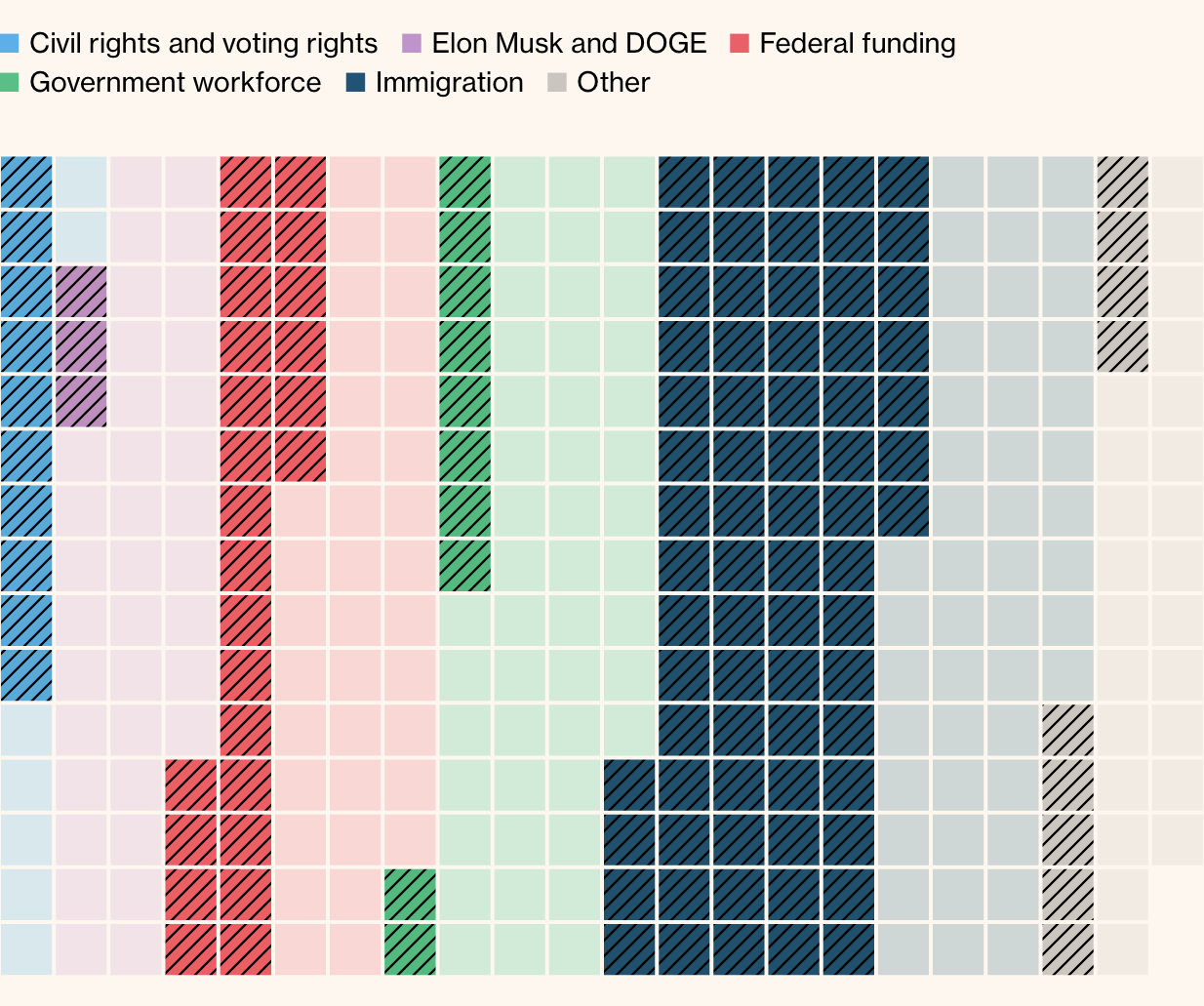
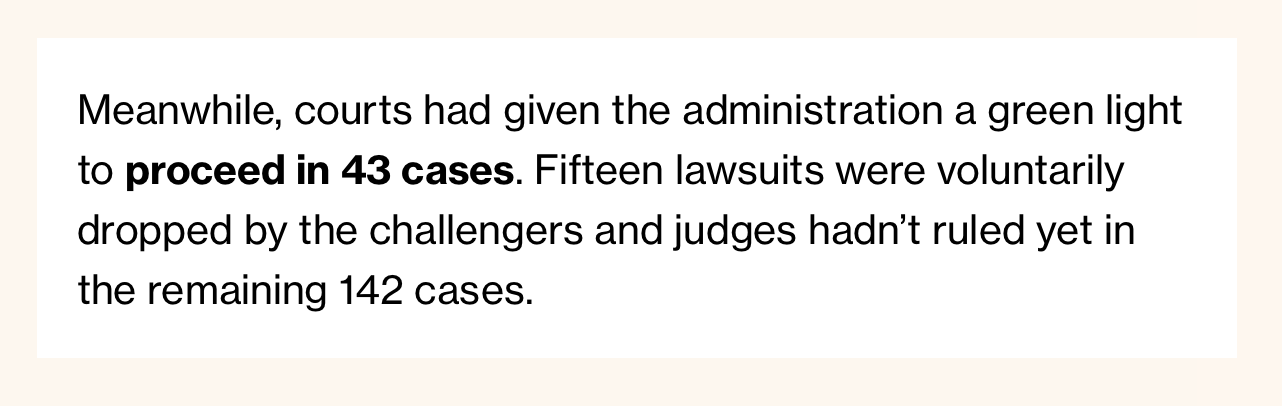
Courts entered more than 200 orders stopping the administration’s actions in 128 cases, with judges sometimes ruling at multiple stages of the legal fights. Judges had allowed contested policies to go ahead in 43 cases, and hadn’t ruled yet in more than 140 others. Most cases are in the early stages, and new ones are being filed daily.
The court battles are testing the balance of power at the heart of American democracy. Trump and his supporters have attacked judges as biased, and his administration has been accused of failing to fully comply with orders. Bloomberg found that his court losses — and wins — came from a mix of appointees of Democratic and Republican presidents, including some nominated by Trump during his first term.
The Justice Department under Trump has exceeded its predecessors in asking the Supreme Court to intervene 13 times following lower court losses, including several that involved multiple consolidated lawsuits. By comparison, only eight such applications were filed by the George W. Bush and Barack Obama administrations combined between 2001 and 2016, according to Stephen Vladeck, a professor at Georgetown Law.
“This Department of Justice has vigorously defended President Trump’s policies and will continue to do so whenever challenged in federal court,” department spokesperson Natalie Baldassarre said in a statement.
Listen to Bloomberg journalists Zoe Tillman, Greg Stohr, Erik Larson and Sarah Holder discuss the story in a Live Q&A.
It’s not just Democratic-appointed judges who are stopping Trump’s policies. Bloomberg found that about 24% of federal district judges pausing or blocking the administration’s policies were appointed by Trump or other Republican presidents. On the other hand, in cases that have allowed administration policies to go forward, about 45% of judges were appointed by Democratic presidents.
Judges aren’t bound to favor the president or party responsible for putting them on the bench, and district judges are obligated to follow precedents set by higher courts.
“The judges have been very careful, really without exception, to anchor their decisions in the law — in the evidence in the case and the law that’s applicable,” said retired California federal Judge Jeremy Fogel, a Bill Clinton appointee who now leads the Berkeley Judicial Institute.
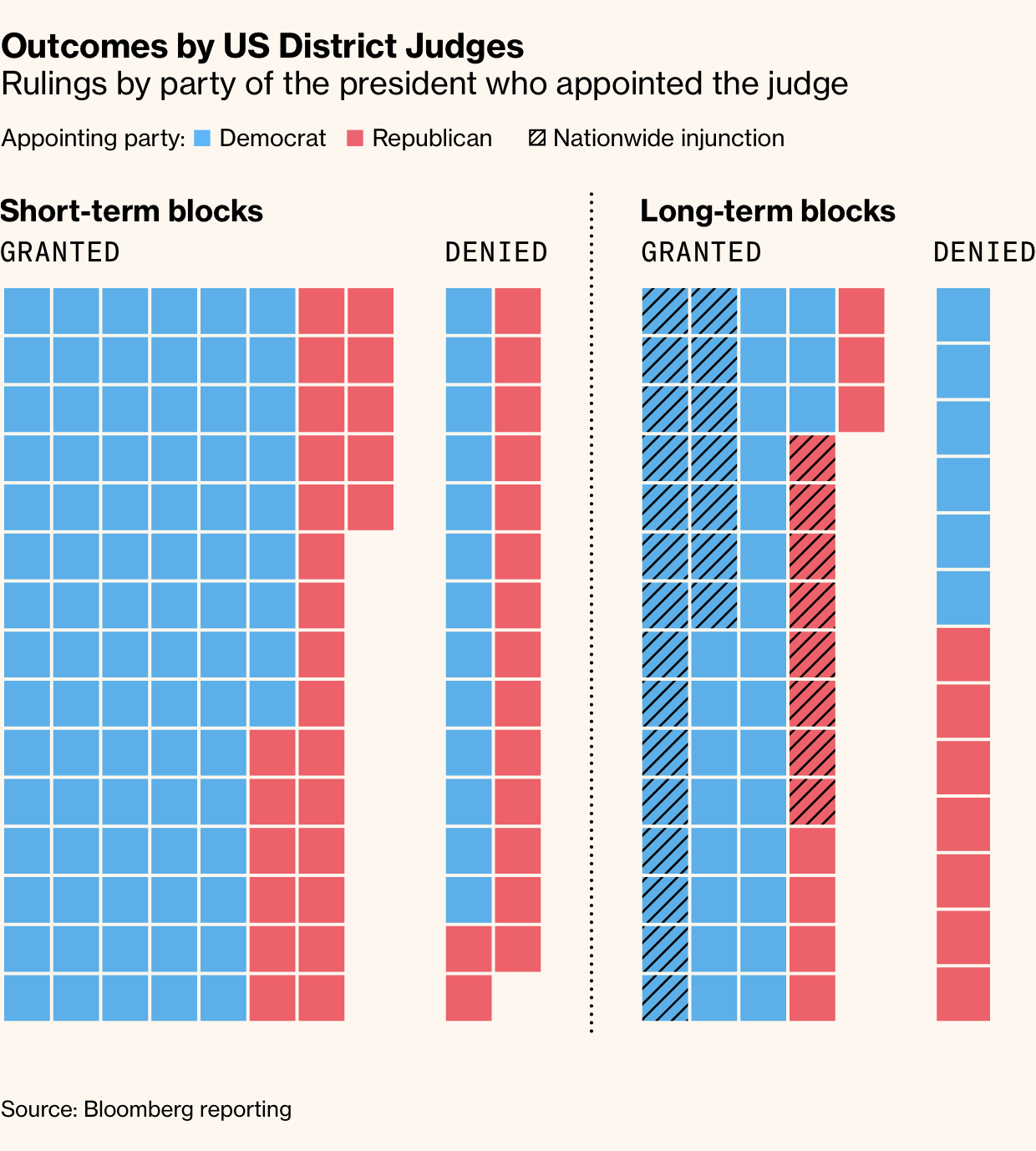
Republican-appointed judges were slightly more likely to side with the administration, although some of Trump’s first-term nominees were responsible for significant setbacks. District Judge Fernando Rodriguez — unanimously confirmed to the south Texas bench in 2018 — issued a blockbuster decision striking down Trump’s use of a centuries-old wartime powers law to send alleged Venezuelan gang members to a Salvadoran prison.
Democratic- and Republican-appointed judges have denied requests to halt his policies, including letting immigration authorities go into churches and schools, dismantling organizations created by Congress and cutting off federal funding.
Trump recently called Obama appointee District Judge Beryl Howell “a highly biased and unfair disaster,” but weeks earlier the Washington jurist allowed him to press ahead with dissolving the Institute of Peace. The judge explained at the time that her “concern about how this has gone down is not one that can sway me” in applying the law.
“Judges feel at this point like anything is possible from a retribution standpoint and they’re concerned about that,” said Dickinson College President John Jones, a retired federal judge in Pennsylvania appointed under George W. Bush. “But are they pulling their punches? Absolutely not.”
Mike Davis, a Trump ally and head of the Article III Project, a conservative court-focused advocacy group, said that too many judges are “performing judicial sabotage” of Trump’s core executive powers. Davis blamed Chief Justice John Roberts, saying that the Supreme Court’s orders halting Trump’s immigration actions and forcing the government to keep paying foreign aid had “emboldened” lower court judges.
Trump committed to follow orders from “all courts” in a recent Time interview. The administration has done so in most cases. US officials have faced accusations of noncompliance in a handful of legal fights, including by a Washington judge who initiated contempt proceedings over the administration’s “willful disregard” of his order to halt the removal of Venezuelan nationals. The Justice Department has appealed.
Presidents have criticized rulings they didn’t agree with, but outright refusal to fully comply with orders would be unheard of in the modern era and upend the checks and balances meant to restrain the already powerful executive branch.
Calls by Trump and his allies for the US House to impeach judges provoked a rare press statement from Roberts, who said in March that was “not an appropriate response.” Justice Ketanji Brown Jackson more recently called out the “relentless attacks” on the judiciary. Threats against judges are on the rise.
Just under half of the longer-term blocks have been nationwide in scope, prompting complaints from conservatives about judicial overreach. Judges have written that fairness demands broad injunctions in the face of policies that likely violate federal laws or the Constitution in a way that crosses state lines, such as Trump’s executive order to restrict birthright citizenship to babies born in the US based on the parents’ legal status.
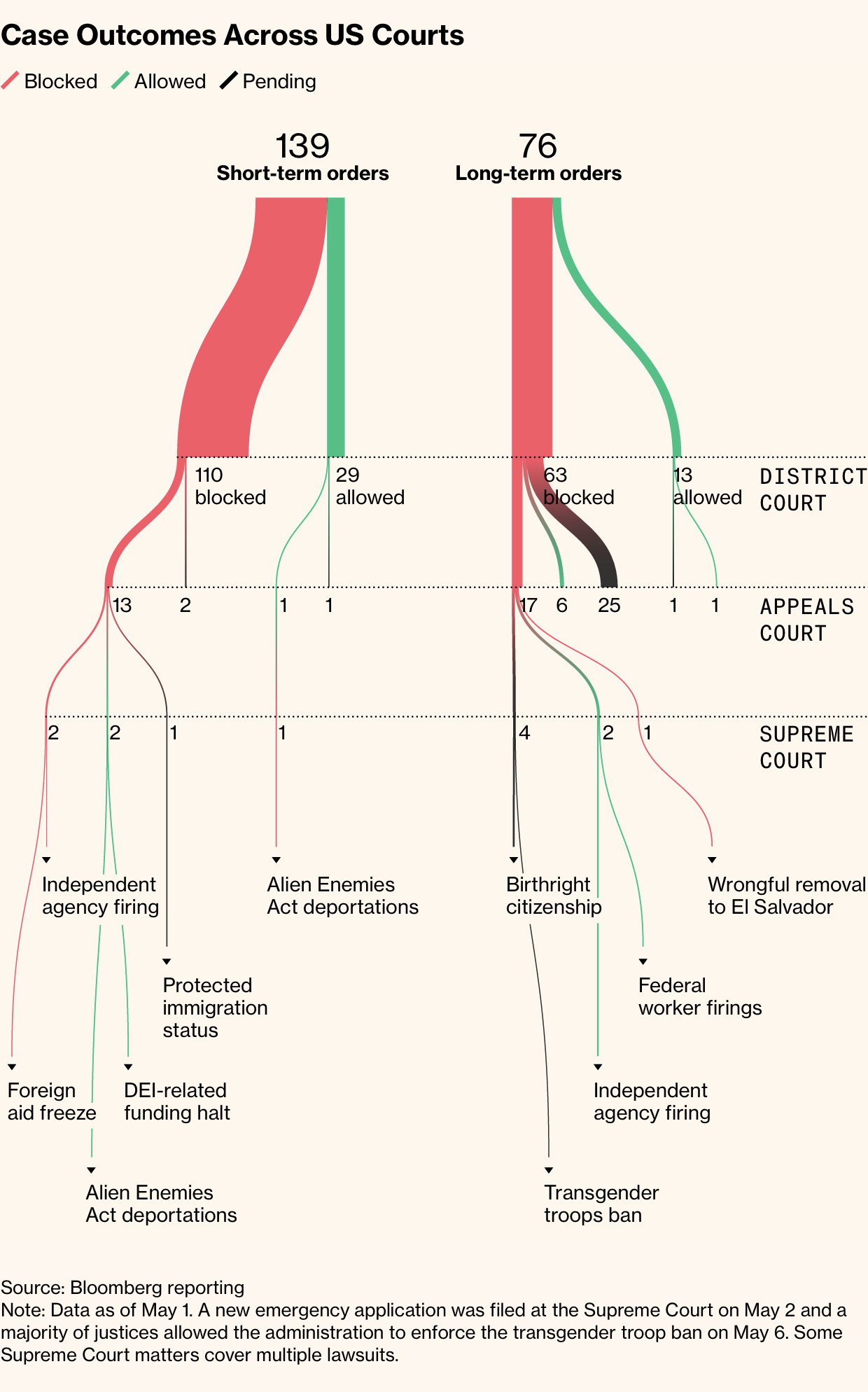
The Justice Department has been aggressive in pursuing appeals, even on temporary restraining orders that circuit courts and the Supreme Court normally aren’t supposed to hear. That approach has earned government lawyers pushback from appellate judges telling them to wait until they have a more substantive ruling to take up.
A majority of Supreme Court justices sided with the administration five times, most recently on May 6 allowing Trump to begin discharging transgender servicemembers. Some of the court’s conservative members joined the liberals in stopping Trump from immediately firing an agency head, sending more alleged Venezuelan gang members out of the country and cutting off foreign aid.
Pending fights before the justices include Trump’s effort to restrict birthright citizenship and the Department of Government Efficiency’s access to Americans’ personal information at the Social Security Administration.
And the lawsuits keep coming.
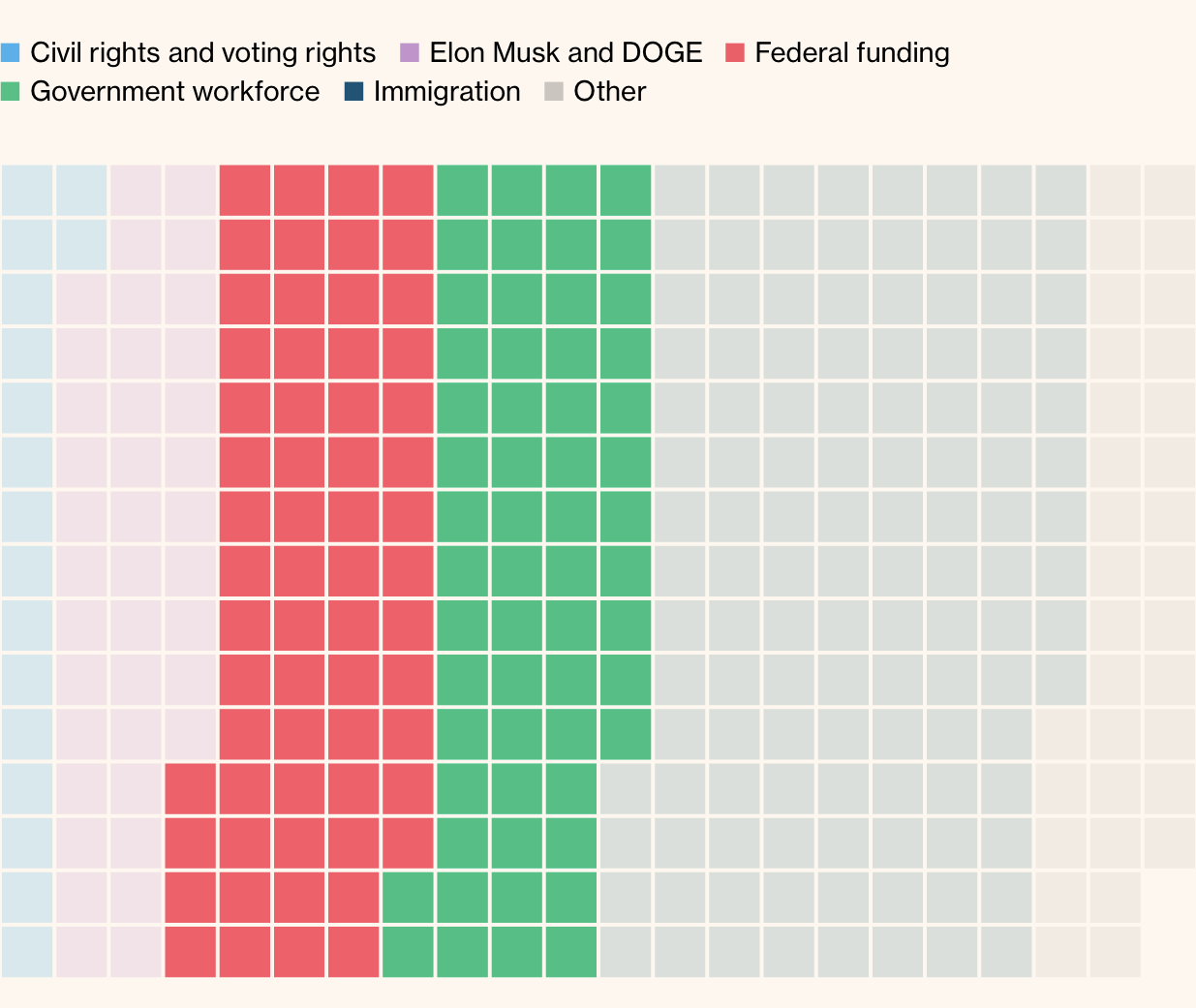
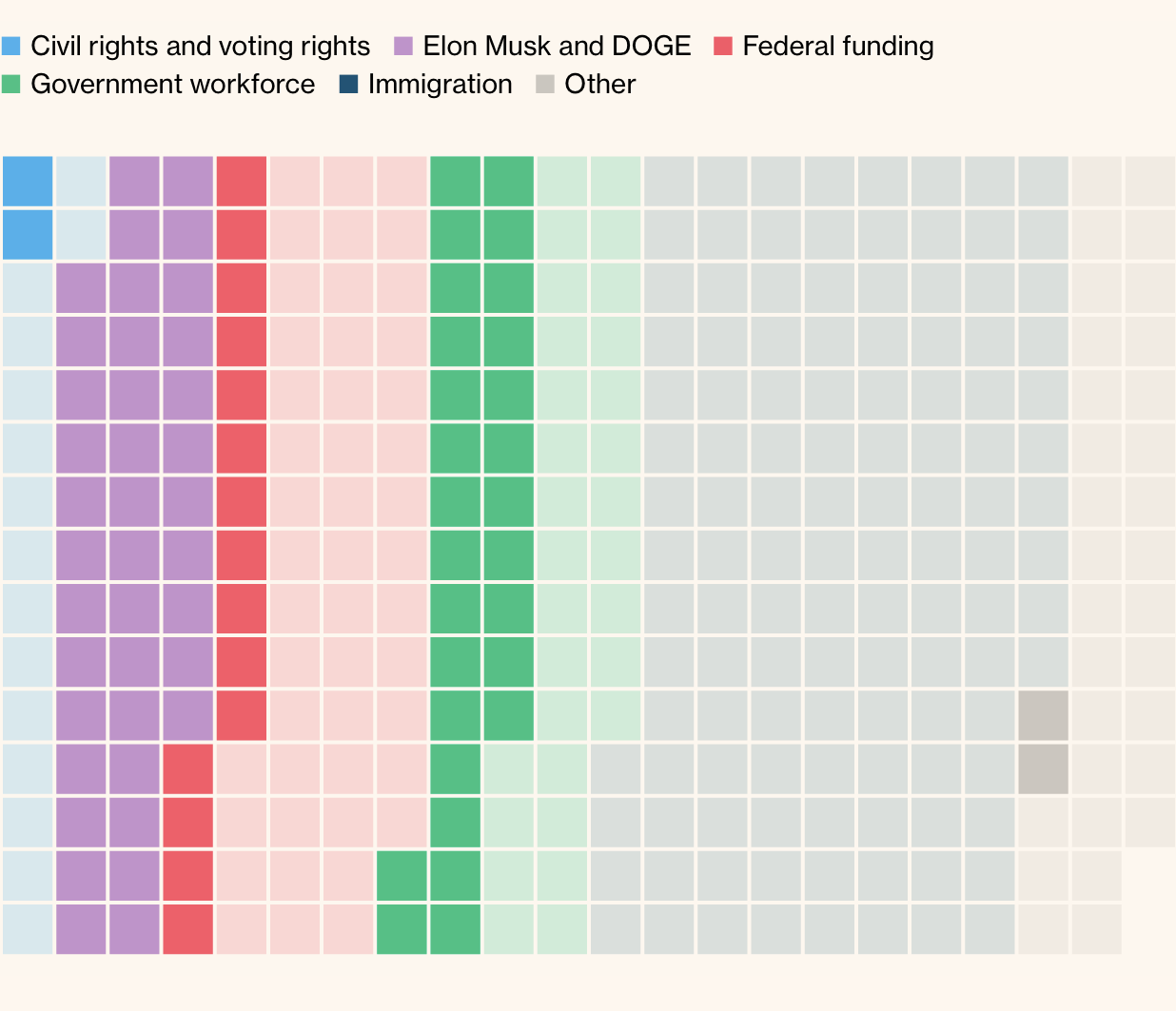
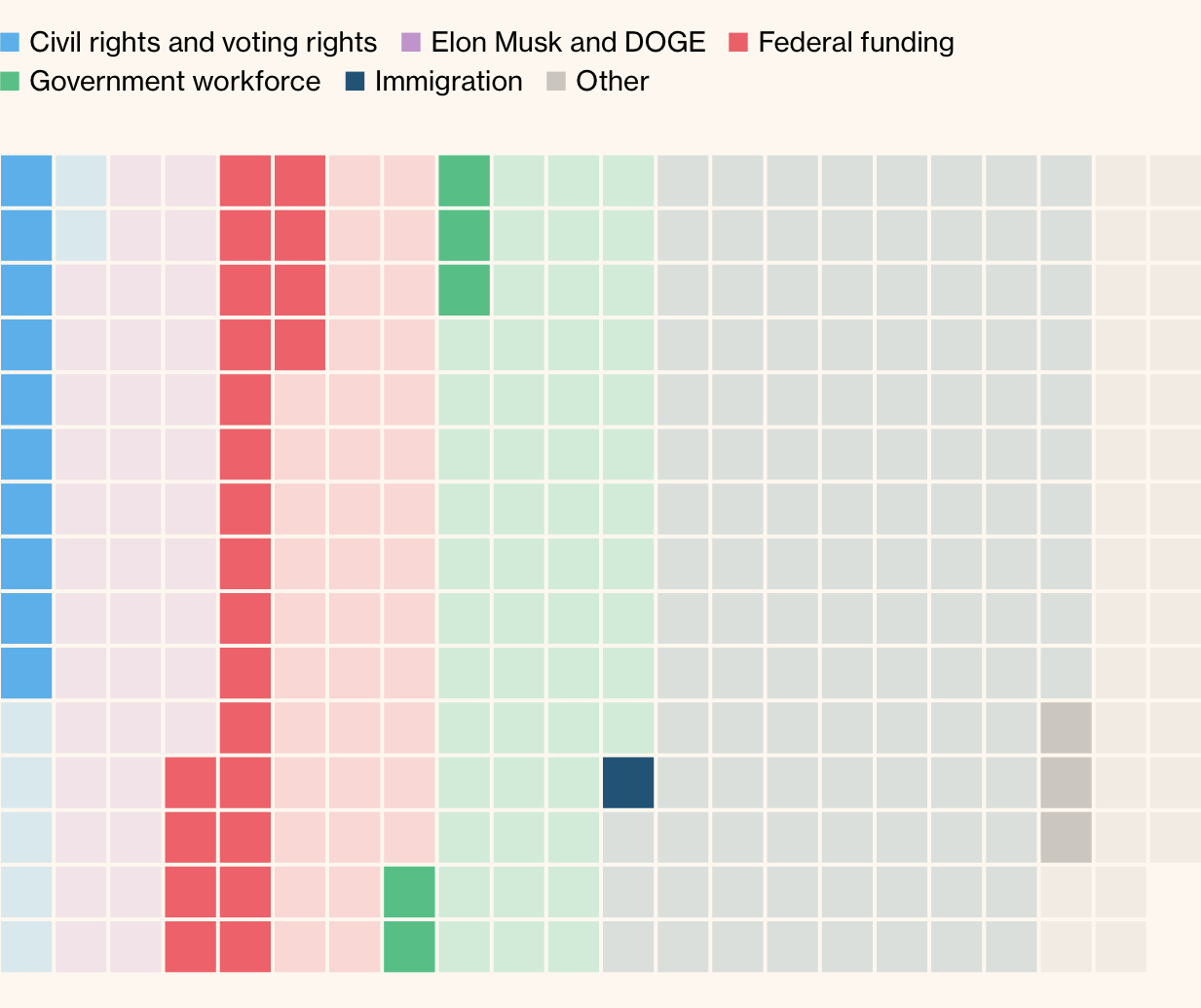
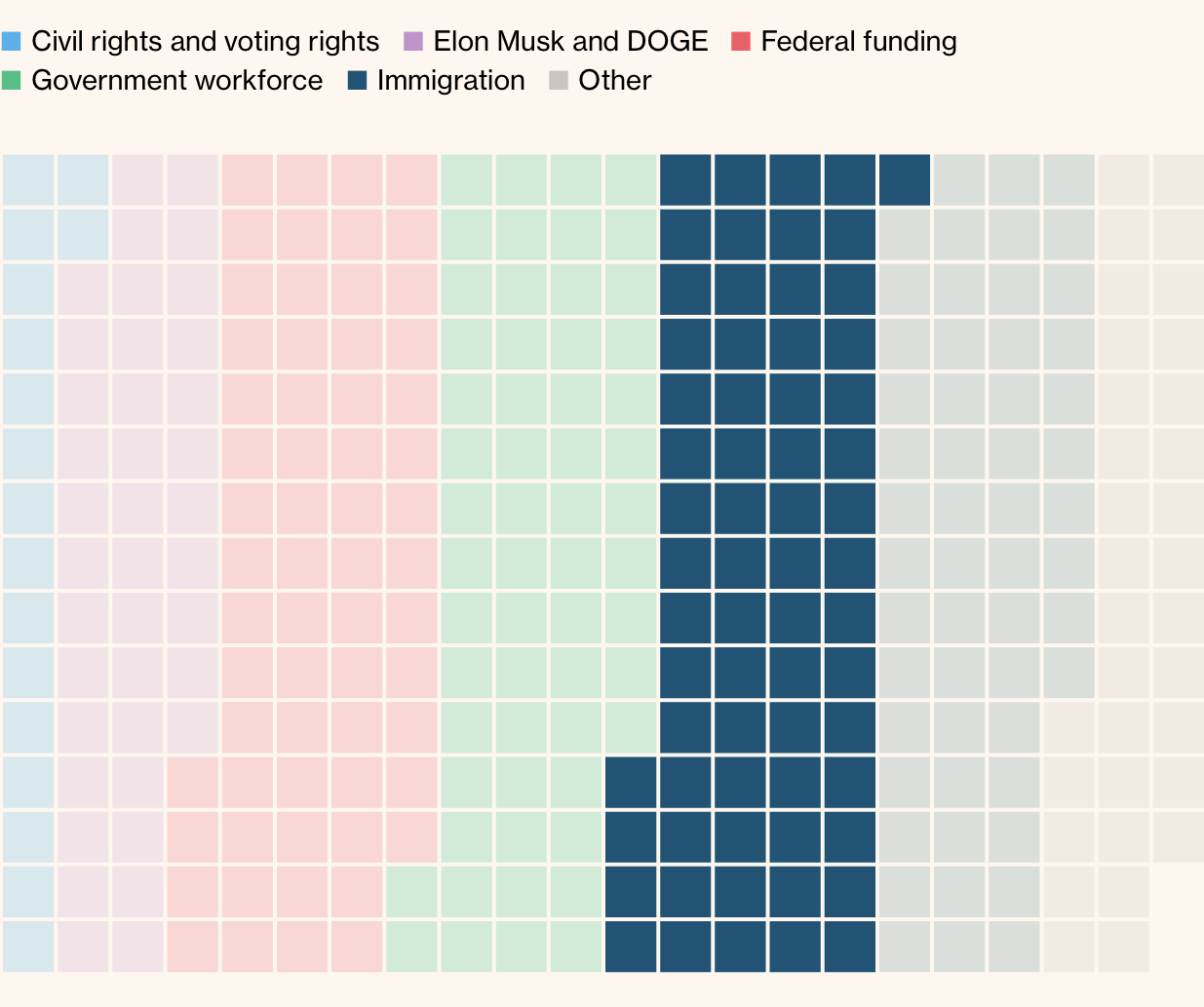
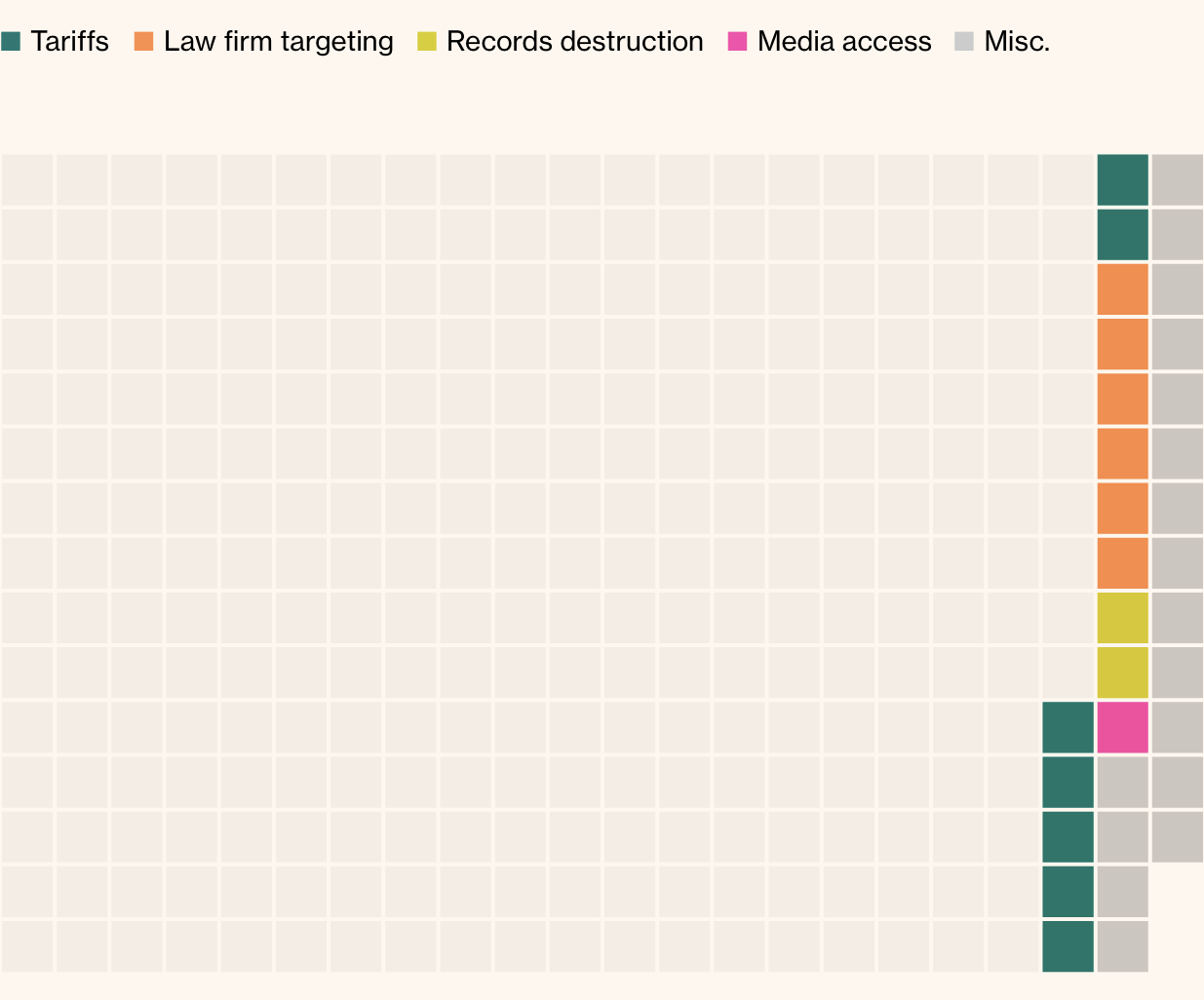
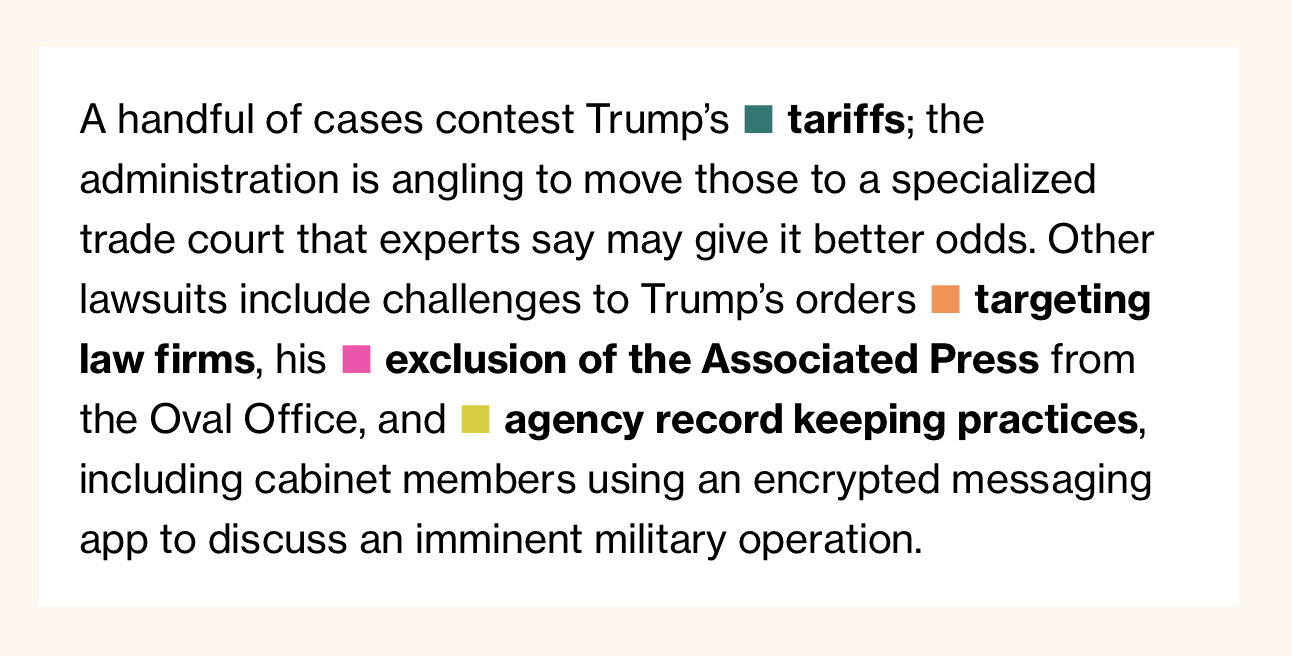
The federal court in Washington has borne the brunt of litigation. At least 161 cases were filed or transferred there — unsurprising, since it historically handles fights against the federal government.
Challengers have filed the bulk of other cases in courts within circuits that have a majority of active judges appointed by Democratic presidents. A high number of lawsuits have landed in Boston, Baltimore and the Maryland suburbs around Washington, and San Francisco.
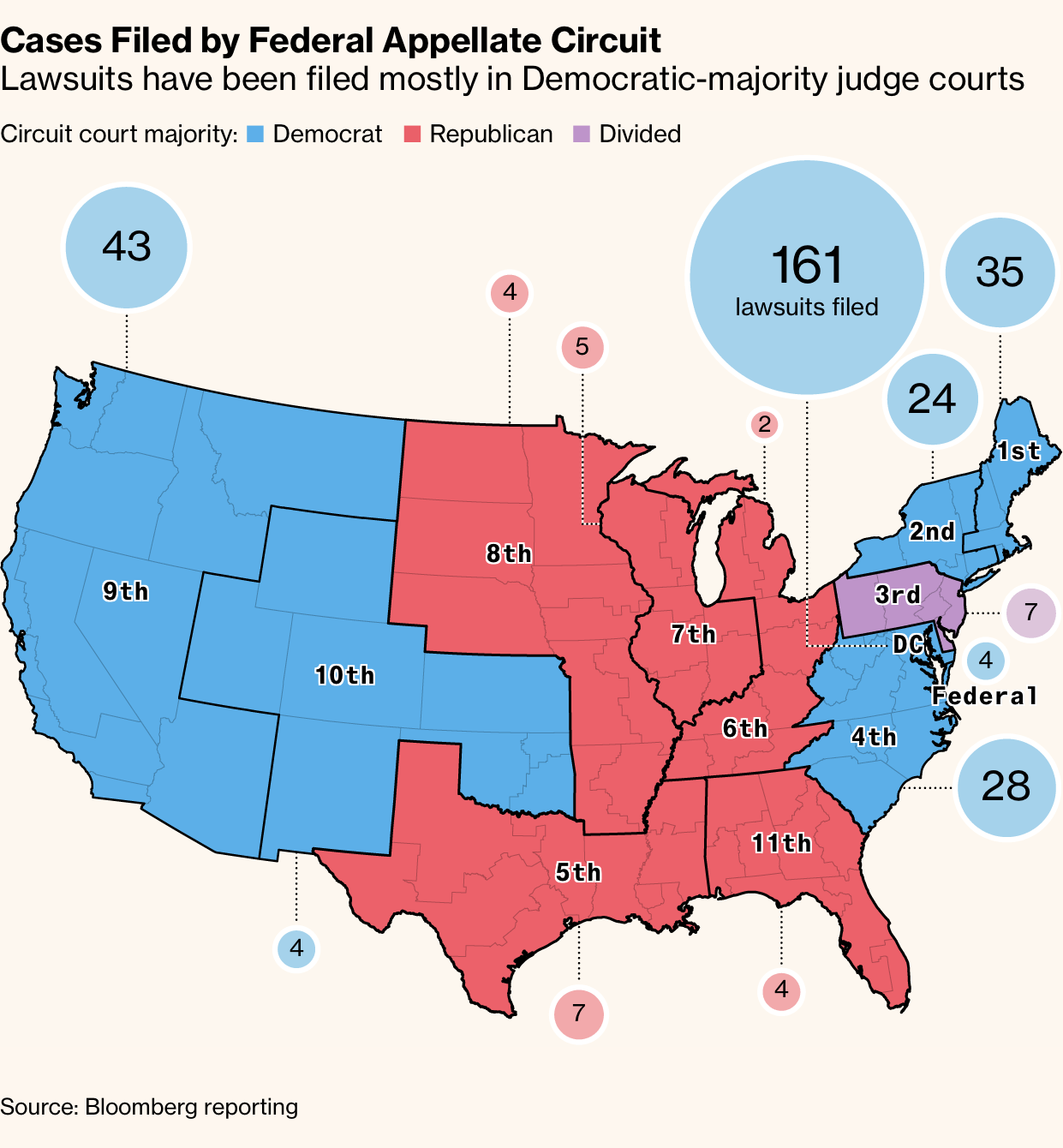
That strategy hasn’t always guaranteed success for plaintiffs. Appellate panels in Washington and the 4th Circuit — which covers the Carolinas, Maryland, Virginia and West Virginia — handed the administration several wins, including letting Trump fire the head of an independent agency that protects government whistleblowers and enforce executive actions against DEI programs.
Democratic state attorneys general, federal employee unions and liberal advocacy groups that have repeatedly taken Trump to court so far say they’re digging in for a long fight. New Jersey Attorney General Matthew Platkin said that the lawyers in his office are motivated to keep up the pace.
“If they think we’re going to get tired and stop, that’s not gonna happen,” Platkin said.