May 10, 2025
Bank A
Investor
Adapted from actual conversations on WeChat
Banned Chinese Bond Tactic That Turns 8% Yields Into 16% Is Roaring Back
Banks are helping investors in Hong Kong secure bond returns that far exceed official rates — and it’s all happening out of view.
China’s cash-strapped local governments are caught in a bind.
The financing vehicles they’ve used for decades need to roll over a mountain of debt. Investors are demanding high interest rates, but openly offering them risks making future borrowings far more expensive.
To get around the dilemma, some of the local government financing vehicles, commonly known as LGFVs, are making extra undocumented payments to investors when selling bonds.
The practice, which regulators cracked down on in mainland China, has migrated to Hong Kong. During the second quarter, dozens of LGFVs sold $3.3 billion of bonds in the city by offering returns that can be double, or more, the official interest rate listed, according to investors and bankers with knowledge of the deals. That’s almost a third of the capital raised offshore by such enterprises in the period.
The scale of this unorthodox fundraising suggests the 10 trillion yuan ($1.4 trillion) program Beijing committed to alleviating the debt burden of its provinces last year won’t be enough. At the very least, it raises questions over the severity of the liquidity stress faced by LGFVs – which finance and build everything from highways to houses – such that some of them are willing to breach securities rules in order to raise money.
It’s unclear how much China’s local governments know about the fundraising methods used.
How to Turn a Bond With an 8% Interest Rate Into One Yielding 16%
1Bank A, registered in the British Virgin Islands, orders the bond on behalf of an investor and pays the full face value of ¥100. The issuer gets the full amount for the bond sold.
2The investor pays only ¥93 for the bond, which offers ¥8 in annual interest. The discount means the buyer gets a total return of about 16%, if the note is held till the yearly payout.
3Bond issuer reimburses Bank A ¥7 as a consultation fee. This may happen months after the sale.
Source: Bloomberg reporting
Notes: Diagram based on a bond maturing in 364 days. The investor typically pays a small amount to Bank A, often a private company, as a service fee of 0.4%.
The hidden returns – which have led to volatile trading in Hong Kong — would breach conduct rules governing debt pricing and sales incentives as laid down by the city’s Securities and Futures Commission. The regulator said in a statement that it would take “regulatory actions against licensed corporations whose conduct does not meet the expected standards to uphold the quality and integrity of Hong Kong’s capital markets.”
On the mainland, regulators have sanctioned and fined companies caught in the act, with bond investors asked to return the additional payout. The China Securities Regulatory Commission and the Ministry of Finance didn’t respond to requests for comments.
“Some weak LGFVs are still desperate for funding,” said Zerlina Zeng, head of Asia strategy at CreditSights, a research firm. “Most have to pay hefty funding costs to attract high-yield and speculative buyers as global and regional real-money investors are avoiding these commercially unviable and financially unsustainable LGFVs.”
LGFVs were started about three decades ago to help provinces and cities fund infrastructure projects. Many had poor returns, leading to a huge pile of off-balance sheet debt for local governments, which Beijing is trying to cut with its plan announced last November. The International Monetary Fund estimated that the financing vehicles could have as much as 60 trillion yuan of borrowings as of 2023.
In an attempt to lessen the liabilities, Beijing has also limited new borrowings by the LGFVs on the mainland. That’s compelling them to raise much-needed funds elsewhere, where they have more leeway.
Most of the issuers offering additional returns for their debt sales in Hong Kong are from regions or cities struggling financially as economic growth stutters – such as the northern agricultural provinces of Henan and Shandong.
Hidden Returns
To make their bonds more attractive, these issuers can give investors money in the guise of consulting fees, according to investors and bankers with knowledge of the deals, who asked not to be identified discussing the practice as they aren’t authorized to speak publicly. The LGFVs can also channel the payout to buyers by having the underwriters sell the debt at an undocumented discount.
The investment banks would be given a supplementary commission by the buyers of the notes, while also receiving a higher-than-usual underwriting fee.
This process differs from how bonds are normally sold. While underwriters do offer discounts in debt sales, the lower pricing is displayed in a term sheet sent to all investors. They also don’t get further payments.
It’s an arrangement that benefits all three parties.
Take for example Luoyang High-Tech Chuanghui Group, an LGFV from its namesake city in Henan. Its prospectus for selling a 1.06 billion yuan bond in June painted a dismal picture of revenue more than halving between 2022 and 2024. The entity had incurred overdue payments on commercial paper since last year, according to the latest data from the Shanghai Commercial Paper Exchange, underscoring the risks of lending money to it.
Given the LGFV’s finances and credit record, there would be few takers for the bond at the official 8% interest rate. Instead, some bankers approached a select group of investors promising a total return of around 16%, according to the people interviewed.
The debt sold out. This is just one example.
The Real Cost of Borrowing
Source: Data compiled by Bloomberg
Note: Yield levels shown are the highest hit in the three months after listing.
The unreported interest payments given to investors in Hong Kong for these bonds can be more than 10%, according to the people familiar with the transactions. These notes typically mature in 364 days or in three years.
Extra returns were also offered for bonds sold by Weifang Ocean Investment Group Co., Lunan Zaozhuang Economic Development Investment Co., as well as Zoucheng City Shengcheng Cultural and Tourism Group Co.
The LGFVs identified in this story didn’t respond to requests for comment.
Investors can get into the trade by earning the trust of executives at the state-owned companies in their provinces, or by knowing the bankers. An introduction is needed since many of the underwriters offering this service conceal themselves behind layers of offshore structures.
“LGFVs and overseas investors are essentially strangers who need intermediaries to bring them together,” said Li, a money manager who had subscribed to such debt sales. “What matters is who you know, not your ability to analyze financial statements,” he said, asking to be identified only by his surname.
Once the relationships are established, the bankers would reach out to potential buyers over the popular Chinese social media platform WeChat or use emails to sound out interest. Code words were used to denote their services, according to records reviewed.
When asked about the practice, Hong Kong’s securities regulator said capital market intermediaries – which include brokers, underwriters and investment banks – shouldn’t offer or pass on rebates to investors under its code of conduct. They also shouldn’t enter into any arrangements which may result in differentiated pricing for debt offerings, it said.
While such debt sales provide high returns for investors and help LGFVs raise much-needed money, there are wider consequences.
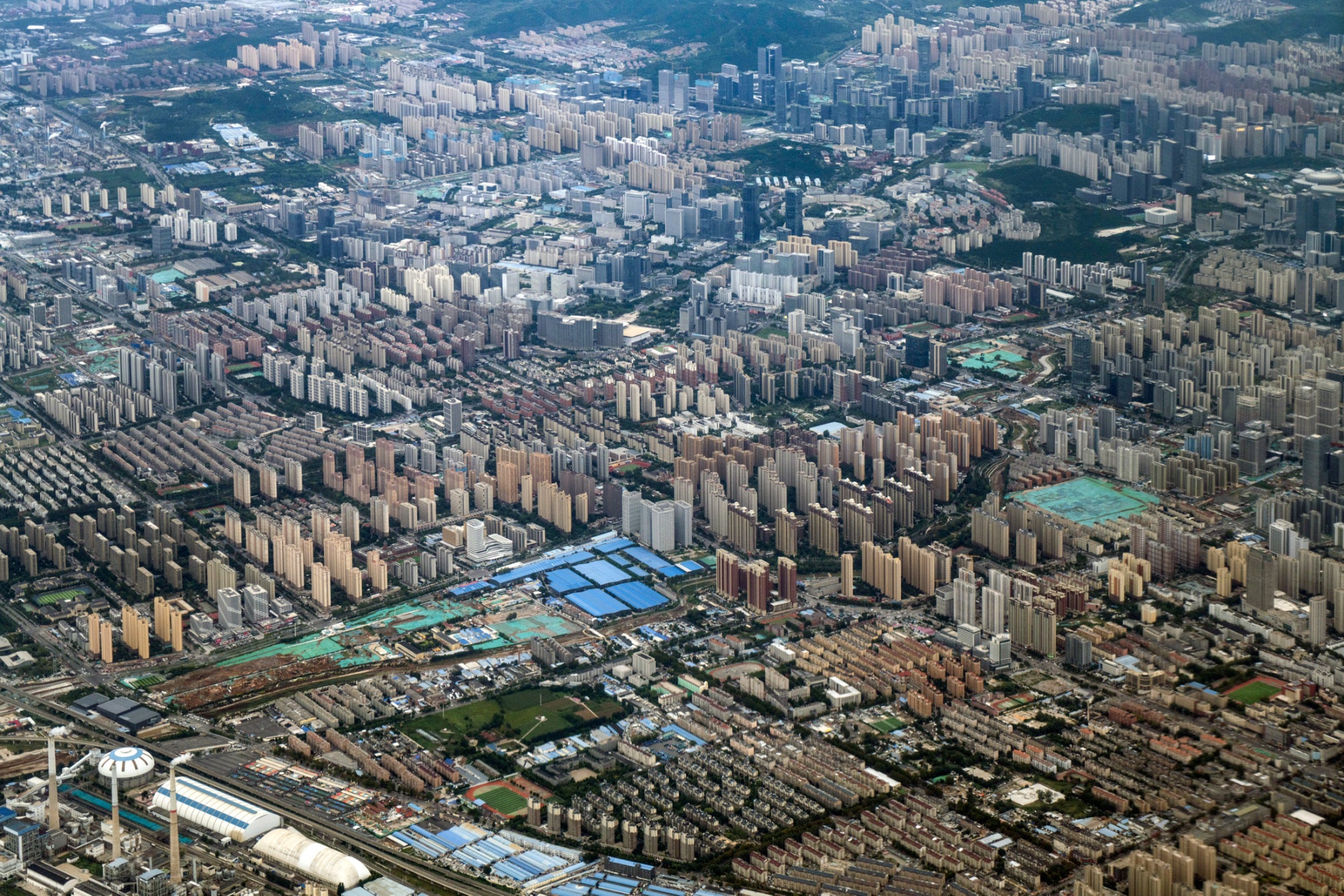
Infrastructure and construction in Jinan, Shandong Province, in September. Photographer: Qilai Shen/Bloomberg
The financial statements for the LGFVs would need to account for the money paid out. It’s unclear how that is done given these entities aren’t officially on the books of China’s provinces and cities. So far, there are few indications that investors have been put off by such behavior.
Volatile Trading
In Hong Kong, the hidden payouts are often revealed as market distortions when the bonds begin trading.
That’s because some buyers, who have pocketed the extra returns, won’t wait for the annual interest rates to be paid. They sell the bonds within days or weeks of the listing, driving the yields close to the unofficial rate marketed.
For those not in the know, the volatile trading seems inexplicable. Most of the notes though see very little activity, with investors content to hold the bonds until maturity.
For Luoyang High-Tech, the yield on the bond hit 15% on Aug. 4, the first day that data was available on Bloomberg, nearing the actual 16% total return offered.
Among the more than 80 such notes sold by LGFVs in the second quarter, yields on 21 of them gained at least two percentage points within three months of their debut, according to available data. The other bonds saw their yields fall on average.
The risk is that the practice becomes widespread and taints the reputation of Chinese companies just when an increasing number of them seek offshore financing. Some $52.7 billion of bonds were sold by LGFVs in cities including Hong Kong and Macau in 2024, an annual increase of over 70%.
People familiar with the unusual debt sales suggest a larger number of such transactions take place in Hong Kong than Bloomberg News has been able to identify.
“It’s the same game and same players,” said Yao Yu, founder of Shenzhen-based credit research firm RatingDog. “Just shifting to a different stage. All these bond market tricks you see in Hong Kong have already played out on the mainland.”