
Labour’s UK Election Prospects Hinge On Winning Over Older, Richer Voters
The UK’s last election left the Labour Party in dire straits, holding the fewest seats since 1935. To get back into power, Labour leader Keir Starmer must win in areas that are older, richer, more rural, have a bigger proportion of homeowners and are more likely to be White. In short, he must cut big chunks out of Prime Minister Rishi Sunak’s Conservative Party base.
The scale of Starmer’s task is laid bare in a Bloomberg analysis of Britain’s new electoral map, with the parties competing on boundary lines revised to account for population shifts since the last census. In it, Bloomberg used a study by election experts Colin Rallings and Michael Thrasher, which allocated the new constituencies to parties based on their past performance, and overlaid demographic data, including measures of ethnicity and affluence.
The New Constituency Standings
325 seats needed
for A majority of one
Conservatives
372
Labour
200
Scottish National Party
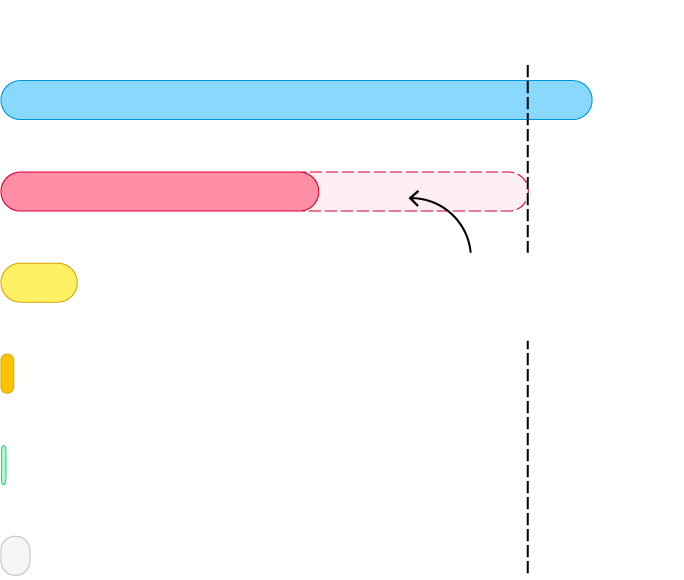
Labour needs an extra 125 seats to reach a majority
48
Liberal Democrats
8
Plaid Cymru
2
Other, House Speaker
20
The analysis focused on 125 battleground seats that Labour is most likely to win on its way to securing a House of Commons majority of one vote. Those constituencies — places where Labour trail by the slimmest margins — show that Starmer must extend the party’s appeal in an election that Sunak has said will be held sometime in the second half of the year. They explain a lot about Starmer’s strategy to cast himself as a pragmatic moderate, pro-business and strong on national security.
“Labour will be fighting to win voters and seats that look much more like the country as a whole,” said Jonathan Mellon, co-director of the British Election Study, a long-term analysis of UK general elections. “This poses a challenge because policies and messaging that work well for attracting the median voter may risk alienating the core vote and activists that Labour will still need to turn out in high numbers.”
Labour’s Battleground Seats
The Rallings and Thrasher map suggests that Labour would need a nationwide swing in its favor of 12.7% to win power. While that’s well within the realm of possibility given the party’s almost 20-point lead in public opinion polls, it’s a margin on a scale it has achieved only twice before, just after World War II and in the first of Tony Blair’s three election victories in 1997.
Moreover, Britain’s first-past-the-post system means its district by district wins, not national support, that hold the keys to 10 Downing Street. The map Starmer inherited after Labour’s disastrous 2019 defeat under Jeremy Corbyn means he’s starting near historic lows, especially in the party’s former strongholds in the rust-belt areas of Scotland and northern England.
“We will fight for every vote in every part of the country,” Pat McFadden, Labour’s national campaign coordinator, told Bloomberg. “For Labour, the election cannot come soon enough.”
Voting Intention Poll
The demographic make-up of the battleground seats shows why Starmer has steered away from radical reforms, such as reversing privatization or Britain’s decision to leave the European Union. His strategy is built around persuading fed-up, but wary, voters that Labour will lead with a steady hand, distancing it from both the Tories and its own recent history. “A politics that treads a little lighter on all of our lives,” Starmer said this month.
“Some of those 125 winnable constituencies fall to the Labour Party simply because the Conservatives’ vote has collapsed universally,” said Jane Green, professor of British politics at Oxford University. Labour needs to have a broader appeal, she said, “but you can have a broader appeal for reasons that aren’t fundamentally ideological.”
Age: Labour Must Win Older Voters
Though the picture is changing, the old truism in British politics, that the older the voter the more likely they are to be Tory, still holds. Their economic messaging on fiscal responsibility and avoiding shocks — Starmer often references the turmoil under former Tory premier Liz Truss — is part of the thinking.
Labour strategists also believe the age profiles of some seats are changing as young people move out of big cities to afford bigger houses. They include English south coast constituencies such as East Worthing and Shoreham, Hastings and Rye, and areas of Bournemouth.
Labour’s approach is not only about over-65s. Middle-aged women are also a key target group, strategists said. Women are seen as more volatile voters than men and the party has identified distinct groups, many of whom are dealing with the dual responsibilities of teenage children and aging parents. These include “National Trusters” — a reference to middle-class members of the heritage conservation organization.

Diversity: Labour Must Win in Whiter Communities
Labour has long been more popular with ethnic minority groups than the Conservatives have, and tend to do better in cities. To win more towns and rural seats, it will need to reach areas with bigger White populations like Redcar, a Brexit-voting seaside town in northeast England that fell to the Tories in 2019 and is one of the least ethnically diverse seats in England and Wales.
Support for Labour among White voters has grown since Corbyn stepped down as leader in 2020, according to polling by Ipsos Mori. last year. While support from ethnic minority groups reached a high under Corbyn, it was climbing again last year under Starmer. Some 68% of ethnic minority Britons said they would vote Labour compared to 16% for the Tories in the eight months to June 2023.
There has been some anger from Muslim voters toward Starmer over his stance on the Israel-Gaza war and his initial decision not to call for a ceasefire. The Labour leader has sought to draw a line under anti-Semitism claims that dogged the party under Corbyn, issuing full-throated support for Jewish people in the wake of the conflict.
Housing: Labour Must Win More Homeowners
In the district of York Outer, which forms a ring around the relatively affluent northern England city, almost half of households own their homes outright. That’s a traditional Conservative demographic, yet the governing party’s majority of under 10,000 is well below the margins overturned by Labour in recent by-elections.
Starmer is trying to supplant the Tories as the “party of home ownership” by talking about the recent economic turmoil, which has seen soaring inflation push up interest rates and hurt mortgage holders. More broadly, it’s trying to associate Labour with aspiration, and the party has a goal of 70% of households owning rather than renting — though without a deadline.
The risk, though, is that in pushing home-ownership — a policy that includes ramping up building to make it easier for first-time buyers — Labour alienates voters who don’t want large-scale development. Still, polling suggests Labour is striking the right balance. A survey by Redfield & Wilton strategies last year shows the party neck-and-neck with the Tories among homeowners, and far ahead with voters who still live in their family’s home i.e. people most likely to be trying to get on the housing ladder.
Inequality: Labour Must Win in More Affluent Areas
Labour will need to appeal to people who have higher incomes than the voters they won in 2019. This is why Starmer has been careful to steer away from any personal tax rises, despite huge pressures on the public purse. “It is Labour that are the pro-business, pro-wealth creation party in Britain today,” shadow chancellor Rachel Reeves told Bloomberg. She has ruled out increases to income tax or levying a wealth tax, in a bid to blunt Tory accusations that Labour would be profligate with public money.
Starmer is walking a tightrope between cosying up to big corporations and the most wealthy while also promising to stand up for “working people.” Labour is traditionally the party of the least affluent voters, having grown out of the trade union movement in the late 1800s to represent the urban working classes. That long trend was flipped in its head in the 2019 election when the Conservatives won an emphatic victory by winning over low-income voters in Labour’s former heartlands of northern England.
They included Blackpool South in northwest England — one of the country’s most deprived constituencies — which was previously held by Labour for 22 years. Tory MP Scott Benton has since been suspended after a probe found he broke lobbying rules, making a Labour comeback here more likely.
Density: Labour Must Win in Rural Communities
“We’re kind of talking about Brexit without talking about Brexit,” Mellon said when asked about how Labour could boost its appeal in the countryside. His point was that whereas urban areas voted strongly to Remain in the EU, rural areas and to a lesser extent towns were more skewed toward Leave. Brexit is also a proxy for other issues whether there is overlap, including on attitudes to immigration and on so-called culture war issues.
But rural loyalty to the Tories is shifting as farmers face global price shocks and Brexit didn’t work out as promised. Labour has sought to capitalize on this, promising major clean energy projects in the countryside to boost jobs and cuts to red tape to make it easier to sell into EU markets again. Starmer’s party has eyes on what would be a major contemporary scalp: former Cabinet minister Jacob Rees-Mogg’s North East Somerset. It’s just outside the 125 list, but strategists say it’s within reach.
Still, the Tories’ biggest electoral threat in rural seats remains Ed Davey’s Liberal Democrats, who have overturned massive Conservative majorities in four by-elections since 2021. It’s why there are growing local efforts to encourage tactical voting, to ensure as many Tory MPs as possible are ousted.