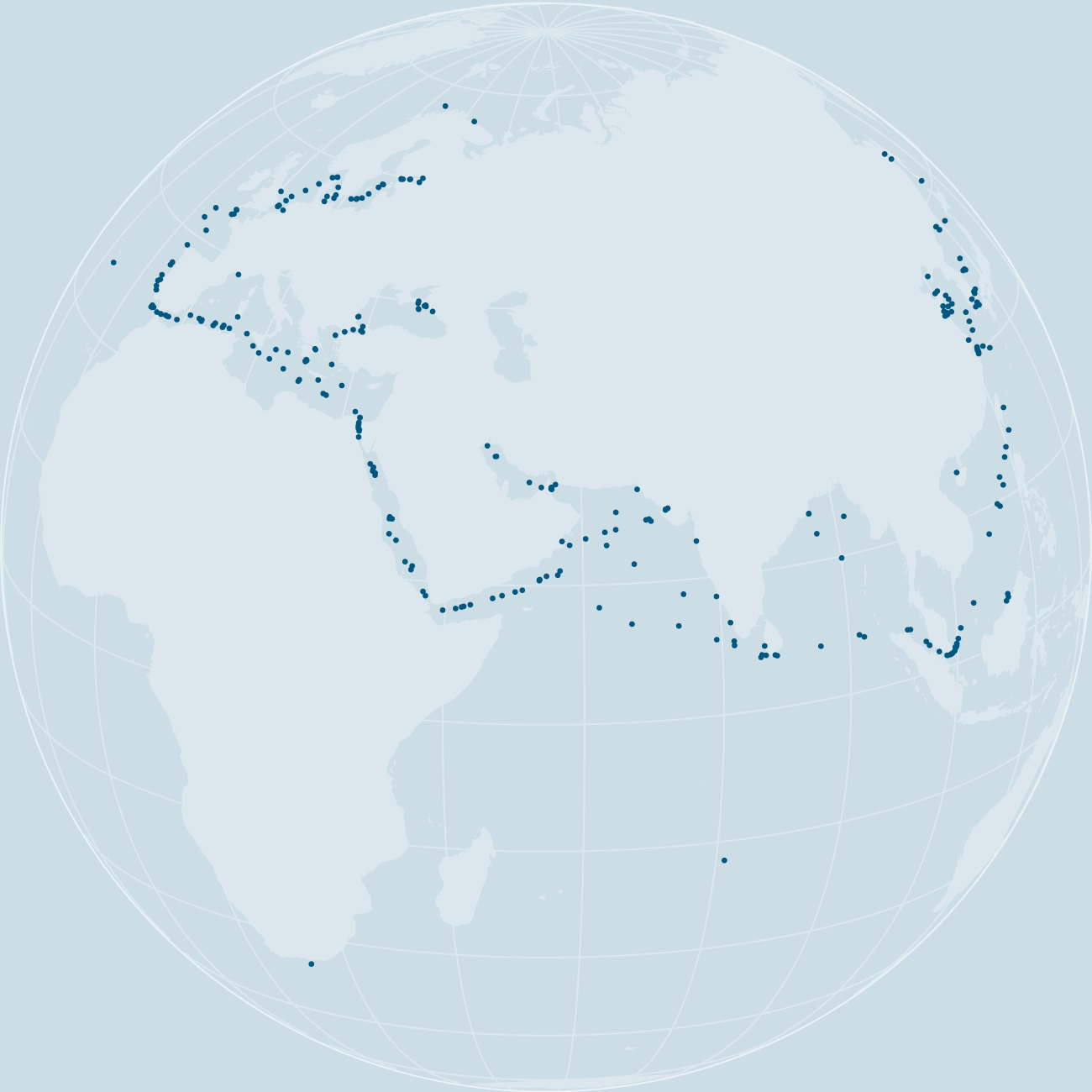
shipping Russian oil,
locations as of May 10
How an Aging Armada and Mystery Traders Keep Russian Oil Afloat
Environmental safety fears surround the new trade in Russian oil which is less transparent, involves older ships and is more difficult to monitor
It was 6:48 a.m. on Feb. 21. and two oil tankers were bobbing around in international waters about 40 miles east of Ceuta, a Spanish exclave at the northern tip of Morocco. The wind, which topped speeds of 33 miles per hour (53 km/h) just a few days earlier, had dropped enough for the Amber 6 and the Catalina 7 — vintage vessels that combined would stretch the length of five soccer pitches — to come together for a ship-to-ship transfer of Russian oil.
As the two tankers maneuvered alongside each other, giant fenders were slung over the side of one of them to avoid their hulls crunching together. Once secured by their mooring lines the real work began: the switching of 730,000 barrels of oil from the smaller of the duo, the Amber 6, onto the Catalina 7. With pipes connecting the ships, they sailed side-by-side for the next 30 hours, twisting and turning in the sea, as the Catalina 7 took every last drop of oil from the Amber 6.
Ship-to-Ship Transfer
Two oil tankers meet in the Mediterranean to swap 730,000 barrels of Russian oil destined for China

Although ship-to-ship transfers are not new, this rendezvous between the Amber 6 and Catalina 7 — which then carried the oil on to China — is anything but routine. One of more than a hundred such transfers since Russia’s invasion of Ukraine triggered global sanctions against Moscow, it offers a real-time glimpse into a network of new and often faceless intermediaries and vessel owners. Working out of locations like Dubai and Hong Kong — and often using an armada of aging tankers, many of which experts suggest should be scrapped — the practice has mushroomed in recent months, redefining Russia’s oil-supply chain.
Using satellite tracking systems that monitor everything from a ship’s location to its destination and depth in the water, Bloomberg News pieced together the movement of the two tankers from the moment the Amber 6 collected its cargo at the Baltic seaport of Ust-Luga. This article is based on months of research and ship-tracking, sifting through corporate filings and trade data, as well as extensive interviews with traders, former traders and shipping officials.
The proliferation of these new traders and fleets is a byproduct of the Group of Seven sanctions that targeted Russia’s oil exports. Before Moscow’s troops invaded Ukraine in February 2022, more than half the crude shipped out of Russia — about 1.5 million barrels a day — ended up in Europe. The European Union agreed in June 2022 to ban member states from importing almost any oil by sea from Russia. While that left other countries free to buy Moscow’s crude, the EU ban extended to the provision of insurance and finance for anyone trading Russian oil. This block on ancillary services was critical. Around 95% of all oil tanker insurance against spills and collisions passes through members of the London-based International Group of P&I Clubs, which operate across most major jurisdictions.
Alarmed that the EU’s measures could slash Russian oil supply and further turbocharge global inflation, US officials and others in the G-7 stepped in and struck a compromise deal to impose a price cap — introduced alongside the EU ban in December 2022 — on sales of Russian oil. Anyone wanting to access key western services, in particular insurance, would be barred from doing so if the oil being transported cost more than $60 a barrel.
The sanctions were designed to limit revenues for the Kremlin rather than to stem the flow of oil into the global market. How well that has worked is debatable, but what it has certainly done is make the trade in Russian oil less transparent, raising concerns over the potential for accidental spillages and environmental damage.
Since the start of the year, more than 40 million barrels of Russian crude have been switched between tankers off the coast of Ceuta and in a bay in southern Greece, near the port city of Kalamata. The transfers frequently use tankers where there will be uncertainty about who owns them or who insures them, or both. The International Maritime Organization, the United Nations agency that governs shipping, has described the increase in cargo switching on the high seas using older vessels as a “dangerous practice”. Russia has blamed western sanctions for the situation.
The EU has proposed clamping down on the ship-to-ship trade by prohibiting access to the bloc’s ports for rule-breaking vessels, part of a broader package of sanctions.
An Aging Armada Now Carries Russian Oil
Number of tankers participating in Russian oil exports, by age and insurance status
At least one third of the vessels associated with the new Russian oil trade have at best ambiguous protection and indemnity cover, according to a database maintained by IHS Maritime for the IMO. That includes the 20-year-old Amber 6. It means it is not clear which insurer, if any, would pay out if one of these tankers smashed into another vessel or a jetty, or if they leaked their oil into the sea. The Catalina 7 does have industry standard insurance, according to the database.
“This is an accident waiting to happen,” said Rolf Thore Roppestad, Chief Executive Officer of Gard AS, which provides insurance services to the marine, oil and gas industries. “In Scandinavia and in the Skagerrak region we see that a significant share of the shadow fleet is Russian-owned ships trading without International Group P&I insurance. But also in other regions, the shadow fleet is growing.”
Shipping officials, who helped Bloomberg to understand the logistics of ship-to-ship transfers, said calm weather and seas were vital. When the switch between the Amber 6 and Catalina 7 took place, the winds were below 10 miles per hour, according to data from Visual Crossing, a weather analytics firm.
Oil Transfers Occur During Brief Windows of Calm Weather
Wind conditions in the area where Amber 6 offloaded cargo to Catalina 7
Tankers as old as the Amber 6 would often have been broken up by now. But times have changed. Sanctions have cut Moscow’s access to international fleets, and the Russian one is not large enough to compensate. As a result the country has been forced into using an armada of older vessels — cheaper to buy, likely more readily available and often renamed — like the Amber 6. Senior shipping officials have expressed alarm generally about the environmental risk this poses, especially where ships are poorly maintained. And despite European ports having some of the strictest safety standards in the world, much of this risk is borne by European countries because of where these transfers take place.
Of the Amber 6’s last eight inspections — the most recent being in October 2020 — four identified deficiencies including deck corrosion, faulty gauges, thermometers, emergency power generation and fire safety precautions. Shortcomings were also identified in two of the past eight inspections of the Catalina 7, according to Equasis.org, an international database set up to promote safe shipping. None of these would have rendered either vessel unseaworthy.
“If there is going to be an accident, it is more likely to be in European waters than anywhere else,” said Brian Gallagher, head of investor relations at Euronav NV, the world’s third-largest owner of supertankers, adding that ship-to-ship transfers are “deliberately not taking place in well-policed waters.”
The Shadow Fleet
More than three weeks before its rendezvous with the Catalina 7, the Amber 6 docked at Ust-Luga to collect its cargo on behalf of a little-known merchant, Sunrise X Trading Co. It spent 36 hours loading up with barrels pumped from oil fields 1,500 miles to the east. The port has exported about 2 billion barrels in the past decade and trade has barely skipped a beat since the war began, according to data compiled by Bloomberg.
What makes the Amber 6 relatively unusual — apart from its uncertain insurance status, age and cargo transfers — is that the name of the trading entity is known. Before the war, it was standard for merchants like Trafigura Group, Vitol Group and Glencore Plc to appear on port reports and other snippets of shipping information related to Russian oil. Today, the column listing of traders is often left blank unless it is Litasco SA, a unit of PJSC Lukoil, doing the bookings.
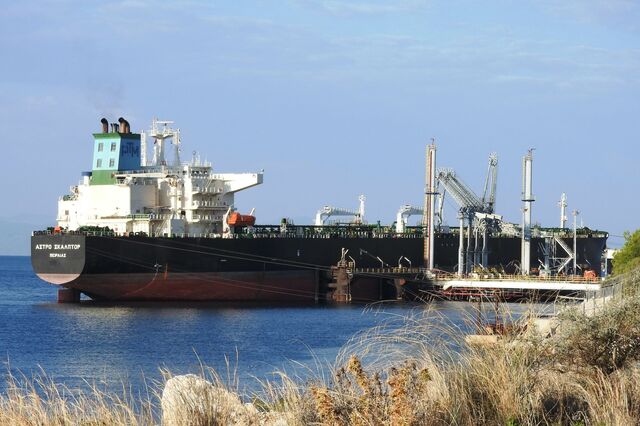
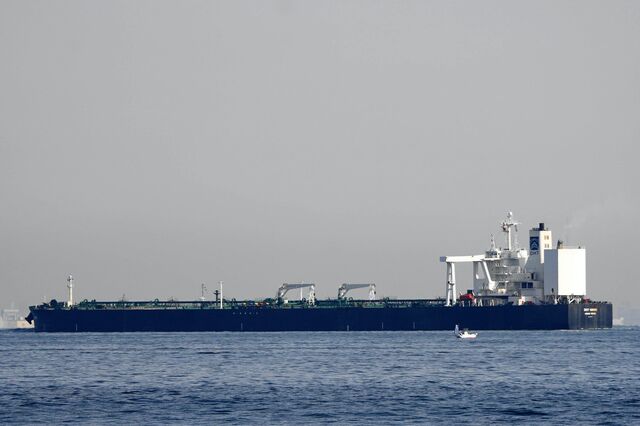
Sunrise X, just one part of a bigger network of new entities associated with the trade in Russian oil, was incorporated in Hong Kong last June and has a registered address at an apartment in the city. The ultimate ownership of many of these firms, or affiliation of the individuals running them, is rarely if ever known. Shipbrokers, traders and specialist media have identified at least 17 new merchants that have risen to prominence since the invasion of Ukraine.
“There is no doubt that economic sanctions on trade provide opportunities for opportunistic traders to find ways to skirt them,” said Ed Morse, global head of commodities research at Citigroup Inc. “These sanctions reduce transparency significantly.”
Invoice level trade data show that by December, six of these companies — all little known, and mostly startups within the past year — collectively dealt with enough of Russia’s oil exports to catapult them into the top league of the world’s biggest crude traders.
Nord Axis was incorporated in Hong Kong in February 2022, and was unknown in the oil market until July 2022 when it bought Trafigura’s 10% stake in Rosneft’s flagship oil project, Vostok Oil. Within nine months it was the biggest of these traders and handled 521,000 barrels a day in the four weeks after Dec. 5, when the EU imports ban and G-7 price cap began.
All of these barrels were supplied by Rosneft PJSC, by far Russia’s largest oil producer, according to data compiled by Bloomberg. Gatik Ship Management and Fractal Shipping, previously unknown tanker operators, between them now marshal a fleet of more than 75 vessels transporting tens of millions of barrels of Russian oil.
Major traders estimate as many as 600 tankers have joined a so-called shadow fleet serving the interests of Russia, plus those of other oil producers under sanctions including Venezuela and Iran.
Attempts to contact — via telephone, email or by visiting their offices — companies identified by the Equasis maritime database as the owners and managers of the Amber 6 and Catalina 7, as well as with Sunrise X, were unsuccessful.
Many of the new generation of traders “are extensions of Russian companies or closely associated with them,” said Adi Imsirovic, a former head of oil at Gazprom Marketing and Trading — a UK entity ultimately owned by the Russian energy giant — and now a director at Surrey Clean Energy. He believes the future for these traders will be determined by the fate of Putin’s Kremlin.
“If the sources of power were removed, these ‘traders’ would disappear,” he added. “However, if there was just a peace agreement with Putin they are likely to survive.”
Ship-buying Binge
The price cap was designed to give countries like China and India access to G-7 services such as crewing, insurance, ship brokerage and trading, provided buyers didn’t pay more than a fixed price for Russian oil. While an agreement in principle to impose a cap was reached in early September, the actual level — $60-a-barrel for crude oil — wasn’t decided until early December.
That three month gap allowed time for Russia, Moscow-friendly intermediaries and shipping companies to ready themselves.
It triggered a ship-buying binge. The number of vessels bought by undisclosed owners soared in the months before sanctions came into effect, according to data from VesselsValue, which monitors such transactions. Anonymous purchasers have spent about $3.8 billion on 187 tankers since the war began, with a sharp uptick — there were 30 sales in January alone — after the decision to impose the cap was set.
This armada of vintage tankers kept Russian oil moving. Shipments of crude from the country’s ports on the Baltic, Black Sea, Barents Sea and Pacific Ocean during the first quarter of 2023 were 19% higher than during the same period in 2022, boosted by the diversion to ports of about 500,000 barrels a day previously delivered by pipeline to Poland and Germany.
The roster of buyers has, however, shrunk dramatically. The flow of oil to Europe has fallen to a trickle with Bulgaria, which got an exemption to the EU ban, the last remaining European buyer of Russia’s seaborne crude.
Russia’s Shifting Oil Exports
Seaborne crude oil shipments from eastern and western Russian ports to major markets, 4-week average volume
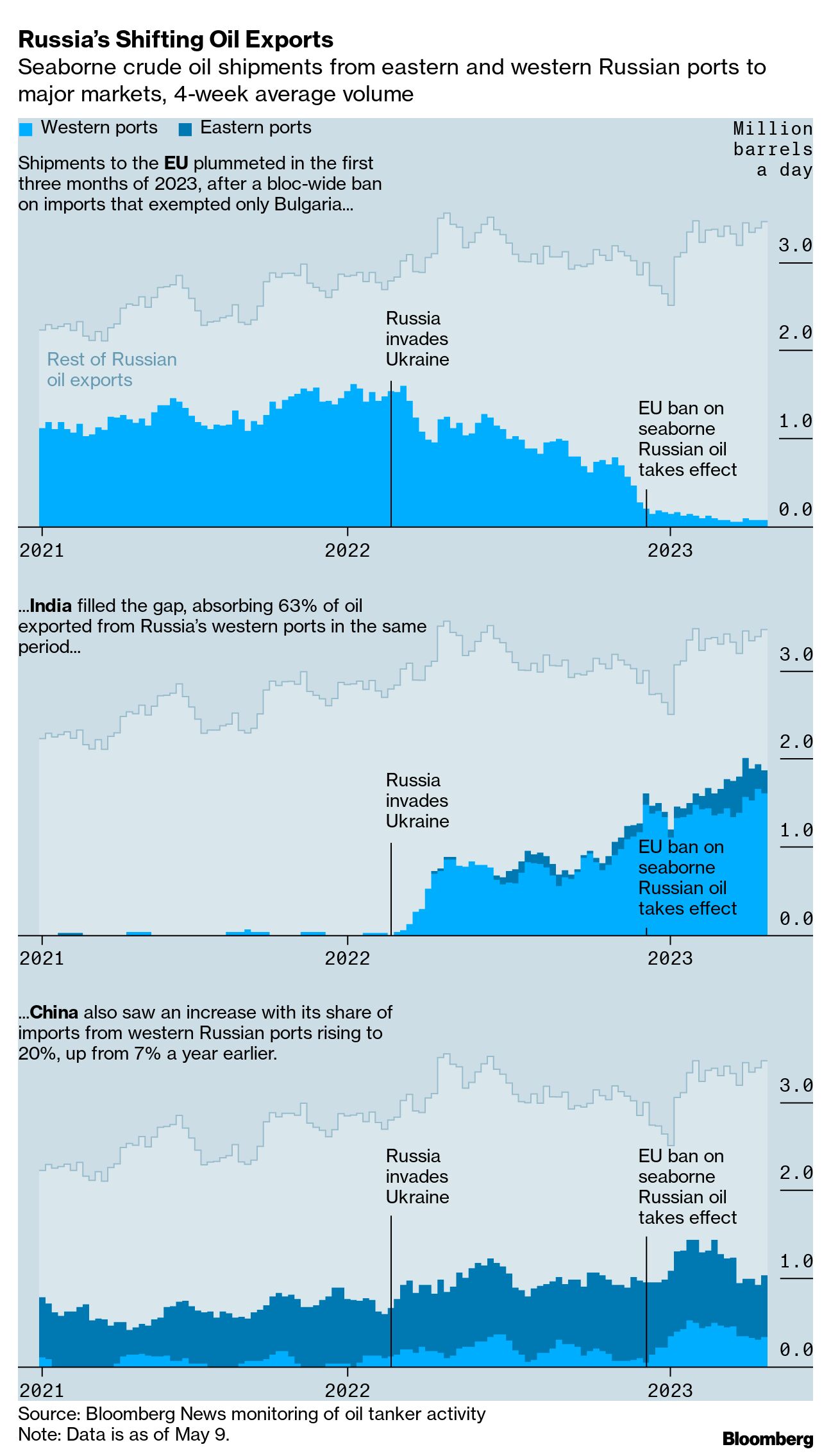
India, which bought almost no Russian oil before the invasion, is now Moscow’s biggest customer for seaborne crude, importing about 1.75 million barrels a day and overtaking China by early November.
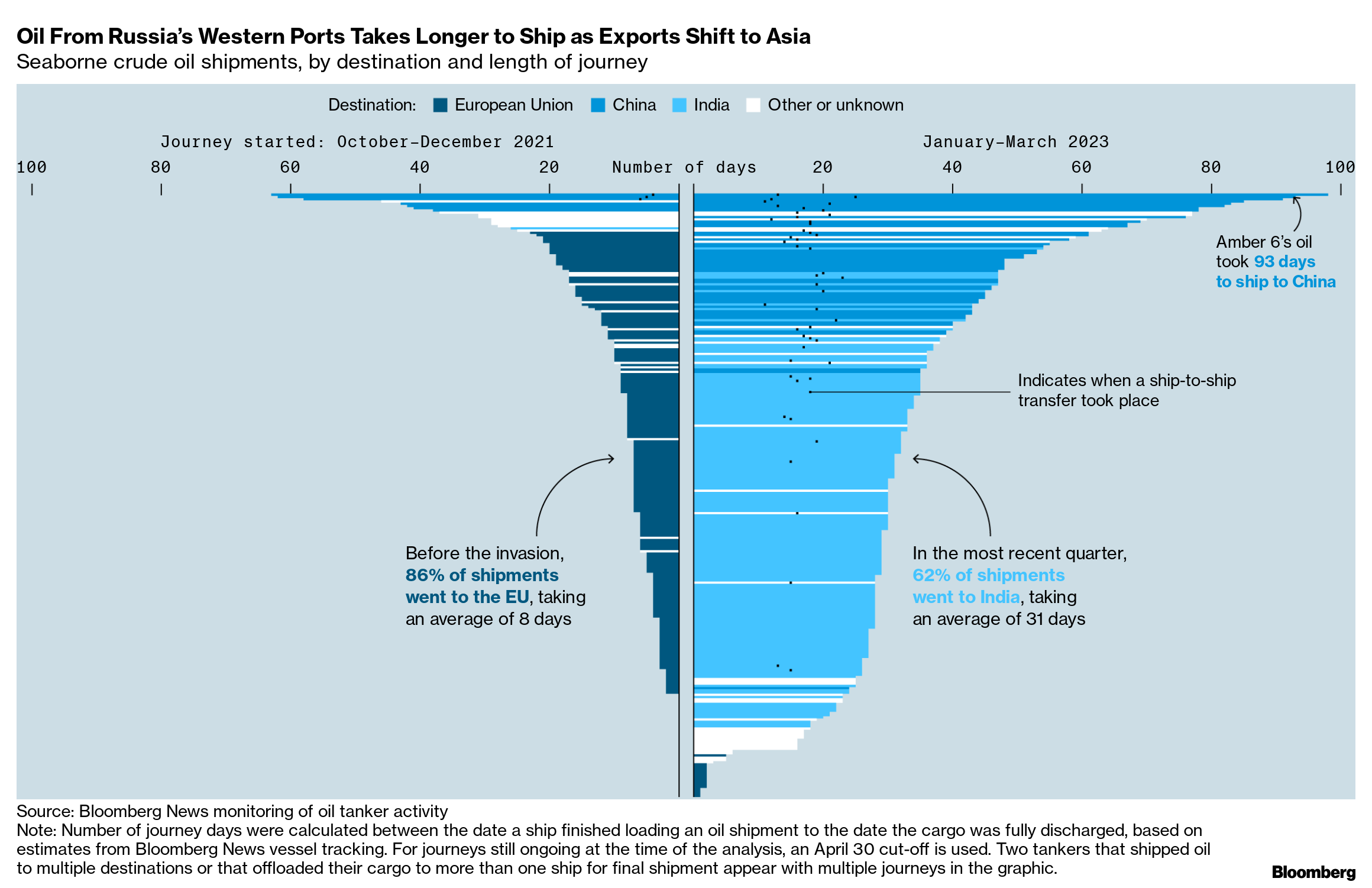
These new routes and customers come at a price. It takes a month for a laden crude tanker to reach the west coast of India from the Baltic, and about a week longer to get to the east coast port of Paradip. The journey to China can take two months or even longer — the Catalina 7 only finished offloading its cargo at the port of Dongjiakou on April 30. This trade is tying up ships for four times as long as it took to deliver similar volumes to Europe and adding to the transit costs.
Oil From Russia’s Western Ports Takes Longer to Ship as Exports Shift to Asia
Seaborne crude oil shipments, by destination and length of journey
Trading Partners
As Russia’s trade has shifted, so have the locations handling it. For decades, Switzerland was the beating heart of international trade in Russian petroleum. All the world’s top merchants had a large presence there, fostering deep ties with Moscow. But as the EU ramped up sanctions, so did Bern. By December 2022, the Swiss government had joined the price-cap program.
That opened the way for Dubai and Hong Kong to emerge as the top locations for traders handling Russian business, or those eager to muscle in on it. The UAE has no restrictions on trading in Russian oil. Dubai, its most populous emirate, has become the default option for traders dealing in Russian oil, along with the country’s oligarchs, influencers and citizens relocating to avoid the military draft at home or restrictions in Europe. Half of the six little-known traders whose December deals catapulted them to the top of the oil commodity houses are based in the emirate.
Often with little more than a temporary address or shell office this new army of traders is hard to pin down. Several are registered in a grim business estate, part of the Dubai Multi Commodities Centre. Security guards at the business park said it was rare for representatives at the trading companies to come to the site.
“There was a window of opportunity for small trading firms as the big trading houses largely backed away from Russian volumes and buyers were initially very nervous about dealing directly with Russia,” said Richard Bronze, head of geopolitics at Energy Aspects Ltd, a consultant. “Many of these traders have expanded significantly and new firms have also sprung up, often registered in the UAE, Turkey or Hong Kong.”
What remains unclear is whether these mystery shipping and trading firms are owned by non-Russian traders making millions of dollars on each trade. Or are they affiliated either to the Russian state or to the country’s oil producers? The US Treasury has argued that it is the former. Senior oil traders said they believed the latter was more likely, since it is not clear where these new firms would otherwise have raised finance from.
On the surface, the combination of the EU import ban and the G-7 price cap appears to have worked. Argus Media Ltd. and S&P Global Commodity Insights, the oil market’s two preeminent cargo price assessors, say that, at the point of export, Russia’s flagship crude Urals has remained steadfastly below $60 a barrel since Dec. 5, often far below.
Yet the spread between the export and the import price remains high, and averaged almost $17 per barrel in March. The Indian government estimates the average price it paid for Russian oil in March was $70, with the huge differential implying what would be extraordinarily high transit costs. Yet that is still a notable discount — Brent oil futures averaged $79.21 in the same month.
Those numbers support the central argument of the US: the cap doesn’t have to be adhered to perfectly for it to be effective. But at what cost? The trade in Russian oil has become less transparent, less safe and more difficult to monitor.
“There is going to be a trade-off between the quality of the shipper and the cost of compliance,” said Steve Cicala, co-director of the Project on the Economic Analysis of Regulation at the National Bureau of Economic Research in the US. “And if the Russians only care about selling at top dollar, they’re going to be selling more of their output to the shadier characters who don’t care much about insurance compliance.”