Apple’s Supply Chain Is on a Collision Course With Climate Change
The iPhone-maker will need to be resilient as it spreads its manufacturing base across the places most impacted by global warming.
Few global multinationals have been more vocal and forthright in their ambitions to take on climate change than Apple Inc.
Chief Executive Officer Tim Cook has woven environmental policy into the very fabric of its brand. The iPhone maker boasts that it has been carbon neutral across all its offices, stores and data centers since 2020, and cut emissions by 45% since 2015.
“By 2030, all Apple devices will have a net-zero climate impact,” Cook said in a recent skit where he’s quizzed by a fictional Mother Nature played by actor Octavia Spencer. The focus isn’t new: A decade ago Cook, who ran Apple’s supply chain operations before taking over from founder Steve Jobs, told climate-denying shareholders to “get out of this stock.”
And yet that vast supply chain — comprising more than 400 facilities across 180 regions in nearly 30 countries, stretching from the Austrian Alps to Vietnam’s Mekong Delta — stands in the path of some of the most damaging effects of climate change itself, according to a Bloomberg Opinion analysis of Apple’s publicly released supplier reports.
Drawing from global databases of power-generation, extreme weather, flood zones, economic impact and carbon emissions, Bloomberg Opinion found that the very regions most vulnerable to climate change are those with the highest concentration of manufacturers. This risk isn’t exclusive to Apple. Global electronics companies including Samsung Electronics Co., Sony Group Corp. and Dell Technologies Inc. procure from many of the same vendors. The analysis is based on Apple’s supply chain because, to its credit, the iPhone maker is one of the most transparent when it comes to shining a light on working conditions, conflict minerals and the environmental impact of its business.
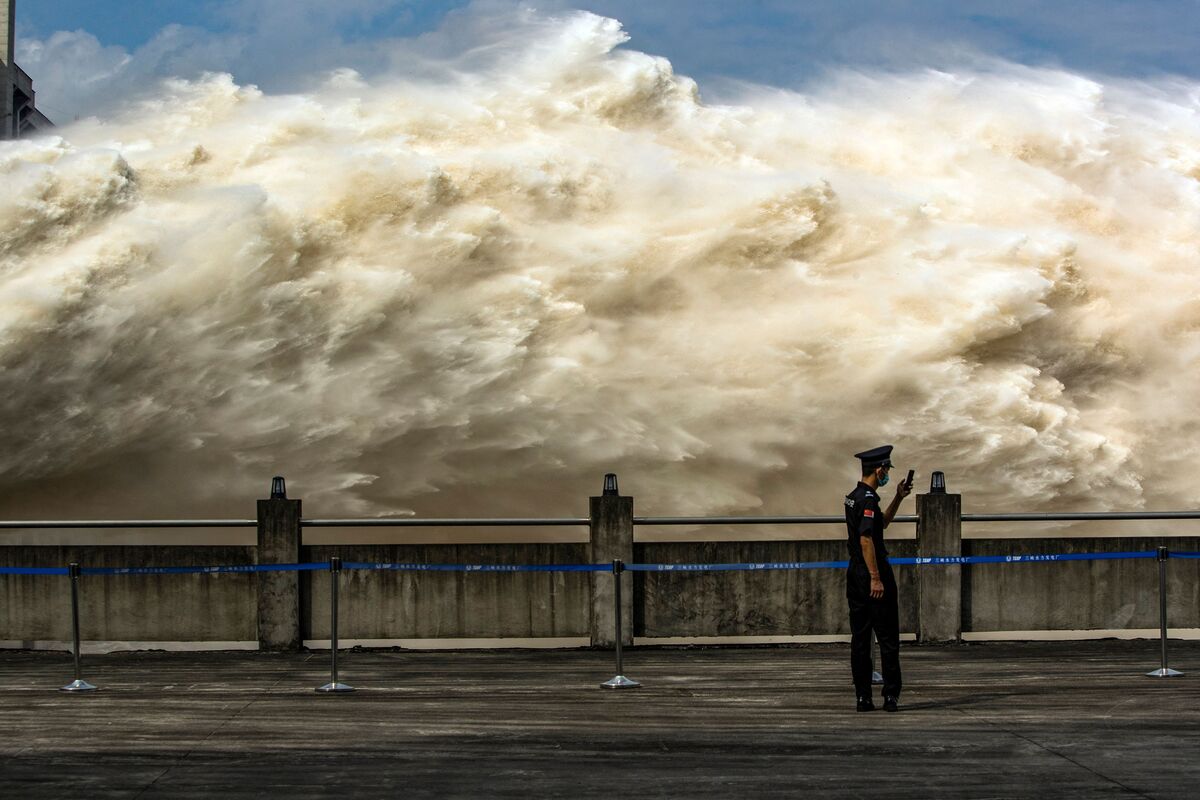
Put simply, the belt of the planet where natural disasters will intensify most rapidly due to global warming — from floods and heatwaves to increasingly powerful cyclones — is precisely the one where Apple has built its manufacturing footprint. It’s most visible in a swath of Asia from India in the southwest to Japan in the northeast.
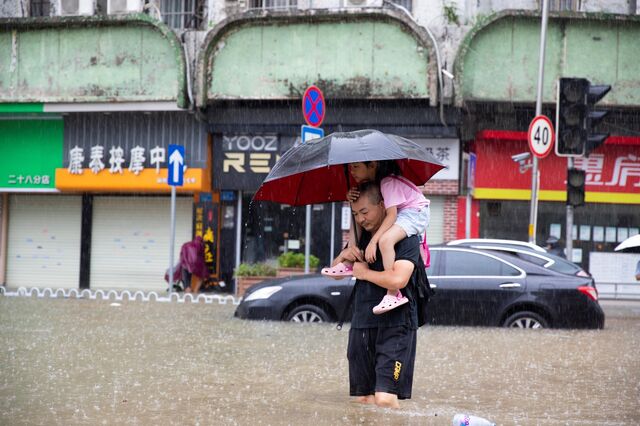
Many of the most dramatic effects of climate change will take place in the tropics and subtropics, where stronger sunlight means there’s more atmospheric energy to be unleashed as damaging weather phenomena. Unlike heavily-urbanized Latin America and underdeveloped sub-Saharan Africa, the manufacturing belt in Asia is seeing a rapid wave of migration to its cities. The same demographic phenomenon is providing both a workforce to assemble Apple’s products, a burst in energy demand that’s keeping emissions on the rise and a growing population in the path of more frequent and damaging natural disasters.
The following charts map out the path upon which supply chains and climate change are set to collide.
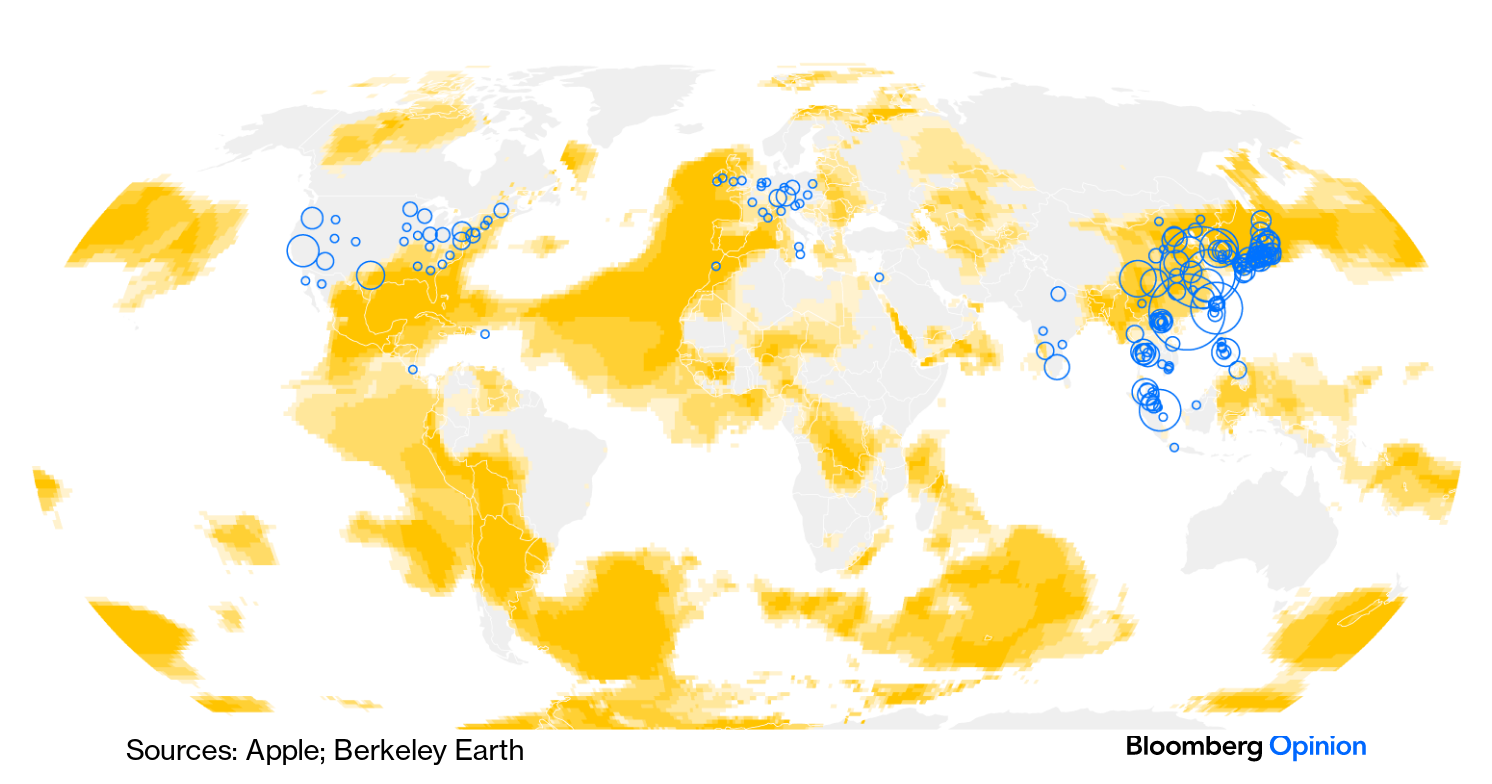
Manufacturing Footprint in Hotspots
Apple’s supply chain is largely based in Asia and the US, where temperatures set records this year

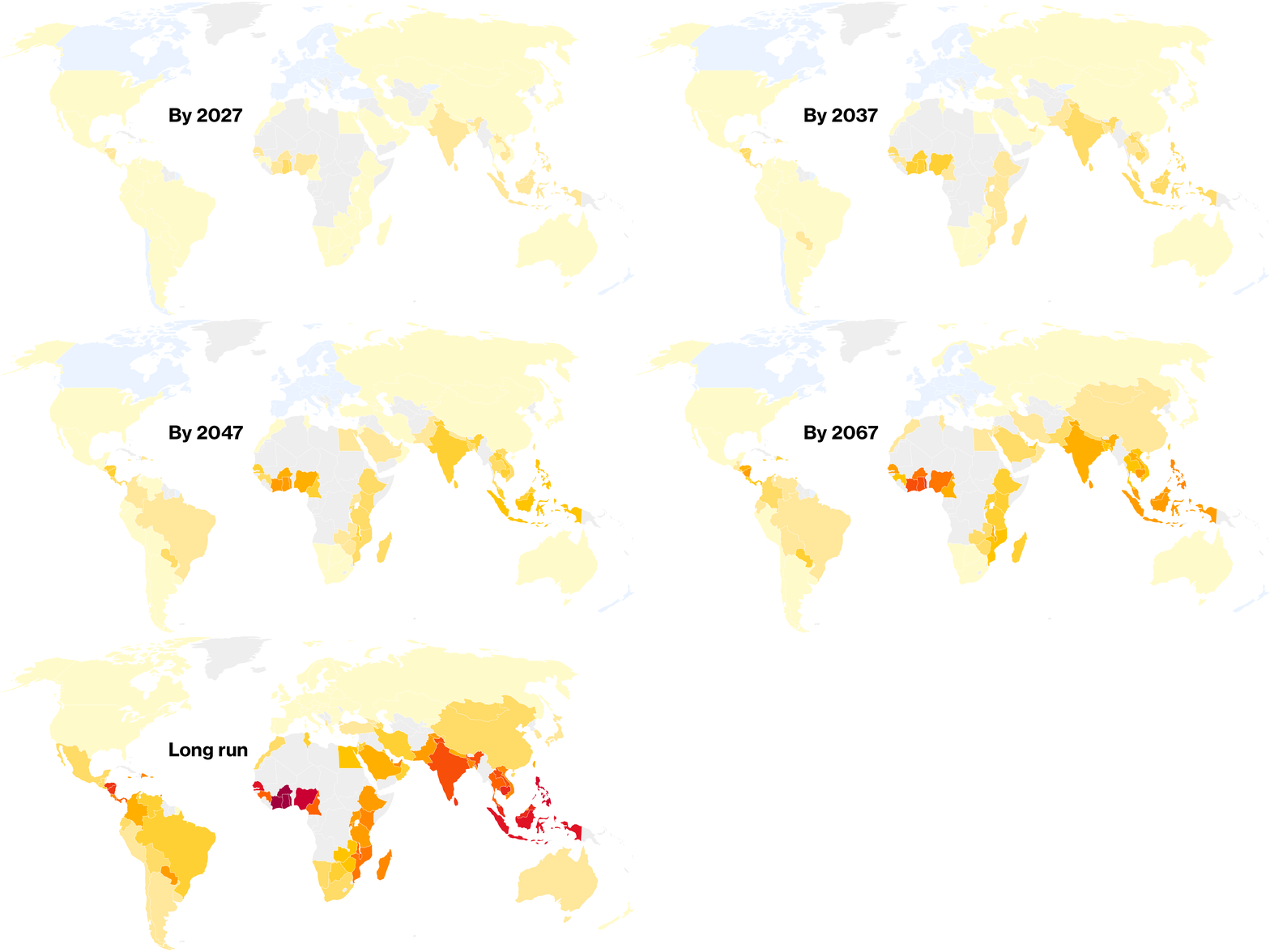
One way of measuring the likely impact on different regions is to estimate how economic growth will be affected by a warmer environment. In a 2018 study, researchers in Australia calculated how different levels of climate change would affect gross domestic product in 139 countries. The results were stark: Five of the 13 middle-income nations facing a GDP drop of at least two percentage points by 2037 on a 3 degrees Celsius (1.7F) warming pathway are ones where Apple has suppliers: India, Indonesia, the Philippines, Malaysia and Cambodia.
GDP Change on a Trajectory of 3°C Warming
Some of the biggest anticipated hits to GDP from global warming will be in South and Southeast Asia

We’ve already seen the damage weather disasters can do to multinational manufacturing operations. Floods across Thailand in 2011 caused by rainfall from the La Niña climate cycle shuttered more than 14,000 businesses, throwing a spanner into global automotive and electronics supply chains that were dependent on low-cost manufacturing close to the capital Bangkok. It was the biggest flood disaster in the history of the insurance industry, causing about $55 billion of losses and slowing deliveries of Apple’s Mac computers as component suppliers were forced to suspend work.
Much of the world has since made efforts to prevent such a disaster. Toyota Motor Corp., a pioneer of just-in-time manufacturing hit by the floods, raised the time it held onto its inventory from 30 days on the eve of the crisis to 49 now. Apple’s inventory days increased from five to 11 over the same period.* The reasons for rising stockpiles vary, from a more diversified manufacturing base, to the effects of the Covid-19 pandemic and more recent economic slowdown. Overall, however, larger inventories make supply chains more resilient to disaster — but they also cost money because capital spends longer tied up in warehouses rather than being turned into sales.
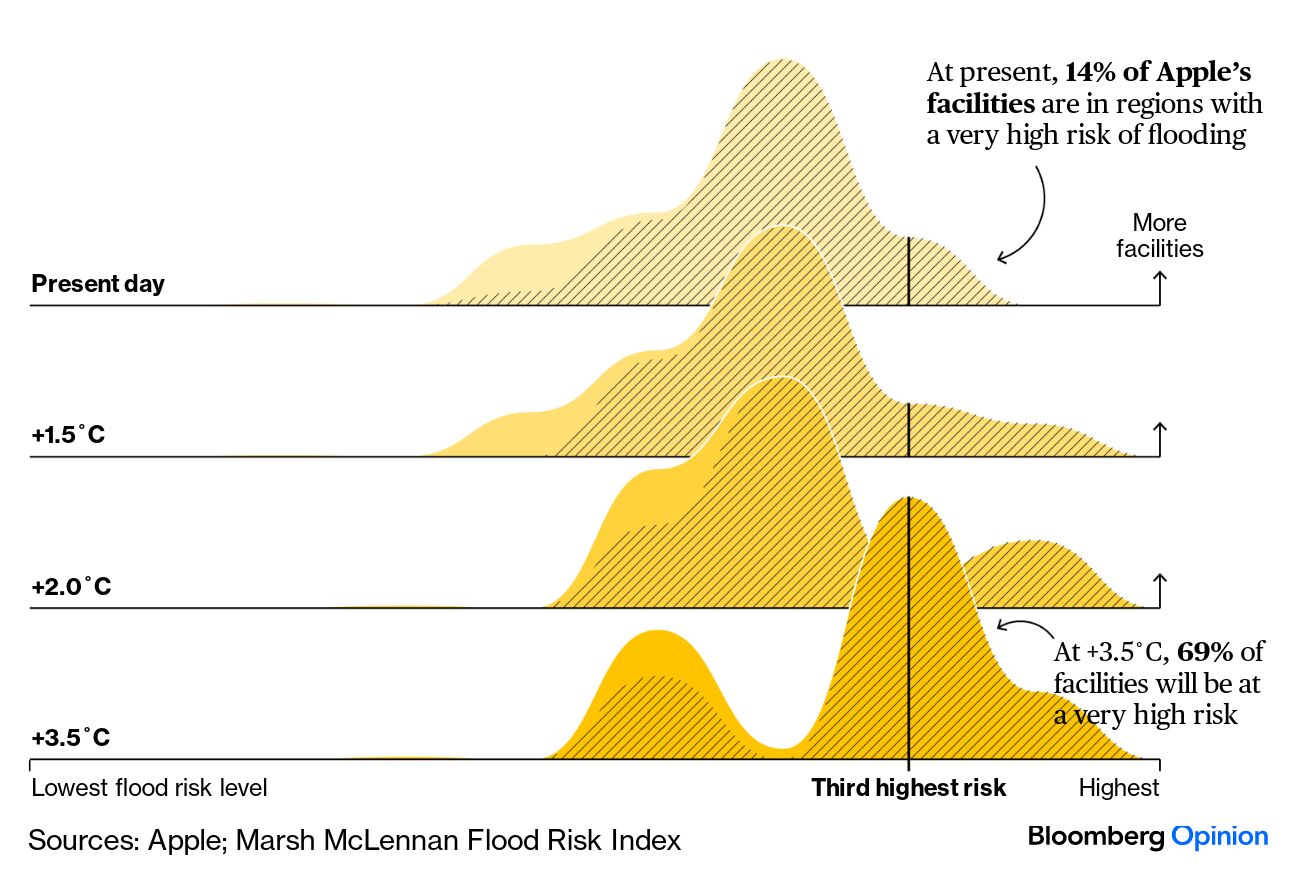
Despite this, the countries in Asia where Apple’s supply chain has been built are also some of those that will be most prone to floods, according to an index compiled by risk consultants Marsh McLennan.
Distribution of Apple’s Supply Chain by Flood Risk
Most of Apple’s facilities, located in tropical Asia, are at extremely high risk of flood in a warmer world

Power cuts pose similar risks to manufacturers. That’s likely to be a growing problem as hotter summers, rising use of air conditioning, unpredictable rainfall and unplanned shutdowns at aging, unprofitable fossil-fired generators put more strains on electricity grids. China’s Yunnan province earlier this year curbed production from smelters that produce aluminum like that used in iPhones, thanks to a drought that reduced the region’s hydroelectric output. A heat wave last year left India’s grid on perilously thin margins as coal-fired generators ran short of fuel.
It’s hard to predict what combination of generators are most likely to cause problems in future extreme weather conditions, but Apple’s own plans for greening its manufacturing network illustrate the challenge. Last October the company called on its suppliers to follow its own path to zero-carbon power by 2030. Yet many of the countries on which it is most dependent have unusually high shares of fossil fuels in their grids, with coal accounting for more than 60% in China and Indonesia, and nearly 75% in India.
Energy Generation by Fuel Type
Many of Apple’s major suppliers are in regions with heavily fossil fuel-dependent grids


Fixing that problem isn’t just a good-vibes target for the corporate responsibility report. From October this year, imports of energy-intensive raw materials into the European Union will face new levies. The intention is to price carbon used in producing these materials at an equivalent level to the EU’s own carbon credits, currently trading at around €84 ($89) per metric ton.
That will reduce the competitiveness of products manufactured in carbon-intensive markets unless manufacturers can prove their green credentials. Much of western Europe now has comparable emissions per capita to Asian countries: The average Chinese resident has a carbon footprint about 59% bigger than the average person in the UK, while Vietnam’s per-capita emissions are only 12% lower than those in France.
Apple’s suppliers are primarily located in carbon-intensive countries, a situation known as “carbon leakage” where production moves to regions with more lax emissions constraints. The costs of remaking its manufacturing web could be substantial should the EU continue raising climate-based trade barriers. And Europe won’t be alone. Australia is among the latest nations examining carbon-based adjustment measures as a way of using trade to enforce climate policy outside its own borders, while similar measures have been proposed in the US Congress.
Carbon Emissions
Much of Asia now has higher emissions per capita than western Europe


No company can claim to be resilient against the vast and unpredictable effects of operating in a warming world, let alone one with Apple’s size and complexity. But its problems are an example of those the planet as a whole must grapple with over the coming century.
Tim Cook built a global production network in the countries that went on to become the 21st century’s industrial powerhouses, complete with rapid urbanization, rising incomes and increasing power consumption. As climate change shifts those same nations into hothouses that strain the tolerance of power grids and human bodies, the CEO of the world’s largest company must work out how to rebuild his manufacturing system in a more resilient form.
Apple has done much to limit its contribution to a heating atmosphere. It may have a far harder time future-proofing itself against the effects that global warming will have on its own operations.