Europe’s Energy Crunch
France's Nuclear Energy Recovery Is Starting to Stumble
As Europe charts a new energy course in the absence of Russian supplies, it's worth taking a closer look at one of the vital engines of the continent's recovery: France.
The country has Europe’s largest fleet of nuclear reactors, and their ability to rebound from a spell of prolonged outages and maintenance is key as the region diversifies its energy supplies. But there are continued signs this might not be so easy, even as France's atomic output trends upward after slumping last year to the lowest level since 1988.
Electricite de France SA this week had an unplanned outage at its Paluel-4 unit in Normandy and extended an outage at its Chooz-2 reactor near Belgium by 10 days, until March 7.
The company also postponed the restart of its Flamanville-1 reactor in western France, due to concerns about possible corrosion in an emergency cooling pipe. (EDF suspects a welding fault.) The unit, which has been offline since April, was supposed to be back in service next month. Now that won't happen until at least early June.
Nuclear Energy Recovery
Reactor output has been shaky recently amid extended outages
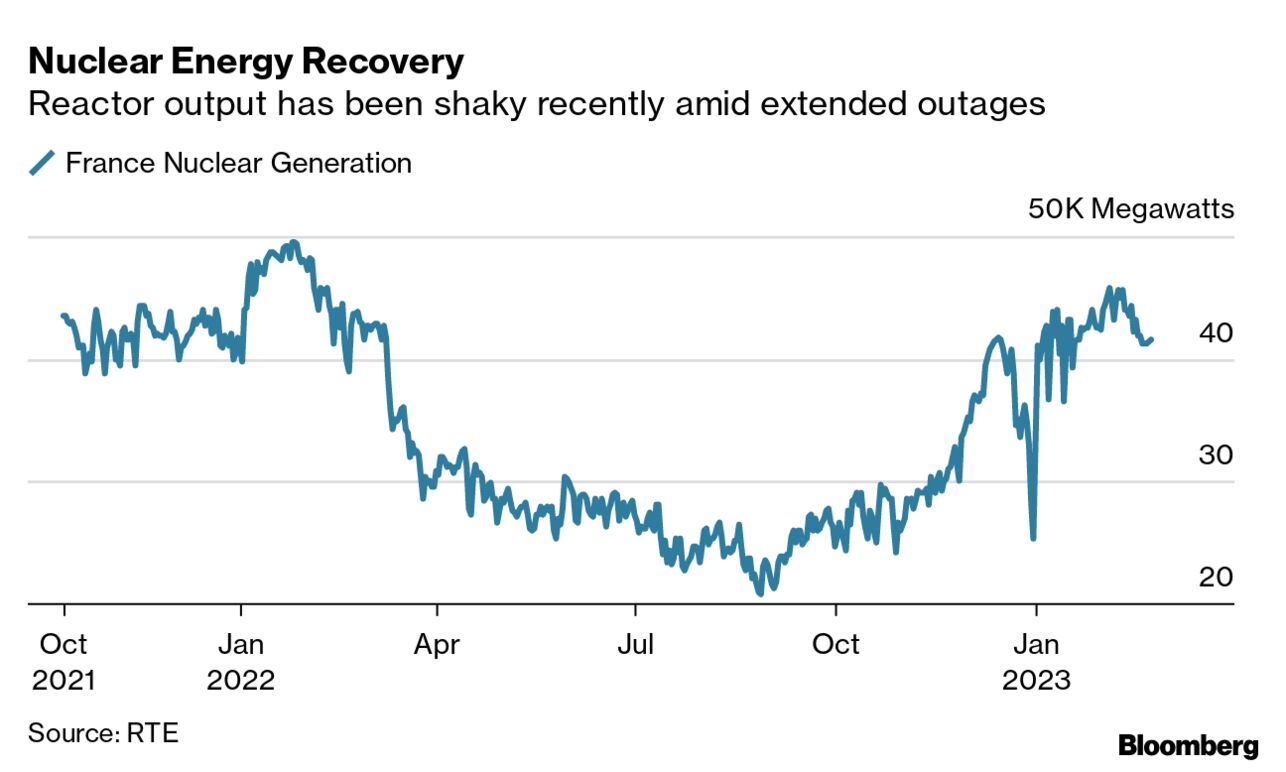
France's nuclear reactors are now operating at about 70% of capacity, data from grid operator RTE show. That's roughly the same level as a year ago. Still, its nuclear output is historically low, when compared with the average from 2018-2022.
These troubles come at a time of uncertainty about the future of nuclear energy. Germany plans to shut down its last remaining reactors in April, after prolonging their use to help the country get through the energy crisis this winter. Belgium recently shut permanently two of its seven reactors.
And new units -- at least the massive, traditional kind -- cost billions of dollars to build, often running years behind schedule. EDF has postponed the startup of a new reactor at Flamanville by several months, into 2024, due to extended work, following delays.
France Was a Net Power Importer in 2022
Net electricity trade, in terawatt-hours
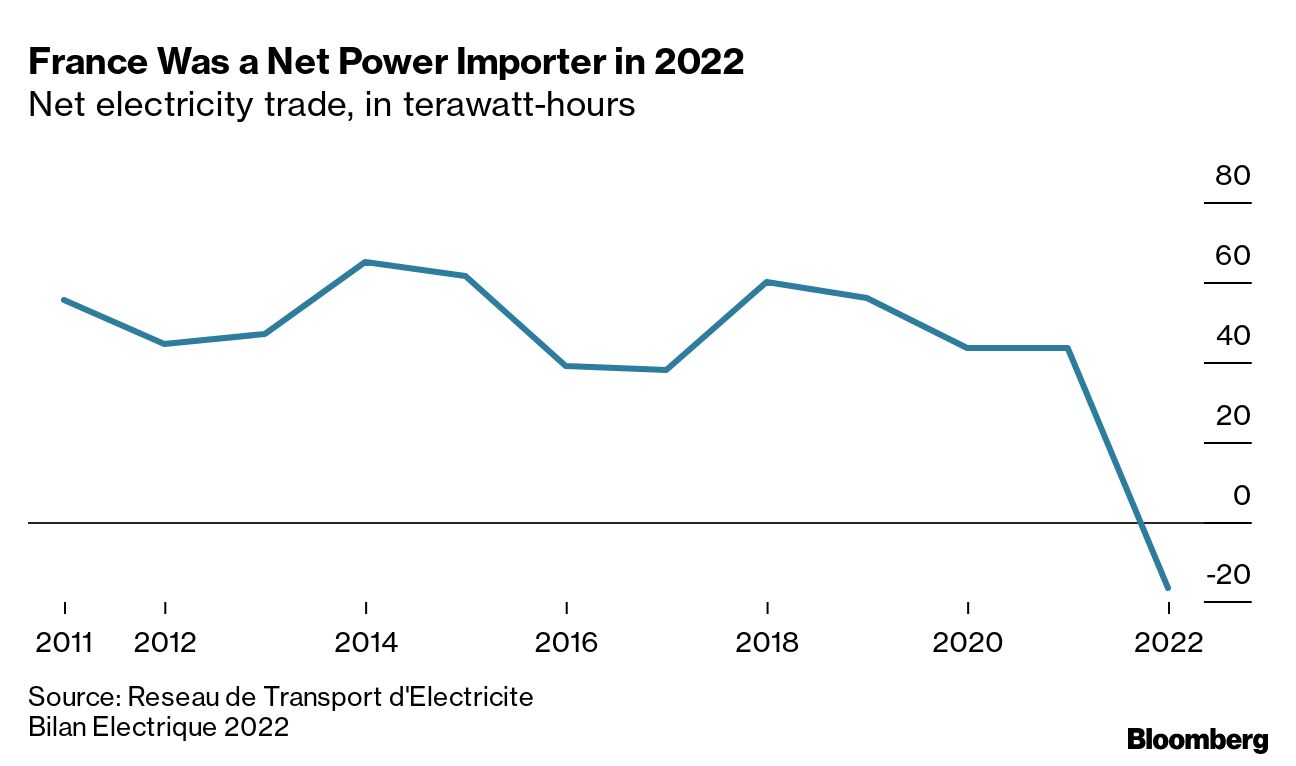
France is historically a net-exporter of electricity to its neighbors, though the spate of nuclear outages and maintenance last year turned that model on its head. If such issues with its atomic energy production continue, it will need to rely more on other sources of energy.
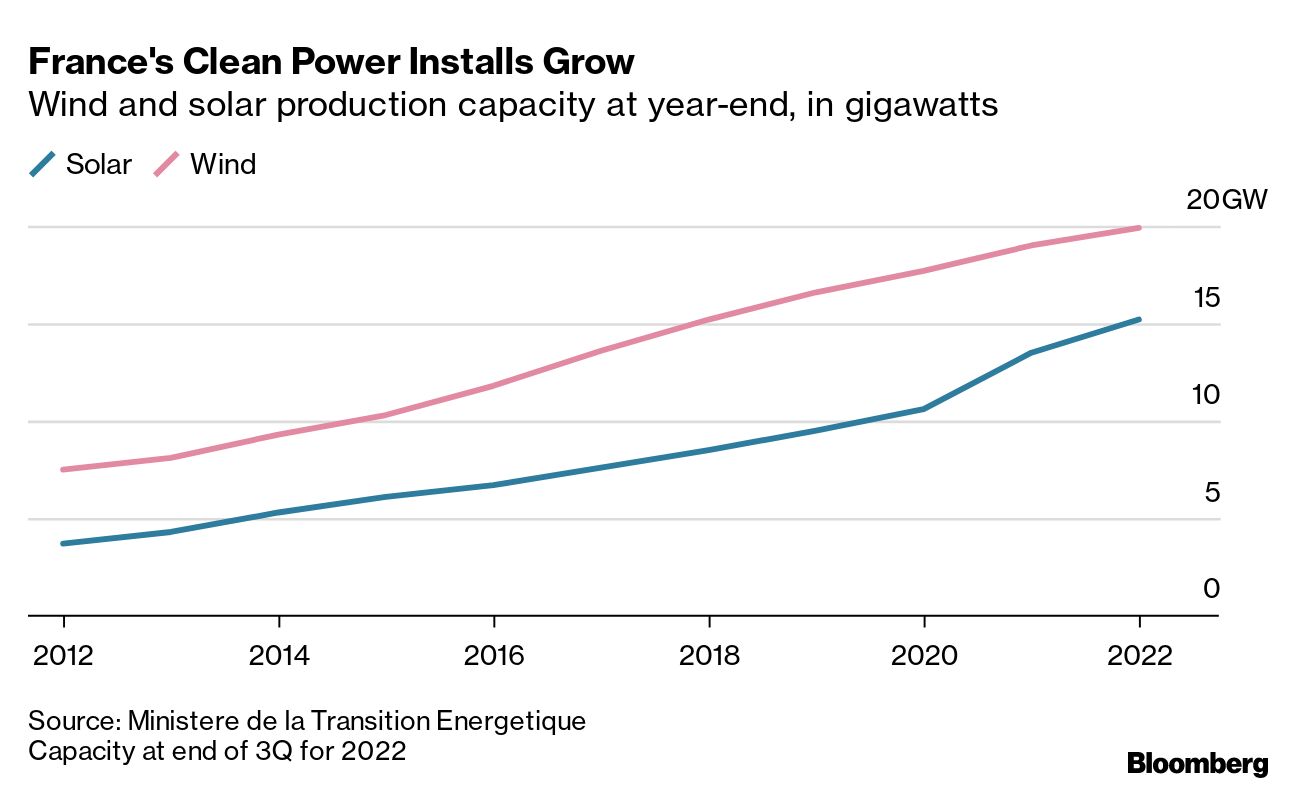
Earlier this month, France adopted a law to accelerate the development of renewables, though critics warn that it could actually slow onshore wind and solar projects due to siting issues.
The country has also experienced its worst winter drought on record, with no rainfall for several weeks. That spells more trouble for hydropower producers as they grapple with climate change. The country’s hydro output plunged last year to the lowest level since 1976 amid a dry spell that also affected other parts of Europe.
France's Clean Power Installs Grow
Wind and solar production capacity at year-end, in gigawatts
Still, there are potential bright spots. EDF officials have said they’re taking steps to make sure the reactor fleet is in better shape for next winter. The company expects its atomic output will be in the range of 300-330 terawatt-hours this year, after dropping to 279 terawatt-hours last year.
Meanwhile, France’s natural gas stockpiles continue to remain higher than usual for the time of year. In fact, BloombergNEF expects the the European perimeter region -- including the northwest of the continent -- to completely fill its inventories by mid-September. That could take the pressure off other forms of energy, including nuclear and renewables.
Previous Posts on Europe’s Energy Crunch Blog
Feb. 22: Europe’s Return to Cheaper Gas Might Be on Verge of Squeezing Out Coal
Feb. 21: Europe Kicks Its Dependence on Russian Fossil Fuels
Feb. 20: China’s Growing Appetite for LNG Is a Long-Term Concern for Europe
More energy coverage
Ukraine Plans to Avoid Gas Imports This Year, Naftogaz CEO Says
Sanctioned Russian Oil Is Being Switched at Sea Just Off Greece