Return of El Niño Threatens New Levels of Economic Destruction
The world’s most potent climate phenomenon risks sparking a chain reaction of dangerous weather, food shortages and blackouts that can disrupt supply chains and stoke inflation.
As the world struggles to recover from Covid-19 and Russia’s war in Ukraine grinds on, the arrival of the first El Niño in almost four years foreshadows new damage to an already fragile global economy.
The shift to a warming phase from the cooler La Niña can generate chaos, especially in fast-growing emerging economies. Power grids strain and blackouts become more frequent. Extreme heat creates public health emergencies, while drought adds to fire risks. Crops are lost, roads are flooded and homes are destroyed.
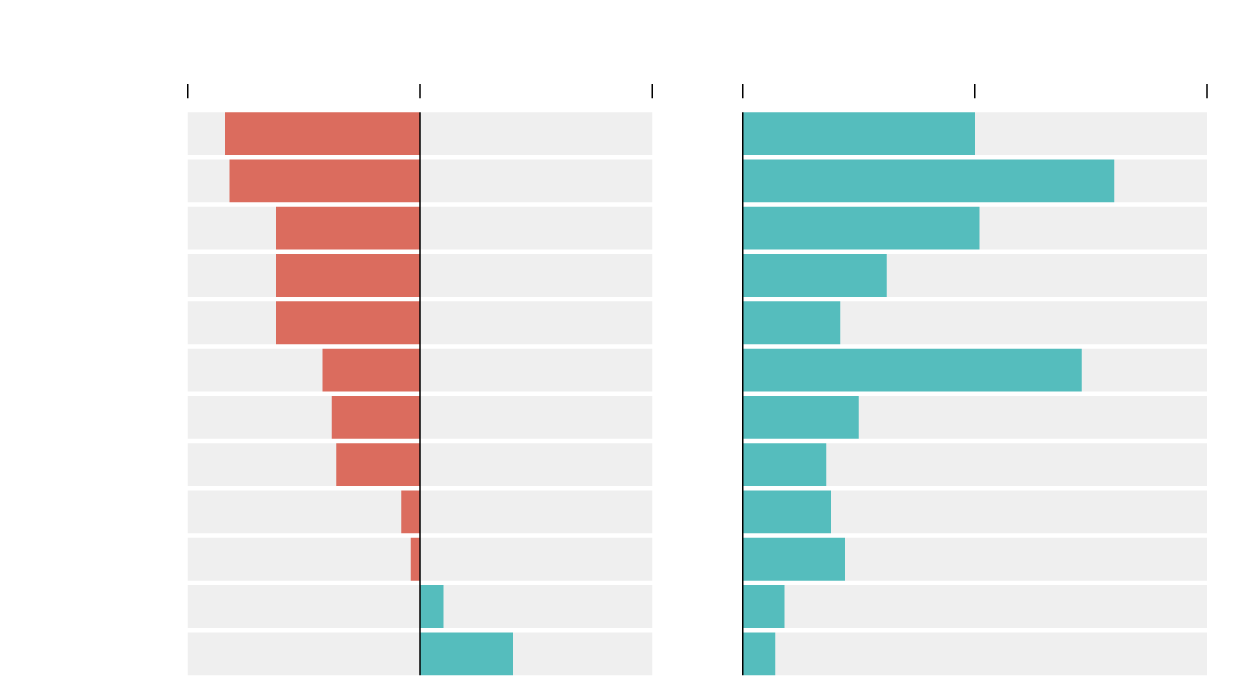
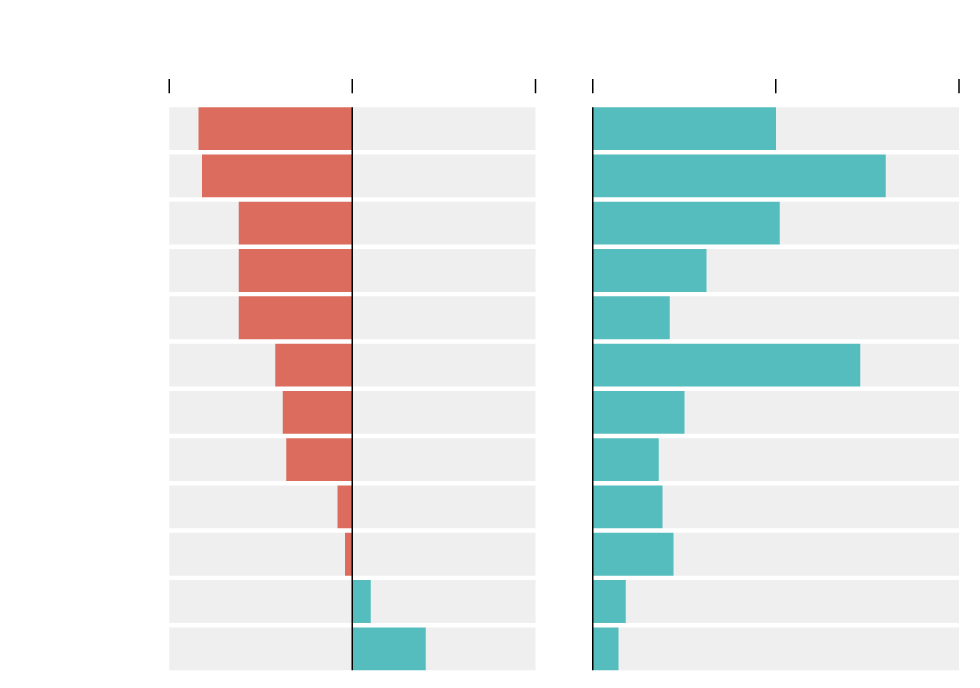
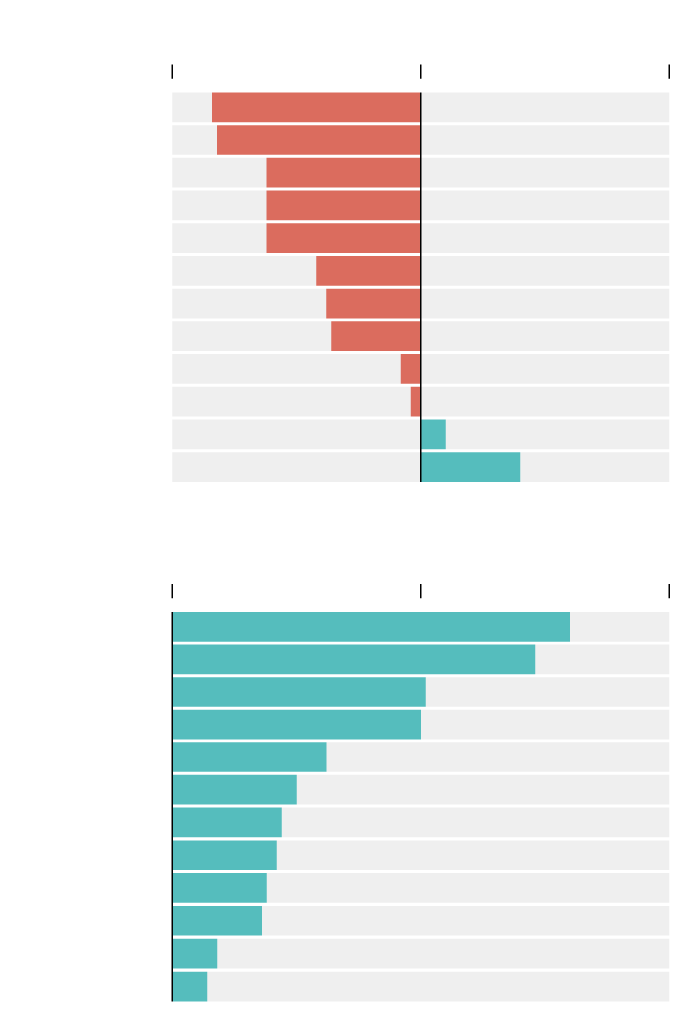
According to Bloomberg Economics modeling, previous El Niños resulted in a marked impact on global inflation, adding 3.9 percentage points to non-energy commodity prices and 3.5 points to oil. They also hit growth to gross domestic product, especially in Brazil, Australia, India and other vulnerable countries.
Combined with more extreme weather and hotter temperatures due to accelerated climate change, the stage is now set for the world’s costliest El Niño cycle since meteorologists started keeping track. It also adds to the dreaded risk of stagflation, in which inflation stays high even as the economy contracts. The Reserve Bank of India said it is carefully watching the climate phenomenon; Peru announced in March that it plans to spend more than $1 billion to counter climate and weather effects this year.
“With the world grappling with high inflation and recession risk, the arrival of the El Niño comes at exactly the wrong time,” said Bhargavi Sakthivel, an economist for Bloomberg Economics based in London. While policy interventions tend to manipulate demand, El Niños typically affect supply. “Central banks are more limited in what they can do.”
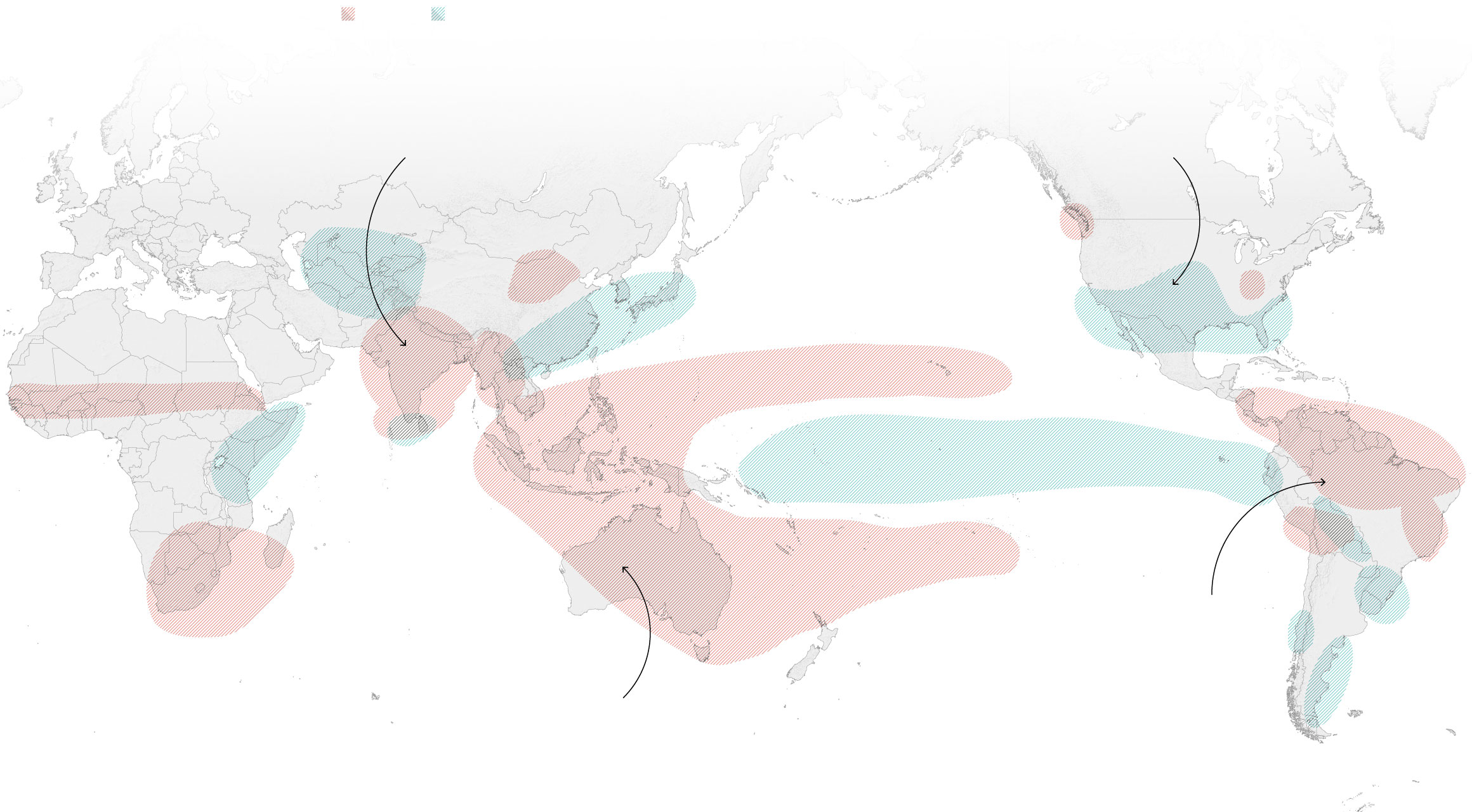
Expected Impacts of El Niño on Global Weather
Drier
Wetter
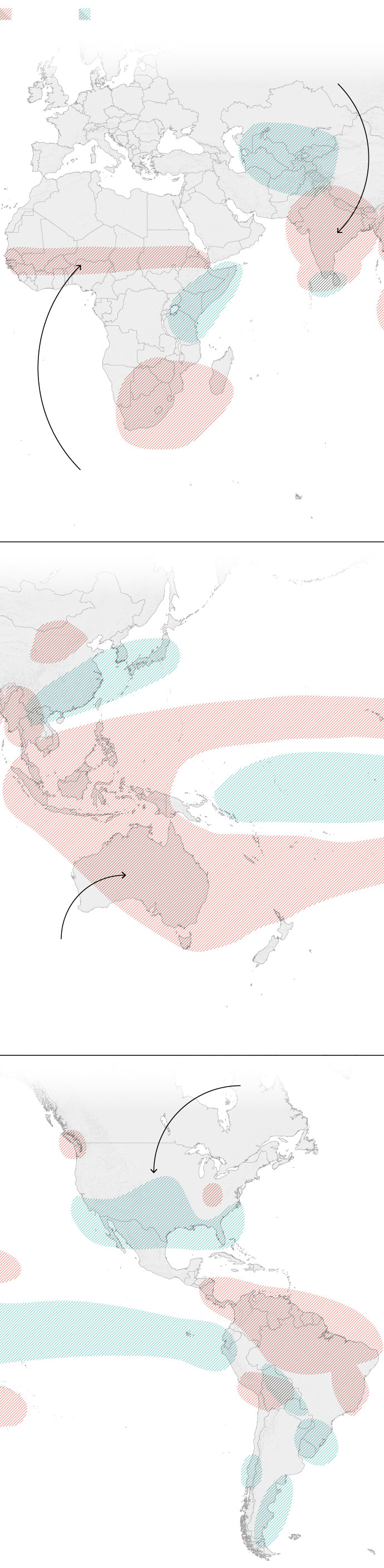
Reduced monsoon could impact rice, cotton, corn and soybeans in India
The US will see a resurgence in deadly
winter storms, although there’s generally
a drop in the number of hurricanes
North Pacific Ocean
Japan
North Atlantic
Ocean
China
Mexico
Philippines
Sri
Lanka
Colombia
Kenya
Wet
Parts of West and
South Africa could be
hit by drought,
affecting cocoa and
corn production
Peru
Brazil
Dry
Indian Ocean
South
Africa
Drought could hit Brazil
and Colombia, crimping coffee
output, while Peru may
see widespread flooding and
a reduced anchovy catch
Argentina
New Zealand
Australia could see severe drought
and forest fires, which would damage production of wheat and other crops
South Pacific Ocean
Drier
Wetter
Reduced monsoon could impact rice, cotton, corn and soybeans in India
The US will see a resurgence in deadly
winter storms, although there’s generally
a drop in the number of hurricanes
North Pacific Ocean
Japan
North
Atlantic
Ocean
China
Mexico
Philippines
Sri
Lanka
Colombia
Wet
Kenya
Parts of West
and South Africa
could be hit by
drought, affecting
cocoa and corn
production
Peru
Brazil
Indian Ocean
Dry
Drought could hit Brazil and Colombia, crimping coffee output, while
Peru may see widespread flooding and a reduced anchovy catch
New Zealand
Argentina
Australia could see severe drought
and forest fires, which would damage production of wheat and other crops
Drier
Wetter
Reduced monsoon could impact rice, cotton, corn and soybeans in India
The US will see a resurgence in deadly winter storms,
although there’s generally a drop in the number of hurricanes
North Pacific
Ocean
North
Atlantic
Ocean
Japan
China
Mexico
Philippines
Sri
Lanka
Colombia
Wet
Kenya
Peru
Brazil
Dry
South
Africa
South Pacific
Ocean
New Zealand
Argentina
Indian Ocean
Drought could hit Brazil and Colombia,
crimping coffee output, while Peru may
see widespread flooding and a reduced
anchovy catch
Parts of West and South
Africa could be hit by
drought, affecting cocoa
and corn production
Australia could see severe
drought and forest fires,
which would damage production
of wheat and other crops
Drier
Wetter
Reduced monsoon could impact rice,
cotton, corn and soybeans in India
The US will see a resurgence in deadly
winter storms, although there’s generally
a drop in the number of hurricanes
North Pacific
Ocean
North
Atlantic
Ocean
China
Japan
Mexico
Philippines
Colombia
Wet
Kenya
Brazil
Peru
Dry
South
Africa
Indian
Ocean
South Pacific
Ocean
Parts of West and
South Africa could
be hit by drought,
affecting cocoa and
corn production
Australia could see
severe drought and forest
fires, which would damage
production of wheat and
other crops
Drought could hit Brazil
and Colombia, crimping coffee
output, while Peru may see
widespread flooding and a
reduced anchovy catch
Drier
Wetter
Reduced monsoon could impact rice, cotton, corn and soybeans in India
Wet
Dry
Sri
Lanka
Kenya
Indian
Ocean
South
Africa
Parts of West and South Africa
could be hit by drought, affecting
cocoa and corn production
North Pacific
Ocean
Japan
China
Philippines
Wet
Dry
Australia could
see severe drought
and forest fires, which
would damage
production of wheat
and other crops
New Zealand
South Pacific
Ocean
The US will see a
resurgence in deadly
winter storms,
although there’s
generally a drop in
the number
of hurricanes
Wet
Atlantic
Ocean
Mexico
Colombia
Dry
Peru
Drought could hit
Brazil and Colombia,
crimping coffee
output, while Peru may
see widespread
flooding and a reduced
anchovy catch
Brazil
Argentina
South Pacific
Ocean
In Chile, for example, El Niño could trigger heavy rains, which could in turn restrict access to the mines that supply almost 30% of the world’s copper. Lower production and delayed shipments will have an affect on the price of the metal used in goods like computer chips, cars and home appliances.
Or consider China, where sweltering temperatures are already killing livestock and stretching power grids. Drought last summer prompted Communist Party officials to shut off power to many factories in China for nearly two weeks, disrupting supplies for manufacturing giants including Apple Inc. and Tesla Inc. Authorities anticipate more power shortages this summer.
Even the price of a cup of coffee could go up if Brazil, Vietnam and other top suppliers get hit.
“When you have an El Niño occurring on top of the long-term warming trend, it’s like a double whammy,” said Katharine Hayhoe, chief scientist at The Nature Conservancy.
The effects last for years. Economists at the Dallas Federal Reserve warned in 2019 that damage from El Niño cycles was “likely to have a persistent negative impact on output growth” and can even “possibly permanently alter income trajectories.”
Climate researchers also found compounding economic effects. Dartmouth scientists estimated that the 1997-1998 El Niño led to $5.7 trillion in lost gross domestic product the following five years. Their modeling estimates that by the end of this century, El Niños will have blocked some $84 trillion in GDP.
Bloomberg Economics Modeling
Inflation
GDP
Percentage point
Percentage point
-0.5
0
0.5
0
0.5
1.0
India
Argentina
Philippines
Australia
Peru
Brazil
Thailand
Mexico
US
Euro area
China
Saudi Arabia
Inflation
GDP
Percentage point
Percentage point
-0.5
0
0.5
0
0.5
1.0
India
Argentina
Philippines
Australia
Peru
Brazil
Thailand
Mexico
US
Euro area
China
Saudi Arabia
Percentage point
GDP
-0.5
0
0.5
India
Argentina
Philippines
Australia
Peru
Brazil
Thailand
Mexico
US
Euro area
China
Saudi Arabia
Percentage point
Inflation
0
0.5
1.0
Argentina
Brazil
Philippines
India
Australia
Thailand
Euro area
Peru
US
Mexico
China
Saudi Arabia
The risks are most acute in the tropics and the Southern Hemisphere. El Niños can trim almost half a percentage point off annual GDP growth in India and Argentina, according to Bloomberg Economics modeling. Peru, Australia and the Philippines can see reductions of about 0.3 percentage point.
Steep price increases worsen the impact. Even back in 2000, the International Monetary Fund warned that strong El Niños can add 4 percentage points to commodity-price inflation — and that’s before taking into account the current impact of climate change.
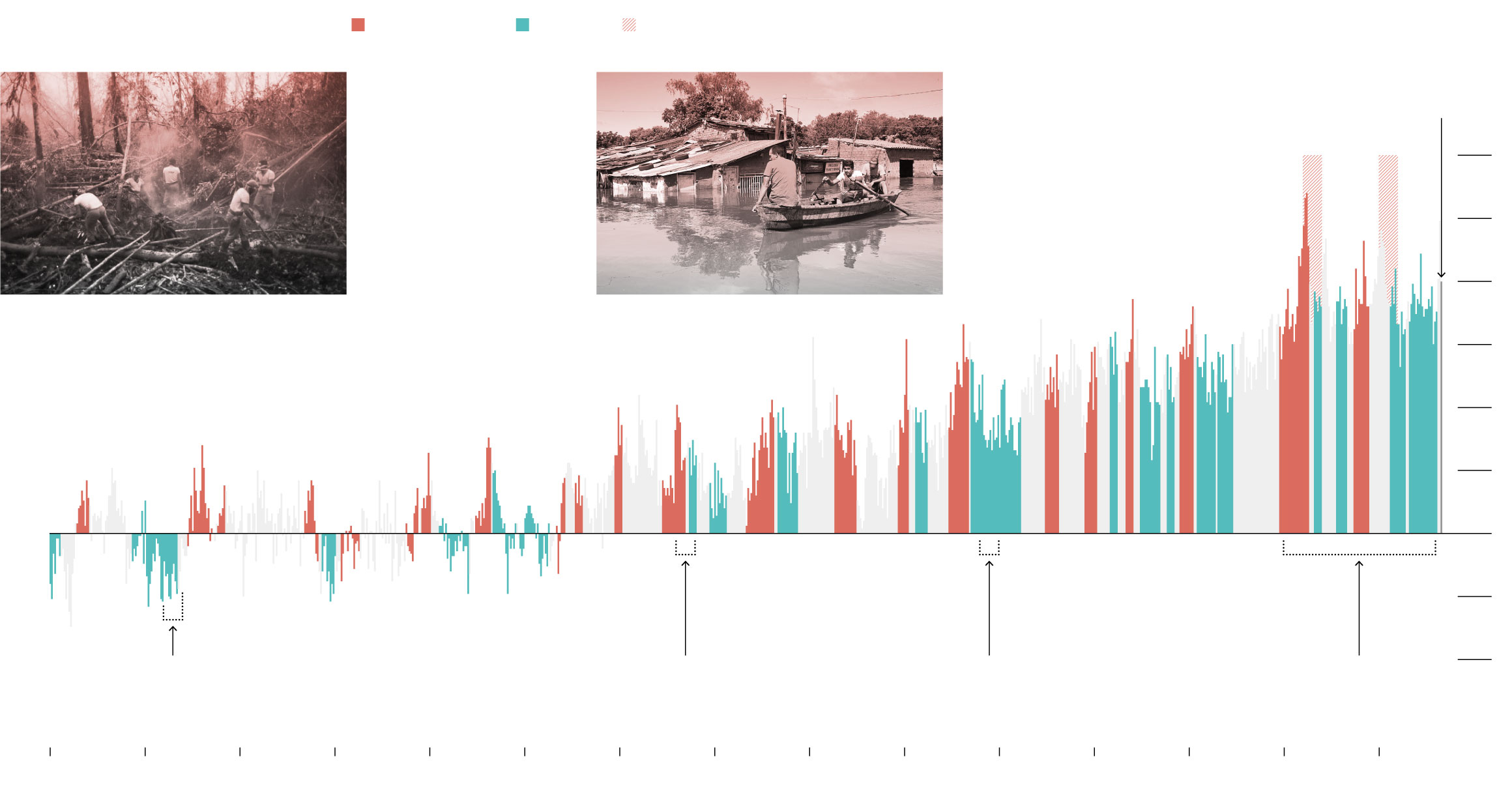
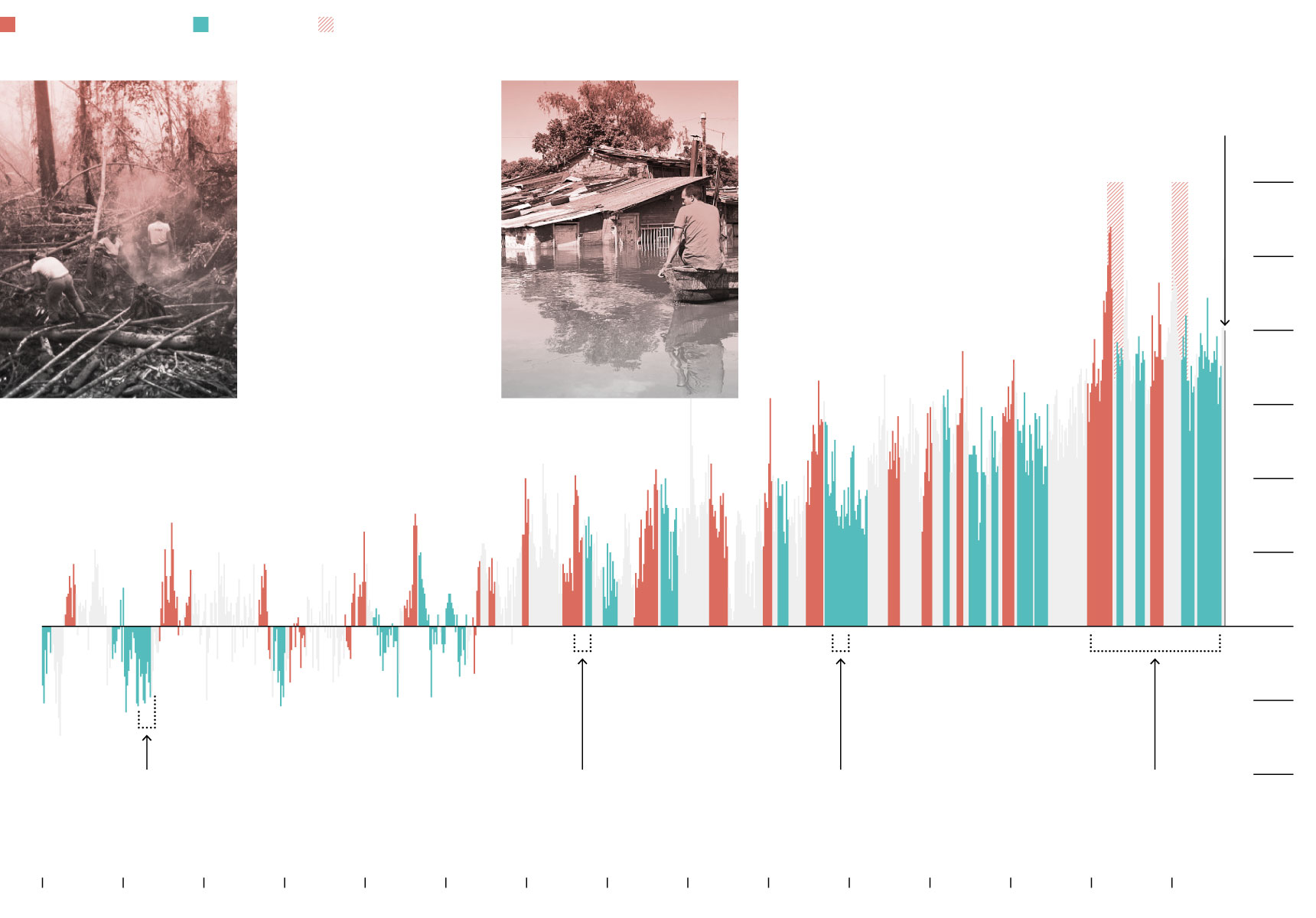
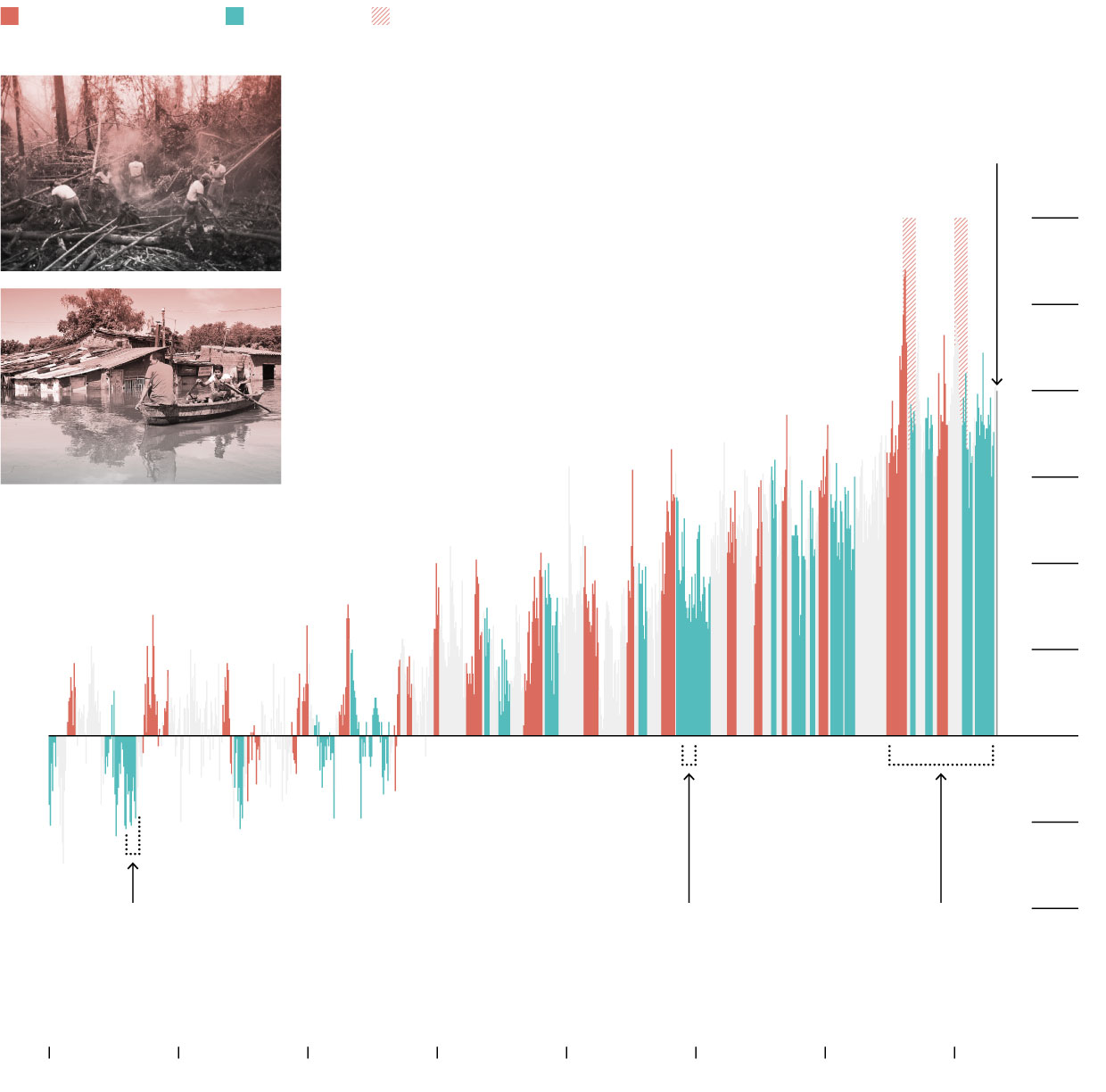
Overall rising temperatures amplify the effects of climate phenomena. The last three “cool” La Niña years — 2020 to 2023 — were hotter than every El Niño year before 2015. The World Meteorological Organization calculates there is a 98% chance the combination of the accumulation of greenhouse gases and the return of El Niño will make the next five-year period the warmest yet, pushing global temperatures into uncharted territory.
“El Niño will only worsen the impacts of climate change that we are already experiencing — hotter heatwaves, more severe drought and more extreme wildfire,’’ said Friederike Otto, a senior lecturer at the Grantham Institute for Climate Change and the Environment.
The El Niño-Southern Oscillation Explained
The impact of the El Niño-Southern Oscillation — as the cycle including both El Niño and La Niña is formally known — is so profound because it involves a massive shift in the vast Pacific basin which covers one-third of the planet.
Getting Ready
This year has already shattered weather records in Asia. Now the official start of El Niño is underway, according to the US Climate Prediction Center, and the conditions are projected to intensify in the months ahead.
What scares many scientists is that in recent years — even without El Niño — the world has seen a growing number of weather events that at times resemble scenes in a Hollywood disaster movie.
Greg Mullins, a firefighter in Australia for more than 50 years, recalled the fear he felt facing a 60-foot wall of flames in a 2020 blaze in Batemans Bay on the east coast.
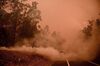
“We were just dodging falling trees, the sparks and embers, it was just incredible,” he said. “I’ve fought fires in America, I’ve studied bush firefighting in France, Spain, Canada — I know my fires. And there’s never been a fire like that.”
El Niño winters often mean less rain and snow in the northern US and Canada, adding to the drought worries that plague the region. It also dries out timber, potentially making next year even worse for fires like the Canadian blaze that turned New York skies orange last week.
Read More: Wildfire’s Toxic Legacy Leaves Children Gasping for Air Year Later
In Southeast Asia, drier conditions also worsen the annual smoke plumes that gather over Singapore when farmers in neighboring countries burn land to grow oil palm, pulpwood and rubber trees.
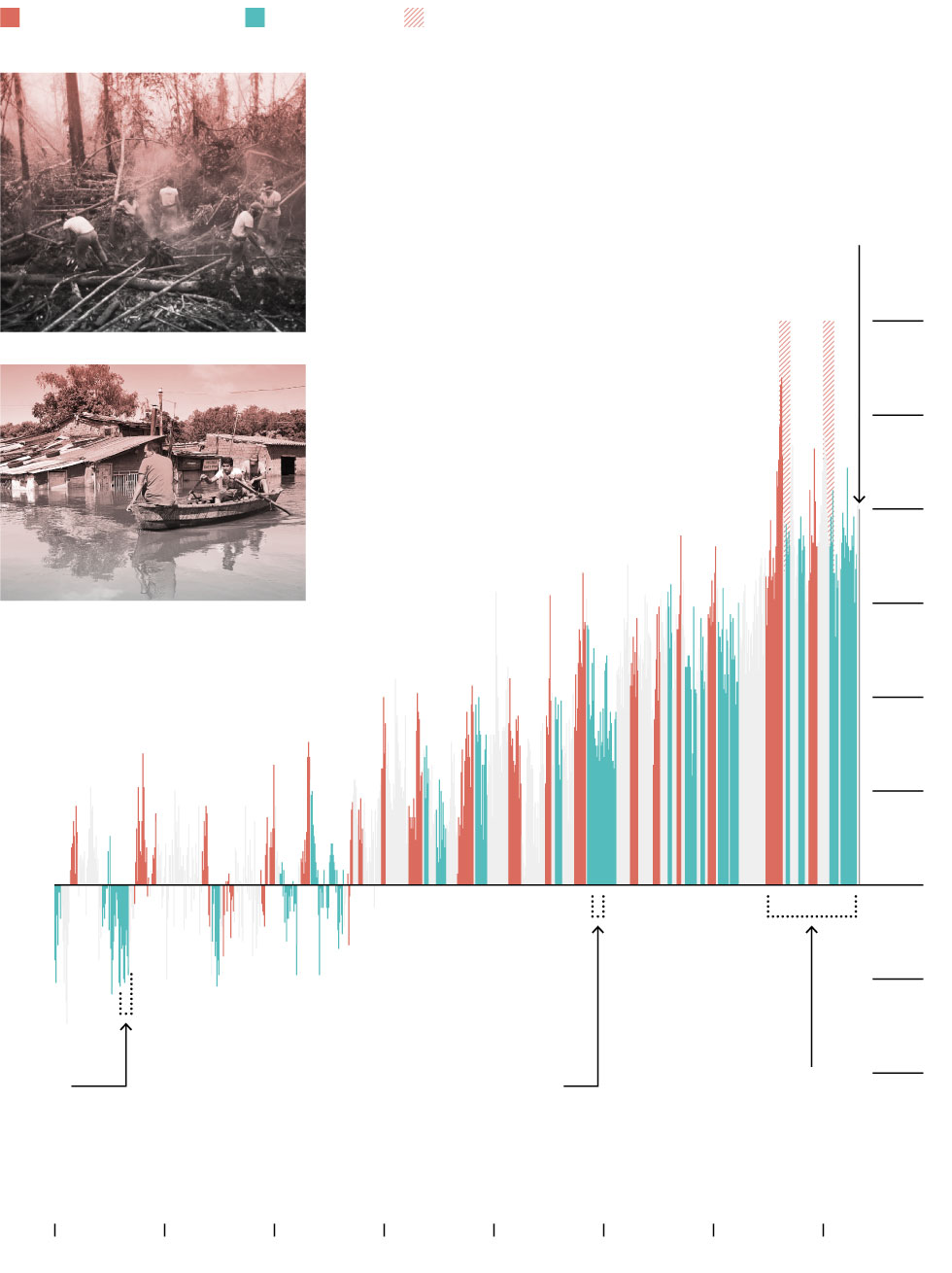
Extreme Weather and the El Niño-Southern Oscillation
El Niño events
La Niña
Hottest years on record
April 2023
+1°C
Increase in global temperature
vs. 20th century average
1997
At least 40,000 fires in Indonesia destroyed an area the size of Costa Rica, with haze drifting
over neighboring countries like Singapore and Malaysia. The smoke impacted people’s health and caused more than 16,000 infant and
fetal deaths.
2015-2016
River banks burst after heavy rain, causing the worst flooding in 50 years in South America.
More than 150,000 people forced to evacuate in Paraguay, Argentina, Uruguay and Brazil.
1.5°C
1.25
1
0.75
0.5
0.25
0
-0.25
-0.5
1956
The Murray River flood was one of the largest to hit South Australia, also swamping towns in New South Wales and Victoria.
1983
Drought in Ethiopia and Sudan kills more than 400,000 people.
1999
Flash floods in Venezuela kill around 30,000 people.
The last eight years have
been the warmest
on record.
1950
1955
1960
1965
1970
1975
1980
1985
1990
1995
2000
2005
2010
2015
2020
El Niño events
La Niña
Hottest years on record
April 2023
+1°C
Increase in global temperature
vs. 20th century average
1997
At least 40,000 fires in Indonesia destroyed an area
the size of Costa Rica, with haze drifting over neighboring countries like Singapore
and Malaysia.
The smoke impacted people’s health and caused more than 16,000 infant and fetal deaths.
2015-2016
River banks burst after heavy rain, causing the worst flooding in 50 years in South America. More than 150,000 people forced to evacuate in Paraguay, Argentina, Uruguay
and Brazil.
1.5°C
1.25
1
0.75
0.5
0.25
0
-0.25
-0.5
1956
The Murray River flood was one of the largest to hit South Australia, also swamping towns in New South Wales and Victoria.
1999
Flash floods in Venezuela kill around 30,000 people.
The last eight years have
been the warmest
on record.
1983
Drought in Ethiopia and
Sudan kills more than
400,000 people.
1950
1955
1960
1965
1970
1975
1980
1985
1990
1995
2000
2005
2010
2015
2020
El Niño events
La Niña
Hottest years on record
April 2023
+1°C
Increase in global temperature
vs. 20th century average
1997
At least 40,000 fires in Indonesia destroyed an area the size of Costa Rica, with haze drifting over neighboring countries like Singapore and Malaysia. The smoke impacted people’s health and caused more than 16,000 infant and fetal deaths.
1.5°C
1.25
2015-2016
River banks burst after heavy rain,
causing the worst flooding in 50 years
in South America. More than 150,000
people forced to evacuate in Paraguay,
Argentina, Uruguay and Brazil.
1
0.75
0.5
0.25
0
-0.25
-0.5
1956
The Murray River flood was one of the largest to hit South Australia, also swamping towns in New South Wales and Victoria.
1999
Flash floods in Venezuela kill around 30,000 people.
The last
eight years
have been
the warmest
on record.
1950
1960
1970
1980
1990
2000
2010
2020
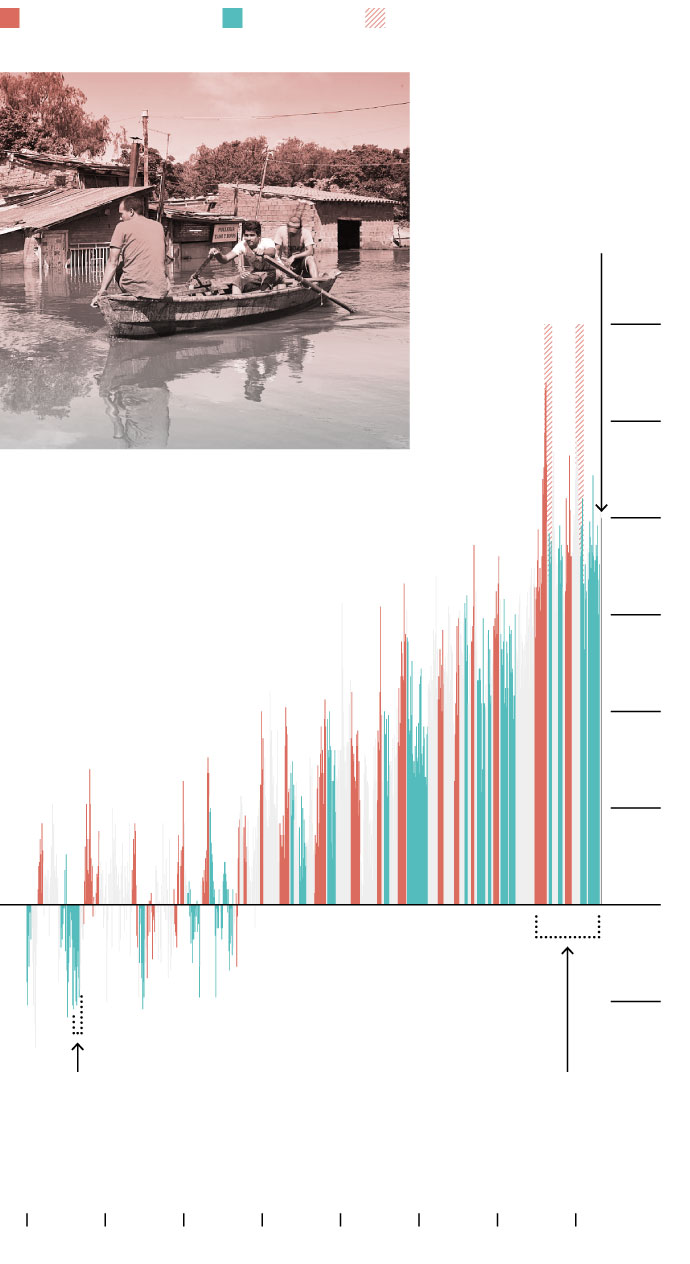
El Niño events
La Niña
Hottest years on record
1997
At least 40,000 fires in Indonesia destroyed an area the size of Costa Rica, with haze drifting over neighboring countries like Singapore and Malaysia. The smoke impacted people’s health and caused more than 16,000 infant and fetal deaths.
April 2023
+1°C
Increase in global
temperature vs. 20th
century average
1.5°C
2015-2016
River banks burst after
heavy rain, causing the worst flooding in 50 years in South America. More than 150,000 people forced to evacuate
in Paraguay, Argentina, Uruguay and Brazil.
1.25
1
0.75
0.5
0.25
0
-0.25
-0.5
1999
Flash floods in Venezuela kill around 30,000 people.
1956
The Murray River flood was one of
the largest to hit South Australia,
also swamping towns in New South
Wales and Victoria.
The last
eight years
have been
the warmest
on record.
1950
1960
1970
1980
1990
2000
2010
2020
El Niño events
La Niña
Hottest years on record
April 2023
+1°C
Increase in global
temperature vs. 20th
century average
1.5°C
1.25
2015-2016 | River banks burst after heavy rain, causing the worst flooding in 50 years in South America. More than 150,000 people forced to evacuate in Paraguay, Argentina, Uruguay and Brazil.
1
0.75
0.5
0.25
0
-0.25
1956 | The Murray River flood
was one of the largest to hit South Australia, also swamping towns in New South Wales and Victoria.
The last eight
years have been
the warmest on
record.
1950
1960
1970
1980
1990
2000
2010
2020
As temperatures rise, power grids across the world strain to keep up. That stokes higher demand for fuel, including coal and gas. “Increasing volatility in weather will lead to higher risks and frequency of energy security events,” said Saul Kavonic, head of integrated energy and resources research at Credit Suisse Group AG, referring to blackouts triggered by fuel shortages.
While El Niño typically means fewer Atlantic hurricanes, and therefore less disruption to oil and gas operations in the Gulf of Mexico, most of the US is still facing elevated blackout risks this summer in the event of widespread extreme heat, according to a recent warning from the North American Electric Reliability Corp., the regulatory body overseeing power grid stability.
The rapid switch to renewable energy in many countries has added to the risk of blackouts. Solar farms go dark just as electricity demand peaks in hot summer evenings, and drought constrains the use of hydroelectric power.
Outages are disruptive regardless of the weather; during intense heatwaves, blackouts can have life-or-death consequences. Heat stroke can lead to severe neurological damage and even be fatal. Very high temperatures also increase the risk of heart attacks, strokes and injuries at work.
Food Issues
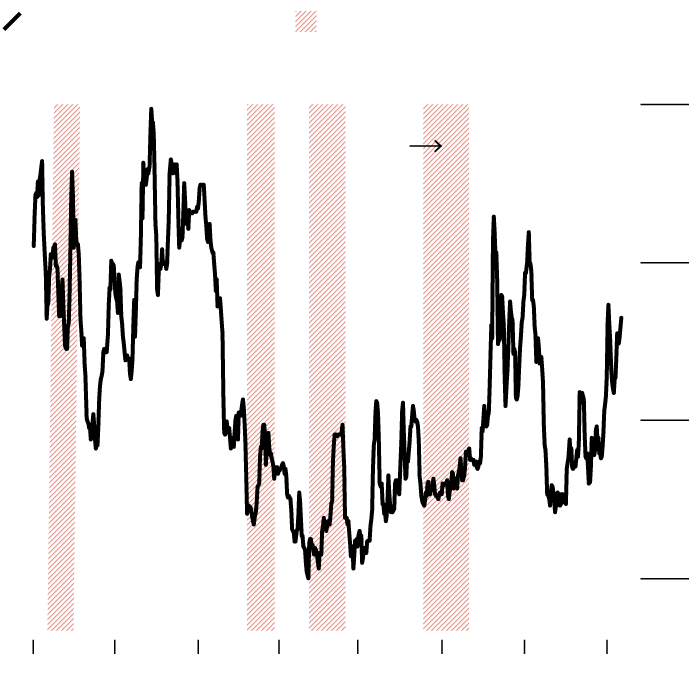
While some crops benefit from El Niño — higher rainfall in California benefits avocados and almonds — many staples including palm oil, sugar, wheat, cocoa and rice are produced in areas likely to face more challenging growing conditions.
Charanjit Singh Gill, 67, a rice farmer in Punjab, is starting to think about what he’ll do if the monsoon doesn’t generate adequate rainfall for his 35 acres.
“There is no way out but to spend more money running diesel-fired generators to pump groundwater,” he said. During the 2015-16 El Niño, his production costs surged by 35%, he said.
Rice Prices and El Niño
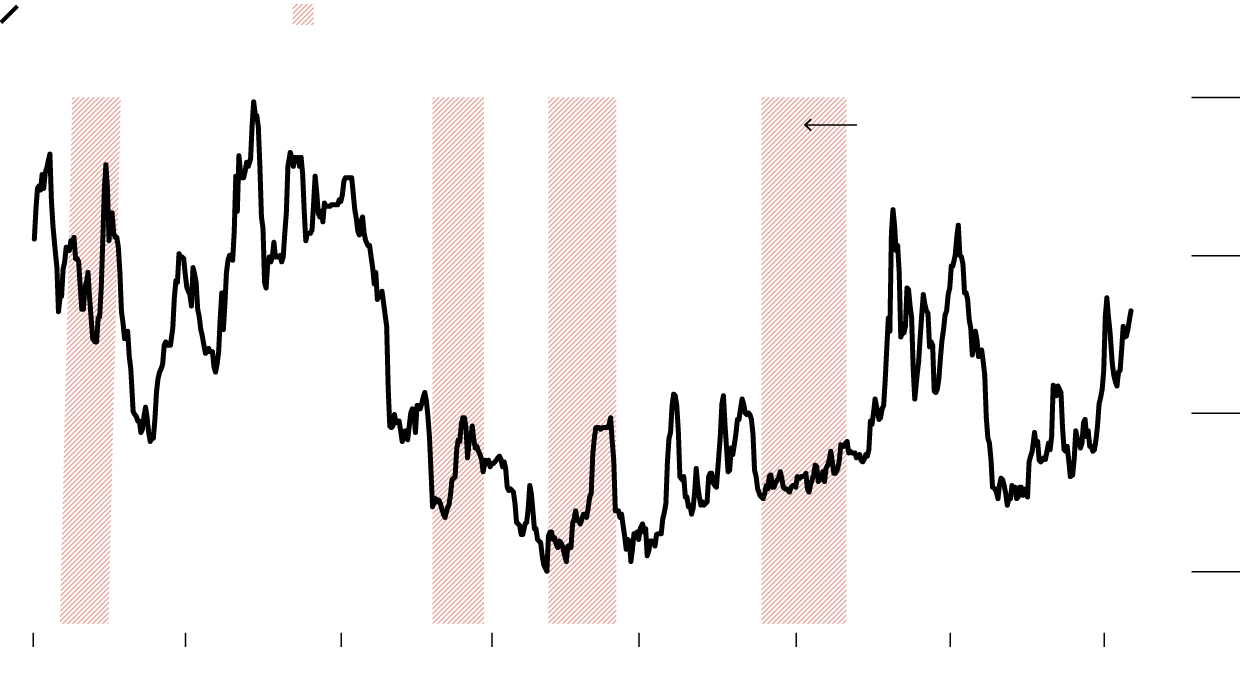
Thailand white rice
El Niño events
Per ton
$650
Weak El Niño in 2018-19
and large Indian crop kept
price increases subdued
550
450
350
2009
2011
2013
2015
2017
2019
2021
2023
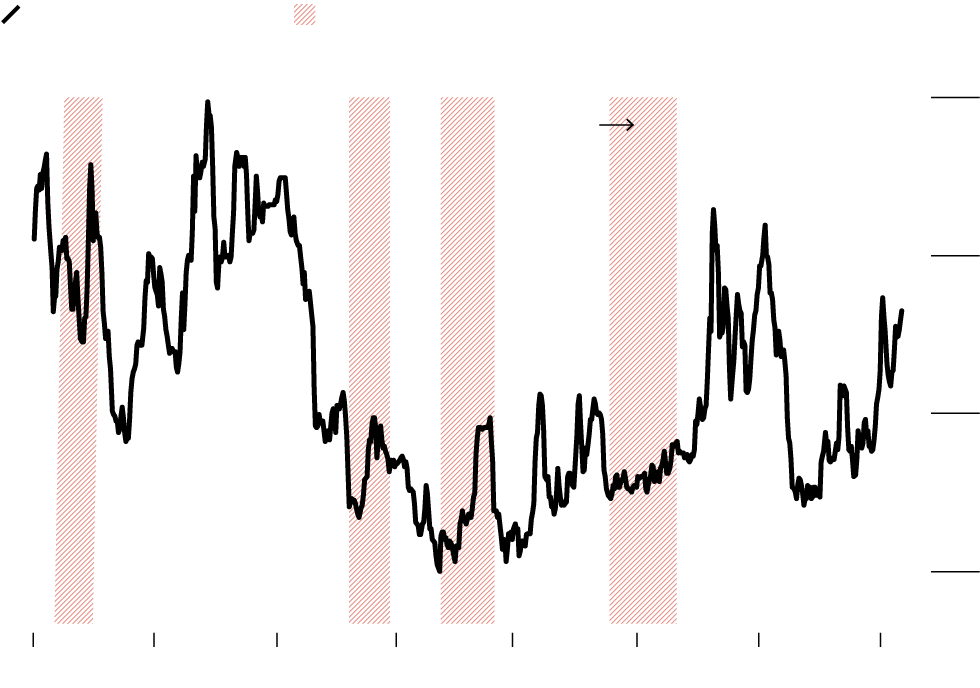
Thailand white rice
El Niño events
Per ton
$650
Weak El Niño
in 2018-19
and large Indian crop kept
price increases subdued
550
450
350
2009
2011
2013
2015
2017
2019
2021
2023
Thailand white rice
El Niño events
Per ton
$650
Weak El Niño in 2018-19
and large Indian crop kept price increases subdued
550
450
350
2009
2011
2013
2015
2017
2019
2021
2023
The world’s poor will face the most dire consequences. Acute food insecurity is already at a record high of 222 million people due to the combined effects of conflict, economic shocks and weather extremes.
The 2015-16 El Niño led to higher malnutrition rates and forced displacement and exacerbated outbreaks of cholera and typhoid, according to the United Nations. Nearly two dozen nations issued humanitarian appeals of more than $5 billion.
Growing Stresses
No two El Niños are alike, and the effects of this cycle will hinge on its duration, intensity, and timing. These climate phenomena are “never black and white,” said Walter Baethgen, a senior research scientist at Columbia University’s International Research Institute. “In the middle of an El Niño year, where you expect a drought, you can have a big storm and have a flood.”
Still, even if the world dodges a major El Niño this year, climate-induced stresses will continue grow with the increasing amount of greenhouse gases blanketing the planet.
To understand the oscillation between El Niño and La Niña in the overall context of climate change, think of a person on a rising escalator, either standing on tiptoe or squatting. They may look taller or shorter, but they’re still heading in the same direction.
“The escalator is only going up,” said Mike McPhaden, a senior scientist at the US National Oceanic and Atmospheric Administration. “There’s a huge amount of heat stored below the surface that’s ready to erupt.”