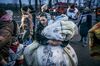
More Than a Million People Have Fled Ukraine in Just One Week
More than one million people have fled Ukraine into neighboring countries in the week following Russia’s invasion, according to data from the United Nations High Commissioner for Refugees.
The number could climb to four million, with six million more projected to be displaced within the country, the UN said Thursday. In total, almost a quarter of Ukraine’s population may be rendered homeless by the war, making it the biggest single-country disruption after the Syrian refugee crisis of the past decade.
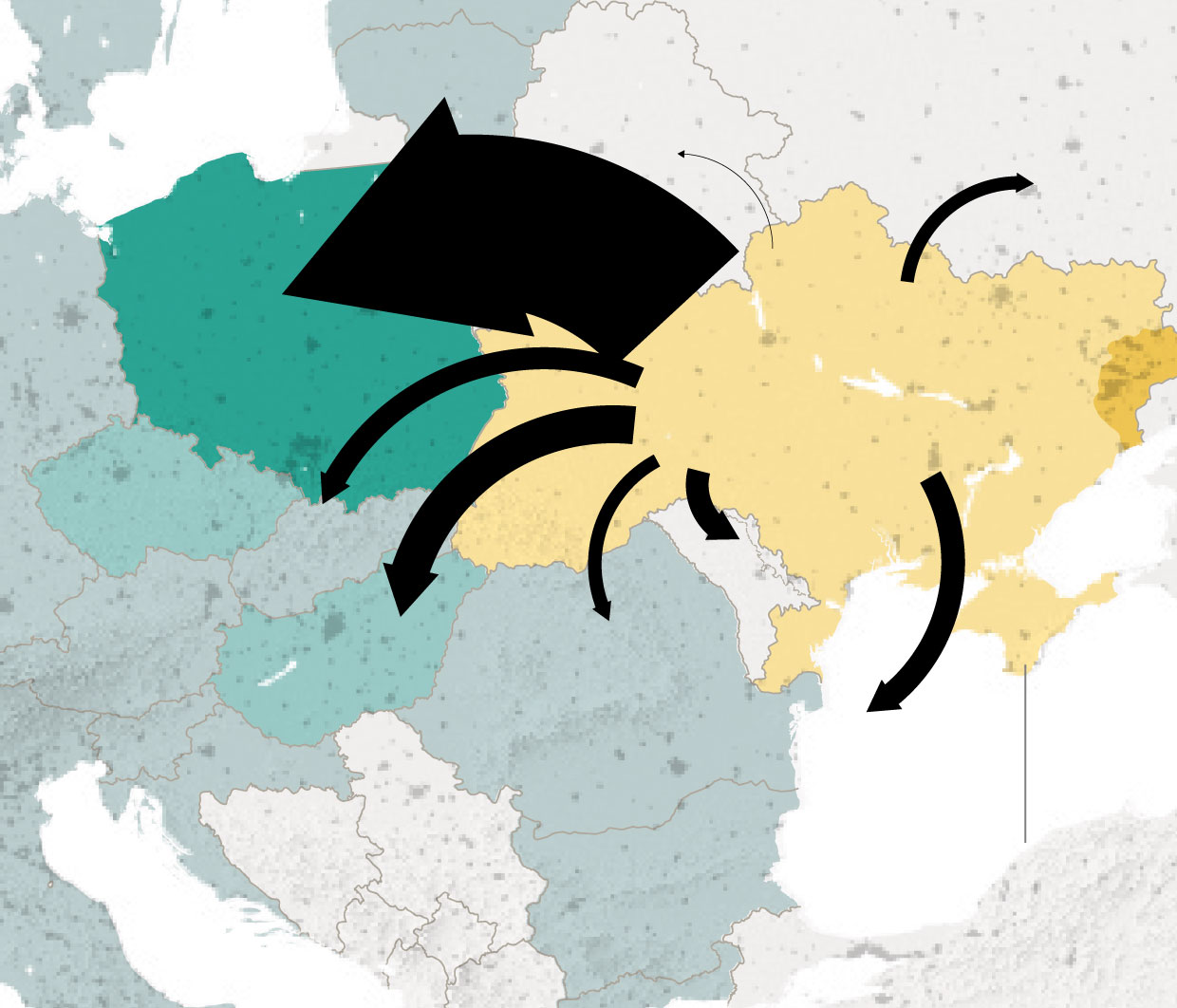
Where Ukraine’s Refugees Are Fleeing
- Number of Ukrainian residents in EU countries
- Less than 20K
- 21–80K
- 81-490K
BELARUS
RUSSIA
384
53K
650K
POLAND
UKRAINE
Over 1 million people have been displaced
SLOVAKIA
90K
MOLDOVA
103K
HUNGARY
145K
ROMANIA
57K
OTHER EU COUNTRIES
111K
The Crimean Peninsula is Ukrainian territory annexed by Russia in 2014
BELARUS
RUSSIA
384
53K
650K
UKRAINE
POLAND
Over 1 million people have been displaced
SLOVAKIA
MOLDOVA
90K
103K
HUNGARY
145K
ROMANIA
57K
OTHER EU COUNTRIES
111K
The Crimean Peninsula is Ukrainian territory annexed by Russia in 2014
BELARUS
384
RUSSIA
53K
650K
UKRAINE
POLAND
Over 1 million people have been displaced
SLOVAKIA
MOLDOVA
90K
103K
HUNGARY
ROMANIA
145K
57K
OTHER EU COUNTRIES
111K
The Crimean Peninsula is Ukrainian territory annexed by Russia in 2014
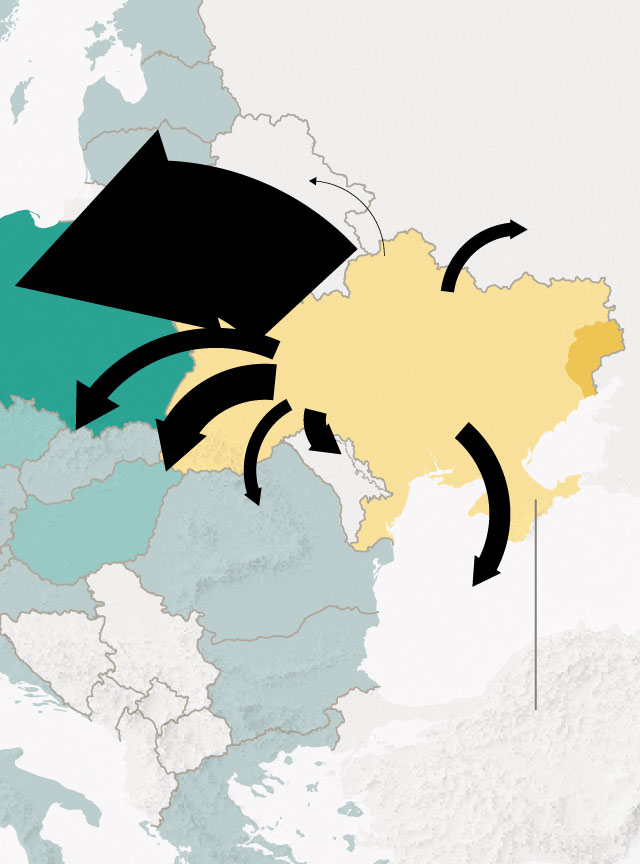
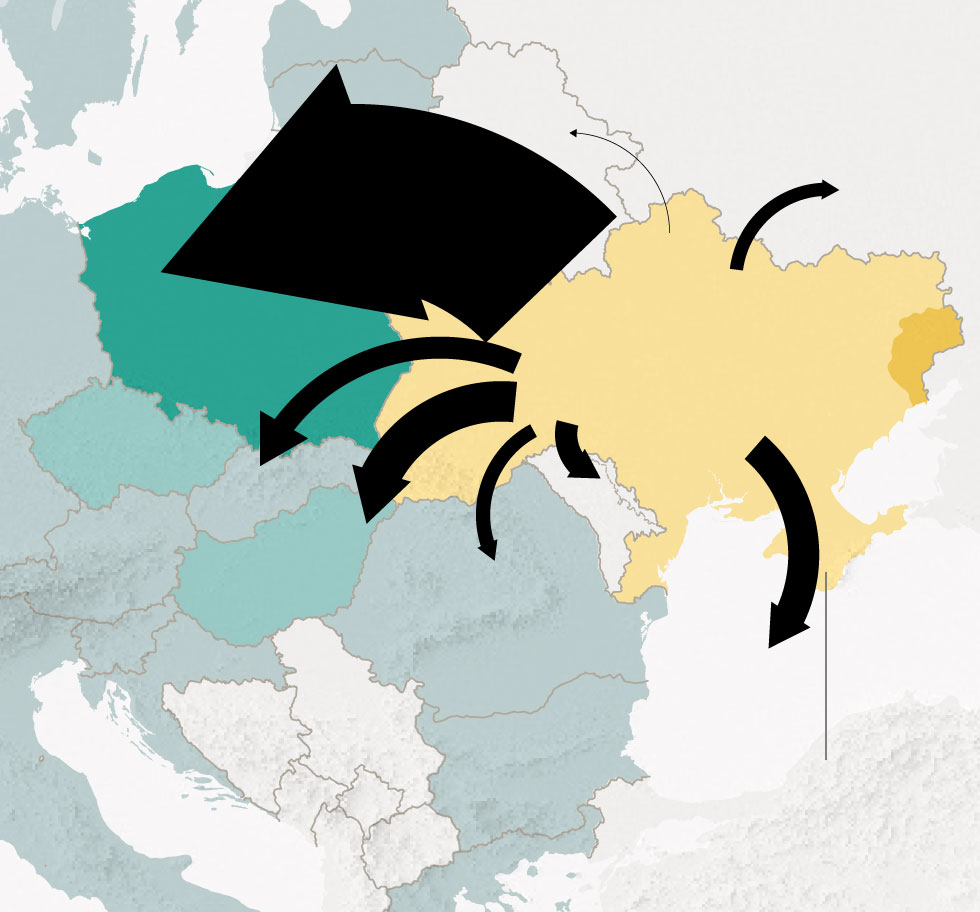
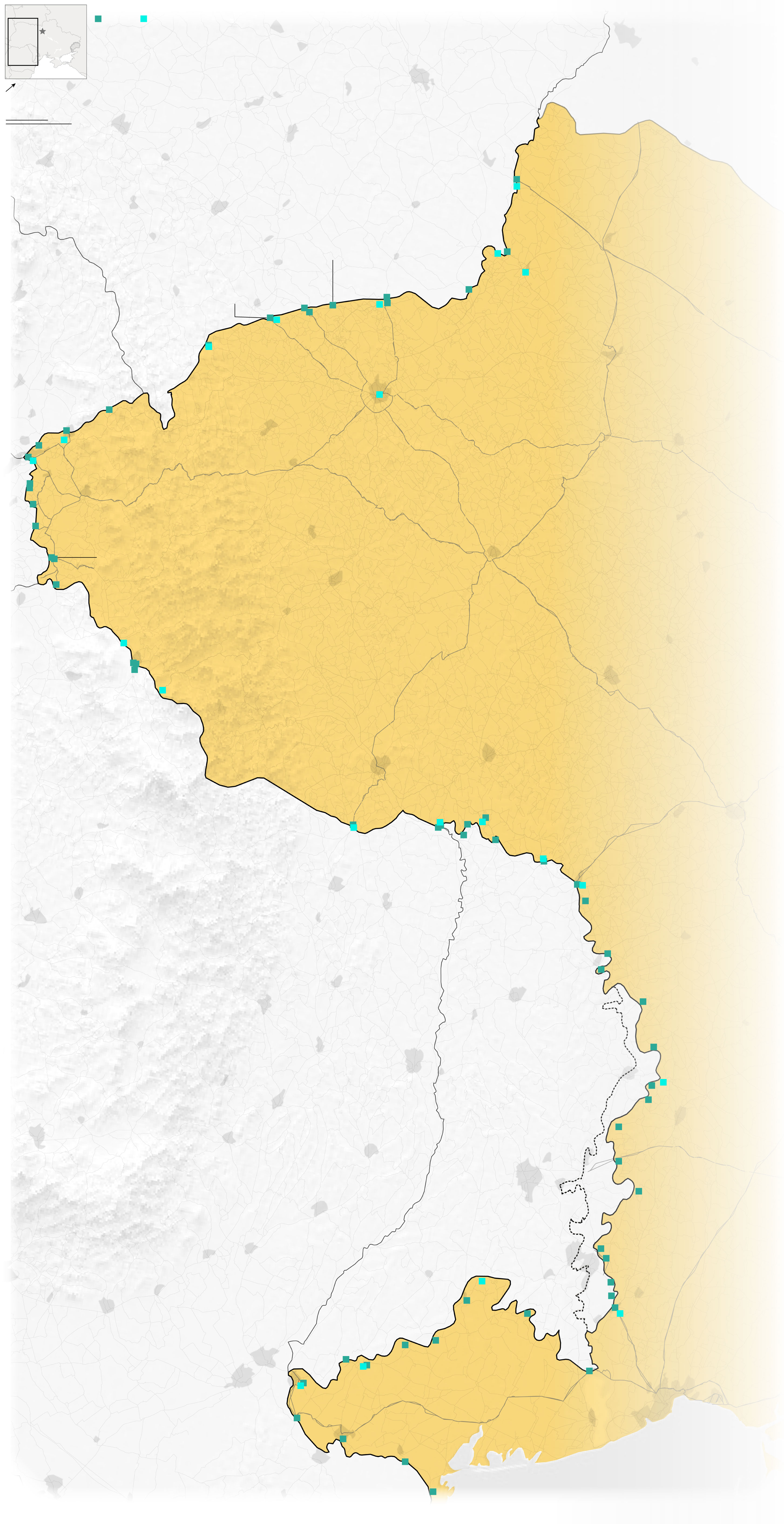
Ukrainian and foreign nationals have been welcomed by bordering countries, which have waived visa requirements and allow asylum requests at any crossing point. Poland, already home to more than one million Ukrainians, has been the first point of escape.
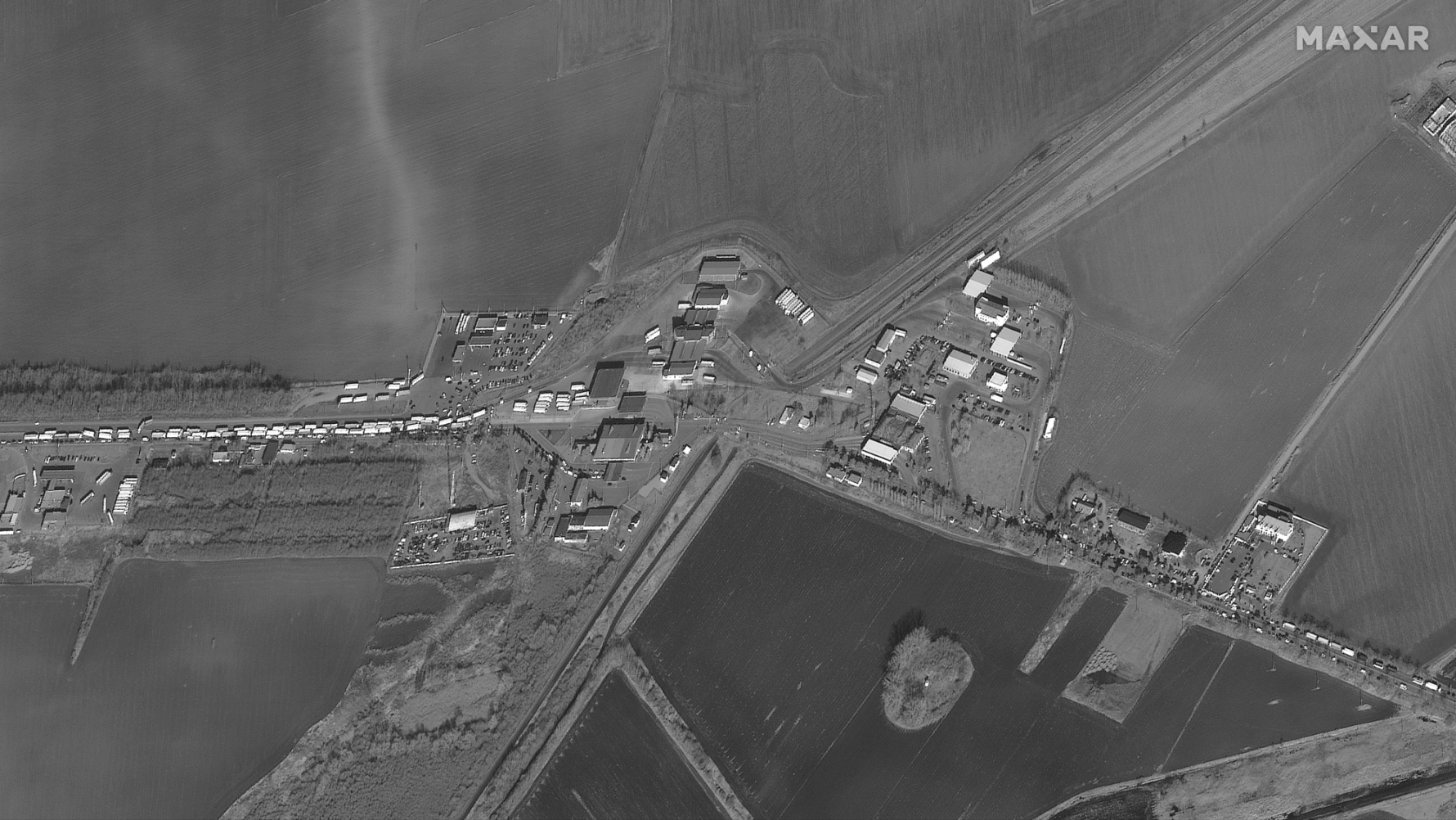
So far, the stream of refugees has been unrelenting. Some 120,000 people left Ukraine through western borders on Feb. 28, according to the Ukrainian State Border Guard Service, a flood that abated only slightly to 94,000 on March 2. Lines stretched to more than 2,000 vehicles at some crossings, leaving people waiting up to 40 hours in nearly freezing temperatures.
In the week before the invasion, 96,000 people moved from Ukraine’s Donetsk and Luhansk regions into Russia, the UNHCR said. Those areas in eastern Ukraine include the breakaway pro-Russia territories that Vladimir Putin recently recognized as independent. As of Feb. 26, Ukranians were banned from entering Russia. Even so, an estimated 40,000 people have fled into Russian territory since the invasion.
But the exodus has been ongoing since President Vladimir Putin annexed the Crimean Peninsula in 2014. An estimated 140,000 ethnic Ukrainians and Crimean Tartars have moved out of the area in the past seven years. These figures don’t include the more than 100,000 people who have been displaced within Ukraine this week, according to the UN.
Ongoing Exodus
Other
Israel
Italy
Germany
Spain
France
U.S.
Sweden
2014
2015
2016
2017
2018
2019
2020
2021
0
10
20
30K
Other
Israel
Italy
Germany
Spain
France
U.S.
Sweden
2014
2015
2016
2017
2018
2019
2020
2021
0
10
20
30K
Other
Israel
Italy
Germany
Spain
France
U.S.
Sweden
2014
2015
2016
2017
2018
2019
2020
2021
0
10
20
30K
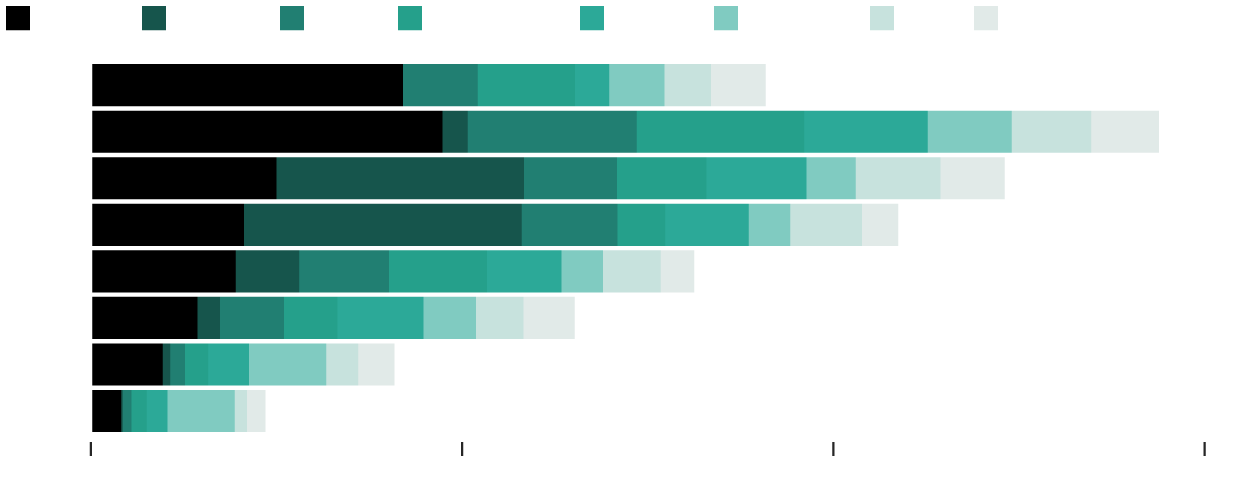
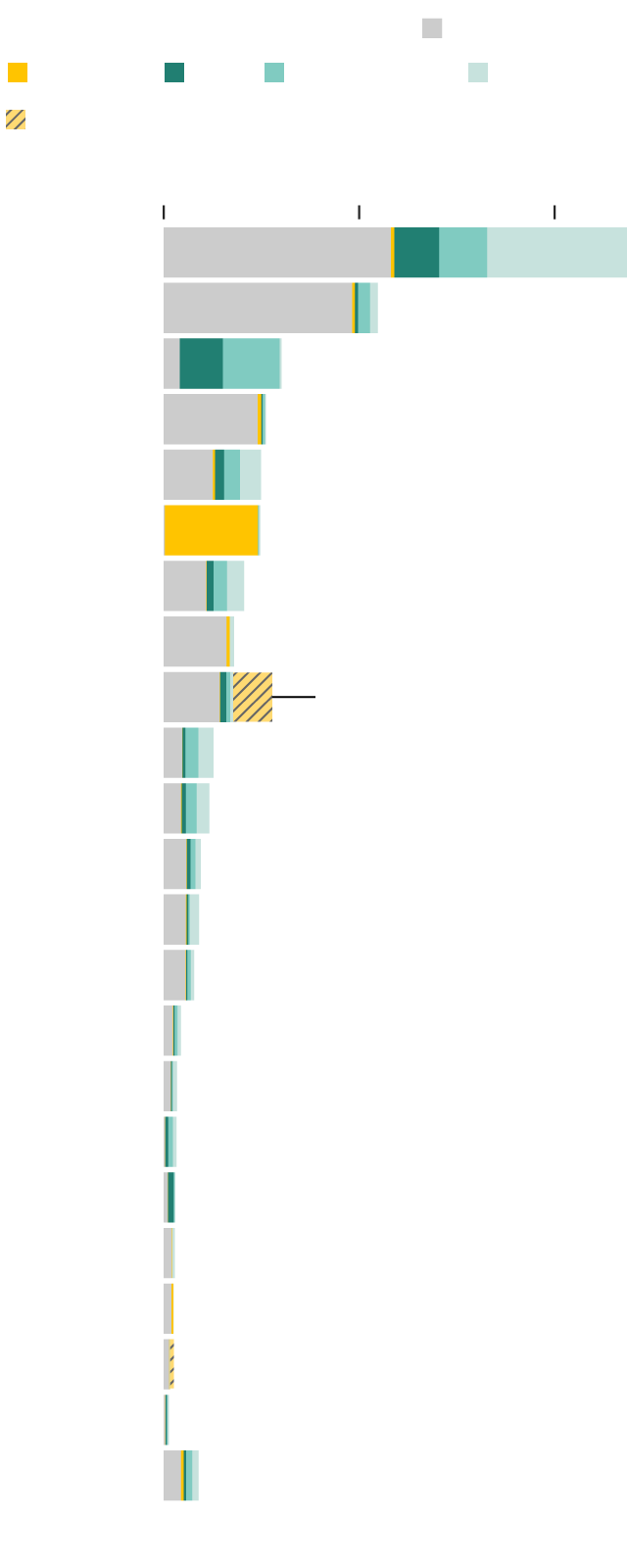
European Union member states have agreed to grant Ukrainians full access to the bloc, make them eligible for residence permits and provide access to school and work. Non-border countries are preparing to accept more people. Ireland has waived visa requirements for Ukrainians and will welcome up to 20,000 refugees. Ukrainians living in the U.K. will be able to sponsor extended family members for a humanitarian visa, a policy that’s expected to make 200,000 people eligible for refugee status.
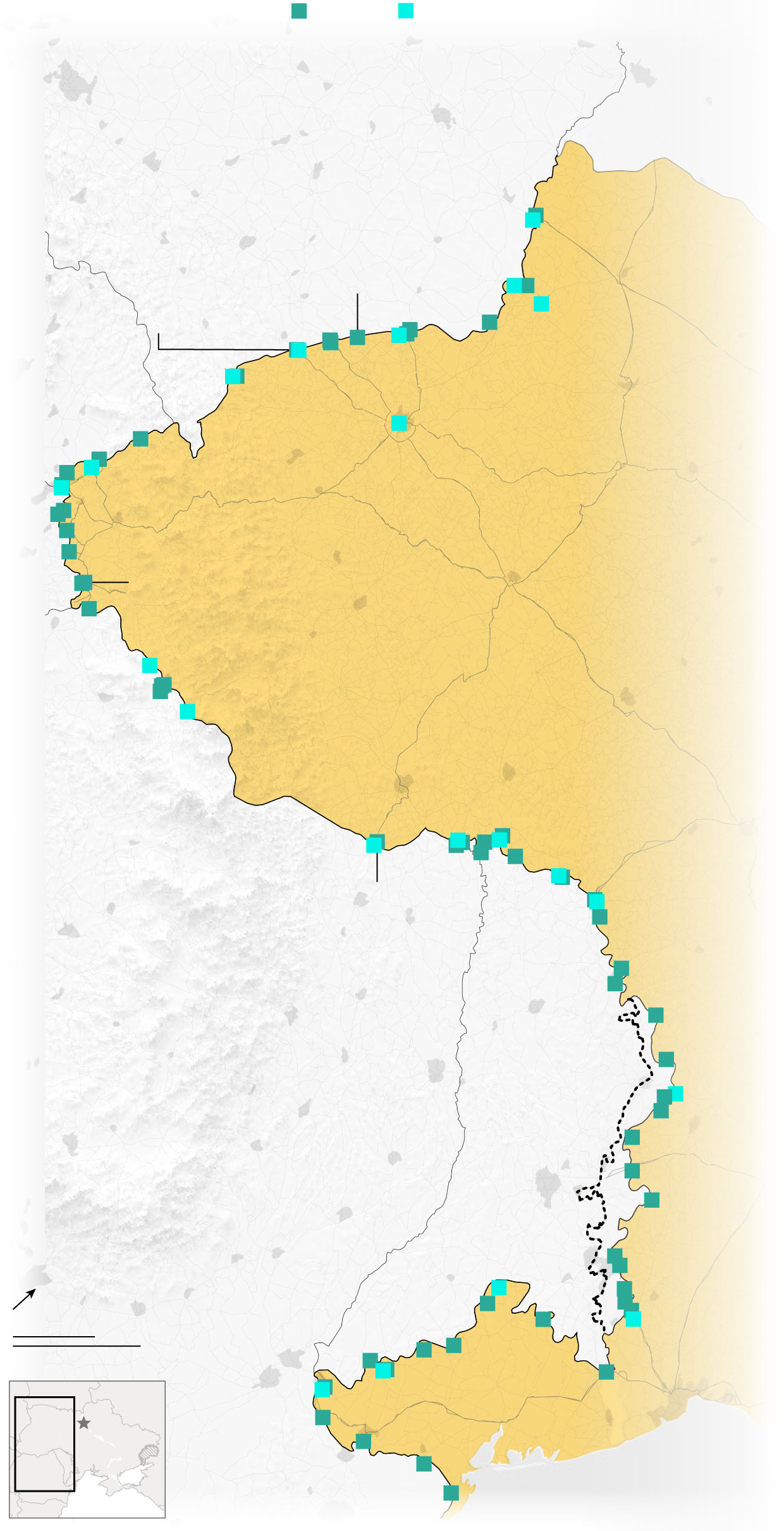
Border crossing/checkpoint for:
Vehicle
Rail
Brest
Lublin
BELARUS
N
25 km
25 mi
POLAND
Chelm
Dorohusk-Jagodzin
Zamosc
Rzeszow
Lines of people on foot and in vehicles wait to cross into Poland at Budomezh-Hrushiv
Zosin-Ustyluh
Krosno
Khrebenne/
Rava-Ruska
Caravans of cars stretch more than 40km at the Shehyni-Medyka border crossing
Korczowa-Krakowiec
SLOVAKIA
Kovel’
Kroscienko-Smolnica
Lviv
Vysne Nemecke–Uzhorod
Rivne
Zakhon–Chop–Tysa
HUNGARY
Temporary shelters have been set up in villages including
Tiszabecs, Hungary
Ternopil
Ivano-Frankvisk
UKRAINE
Khmelnytskyi
Chernivtsi
Vinnytsya
Long traffic lines formed at the Porubne-Siret crossing into Romania
ROMANIA
Mohyliv-Podilskyi-Otach
MOLDOVA
Brasov
Chisinau
Basarabiaska
Odesa
Isaccea-Orlivka
Tulcea
Black Sea
Vehicle
Border crossing/checkpoint for:
Rail
Brest
Lublin
BELARUS
POLAND
Chelm
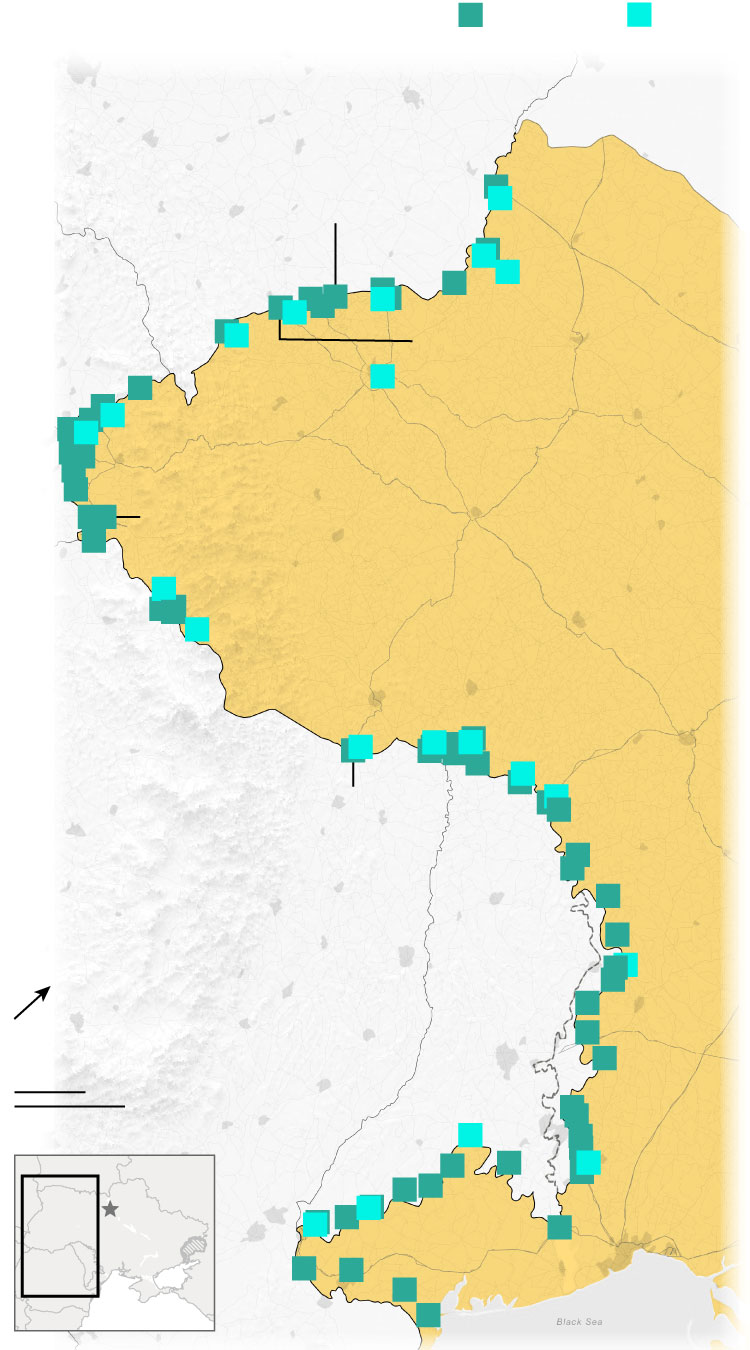
Lines of people on foot and in vehicles wait to cross into Poland at Budomezh-Hrushiv
Caravans of cars stretch more than 40km at the Shehyni-Medyka border crossing
Zosin-Ustyluh
Kovel’
SLOVAKIA
Kroscienko-Smolnica
Lviv
Rivne
Zakhon/Chop–Tysa
HUNGARY
Temporary shelters have been set up in villages including Tiszabecs, Hungary
Ternopil
Ivano-Frankvisk
UKRAINE
Khmelnytskyi
Chernivtsi
Vinnytsya
ROMANIA
Long traffic lines formed at the Porubne-Siret crossing into Romania
MOLDOVA
Brasov
Chisinau
N
50 km
50 mi
Odesa
Isaccea-Orlivka
Black Sea
Tulcea
Vehicle
Border crossing/checkpoint for:
Rail
BELARUS
POLAND
Lines of people on foot and in vehicles wait to cross into Poland at the Budomezh-Hrushiv crossing
Caravans of cars stretch more than 40km at the Shehyni-Medyka border crossing
Lviv
HUNGARY
Temporary shelters have been set up in villages including Tiszabecs, Hungary
UKRAINE
ROMANIA
Long traffic lines at the Porubne-Siret crossing into Romania
MOLDOVA
N
Brasov
50 km
50 mi
Odesa
Black Sea

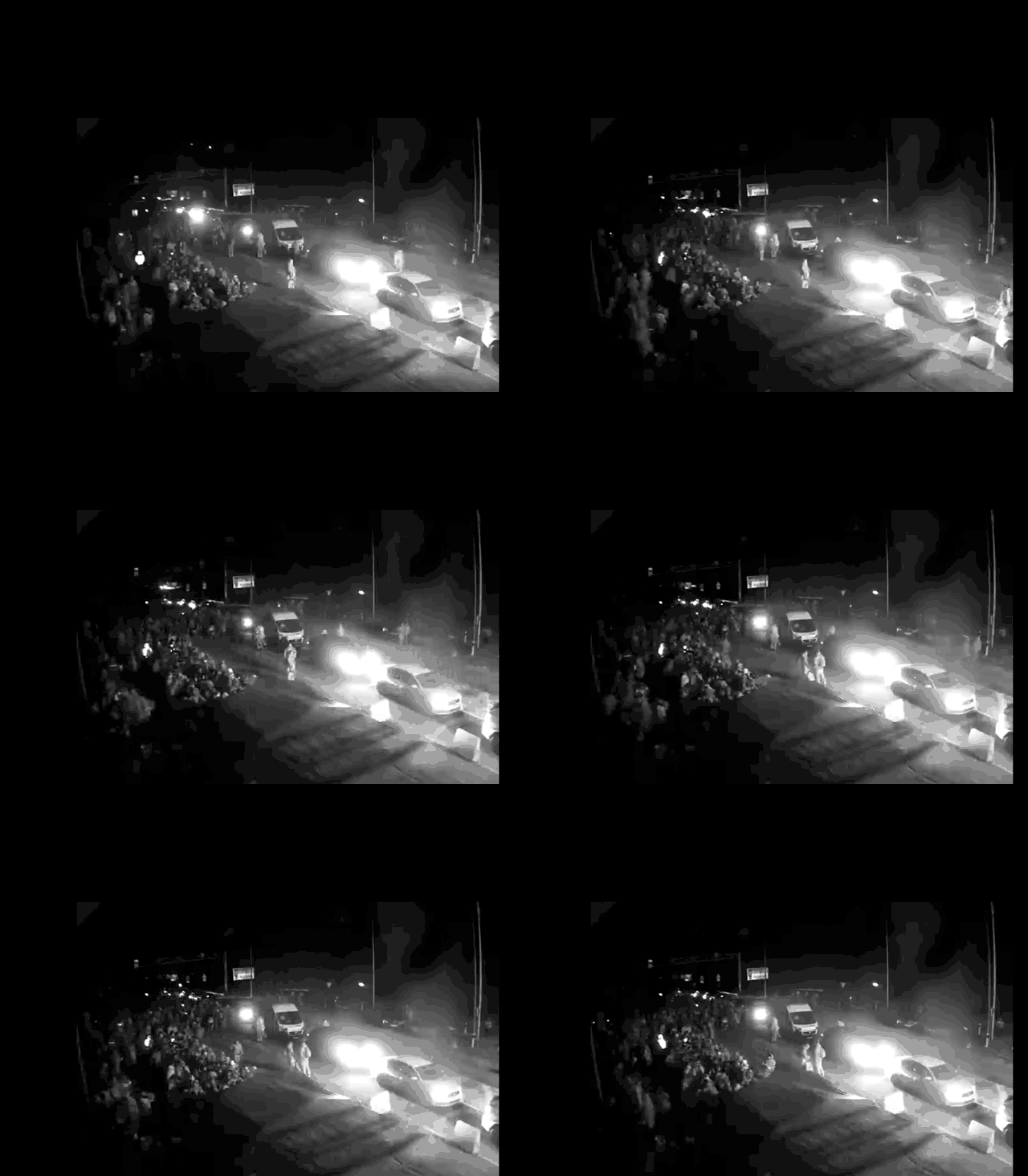
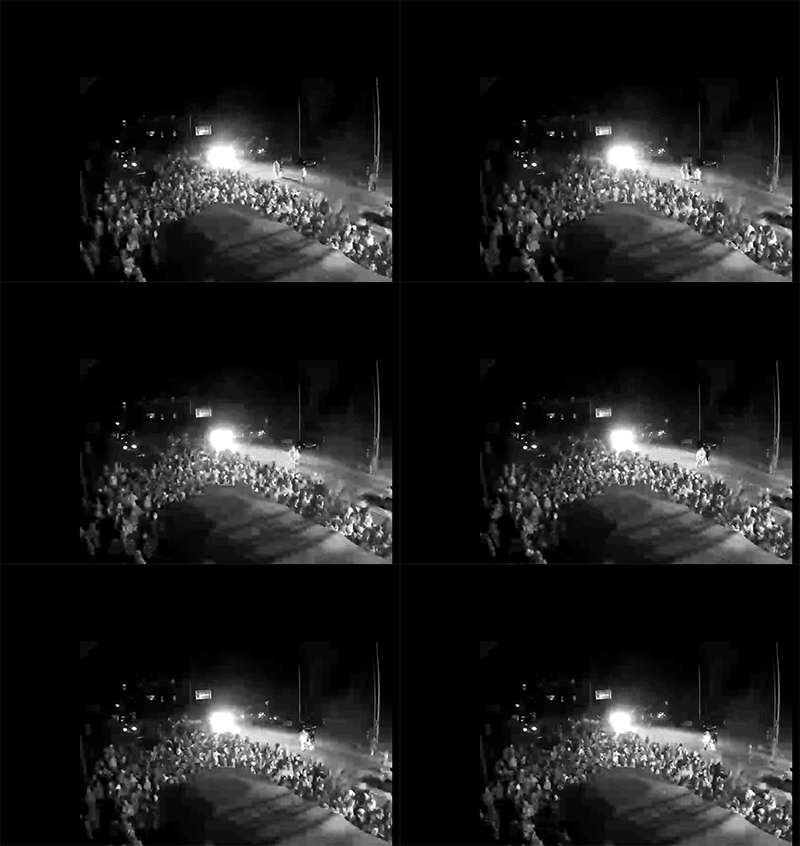
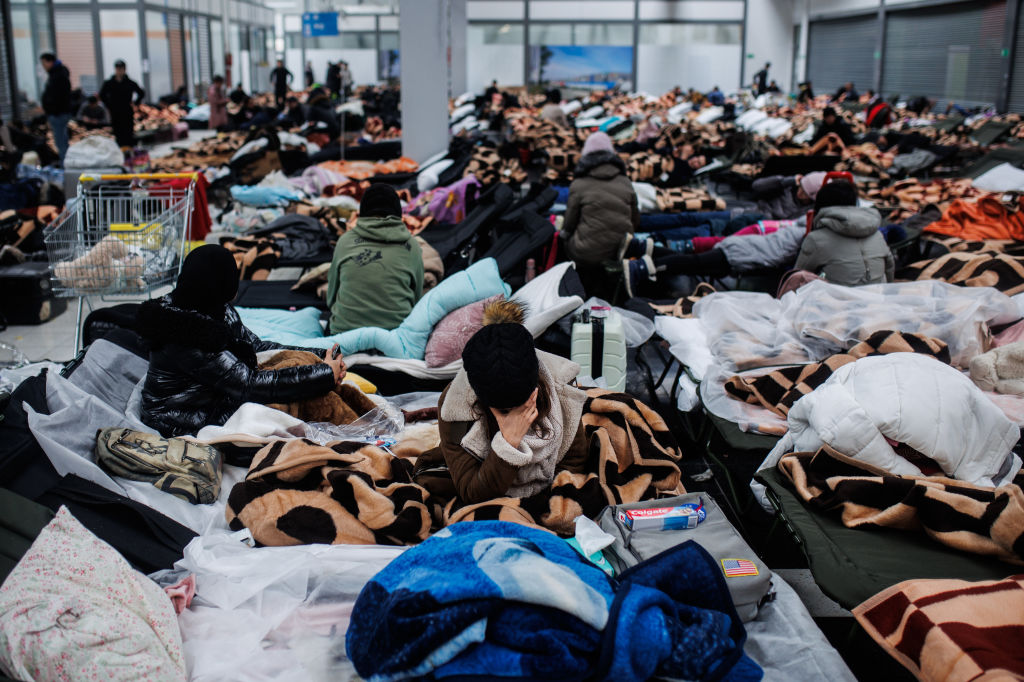

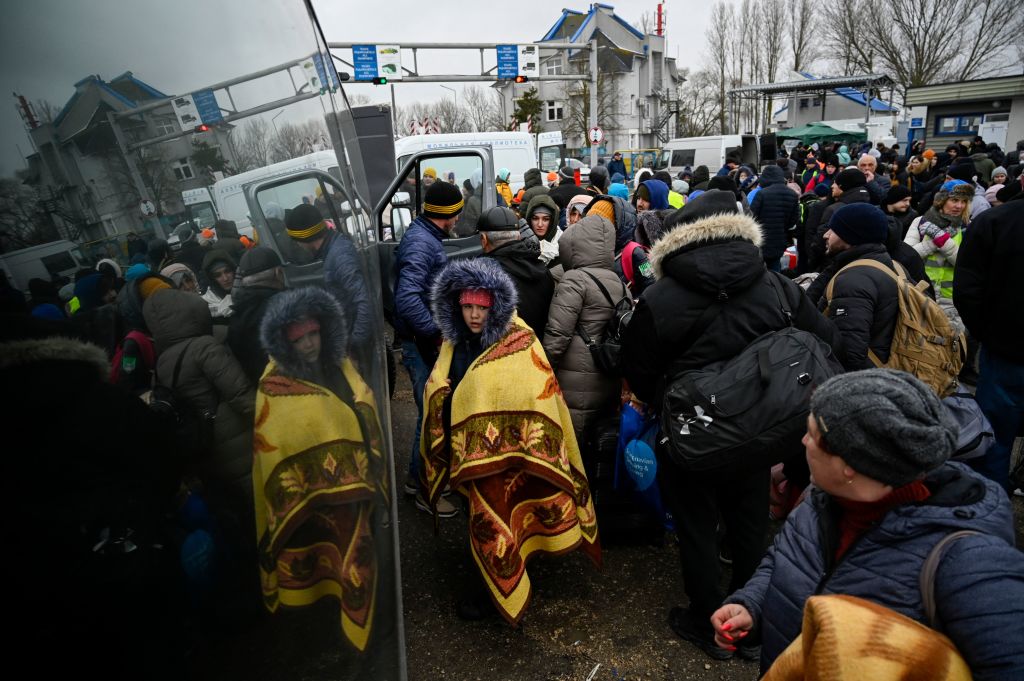
Women and children make up the bulk of the refugees. Ukrainian men between the ages 18 and 60 are prevented from leaving so they can be pressed into military service. (Another 16,000 have entered the country to join the Ukrainian army’s International Legion, Ukrainian President Volodymyr Zelenskiy said.)
Local authorities and charities have set up reception centers with beds and food donations in railway stations and shopping centers, shown here in Poland and Hungary. Refugee distribution centers have also been set up on the border with Moldova.
The global rush to accept and support refugees is a shift for Europe, where many countries had been working to tighten their borders. As of November, more than half of the 820,000 people applying for asylum to EU member nations had been waiting for more than 180 days. At the same time, thousands of migrants were stranded on Poland’s border with Belarus, where a state of emergency was created to stem an inflow of migrants mostly from the Middle East.
“What is really notable is the attitude, the sympathy and solidarity and compassion of people in Europe and European governments towards Ukrainian refugees,” said Serena Parekh, a professor at Northeastern University and author of “No Refuge: Ethics and the Global Refugee Crisis.”
“That was not the attitude that they had towards Syrian, Afghan and Iraqi refugees and others who were also fleeing war and in need of asylum and protection from the European Union,” she said.
Chancellor Karl Nehammer of Austria, who as interior minister sought to block some Afghan refugees from entering, said this situation was “totally different” and a matter of “neighborly assistance.”
Hungarian Prime Minister Viktor Orban, a champion of anti-immigration policies who faces a tough re-election fight in April, also said his country would accept refugees. “We’re prepared to take care of them, and we’ll be able to rise to the challenge quickly and efficiently,” Orban said after a meeting with his national security cabinet.
Europe’s Existing Migrant Crisis

Asylum applications 2014-2021
Afghanistan
Other
Ukraine
Iraq
Syria
Country announcements February–March 2022
0
500K
1M
1.5M
2.0M
Germany
France
Turkey
Italy
Sweden
Russia
Greece
Spain
The U.K. is making 200K
Ukrainians eligible for
refugee status
U.K.
Hungary
Austria
Belgium
Netherlands
Switzerland
Norway
Denmark
Bulgaria
Finland
Cyprus
Poland
Ireland
Ireland will welcome 20K refugees
Romania
Other Europe
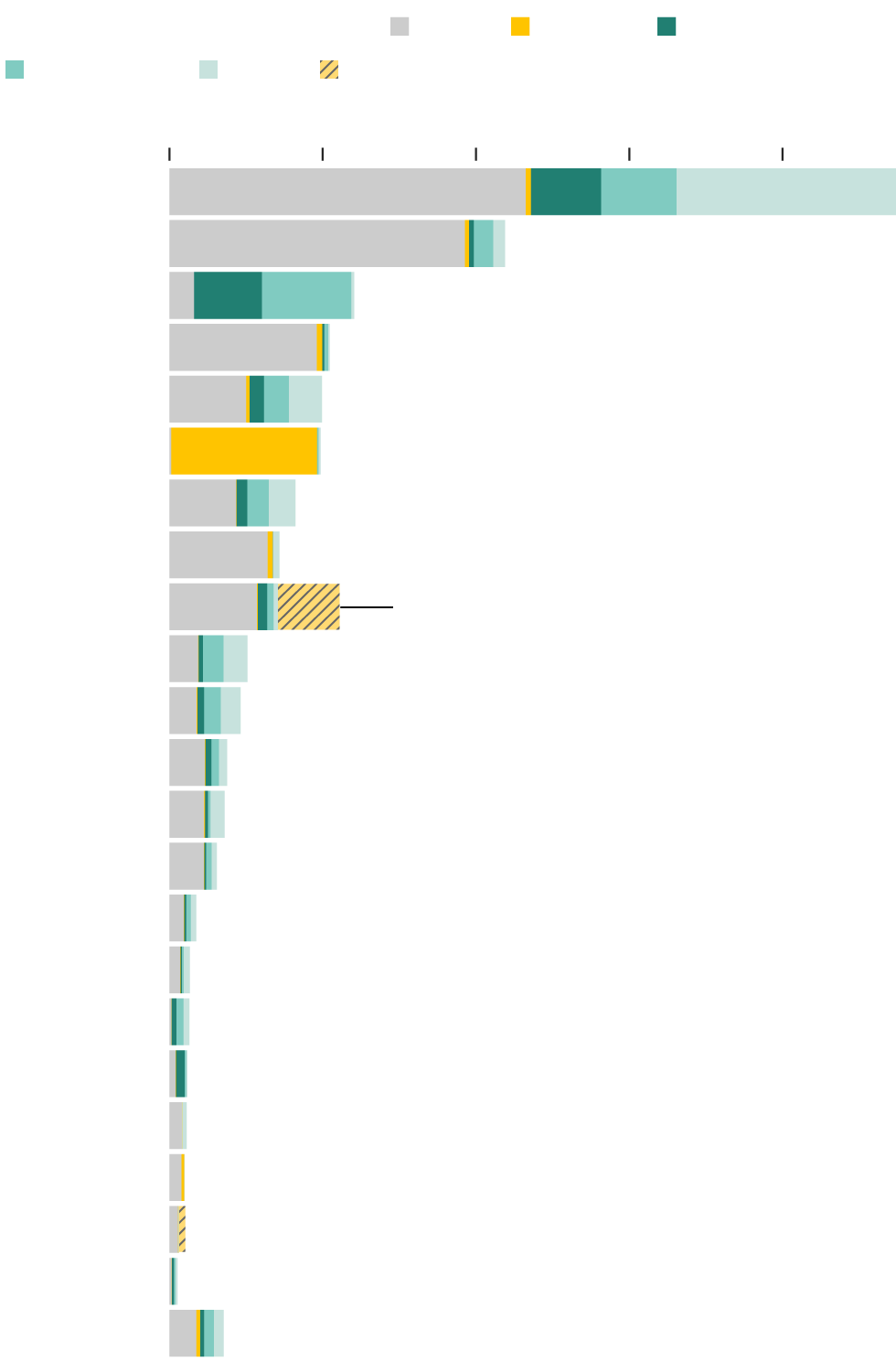
Asylum applications 2014-2021
Other
Ukraine
Iraq
Afghanistan
Syria
Country announcements Feb.–March 2022
0
500K
1M
1.5M
2.0M
Germany
France
Turkey
Italy
Sweden
Russia
Greece
Spain
The U.K. is making 200K
Ukrainians eligible for
refugee status
U.K.
Hungary
Austria
Belgium
Netherlands
Switzerland
Norway
Denmark
Bulgaria
Finland
Cyprus
Poland
Ireland
Ireland will welcome 20K refugees
Romania
Other Europe
Asylum applications 2014-2021
Other
Afghanistan
Ukraine
Iraq
Syria
Country announcements Feb.–March 2022
0
1M
2M
Germany
France
Turkey
Italy
Sweden
Russia
Greece
Spain
The U.K. is making 200K Ukrainians eligible for
refugee status
U.K.
Hungary
Austria
Belgium
Netherlands
Switzerland
Norway
Denmark
Bulgaria
Finland
Cyprus
Poland
Ireland
Ireland will welcome 20K refugees
Romania
Other
Europe
Almost half a million people living in Ukraine are migrant workers and international students, according to estimates from the International Organization of Migration. About 80,000 of those are students, many from India, Morocco, Azerbaijan, Nigeria and China. New Delhi has evacuated about 12,000 Indian students in the last month, and half of the remaining 8,000 students are estimated to be in the Kharkiv-Sumy conflict zone, according to a March 1 briefing by India’s foreign secretary. Already one Indian student was killed in shelling while waiting in line to buy food, according to India’s foreign ministry.
Leaving Ukraine may pose different challenges for people of color and other vulnerable groups. Some non-White refugees say they’ve faced racism at the border (the UN says that’s not state policy), and transgender people have worried about their ability to leave without identification that matches their name or gender identities.
“There should be absolutely no discrimination between Ukrainians and non-Ukrainians, Europeans and non-Europeans. Everybody is fleeing from the same risks,” Filippo Grandi, the UN high commissioner for refugees, said on Tuesday.
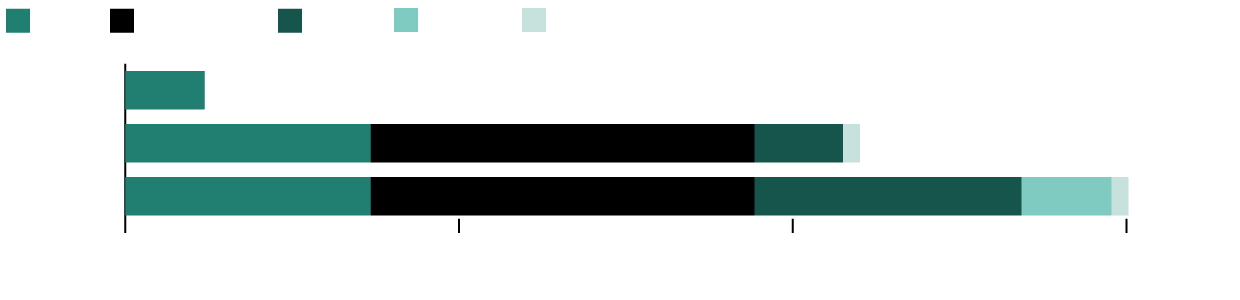
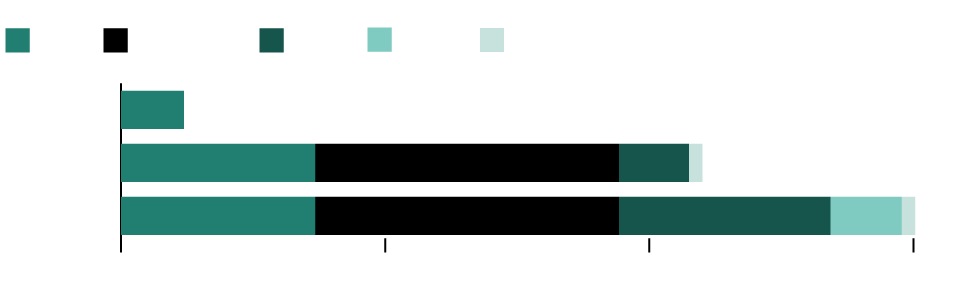
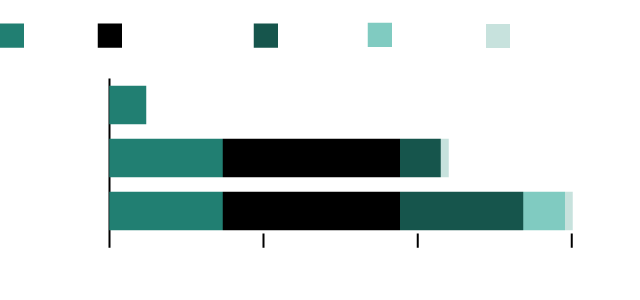
The UN humanitarian agencies and their NGO partners have launched an appeal to donors for $1.7 billion to support both the people remaining in Ukraine and those who have fled. The Norwegian government has allocated $230 million, the U.K. has committed nearly $160 million and the U.S. has so far pledged an additional $54 million in humanitarian aid on top of the $700 million in security and humanitarian aid it had previously committed in the last year.
Humanitarian Aid
U.S.
Sweden
EU
Norway
U.K.
48
Feb. 23
440
Feb. 28
601
March 1
0
$200M
$400M
$600M
U.S.
Sweden
EU
Norway
U.K.
48
Feb. 23
440
Feb. 28
601
March 1
0
$200M
$400M
$600M
U.S.
EU
Norway
U.K.
Sweden
48
Feb. 23
440
Feb. 28
601
March 1
0
$200M
$400M
$600M
If UN projections turn out to be accurate, the Ukrainian refugee crisis would reflect the second-largest such exodus from a single country, behind the estimated 13.5 million people who have escaped or been displaced by war in Syria in the past decade. At least six million people have fled Venezuela since 2014.
In total, some 84 million people had been forcibly displaced as of mid-2021, the UNHCR said. Almost a third of those people are refugees, while nearly 60% of those people are internally displaced within their own countries.
“This is one crisis in a larger global story,” Parekh said. “My hope would be to link it — link people’s compassion and solidarity with other refugees.”