20
/68
32
C
/89.6
F
June 23
20
/68
56
C
/132.8
F
Jan 24
36
/96.8
54
C
/129.2
F
July 17
26
/75.2
36
C
/96.8
F
July 18
21
/69.8
30
C
/86.0
F
July 14
12
/53.6
24
C
/75.2
F
July 14
Mapping the Coolest Spots Inside the World’s Sweltering Cities
The cement, glass and steel that give shape to urban life have also turned modern cities into dangerous heat sinks. Scorching sunlight gets absorbed, stored and slowly emitted in a bubble of warmth that can push city temperatures as much as 3°C (5.4°F) above the surrounding countryside. This dynamic, combined with the increasingly extreme heat waves produced by climate change, helped drive record-breaking highs in Delhi (49°C) and London (40.2°C) over the past few months. Thousands of citydwellers died in sweltering cities this summer.
But even on the hottest days during what will likely be one of the five hottest years in modern history, there are urban neighborhoods that succeed at blunting climate-driven heat waves. Evidence of these effective solutions capable of saving countless lives can be seen from space.
Satellite images produced by the European Space Agency, working in part with data from NASA and the US Geological Survey, now have a high enough resolution to allow for temperature variations to be parsed on a street-by-street level. These snapshots of heat differences offer clear evidence of cooling strategies that can counteract what researchers term the “urban heat island effect,” in which city temperatures get that extra boost.
“The strongest weapon that we have for lowering temperatures are trees, and the best thing we can do for cities are green corridors that connect existing green areas,” says Eleni Myrivili, the city of Athens’ Chief Heat Officer. She will become the United Nations’ Global Heat Officer later this year. “We have to lead with trees to begin with, and then use technology and materials to figure out other ways of cooling spaces,” she says.
Some of the best ways to lower temperatures in an overheated metropolis come from nature and the wisdom of ancient civilizations that invented city living. Others adapt the latest technological innovations. Here’s a look at the neighborhoods that managed to curb this summer’s most extreme heat.
London
Millions of people in the UK escaped to parks to cool down during this summer’s heat wave, which was more intense and widespread than past extreme events, with 40°C temperatures in the country for the first time ever.
Hot Spot
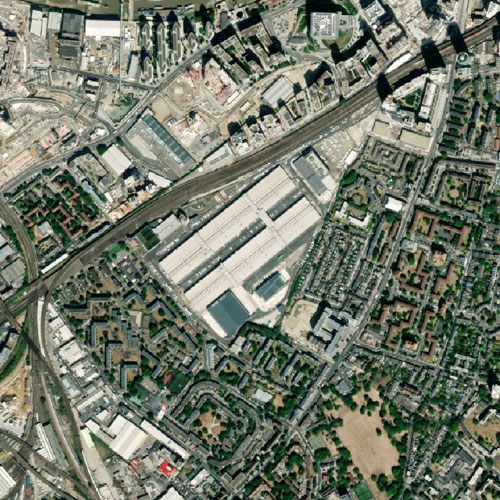
Intense activity around New Covent Garden Market makes the UK’s largest fruit, vegetable and flower market a source of heat for London. Every Sunday thousands of people visit the Nine Elms Vauxhall Market, inside the venue, to roam its 400 stalls.
Cool Stuff
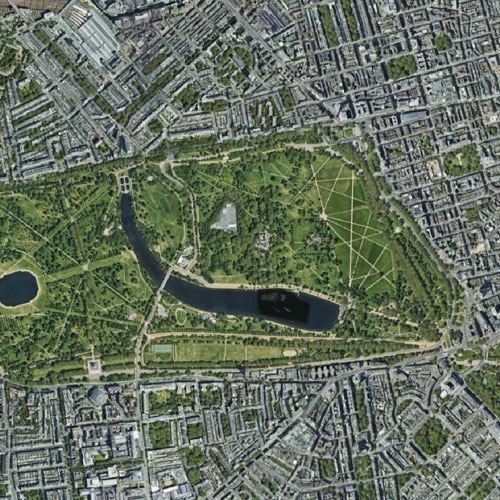
Hyde Park was milder than more urbanized areas of the city and the cooling effect spilled over the streets around it. It’s one of London’s more than 3,000 parks, covering about a fifth of the city. Local authorities want green areas to cover more than half of the city by 2050.
Work in Progress
The London borough of Hackney has one of the UK’s most ambitious greening programs, with a goal to plant 5,000 street trees this year to help lower heat and improve air quality.

Delhi
Home to around 19 million people, Delhi recorded its highest temperature ever in May this year, with thermometers rising to 49°C. The city has seen a total of six heat waves in the first seven months of 2022. Combined with high levels of humidity, heat can become deadly for millions of people who can’t afford cooling devices. And heat deaths are likely undercounted, according to researchers. The first step to adaptation is knowing where the most vulnerable people are.
Hot Spot
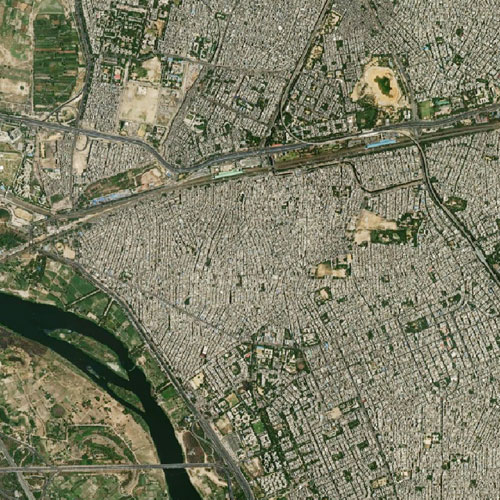
Seelampur is an area east of the Yamuna River that was built during the 1970s to relocate people whose homes had been demolished by the government in north and central Delhi. It’s a low-income, densely-populated district dotted with street vendors, informal housing and very little green space. It is also one of the city’s hottest areas.
Cool Stuff
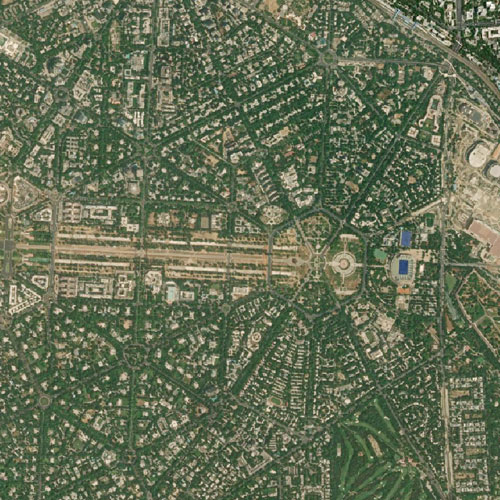
Delhi’s iconic India Gate is surrounded by leafy neighborhoods that include government buildings, housing for officials, gardens, sports courts and a golf club. Temperatures there can be as much as 12°C lower than on the other side of the river.

Fez
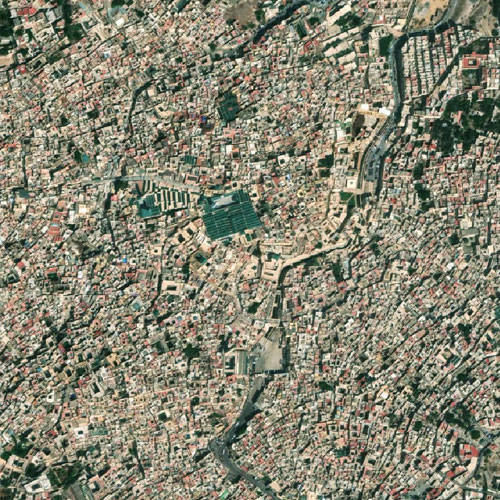
Cities in southern Europe like Madrid are set to have a climate similar to Morocco’s, according to a recent study. But unlike Europeans, Arabs co-existed with extreme heat for centuries — and have built cities that can withstand it. The old medina in Fez, a UNESCO World Heritage site, is one of the largest and best preserved historic towns in the Arab world.
Hot Spot
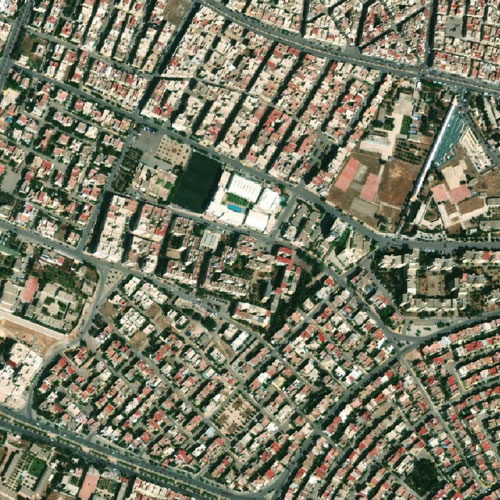
Modern houses built along the wide, paved streets of the Al-Adarissa suburb are exposed to much more solar radiation during the day, making them much hotter than buildings in the centuries-old Medina. That, in turn, means residents need air conditioning to cool off, increasing the amount of heat generated in the area.
Cool Stuff
Clay brick buildings and an irregular network of narrow streets that have almost permanent shade make the Seffarine district as much as 8°C cooler than the city’s average temperature — even though the old district has the highest density of population. The fact that the alleys are unpaved or else paved with concrete stones helps make the ground more permeable and the area more humid, an advantage in the desert city’s hot and dry climate.

Los Angeles
California’s largest city will warm no matter what, with the number of extreme heat days increasing by five- or even six-fold by mid-century, according to researchers at the University of California at Los Angeles. For years, the city has been at the forefront of adaptation to heat. It now requires all new roofs to be installed with materials that have a Cool Roof rating and reflect solar radiation. It is also experimenting with reflective pavement on some streets.

Hot Spot
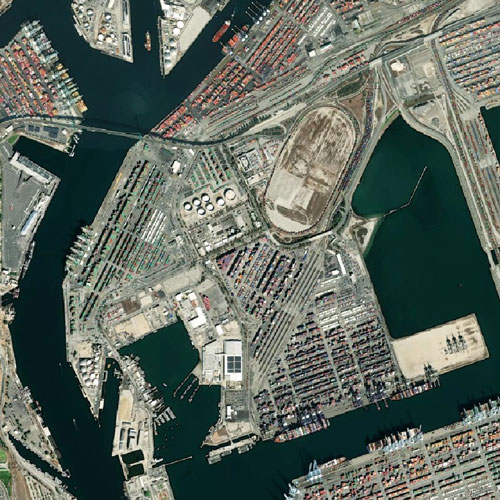
The Port of Los Angeles is the busiest port in the US, processing millions of containers every year. Intense activity around it also makes it a major source of heat for the city.
Cool Stuff
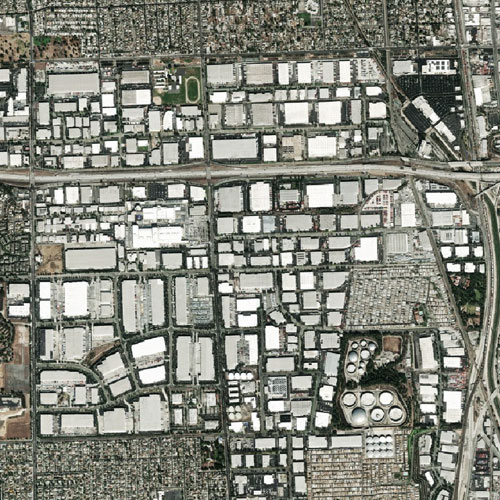
Glaciers in the Arctic and Antarctica that reflect sunlight back into space and help cool the Earth. City rooftops painted with reflective paint can have the same effect. Some roofs in Los Angeles’ South Bay are helping reflect over 60% of the energy from sunlight, according to research by the Berkeley Lab Heat Island Group.

Melbourne
Melbourne experienced unusually long and intense episodes of heat during the southern hemisphere’s summer. In January, the city registered 17 consecutive days of temperatures above 30°C for the first time since 1974. Minimum temperatures, or the coldest it gets at night, were around 18.3°C on average in January, about 4 degrees higher than the previous record.
Hot Spot
Australia’s fifth-largest retail center, Highpoint Shopping Centre, attracts more than 16 million shoppers every year and is a source of heat for the city, even though it’s close to two large parks and the river. The surrounding suburb of Maribyrnong is made warmer by activity around college sports pitches and a heritage-listed WWI explosives factory, which is set to be converted to 3,300 homes.
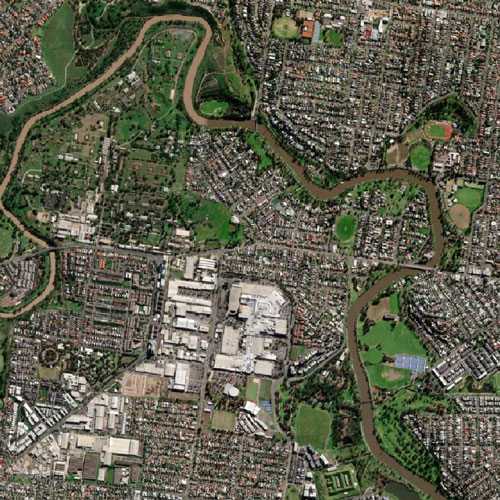
Cool Stuff
On hot days, the people of Melbourne head to the zoo. Placed just north of the city center and nestled in the greenery of Royal Park. The open space helps cool the dense areas around it.
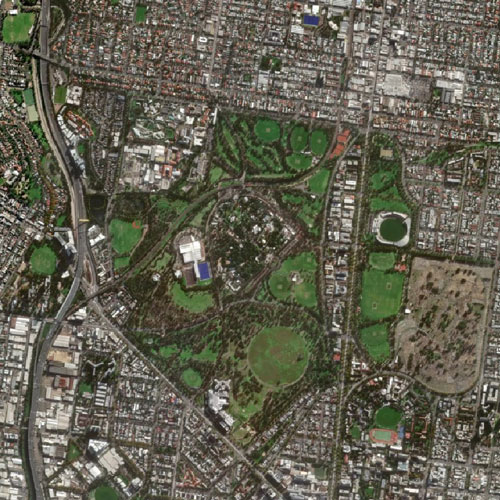
Work in Progress
Because trees can struggle within the city, Melbourne is promoting the installation of permeable asphalt in places where greening isn’t possible. A pilot project at Eades Place, a residential street in West Melbourne, included the installation of pavement that lets water soak through, reaching tree roots and improving their health.

Seville
One of Europe’s warmest cities regularly experiences temperatures above 40°C in summer. This year it has become the first to name heat waves in an attempt to raise awareness about the damage they can cause. The city has already spent millions to adapt but still suffered 46 deaths during a heat wave in July.
Hot Spot
Seville’s airport is an extension of concrete, steel and glass built in the middle of farms and agriculture fields. Plane engines, the energy used to cool the airport and the movement of people make it a source of heat for the city.

Cool Stuff
Blue infrastructure like rivers, canals and ponds can cool cities off through water evaporation, providing resilience to the urban infrastructure. In Seville, the Guadalquivir River and the Alfonso XIII Canal help lower temperatures in the districts around them.
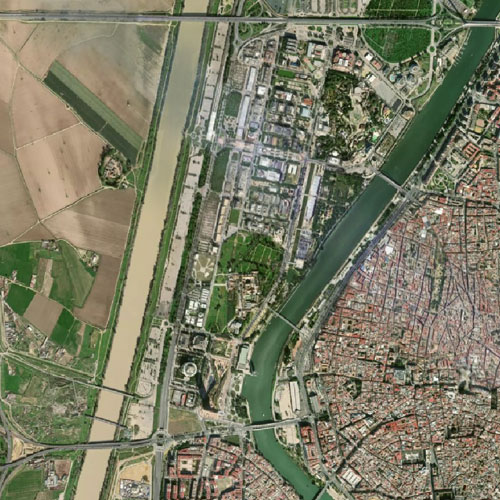
Work in Progress
A pilot project at a technology district on Cartuja Island combines ancient Iranian knowledge with the latest innovations. The first element involves qanats, or underwater aqueducts, that have been used by Persians since 1,000 BC to cool the buildings above. These will be irrigated by a thin layer of water to improve cooling and covered with shades designed to move with the sun. The 4 million euro project ($4 million) aims to lower average temperatures by 10°C.