Confused About Masking? It’s Time to Get Tactical
The Covid-19 pandemic seems to have sorted us into three types based on our attitudes toward masking: Call them nervous maskers, never-maskers and uncertain maskers. The first feel guilty or nervous about unmasking, so they tend to default to wearing masks; the second feel angry and resentful about being told to mask, so they often refuse entirely. And the third group is just trying to do the right thing without a lot of certainty one way or another.
Winter is coming, with its continued battles against delta or mu or another variant. We have better protections now (vaccinations, natural antibodies) but also are returning to higher-risk environments (nightclubs, offices, schools). To complicate matters, there are additional factors to consider such as waning immunity from vaccines and the potential of a bad flu season.
Fortunately, there have been a number of important studies on the efficacy of masking over the past 18 months. The good news is that the research suggests most of us can actually de-mask without guilt or worry in many instances — and not just outdoors. It tells us, for example, that plexiglass dividers are in most cases useless or worse.
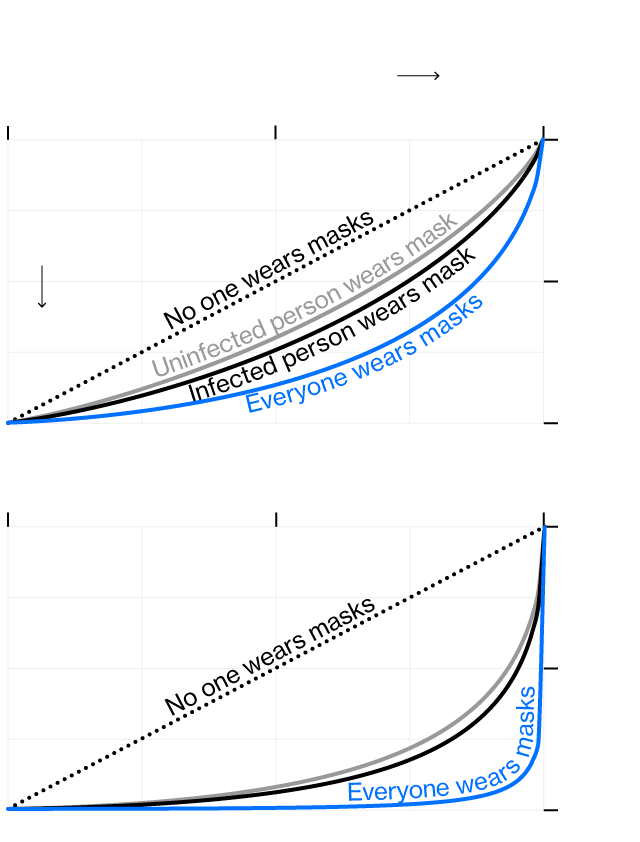
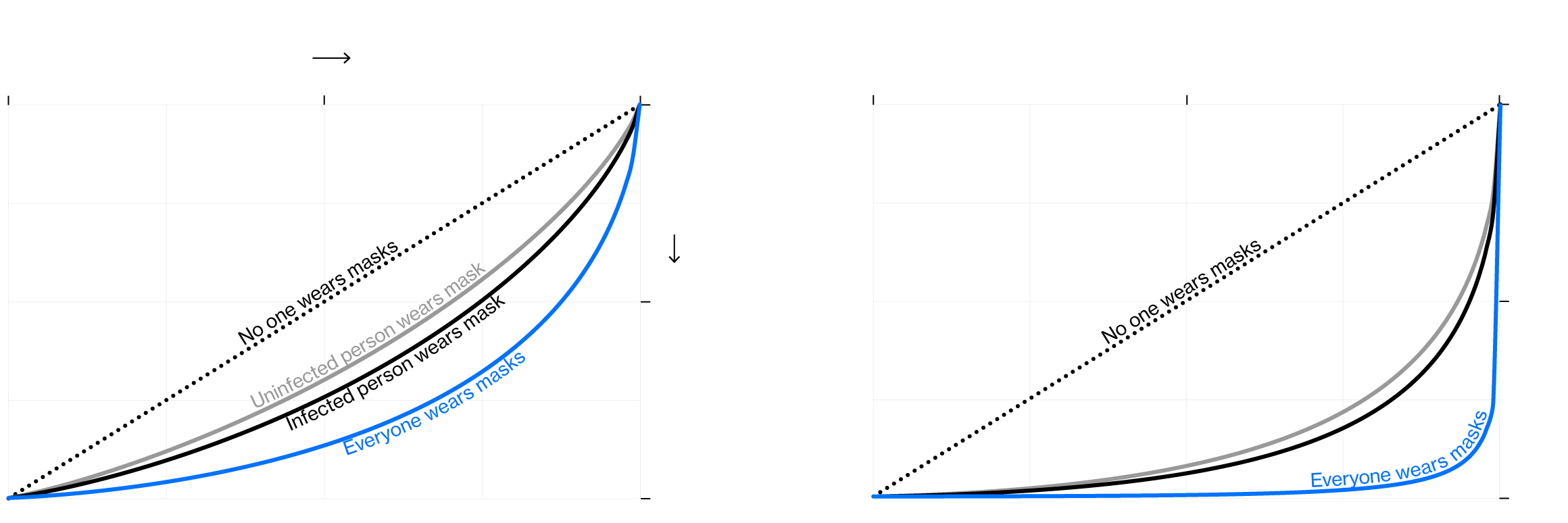
But relaxed refuseniks need a rethink, too — we shouldn’t be ditching masks entirely. On the contrary, the more people adopt a policy of tactical masking, taking situational factors into account, the lower the infection risk and the more freedoms we can enjoy again.
Masking, By the Odds

Uninfected
person
wears
mask
Relative reduction
for risk of infection
↓67%
Infected
person
wears
mask
↓75%
Everyone
wears
masks
↓92%

Uninfected
person
wears
mask
Relative reduction
for risk of infection
↓67%
Infected
person
wears
mask
↓75%
Everyone
wears
masks
↓92%
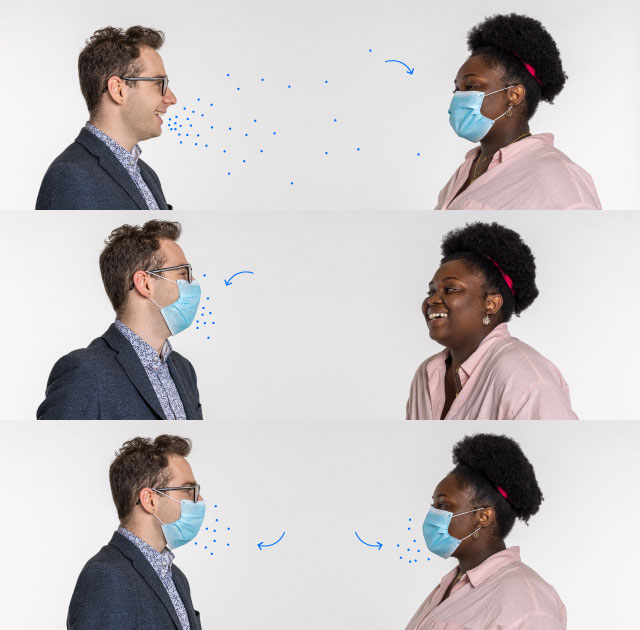
Uninfected person
wears mask
Relative reduction
for risk of infection
↓67%
Infected person
wears mask
↓75%
Everyone
wears
masks
↓92%

Surgical masks
N95 or FFP2 masks
Probability of infection increases
0
50
50
100%
100%
0
100%
100%
Risk of infection
for maskers
decreases
50
50
0
0

Surgical masks
Probability of infection increases
50
100%
0
100%
Risk of infection
for maskers
decreases
50
0
N95 or FFP2 masks
0
50
100%
100%
Risk of infection
for maskers
decreases
50
0
Surgical masks
Probability of infection increases
50
100%
0
100%
Risk of infection
for maskers
decreases
50
0
N95 or FFP2 masks
0
50
100%
100%
50
0

Surgical masks
N95 or FFP2 masks
Probability of infection increases
0
50
50
100%
100%
0
100%
100%
Risk of
infection
for maskers
decreases
50
50
0
0
Surgical masks
N95 or FFP2 masks
Probability of infection increases
0
50
50
100%
100%
0
100%
100%
Risk of
infection
for maskers
decreases
50
50
0
0
Note: Relative reduction in risk-of-infection figures are for an infection probability of 4%.
It’s no wonder we’re either nervous, angry or confused about masks when you consider how masking guidance and conventions have been all over the map. It seems amazing now that the Centers for Disease Control and Prevention, the World Health Organization and various governments had warned against using masks in the early days of the pandemic. When Thomas Nitzsche, mayor of Jena, Germany, made the decision to require masks in public in early April 2020, his city became one of the first to do so. Infections dropped by up to 75% over the next few weeks.
In May, the CDC said fully vaccinated people no longer needed to wear masks in most public settings. Two months later, as delta variant cases rose, the CDC revised that guidance.
Now seven U.S. states — Hawaii, Illinois, Louisiana, Nevada, New Mexico, Oregon and Washington — require most people to wear masks indoors in public places. Some states, including Texas and Florida, bar local authorities from imposing Covid-19 restrictions, including mask-wearing. In places that view masking as an affront to liberty, university professors can’t even ask students to wear masks during office hours without putting their jobs at risk.
In England, there was a general lifting of restrictions in July, though U.K. Health Secretary Sajid Javid said last week that masking may become mandatory again in some indoor settings this winter, depending mainly on whether hospitalizations from Covid spike. While masks are required on public transport, I’d say about half or fewer comply during my journeys. Many offices require workers to mask while walking around, but few Tory lawmakers are wearing them in the House of Commons.
Scotland still requires masks to be worn in shops and restaurants while not seated, as well as on public transport. Berlin requires the medical-grade FFP2 masks on public transport. Certain regions of France also have masking requirements in place.
But if you care about what the evidence says (and some people don’t), the jury is in: Masks help a lot. Take, for example, the study that shows most U.S. states that had high mask usage in one month avoided high Covid rates in the subsequent month, even after adjusting for masking policy, social-distancing policy and demographic factors. The majority of states with low mask usage ended up with high Covid case rates.

Percentage of low mask usage states with high Covid rates
54%
June–July
62
July–August
85
August–September
100
September–October
Percentage of high mask usage states with high Covid rates
8%
June–July
8
July–August
8
August–September
23
September–October

Percentage of low mask usage states with high Covid rates
54%
June–July
62
July–August
85
August–September
100
September–October
Percentage of high mask usage states with high Covid rates
8%
June–July
8
July–August
8
August–September
23
September–October

Percentage of low mask usage states
with high Covid rates
54%
June–July
62
July–August
85
August–September
100
September–October
Percentage of high mask usage states
with high Covid rates
8%
June–July
8
July–August
8
August–September
23
September–October
Note: Low mask adherence means states that fall below the 25th percentile; high adherence are those states above the 75th percentile. Study analyzed data from April to October 2020.
The largest study yet on the effectiveness of masking, posted online in pre-print earlier this month, was a randomize trial conducted in 600 villages across Bangladesh covering a population of more than 340,000 adults. It offered strong evidence that masks, and surgical masks in particular, reduce virus transmission. Researchers found that a 29 percentage-point increase in mask adoption led to an 11% reduction in symptomatic SARS-CoV-2 prevalence, where surgical masks were distributed; and a 35% reduction in people over 60.

Relative reduction of Covid cases confirmed by blood test
By mask type
By age (for surgical masks)
Overall
Cloth
Surgical
50-60
60+
5
9%
11
23
35

Relative reduction of Covid cases confirmed by blood test
By mask type
By age (for surgical masks)
Overall
Cloth
Surgical
50-60
60+
5
9%
11
23
35

Relative reduction of Covid cases confirmed by blood test
By age
(for surgical masks)
By mask type
Overall
Cloth
Surgical
50-60
60+
5
9%
11
23
35
Note: Symptom reductions using surgical masks were not statistically significant in younger age groups.
While vaccines have largely broken the link between infections and hospitalizations (and death), they haven’t eliminated the need for mask-wearing. Data released last week showed that two doses of the Oxford/AstraZeneca vaccine were 67% effective against delta-variant infections (compared with 80% for two doses of Pfizer/BioNTech’s). Infections can still be nasty; long Covid remains another reason for vigilance. Not only can fully vaccinated people catch and transmit the virus, but it is unvaccinated adults who are more mask-resistant.
Since it’s estimated that around half of all transmissions come from asymptomatic persons, masks are still key to preventing infections. But masking shouldn’t be performative, as it often is with those uncertain maskers who just want to show they are being thoughtful. Which masks we wear, and especially how they fit, is important.
Mind the Gap
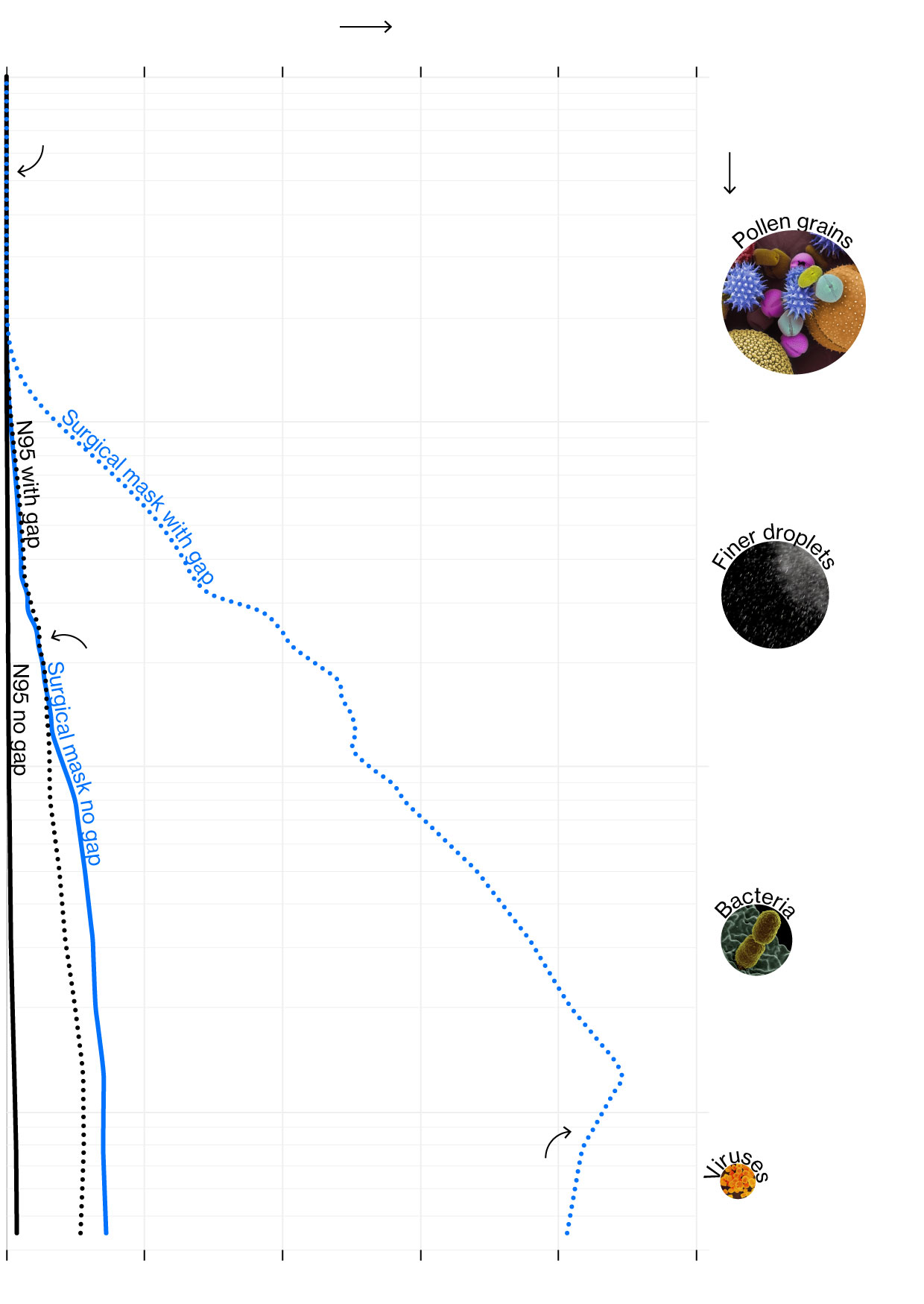
More particles get through mask
0
10
20
30
40
50%
100,000 nanometers
Less than 1% of larger aerosols,
like pollen, get through masks
Smaller
particles
10,000
A well-fitted surgical
mask is as effective
as an N95 with leaks
against aerosols that
can carry SARS-CoV-2
1,000
100
Surgical masks with leaks let
in more of the tiniest particles
40
0
10
20
30
40
50%
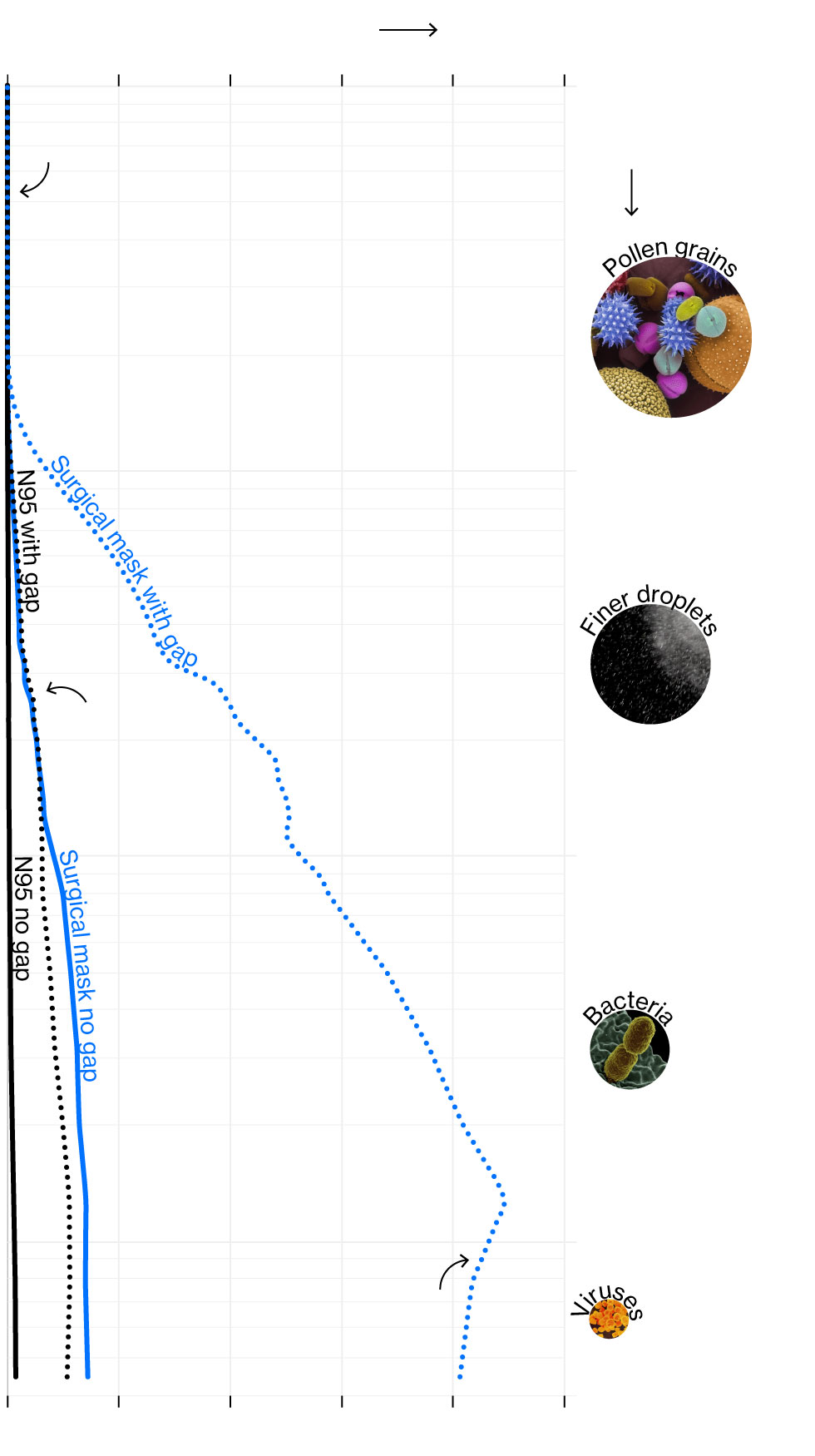
More particles get through mask
0
10
20
30
40
50%
100,000 nanometers
Less than 1% of larger aerosols,
like pollen, get through masks
Smaller
particles
10,000
A well-fitted
surgical mask
is as effective as
an N95 with leaks
against aerosols
that can carry
SARS-CoV-2
1,000
100
Surgical masks with
leaks let in more of
the tiniest particles
40
0
10
20
30
40
50%
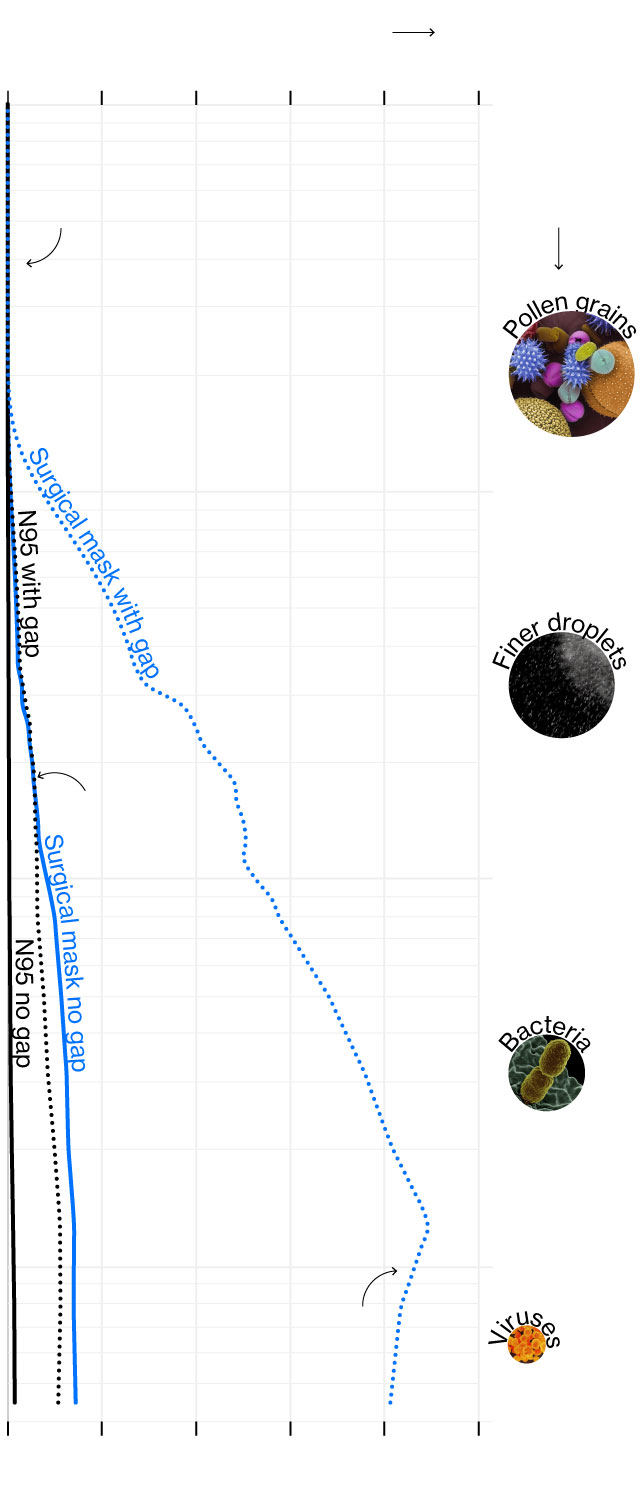
More particles get through mask
0
10
20
30
40
50%
100,000
nanometers
Less than 1% of larger aerosols,
like pollen, get through masks
Smaller
particles
10,000
A well-fitted
surgical mask
is as effective
as an N95 with
leaks against
aerosols that can
carry SARS-CoV-2
1,000
100
Surgical masks with
leaks let in more of
the tiniest particles
40
0
10
20
30
40
50%
Of course, not all masks are created equal, as a recent study published in the journal Nature highlighted. The authors measured the thermal behavior of face masks in real time during inhalation and exhalation to determine the relationship between the fabric structure of the masks and their performance. Their experiment helped shed light on how aerosol-containing bacteria and coronaviruses penetrate three different kinds of masks — reusable face masks, disposable surgical masks and the N95 — and how we can evaluate air filtration performance.
Reusable masks have longer, thicker fibers with a larger average pore diameter. Unsurprisingly, they have higher levels of permeability, with the surgical mask coming second, followed by the F95 (similar to the FFP2 in Europe). Those findings should even help manufacturers create a new generation of masks that offer more breathability while also improving filtration.
Make and Model
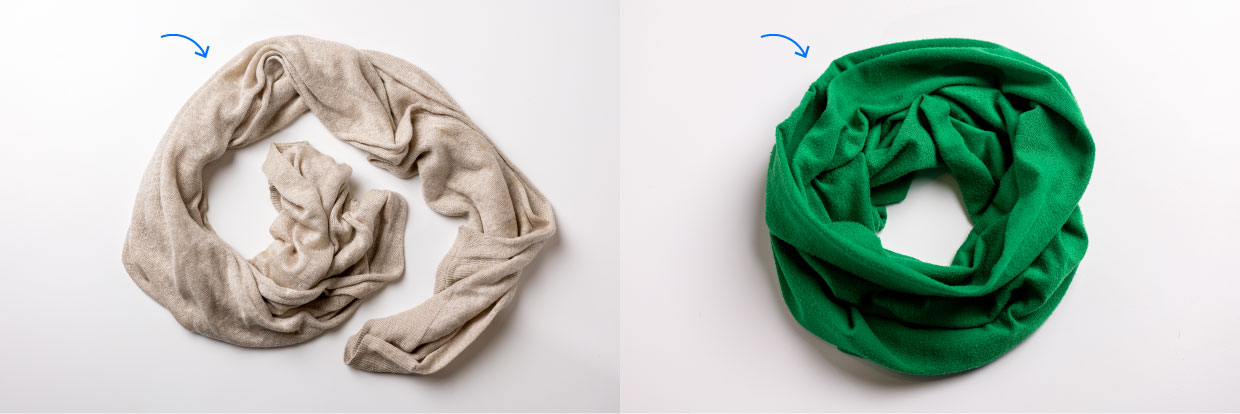
Loosely
knit
Single
layer
fabric
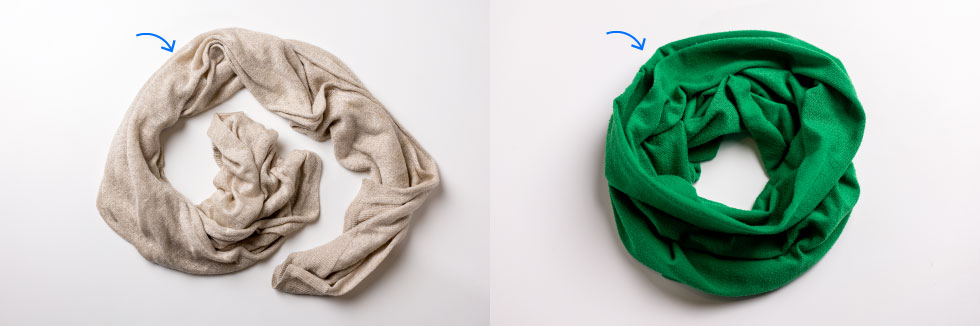
Loosely
knit
Single
layer
fabric

Loosely
knit
Single
layer

Percentage of particles filtered out
0
20
40
60
80
100%
Cotton, threads per inch
80 thread count
600 thread count
Chiffon, mix
Chiffon
Chiffon-cotton
Silk, mix
Silk
Silk-cotton
Flannel, mix
Flannel
Flannel-cotton

Percentage of particles filtered out
0
20
40
60
80
100%
Cotton, threads per inch
80 thread count
600
Chiffon, mix
Chiffon
Chiffon-cotton
Silk, mix
Silk
Silk-cotton
Flannel, mix
Flannel
Flannel-cotton

Percentage of particles filtered out
0
25
50
75
100%
Cotton, threads per inch
80 thread count
600
Chiffon, mix
Chiffon
Chif.-cott.
Silk, mix
Silk
Silk-cotton
Flannel, mix
Flannel
Flannel-cotton
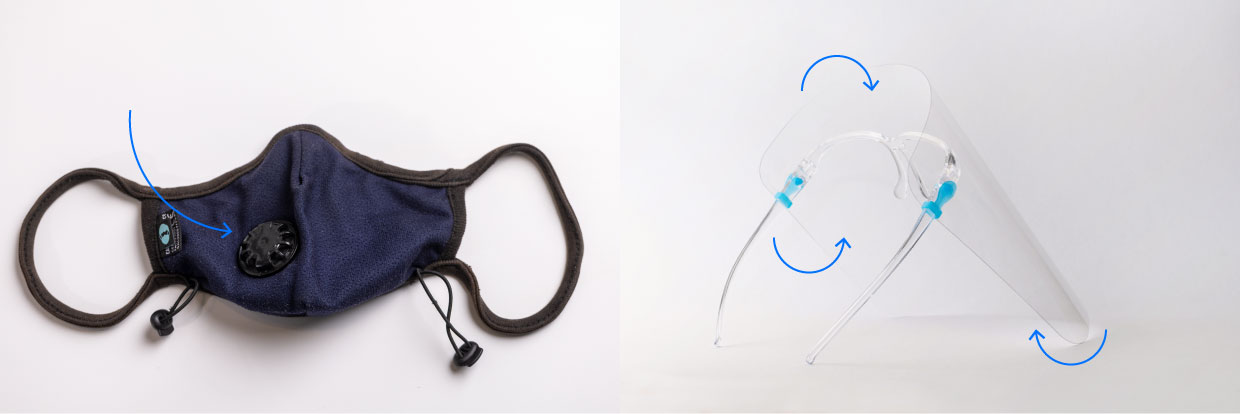
Valves have holes
that let in virus
Face shields
leave large areas
exposed

Valves have holes
that let in virus
Face shields
leave large
areas exposed
Holes let
in virus
Large
exposed
areas

Percentage of particles filtered out
0
20
40
60
80
100%
N95
Gap
No gap
Surgical mask
Cotton-silk mix

Percentage of particles filtered out
0
20
40
60
80
100%
N95
Gap
No gap
Surgical mask
Cotton-silk mix

Percentage of particles filtered out
0
25
50
75
100%
N95
Gap
No gap
Surgical mask
Cotton-silk mix
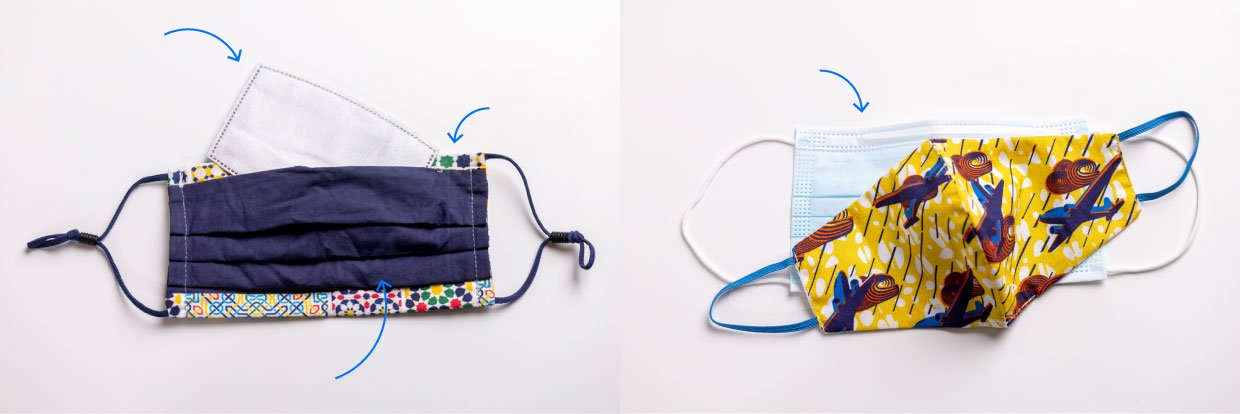
Surgical and cloth
mask combo
Pocket to
insert filter
Tightly
woven
cotton
Two layers

Tightly
woven
cotton
Pocket to
insert filter
Surgical and cloth
mask combo
Two layers
Filter
Double mask
combo
Multiple layers

Percentage of particles filtered out
0
20
40
60
80
100%
1 layer
Cotton, 600 thread count
2 layers
Chiffon
1
2
Natural silk
1
2
4 layers
Cotton, 80 thread count
1
2

Percentage of particles filtered out
0
20
40
60
80
100%
1 layer
Cotton, 600 thread count
2 layers
Chiffon
1
2
Natural silk
1
2
4 layers
Cotton, 80 thread count
1
2

Percentage of particles filtered out
0
25
50
75
100%
1 layer
Cotton, 600 thread count
2 layers
Chiffon
1
2
Natural silk
1
2
4 layers
Cotton, 80 thread count
1
2
Note: The CDC doesn’t recommend using two surgical masks at once. Filtration data are weighted averages for particles larger than 300 nanometers (approximate size of bacteria, fine aerosols and spores) conducted at a flow rate of 1.2 cubic feet per minute.
One common myth is that face masks increase the amount of carbon dioxide the user breathes, leading to feelings of illness or tiredness. A CO2 molecule is 0.33 nanometers in diameter; any mask tightly knit enough to filter out something that size would make breathing impossible. While SARS-CoV-2 is about 100 nm in diameter, it travels in a droplet many times its size. We measure the droplets we produce when speaking in micrometers, which are 1,000 times bigger than nanometers. If a CO2 molecule were the length of a Tyrannosaurus rex, then the average pore size of an N95 mask would span a country the size of Italy.
All this research on masking, of course, doesn’t begin to get at what makes the issue so emotional in some countries and cultures. The presence of masks is more than a mild discomfort or inconvenience. They are a barrier to effective communication, making us less relatable and able to connect with others. They are also a jarring visual reminder of something we lost when we got hurled into the pandemic age. Demasking feels like an act of defiance.
As much as we’d like to see the end of masking, the high transmissibility of the delta variant and the declining protection offered by vaccines means we need masking in our routines.
Strategic Masking

Molded
Gap
Closed
Closed
Gap

Molded
Gap
Closed
Closed
Gap
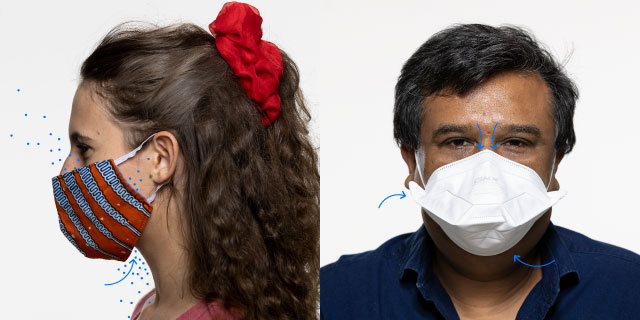
Molded
Closed
Closed
Gap
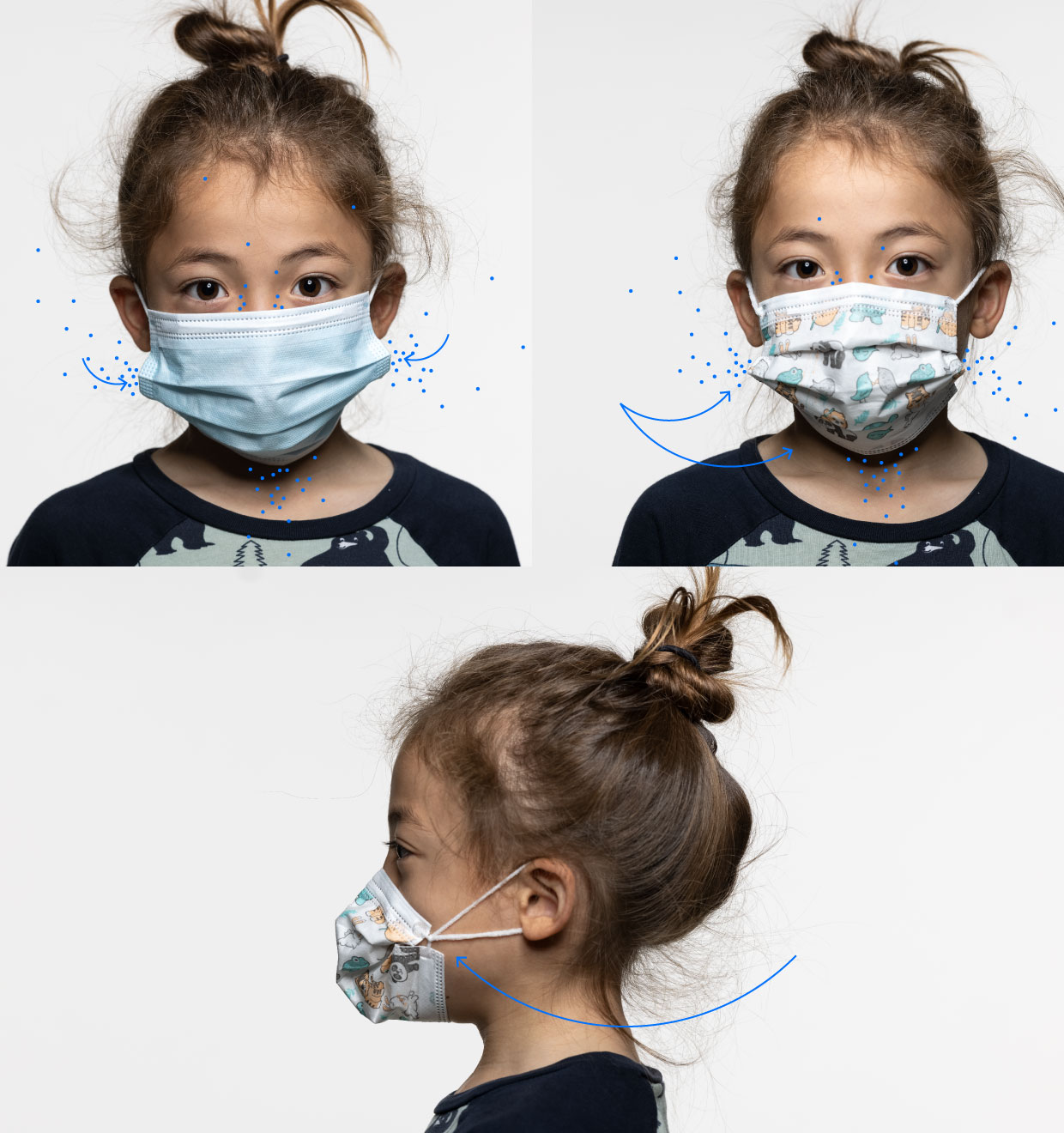
Gap
Even child
masks can
leave large
gaps
Gap
Tie the sides to
lower exposure by
65%
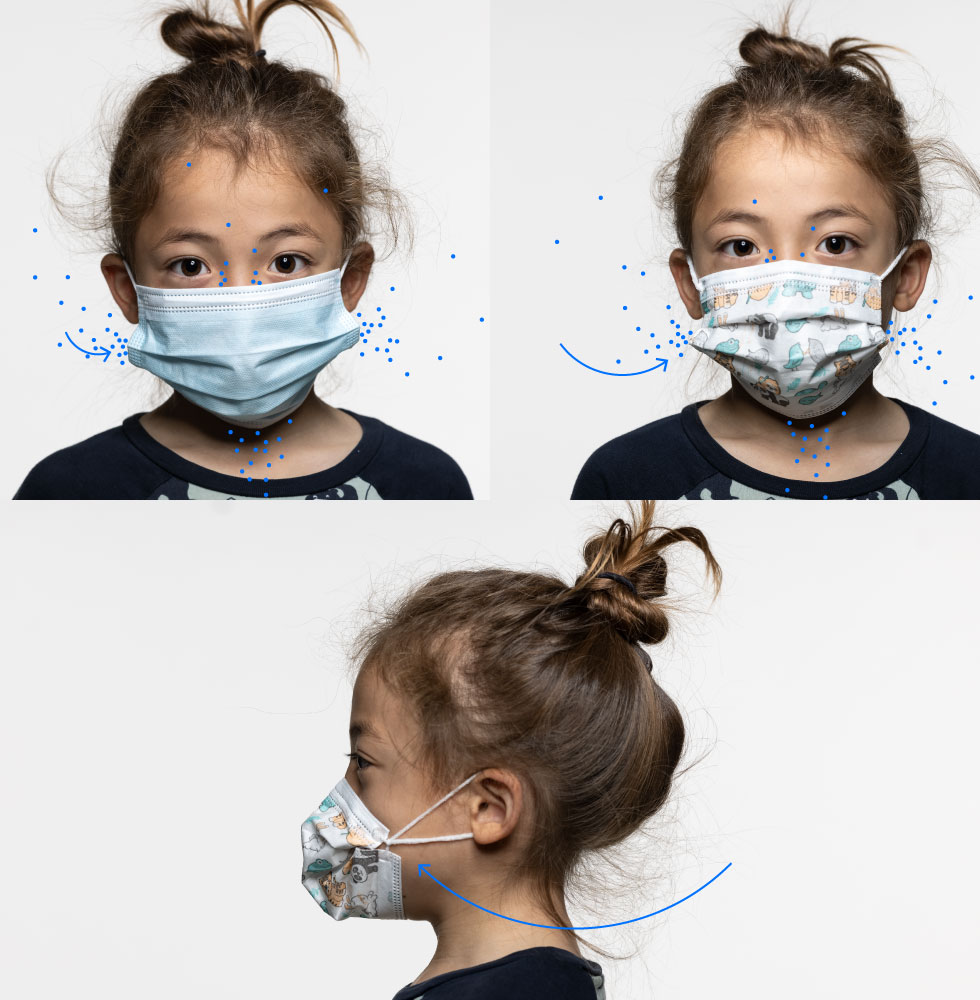
Even child
masks can
leave large
gaps
Gap
Tie the sides to
lower exposure by
65%

Even child
masks can
leave big
gaps
Gaps
Tie the sides to
lower exposure by
65%
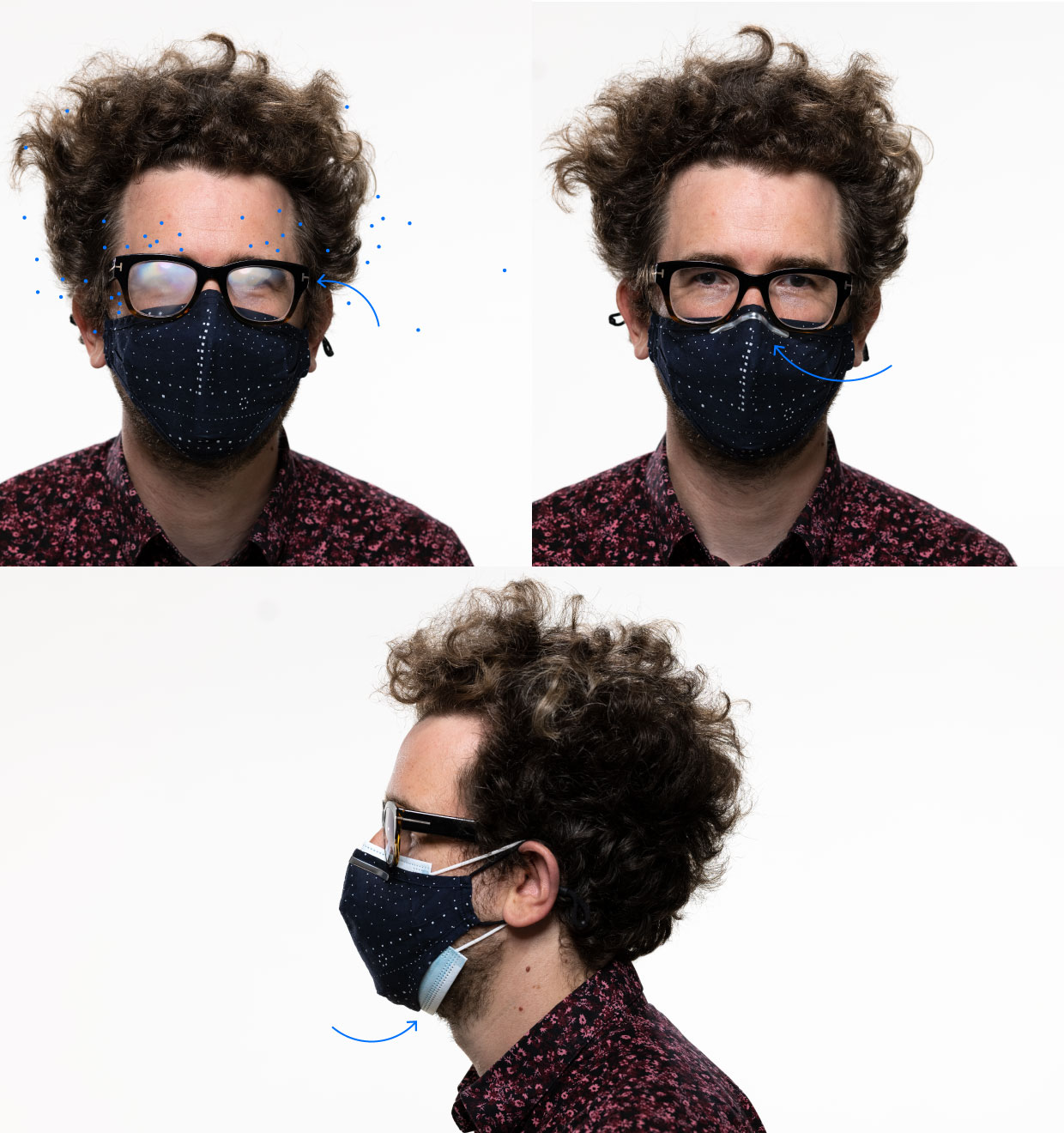
Foggy glasses
are a sign the
mask is not
sealed
Attach a
metal strip
for a better
fit
Add a second mask, which
can reduce exposure to
infectious aerosols by
83%
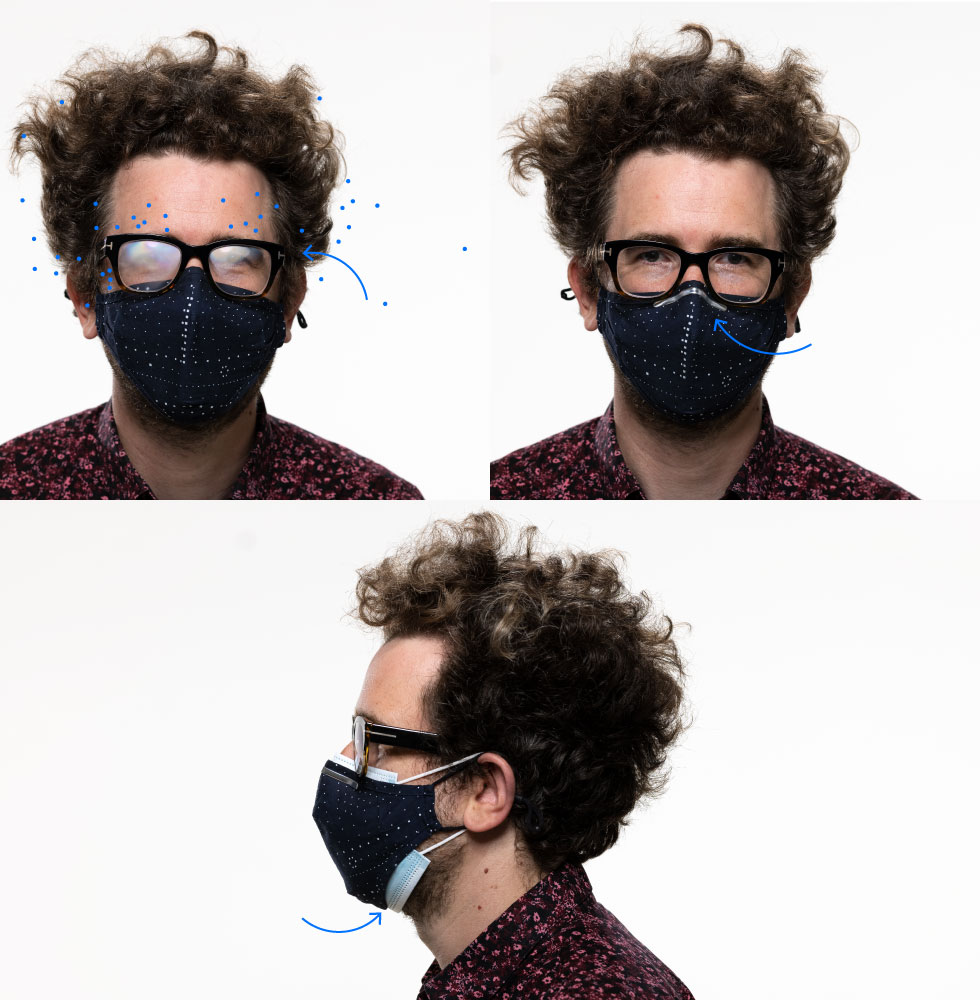
Foggy
glasses
are a sign
of leaks
Attach a
metal strip
for a better
fit
Add a second mask,
which can reduce
exposure to infectious
aerosols by
83%

Attach
a metal
strip for
a better
fit
Foggy
glasses
are a sign
of leaks
Add a second
mask, which can
reduce exposure
to infectious
aerosols by
83%
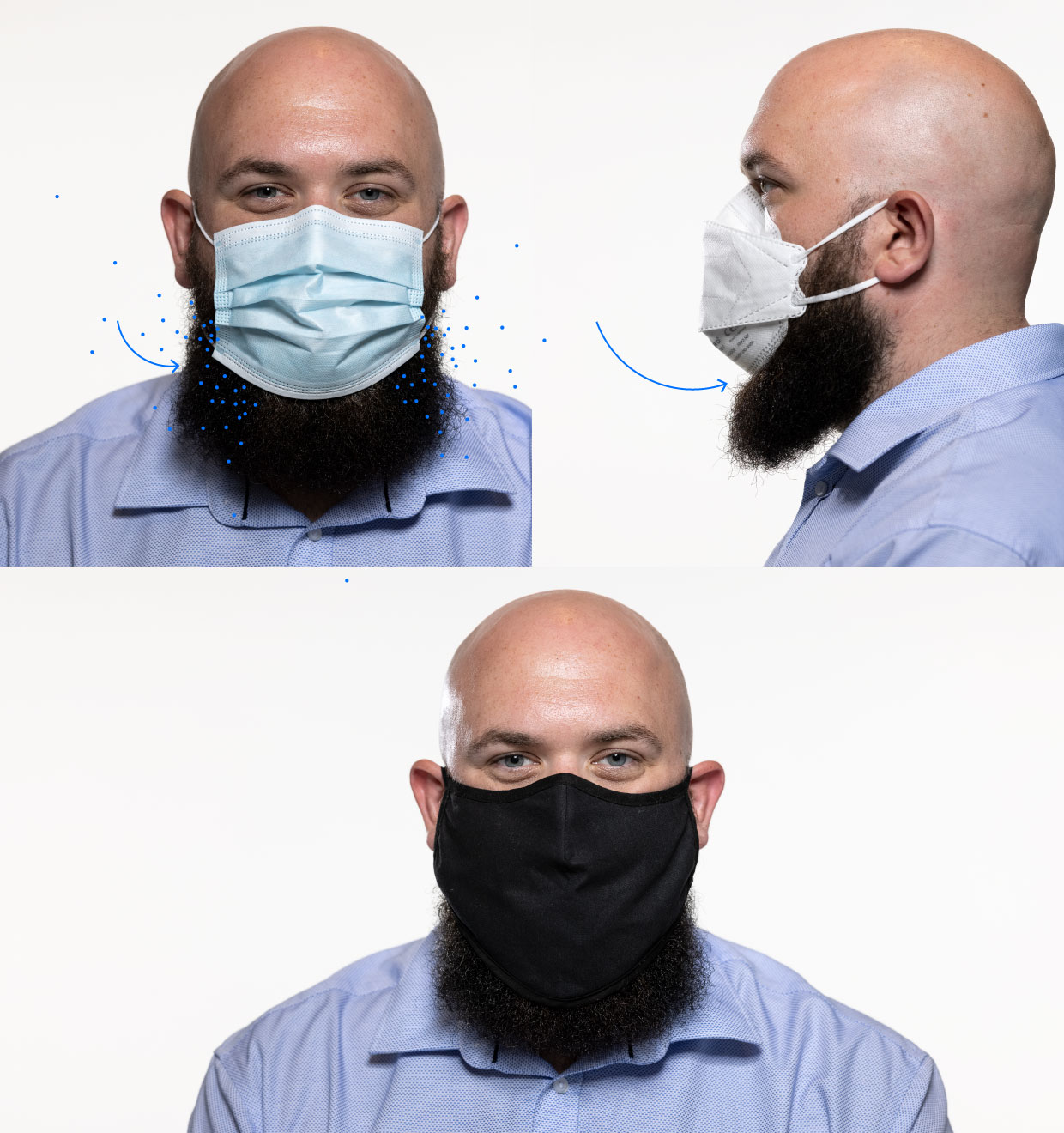
Snug mask
cuts into beard,
creating the
facial hair
equivalent
of hat head
Beards can
make a tight
seal tricky
Wear a comfortable mask
that wraps around the side
and extends below the chin
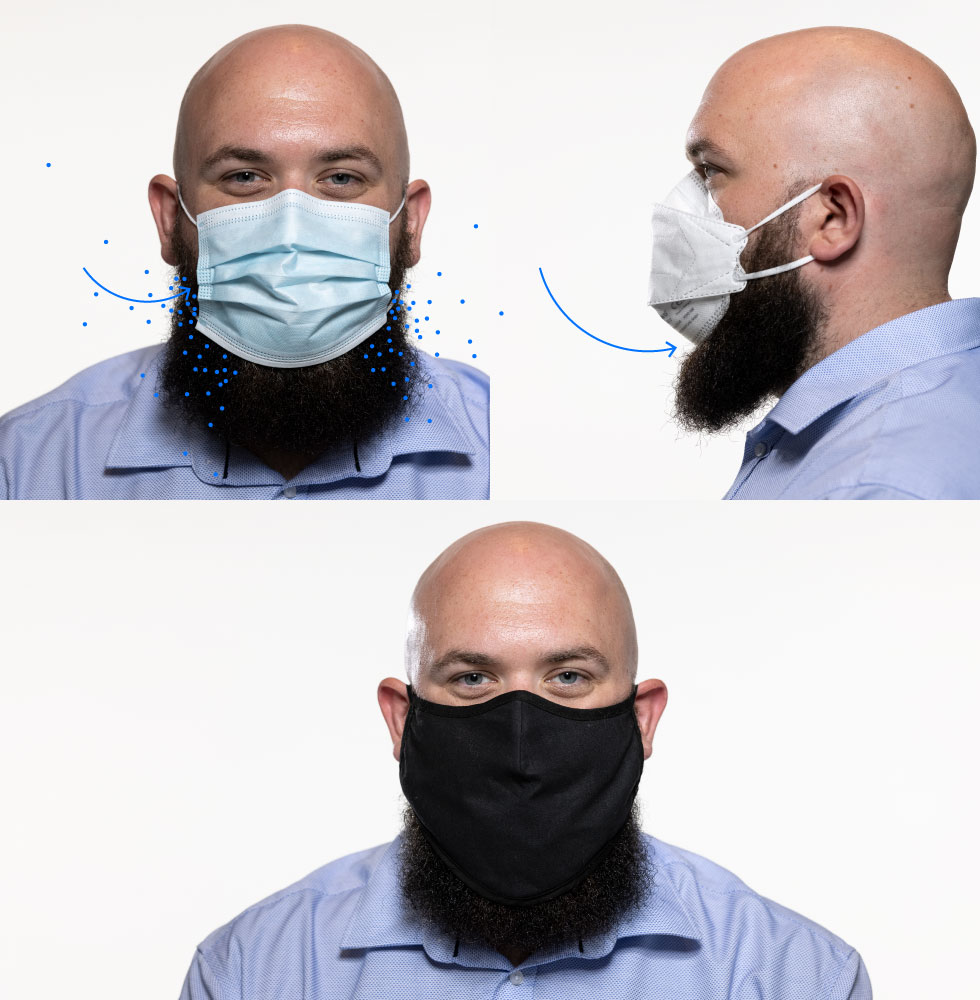
Snug mask
creates the
facial hair
equivalent
of hat head
Beards
make a
tight seal
tricky
Wear a comfortable
mask that wraps around
the side and extends
below the chin

Snug mask
creates the
facial hair
equivalent
of hat
head
Gaps
Wear a comfortable
mask that wraps
around the side
and extends
below the chin
Comfort is important to being able to wear a mask for long periods of time. In addition to metal nose-bridge strips that can help a mask stay on better, straps that tie behind the head and mask extenders can help reduce soreness around the ears. Insertable filters can be replaced when masks get wet.


Masks will also help prevent more vaccine-resistant variants from emerging as well as higher rates of flu infections, which can also cause serious illness and even death.
Even so, the research strips away some of the mask myths and can help all categories of maskers — nervous, nevers and uncertains — be more tactical and aware. To know whether a mask is a must-have, a good idea or entirely superfluous, check the risk factors the way you might a weather report in the mountains: How densely packed and how well-ventilated is the space you are entering? Will you be moving around or stationary? It’s certainly good to mask up in an elevator or on public transport where people are pretty close together. It’s probably not necessary in an open-planned, well-ventilated office, provided people observe a measure of social distancing.
Then be mindful of the infection and vaccination rates where you are. If you are in Broward County, Florida, where 70% of over-18s are vaccinated, you’d be justified in having a more relaxed approach; drive next door to Glades County, where only 31% are vaccinated and infection rates are high, and you’ll want to be more vigilant. Similarly only 16% of over-65s in King County, Texas, are vaccinated compared with 70% next door in Knox County, where the CDC recommends even vaccinated people mask.
By moving beyond the “hygiene theater” of practices that don’t offer much benefit while also accepting that there are many different levels of risk tolerance and factors that increase or lower situational risk, we can treat masking a little like checking the weather forecast. Some days require a little more covering up than others.