BP Looks Dirtier Than Exxon in New Data From Giant U.S. Oil Field
BP Plc aspires to be the oil industry’s climate champion. Last year, the London-based company became the first of the world’s supermajors to embrace an eventual phase-out of all greenhouse gas emissions.
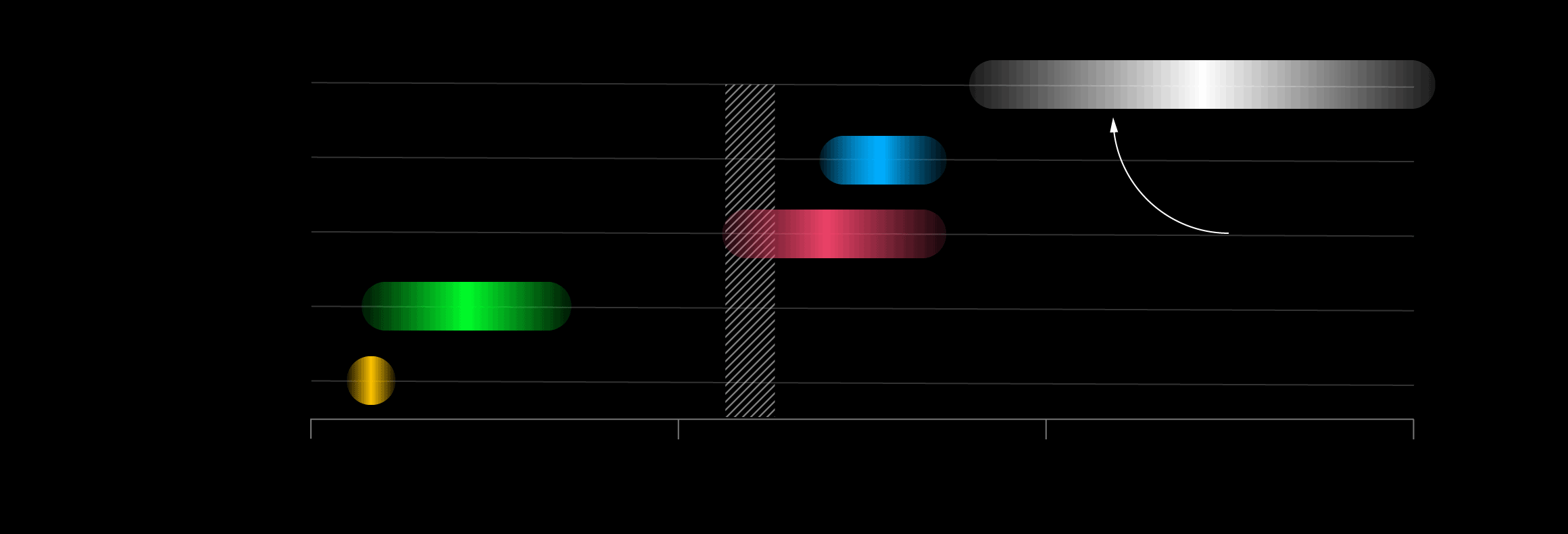
But a Bloomberg News analysis of new data collected from the Permian Basin, the largest U.S. oil field, shows that BP’s operations are among the dirtiest of dozens of companies operating there. The same analysis shows Exxon Mobil Corp., which has resisted a net-zero target, is among the cleanest.
Stark differences among big oil companies in the Permian
Study
average
BP
ConocoPhillips
Error bars
show emissions
estimated at a 95%
confidence level.
Shell
Chevron
Exxon
0 grams
200
400
600
Grams of methane released per barrel of oil equivalent
Study
average
BP
ConocoPhillips
Error bars
show emissions
estimated at a 95%
confidence level.
Shell
Chevron
Exxon
0 grams
200
400
600
Grams of methane released per barrel of oil equivalent
Study
average
BP
ConocoPhillips
Shell
Error bars
show emissions
estimated at a
95% confidence
level.
Chevron
Exxon
0 grams
200
400
600
Grams of methane released per barrel
of oil equivalent
The findings are based on research by the nonprofit Environmental Defense Fund that offers an unprecedented chance to compare major companies’ performances across tens of thousands of wells in the oil-rich region of West Texas and New Mexico. They’re far from comprehensive, though, covering only a portion of a single basin over a few days. Both companies operate in dozens of countries around the world.
Methane is the chief component of natural gas, often produced in such large quantities in the Permian that pipelines can’t handle the volume. Instead, it spills unburned into the air, where its climate-warming power is more than 80 times greater than carbon dioxide’s over a 20-year period. Last year, researchers found that oil and gas activity in the basin was responsible for about 2.7 million metric tons of methane a year, or more than those of all but eight countries in the world.
Read More: The Methane Hunters
For the past several years, most big producers have been pledging to get their methane emissions under control. Some have turned to monitoring well sites by satellite, airplane or stationary sensors, while others are re-engineering production facilities to reduce waste. Before now, there was no way to compare the companies’ progress.
The supermajors’ Permian footprint
- Flight coverage area

ConocoPhillips
Chevron
Exxon
Shell
BP
0
100
200
300
400K
Estimated average daily production, July-August 2021, barrels of oil equivalent.

ConocoPhillips
Chevron
Exxon
Shell
BP
0
100
200
300
400K
Estimated average daily production, July-August 2021,
barrels of oil equivalent.
The environmental group hired Carbon Mapper, a nonprofit affiliated with NASA’s Jet Propulsion Laboratory, to fly over a 3,200-square-mile area with an infrared spectrometer that can detect the otherwise invisible gas. Over 11 days in July and August, Carbon Mapper spotted more than 900 methane plumes pouring from tanks, compressors and pipelines. Later, EDF scientists identified the companies that owned the equipment and made the findings available online.
Bloomberg compared each oil producer’s methane emissions with the amount of oil and gas it produced in the flyover area, which includes almost 22,000 wells. Each well’s production was counted once for each day the Carbon Mapper airplane flew over it.
BP emitted about 500 grams of methane per barrel of oil equivalent produced, a measure that incorporates the energy content of both gas and oil. The figure for Exxon was less than 50 grams. Chevron Corp.’s rate was higher but within the margin of error of Exxon’s. The other supermajors in the basin, Royal Dutch Shell Plc and ConocoPhillips, fell between Chevron and BP.
The EDF study covered wells responsible for about 41% of production in the basin and at least one-third for each of the supermajors operating there. The figure for BP is 84%.
In a statement, BP said that “using a limited data set to draw these conclusions about BP’s overall Permian methane emissions is misleading and does not provide an accurate reflection of our performance.”
The company said it is using drones and piloted aircraft to check for methane emissions and is experimenting with stationary monitors and satellites. It plans to install measurement devices at all of its major processing sites by 2023, publish the data and cut emissions intensity in half.
“We still have more to do,” BP said. “We have additional infrastructure plans in the current capital framework, which will help us further reduce emissions and flaring.”
Exxon Mobil pointed to its efforts to reduce emissions by testing a number of technologies and participating in industrywide projects. This year, the Irving, Texas-based company filed an application with the U.S. Environmental Protection Agency to use lasers mounted on airplanes to check for leaks at its well sites as an alternative to traditional on-the-ground monitoring.
“Our success depends on finding, testing and scaling the latest technologies,” Exxon Mobil said in a statement.
Methane plumes across the Permian Basin
The other supermajors active in the Permian said they were also working to control emissions. ConocoPhillips added that “while aerial monitoring is an important part of our own leak detection and repair toolkit, it only captures a moment in time and its effectiveness can be diminished in areas like the Permian where operators work in close proximity to each other.” In September, ConocoPhillips agreed to buy Shell’s Permian assets for $9.5 billion.
The companies’ own environmental disclosures paint a different picture. BP reported lower emissions per barrel across its global operations than Chevron, Shell or ConocoPhillips, according to data compiled by Bloomberg, and Exxon had the highest. BP also scored best on flaring, the practice by which producers burn off unwanted natural gas.
Differences in emissions intensity among global producers are often driven by geography. Operating in a basin where gas is frequently flared, such as in Nigeria or Iraq, can increase a company’s emissions rate.
The EDF Permian study allows for a different kind of comparison, because it tracks companies working alongside each other in the same area. It also relies on direct field measurement, rather than the formulas companies use to estimate emissions. In recent years, a growing body of research has found that these formulas tend to underestimate certain types of emissions.
Production in the Permian is highly fragmented, and the supermajors in the Bloomberg analysis account for only about 28% of the total. Houston-based EOG Resources Inc. was the biggest producer in the analysis, and its emissions rate was somewhat lower than average. EOG declined to comment.
The EDF surveillance effort isn’t the final word on emissions in the basin, which encompasses about 64,000 square miles. On average, each well in the study area was flown over on three different days. The spectrometer, mounted on an airplane more than two miles above the Earth, can’t detect plumes emitting gas at less than 10 or 20 kilograms an hour. Still, it’s good at finding the biggest leaks, which regulators and companies prioritize because they make up a large share of total emissions.
Carbon Mapper uses a formula to estimate the amount of emissions based on the observed methane concentrations and wind speed. The estimates aren’t precise.
EDF attributed about half of the plumes to midstream companies, which gather gas from producers, process it and transport it out of the region. The Bloomberg analysis doesn’t include these emissions because there isn’t enough data on company assets for valid comparisons. There were also about 80 plumes that EDF wasn’t able to attribute to any company.
Still, the flyovers offer the most comprehensive public accounting ever assembled of company pollution across a broad region. Previous studies have either been too small, didn’t identify companies, or both.
The emissions data are publicly available on EDF’s Permian Methane Analysis Project website, with the aim of spurring companies to control emissions and helping regulators craft better rules. Since they were posted in recent weeks, “several operators have said that the data has led to them finding and fixing emission sources that they did not know about,” said David Lyon, a senior scientist at EDF. His team is working on its own comparison of company operators, one it intends to publish in a scientific journal.
Exxon’s performance also stood out in EDF’s preliminary analysis, Lyon said. He pointed to the company’s use of aerial monitoring as a potential factor. “They’ve likely detected and fixed a lot of these super-emitters,” he said, adding that “they still have emissions above what they need to do. It’s critical for them to do more.”