In Florida, Petty Condo Politics Jeopardizes Residents' Safety
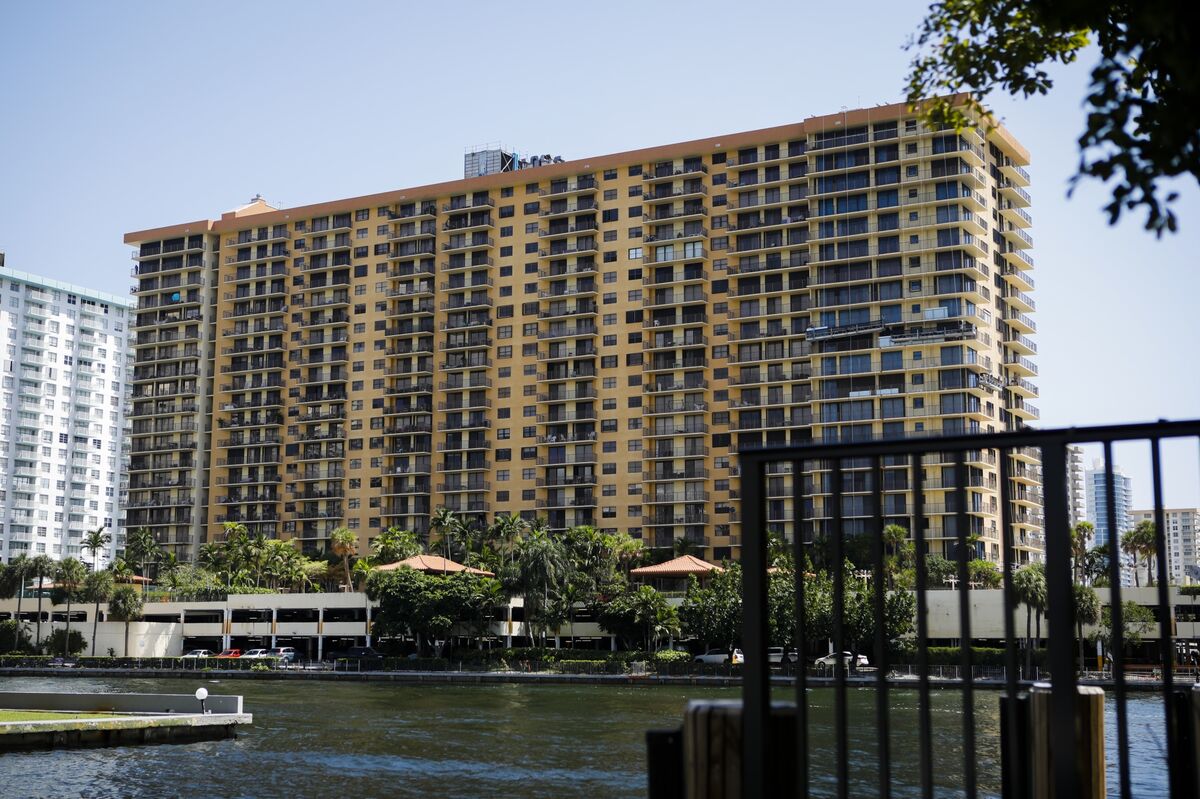
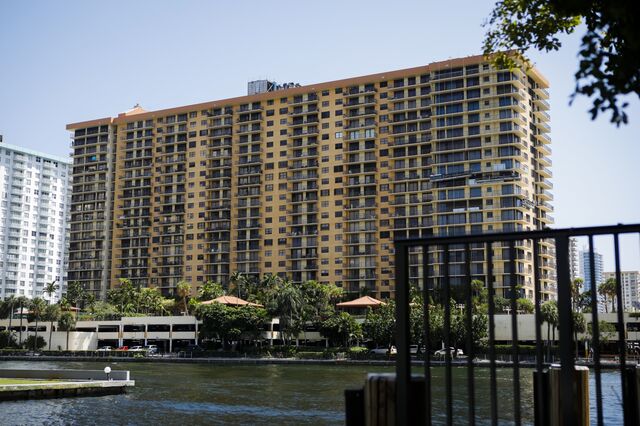
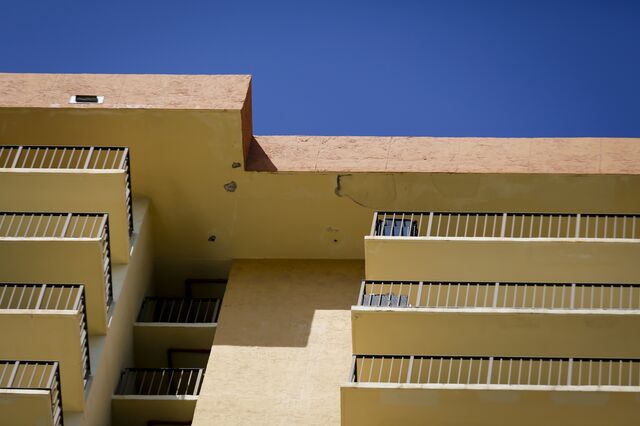
Half the balconies on the 23-story high-rise condominium building needed repairs, sometimes breaking off in pieces and threatening units below. To reduce the load, one owner was asked to move her plants inside and be patient until the spalling concrete could be fixed.
But the $11.9 million repair plan for Winston Towers 700 in Sunny Isles Beach, Florida, never got off the ground. The price tag sparked an owner rebellion that ended in June 2020 with the recall of all nine board members. The new board instead planned a project that would cost only $2.3 million, according to the general contractor’s bid.
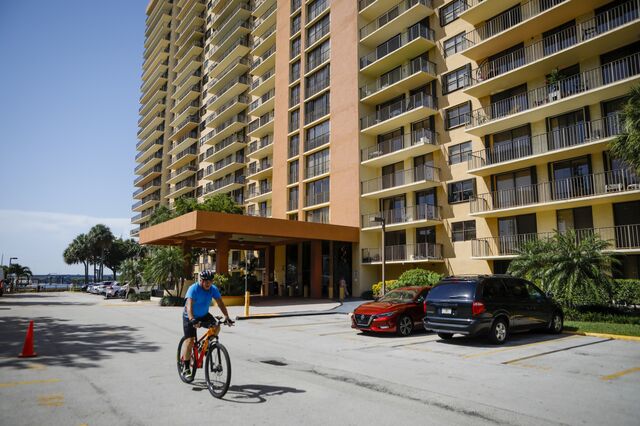
The saga of Winston Towers 700—two years of ALL-CAPS internet insults, cloak-and-dagger surveillance and meetings so raucous that board members called in police—was subsiding when nearby Champlain Towers South crashed down, killing 98 people.
The struggle ended for good in July, when the city authorized emergency repairs, which are underway. But the fight shows how ownership structures in buildings inhabited by 4.7 million people can undermine residents' safety. Across the state and the U.S., similar battles must be fought within buildings, each in various states of decay.
For Nadia Edwards, the ousted treasurer of Winston Towers, the mix of shock and vindication remains fresh. “I said, ‘Oh my god,’” said Edwards, a retired accountant from Romania who lives on the 19th floor. “This is what I was fighting for—for the building not to collapse.”
Condominium board president Felix Liderman declined requests to comment. Mayor Larisa Svechin said Winston Towers 700 has been making the necessary repairs.
While condo boards across the globe feel pressure from residents to keep costs low, few get as much leeway as Floridians.
New York City, for example, requires exterior walls and balconies to be checked every five years, and parking garage inspections will soon be mandated too. In Hong Kong, a vertical city of colorful high-rises, 30-year-old buildings must be inspected and the government subsidizes unaffordable repairs. In Canada, condo boards must keep reserve funds for major work and do periodic studies to determine what’s necessary.
Keeping Florida residents safe is made harder by humid, salty ocean air and corrosive condo politics enabled by state laws that embolden boards—and allow engineers they hire to decide what repairs are needed.
Crumbling Condos
Buildings housing thousands around Miami are aging and decaying

As soon as this month, legislative committees may consider changes, including whether to require greater reserves and inspections more than once every four decades—currently a requirement in only two of 67 counties, Miami-Dade and neighboring Broward.
Bills must get past the Republican-dominated legislature and the powerful condo association lobby. The eight-member Florida Bar task force that will recommend changes includes five condo association representatives.
The force’s leader, William Sklar, is a University of Miami School of Law adjunct professor who represents developers and lenders. Florida places responsibility for protecting buildings on owners, many of whom are investors or seniors on fixed incomes, Sklar says. They share a common goal: keeping costs—and reserves—as low as possible.
“Someone who is 75 years old says, ‘Why should I pay for a roof that’s only necessary 10 years from now when I’m not here any more?’” Sklar said.
Florida’s newest buildings meet modern codes and have wealthier owners who can make expensive repairs. But more than 900,000 units are over 30 years old.
On the Miami-area barrier islands that include Sunny Isles Beach and Surfside, more than half of the 25,000 oceanfront condo units are approaching a recertification deadline by 2030, according to Peter Zalewski, principal at Condo Vultures, a South Florida real estate consultancy.
Sunny Isles Beach is a city of about 21,000 people perched on Biscayne Bay with ranks of condominiums standing guard yards from the water. Its inhabitants reflect polyglot South Florida, with 62% born abroad, according to the U.S. Census. Many are from Latin America, but the town has a large population of residents from the former Soviet Union.
In 1980, Sunny Isles was known for cheesy mid-century motels, like the Suez, which once greeted guests with a pyramid and fiberglass Sphinx. Winston Towers opened that year with an expansive pool deck lined by palm trees and the ill-starred balconies.
In 2019, the balconies set off the war of Winston Towers 700. The battle lines were drawn by structural engineers, starting with ACG Engineering, a local firm the board hired that recommended $11.9 million in repairs. The bulk of the work—$6.8 million—was for the balconies, potentially requiring replacement of some of the concrete and railings, according to a draft estimate of the costs.
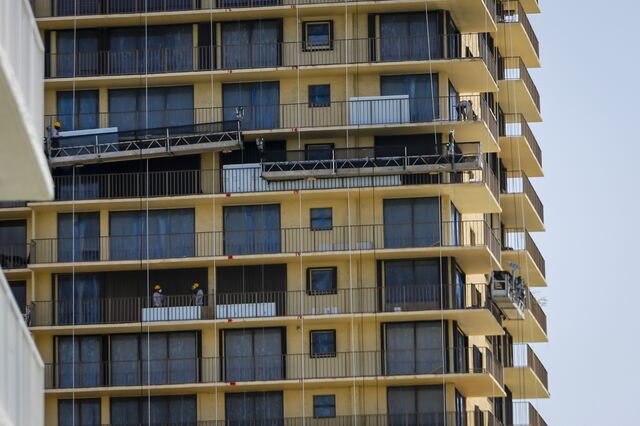
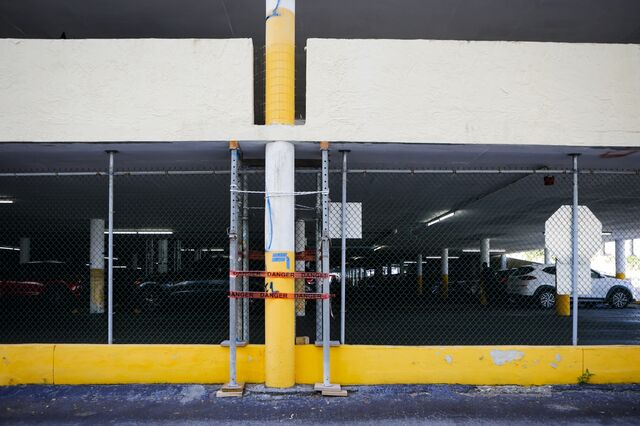
Structures from that era are showing cracks as salt and moist air seeps through gaps, rusting rebar and splitting concrete apart.
ACG president Andres Caicedo gave a daunting PowerPoint presentation to residents packed into an assembly room for a meeting in January 2020.
“The continued deterioration of the balcony slabs and railing systems raises a concern with the structural integrity of these elements,” it said, going on to warn of “the risk of a piece of deteriorated concrete falling off the building and damaging property or worse, injuring someone.”
Soon after, opponents began insinuating—without evidence—that board members would enrich themselves, storing money in off-shore accounts, said Edwards, the former treasurer.

Residents yelled at board meetings. The gazebo became a scene of espionage. An opponent filmed Edwards having drinks with other members, presumably on an intelligence-gathering mission to show they were having secret meetings, she said.
“They are spying on us. They film me more than I would be filmed in Hollywood,” Edwards said at the following month’s meeting of the Sunny Isles Beach City Commission.
Svetlana Cholodkovskaya, an 11th-floor resident, complained at the same meeting that the assessments in neighboring buildings were much lower. She was pushing for a second opinion from another engineer.
“The board is just moving on with this one engineer they found with an overexaggerated price,” said Cholodkovskaya. “If you’re buying a car, you’d go to several dealerships and you’d shop around.”
Sunny Isles’s then-mayor, George Scholl, offered a piece of advice. “The one thing I would warn,” he said. “Be careful shopping for an opinion you want to hear.”
Winston’s war was fought via Facebook and flyer. One online skirmish posted on the “Sunny Isles Beach Insider” Facebook group after the commission meeting included accusations of bad engineering and accounts of personal affronts:
On a cloudy March day in 2020, the new board candidates lined up on a terrace at Winston Towers, with yachts and high-rises setting the backdrop for a campaign video. Taking turns, each took a few steps forward, reciting their credentials, and promising to minimize spending and bring back honesty.
“I am engineer myself,” says Mike Kon, in a starched short-sleeved dress shirt and shades. “The current board is completely incompetent or even worse, it sounds fishy.”
In the face of the insurgent candidacy and a recall petition taken door to door that created acrimonious accusations of cheating, the condominium's board gave in. The new board took office in June 2020 with Liderman as its president and Cholodkovskaya as a member. It hired Property Consulting Group, a Pompano Beach firm, to win recertification from Miami-Dade.
The balconies could be mended for less than $700,000, a tenth of the ACG estimate, according to bidding documents. Art Weissman, a retired NASA engineer who helped launch the recall campaign and was the new board’s vice president, said in an e-mail that the building had already spent about $2.5 million on a balcony and concrete restoration in 2005.
James Hanskat, the lead engineer at PCG, declined to comment about the building; ACG’s Caicedo declined as well.
Ben Messerschmidt, executive director with Epic Forensics and Engineering, a West Palm Beach firm that advises condo associations, reviewed draft estimates from both companies at Bloomberg’s request. (Messerschmidt’s firm unsuccessfully competed for the Winston Towers 700 project.)
He said that ACG’s estimate was expensive, but its breadth made sense. Recertification requires addressing only immediate dangers, but underlying causes, such as leaks that cause columns to corrode, aren’t required, Messerschmidt said.
PCG appeared to be greatly underestimating the project’s cost, he said. The bidding documents included costs that added up to about $2.3 million for construction and optional work, though the new board eventually said it would borrow up to $500,000 more to cover all costs, according to an April 6 letter notifying residents of the cost. “There’s no way in hell they’d get that done for $2.8 million,” Messerschmidt said.
On June 24 of this year, the Champlain Towers tragedy ended the war.
A few days after the Surfside collapse, the Winston board told residents that it would "expand the scope" of the recertification project, according to a note to owners. It would test the sturdiness of the ground and review the building's original structural plans—though no cost estimates were included.
City inspectors fanned out across Sunny Isles, arriving at Winston Towers less than a week after the collapse, and ordered emergency repairs. Work is proceeding on the parking garage and workers in yellow hardhats are breaking apart tiles on balconies.
However, the repercussions of the war of Winston Tower linger. Weissman quit as board vice president on Sept. 10. He said in the e-mail that he didn’t leave over the building’s safety, but because “good communication and free flow of ideas is absolutely essential within any organization, which I felt was lacking with our Board.”
Weissman said in an interview that the Champlain Towers disaster was a pivotal moment.
“Everybody is totally shocked about what happened,” he said. “It did put a spotlight on safety.”