Charting the Scale of the White House Covid-19 Cluster
President Donald Trump announced his Supreme Court nominee at a crowded Rose Garden event on Sept. 26 where few people wore masks or observed social distancing. Between it and Oct. 2, when Trump was helicoptered to Walter Reed National Military Medical Center for treatment of Covid-19, he headlined a string of risky events, many indoors, that have sent people scrambling to get tested.
In addition to Trump, at least 23 people who have been in close proximity to the president, his campaign or the White House have tested positive for the coronavirus. The number of positive cases may be higher, as some staffers and event attendees haven’t publicly shared their diagnoses.
The growing number of cases reported among people with contact to the White House shows how the virus can rapidly spread among people in close contact without wearing masks.
For comparison, in all of Washington, with a population of more than 700,000, the seven-day average of daily Covid-19 cases was 58 on Thursday.
For the past week, there have been about eight cases a day per 100,000 people across the capital, and major cities on the Eastern Seaboard have seen relatively low positive cases per capita, too.
People testing positive following Sept. 26 Rose Garden event
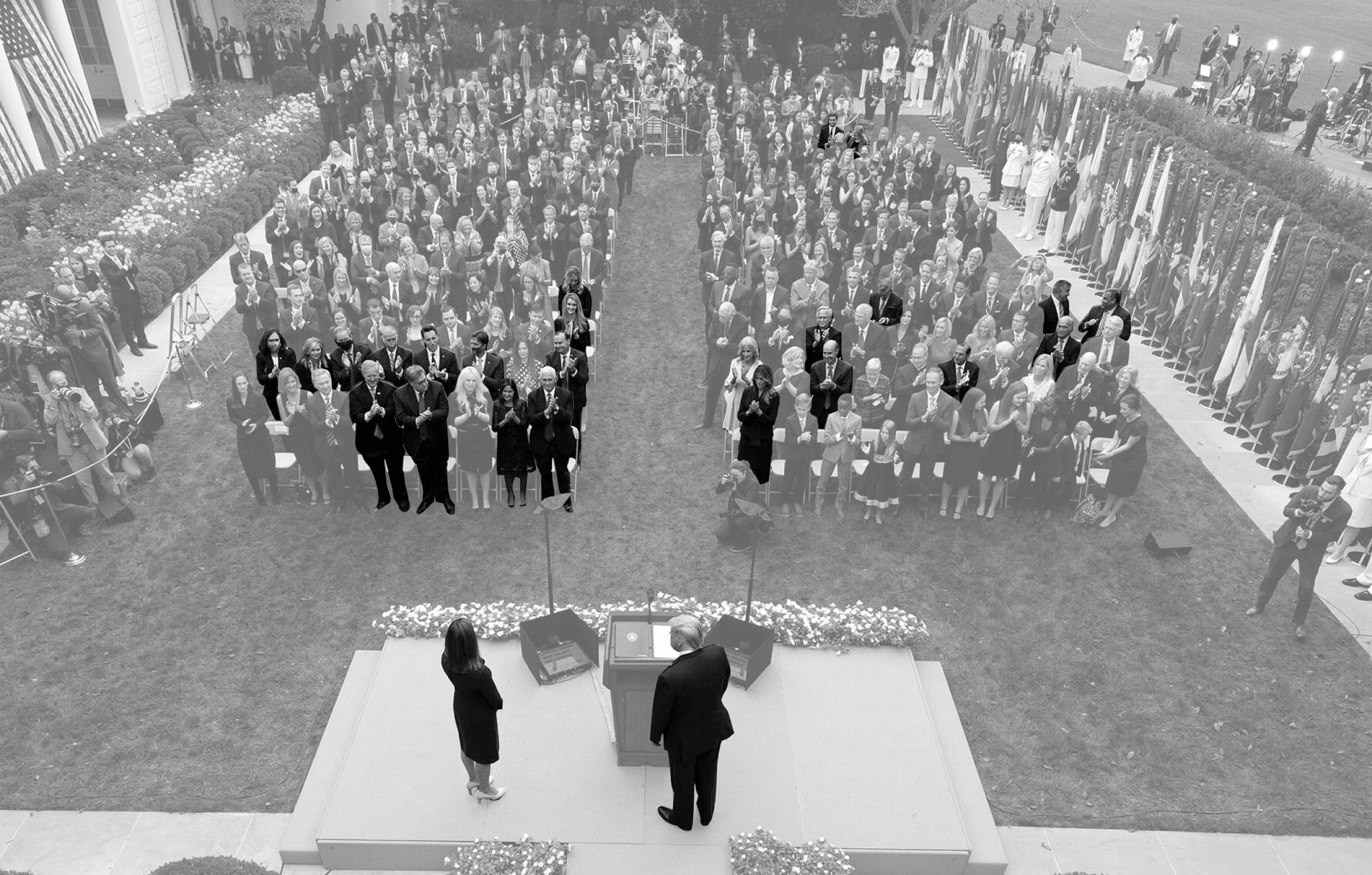
The White House cluster has the potential to affect the activities of the federal government and Congress. House Speaker Nancy Pelosi said Wednesday she “won’t go anywhere near the White House” in reference to the outbreak when asked about whether she would resume in-person talks with the president. Senate Majority Leader Mitch McConnell postponed floor votes until Oct. 19, though the Judiciary Committee, of which two Republican members have tested positive for the virus, will begin hearings for Amy Coney Barrett’s nomination to the Supreme Court on Oct. 12.
After the Commission on Presidential Debates announced Thursday that the second debate next week between Trump and his rival, Democrat Joe Biden, would be held virtually, Trump said he would not participate. The president has also said he will be back on the campaign trail soon and that he believes he is no longer contagious. The Centers for Disease Control and Prevention guidelines suggest patients who have had symptoms should not be around others until they’ve experienced 10 symptom-free days.