What More Than 100 Million Early Votes Say About 2020 Turnout
More than 70% of the total votes in 2016 have already been cast in the 2020 election—and all before a single voter cast a ballot for President Donald Trump or former Vice President Joe Biden at the polls on Election Day.
As states expanded rules to allow more voters to cast a mail-in ballot or vote early in person as a precaution against Covid-19, early votes have exceeded 103.2 million as of Tuesday, according to preliminary data that tally mail and early in-person votes, collected by the Associated Press.
That’s 1.8 times as much as the early vote total in 2016 (58.8 million votes). With many states allowing for mailed ballots to be received on Election Day or several days after, the final early vote tally will be even higher.
Early Voters👆
It’s possible that the surge in early voting won’t translate to a higher overall turnout. Five states already hold all-mail elections and another four states and Washington D.C. mailed a ballot to all registered voters for this election due to Covid-19. In other states, early votes accounted for a high share of the total vote in 2016, too. This year, voters who might normally vote in person on Election Day could instead be voting early due to the pandemic, leaving fewer voters to cast ballots on Nov. 3.
Coming up: Live 2020 election results
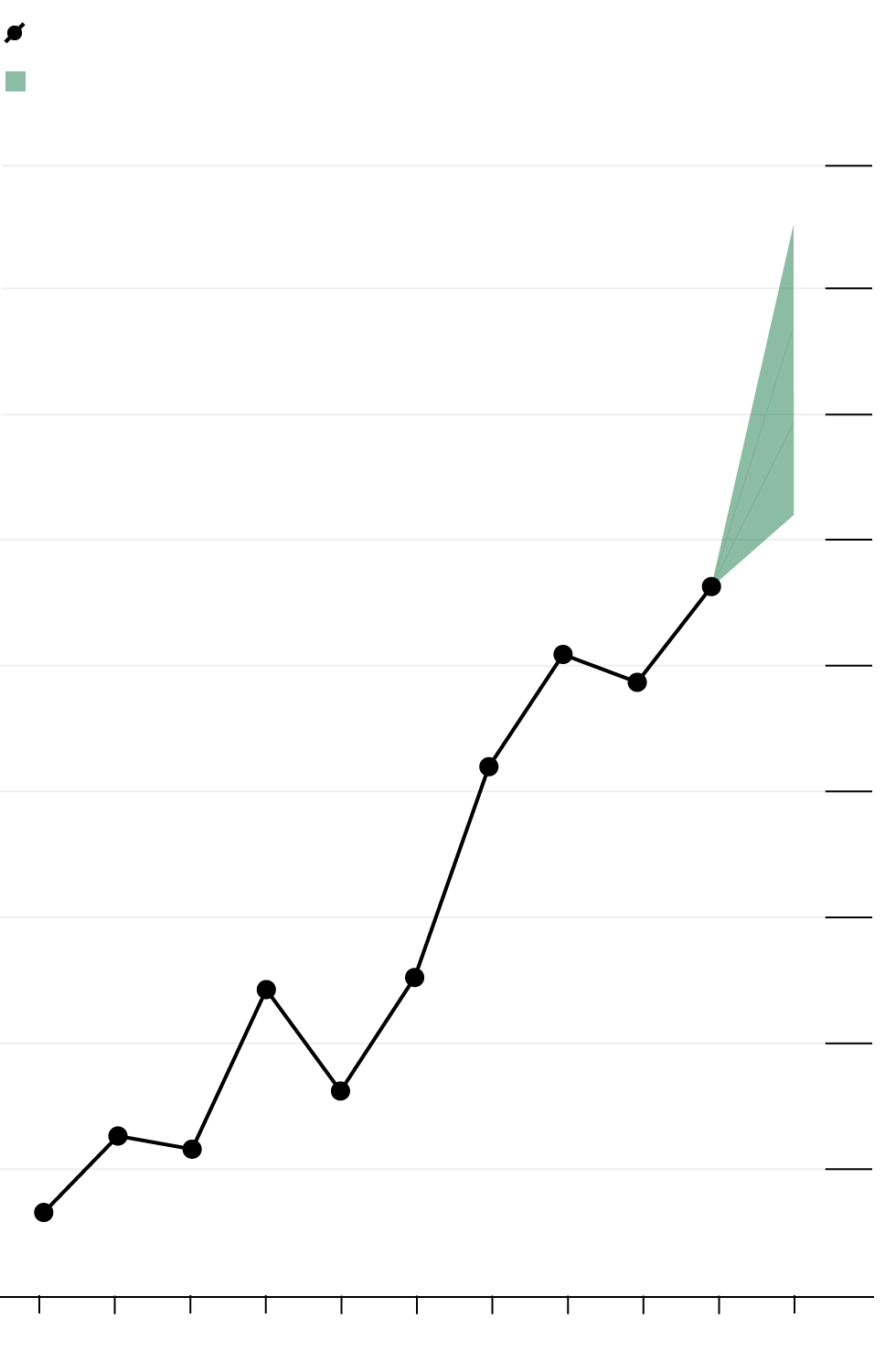
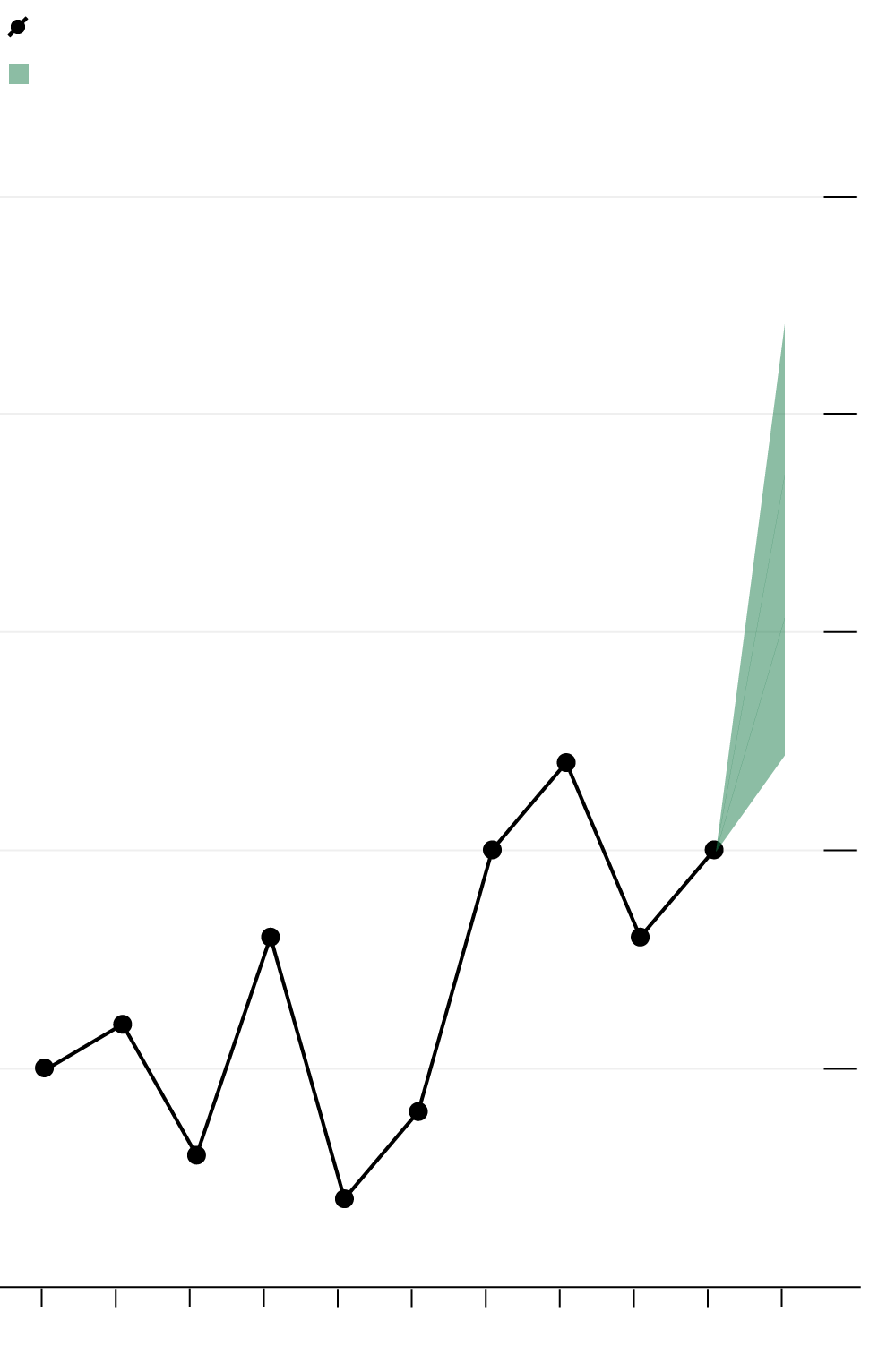
But according to the baseline scenario of a turnout model developed by data scientist Andrew Therriault for Bloomberg News, the total number of votes cast for president are expected to range from roughly 142.4 million to 149.6 million (62%–65% of the citizen voting-age population). The model considers scenarios that could drive that range higher in the event of a historically high-turnout election. (Read more about our model here.)
Turnout in the polarized 2016 election was the highest in a presidential election so far with 138.8 million votes.
Turnout Forecast

Historical turnout, in absolute votes
Forecast range, based on three voter turnout scenarios
170M
160
150
140
130
120
110
100
90
80
1980
’84
’88
’92
’96
2000
’04
’08
’12
’16
2020
Historical turnout, in absolute votes
Forecast range, based on three voter turnout scenarios
170M
160
150
140
130
120
110
100
90
80
1980
’84
’88
’92
’96
2000
’04
’08
’12
’16
2020

Historical turnout, in absolute votes
Forecast range, based on three voter turnout scenarios
170M
160
150
140
130
120
110
100
90
80
1980
2000
2020

Historical turnout, as share of the citizen voting-age population
Forecast range, based on three voter turnout scenarios
70%
65
60
55
50
1980
’84
’88
’92
’96
2000
’04
’08
’12
’16
2020
Historical turnout, as share of the citizen voting-age population
Forecast range, based on three voter turnout scenarios
75%
70
65
60
55
50
1980
’84
’96
2000
’04
’08
’12
’16
2020
’88
’92

Historical turnout, as share of the citizen voting-age population
Forecast range, based on three voter turnout scenarios
75%
70
65
60
55
50
1980
2000
2020
Even if it’s hard to pinpoint overall turnout from the early vote, the numbers in some states are staggering nonetheless.
Early votes have already surpassed the total 2016 vote in Texas, Washington, Colorado, Arizona, Oregon, Hawaii and Montana, the AP data show. In Texas—where early votes in 2016 represented 73% of all votes cast—the overwhelming majority of votes have come from early in-person voting. Washington, Colorado and Oregon hold all-mail elections, while Hawaii passed a bill last year to switch to all-mail elections starting in 2020. (Available data for Arizona and Montana do not break out mail and in-person votes.)
In populous states California, Florida and New York, combined early votes have already exceeded 24.9 million, 1.6 times all their early votes in 2016. In Florida 52% of votes are mail votes and in New York 67% of early votes have been cast in person. (There is no available break-down for California.)
Early Voting Surge
In Kentucky, early votes are 12.8 times as much in 2016. A total of 1,024,954 voters have cast an early in-person vote and 590,282 voters a mail ballot. The state allowed voters to use concern over Covid-19 as an excuse to vote by mail. Due to a surge in mail voting, similar rates are recorded in Delaware, Pennsylvania and New Jersey—the latter sending a mail ballot to registered voters, but not offering early in-person voting.
Over the last four elections, the share of votes cast early nationally doubled to 41% in 2016, according to the U.S. Election Assistance Committee data, after increased adoption of by-mail and early in-person voting among states in recent years. However, early votes in 2016 represented more than half of the total vote in 16 states only.
Physical voting on Election Day can still be crucial, even during the Covid-19 emergency. According to the AP data, early votes have delivered less than half of the total 2016 vote in 10 states with no all-mail elections—although the volume of their early votes has increased compared to 2016—with the lowest shares recorded in Missouri, Mississippi and Alabama.
How to vote on Election Day: A guide
In past presidential elections, state turnout among the voting age population ranged from 35% to 75%. Minnesota usually sees the highest turnout shares, while Hawaii, Arizona and Washington D.C. have seen some of the lowest turnout in recent elections overall.
Voter Turnout In Every Presidential Election Year Since 1980
It’s possible that the winner of the presidential election will not be clear on election night. While some competitive states, such as Florida and Arizona, can process and count the early vote in advance, it will take longer to tally the early vote in others, including Pennsylvania and Wisconsin, where state rules don’t allow for pre-processing certain early votes.