What A Hotter And Drier World Means for Shared Firefighting
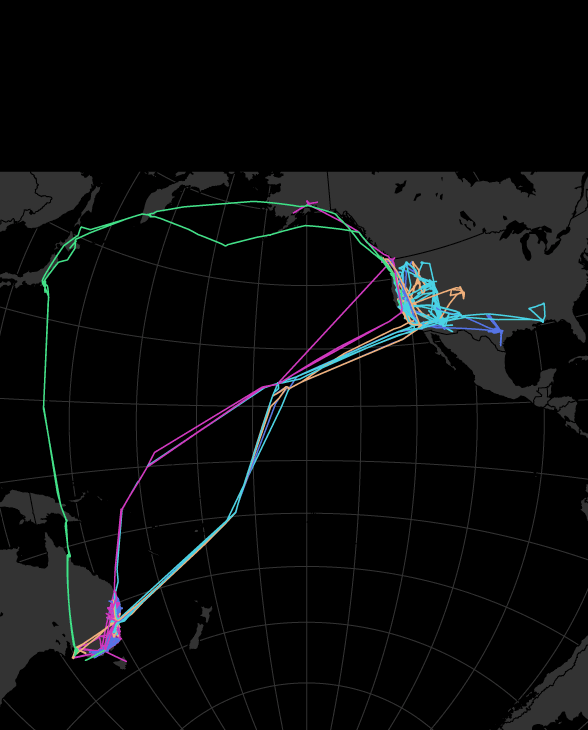
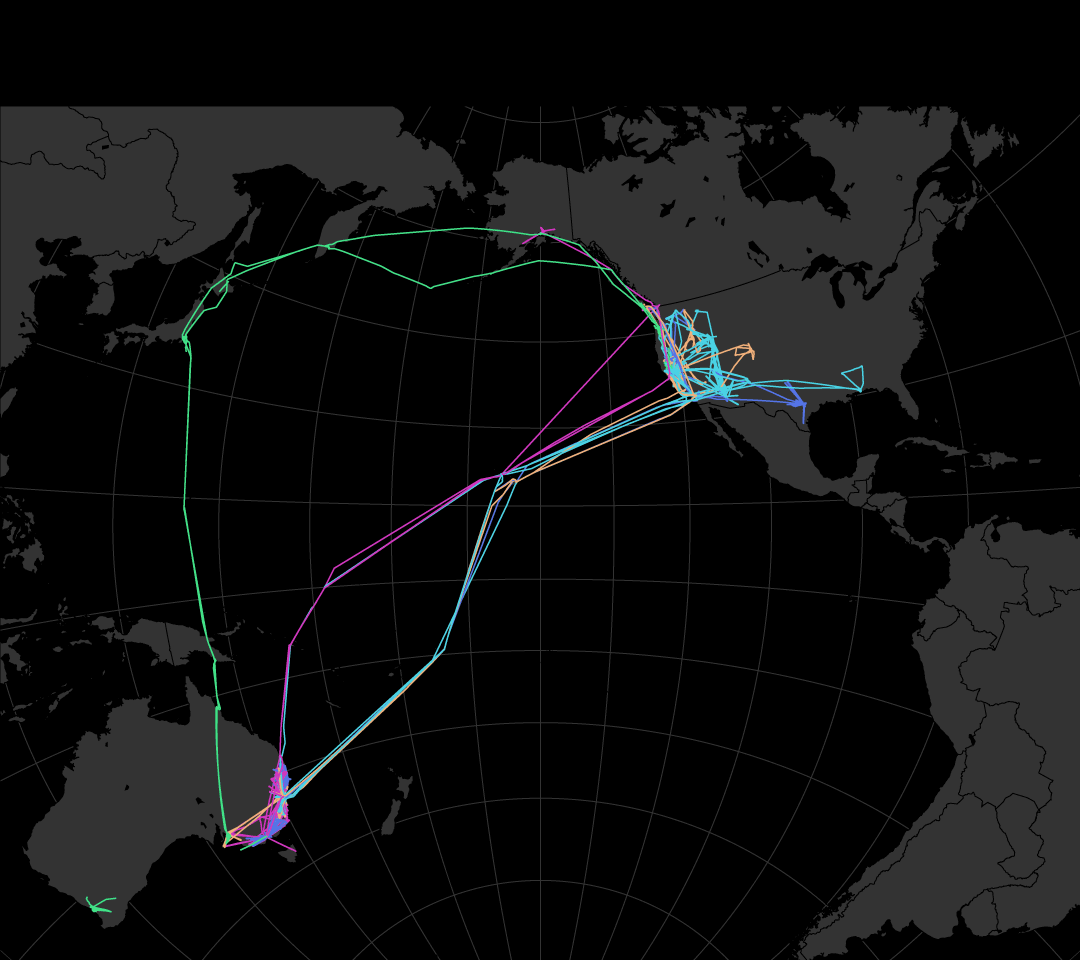
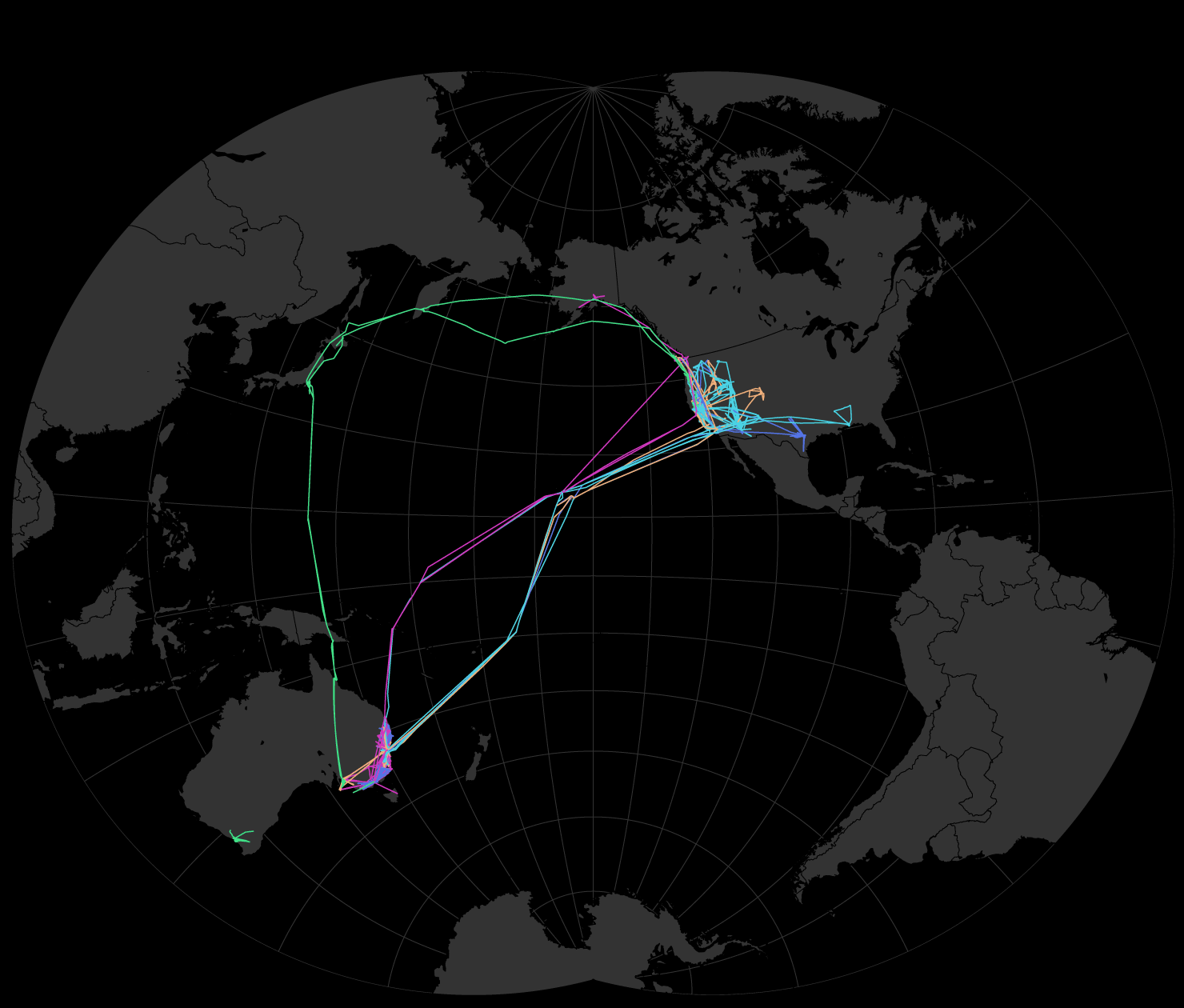
The close of the warmest decade on record brought with it widespread, devastating wildfires from the Amazon to Indonesia, the Arctic Circle and Australia. Firefighting resources and expertise have long been shared between the Northern and Southern hemispheres, leveraging the fact that their hot, dry seasons occur at different times of the year. The U.S. and Australia count on many of the same firefighting aircraft, which make trips across the Pacific when called upon.
But climate change is contributing to longer fire seasons and more dangerous conditions, straining this global arrangement and forcing governments and fire services to take drastic action and rethink how fires are fought.
Crossing Oceans
3x McDonnell Douglas DC10
3x BAE Systems Avro RJ85
2x McDonnell Douglas MD87
1x Lockheed Hercules C130
1x Boeing 737 Fireliner
3x McDonnell Douglas DC10
3x BAE Systems Avro RJ85
2x McDonnell Douglas MD87
1x Lockheed Hercules C130
1x Boeing 737 Fireliner
MD87
B737
C130
RJ85
DC10
3x McDonnell Douglas DC10
3x BAE Systems Avro RJ85
2x McDonnell Douglas MD87
1x Lockheed Hercules C130
1x Boeing 737 Fireliner
MD87
B737
C130
RJ85
DC10
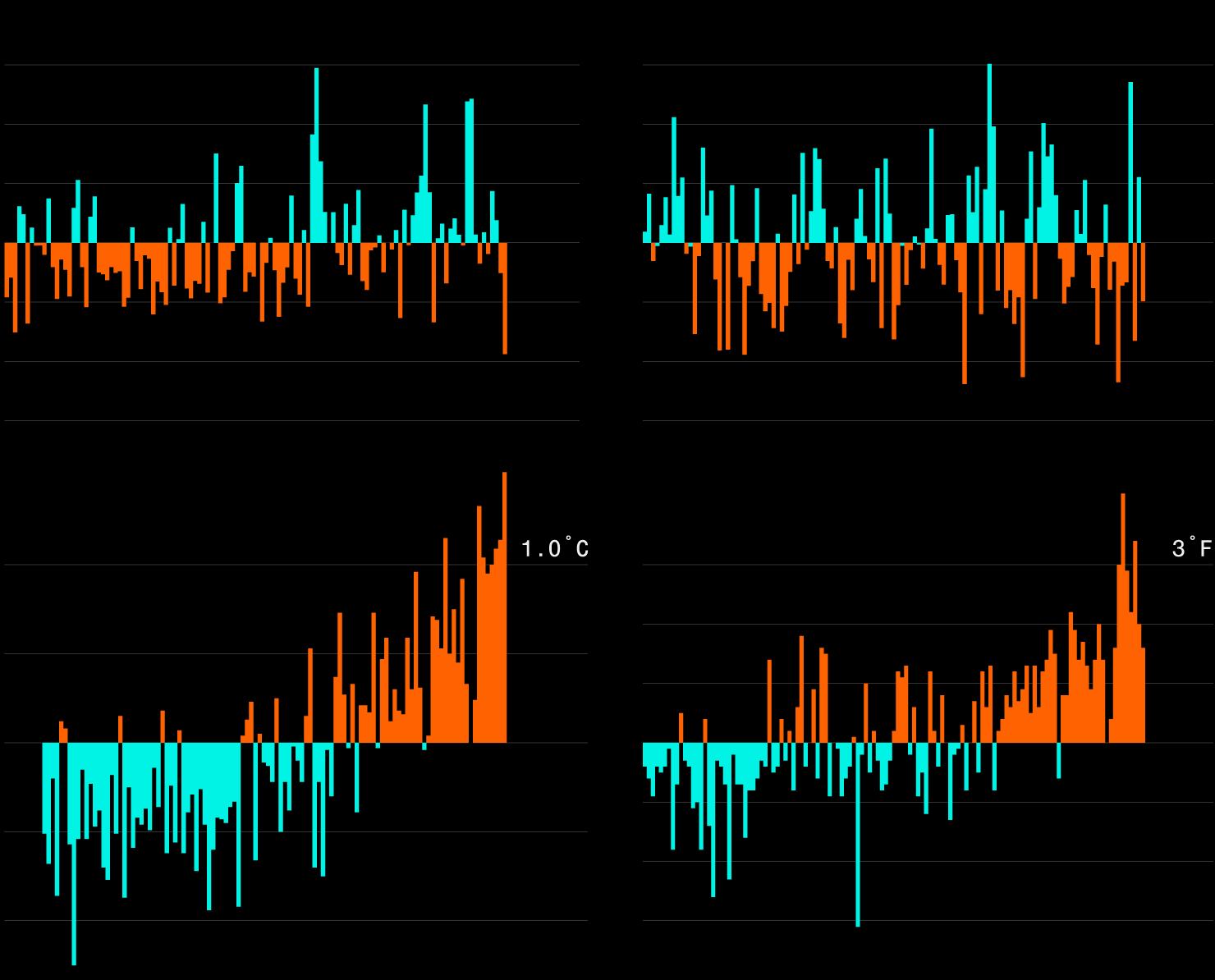
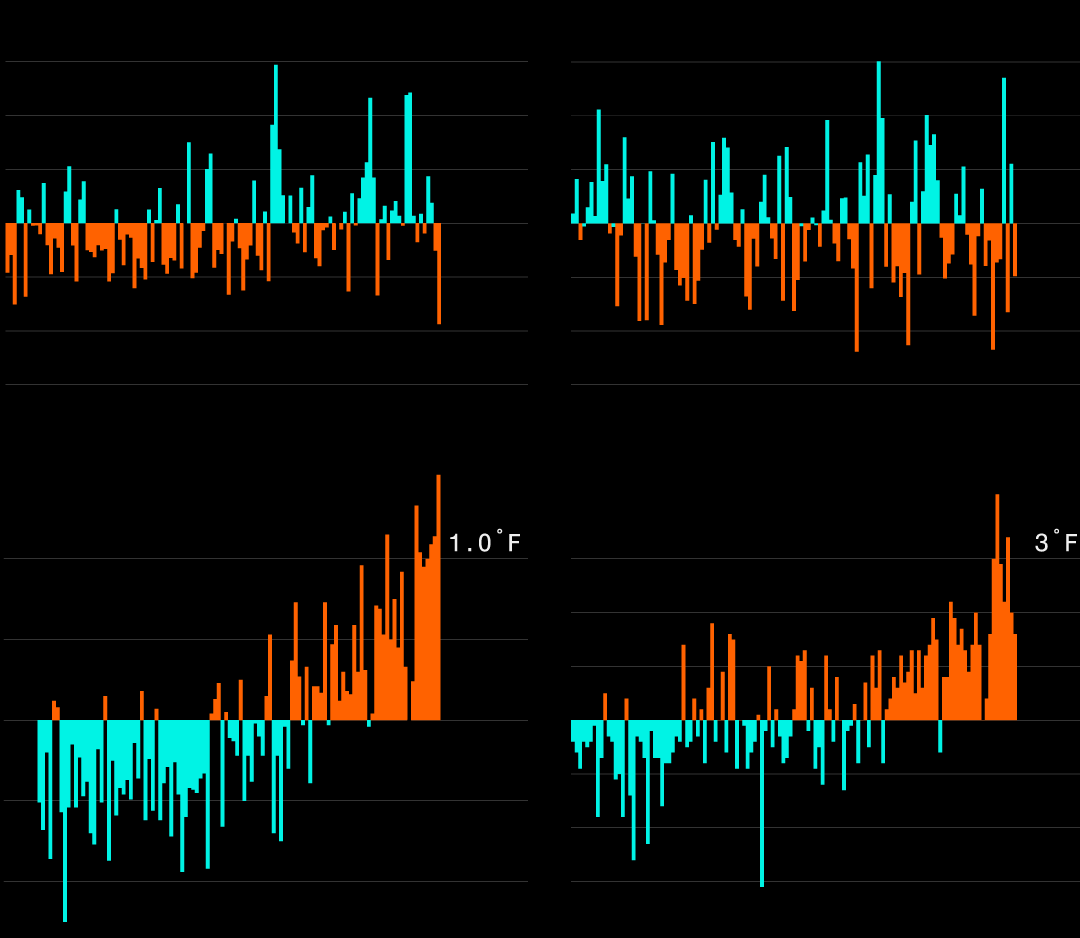
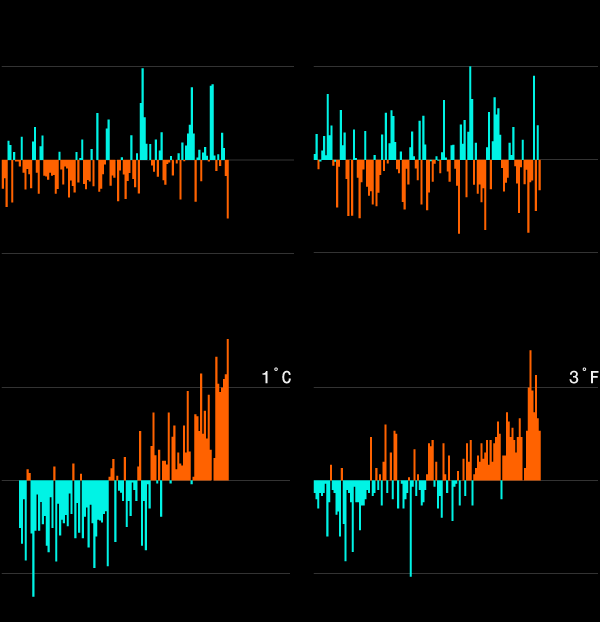
Australia just had its hottest, driest year on record, with fires starting in the winter months. By March, the fires had burned an area the size of Syria, destroyed more than 2,000 homes and claimed the lives of 34 people and about one billion animals. Smoke from the immense fires, which traveled as far as Argentina, was responsible for a further 417 deaths.
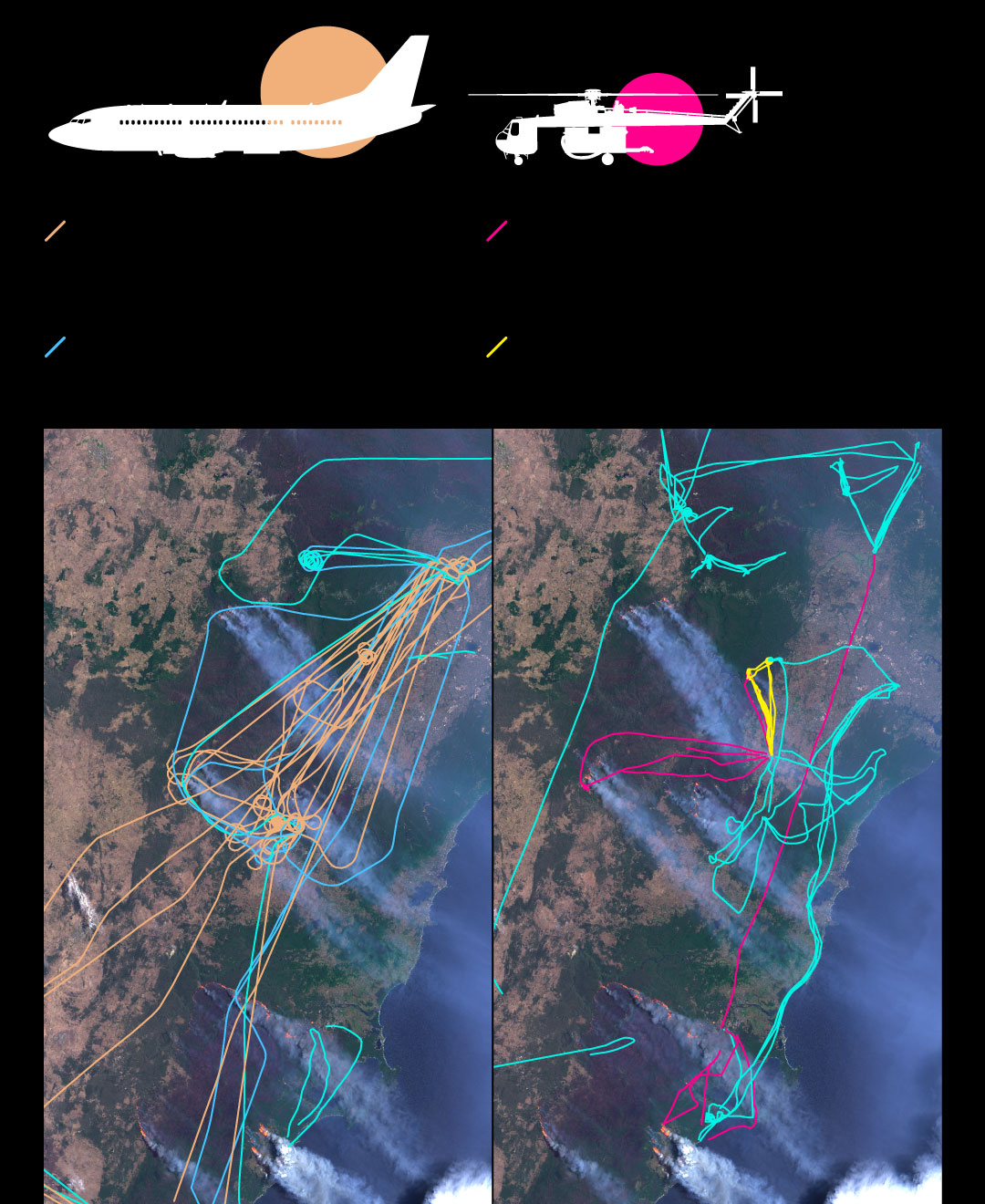
Between July 2019 and February 2020, nearly 40,000 flights by firefighting aircraft were taken over southeast Australia.
Drought and sustained high temperatures transformed sub-tropical vegetation into available fuel.
The fires burned through more than 48 million acres across the country.
Smoke blanketed towns and cities, exposing millions of Australians to dangerous levels of air pollution.
In April 2019, 23 former Australian fire chiefs and senior officials issued a letter to the government expressing urgent concerns over longer fire seasons and inadequate resources to keep pace with them. “The increasing overlap of fire seasons between states and territories and with the USA and Canada will limit our ability to help each other during major emergencies,” the letter said.
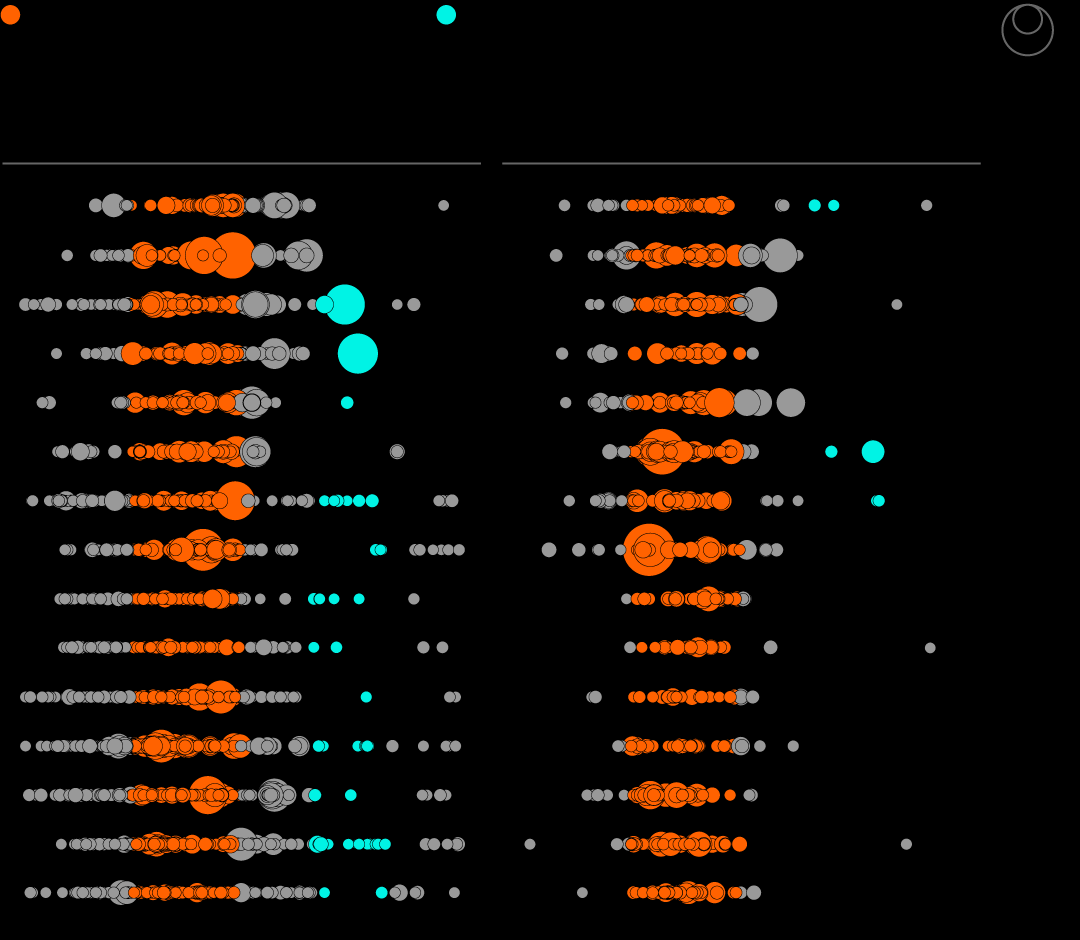
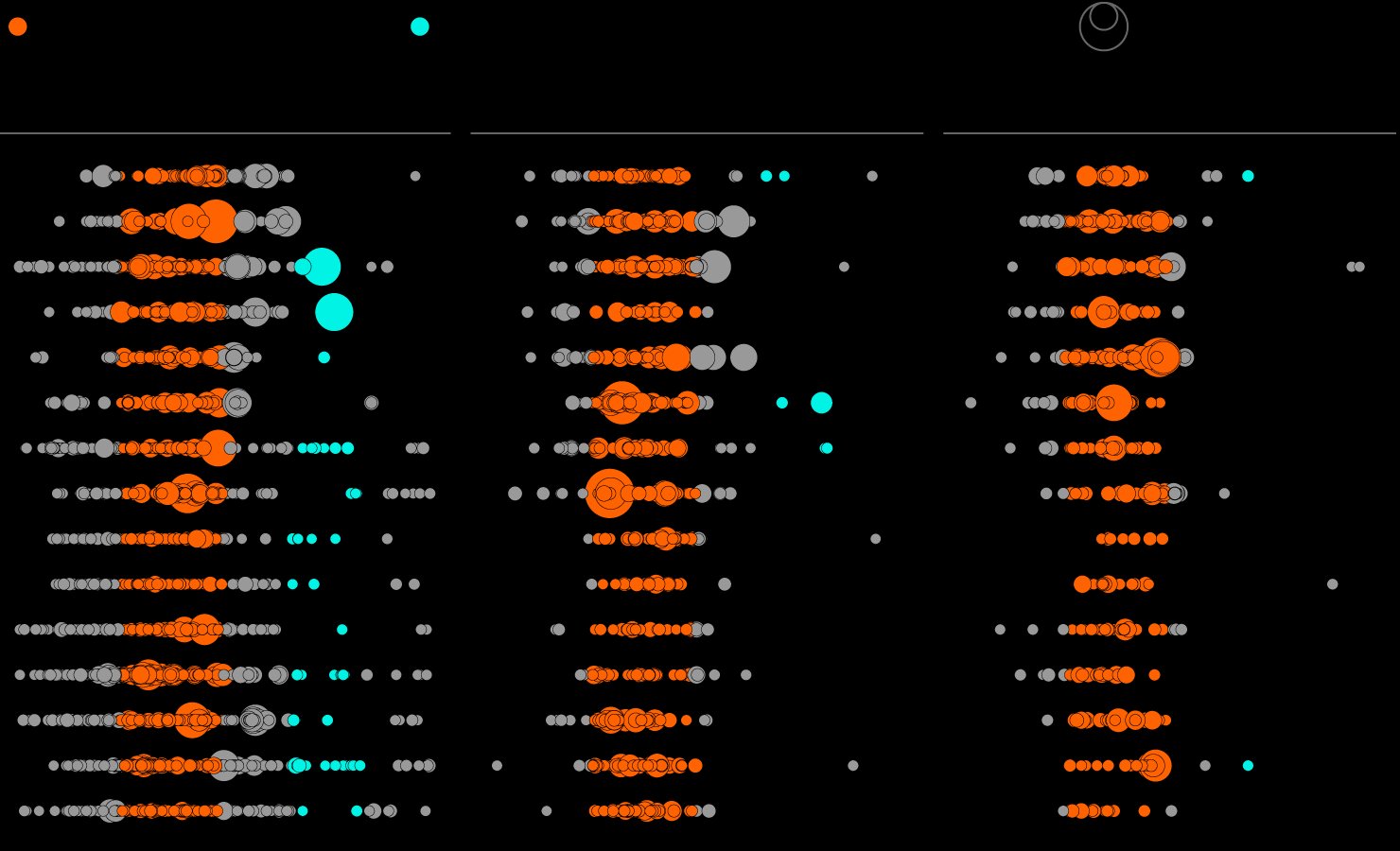
Parts of the western United States face wildfire seasons more than a month longer than they were 35 years ago, according to a 2015 study by the U.S. Forest Service. California experienced its driest February on record this year, and while last week’s precipitation brought some respite, the state could see an elevated fire risk by July as nearly three-quarters of the state remains in drought. Fires this year may be “slightly above average for both number of fires and acres burned,” according to the National Interagency Fire Center.
According to California’s agency responsible for fire protection, Cal Fire, the length of the fire season in the Sierra Mountains has increased by about 75 days. Fifteen of the 20 largest fires in California history have occurred since 2000, and research shows the amount of area burned in the state has increased by a factor of five since the 1970s. In some U.S. states, large fires are occurring well past the traditional summer months of July through September, with some of the largest fires occurring in December. Fires often burn later in California following hot, dry summers, fanned by fall’s warm Santa Ana winds.
U.S. West Coast Experiences Fires During Australian Summer

U.S. summer July-Sept
Australian summer Dec-Feb
100K/
500K
acres
California
2019/20
2015/16
2010/11
2005/06
U.S. summer July-Sept
Australian summer Dec-Feb
100K/
500K
acres
California
Oregon
2019/20
2015/16
2010/11
2005/06
U.S. summer July-Sept
Australian summer Dec-Feb
100K/500K acres
California
Oregon
Washington
2019/20
2015/16
2010/11
2005/06
Aircraft are a key tool in fighting these large fires. They’re often the first vehicles on the scene, carry thousands of gallons of fire suppressant and can also refuel more quickly than their ground-based counterparts. Nearly all are repurposed from older vehicles, ranging from ex-passenger jets such as the DC-10 to military helicopters.
Air tankers operate in conjunction with helicopters and spotter planes that assess the situation and help coordinate fire suppressant drops. Other more agile bombers and Helitak aircraft can pick up water from lakes, reservoirs and the ocean, removing the need to fly long distances back to airports to reload. Australia leased six Erickson Skycrane S-64E’s this season, four of which fought fires in Greece in March 2019.
Aerial Firefighting in the Blue Mountains
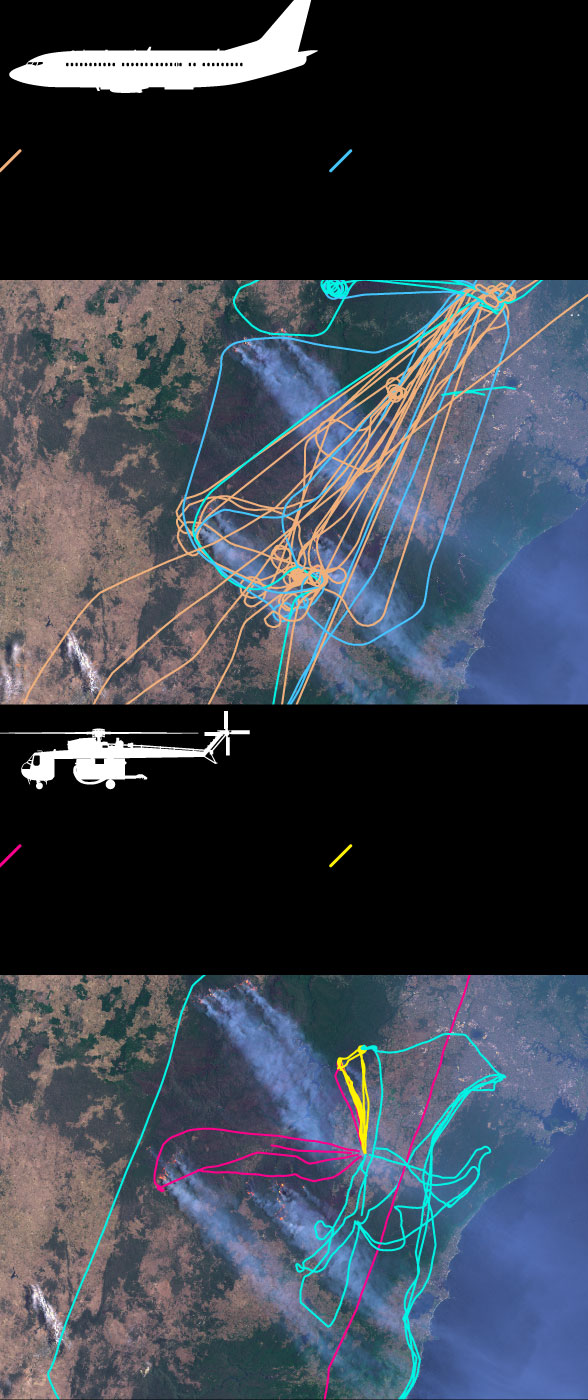
Bomber
B737 Fireliner
“Gaia” (U.S.)
“Marie bashir”
(Aus)
Dc10
“Tanker 910”
(U.S.)
Helitak
S64e Aircrane
“Jerry”,
“Gypsy Lady”
(U.S.)
Boeing-Vertol
234LR
(PAPUA NEW
GUINEA)
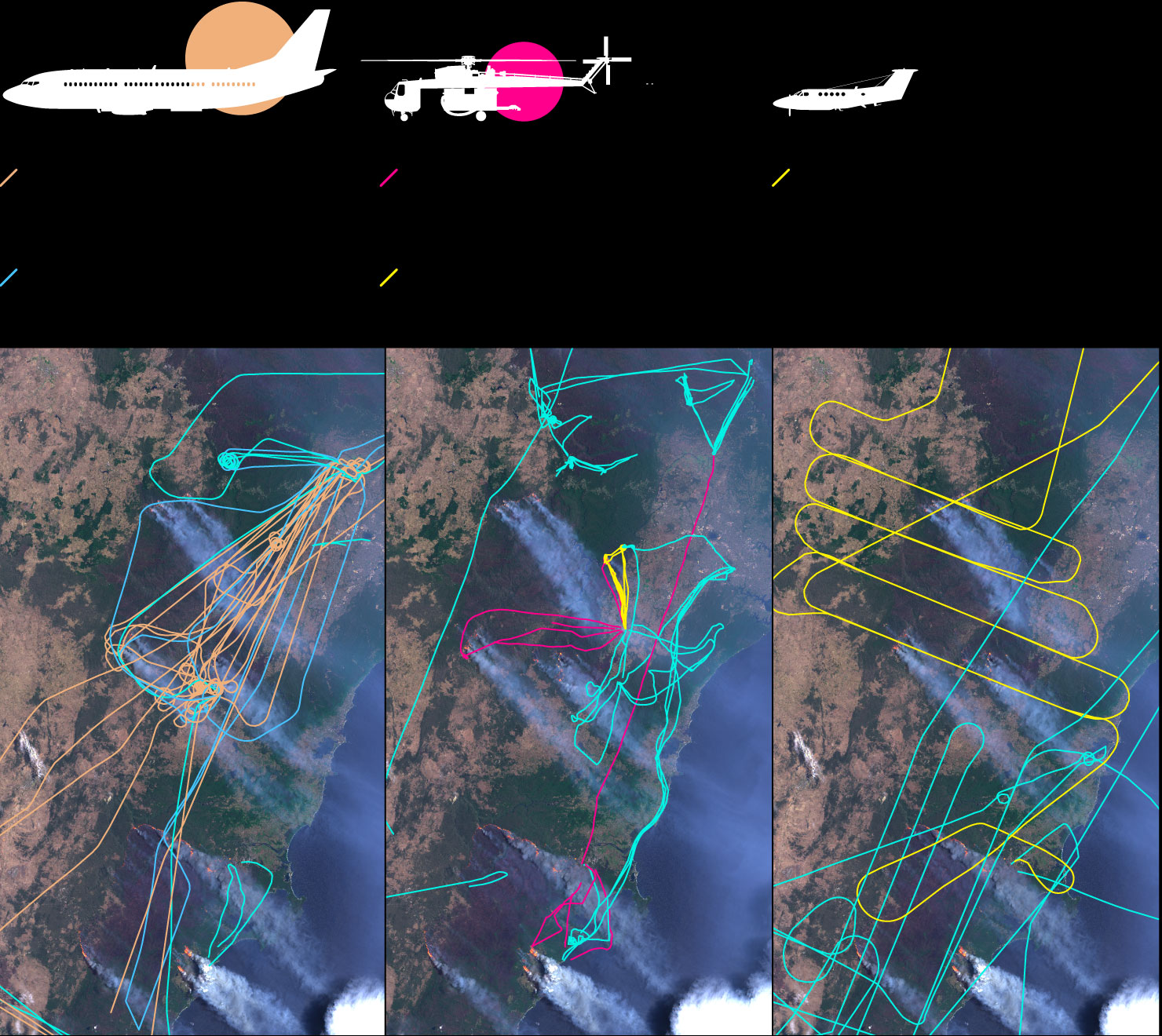
Firescan
Bomber
Helitak
Beechcraft SUPER KING
B200t (AUS)
BOEING 737 Fireliner
CAPACITY: 15,450 Liter
“Gaia” (U.S.)
“Marie bashir” (Aus)
S64e Aircrane
CAPACITY: 7,560 Liter
“Jerry”, “Gypsy Lady”
(U.S.)
MCDONNELL DOUGLAS Dc10
CAPACITY: 45,000 LITER
“Tanker 910” (U.S.)
Boeing-Vertol 234LR
(PAPUA NEW GUINEA)
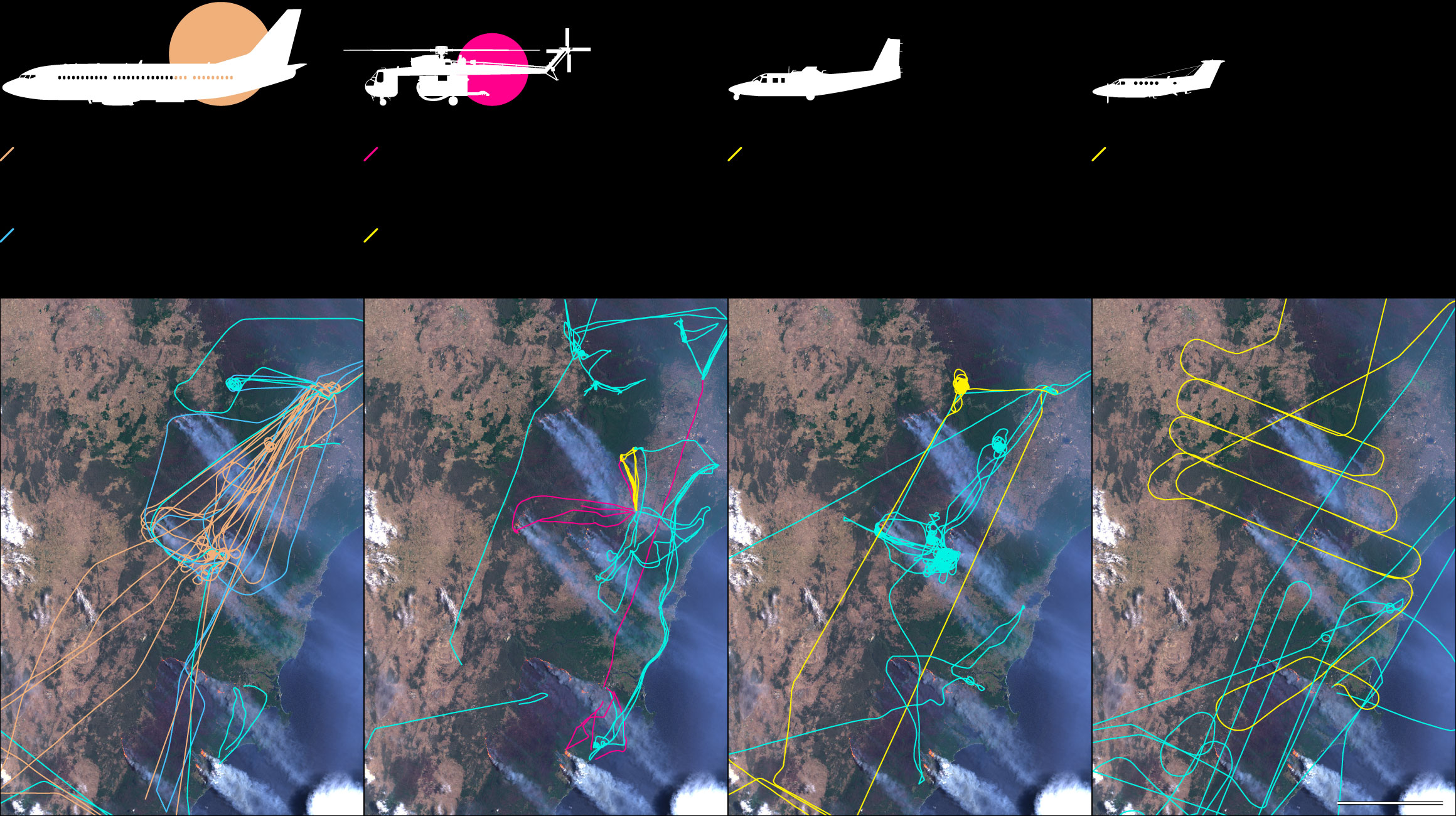
Bomber
Helitak
Birddog
Firescan
BOEING 737 Fireliner
CAPACITY: 15,450 Liter
“Gaia” (U.S.)
“Marie bashir” (Aus)
S64e Aircrane
CAPACITY: 7,560 Liter
“Jerry”, “Gypsy Lady” (U.S.)
TWIN COMMANDER 690A (AUS)
Beechcraft SUPER KING
B200t (AUS)
MCDONNELL DOUGLAS Dc10
CAPACITY: 45,000 LITER
“Tanker 910” (U.S.)
Boeing-Vertol Chinook 234LR
(PAPUA NEW GUINEA)
50km
Bomber
Helitak
S64e Aircrane
CAPACITY: 7,560 Liter
“Jerry”, “Gypsy Lady”
(U.S.)
BOEING 737 Fireliner
CAPACITY: 15,450 Liter
“Gaia” (U.S.)
“Marie bashir” (Aus)
MCDONNELL DOUGLAS Dc10
CAPACITY: 45,000 LITER
“Tanker 910” (U.S.)
Boeing-Vertol 234LR
(PAPUA NEW GUINEA)
A recent analysis of U.S. Forest Service data, commissioned by a company that owns and operates an air tanker, found that when air tankers responded within the first hour of a fire starting, the blazes lasted only 29 minutes, on average. When it took longer than 72 hours to send a tanker, fires burned for an average of nearly two weeks.
In California, fire aviation craft are supposed to be stationed no further than 20 minutes from a given area in the state. “If we can get as much equipment on a fire right in the beginning, then usually we can put it out,” says Lucas Spelman, battalion chief for the Southern Operation at Cal Fire. “Our motto is that we want to keep all fires at 10 acres or less, and we’re able to do that now 95% of the time.”
But only 13 air tankers are on hand for the entire U.S. Forest Service this year, down from 44 exclusive-use tankers in 2002. “They can order more on call when needed, but the cost of those is about 50% higher than the exclusive-use contracts, and they may or may not be available,” says Bill Gabbert, a former firefighter who operates two websites about firefighting and aviation. “In order to use that system, you’re hoping a vendor has an air tanker just sitting there, and that it’s been maintained, and that the pilots are still on payroll not doing anything—so that’s asking a lot when an air tanker is needed to respond to a fire.”
Australia’s National Aerial Firefighting Centre contracts a fleet of 150 firefighting aircraft across all states and territories, which goes up to 500 when including “on call” vehicles. At the beginning of the 2019-20 season, five large air tankers and nine large helicopters were contracted from North America, but as fires worsened in November, two additional tankers were leased. By January, $20 million in additional funding from the Australian government was used to add four more, including a DC-10 Air Tanker flown from Alabama thought to have cost AUD$1 million for the 50 days of its contract.
The practical complications of accessing these specially retrofitted aircraft—which must take circuitous routes across the Pacific since they weren’t built for long trips—can result in delays. An air tanker en-route to Australia on November 10 had to turn back when pilots discovered a radio problem. Two more scheduled to leave in January were delayed: a MD-87 due to volcanic ash from an eruption in the Philippines, and a DC-10 due to fog in Alabama delaying final maintenance checks.
State and federal organizations may move toward an ownership model as the unpredictability of fire seasons begins to strain the system—but developing one would be costly. Last May, the New South Wales government became the first in Australia to purchase its own large air tanker, the Boeing 737 Fireliner Marie Bashir, for $26.3 million. Cal Fire—which already owns the largest state fleet, including 23 airtankers, 11 helicopters and 14 air attack aircraft—recently bought seven C-130 water bombers, which should be ready by 2021 once pilots and crew are trained.
For residents living in wildfire areas, the sight of airplanes spreading clouds of pink fire retardant can bring reassurance. Similarly, their absence can quickly inspire public criticism.
There’s more competition for the tankers than ever before as climate change and land use patterns expose new areas to fire risk. Bolivia contracted the largest firefighting craft in the world—a retrofitted Boeing 747 owned by Global Supertanker—to help combat historic fires in the Amazon last August. Six months earlier, 10 Tanker, a New Mexico-based private aerial firefighting company, sent a DC-10 from California to Chile to fight the country’s forest fires after a state of catastrophe was declared in some regions.
As the number of deployments rise, so do the dangers and costs. In January, a Coulson C-130 Hercules air tanker crashed while fighting a fire in New South Wales’ Snowy Mountains, killing the three American crew members. California’s suppression costs surged to a record $773 million during its historic 2018 fire season, while federal expenditures that year topped $3.1 billion.
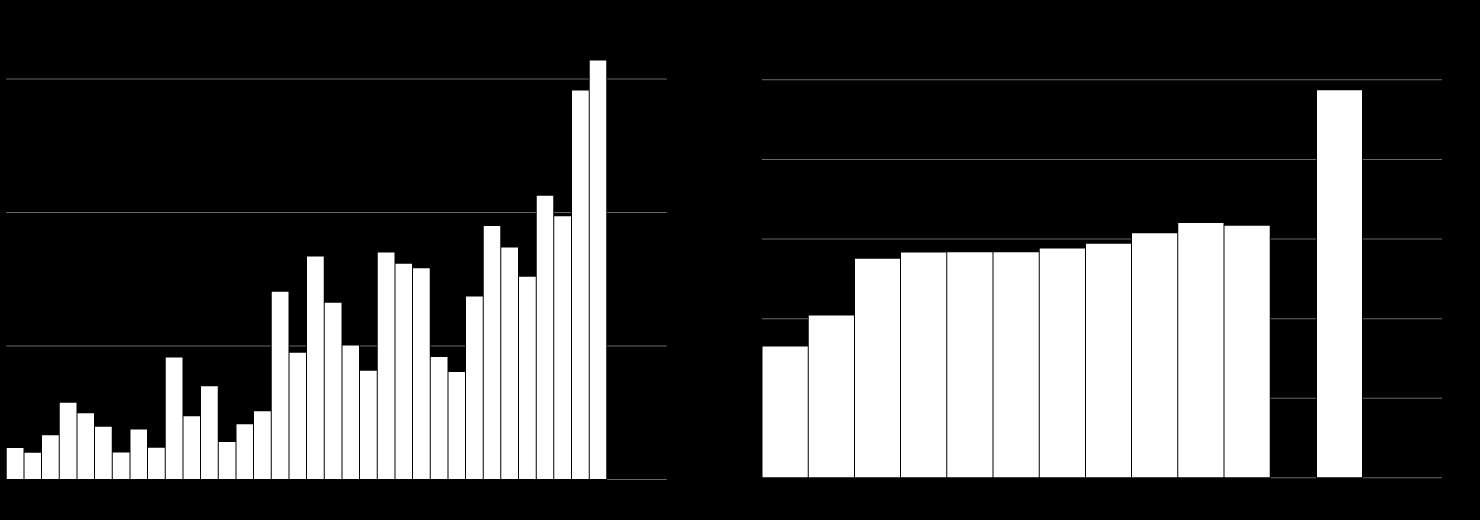
Almost a third of Australia’s National Aerial Firefighting Centre’s budget goes toward the lease of aircraft, largely needed to cover standing costs of keeping the fleet on call. Prime Minister Scott Morrison announced this year that the $11 million in supplemental payments made in 2018 and 2019 would now be permanent, bringing the annual firefighting budget up to $25 million.
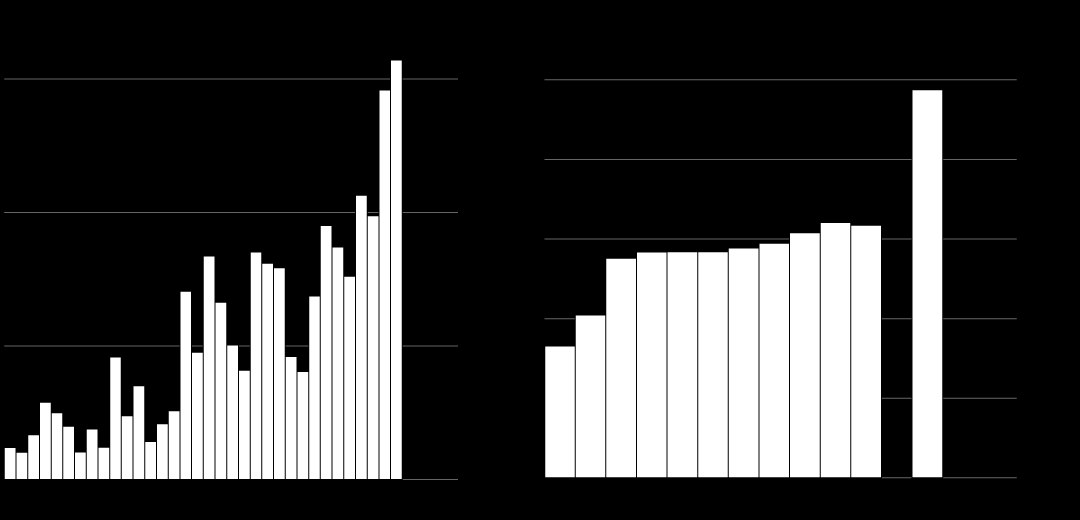
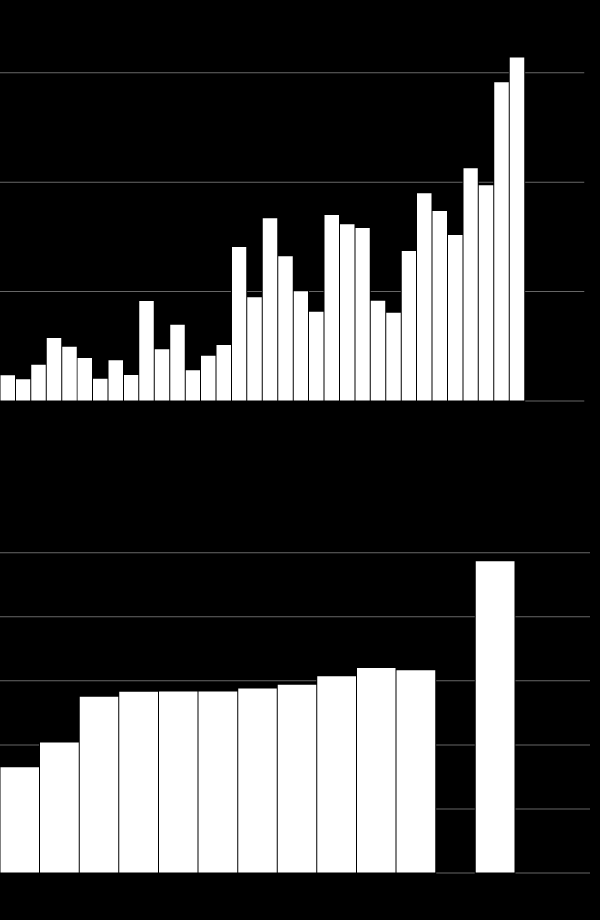
Annual costs for Australian and U.S. federal firefighting aviation programs
NATIONAL INTERAGENCY
FIRE CENTER (U.S.)
NATIONAL AERIAL FIREFIGHTING
CENTRE (AUSTRALIA)
$3B
$25M
20
2
15
10
1
5
0
0
2006/07
2018/19
1985
2018
NATIONAL INTERAGENCY
FIRE CENTER (U.S.)
NATIONAL AERIAL FIREFIGHTING
CENTRE (AUSTRALIA)
$25M
$3B
20
2
15
10
1
5
0
0
2006/07
2018/19
1985
2018
NATIONAL INTERAGENCY
FIRE CENTRE (U.S.)
$3B
2
1
0
1985
2018
NATIONAL AERIAL FIREFIGHTING
CENTRE (AUSTRALIA)
$25M
20
15
10
5
0
2006/07
2018/19
Meanwhile, private contractors continue to invest in their fleets in anticipation of increased need. Coulson, a British Columbia-based private aviation company that leases vehicles and crew, purchased five C-130s from the Norwegian military; and Erickson Aero Tanker, another private operator out of Oregon, is partnering with Sikorsky, a Lockheed Martin company, to develop a “pilot optional nighttime firefighting solution.”
The resource constraints aren’t likely to ease in the foreseeable future. Low rainfall and record high temperatures that fueled the record fire season in Australia have been on the rise globally.
An extended drought between 2014 and 2017 in the U.S. West slowly turned the state’s trees and brush into a stockpile of fuel. “And when those things die, they don’t just go away,” explains Spelman at Cal Fire. When followed with sudden rains, grasslands flourish, dry out, and turn into tinder that can quickly carry flames to those larger fuel sources, leading to the uncontrollable fires that California experienced in 2018.
Removing the dry brush manually or through controlled burns is always ongoing, but the at-risk areas are massive. A 2019 U.S. Forest Service study estimated 149 million dead trees that could take up to 2,530 years to clear or decompose.
Hottest and Driest
AUSTRALIA,
ANNUAL RAINFALL ANOMALY
CALIFORNIA
ANNUAL RAINFALL ANOMALY
300mm
15mm
10
200
100
5
0
0
-5
-100
-200
-10
-300
-15
1900
2019
March
1900
March
2020
AUSTRALIA,
ANNUAL MEAN TEMPERATURE ANOMALY
CALIFORNIA,
ANNUAL MEAN TEMPERATURE ANOMALY
2
0.5
1
0.0
0
-1
-0.5
-2
-1.0
-3
1900
2019
March
1900
March
2020
AUSTRALIA,
ANNUAL RAINFALL ANOMALY
CALIFORNIA
ANNUAL RAINFALL ANOMALY
300mm
15mm
200
10
100
5
0
0
-100
-5
-200
-10
-300
-15
1900
2019
March
1900
March
2020
AUSTRALIA,
ANNUAL MEAN
TEMPERATURE ANOMALY
CALIFORNIA,
ANNUAL MEAN
TEMPERATURE ANOMALY
2
0.5
1
0.0
0
-1
-0.5
-2
-1.0
-3
1900
2019
March
1900
March
2020
AUSTRALIA,
ANNUAL RAINFALL
ANOMALY
CALIFORNIA
ANNUAL RAINFALL
ANOMALY
300mm
15mm
0
0
-300
-15
March
1900
March
2020
1900
2019
AUSTRALIA,
ANNUAL MEAN
TEMPERATURE ANOMALY
CALIFORNIA,
ANNUAL MEAN
TEMPERATURE ANOMALY
0
0
-1
-3
March
1900
March
2020
1900
2019
The seven tankers being added to Cal Fire’s fleet were still awaiting trained crew when the spread of the coronavirus caused additional delays. Aerial crew stationed in Australia, taxed from a lengthy season, will start flying back to North America at a time when the virus has put many firefighters under quarantine, and the rest at heightened risk due to the close proximities their jobs often require.
“If one person on those crews comes down with symptoms, they would have to sequester the entire crew,” says Gabbert.
In addition to the risk of losing ground crew for weeks at a time to quarantine, many preventative measures will need to be taken. Incident command posts that are typically set up to house, feed and coordinate firefighters are likely to be replaced with electronic communications. Aerial firefighting crew may no longer station at airports, delaying response-times as they rush from their quarters to the aircraft to take off.
It all adds precious minutes to the prompt response that Spelman said Cal Fire adheres to. “When somebody calls it in and tells them where it’s at, they immediately start putting the call together. There’s no time to delay.”
April 10, 2020: Spelling of Bill Gabbert’s name was corrected and Gabbert’s quote has been edited for clarity