
Ginsburg Replacement Fight Complicates Swing State Campaigns
With the 2020 presidential campaign in full swing, Bloomberg News is assessing the state of the race in a series of stories every two weeks that examines the battleground states that will determine whether Donald Trump or Joe Biden wins the election.
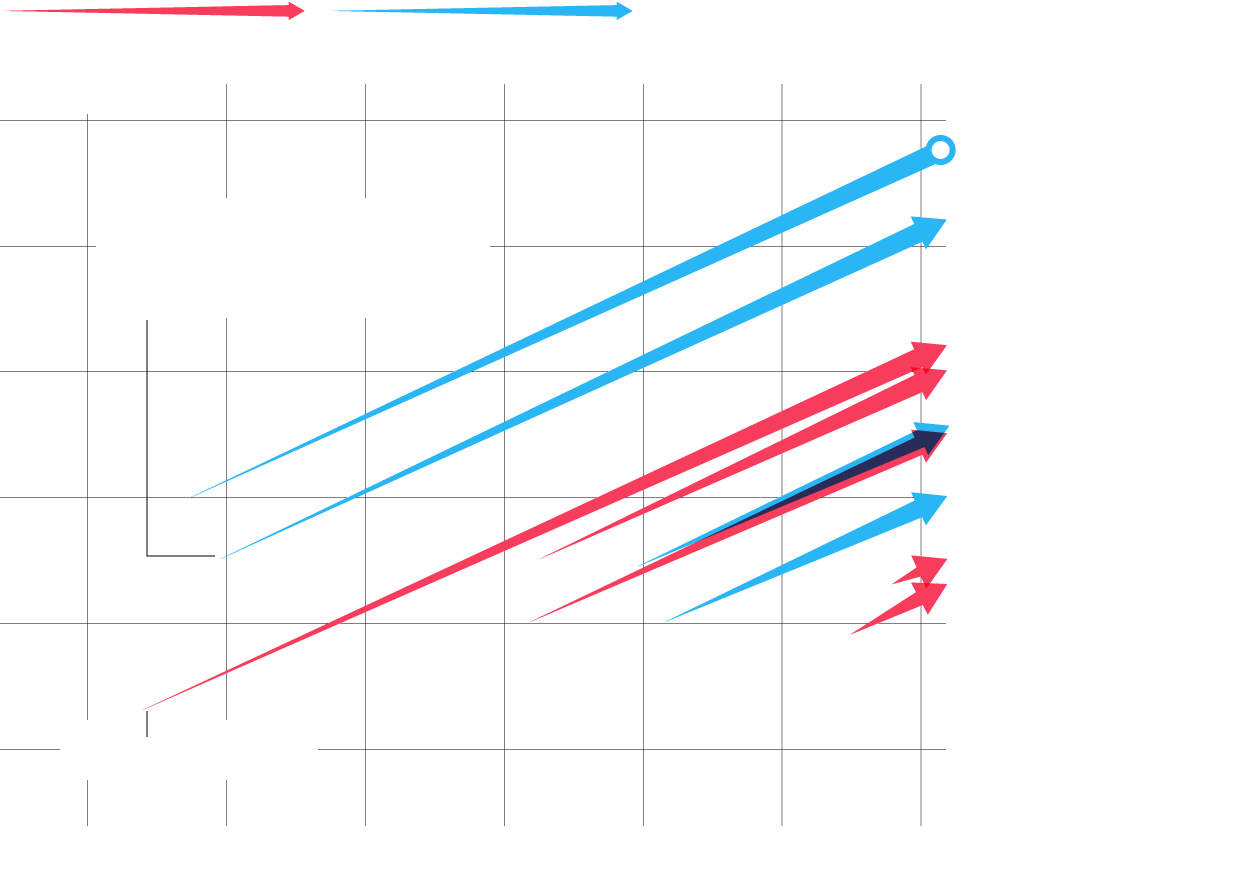
The death of Supreme Court Justice Ruth Bader Ginsburg is injecting a partisan fight over the future of the court into battleground states already bombarded with conflicting messages on the coronavirus, the economy and racial justice.
The fate of the next Supreme Court justice, an issue consuming Washington, is just one of the many playing out in the most competitive states with 40 days to go before Nov. 3.
Follow the storythread for real time updates on this graphic.
Voters have been focused on how the next president would handle the public health crisis and how to restore the shattered U.S. economy, and both Democratic nominee Joe Biden and President Donald Trump are tailoring their message for each issue in the battleground states.
Seven of those 12 most competitive states—Arizona, Georgia, Iowa, Michigan, Minnesota, North Carolina and Texas—also have Senate races that will heat up with a high court seat in the balance, potentially boosting voter turnout on both sides.
Three incumbent Republicans running for re-election serve on the Judiciary Committee, which first votes on a Supreme Court nominee—John Cornyn of Texas, Thom Tillis of North Carolina and Joni Ernst of Iowa. Also likely to play a starring role in hearings would be Judiciary Committee member and Democratic vice presidential nominee Kamala Harris.
A Reuters/Ipsos national survey published Sunday found 62% of American adults said the winner of the presidential election should nominate Ginsburg’s replacement. But no reliable surveys of battleground state voters have yet been published on the matter.
Ages and Tenures of Supreme Court Justices
GOP Pres. nominated
Dem Pres. nominated
90 years old
Ruth Bader Ginsburg
Stephen Breyer
80
Breyer, appointed by Clinton
in 1994, is now the oldest
justice by 10 years
Clarence Thomas
70
Samuel Alito
Sonia Sotomayor
John Roberts
60
Elena Kagan
Brett Kavanaugh
Neil Gorsuch
50
40
Joined the court
1990
1995
2000
2005
2010
2015
2020
GOP Pres. nominated
Dem Pres. nominated
90 years old
Ruth Bader Ginsburg
Stephen Breyer
80
Clarence Thomas
70
Samuel Alito
Sonia Sotomayor
John Roberts
60
Elena Kagan
Brett Kavanaugh
Neil Gorsuch
50
40
Joined the court
1990
1995
2000
2005
2010
2015
2020
GOP Pres. nominated
Dem Pres. nominated
90 years old
Ruth Bader Ginsburg
Stephen Breyer
80
Clarence Thomas
70
Samuel Alito
Sonia Sotomayor
John Roberts
60
Elena Kagan
Brett Kavanaugh
Neil Gorsuch
50
40
Joined the court
2000
2010
2020
Bloomberg News is tracking key vital statistics data from 12 of the crucial battleground states that will decide the election. It’s a fluid list of states. Since August, both parties have intensified their campaigns in Democratic-leaning Nevada, worth six electoral votes, as they’ve invested less in New Hampshire.
2020 Election Preview: Democrats’ Quest for Senate Majority Rides on Biden’s Coattails
Polls over the last two weeks show a dynamic race with as many as 13 states still in play—though Trump is playing defense in most of them. The race has tightened in Florida, New Hampshire and Texas, while Biden’s lead has expanded in Arizona, Michigan and Wisconsin.
The leading Supreme Court candidate is Amy Coney Barrett, a Notre Dame Law School professor and appeals court judge whose public views on abortion and feminist issues could add some White Catholics to Trump’s side, but also energize women, a majority of whom favor abortion rights and plan to vote for Biden.
The spread of Covid-19 and the economic misery that came with it have hit each state differently, with some recovering more quickly than others.
Nevertheless, Trump is campaigning as if the court battle could be the latest distraction from his handling of the coronavirus pandemic, which voters still say is more important than almost anything else, as the death toll topped 200,000 this week.
Total Deaths from Covid-19
Trump has largely ignored the pandemic in Florida, instead focusing on taxes, jobs and—in a state where 30% of voters are age 65 or older—Social Security and Medicare.
Biden is running hardest on the coronavirus pandemic in Florida, which has the third-highest number of infections in the country and where the two candidates are nearly tied in public opinion polls.
“Obamacare is personal to me,” Biden says in a 60-second ad, his most frequently run ad there. “When I see the president of the United States try to eliminate this health care in the middle of a public health crisis, that’s personal to me too.”
TV Ads by Issue
- Trump campaign
- Biden campaign
But in the Upper Midwestern states, Trump is still running on immigration and terrorism—while linking those back to the coronavirus.
“When Covid struck, President Trump took action,” says Trump’s most ubiquitous ad in Michigan and Minnesota. “And what does Biden now propose? While the pandemic still smolders around the globe, increasing refugees by 700% from the most unstable, vulnerable, dangerous parts of the world.”
The pace of recovery also differs by state, as new data released Friday showed.
Unemployment Rate by State
Nevada has the highest unemployment rate in the nation, but the rate has fallen to 13.2% from the 30.1% it soared to in April. In August, Arizona saw its unemployment rate fall nearly half from the month before as Florida’s rate improved by 4 percentage points.
But other states, like Michigan and Ohio, saw little to no improvement in their jobless rates. In July the two states had lower unemployment rates than Arizona and Florida, but now the two manufacturing strongholds are trailing.
When it comes to consumer activity, data from the restaurant-booking platform OpenTable highlight the extent to which Americans are heading back to restaurants but also the degree to which the hospitality industry has been crushed. Restaurant bookings last Saturday were down 10% in Georgia from a year ago, but down nearly 40% in Pennsylvania and Wisconsin.
Restaurant Reservations
For states like Florida, which relies heavily on the accommodation and food services sector for jobs, Covid-19 stands to limit just how much the state’s jobs market can recover. In August, employment in the sector was down 19.8% from the year before and up just 0.1% from the prior month.
As with most campaigns, the candidates’ focus emerges through their ad campaigns and what states they target.
And it leaks out in every decision a candidate makes. The electoral map clearly was not far from Trump’s mind as he considers his third high court pick in four years. Speaking to Fox News on Monday, he described the campaign advantages of nominating Appeals Court Judge Barbara Lagoa.
“She’s Hispanic. She’s a terrific woman from everything I know. I don’t know her. Florida. We love Florida. So she’s got a lot of things—very smart.”
Political considerations, he said, were “automatically” part of the process.
Broadcast Television Ad Spending
- Trump campaign
- Biden campaign
Trump is returning to his economic message, with 74% of his campaign ads focused on jobs, trade and other pocketbook topics after three months of a campaign focused on crime, riots, and protests, according to data by ad-tracking firm Advertising Analytics.
The Trump campaign said last week that its fall ad campaign would “focus on the economy, which will be the defining issue of the race.”
“The greatest economy the world has ever seen coming back to life. But Joe Biden wants to change that,” says one Trump ad.
For Biden, the top issue is Trump’s handling of the coronavirus, which features in 45% of his television ads, according to data by Advertising Analytics.
“We can’t deal with an economic crisis until you beat the pandemic. You can’t have an economic comeback when almost 1,000 Americans die each day from Covid,” Biden says in one of his ads, targeted at hard-hit cities like Philadelphia, Detroit and Miami. “Mr. President, do your job.”
Those arguments frame the national debate that’s playing out in schools, workplaces and restaurants around the country, as the push-and-pull from coronavirus and resulting economic fallout have revealed another fault line in American politics.
But whether that will change anyone’s vote at this point is unclear.
The pandemic could also influence the outcome of the election by changing how and when people vote.
Most battleground states have relaxed restrictions on absentee voting. Earlier voting could also dampen the impact of an “October Surprise”—a late news development like the re-opening of the FBI investigation into Democrat Hillary Clinton’s emails in 2016.