Day Trips Instead of Destinations: Tourist Hot Spots Brace for Lean Years
From California’s wine country to Colorado’s ski towns and Florida’s beaches, American cities that built their economies around tourists are being upended by Covid-19.
For many towns, day trippers are replacing free-spending vacationers. Social-distancing guidelines are crimping restaurant sales, and hotel stays have fallen dramatically. That’s eating into the tax revenue that funds schools and police, prompting local officials to slash budgets and furlough workers.
Bloomberg News collected data on more than 50 of the most tourism-reliant U.S. towns and cities to assess the scope of the pandemic’s economic blow. The data, as well as interviews with mayors, budget directors and other government officials, offer another view of what’s at stake as lawmakers in Washington debate whether to provide more aid to coronavirus-battered states and cities.
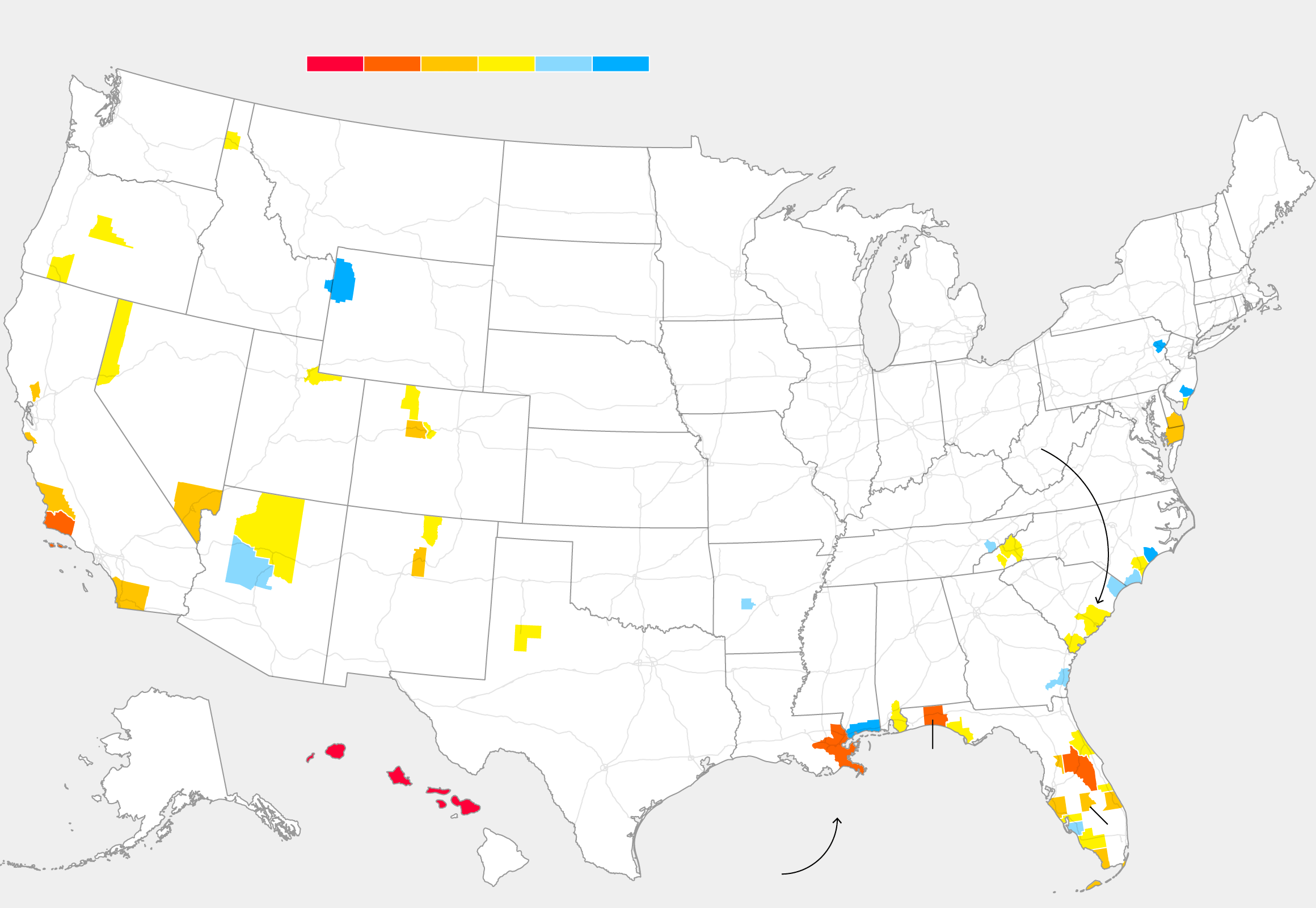
Yearly change in average Airbnb bookings per night by city, week ending July 31, 2020
–75%
–50%
–25%
0%
+25%
Coeur
D’Alene
Bend
Medford
Jackson
East
Stroudsburg
Summit Park
Steamboat
Springs
Napa
50%
Approximate decline in tourism funds through June compared to last year
Atlantic City
Reno
Ocean City
Santa
Cruz
Edwards
Salisbury
Breckenridge
Las
Vegas
San Luis
Obispo
Taos
Santa
Barbara
Sevierville
Asheville
Flagstaff
Jacksonville
Cullowhee
Hot
Springs
Wilmington
Santa Fe
Prescott
Myrtle Beach
San Diego
Charleston
Lubbock
Hilton Head Island
Brunswick
Daphne
Panama
City
Gulfport
The
Villages
Kapaa
Deltona
Crestview
Orlando
New
Orleans
Sebastian
Kahului
The Big Easy slashed its sales tax revenue forecast by
$66M
Honolulu
North Port
Port St. Lucie
Punta Gorda
Cape Coral
Sebring
Naples
Key West
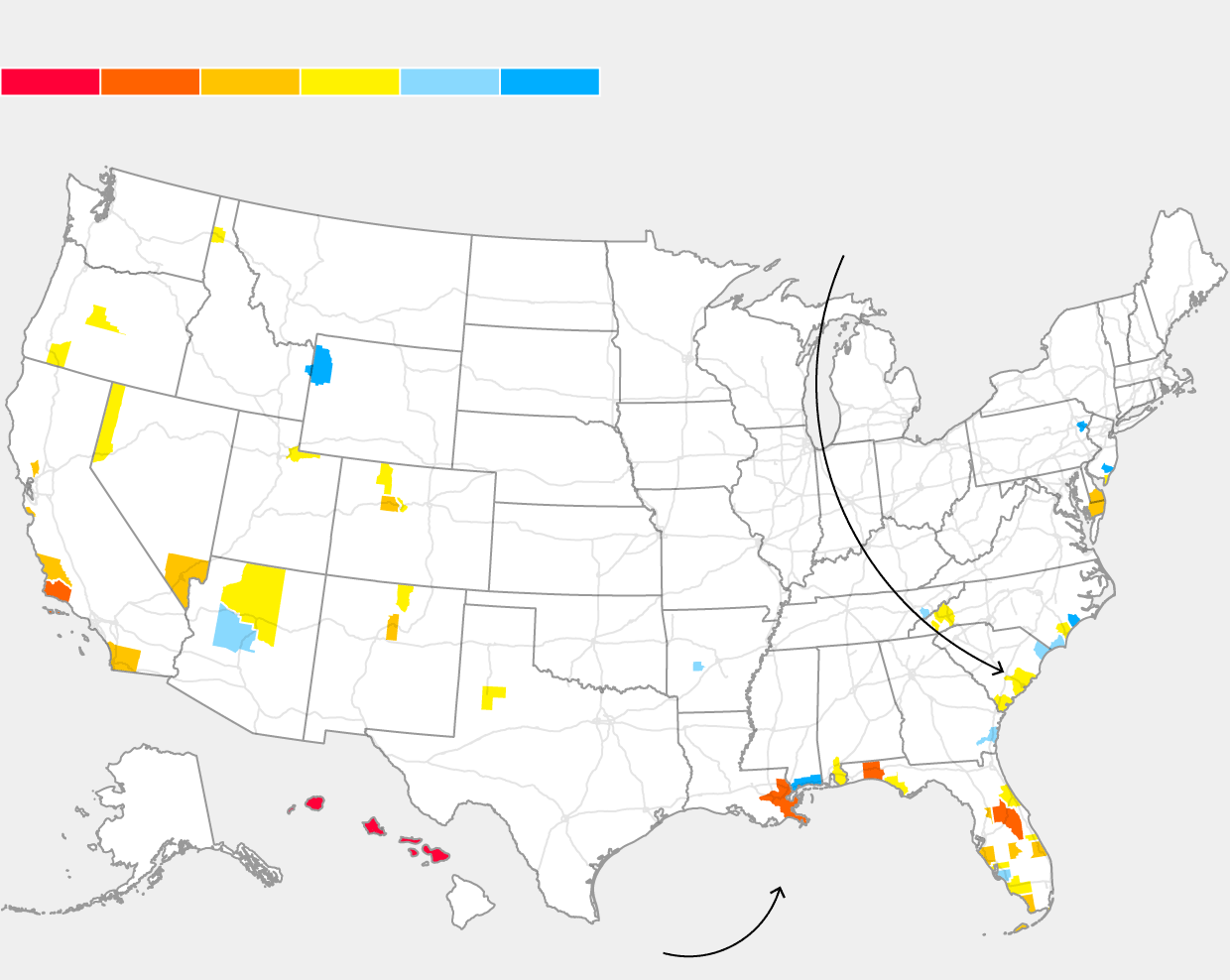
Yearly change in average Airbnb bookings per night by city, week ending July 31, 2020
–75%
–50%
–25%
0%
+25%
~50%
decline in tourism funds through June
Coeur
D’Alene
Bend
Jackson
East
Stroudsburg
Summit
Park
Steamboat
Springs
Atlantic
City
Napa
Ocean
City
Salisbury
Las
Vegas
San Luis
Obispo
Edwards
Breckenridge
Taos
Flagstaff
Asheville
Sevierville
Jacksonville
Santa
Barbara
Hot
Springs
Cullowhee
Myrtle Beach
Santa Fe
Prescott
San Diego
Charleston
Lubbock
Hilton Head Island
Gulfport
Kapaa
Panama
City
Orlando
New
Orleans
Kahului
Honolulu
Port St. Lucie
Sales tax revenue forecast cut by
$66M
Naples
Key West
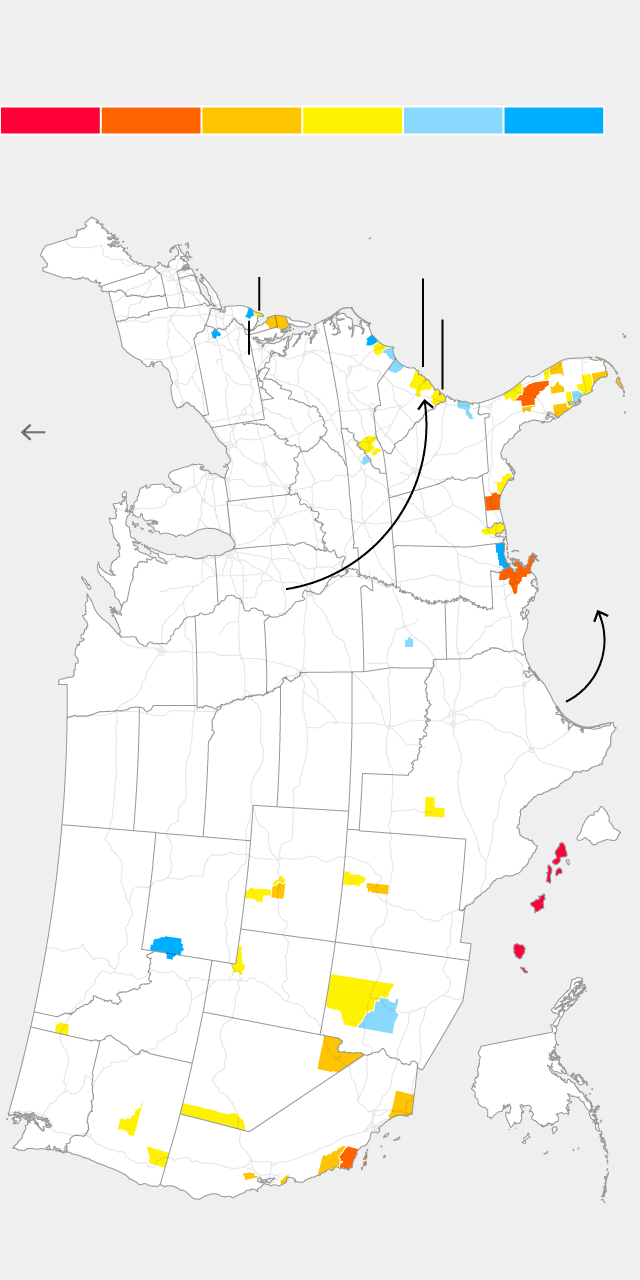
Yearly change in average Airbnb bookings per night by city, week ending July 31, 2020
–75%
–50%
–25%
0%
+25%
Ocean
City
Charleston
Hilton Head
Island
Orlando
Atlantic
City
Key
West
north
Sevierville
Panama
City
~50%
decline in tourism funds through June
New
Orleans
Hot
Springs
Sales tax revenue forecast cut by
$66M
Breckenridge
Taos
Santa Fe
Jackson
Honolulu
Coeur
D’Alene
Kapaa
Summit
Park
Las
Vegas
San
Diego
Reno
Bend
Napa
San Luis
Obispo
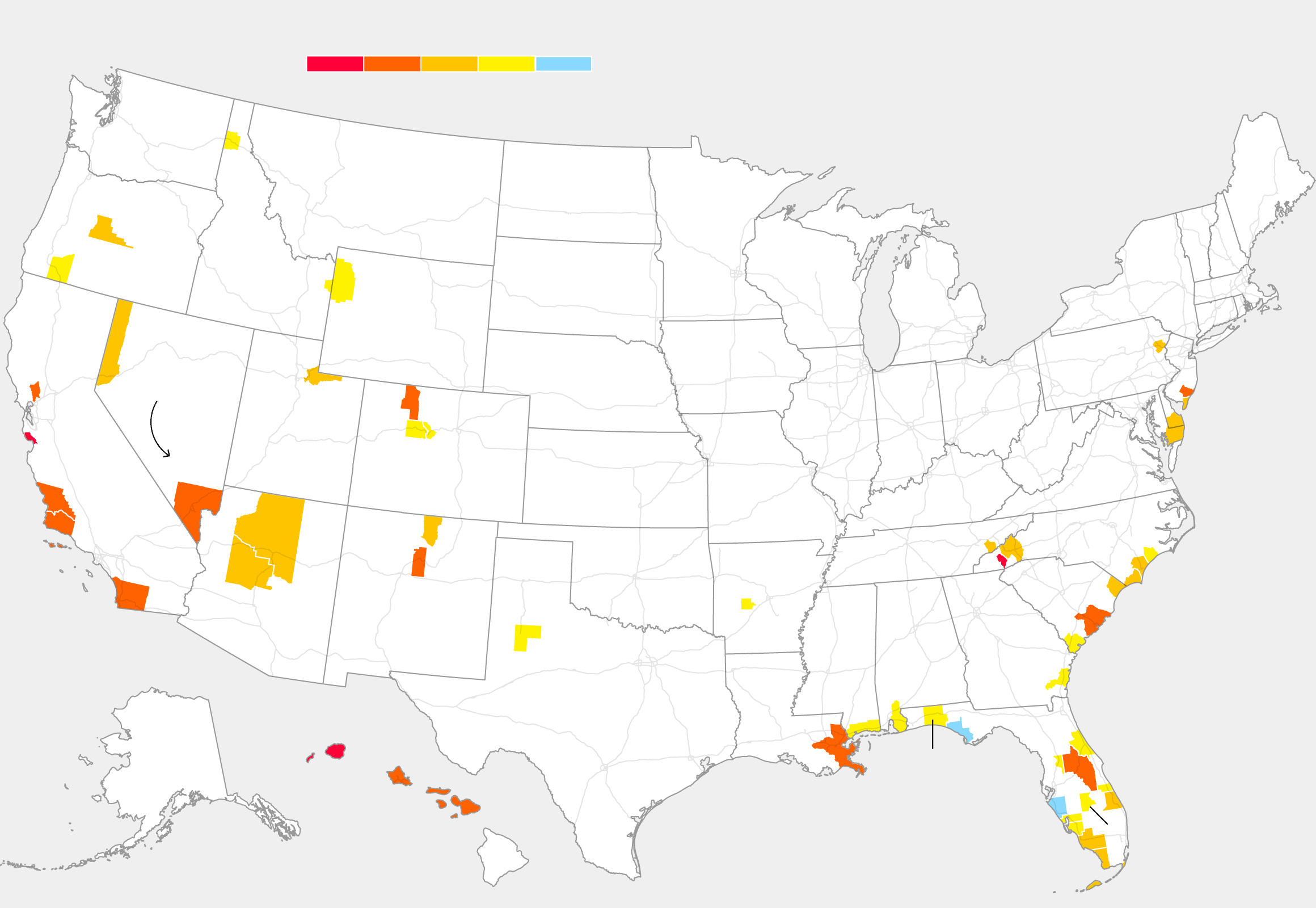
Yearly change in average foot traffic to tourism-related businesses by city, week ending July 26, 2020
–60%
–40%
–20%
0%
Coeur
D’Alene
Bend
Medford
Jackson
Sin City projects
$87M
less tax revenue from FY 2019 to FY 2021
East
Stroudsburg
Summit Park
Steamboat
Springs
Napa
Atlantic City
Reno
Ocean City
Santa
Cruz
Edwards
Salisbury
Breckenridge
Las
Vegas
San Luis
Obispo
Taos
Santa
Barbara
Sevierville
Asheville
Flagstaff
Jacksonville
Cullowhee
Hot
Springs
Wilmington
Santa Fe
Prescott
Myrtle Beach
San Diego
Charleston
Lubbock
Hilton Head Island
Brunswick
Daphne
Panama
City
Gulfport
The
Villages
Kapaa
Deltona
Crestview
Orlando
New
Orleans
Sebastian
Kahului
Honolulu
North Port
Port St. Lucie
expects
$77M
revenue decrease in FY 2020 and FY 2021
Punta Gorda
Cape Coral
Sebring
Naples
Key West
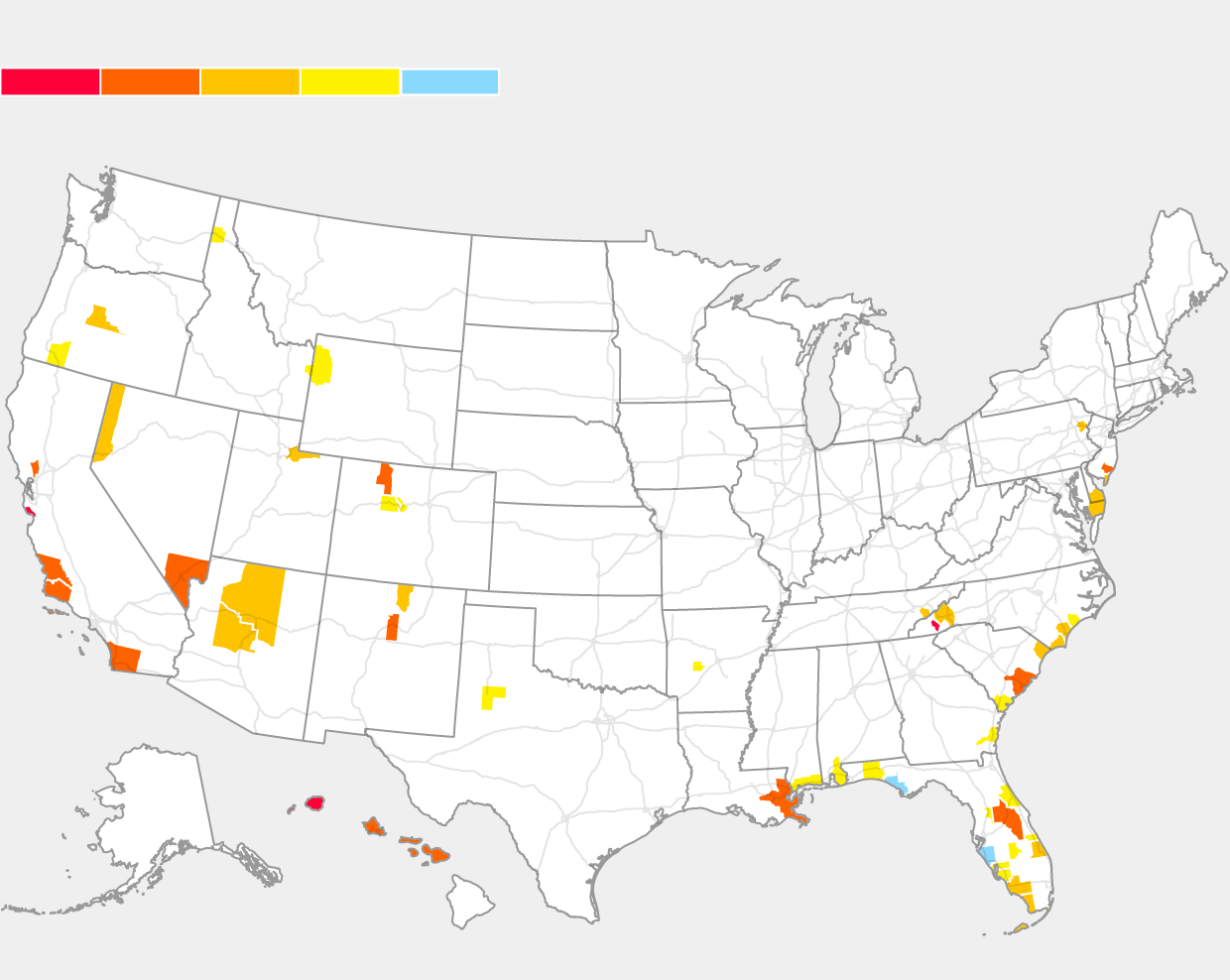
Yearly change in average foot traffic to tourism-related businesses by city, week ending 7/26/20
–60%
–40%
–20%
0%
Coeur
D’Alene
Bend
Jackson
$87M
less tax revenue through
FY 2021
East
Stroudsburg
Steamboat
Springs
Atlantic
City
Napa
Ocean
City
Salisbury
Las
Vegas
San Luis
Obispo
Edwards
Breckenridge
Taos
Flagstaff
Asheville
Sevierville
Jacksonville
Santa
Barbara
Hot
Springs
Cullowhee
Myrtle Beach
Santa Fe
Prescott
San Diego
Charleston
Lubbock
Hilton Head Island
Gulfport
Kapaa
Panama
City
Orlando
New
Orleans
Kahului
Honolulu
Port St. Lucie
$77M
revenue decrease through FY 2021
Naples
Key West
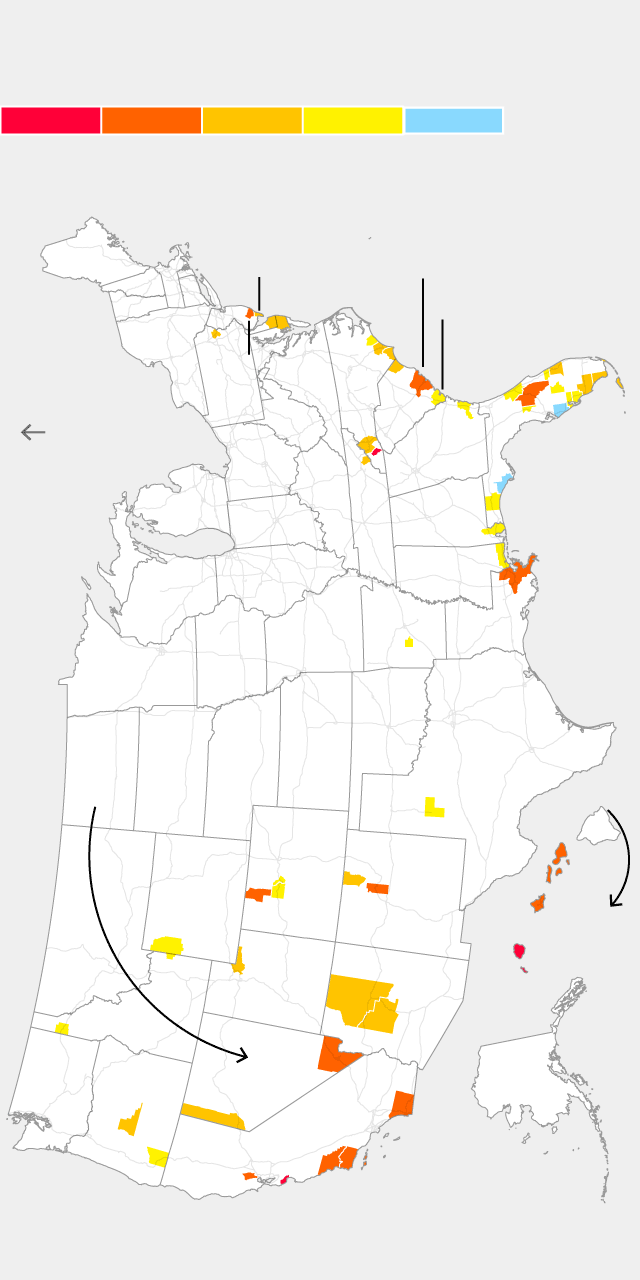
Yearly change in avg. foot traffic to tourism-
related businesses, week ending 7/26/20
–60%
–40%
–20%
0%
Ocean
City
Charleston
Hilton Head
Island
Orlando
Atlantic
City
Key
West
north
Sevierville
Panama
City
New
Orleans
Hot
Springs
$77M
revenue decrease through FY 2021
$87M
less tax revenue through FY 2021
Breckenridge
Taos
Santa Fe
Jackson
Honolulu
Coeur
D’Alene
Kapaa
Summit
Park
Las
Vegas
San
Diego
Reno
Bend
Napa
San Luis
Obispo
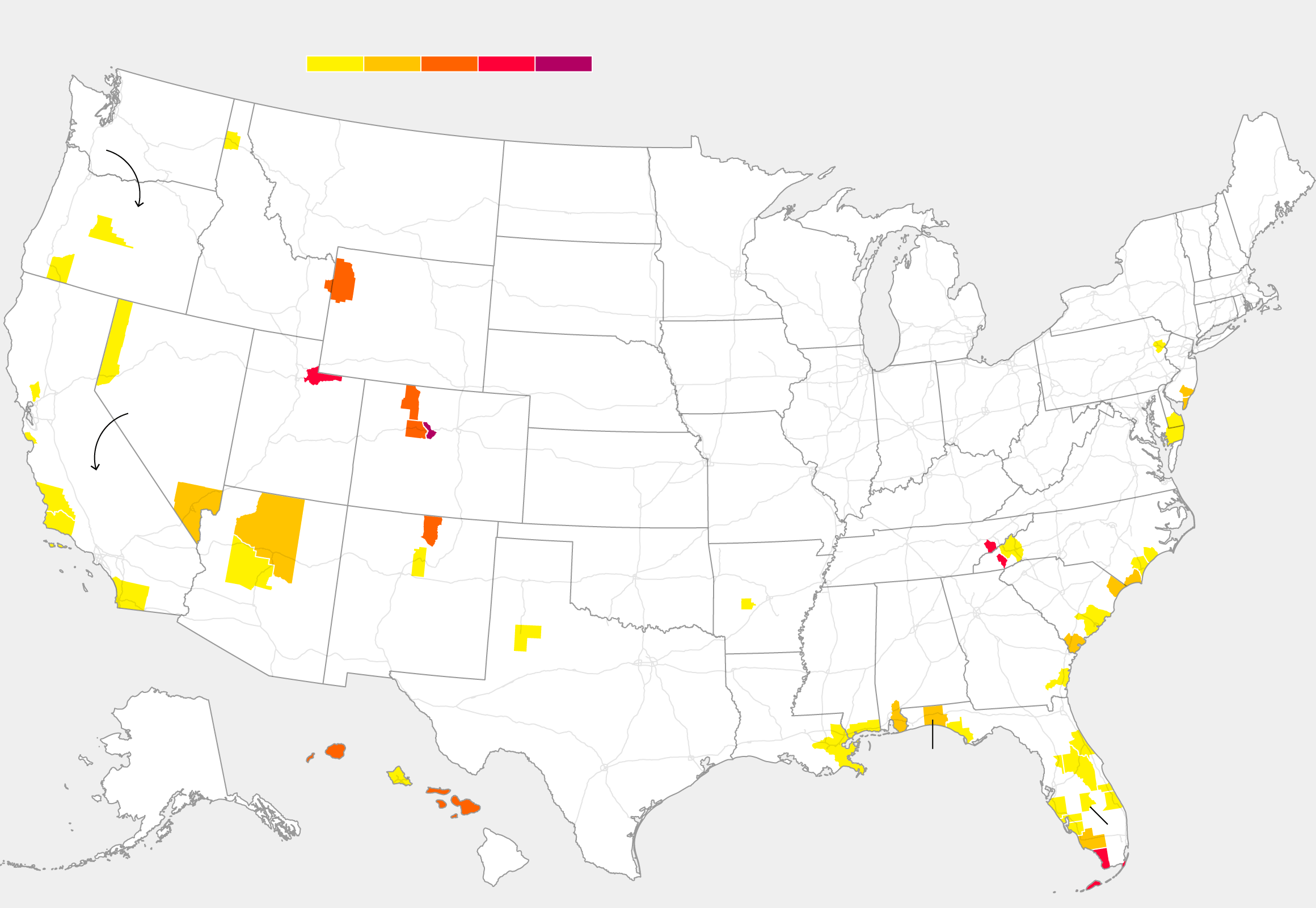
Tourism-related occupations as a share of metro/micro area labor force, 2017 or later
This mountain town has cut its budget by
10%
20%
30%
40%
50%
Coeur
D’Alene
Bend
Medford
Jackson
East
Stroudsburg
Summit Park
Revenues are expected to fall
$36M
Steamboat
Springs
Napa
Atlantic City
Reno
Ocean City
Edwards
Salisbury
Breckenridge
Las
Vegas
San Luis
Obispo
Taos
Santa
Barbara
Sevierville
Asheville
Flagstaff
Jacksonville
Cullowhee
Hot
Springs
Wilmington
Santa Fe
Prescott
Myrtle Beach
San Diego
Charleston
Lubbock
Hilton Head Island
Brunswick
Daphne
Panama
City
Gulfport
The
Villages
Kapaa
Deltona
Crestview
Orlando
New
Orleans
Sebastian
Kahului
Honolulu
North Port
Port St. Lucie
Punta Gorda
Cape Coral
Sebring
Naples
Key West
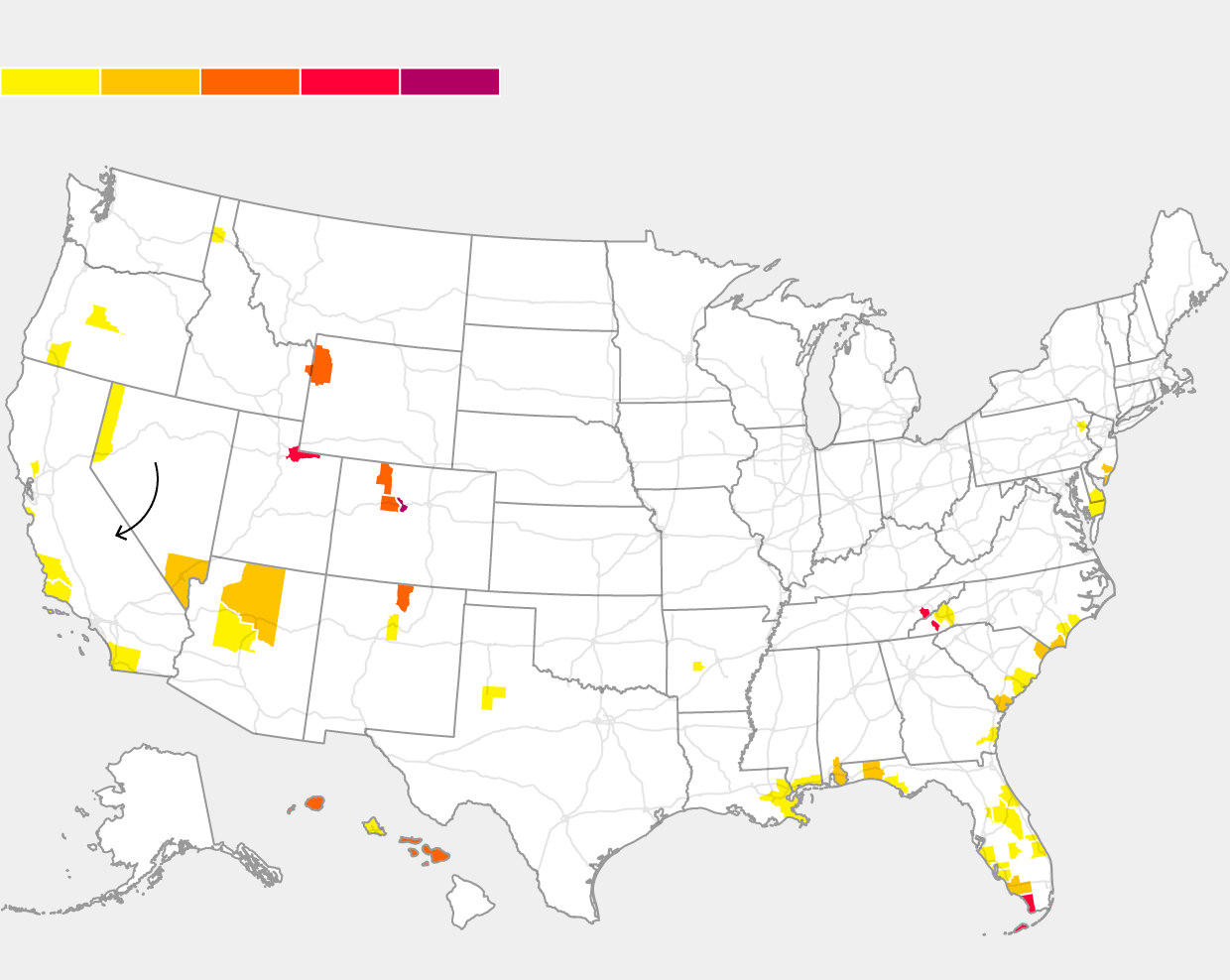
Tourism-related occupations as a share of metro/micro area labor force, 2017 or later
20%
30%
40%
50%
10%
of budget cut
Coeur
D’Alene
Bend
Jackson
$36M
expected revenue hit
East
Stroudsburg
Summit
Park
Steamboat
Springs
Atlantic
City
Napa
Ocean
City
Salisbury
Las
Vegas
San Luis
Obispo
Edwards
Breckenridge
Taos
Flagstaff
Asheville
Sevierville
Jacksonville
Santa
Barbara
Hot
Springs
Cullowhee
Myrtle Beach
Santa Fe
Prescott
San Diego
Charleston
Lubbock
Hilton Head Island
Gulfport
Kapaa
Panama
City
Orlando
New
Orleans
Kahului
Honolulu
Port St. Lucie
Naples
Key West
Tourism-related occupations as a share of metro/micro area labor force, 2017 or later
20%
30%
40%
50%
Ocean
City
Charleston
Hilton Head
Island
Orlando
Atlantic
City
Key
West
north
Sevierville
Panama
City
New
Orleans
Hot
Springs
Breckenridge
Taos
Santa Fe
Jackson
Honolulu
Coeur
D’Alene
Kapaa
Summit
Park
Las
Vegas
San
Diego
Reno
Bend
$36M
expected revenue hit
Napa
San Luis
Obispo
10%
of budget cut
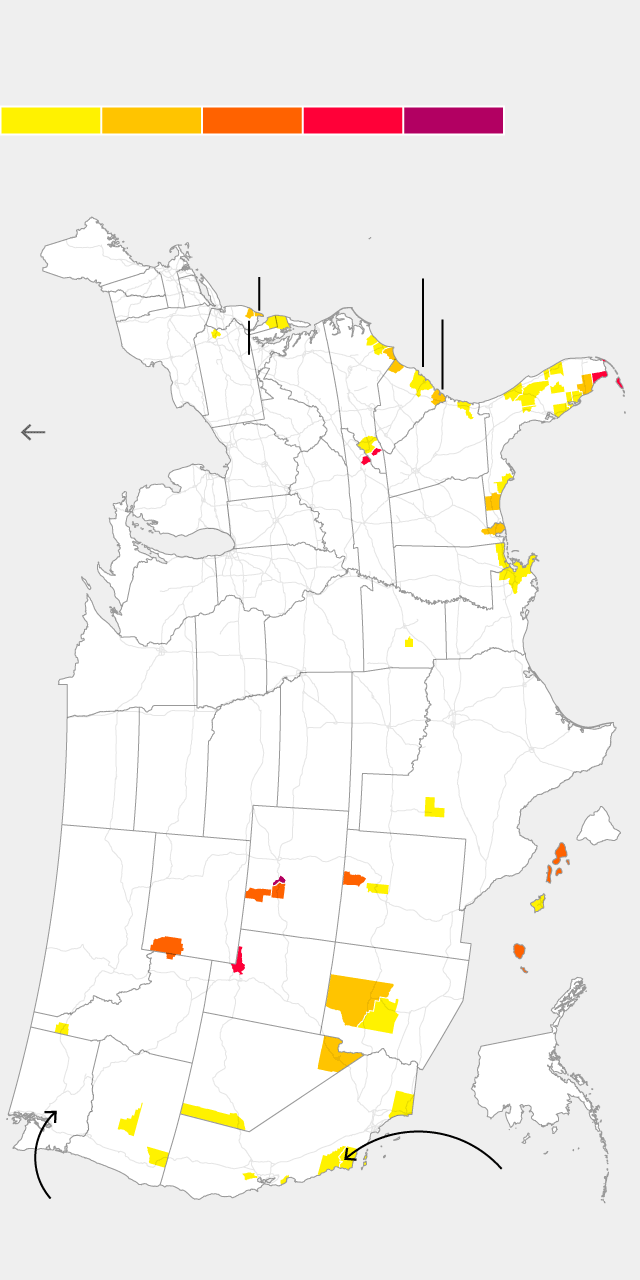
At least one out of every six jobs in these 53 tourist towns is in a related industry, such as hotels or restaurants. For some smaller ski resort areas, that share rises above 40%. Fewer tourists and their dollars means fewer jobs and strained city budgets.
Sources: Bureau of Labor Statistics and Bloomberg reporting
Outside a few stretches of Florida coastline, most tourist towns aren’t yet back to their usual levels of summer activity, according to mobile-phone location data. Foot traffic is especially down in Hawaii, gambling destinations like Las Vegas as well as in the country’s theme park capital, Orlando. The Disney parks started reopening on July 11.
Sources: SafeGraph and Bloomberg reporting
There are at least 75% fewer Airbnb bookings in the top Hawaiian destinations, and almost a 50% decrease in Napa wine country, with several other California cities also lagging. Still, some places like Sevierville, Tennessee, near the Great Smoky Mountains National Park, have seen increased activity with about 60 additional average nightly bookings in 2020 compared to 2019, up 23%.
Sources: AllTheRooms Analytics and Bloomberg reporting
“We are at a crossroads,” said Bret Prebula, finance director for Napa, California. “If this continues to go in the bad way that it is—I have a bad feeling that the fall becomes a really telling time for Napa on whether this will have a long-term systemic impact on us.”
If enough visitors don’t return and towns like Napa don’t get a lifeline, they may be forced to deepen their spending cuts, potentially worsening a U.S. economy that’s struggling to rebound. Cities are facing $360 billion of revenue losses through 2022, according to the National League of Cities, and Congress is mired in a partisan standoff over the next round of stimulus.

More far-flung destinations like Hawaii’s beaches, and the ski towns of Vail, Colorado, and Park City, Utah, where visitors often must fly to, are especially impacted during the contagious outbreak.
A New Jersey family’s travel plans illustrate the problem. Arnel Kernaghan had planned a trip to Italy this month as a getaway before her niece’s wedding. But as the virus spread through the country earlier this year, they thought better of it and shifted their plans to a small resort on Lake Tahoe. Then the pandemic erupted in the U.S., prompting them to look for a place within driving distance. They settled on Long Beach Island, just down the Garden State Parkway on the Jersey Shore.
Such decisions are playing out across the nation. Here’s how four tourist towns are handling them.
Napa, California
Metro area population: 137,744
Metro Pop
$105M
labor
force
$84M
19.5%
–$21M
–52.5%
45%
Share of labor force jobs in tourism within the metro population
Change in projected revenue for FY 2020/21
Change in average credit-card revenue per winery or restaurant, week ending July 30, 2020 vs. same week last year
Share of pre- pandemic revenue from sales, hotel & restaurant taxes
Napa, California
Metro area population: 137,744
Metro Pop
$105M
labor
force
$84M
19.5%
–$21M
–53%
45%
Share of labor force jobs in tourism within the metro population
Change in projected revenue for FY 2020/21
Change in avg. credit-card revenue per winery or restaurant, week ending July 30, 2020 vs. same week last year
Share of pre- pandemic revenue from sales, hotel & restaurant taxes
Napa, CA
Metro area population: 137,744
Metro Pop
$105M
labor
force
$84M
19.5%
–$21M
Share of labor force jobs in tourism within the metro population
Change in projected revenue for FY 2020/21
–52.5%
45%
Change in average credit-card revenue per winery or restaurant, week ending July 30, 2020 vs. same week last year
Share of pre- pandemic revenue from sales, hotel & restaurant taxes
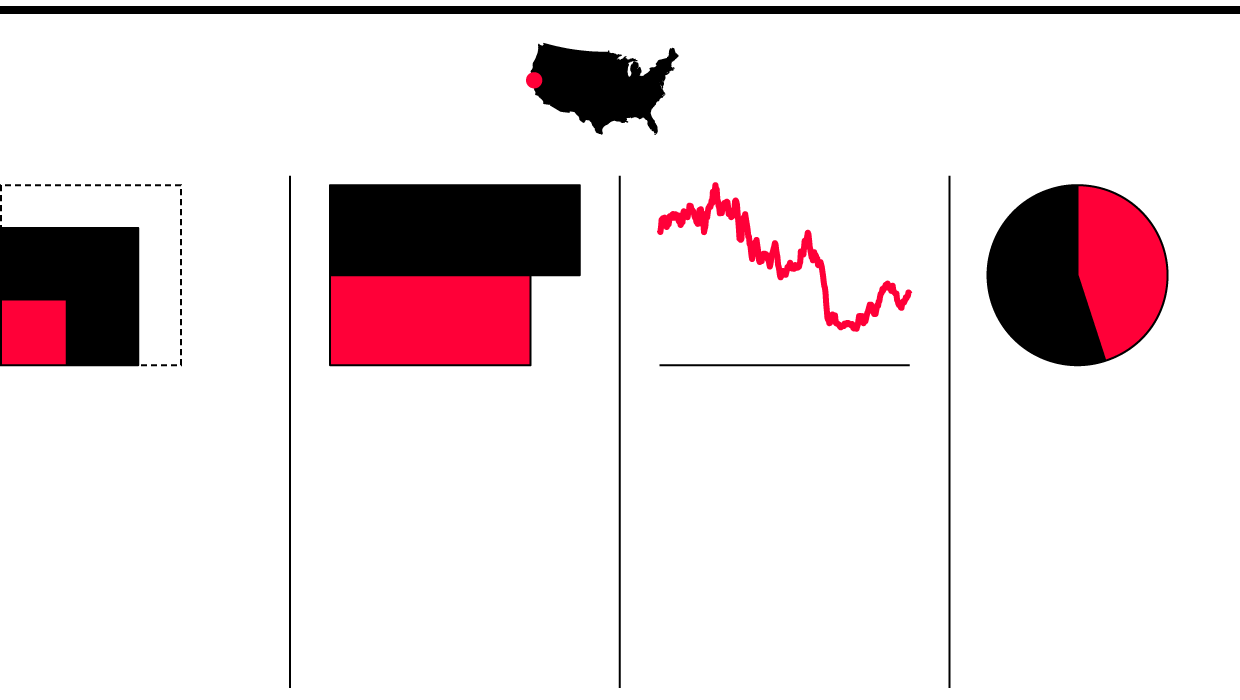
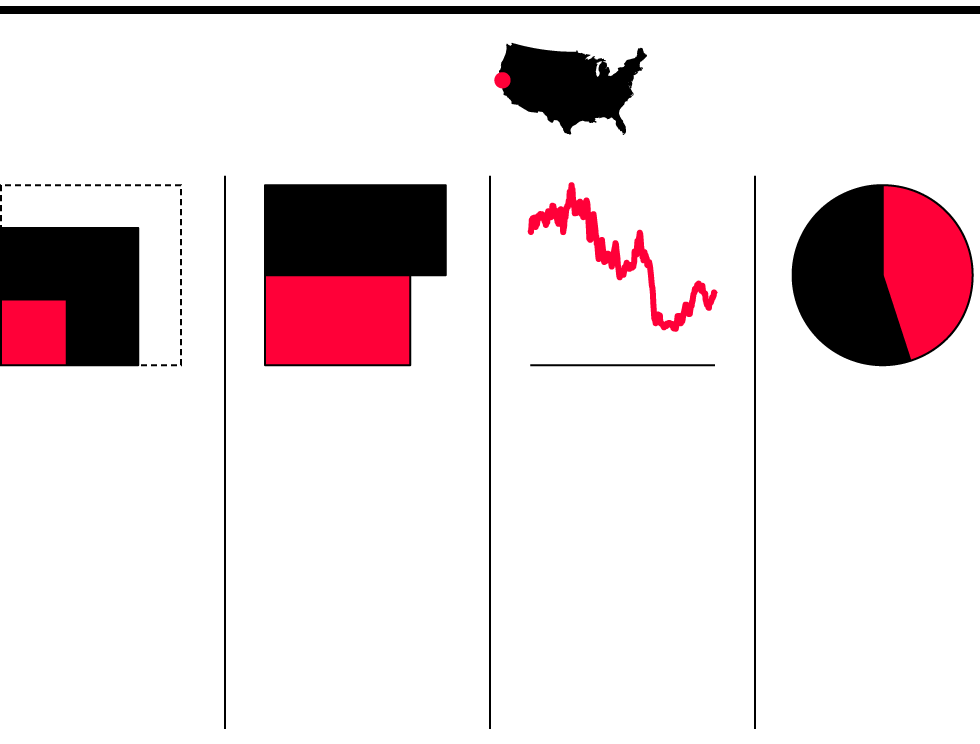
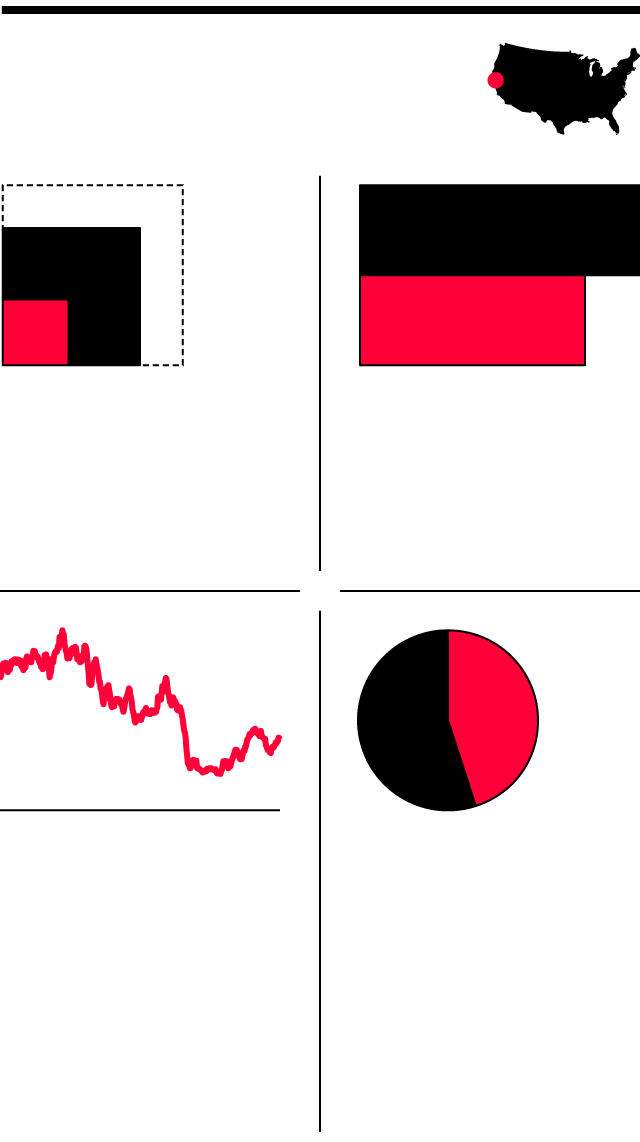
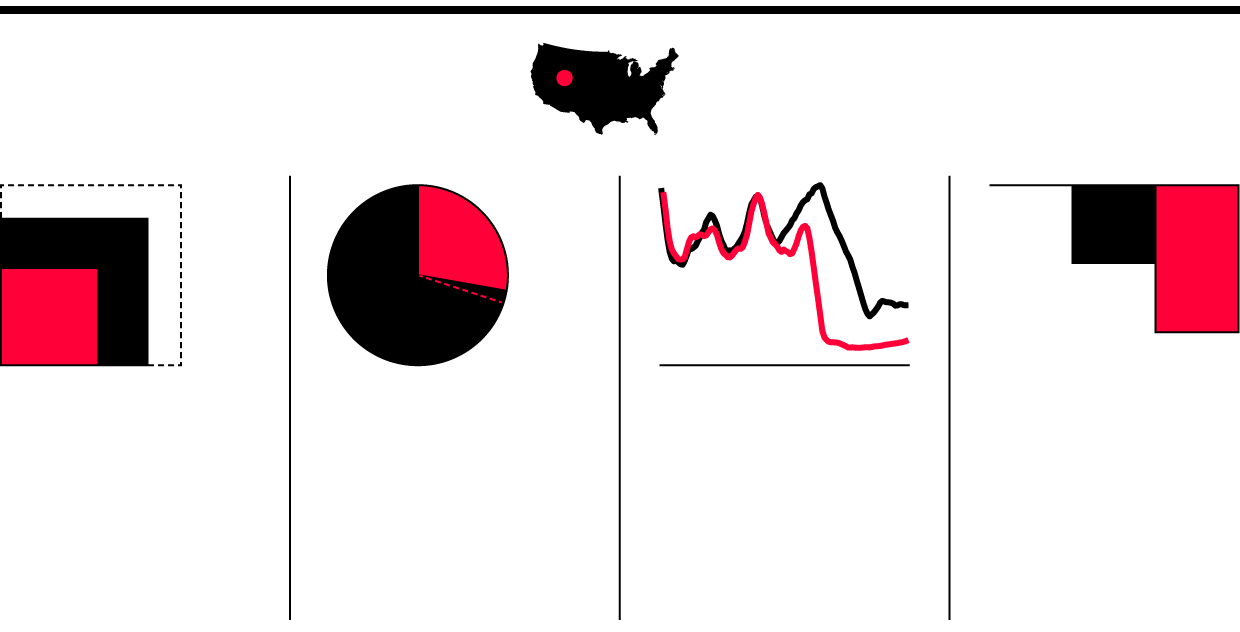
In Napa, whose wineries help to attract nearly 4 million visitors annually to the region, the city is projecting to lose a fifth of its revenue. It implemented a hiring freeze leaving dozens of vacancies, halted infrastructure projects and cut employee trainings and contracts, said Prebula, the finance director.
Napa’s revenue for the fiscal year started July 1 is about $20.7 million lower than a previous projection. “We need a revenue transplant, essentially,” Prebula said.
Before the pandemic, about 45% of the city’s revenue was generated from hotel or sales taxes, much of which comes from restaurants, which have seen sales plunge. In the last week of July, average daily credit-card spending at a sample of Napa restaurants and wineries was down more than 50% on a per-location basis compared to 2019, according to small-business transaction data compiled by software and business-services provider Womply.
“McDonald’s knows how to do takeout,” said Prebula, who is worried about the very existence of the area’s restaurants, many of which are small businesses. “But when you spend $250 on a meal with wine, you don’t make money on to-go orders.”
Park City, Utah
Micro area population: 42,145
42K
2019
2020
2021
28%
–36%
44.0%
–283K
Share of labor force jobs in tourism within the micro-area population
Direct tourism share of budget in FY 2021, vs. 30% in FY 2020
Change in average number of mobile phones detected, January to April 2020 vs. 2019
Projected decrease in sales taxes for FY 2021 vs. FY 2020 revenue budget
Park City, Utah
Micro area population: 42,145
42K
’19
’20
’21
28%
–36%
44.0%
–283K
Share of labor force jobs in tourism within the micro-area population
Direct tourism share of budget in FY 2021, vs. 30% in FY 2020
Change in avg. number of mobile phones detected, January to April 2020 vs. 2019
Projected decrease in sales taxes for FY 2021 vs. FY 2020 revenue budget
Park City, UT
Micro area population: 42,145
42K
28%
44.0%
Share of labor force jobs in tourism within the micro-area population
Direct tourism share of budget in FY 2021, vs. 30% in FY 2020
2019
2020
2021
–36%
–283K
Change in average number of mobile phones detected, January to April 2020 vs. 2019
Projected decrease in sales taxes for FY 2021 vs. FY 2020 revenue budget
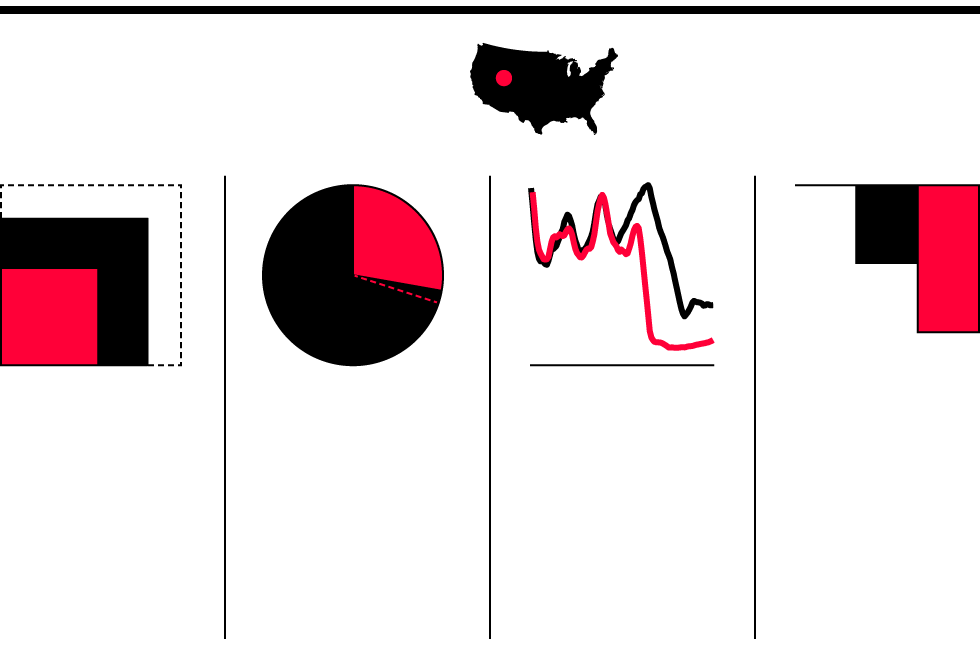
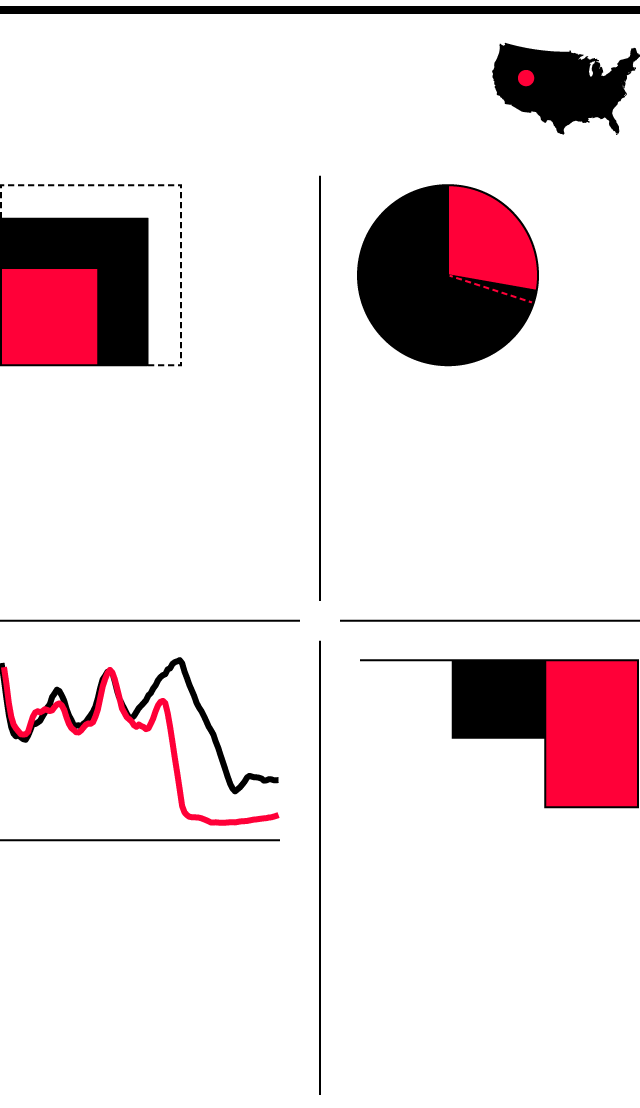
Scientists have warned the coronavirus could worsen in the fall and during flu season. That’s bad news for winter-sports havens like Park City, Utah, or Vail, Colorado, which attract hundreds of thousands of visitors each year. Vail has instituted the fifth and highest level of its recession plan, aptly named “Crisis,” projecting a more than 20% decrease in revenue. Ski season will look different this year, but it could be worse in the unlikely scenario the mountain doesn’t reopen at all, said Kathleen Halloran, Vail’s finance director.
“I wish everything was going back to normal in November and December. But that’s not just going to happen,” she said.
Park City, home to the largest U.S. ski resort, faces a potential economic hit if its signature event, the Sundance Film Festival, is scaled back from its traditional Hollywood glamour. In just 10 days, the festival accounts for about 10% of the town’s annual economy, according to Mayor Andy Beerman. But this year, the festival is planning to expand beyond Park City to accommodate social distancing and protect attendees.
The city is trying to find creative ways to ease the burden on businesses, like closing down Main Street once a week so that restaurants can expand their outdoor dining options.
“We are trying to figure out how to keep our economy on life support,” he said.
Kauai, Hawaii
Micro area population: 72,293
JUNE
72K
22 ⟶ 1
37.9%
20.2%
$6.5M
Share of labor force jobs in tourism within the micro-area population
Unemployment rate for June 2020, vs. 11.1% for the U.S.
Less in taxes from tourist and overall spending ($9.6M total revenue decline)
Change in the average number of mainland U.S. flights per day to Lihue since
July 26, 2019
Kauai, Hawaii
Micro area population: 72,293
JUNE
72K
22 ⟶ 1
37.9%
20.2%
$6.5M
Share of labor force jobs in tourism within the micro-area population
Unemployment rate for June 2020, vs. 11.1% for the U.S.
Less in taxes from tourist and overall spending ($9.6M total revenue decline)
Change in the average number of mainland U.S. flights per day to Lihue since
July 26, 2019
Kauai, HI
Micro area population: 72,293
JUNE
72K
37.9%
20.2%
Share of labor force jobs in tourism within the micro-area population
Unemployment rate for June 2020, vs. 11.1% for the U.S.
22 ⟶ 1
$6.5M
Less in taxes from tourist and overall spending ($9.6M total revenue decline)
Change in the average number of mainland U.S. flights per day to Lihue since July 26, 2019
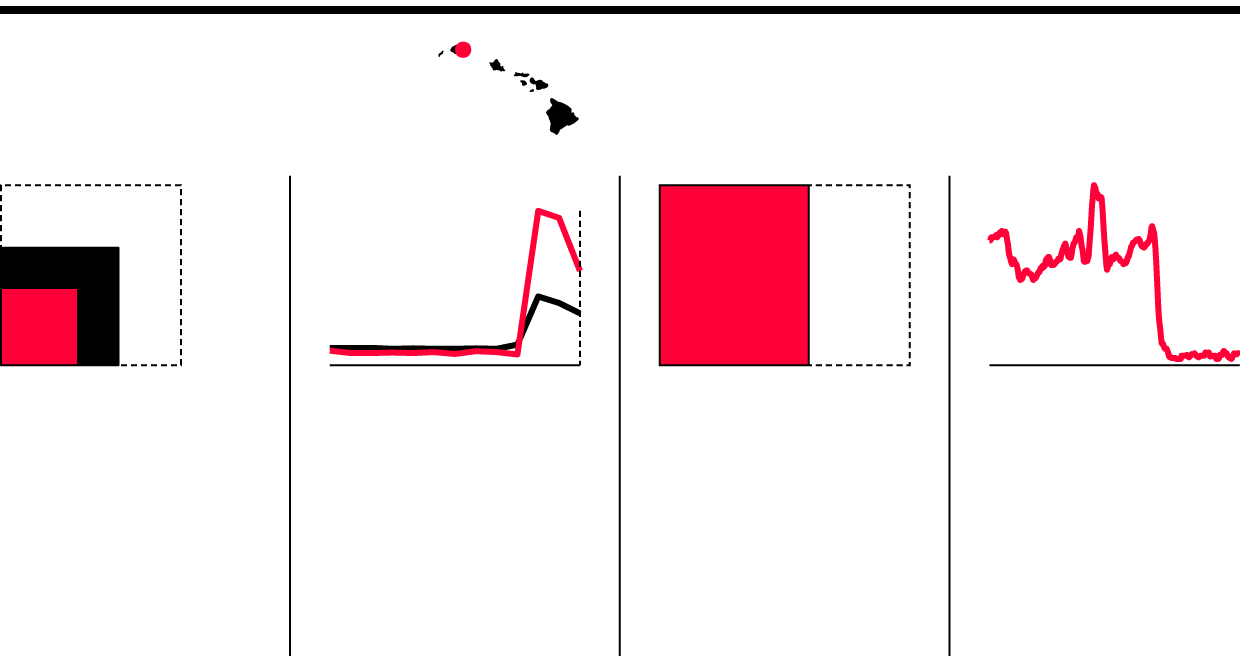
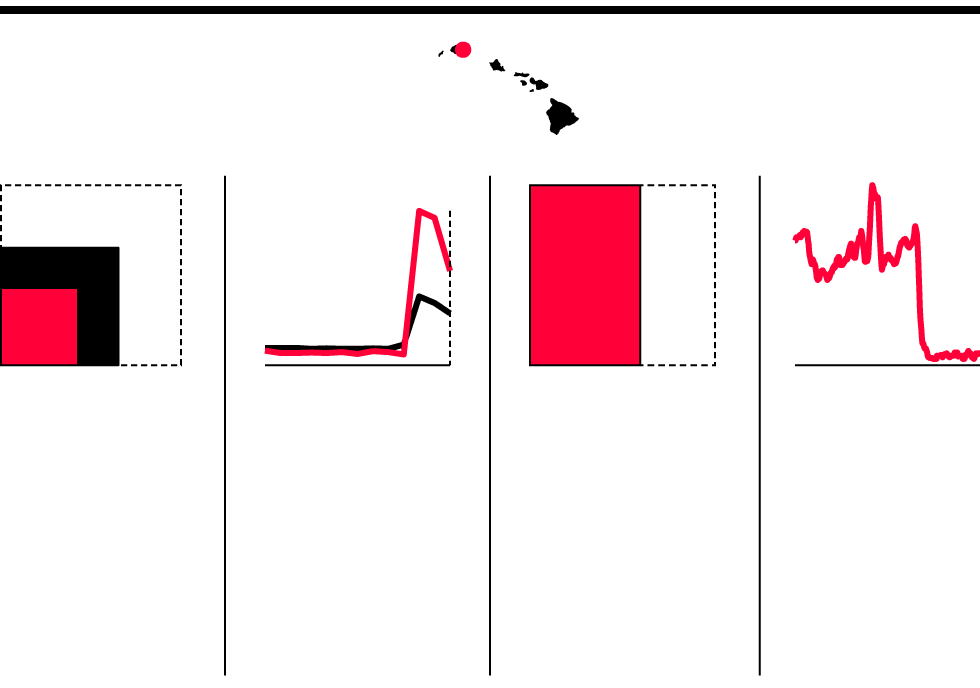
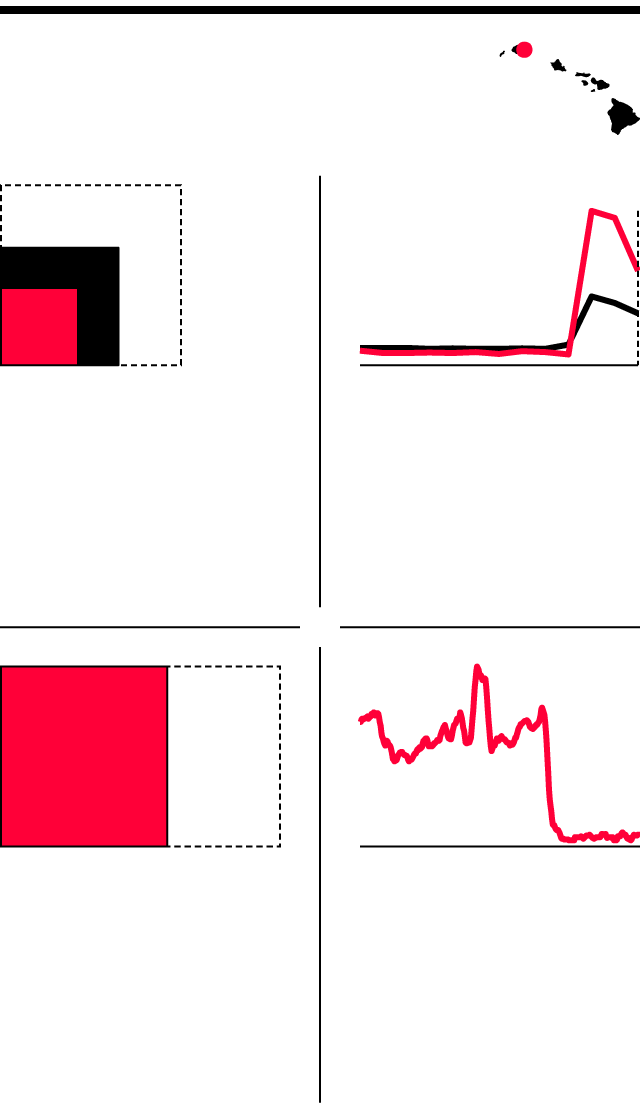
Across the Pacific, the county of Kauai has seen one in five of its residents become unemployed during the pandemic as hotels closed and the tourism industry dried up. Derek S.K. Kawakami, the county mayor, said the empty beaches are a daily reminder of the estimated 30,000 fewer people on the island every day.
“This whole thing is a big wakeup call,” he said. Kauai needs to use this as an opportunity to diversify its economy away from tourism, Kawakami said. The county has frozen hiring and suspended infrastructure projects.
“We’ve been through hurricanes, we’ve been through flooding events, we’ve been through economic downturns,” Kawakami said. “This is unique. When a natural disaster happens, it occurs quickly then we have to rebuild. This is an ongoing marathon.”
A Hawaii state forecast found that the visitor industry won’t begin its slow recovery until September and visitor arrivals won’t rebound to 2019 levels until 2025. Visitor arrivals to Hawaii were around 700 to 900 people a day in early July, compared to about 30,000 to 35,000 pre-pandemic, according to a securities filing.
Ocean City, New Jersey
Metro area population: 92,039
2020
JULY
92K
12%
25.9%
+13.7M
+8.5%
Share of labor force jobs in tourism within the metro population
More passenger vehicle toll transactions on the Garden State Parkway, June 2020 vs. April
Tourism share of budget in FY 2020, vs. 15% in FY 2019
Average Airbnb nightly bookings, July 2020 vs. same period last year
Ocean City, New Jersey
Metro area population: 92,039
2020
JULY
92K
12%
25.9%
+13.7M
+8.5%
Share of labor force jobs in tourism within the metro population
More passenger vehicle toll transactions on the Garden State Parkway, June 2020 vs. April
Tourism share of budget in FY 2020, vs. 15% in FY 2019
Average Airbnb nightly bookings, July 2020 vs. same period last year
Ocean City, NJ
Metro area population: 92,039
2020
92K
25.9%
+13.7M
Share of labor force jobs in tourism within the metro population
More passenger vehicle toll transactions on the Garden State Pkwy, June 2020 vs. April
JULY
12%
+8.5%
Tourism share of budget in FY 2020, vs. 15% in FY 2019
Average Airbnb nightly bookings, July 2020 vs. same period last year
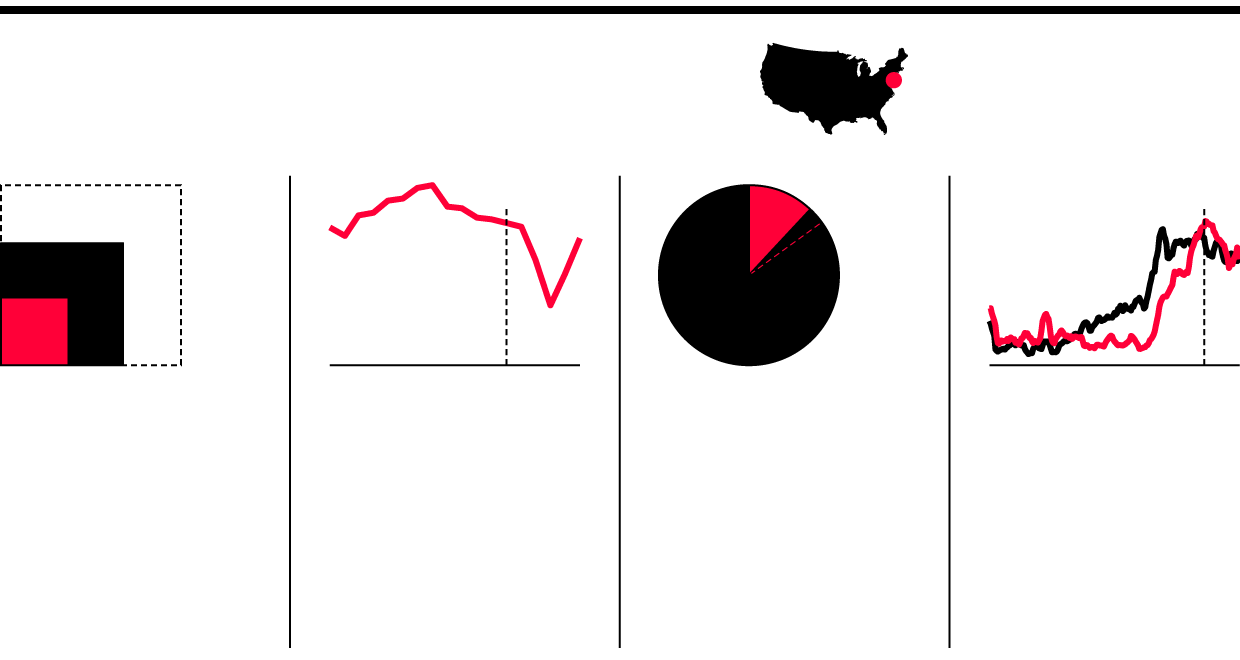
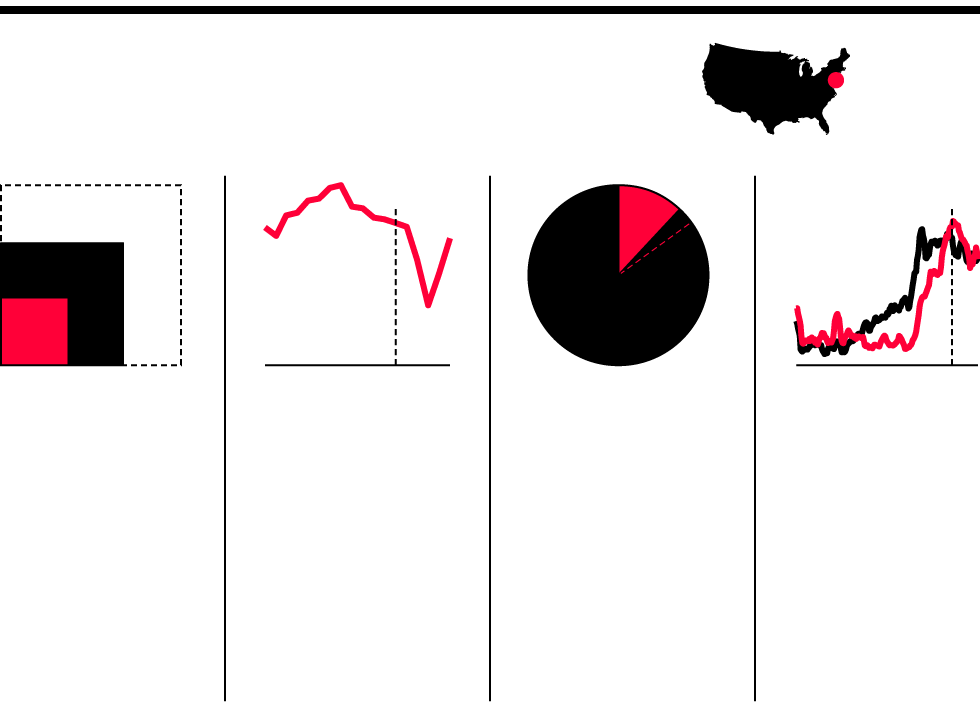
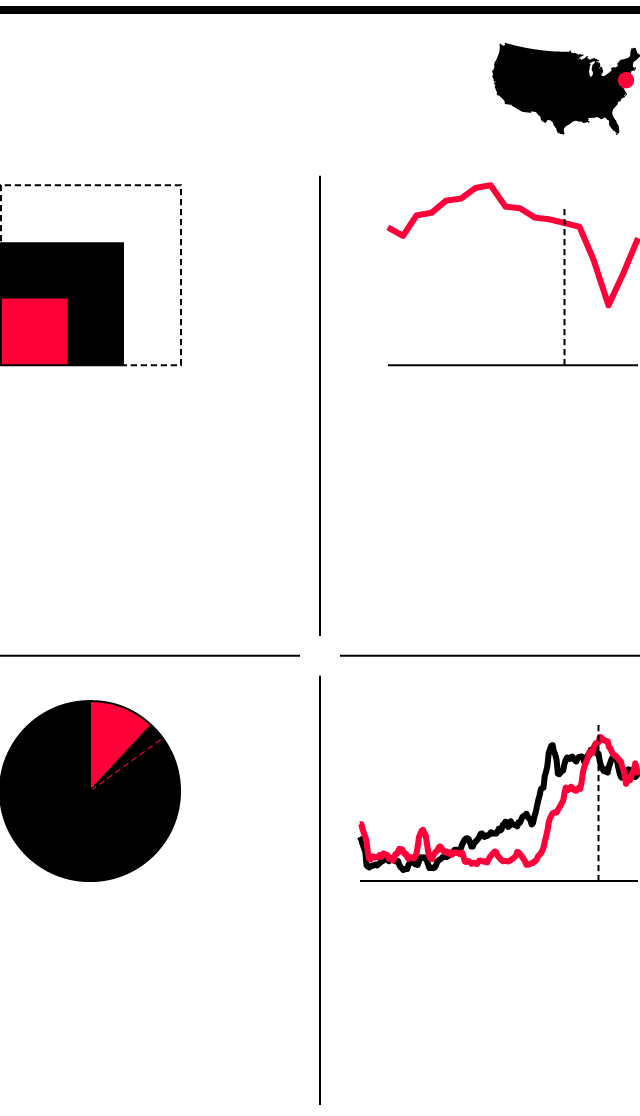
Arnel Kernaghan, who had to scale down her family’s European plans to a Jersey Shore road trip, isn’t alone. East Coast beaches are in many cases seeing increases in foot traffic over the summer months, according to cell phone data. That’s good news for the local economy—but it also presents issues given crowds can accelerate the spread of Covid-19.
From the window of his house, Frank Donato, the financial management director of Ocean City, New Jersey, can see the Saturday traffic lined up on the main artery into his town. He says it looks almost like every other summer since he was five years old—a good sign for next year’s budget.
Most of the town’s money comes from property taxes, a stabilizing factor as home values don’t fluctuate immediately during a downturn. One revenue stream, the sale of beach tags that allow daily and seasonal access to Ocean City’s beaches, was down about $600,000 at the start of the season when uncertainty around when the beaches would reopen limited sales. That came roaring back in June, mostly with day-trippers looking for something to do, he said. Now, sales are off only about $30,000, he estimates.
Ocean City hasn’t had to implement any layoffs, furloughs or service cuts and Donato expects revenue to be down about 1% from lower tag sales and money the city gets from a sports complex.

Even as beach vacationers start to come back, cities are still struggling from the drop-off in revenue from the stay-at-home orders, said Derek Brockbank, executive director of the American Shore and Beach Preservation Association. “All of that dried up completely this spring,” Brockbank said.
Now, months into the pandemic, beaches are seeing “phenomenal” turnout, raising public health risks, he said. But cities’ fiscal constraints have made it difficult to staff positions like lifeguards and meet the increased demand for cleaning and sanitizing, he said.
While road trips are softening the blow for places like Ocean City, the recovery for air travel appears further off. Destination Analysts, a travel market research company, found that 18% of respondents in a survey of U.S. travelers said they may take a road trip in August, but 30% of those surveyed said they wouldn’t get on a plane until later in 2021.
Randy Wright, finance director of North Myrtle Beach, South Carolina, said he’s hoping Congress considers small cities like his in the next round of stimulus. Because of its size, North Myrtle Beach wasn’t eligible for direct support from the Cares Act to cover public health costs, but the city is still contending with rising cases of the virus.
And Wright considers his city, which had a strong financial position going into the pandemic, one of the lucky ones. “Some of the smaller towns, they won’t survive, no way.”