More Refugees Are Seeking Shelter. The U.S. Is Taking Fewer
More people around the world are forcibly displaced now than at any point since the United Nations began keeping track, according to data released Wednesday by the UN refugee agency. The rise comes as millions flee ongoing crises in Syria and Venezuela and as governments in many developed countries that resettle refugees have limited how many people they’ll allow to cross their borders.
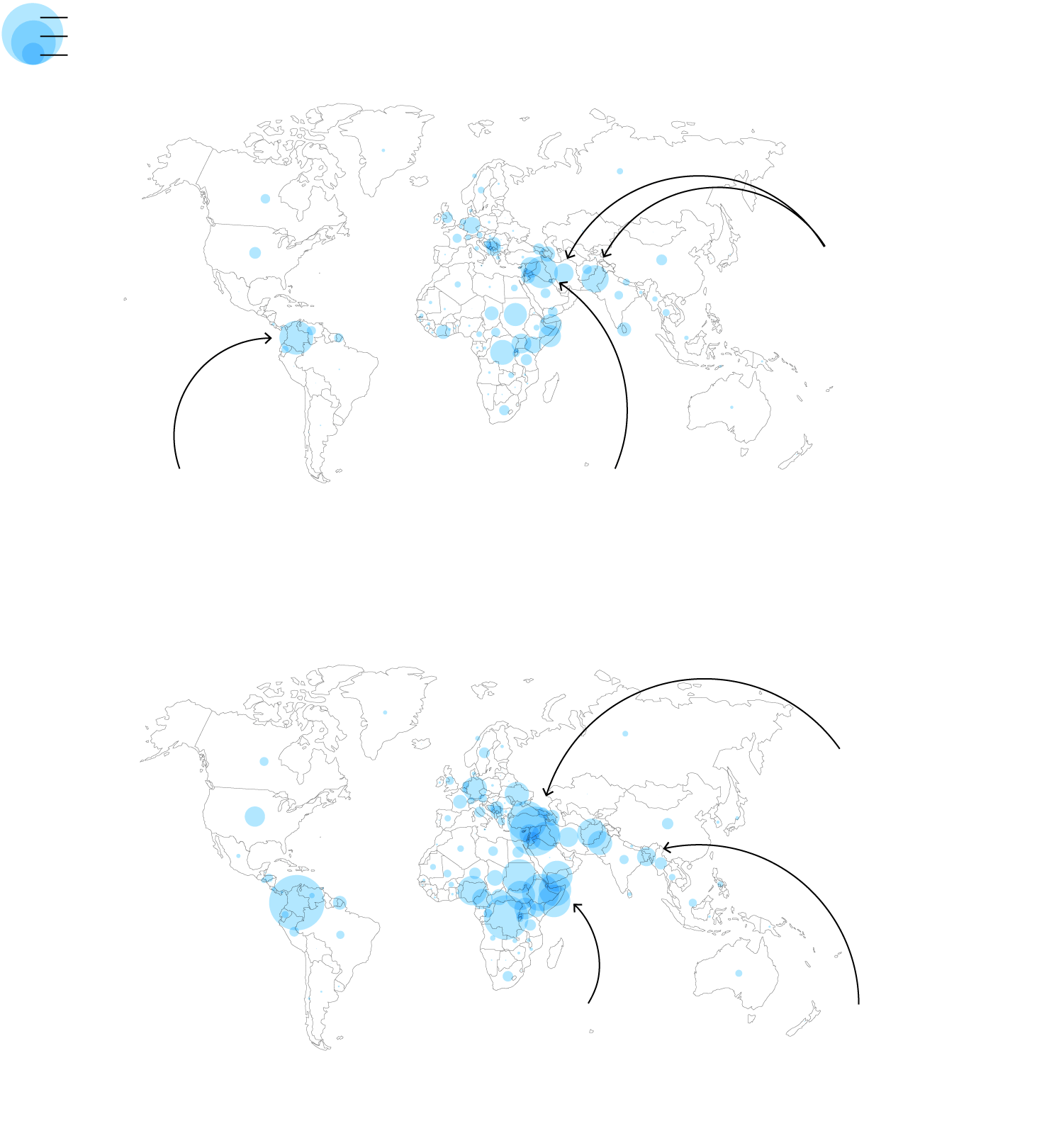
Almost 71 million people—nearly one in 100 people in the world—were forcibly displaced by the end of 2018 because of persecution, conflict, violence or human rights violations. That’s up from around 42 million in 2008. More than 13 million people were newly displaced last year.
Record displacement

10 million
5 million
1 million
2008
2018
13 million Syrians are displaced, mostly in the Middle East, following its
civil war
Nearly 3 million Afghanis resided in neighboring Pakistan or Iran
Millions were displaced within the Democratic Republic of Congo, Ethiopia, South Sudan, Sudan and Nigeria, but most have stayed within their home countries
700,000 Rohingya Muslims from Myanmar crossed into Bangladesh in 2017
At 4.5 million, Iraqis were the largest displaced group in 2008. Most were displaced within the country
Decades of internal armed conflict displaced millions of Colombians within the country
10 million
5 million
1 million
2008
Nearly 3 million Afghanis resided in neighboring Pakistan or Iran
At 4.5 million, Iraqis were the largest displaced group in 2008. Most were displaced within the country
Decades of internal armed conflict displaced millions of Colombians within the country
2018
13 million Syrians are displaced, mostly in the Middle East, following its
civil war
Millions were displaced in the Democratic Republic of Congo, Ethiopia, South Sudan, Sudan and Nigeria, but most have stayed within their home countries
700,000 Rohingya Muslims from Myanmar crossed into Bangladesh in 2017

10 million
2008
5 million
1 million
Nearly 3 million Afghanis resided in neighboring Pakistan or Iran
At 4.5 million, Iraqis were the largest displaced group in 2008. Most were displaced within the country
Decades of internal armed conflict displaced millions of Colombians within the country
2018
13 million Syrians are displaced, mostly in the Middle East, following its
civil war
Millions were displaced in the Democratic Republic of Congo, Ethiopia, South Sudan, Sudan and Nigeria, but most have stayed within their home countries
700,000 Rohingya Muslims from Myanmar crossed into Bangladesh in 2017

10 million
2008
5 million
1 million
Decades of internal armed conflict displaced millions of Colombians within the country
At 4.5 million, Iraqis were the largest displaced group in 2008. Most were displaced within Iraq
13 million Syrians are displaced, mostly in the Middle East, following its civil war
2018
Millions were displaced within the Democratic Republic of Congo, Ethiopia and South Sudan but most have stayed within their home countries
700,000 Rohingya Muslims from Myanmar fled to Bangladesh in 2017
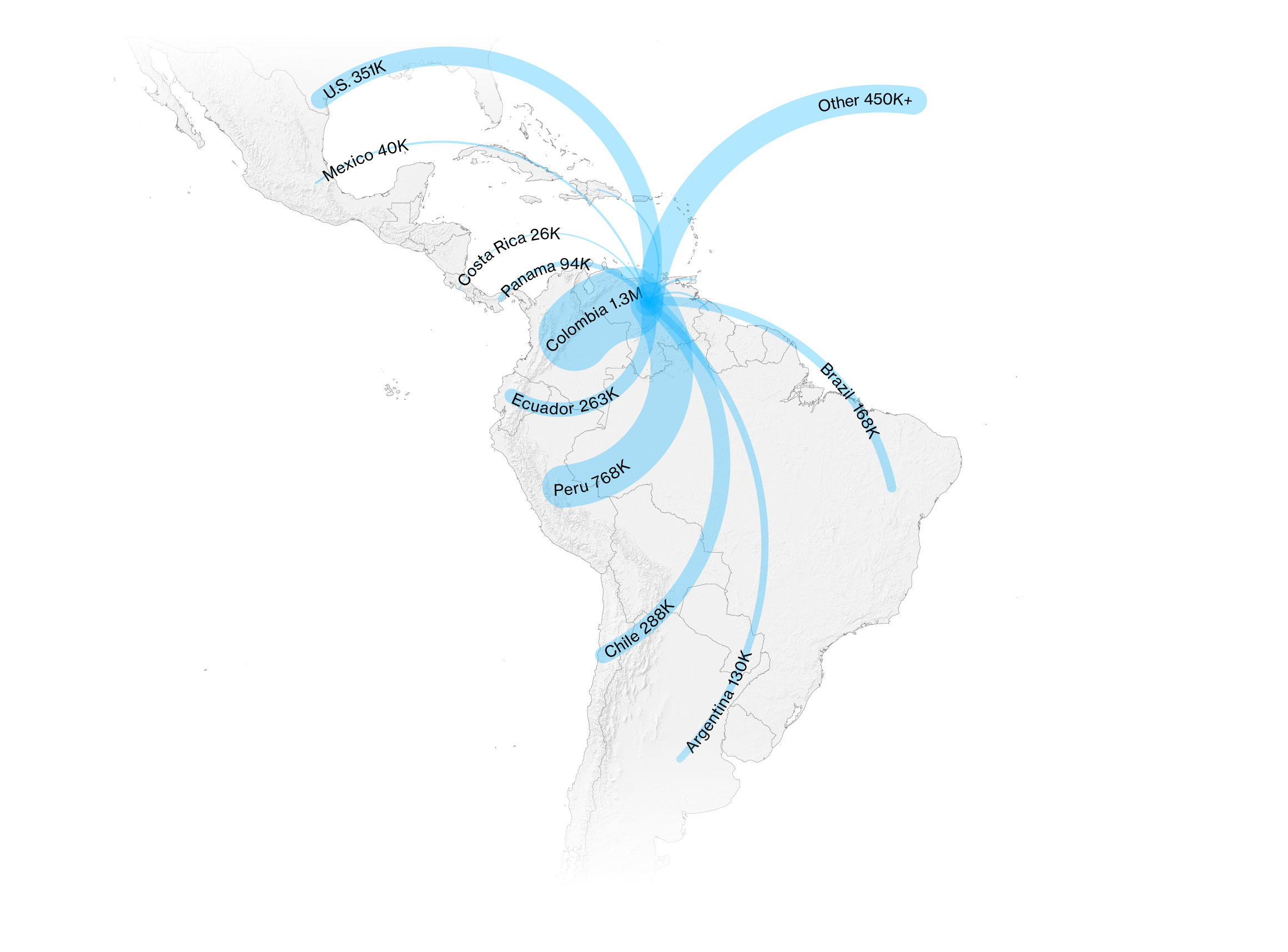
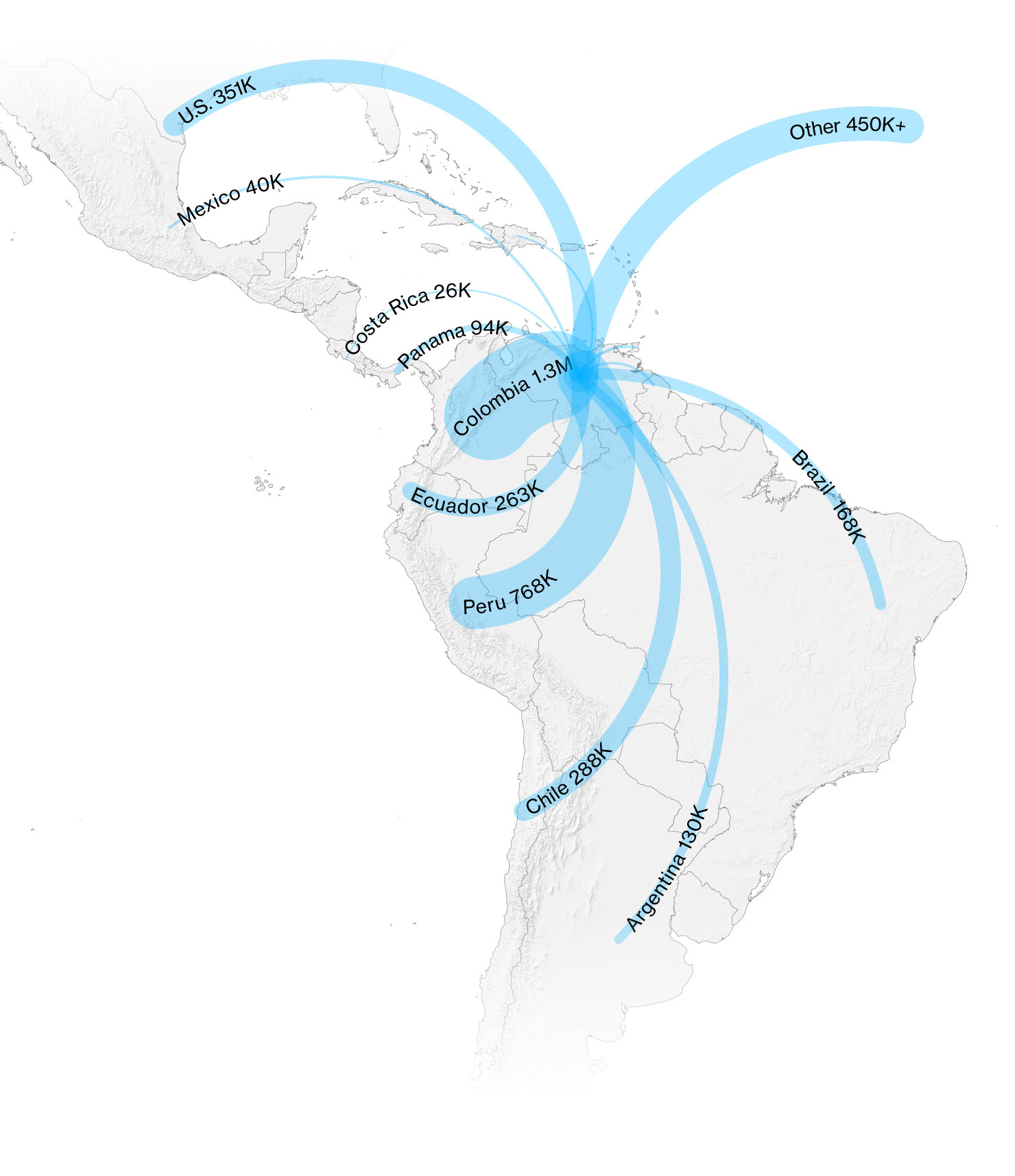
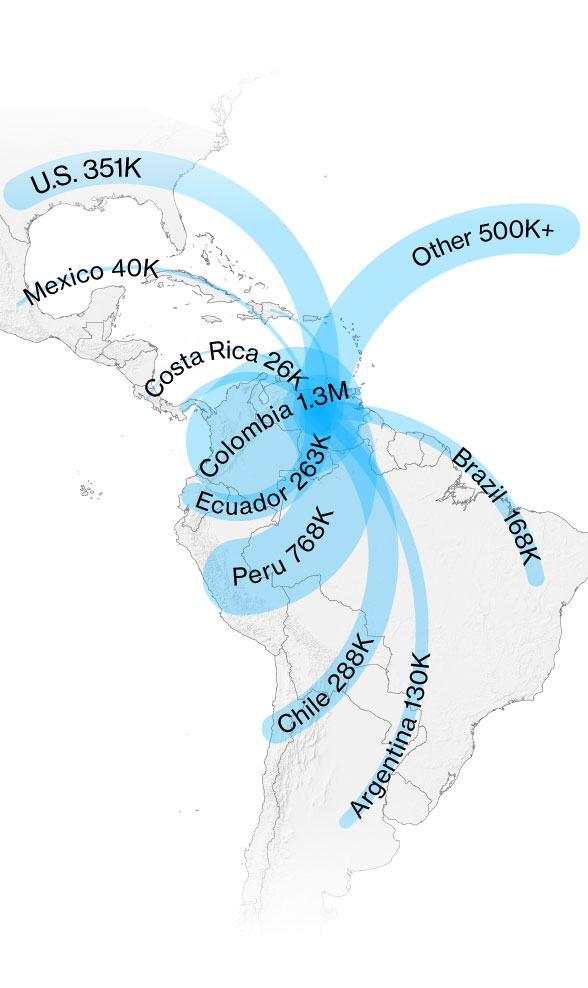
The rise in global displacement comes as the number of Venezuelans who have left the country hit 4 million. About 5,000 more are leaving the country each day, according to the UN High Commission for Refugees (UNHCR) and the International Organization for Migration. Most have ended up in neighboring Latin American countries, straining those countries’ infrastructure and job markets unprepared for a rapid population surge.
“Especially in border areas but also in capital cities, we see hospitals receiving a lot of Venezuelans and classrooms welcoming Venezuelan children,” said Olga Sarrado, a UNHCR spokeswoman who specializes in the ongoing crisis in Venezuela.
To help cope with the sudden influx of migrants, many Latin American countries have put in place alternative visas or special permits to allow Venezuelans to stay legally. That means most Venezuelans have not filed asylum claims with the UN. Still, nearly half a million Venezuelans—and 341,800 alone in 2018—have filed such a claim since 2014.
Destinations of Venezuelan refugees and migrants
Dominican
Republic 29K
Trinidad and Tobago 40K
Guyana 36K
Dominican
Republic 29K
Trinidad and Tobago 40K
Guyana 36K
Trinidad
and Tobago 40K
Guyana 36K
Panama 94K

Dominican
Republic 29K
Trinidad and Tobago 40K
Guyana 36K
Venezuelan mass migration mirrors other recent crises in which citizens spill over borders into neighboring countries ill equipped to cope with the influx. Nearly four in five refugees live in countries that border their home country. At more than 13 million, Syrians now represent the largest group of displaced persons, most of whom are internally displaced within Syria or in neighboring Turkey, Lebanon or Jordan. Protracted crises in Afghanistan and Iraq have led to similar situations, while Colombia and the Democratic Republic of Congo have millions of internally displaced people.
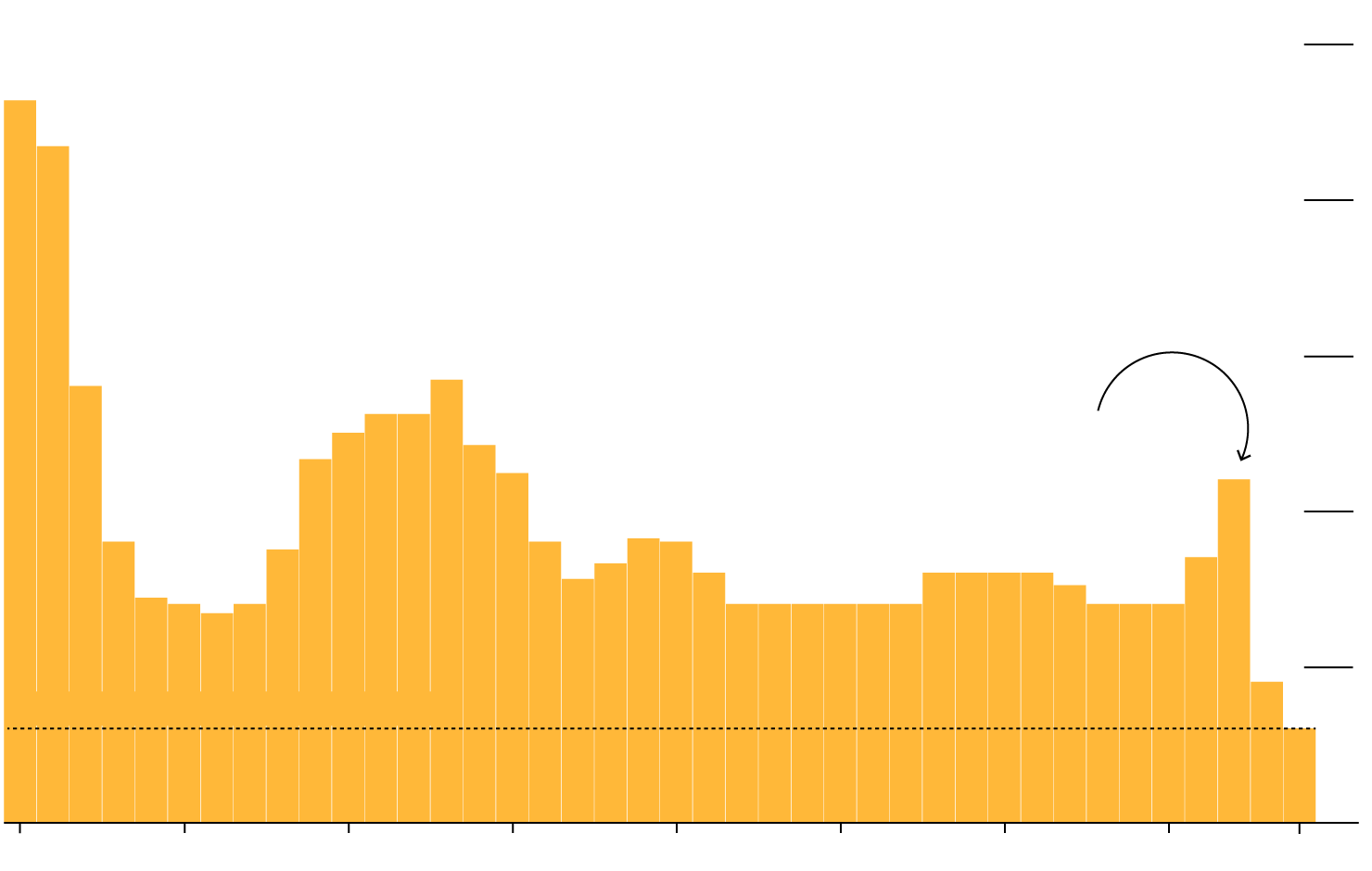
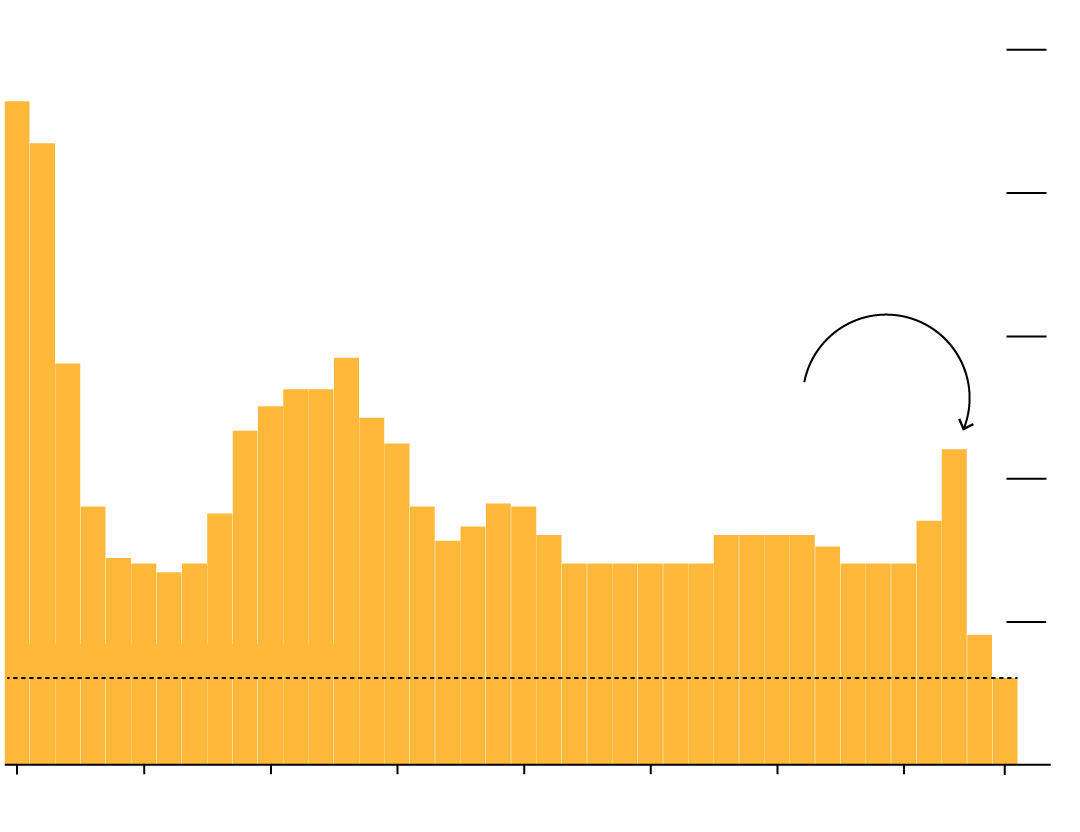
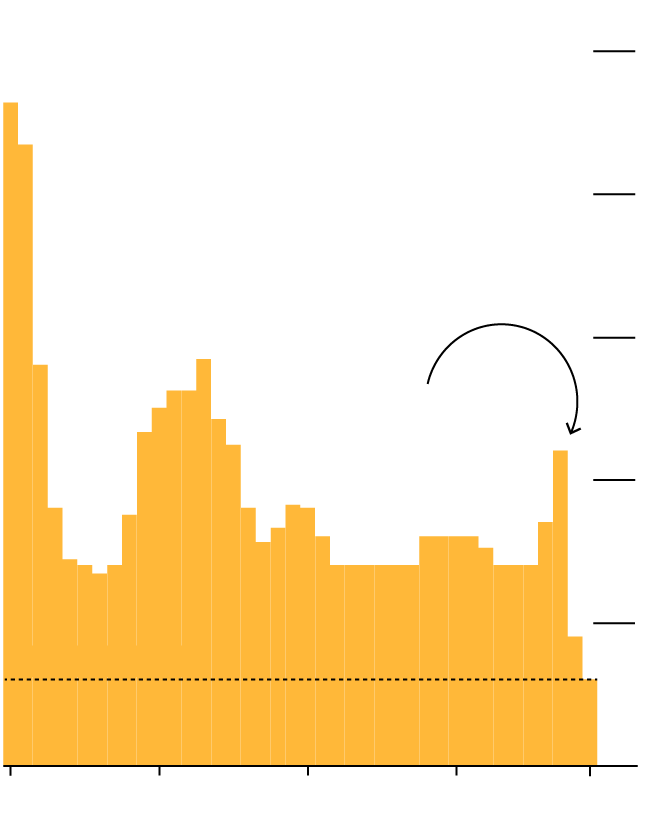
All this comes as some established western democracies with a legacy of resettling refugees within their borders have clamped down on the number they’ll now accept. Last year, the Trump administration capped refugee admissions at to 30,000, the lowest since the U.S. program was created in 1980. The Obama administration set the number at 110,000 the year Obama left office. The U.S. decline is the most dramatic—the country has historically accepted more resettled refugees than all other OECD member countries combined. Australia and Canada also accepted a number of refugees in 2018 below their recent peaks. But, for the first time, Canada accepted more refugees last year than the U.S.
Trump's record-low refugee resettlement ceiling
250K
200
150
The Obama administration set the limit at 110,000 the year Obama left office
100
50
Trump administration FY 2019 limit
0
2019
1980
1985
1990
1995
2000
2005
2010
2015
250K
200
150
The Obama administration set the limit at 110,000 the year Obama left office
100
50
Trump administration FY 2019 limit
0
2019
1980
1985
1990
1995
2000
2005
2010
2015
250K
200
150
The Obama administration set the limit at 110,000 the year he left office
100
50
Trump administration FY 2019 limit
0
2019
1980
1990
2000
2010
Of the 1.4 million refugees the UNHCR deemed in need of resettlement in 2018, countries only provided 81,300 places. Without increasing those thresholds, the backlog of refugees will only continue to increase.