On a Chicago Corner, Industry Leaves, Desolation Remains
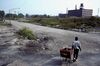
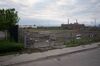
Back in 1988, standing at 2700 West Taylor St. in the East Garfield Park section of Chicago, I saw an extraordinary example of de-industrialization unfolding before me. Mountains of tires lined both sides of South Washtenaw Avenue. Along the street, a stream of homeless men, on their way to a recycling center, pushed shopping carts full of metal. In the distance stood abandoned factories that had once made cookies and corrugated steel ceilings. There was also an abandoned school, a sewer-repair company and, across the Eisenhower Expressway, Rockwell Gardens, a high-rise housing project.
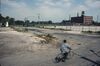
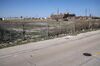
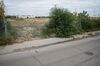
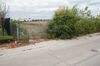
Back then, it seemed that the area had reached its greatest state of entropy. It was hard to imagine what was going to happen next. The open spaces looked like they were waiting for cows to come graze. Since then, I’ve returned to the spot yearly, looking for a new world to emerge. To orient myself amid the ever-increasing desolation, I used the manhole covers on West Taylor Street and the tall, idle smokestacks in the distance.
Eventually, the tires were removed, the ruins cleared, the field fenced. A block of South Washtenaw was eliminated and some of the smokestacks came down. It was scant progress, especially compared to other parts of de-industrialized Chicago. Places closer to the Loop attracted housing, restaurants and lofts for artists; beekeepers became active just south of the area.
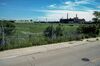
Then, two years ago, a sign appeared on the fence on West Taylor advertising “Field of Dreams.” I expected a baseball diamond. But in 2019, a manicured rugby field appeared, a project of the Lions for Hope Sports Complex and the Chicago Hope Academy. The Lions for Hope website features a quote from Nelson Mandela: “Sport has the power to change the world.”
On a recent Sunday in October, I saw Ohio State rugby players walking past tents for the homeless along South Washtenaw on their way to the Field of Dreams, where they later defeated the University of Minnesota. The old empty lot, a sometimes gloomy, sometimes exciting urban space, has been tamed by green grass, armored trucks on their way to a nearby Brink’s Document Destruction facility, and a few new homes squeezed among abandoned factories.
Destitute men still wander by. But — no children, no skateboarders, no restaurants, no artists, no bees. On West Taylor Street, those changes are nowhere in sight.