How Hong Kong Got a Million Protesters Out on the Streets
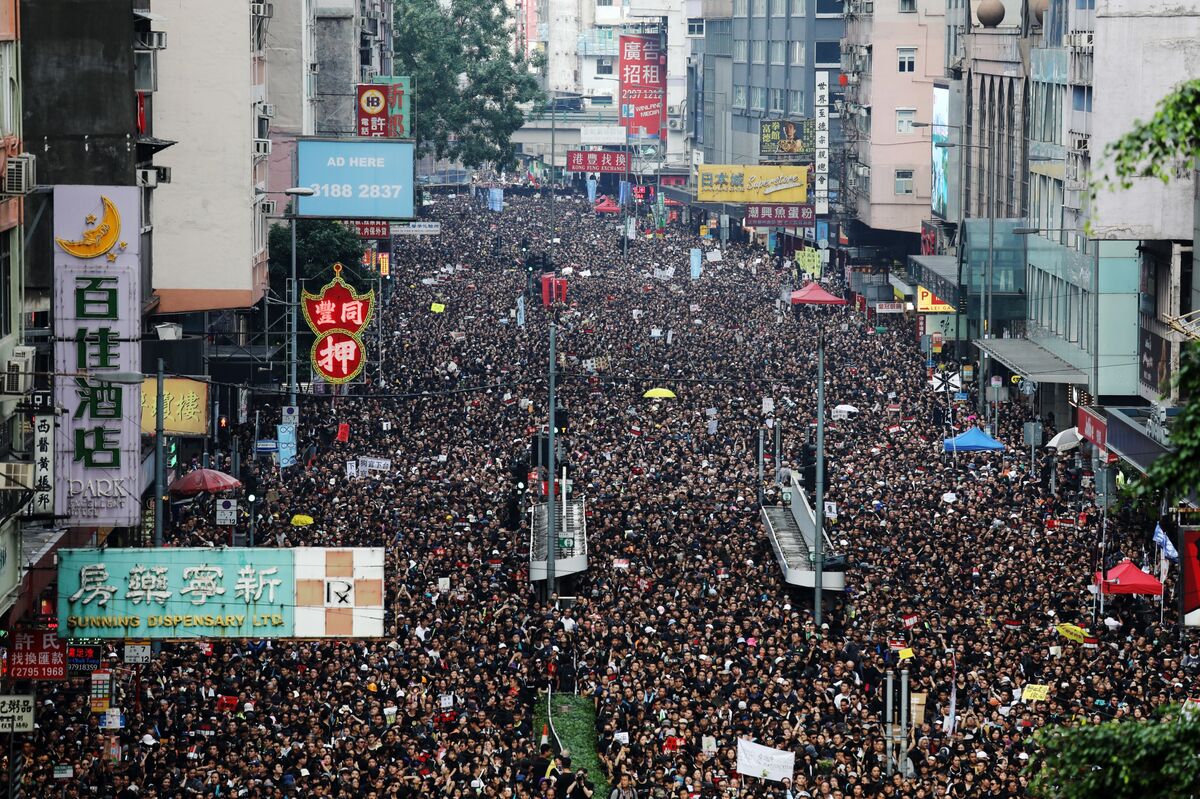
Hundreds of thousands of protesters flooded the streets of Hong Kong on June 16, bringing parts of the city to a standstill for hours. It was the third mass demonstration in just over a week over a controversial bill that would allow extraditions to mainland China for the first time.
The first march, on June 9, was one of Hong Kong’s largest protests since the city was returned from British rule in 1997. But June 16’s demonstration dwarfed it by any reckoning: Police say some 338,000 joined the protest’s main routes during the rally’s peak, while organizers said close to 2 million—more than a quarter of Hong Kong’s 7.5 million population—came out to march.
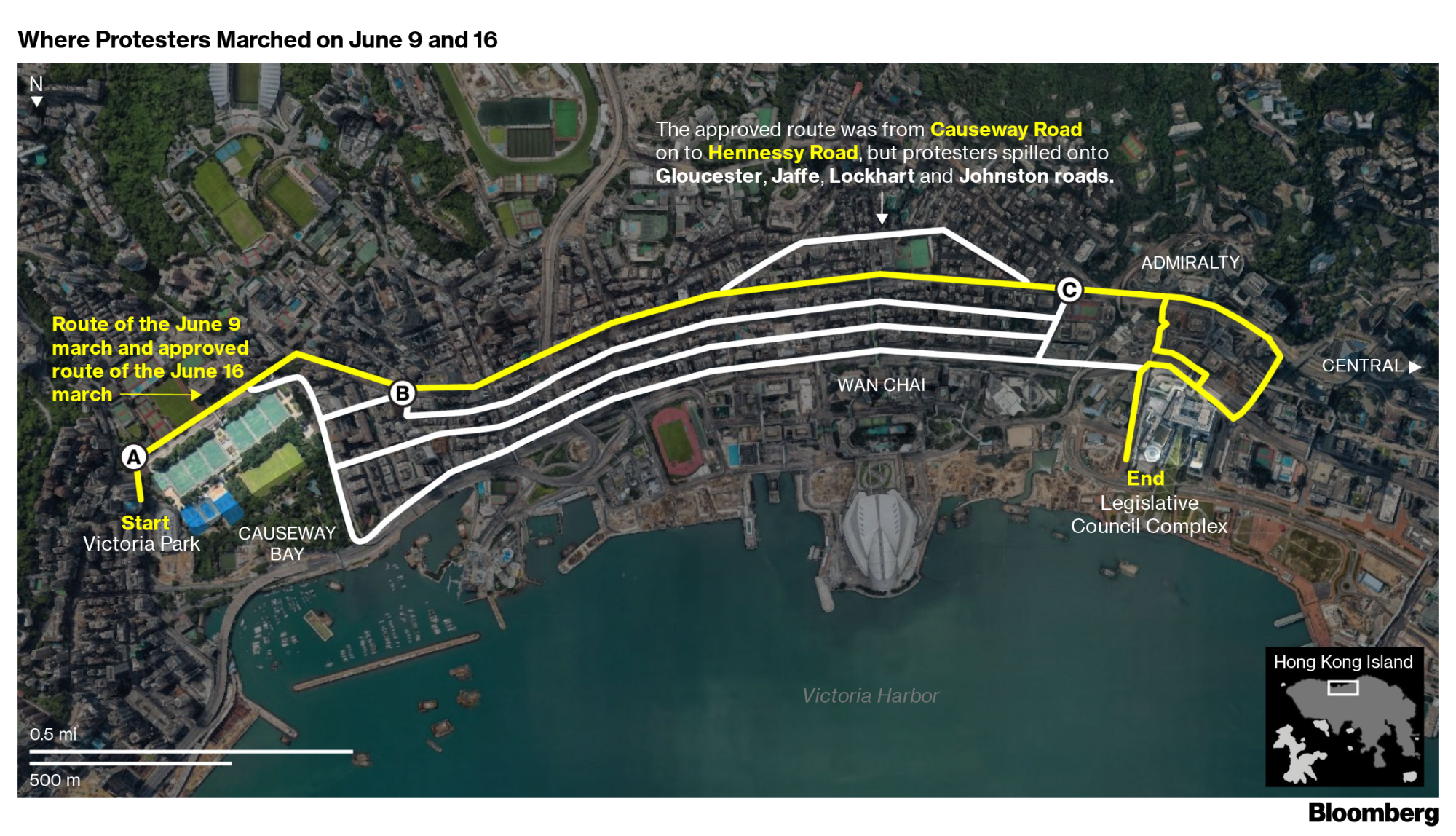
Sunday’s demonstration followed the same route as the previous weekend’s event, starting at Victoria Park before heading towards a complex of government buildings closer to the city center. But as the crowd swelled, the designated marching area became too small to hold them and marchers spilled over into key roads, side streets and even shopping centers along the route.
Where Protesters Marched on June 9 and 16
The record turnout didn’t come from nowhere. Tension over the extradition bill has built since the government first floated changes to it in February. The legislation would give Hong Kong the power to enter one-time agreements with places like mainland China and Taiwan to transfer criminal suspects. Hong Kong Chief Executive Carrie Lam and the bill’s backers say the bill is needed to help bring fugitives to justice, pointing to the case of a Hong Kong man who escaped prosecution over a murder case in Taiwan by returning home as proof. But the proposed changes quickly spooked rights groups, lawyers and the business community, who fear it will erode the city’s autonomy under increased pressure from Beijing.
On June 15, with two protests down and a third looming, Lam suspended the bill. But protesters sent a clear message that her measures weren’t enough, calling for Lam’s resignation along with the complete withdrawal of the legislation.
Epicenter of the June 12 Protests
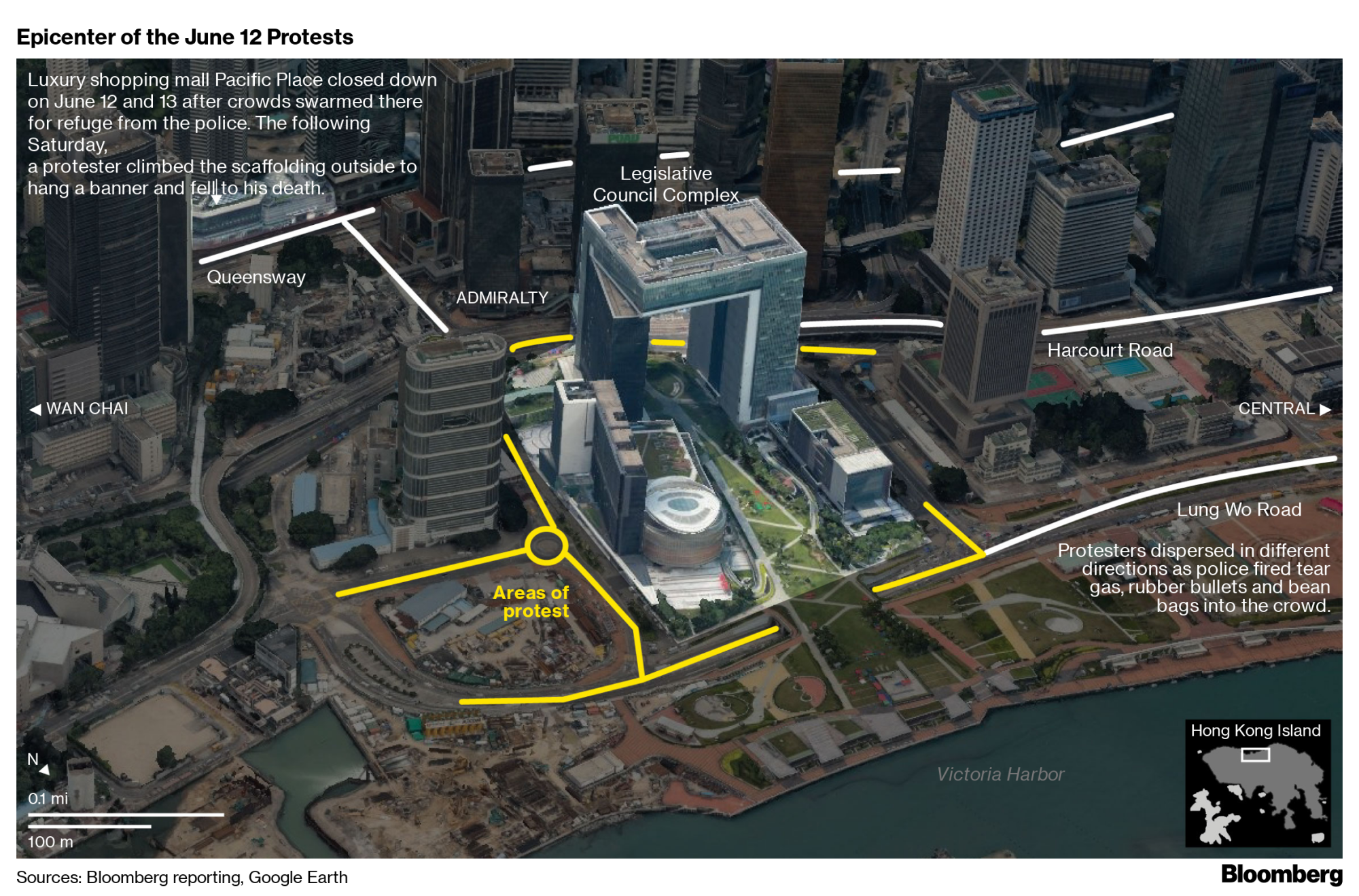
Sources: Bloomberg reporting, Google Earth
The sheer scale of the protest energized the crowd as people inched their way along the route. Protesters were also fueled by anger over clashes on June 12 between protesters and police. Organized by the Civil Human Rights Front, the protest had mostly been attended by protester wearing white to symbolize peace and justice. But riot police fired rubber bullets and rounds of tear gas at people trying to storm the legislature, and more than 70 people ended up in hospital.
A 360 degree view of the June 16 protest
On Sunday, almost all protesters turned out dressed in somber black. Cars and buses were forced to make way for foot traffic on some of the city’s busiest roadways. Wanchai, normally home to bustling shoppers and a lively late-night bar scene as well as government buildings, was brought to a near-standstill. As they marched, some held homemade signs reading “No Extradition to China.” Others sang two of the movement’s unofficial anthems—“Sing Hallelujah to the Lord” and “Do You Hear the People Sing” from “Les Miserables.”
“The Chief Executive clearly heard the views expressed in a peaceful and rational manner,” the government said in a statement on Sunday night. “She acknowledged that this embodied the spirit of Hong Kong as a civilized, free, open and pluralistic society that values mutual respect, harmony and diversity. The Government also respects and treasures these core values of Hong Kong.” By Monday morning, a few hundred demonstrators on the streets near the central government complex were all that remained of the historic crowds.
How Many People Marched?
Police and protest organizers have wildly different crowd estimates
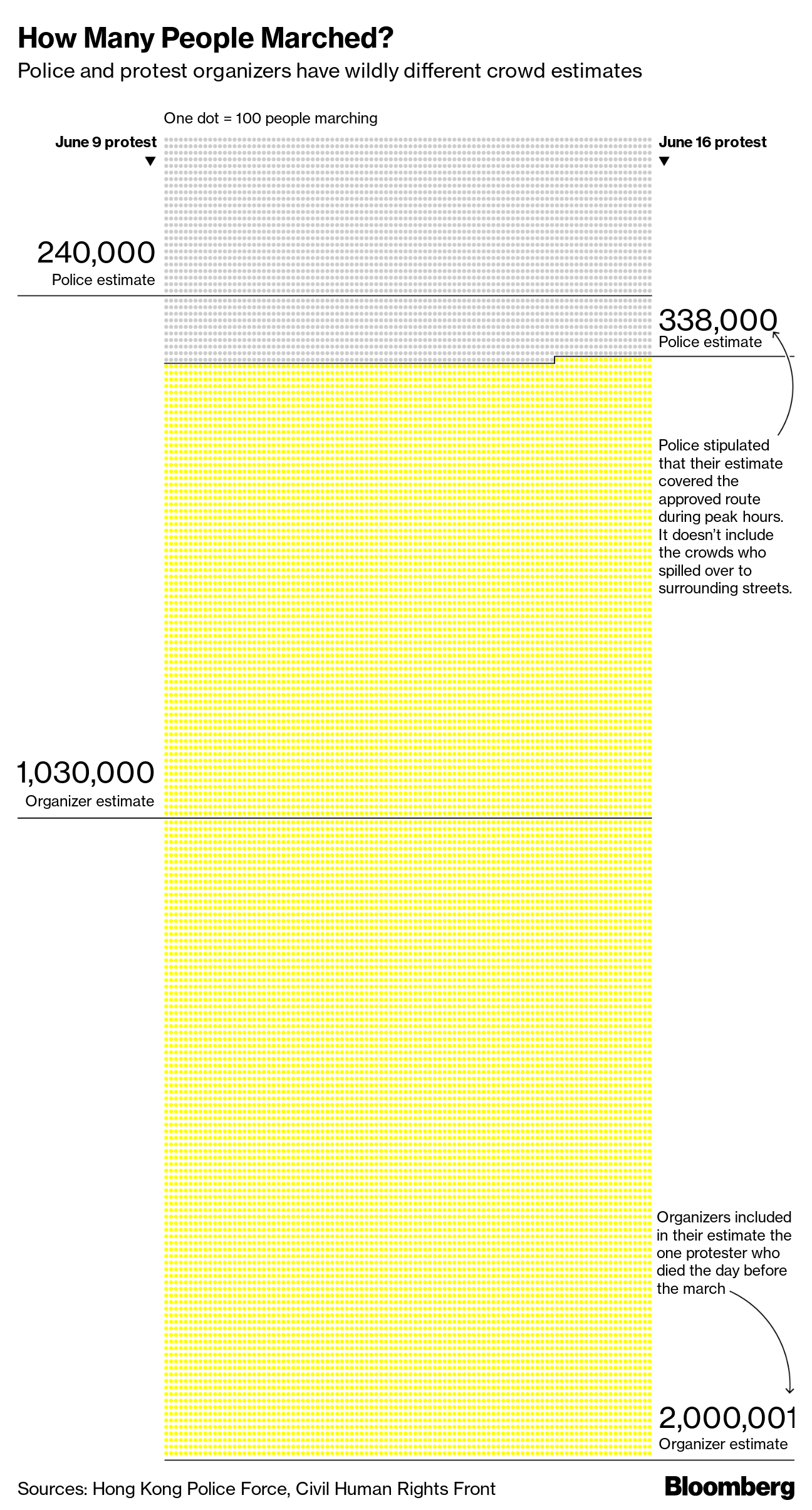
Sources: Hong Kong Police Force, Civil Human Rights Front
The past week has left Lam vulnerable. But more than that, the extradition saga raises questions about whether Hong Kong is governable under the “one country, two systems” framework devised before the city’s return to Chinese rule 22 years ago. And it puts new pressure on China to either compromise on activists’ democratic demands or risk further unrest that could destroy its viability as one of the world’s great financial centers.
Correction: An earlier version of this graphic referenced a June 6 march rather than June 9 and mislabeled the location of the Wan Chai and Admiralty areas.