Photographer: Krisztian Bocsi/Bloomberg
The World Doesn’t Have Enough Pigs to Fill China’s Pork Deficit
The deadly pig virus that spread from Africa across Europe and Asia will mean there isn’t enough pork in the whole world to make up for the millions of animals China is slaughtering to try to halt the contagion. But stopping African swine fever isn’t so easy.
The virus that causes the hemorrhagic disease is highly virulent and tenacious, and spreads in multiple ways. There’s no safe and effective vaccine to prevent infection, nor anything to treat it. The widespread presence in China means it’s now being amplified across a country with 440 million pigs—half the planet’s total—with vast trading networks, permeable land borders and farms with little or no ability to stop animal diseases.
Leaner Meat
Number of pigs raised
800M
600
400
200
0
1994
2020
estimate
Number of pigs raised
800M
600
400
200
0
1994
2007
2020
estimate
Number of pigs raised
800M
600
400
200
0
1994
1996
1998
2000
2002
2004
2006
2008
2010
2012
2014
2016
2018
2020
estimate
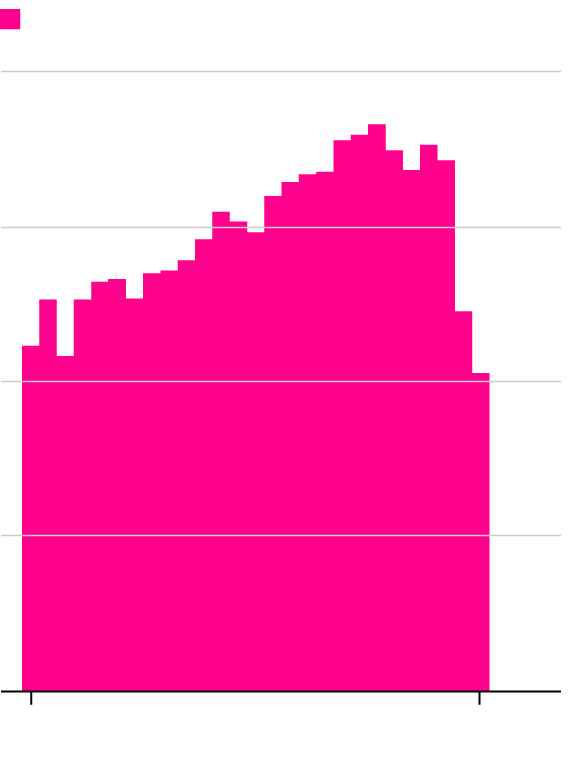
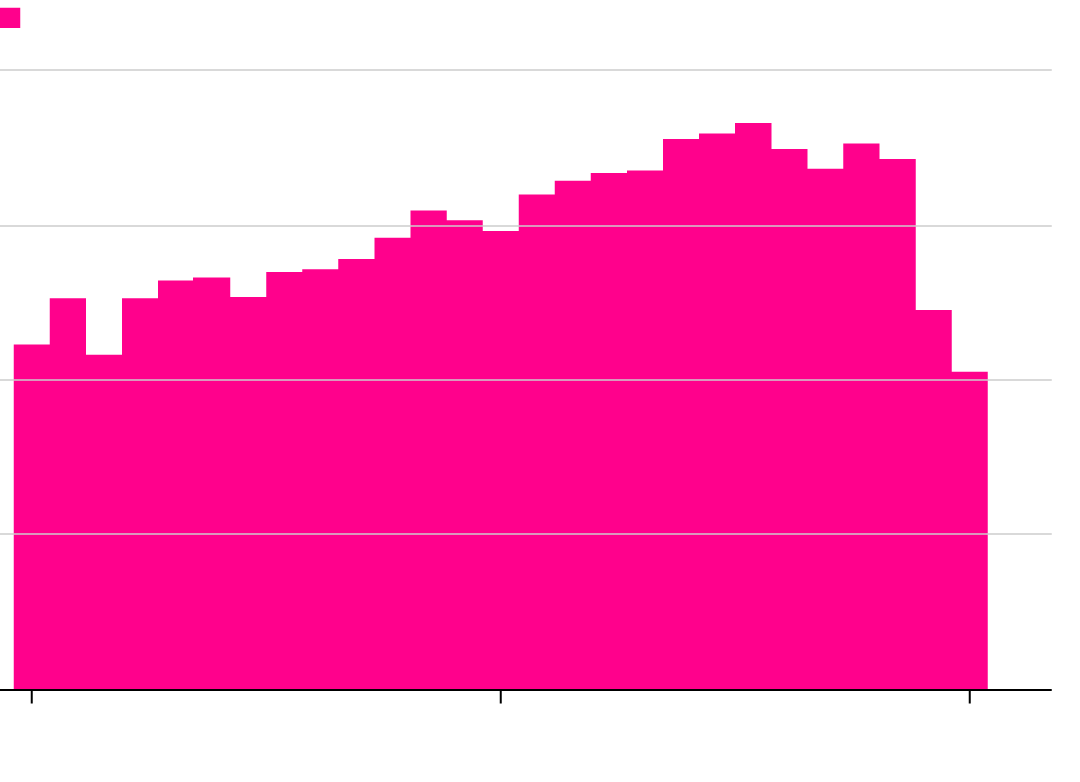
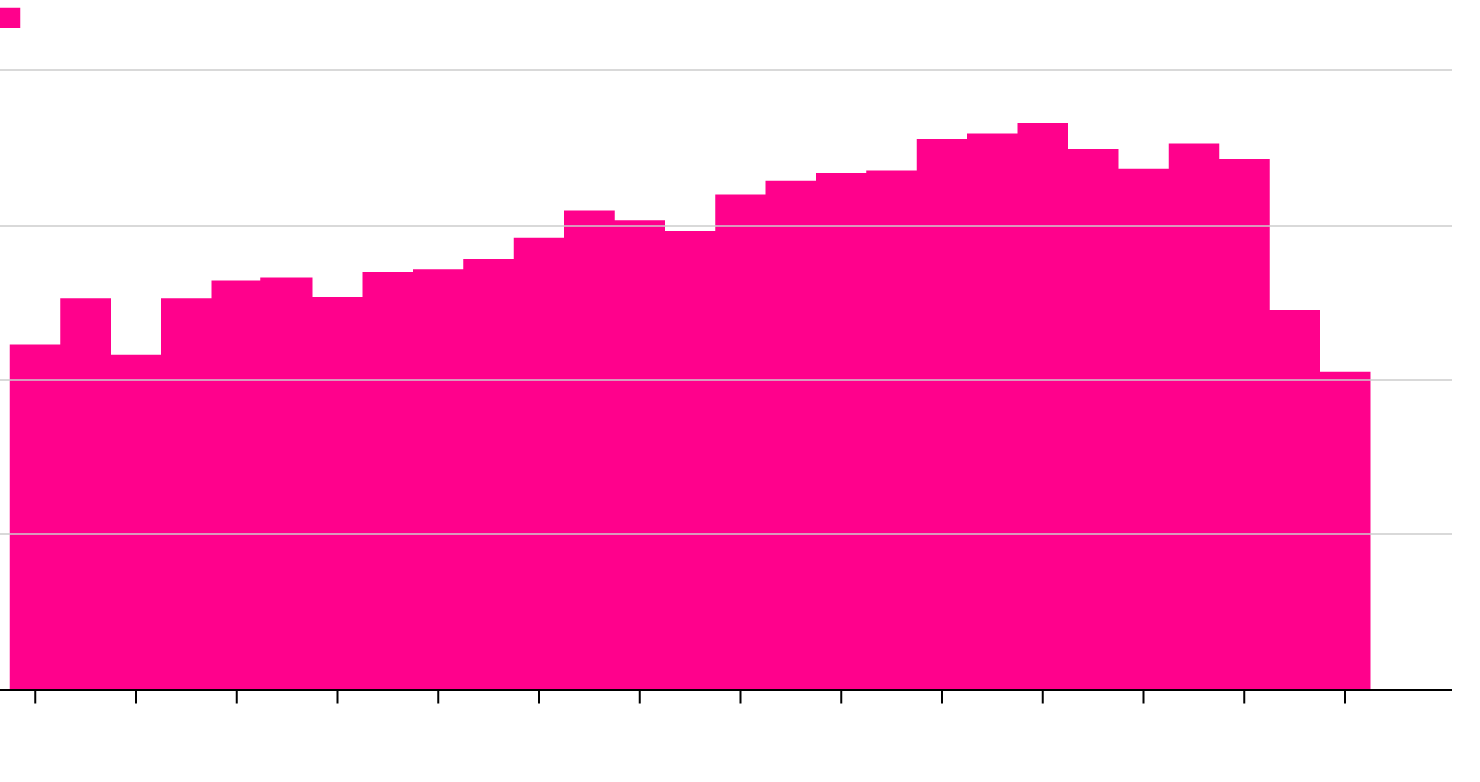
The estimated number of pigs China fattened in 2019 plunged about 30% to 490 million—the worst annual slump since the U.S. Department of Agriculture began counting China’s pigs in the mid-1970s. While the pig virus doesn’t harm humans even if they eat tainted pork, the fatality rate in pigs and the number of swine culled to curb the virus’s spread, mean it could destroy the region’s pork industry.
Pork is the staple animal protein in China. Rabobank expects domestic supplies to hit a low in the first half of 2020, as a result of an expected 25% drop in output in 2019.
That’s caused wholesale spot prices for pork to skyrocket. They jumped 40% in October alone and have more than doubled since the first African swine fever cases were reported in China in August 2018.
China’s Growing Pork Deficit

Demand fulfilled by Chinese
production
(1 million metric tons)
Demand fulfilled by world supply
Estimated pork supply deficit
2018
2019
2020
Demand fulfilled by
Chinese production
(1 million metric tons)
Demand fulfilled
by world supply
Estimated pork
supply deficit
2018
2019
2020
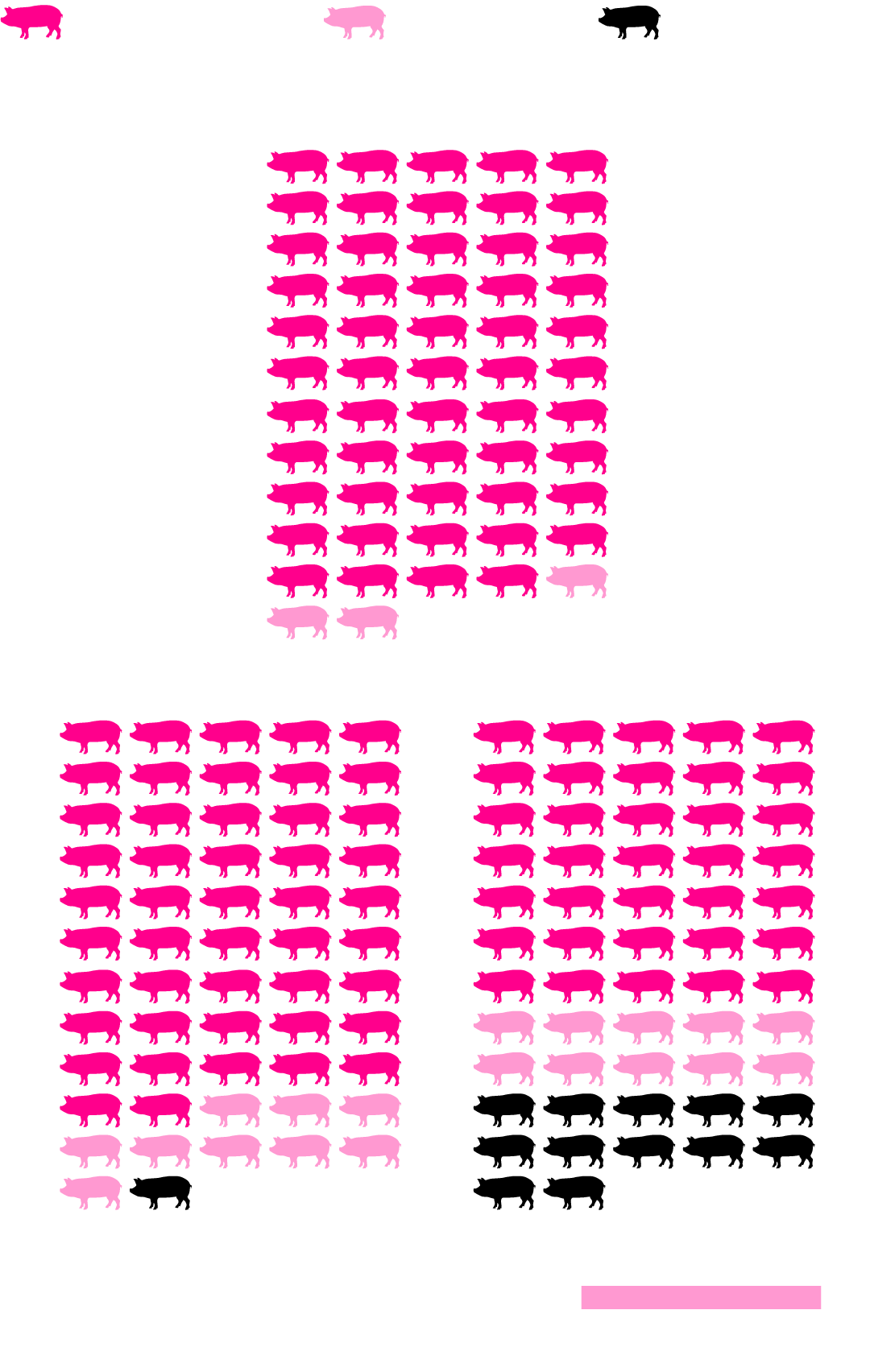
Even if all the world’s supply
will be exported to China, it can only cover 10 million metric tons of the 22 million metric ton
pork supply deficit.
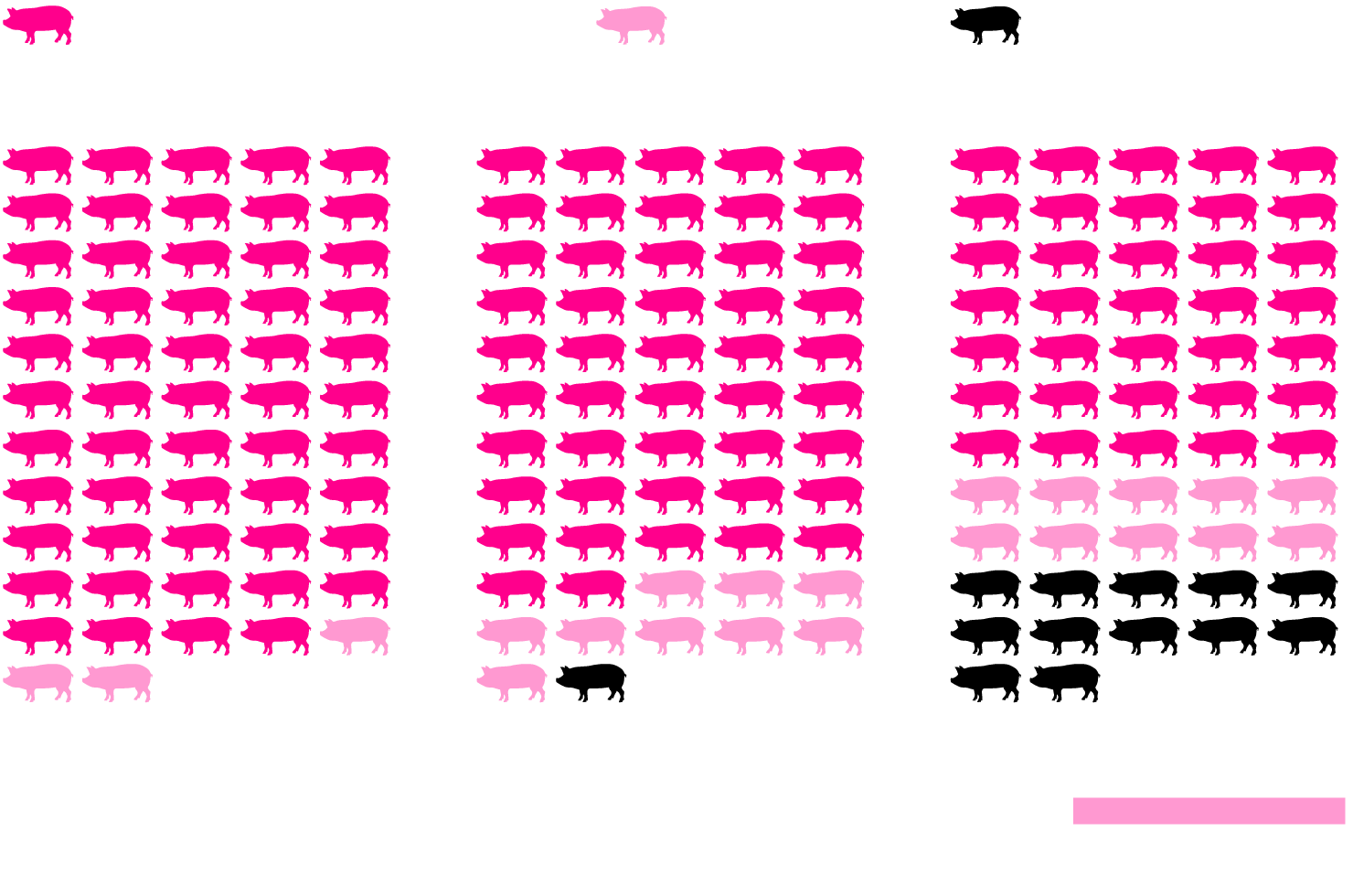
Demand fulfilled by Chinese production
(1 million metric tons)
Demand fulfilled by
world supply
Estimated pork supply
deficit
2018
2019
2020
Even if all the world’s supply
will be exported to China, it can only cover 10 million metric tons of the 22 million metric ton
pork supply deficit.
Note: Based on five-year average consumption
Such a massive plunge in domestic pork production can’t immediately be filled by any country or any alternate source of animal protein.
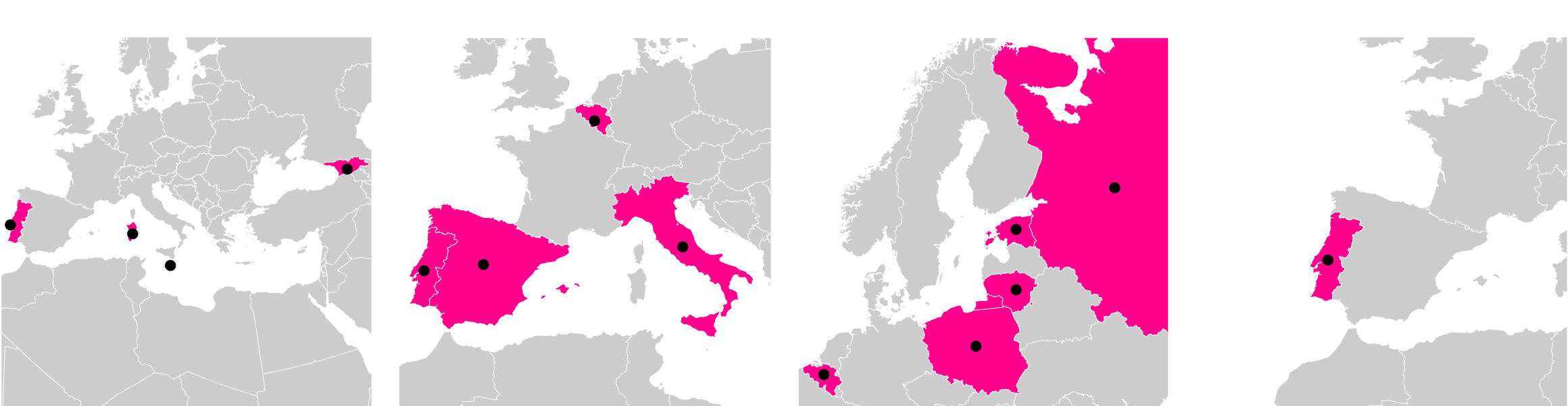
Spain’s experience with the disease suggests that a cull alone won’t be enough to solve the problem. The country implemented strict sanitary measures and industrialized its hog production system but it took 35 years and help from the European Union before the disease was eradicated in 1995. The Italian island of Sardinia has been trying unsuccessfully to get rid of the virus for four decades, and its hog population is a fraction of China’s.
Multiple Routes
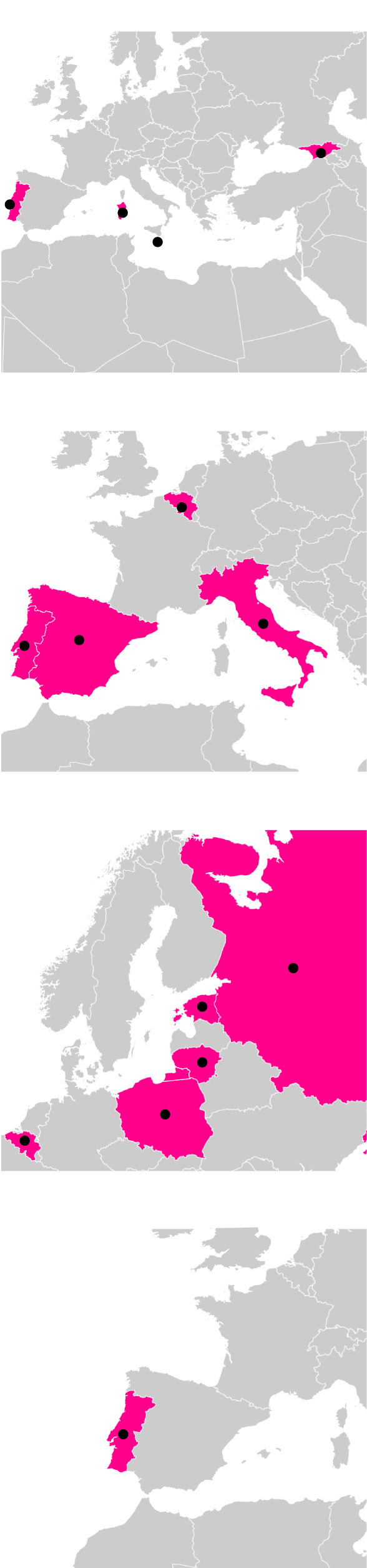
Raw pork waste at airport or port
Georgia
2007
Sardinia
1978
Lisbon
1957
Malta
1978
Movement of pork or pig product
Belgium
1985
Italy
1983
Portugal
1960
Spain
1960
Natural ranging of infected wild boar
Russia
2007
Estonia
2014
Lithuania
2014
Belgium
2018
Poland
2014
Infected ticks
Portugal
1999
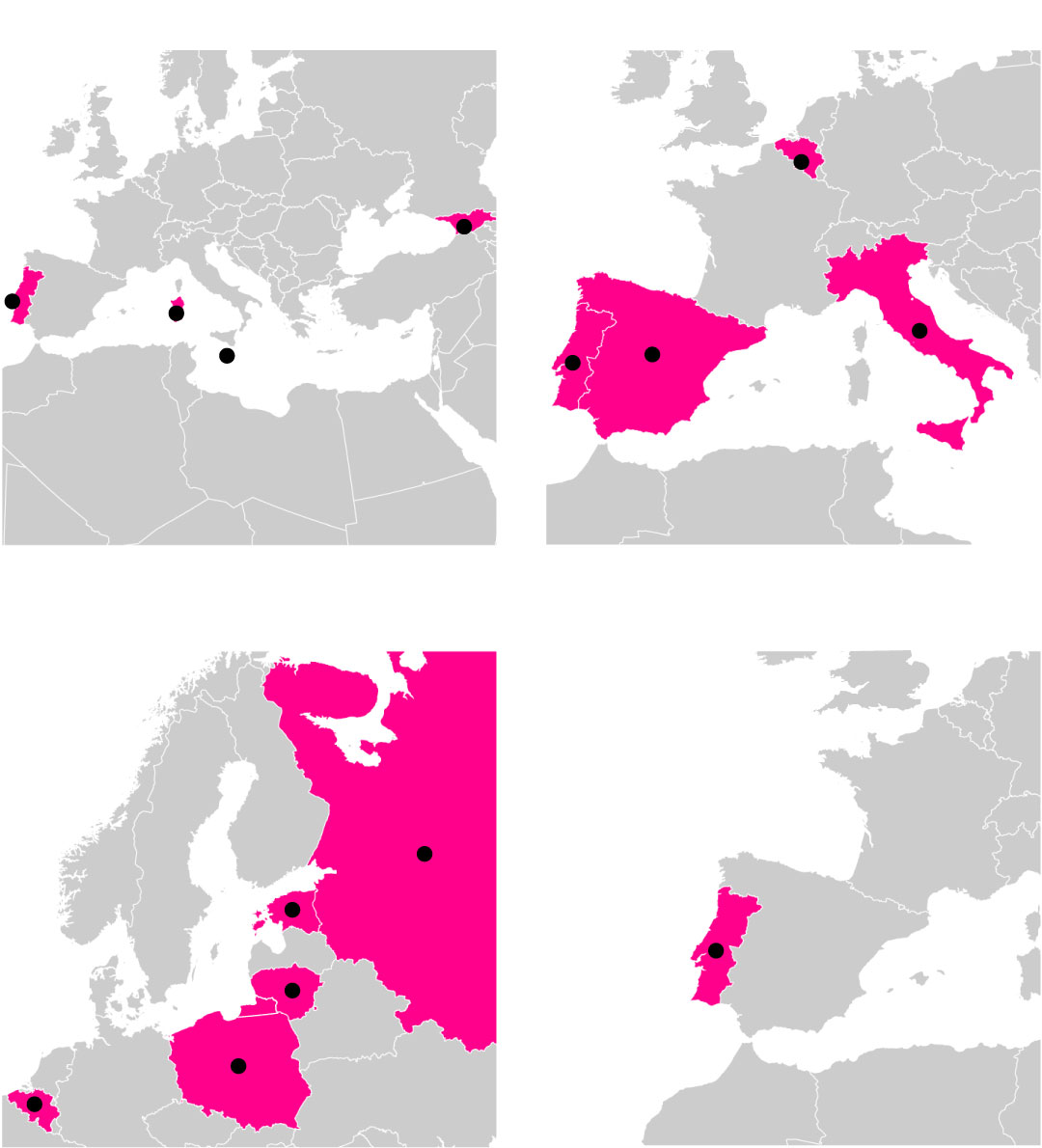
Raw pork waste at airport or port
Movement of pork or pig product
Belgium
1985
Georgia
2007
Sardinia
1978
Italy
1983
Portugal
1960
Lisbon
1957
Malta
1978
Spain
1960
Infected ticks
Natural ranging of infected wild boar
Russia
2007
Estonia
2014
Portugal
1999
Lithuania
2014
Belgium
2018
Poland
2014
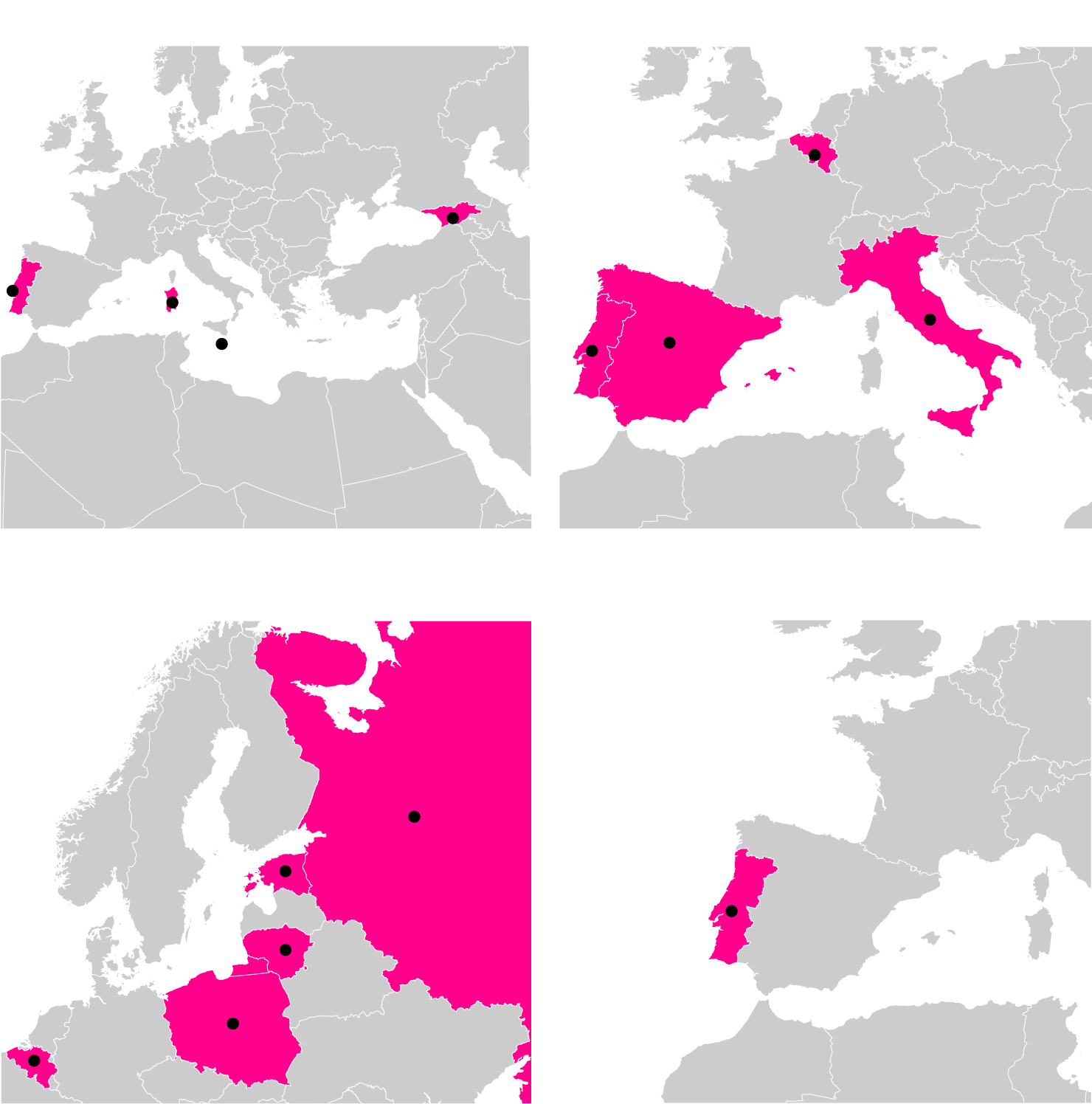
Raw pork waste at airport or port
Movement of pork or pig product
Belgium
1985
Georgia
2007
Sardinia
1978
Italy
1983
Portugal
1960
Lisbon
1957
Spain
1960
Malta
1978
Infected ticks
Natural ranging of infected wild boar
Russia
2007
Estonia
2014
Portugal
1999
Lithuania
2014
Belgium
2018
Poland
2014
Raw pork waste at airport or port
Movement of pork or pig product
Natural ranging of infected wild boar
Infected ticks
Belgium
1985
Georgia
2007
Russia
2007
Estonia
2014
Sardinia
1978
Italy
1983
Portugal
1999
Portugal
1960
Lisbon
1957
Lithuania
2014
Malta
1978
Spain
1960
Belgium
2018
Poland
2014
In addition to direct contact with an infected pig, the virus can be passed on to animals that eat virus-laden pork or feed, via contaminated clothing or equipment or when a pig drinks water containing even minute quantities of the virus.
Studies show that the strain in China closely resembles one that’s been spreading in Russia and other parts of Europe for more than a decade. But scientists still don’t know the route it took to get into the world’s most populous nation. Without knowing how the virus got in, China’s customs officials will have a harder time preventing repeated introductions.
The disease is now in Cambodia, Laos, Mongolia, Myanmar, North Korea, South Korea, Philippines, Timor Leste, Vietnam and possibly other neighboring countries that lack the resources to identify and control the disease. That increases the risk that, even if China does manage to control the disease domestically, it could re-enter the country via people or pork products that cross the border.
Transcontinental Contagion
Click to replay 👆
Source: World Organization for Animal Health (OIE), as of October 29, 2019
Pigs and their feral wild-boar cousins are quintessential waste disposal units, guzzling on protein from a wide variety of sources, including kitchen scraps, manure and dead hogs. While the omnivorous nature of the animals makes them low-cost nutrient converters, it’s also a key reason why African swine fever spreads easily.
A review of outbreaks showed that almost half were caused by the spread of virus material on vehicles and on non-disinfected workers, with feeding pigs contaminated swill or food scraps the second-biggest source. Feeding raw swill to pigs has been outlawed in China because of the risk of disease transmission, but clandestine use of non-heat-treated restaurant and household waste is reported to persist among suburban and smallholder farmers. About half of China’s producers raise fewer than 500 hogs each.
Sticky Germs

19%
Transportation of live
pigs and their products
34%
Feeding pigs swill
68
outbreaks
46%
Virus carried on
vehicles and workers
without disinfection

68
outbreaks
46%
34%
19%
Feeding pigs swill
Virus carried on
vehicles and workers
without disinfection
Transportation
of live pigs and
their products

68
outbreaks
46%
34%
19%
Virus carried on
vehicles and workers
without disinfection
Feeding pigs swill
Transportation
of live pigs and
their products
So far, government efforts to halt the spread through quarantining and sanitizing infected farms, culling vulnerable pigs, closing markets and restricting the movement of hogs have been insufficient, and the disease has become entrenched across the country.
In China, pigs are routinely trucked hundreds of miles as farmers and traders seek to take advantage of regional differences in livestock and meat availability and prices, as well as a preference for fresh meat. When hogs arrive at a new farm, they are typically mixed immediately with other swine, facilitating transmission of the disease.
In some instances, individuals have even been punished for publicizing outbreaks. A hog manager in Shandong province was allegedly arrested for reporting infected pigs to the national government after his efforts to alert local officials were ignored.

Infected blood, or fluids from urine, saliva or feces, can be carried in dirt on truck tires and shoes, allowing the disease to travel hundreds of miles quite rapidly. Contaminated sources require heating to 60 degrees Celsius (140 Fahrenheit) for 30 minutes to be rendered safe.
Tens of thousands of swine have been infected in China and their carcasses represent an enormous environmental risk, requiring careful handling and disposal. In Romania, the contamination of the Danube River from dead hogs was implicated in the virus’s spread to a 140,000-pig farm.
Stealthy Bug

Pork products
Others

Pork products
Others
15 minutes in unprocessed
meat heated to 70°C (158°F)
3.5 hours at 56°C
5 days in feces at 4-10°C
5 days in urine
22 hours at pH 3.1 (an acidity
similar to vinegar)
5 days in animal feed at room
temperature
5 days in cooked ham
11 days in feces at room
temperature
16 days in organs at room
temperature
25 days in slurry
30 days in pigs that
survive infection
30 days in pepperoni
and salami sausage
60 days in water at room
temperature
60 days in canned stew
100
104 days in frozen meat
or chilled meat
105 days in offal
112 days inIberian loins
140 days in Iberian hams
and white Serrano hams
182 days in salted meat
200
300 days in dried meat and skin
400
399 days in Parma hams
500
525 days in blood at 4-10°C
600
700
More than 2 years in frozen
pig organs
6 years at 5°C with no light

Pork products
Others
15 minutes in unprocessed meat
heated to 70°C (158°F)
3.5 hours at 56°C
5 days in feces at 4-10°C
22 hours at pH 3.1 (an acidity similar
to vinegar)
5 days in urine
5 days in animal feed at room temperature
5 days in cooked ham
11 days in feces at room temperature
16 days in organs at room temperature
25 days in slurry
30 days in pigs that survive infection
30 days in pepperoni and salami sausage
60 days in water at room temperature
60 days in canned stew
100
104 days in frozen meat or chilled meat
105 days in offal
112 days inIberian loins
140 days in Iberian hams and white
Serrano hams
182 days in salted meat
200
300 days in dried meat and skin
400
399 days in Parma hams
500
525 days in blood at 4-10°C
600
700
More than 2 years in frozen pig organs
6 years at 5°C with no light
There are no published studies reporting the incidence of African swine fever virus detected in food in China. But the virus has been in Chinese pork products that were confiscated by customs officials in Australia, Japan, Northern Ireland, Philippines, South Korea, Taiwan, and Thailand, suggesting that the virus has permeated the food chain in China.
Even if China is able to stop the virus transmitting from pig to pig, two other disease vectors may frustrate eradication efforts: wild boars and Ornithodoros ticks. These are the natural hosts of African swine fever virus and are widely distributed in China, though it’s not yet known what role they are playing in spreading the disease there. Zhejiang province, south of Shanghai, has about 150,000 wild boars.
While infected wild boars have been reported in China, the Russian Far East, and South Korea, scientists believe human activities are a bigger contributor to the spread of African swine fever.
One of the earliest attempts—based on a live, weakened form of the virus—was abandoned after it was found the vaccine gave pigs a debilitating and disfiguring disease.
Studies have found that the animals which recover from an initial African swine fever infection are resistant to some other strains, but scientists aren’t sure what exactly confers that protection or how best to evaluate the potential efficacy of candidate vaccines.
One of their difficulties is that the large, complex DNA virus that causes African swine fever has some 170 genes and 80 proteins, many of them specialized in evading different aspects of the pig immune system.
More recent attempts to produce an immunization using viruses that lack key disease-causing genes appear to be safe. Still, researchers are yet to carry out large field trials to demonstrate effectiveness in commercial farms—a necessary step for gaining regulatory approval. That’s not stopping some farmers from using unauthorized, experimental vaccines, potentially undermining efforts to both develop effective immunizations and control the disease.
With a tough virus to eradicate and no vaccine available anytime soon, the best way China can protect its domestic pork industry from African swine fever is to carefully monitor and control the germs on every pig, person and product entering and leaving hog farms. That would mean turning China’s 26 million piggeries into veritable biocontainment facilities.