Argentines Eye Swing From Free Market to Protectionist Policies
Argentina faces a major decision in this year’s presidential election: Stay on the current path or reverse course. Voters in South America’s second-largest country cast their ballots in a polarizing presidential election on Oct. 27 amid an economic crisis and political unrest throughout the region.
Frontrunner Alberto Fernandez is poised to defeat market-friendly President Mauricio Macri Sunday after he trounced the incumbent in an Aug. 11 primary vote by 16 points—a gap investors and political analysts say Macri can’t overcome.
Argentina’s August 11 Primaries
Macri has restored credibility in Argentina’s institutions and gained international support, especially from U.S. President Donald Trump and a record $56 billion bailout from the International Monetary Fund. However, he failed to deliver on most of his economic promises. Fernandez, a politician from the nation’s prominent political movement known as Peronism, has kept his economic plans vague, but says he will look to curb austerity and boost consumer spending.
Many investors worry that Fernandez will undo Macri’s pro-market stance. Markets sold off after the primary, which in practice serves as an indicator of how Argentines may vote in October. The plunge, particularly in the peso, undermined Macri’s political standing, putting Fernández in position to beat him and overturn his pro-business ways.
Asset Rout
Albeit a long shot, Macri could still narrow the gap enough with Fernandez to force a runoff vote on Nov. 24. He campaigned heavily in recent weeks, brought back capital controls to preserve foreign reserves and implemented several measures to appease Argentines enduring double-digit unemployment and 50% inflation.
Key dates in the 2019 Argentine elections
-
August 11: Primary
Also known as the PASO, the national primary was the first key event in the Argentine election. The primary was effectively a major nationwide poll: Political parties have already chosen their candidates for each office. Voter participation is mandatory, meaning the outcome will indicate potential support ahead of the October vote.
-
October 27: Elections
To win Argentina's election in the first round, the lead candidate must receive either 45% of the vote or 40% with more than 10 percentage points separating the candidate who received the next highest total. If no candidate reaches these thresholds, there is a runoff vote between the top two candidates.
Elections for the Congress and some key governor races—including the province of Buenos Aires—also take place on this date.
-
November 24: Runoff
If no candidate gets enough votes for a first round victory, the runoff will take place a month later and the winner will be decided by simple majority.
Spotlight on Congress
Voters will also choose lawmakers, which will be key to determine how easily the next administration can pass legislation on items including a plan to delay local debt payments. If the percentage of votes from the primary are repeated, Fernandez could have a majority in the Senate.
Argentina’s Senate has 3 lawmakers per province, while the Lower House is linked to the population of each district. Every two years, Argentines vote for half of the Lower House seats and a third of the senators.
| Lower house | Senate | |
|---|---|---|
| Seats up in 2019 | 130 | 24 |
| Total seats | 257 | 72 |
After reeling in public spending to shrink the fiscal deficit, the economy sank back into recession this year and prices have skyrocketed to above 50% as Argentines pay more for everything from utility bills to food and gasoline.
Shaky Macro
Source: Bloomberg
Note: Inflation figures based on San Luis Province, as national inflation figures unavailable before 2018. Peso and sovereign spread charts show data from last day of each month.
Macri reached across the political divide and picked the opposition’s Miguel Pichetto as his vice-presidential candidate to try lure more voters from the center. Fernandez is reviving fears that populism could return to Argentina after tapping into former president Cristina Fernandez de Kirchner’s still-strong political base, as she remains popular, albeit, divisive.
The major candidates for president


Mauricio Macri and Miguel Pichetto
Coalition: Juntos por el Cambio
Mauricio Macri, a wealthy heir to a construction empire, stunned the nation with his surprise, come-from-behind election victory in 2015. Before that, he was mayor of the nation’s capital, Buenos Aires, from 2007 to 2015. His vice president pick, opposition senator Miguel Pichetto, a Peronist, could help Macri push much-needed economic reforms through Congress if they win.


Alberto Fernández and Cristina Fernández de Kirchner
Coalition: Frente de Todos
Alberto Fernández, also 60, was the cabinet chief from 2003 to 2008 for all of the late Néstor Kirchner’s presidency and the beginning of Cristina’s tenure. Fernández has never won a national election. Cristina, as she’s commonly known, remains one of Argentina’s most polarizing and popular figures despite running for vice president.
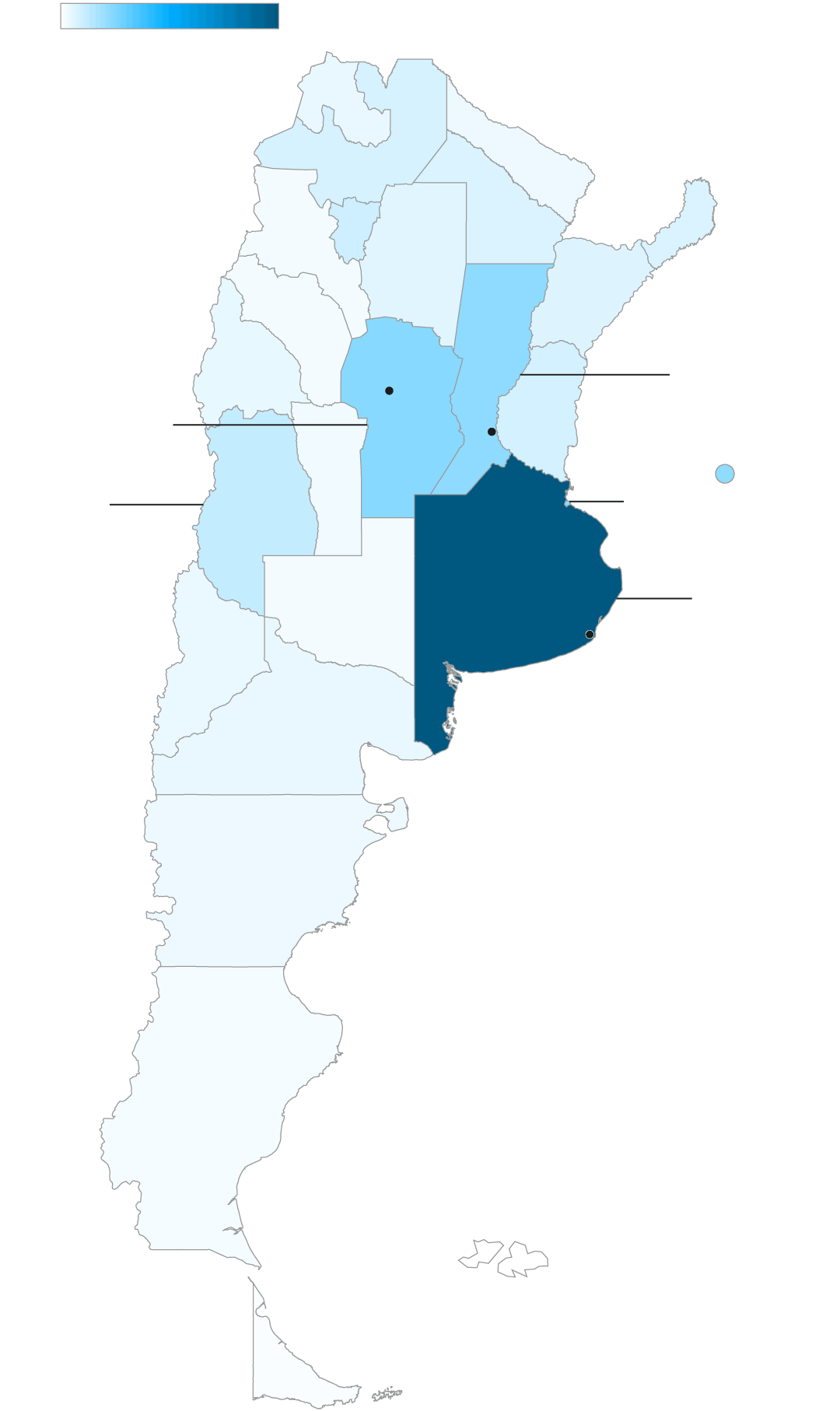
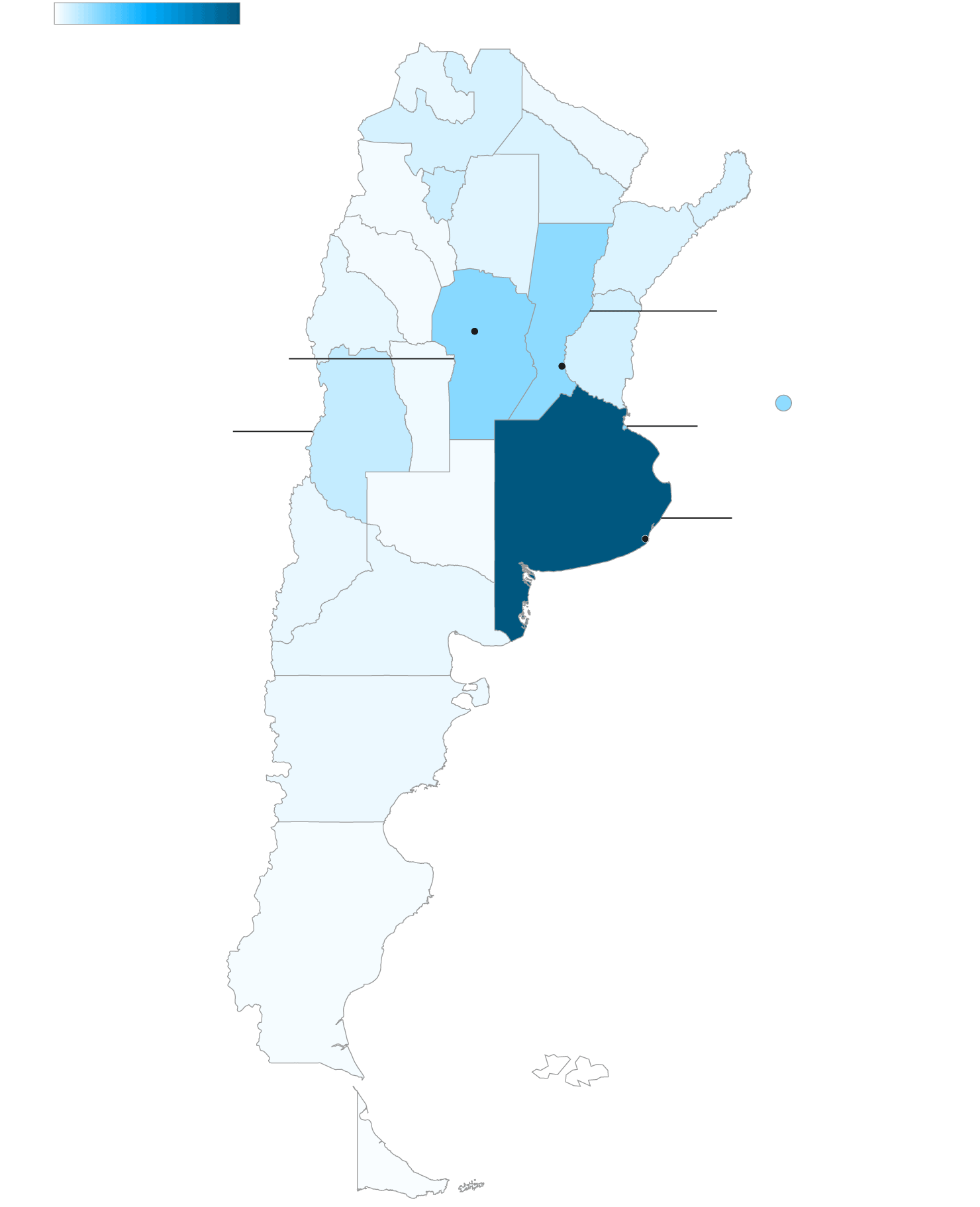
All eyes will be on voters in and around Buenos Aires during the primary and beyond. The province of Buenos Aires is the country’s most populous district, with 37% of the electorate, and it’s seen as a key battleground in the race.
Where the voters are

0.4%
37%
8.2%
Santa Fe
8.6%
Córdoba
4.3%
Mendoza
8.1%
Buenos Aires
City
37%
Buenos Aires
Province
0.4%
37%
8.2%
Santa Fe
Córdoba
8.6%
Córdoba
Rosario
8.1%
Buenos Aires
City
4.3%
Mendoza
37%
Buenos Aires
Province
Mar del Plata
0.4%
37%
8.2%
Santa Fe
Córdoba
8.6%
Córdoba
Rosario
8.1%
Buenos Aires City
4.3%
Mendoza
37%
Buenos Aires Province
Mar del Plata
The country wants to begin talks with creditors to extend maturities in order to lighten its debt load next year and has to start paying back $56 billion to the IMF in 2021. Argentina badly needs to make deep economic reforms in order to avoid aggravating its debt crisis which could lead to yet another default.