Why Mexico Is Trump’s First Line of Defense on Immigration
Putting an end to undocumented immigration has been a top priority for President Donald Trump in his first month in office. He’s taken a hard line against Mexico, insisting the country pay for his proposed wall along America’s southern border—a demand that the nation has repeatedly rejected. That strategy carries risks for Trump, because he’ll probably need Mexico’s help if he wants to achieve his border security goal.
U.S. Border Patrol apprehensions at Mexico border

Non-Mexicans
Mexicans
2.0M
1.5
1.0
0.5
0
2000
’16
Despite Trump’s assertion that Mexico is sending “bad hombres” to the U.S., most of the people crossing the southern border came from other countries. That’s a significant change from 2000, when the U.S. Border Patrol apprehended a record 1.6 million people, and most came from Mexico. While Mexico’s border with its own southern neighbors is only about one-third the length of the almost 2,000 mile frontier between Mexico and the U.S., it’s often the entry point for refugees from the “northern triangle” of Guatemala, Honduras and El Salvador seeking asylum in the U.S.
“Really, the Central American flow has been the story,” said Doris Meissner, commissioner for the U.S. Immigration and Naturalization Service under President Bill Clinton.
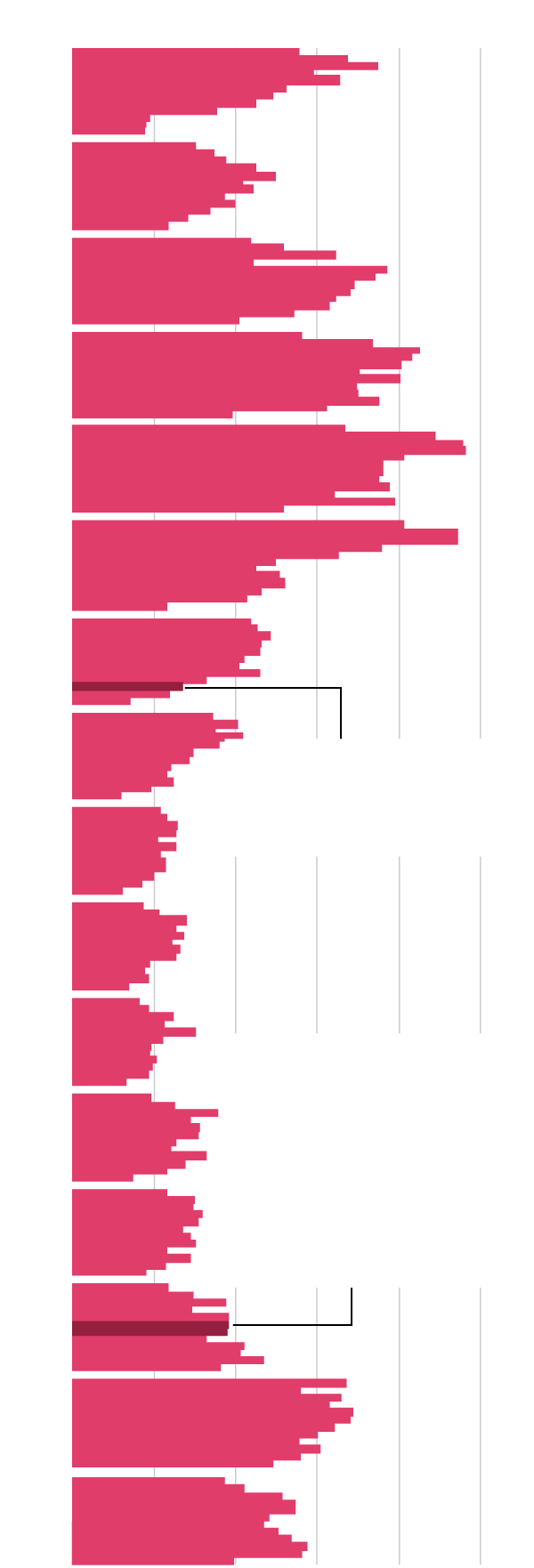
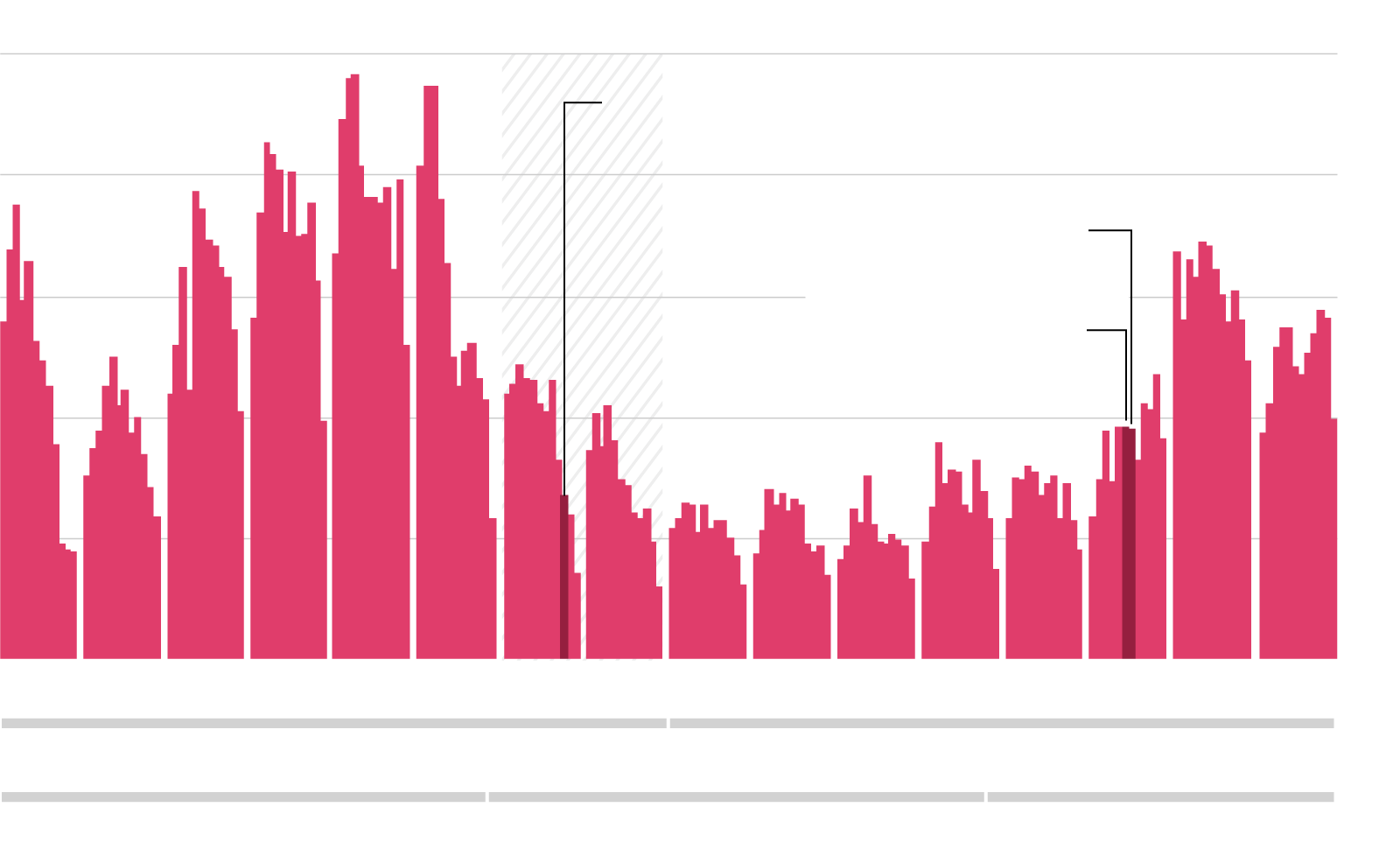
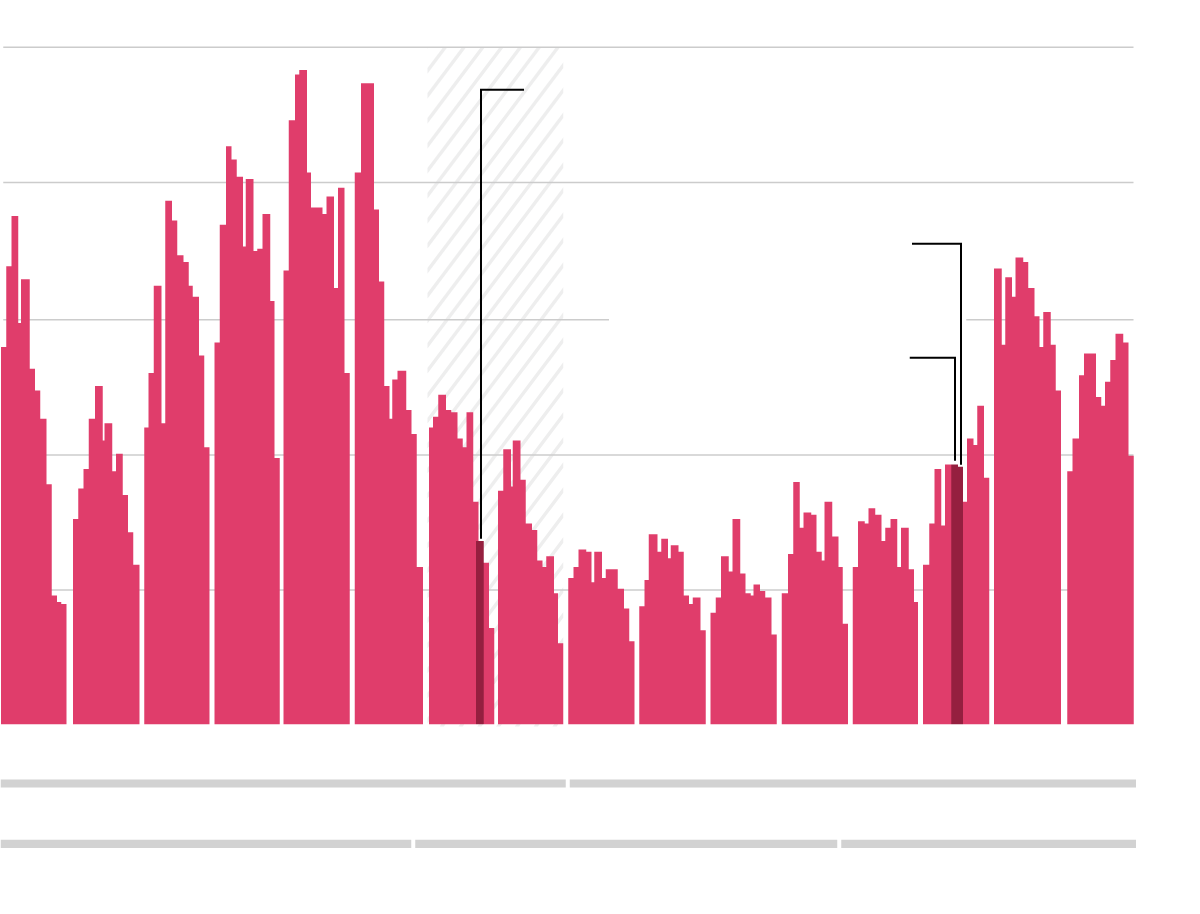
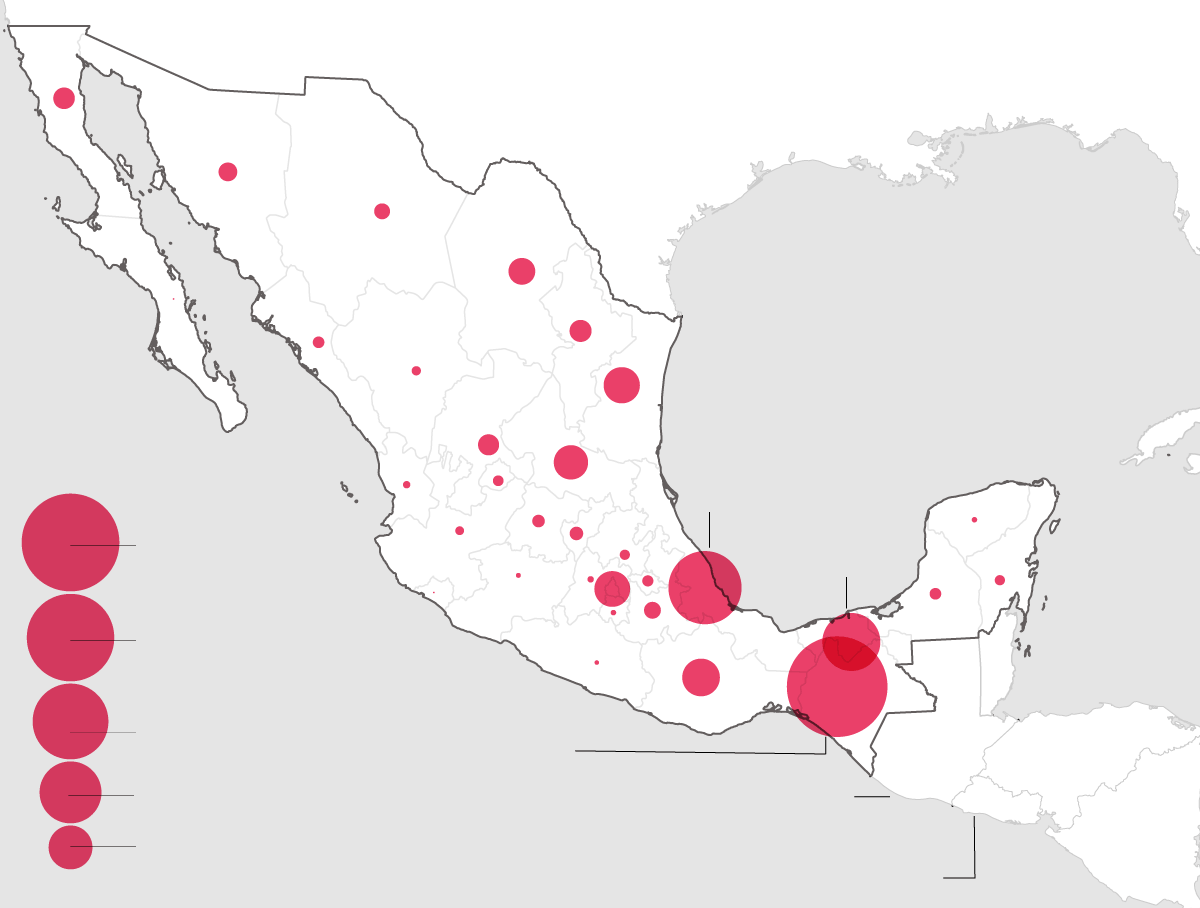
This is where Mexican cooperation could be key for Trump. Mexico and the U.S. have coordinated on immigration policy in the past. At times that led to a surge in the number of people deported by Mexico—though there are lots of reasons why deportation numbers fluctuate. In any case, Mexico deported more than 140,000 people in 2016, with 96 percent coming from the “northern triangle.” Those are people who, absent Mexico’s own efforts, could have reached the U.S. border.
Monthly deportations by Mexico
20k
0
10
2001
2002
2003
2004
2005
2006
2007
2008
October 2007
The Mérida Initiative
takes effect
2009
2010
2011
July 2014
The Southern Border
Plan takes effect
2012
June 2014
Vice President Biden
visits Central America
to address immigration
2013
2014
2015
2016
Financial crisis
25K
October 2007
The Mérida Initiative
takes effect
20
July 2014
The Southern Border
Plan takes effect
15
June 2014
Vice President Biden
visits Central America
to address immigration
10
5
0
2001
’02
’03
’04
’05
’06
’07
’08
’09
’10
’11
’12
’13
’14
’15
’16
Barack Obama
President George W. Bush (U.S.)
President Vicente Fox (Mexico)
Felipe Calderón
Enrique Peña Nieto
Financial crisis
25K
October 2007
The Mérida Initiative
takes effect
20
July 2014
The Southern Border
Plan takes effect
15
June 2014
Vice President Biden
visits Central America
to address immigration
10
5
0
2001
’02
’03
’04
’05
’06
’07
’08
’09
’10
’11
’12
’13
’14
’15
’16
Barack Obama
President George W. Bush (U.S.)
Felipe Calderón
President Vicente Fox (Mexico)
Enrique Peña Nieto

25K
July 2014
The Southern Border
Plan takes effect
Financial crisis
20
June 2014
Vice President Biden
visits Central America
to address immigration
15
October 2007
The Mérida Initiative
takes effect
10
5
Annual
total
138,475
110,573
178,519
211,218
232,157
179,345
113,206
87,386
64,447
65,802
61,202
79,643
80,902
107,814
181,163
147,370
0
2001
’02
’03
’04
’05
’06
’07
’08
’09
’10
’11
’12
’13
’14
’15
’16
Barack Obama
President George W. Bush (U.S.)
President Vicente Fox (Mexico)
Felipe Calderón
Enrique Peña Nieto
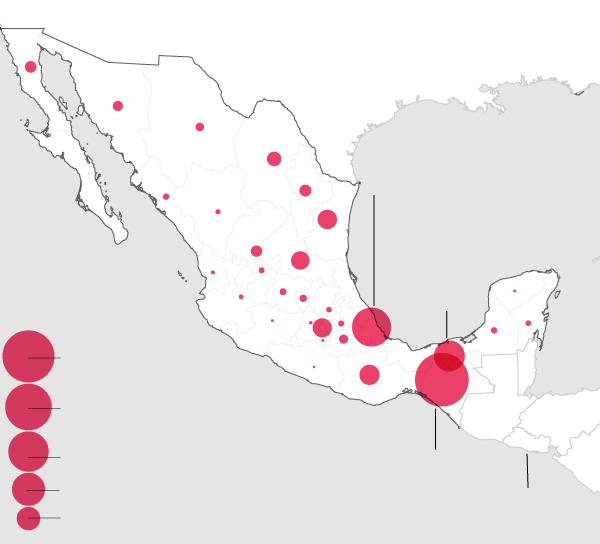
Mexico has no border barrier comparable to that of the U.S.; immigrants can cross into Mexico from the south largely by trekking through jungle brush or crossing rivers on rafts. Apprehension efforts are chiefly focused on highways farther north, forcing migrants into rougher, off-road routes often controlled by human trafficking gangs.
Mexican deportations by state in 2016
United States
Gulf of Mexico
27,640
Veracruz
17,395
52.5K
persons
Tabasco
40
52,571
30
honduras
Chiapas
20
Guatemala
10
El salvador
United States
27,640
Veracruz
17,395
Tabasco
52.5K
persons
40
GTM
HND
30
52,571
20
Chiapas
SLV
10

United States
Gulf of Mexico
27,640
Veracruz
17,395
Tabasco
Belize
Honduras
52,571
52.5K persons
Chiapas
40
30
20
Nicaragua
Guatemala
10
El Salvador
In 2007, the U.S. and Mexico partnered on the Mérida Initiative, which sought to strengthen security along Mexico’s southern border, address humanitarian issues and combat the flow of drugs and organized crime. Congress has allocated more than $2.6 billion to help fund the plan. Implementation of the Mérida Initiative coincided with the global financial crisis, which likely contributed to fewer people migrating to the U.S. as economic opportunities diminished.
In 2014, the Texas border saw a surge in the number of families and unaccompanied children trying to enter the U.S. from Central America. The flow slowed in 2015 after U.S. Vice President Joe Biden visited the region to address the humanitarian crisis and Mexico launched the Southern Border Plan to secure its border with Guatemala and started an unprecedented crackdown on the migrants.
The crackdown caused deportations by Mexico to spike in 2015, but migration to the U.S. picked up again last year, fueled by a worsening security situation in the “northern triangle.”
“We need cooperation with Mexico to address the flow of people from further south, [and] cooperation is not guaranteed,” said Eric Farnsworth, vice president of the Council of the Americas, an American business organization promoting free trade and open markets throughout the Americas.
Mexican deportations in 2016 by country of origin

Other countries in Latin America
31,347
59,679
These three
countries
account for
about
96 percent
of Mexican
deportations
El Salvador
Guatemala
50,964
Honduras
All other countries

Other countries in Latin America
59,679
31,347
These three
countries
account for
about
96 percent
of Mexican
deportations
El Salvador
Guatemala
50,964
Honduras
All other countries

Other countries in Latin America
31,347
59,679
These three
countries
account for
about
96 percent
of Mexican
deportations
El Salvador
Guatemala
50,964
Honduras
All other countries
Mexico has made it clear that talks with the U.S. must be comprehensive and that the nations can’t have a good relationship in some areas, such as anti-drug efforts, and a bad one in other areas, such as immigration and trade.
U.S. Secretary of State Rex Tillerson and Homeland Security Secretary John Kelly met with President Enrique Peña Nieto on Thursday to discuss U.S. immigration policies, among other things. Peña Nieto canceled a visit to Washington to meet with Trump last month over Trump’s insistence that Mexico pay for the border wall.
Trump’s anti-Mexico and anti-immigrant rhetoric is also helping boost anti-American sentiment in Mexico, fueling the electoral prospects of populist candidate Andrés Manuel López Obrador, who calls for Mexico to address aggression from abroad with domestic strength.
“You could have a leader that just wants to put Mexico first and make Mexico great again, and really just say to the U.S. ‘You’re on your own,’” Farnsworth said. “That would be a real setback.”