Japan’s Abe Has Pulled Off a Landslide—But He’s Not as Popular as You Might Think
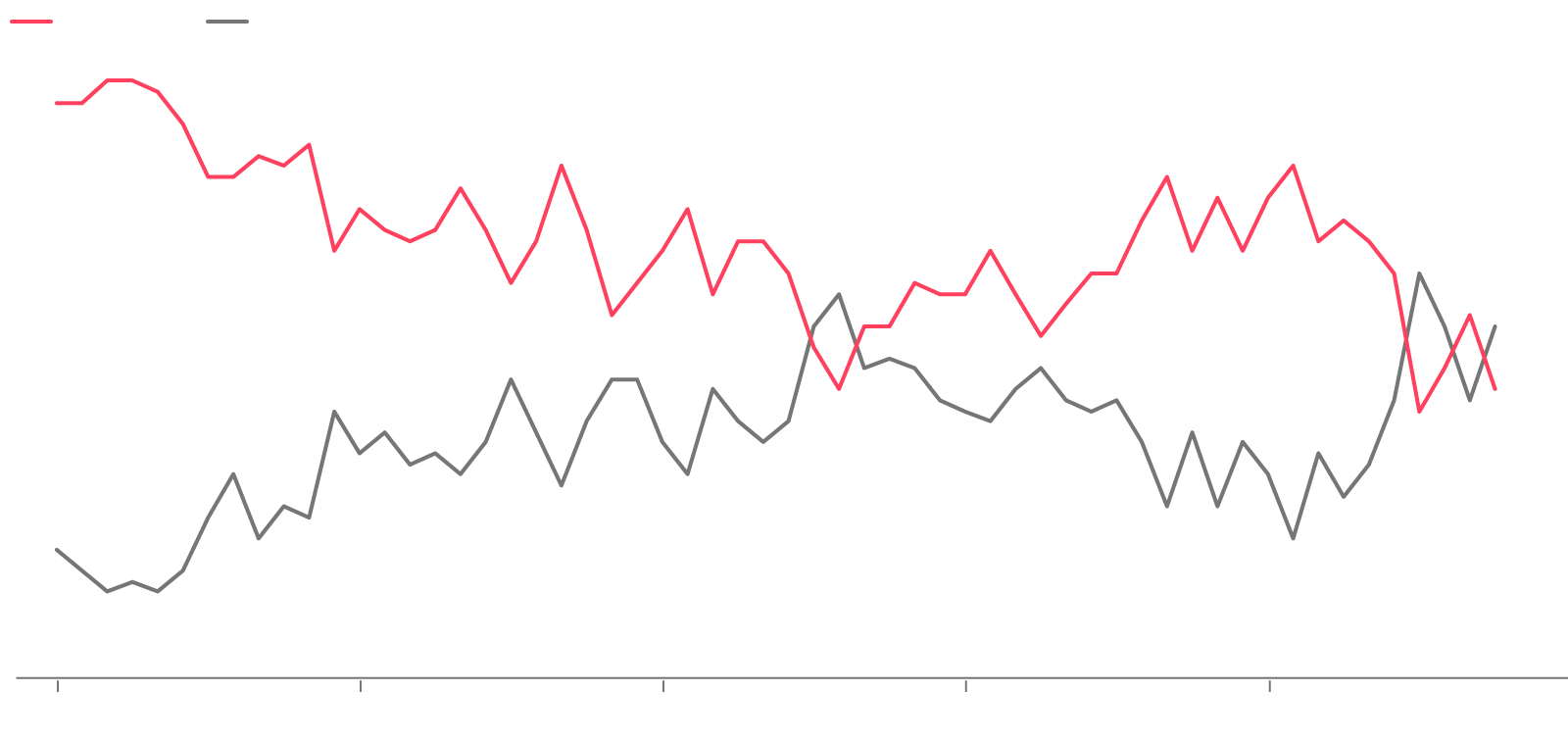
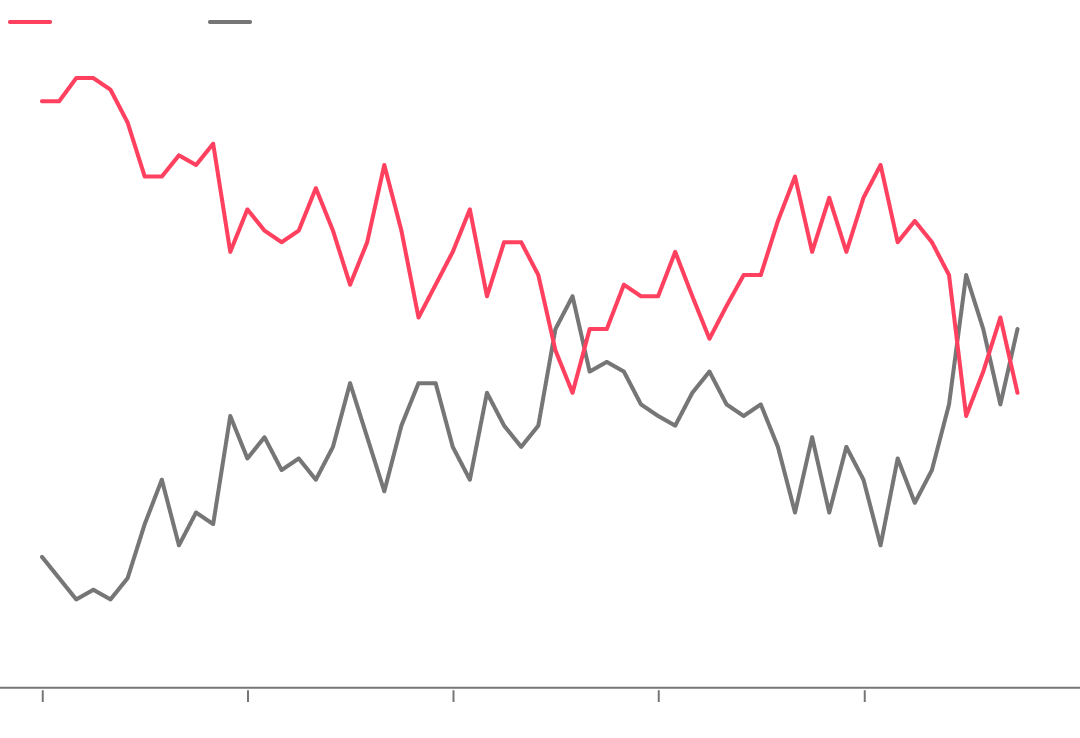
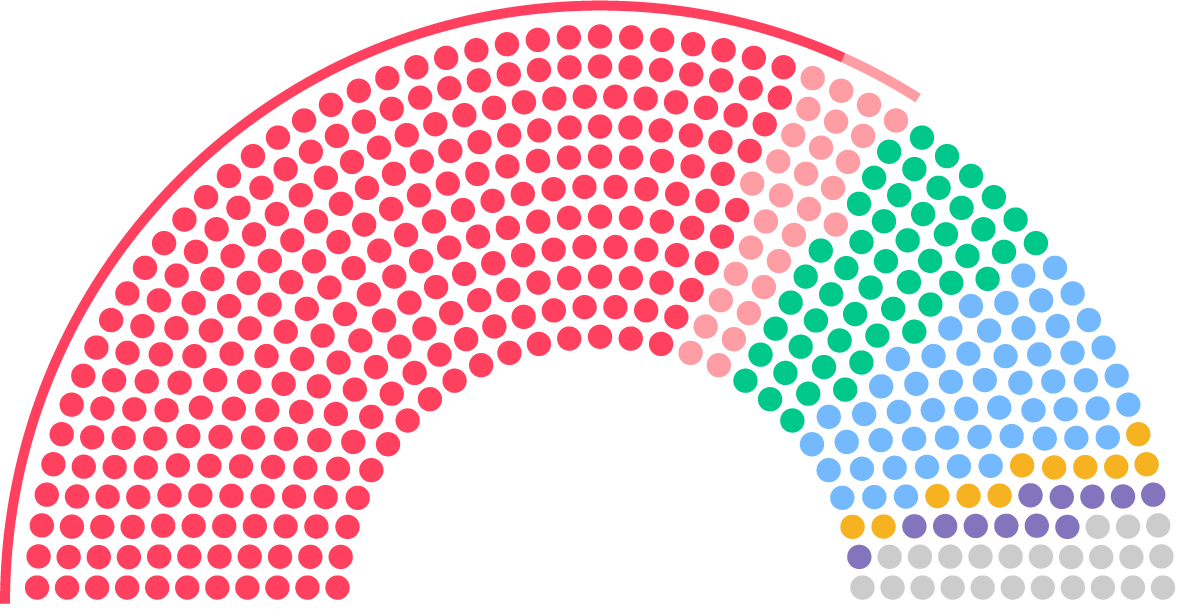
Prime Minister Shinzo Abe’s Liberal Democratic Party swept away the opposition in Japan’s Oct. 22 election, even as polls show a sizable chunk of the electorate doesn’t support him. His ruling coalition maintained its two-thirds majority, with the next-largest party taking only about 12 percent of the available seats.
Approval rate for Abe’s cabinet
Support
Don’t support
64%
43%
37%
22%
2013
2014
2015
2016
2017
Support
Don’t support
64%
43%
37%
22%
2013
2014
2015
2016
2017
Support
Don’t support
64%
43%
37%
22%
2013
2014
2015
2016
2017
While Abe campaigned on his record of delivering six straight quarters of growth in the world's third-largest economy, he also got some help from a divided opposition. Parties opposed to Abe failed to unite, splitting the votes of those upset with him, including over a series of cronyism scandals.

Ruling
coalition
2017
Ruling
coalition
2017

Ruling
coalition
2017
Japan’s lower house has control over the budget and can overrule the upper house on legislation. It has 465 lawmakers, including 289 elected from single-member districts and 176 from proportional representation blocs.
Red All Over
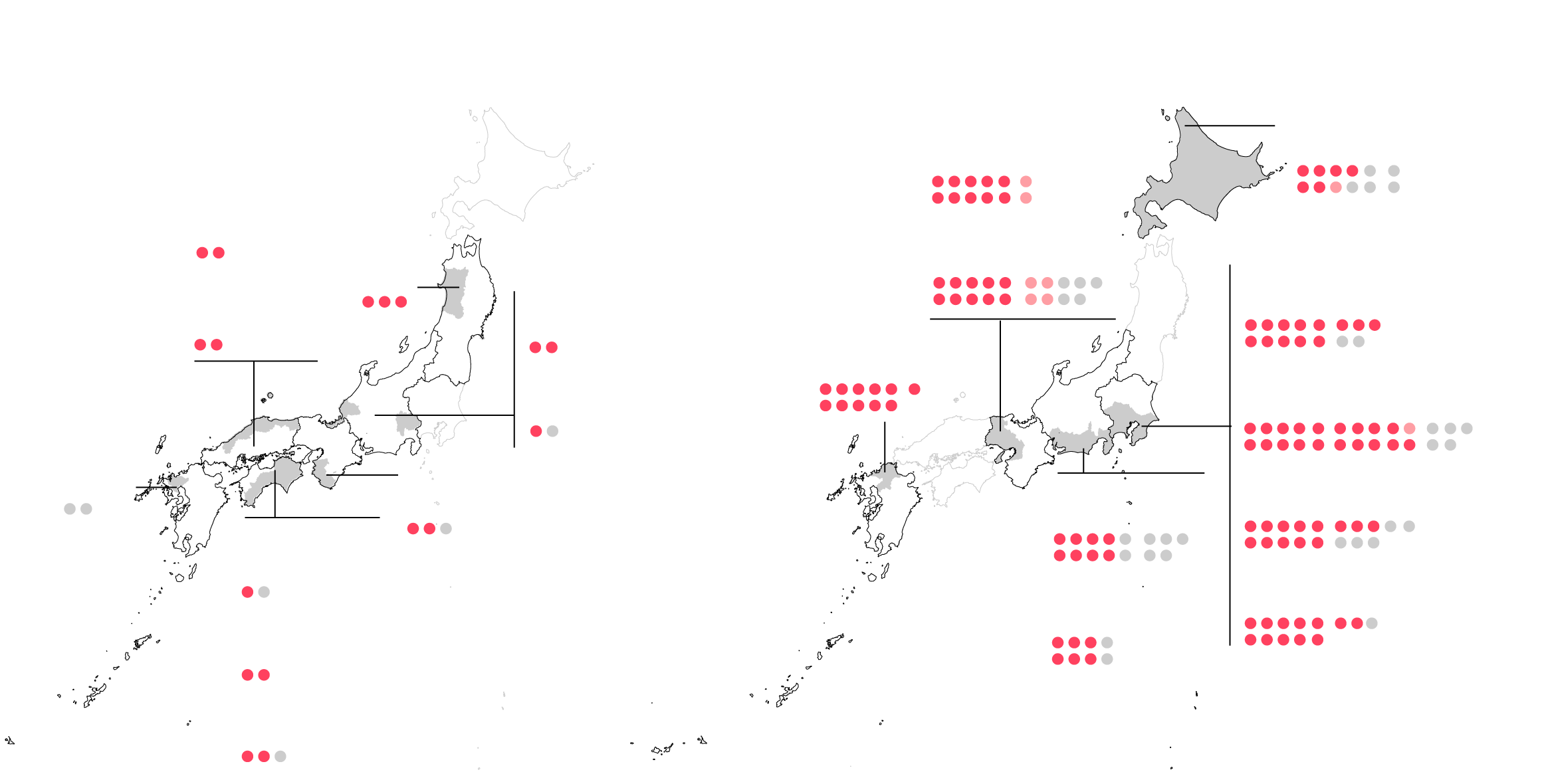
The ruling party has an advantage in single-member districts as it has deep-rooted support in many rural areas that are given disproportionate weight. While 10 seats were eliminated ahead of the election in a bid to rectify the situation, a vote in one of the most populous districts is still worth only about half of that in one of the most sparsely populated areas.
The splintered opposition helped the LDP win about 75 percent of these seats nationwide.
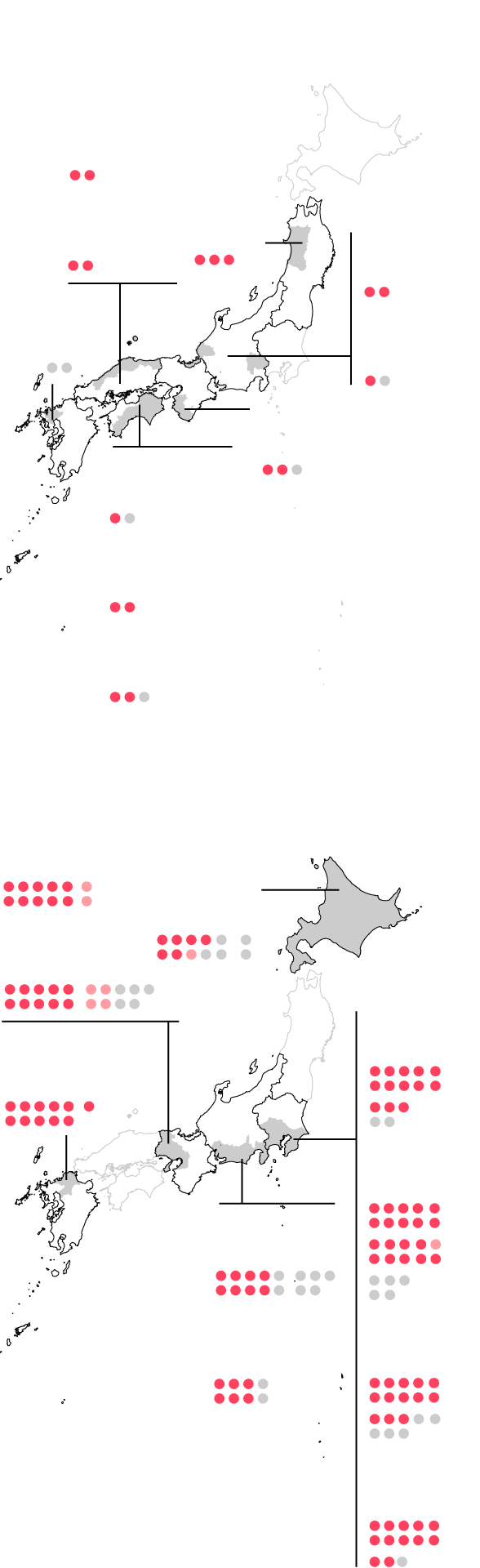
Smallest 10 Prefectures by Registered Voters
● LDP + ● Komeito 17 seats ● Other 6
Tottori
480K
Akita
886K
Shimane
580K
Fukui
655K
Saga
690K
Yamanashi
703K
Wakayama
831K
Kochi
622K
Tokushima
646K
Kagawa
831K
Largest 10 Prefectures by Registered Voters
● LDP + ● Komeito 116 seats ● Other 32
Hyogo
4.6M
Hokkaido
4.6M
Osaka
7.3M
Saitama
6.1M
Fukuoka
4.2M
Tokyo
11.3M
Aichi
6.1M
Kanagawa
7.6M
Shizuoka
3.1M
Chiba
5.2M
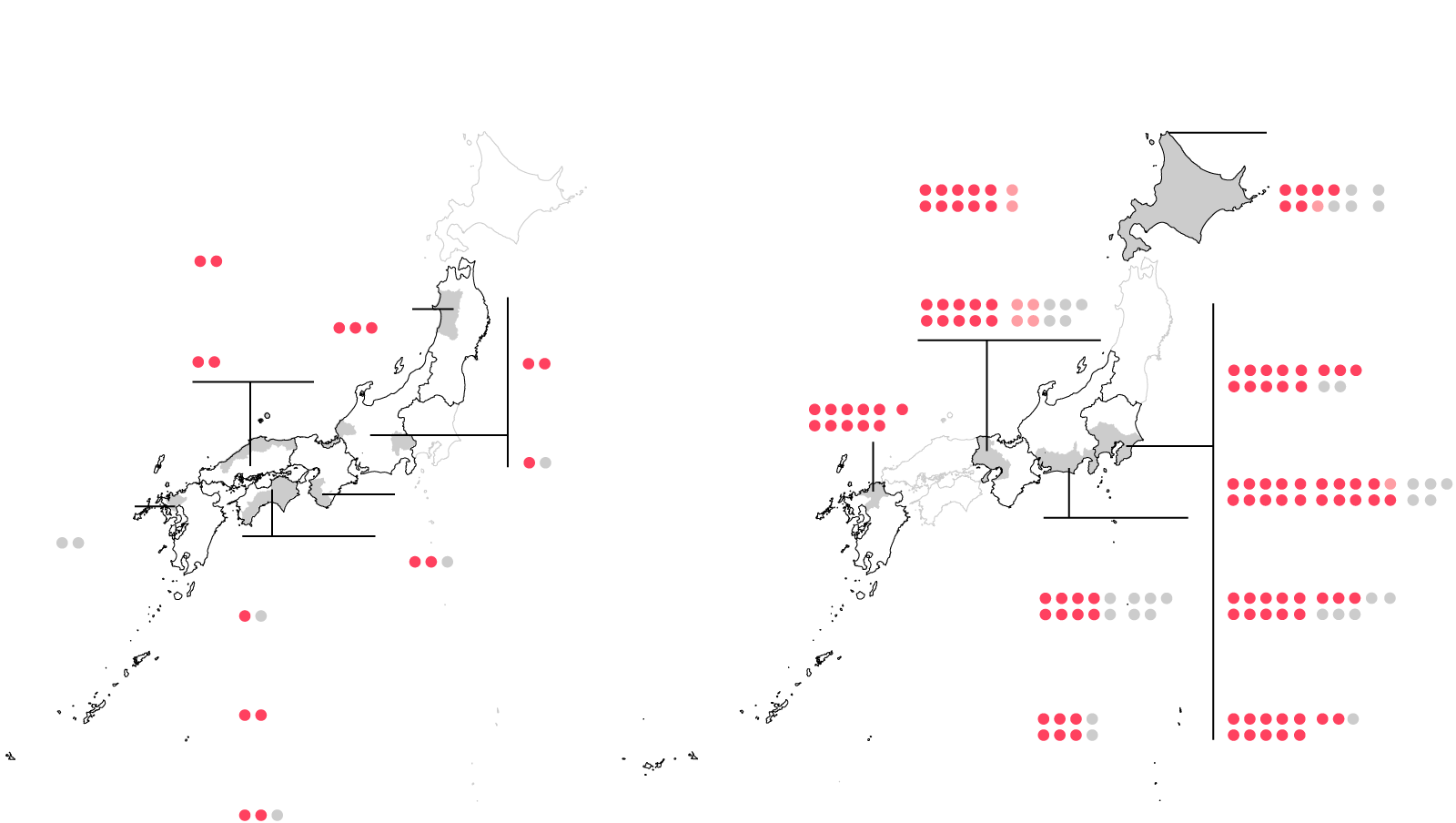
Smallest 10 Prefectures by Registered Voters
Largest 10 Prefectures by Registered Voters
● LDP + ● Komeito 17 seats ● Other 6
● LDP + ● Komeito 116 seats ● Other 32
Hyogo
4.6M
Hokkaido
4.6M
Tottori
480K
Osaka
7.3M
Akita
886K
Shimane
580K
Fukui
655K
Saitama
6.1M
Fukuoka
4.2M
Yamanashi
703K
Tokyo
11.3M
Saga
690K
Wakayama
831K
Aichi
6.1M
Kanagawa
7.6M
Kochi
622K
Tokushima
646K
Chiba
5.2M
Shizuoka
3.1M
Kagawa
831K
Smallest 10 Prefectures by Registered Voters
Largest 10 Prefectures by Registered Voters
● LDP + ● Komeito 17 seats ● Other 6
● LDP + ● Komeito 116 seats ● Other 32
Hokkaido
Hyogo
4.6M
4.6M
Tottori
480K
Osaka
Akita
7.3M
886K
Saitama
Shimane
Fukui
6.1M
580K
655K
Fukuoka
4.2M
Tokyo
Yamanashi
11.3M
703K
Saga
Kanagawa
Wakayama
690K
Aichi
7.6M
831K
6.1M
Kochi
622K
Chiba
Shizuoka
5.2M
3.1M
Tokushima
646K
Kagawa
831K
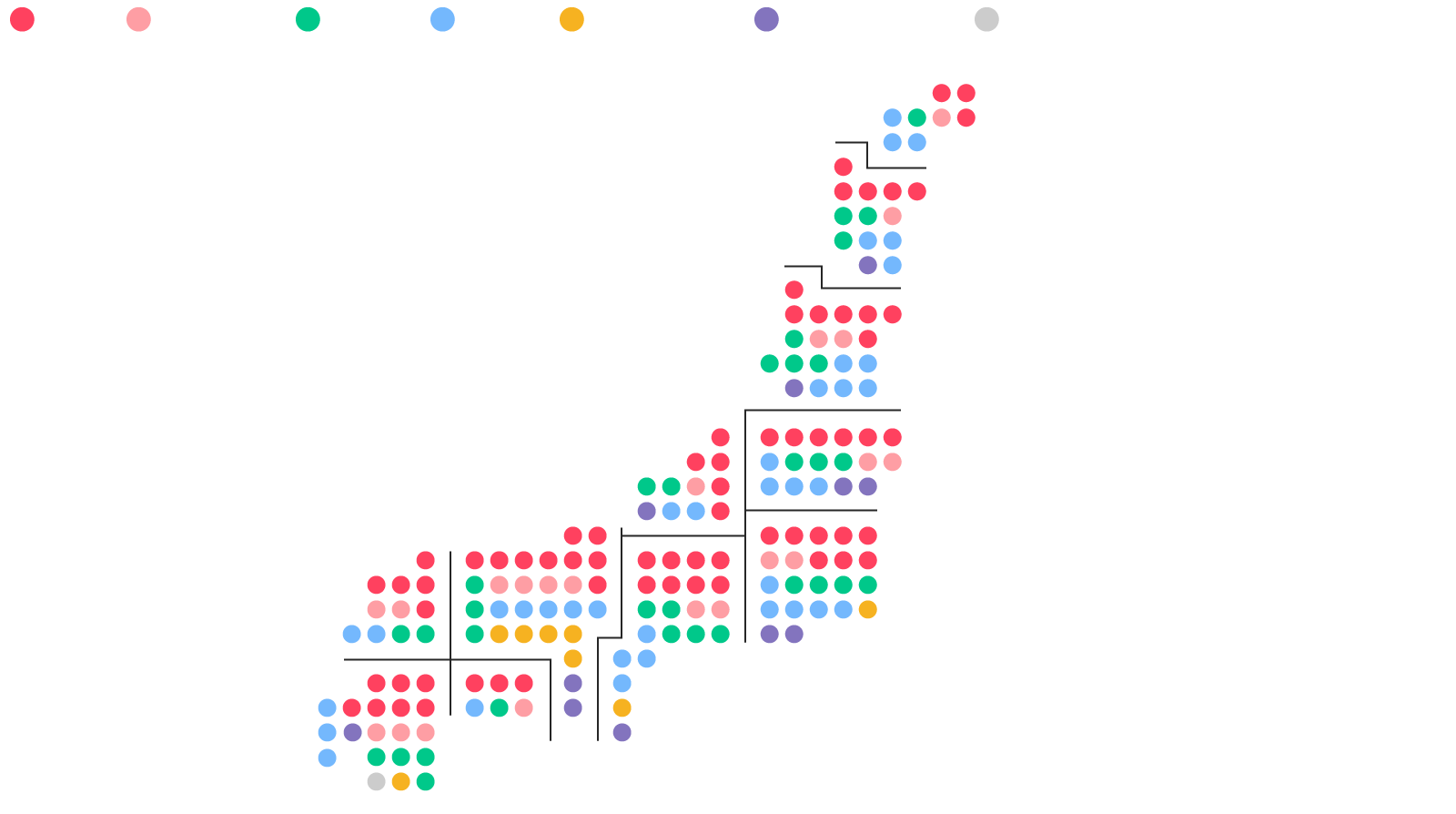
Not So Dominant
While vote totals for each party aren’t yet available for the single-member districts, only about a third of voters opted for the LDP in the proportional representation section.

LDP
Komeito
Hope
CDP
Innovation
Communist
Others
Hokkaido
Tohoku
Kita-kanto
Hokuriku-shinetsu
Tokyo
Chugoku
Kinki
Minami-kanto
Tokai
Shikoku
Kyushu

LDP
Komeito
Hope
CDP
Innovation
Communist
Others
Hokkaido
Tohoku
Kita-kanto
Hokuriku-shinetsu
Tokyo
Kinki
Chugoku
Minami-kanto
Tokai
Shikoku
Kyushu
LDP
Komeito
Hope
CDP
Innovation
Communist
Others
Hokkaido
Tohoku
Kita-kanto
Hokuriku-shinetsu
Tokyo
Kinki
Chugoku
Minami-kanto
Tokai
Shikoku
Kyushu
Elderly People Are Over-Represented
Rural Japan also has a higher concentration of the elderly, meaning this demographic group is over-represented in the halls of power in Tokyo.
How Single-Seat Constituencies Went With Respect to Proportion of Elderly Voters
An opinion poll published by NHK ahead of the election found 43 percent of those surveyed said they did not support Abe.
But his third election success should quiet critics in his own party who may have sought to challenge him for the leadership next year. This could help Abe cement his position through 2021, putting him on course to becoming Japan’s longest serving prime minister.