How the Populist Right Is Redrawing the Map of Europe
If 2017 looked like the year when moderate politicians took back Europe, look again. The election of centrist French President Emmanuel Macron and the reelection of German Chancellor Angela Merkel mask a rising tide of anti-immigrant and populist sentiment that is sweeping aside or weakening mainstream party politics across the continent.
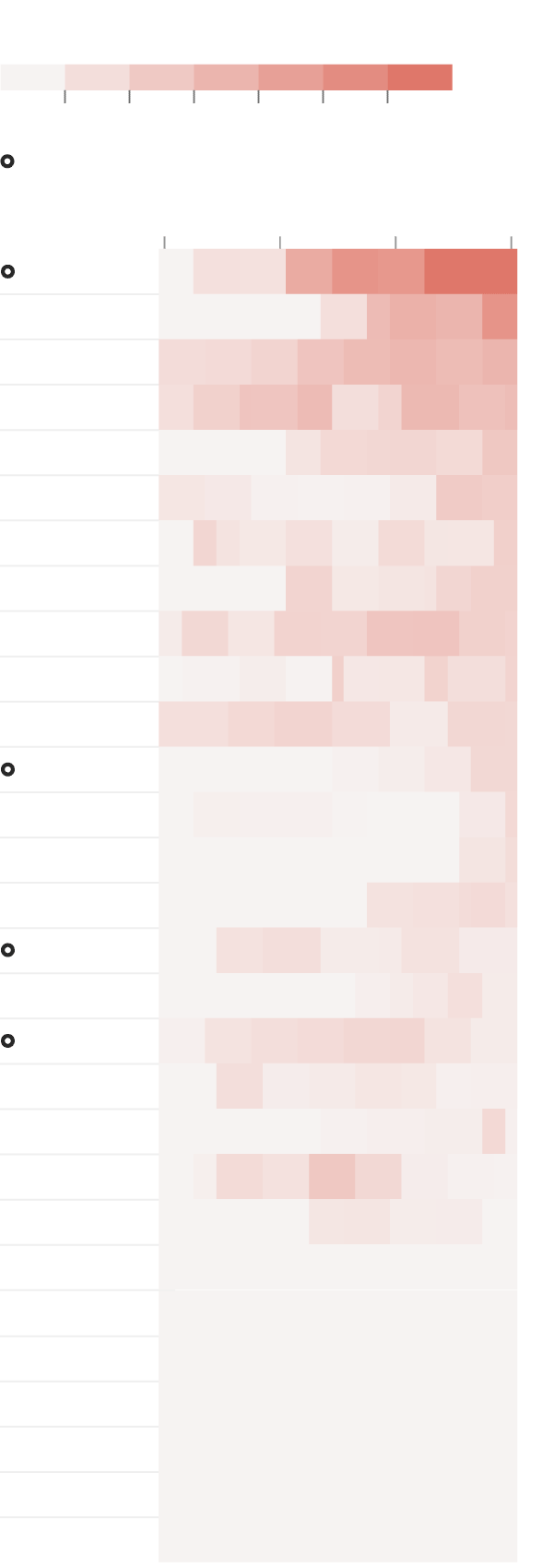
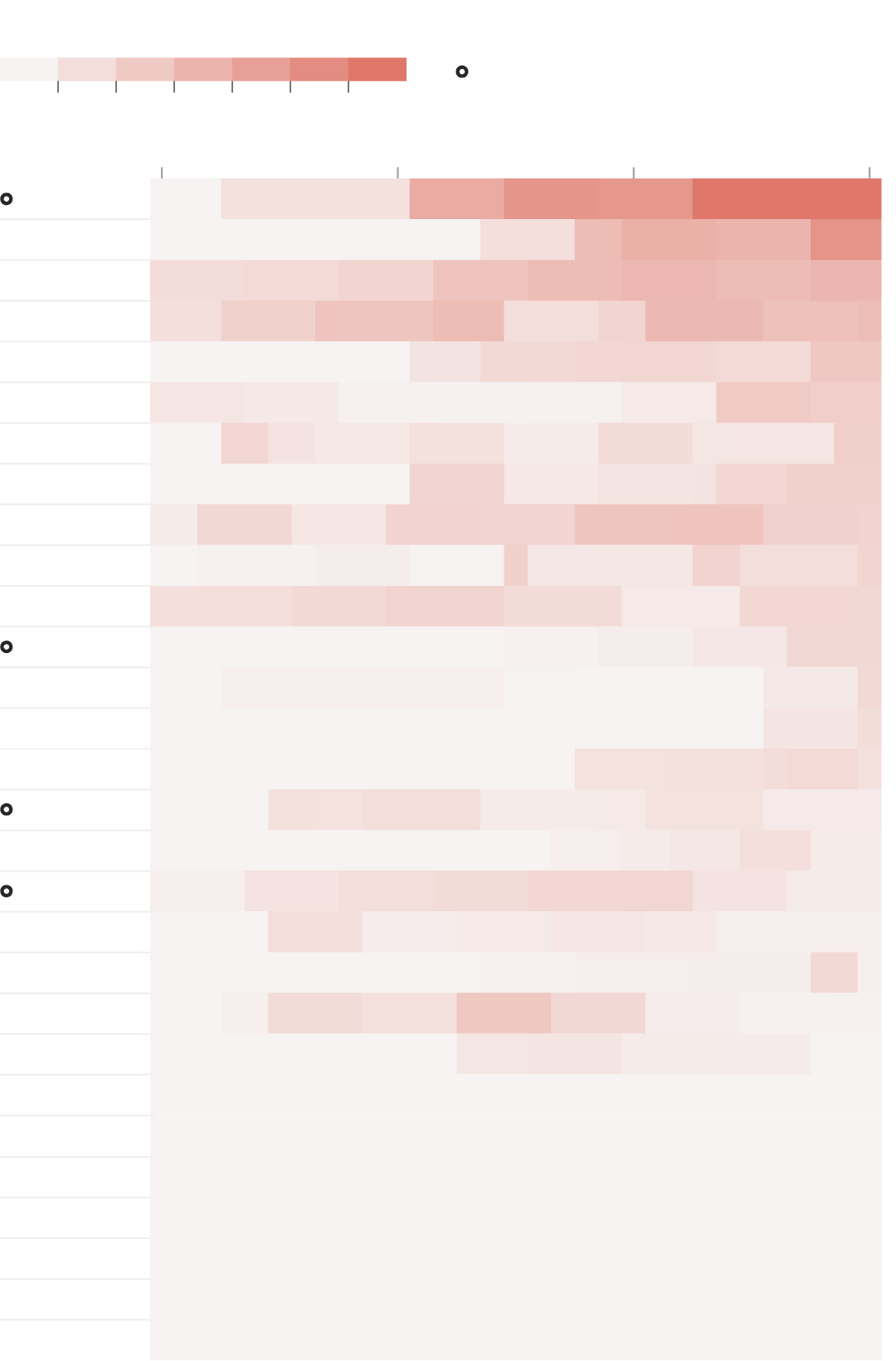
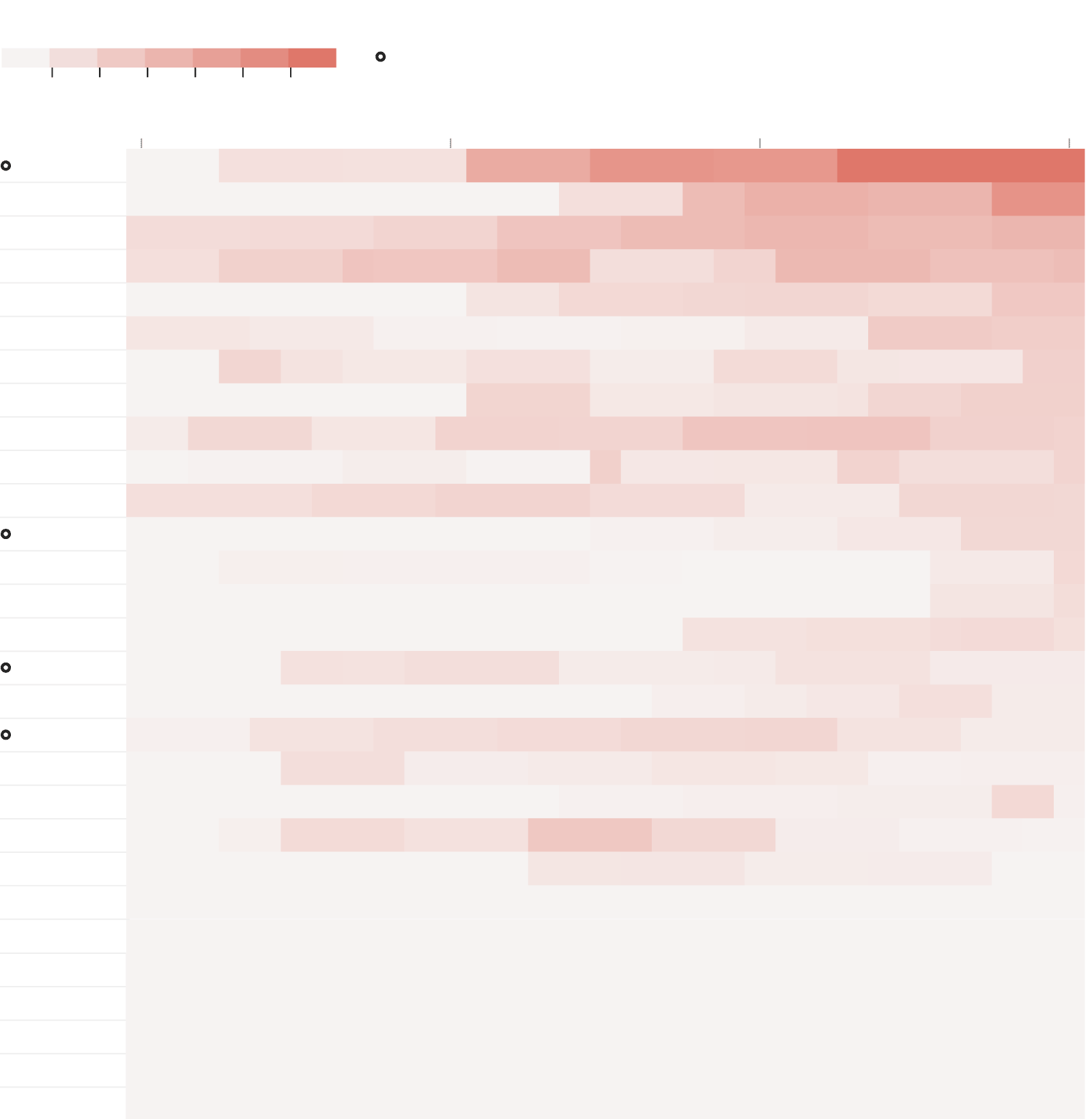
A Bloomberg analysis of decades of election results across 22 European countries reveals that support for populist radical-right parties is higher than it’s been at any time over the past 30 years. These parties won 16 percent of the overall vote on average in the most recent parliamentary election in each country, up from 11 percent a decade earlier and 5 percent in 1997.
While some parties evolved along the way, they are all now seen as anti-elite, nativist, and having a strong law and order focus, as defined by academics who helped shape this analysis. The series of maps and charts below show how they maneuvered from the margins, or even from the center in some cases, to disrupt the European political landscape.
Overview (hidden entry)
Overview placeholder
Where Are They Doing Well?
The populist radical right has left its largest mark in Eastern Europe and Scandinavia—where these parties are currently members of five governments in both regions—while barely registering in the Iberian Peninsula. They’ve also made serious inroads across the heart of continental Europe, generally winning at least 10 percent of the popular vote in most areas outside of Belgium and western sections of Germany and France.
Poland, Hungary, and Romania
The movement’s local standard-bearers govern in both Poland and Hungary, defying European Union rules and curbing some civil freedoms. While experts are divided over whether Poland’s Law and Justice and Hungary’s Fidesz are truly radical right, both parties have clearly leveraged related issues for political gain. A more fractured political landscape in Romania, where nativist strains are evident in several parties, has kept any one of them from emerging as a true contender on that end of the spectrum.
Denmark, Finland, Norway, and Sweden
These parties have also had relative success in Scandinavia, where they’ve breached 20 percent of the vote in several countries’ elections and taken part in a few governments. The region is also home to some of the oldest parties currently seen as populist and radical right, with Norway’s Progress Party dating back to 1973.
France
Looking at France’s legislative election shows only part of the story, considering the country’s semi-presidential system. In fact, first-round turnout in the 2017 parliamentary elections was 28 percentage points lower than in the earlier presidential vote. In the presidential runoff between National Front leader Marine Le Pen and centrist candidate Macron, she won a full third of the popular vote. That nearly doubled the best performance of the party’s previous leader—her father, Jean-Marie Le Pen—in 2002.
Where Are They Growing Fastest?
How these parties performed compared with the most recent previous election tells a more mixed story. There were clear gains in some of Europe’s most populous countries—including Germany and Poland—as well as some setbacks in Greece, Italy, and, most notably, the U.K. Of the roughly 250 subnational regions on the map, about half saw a rise and half saw a fall in the populist radical right’s aggregate vote share.
Germany and the Netherlands
Germany, Europe’s largest economy, and the Netherlands, its second-most densely populated, saw surges in their respective populist radical-right parties, though not in quite the same way. The Alternative for Germany became the first far-right party to enter the Bundestag in more than five decades, and the Dutch Freedom Party became its country’s No. 2 party.
United Kingdom
The U.K. stands out as the real outlier in 2017. The vote share of the populist, anti-immigration U.K. Independence Party plummeted from 12.6 percent in 2015 to less than 2 percent in the June snap election, which cost Prime Minister Theresa May her outright majority. Without leader Nigel Farage and with May’s government championing Brexit, its signature issue, UKIP became a party without a cause.
Overview (hidden entry)
Overview placeholder
Which Parties Are Included?
There is a powerful shift emerging in politics around the world, and in Europe in particular. While there has been a rise in populism broadly, it’s the right-wing part of this movement that has redrawn politics this year—including the recent election of Andrej Babis as Czech prime minister. These parties have combined populist, nativist, and authoritarian strains in a mix that academics say shows clear commonalities.
To conduct this analysis, Bloomberg relied on a list of 39 political parties classified as populist and radical right that have at some point in their history held at least one parliamentary seat (whether nationally or in the European Parliament). The list was compiled mostly by University of Amsterdam assistant professor Matthijs Rooduijn. He used definitions set out by University of Georgia associate professor Cas Mudde in two books, published in 2000 and 2007. The list was then peer-reviewed and finalized with the help of nine other experts.
These parties generally share traits such as support for strong immigration controls, as well as anti-Europe and anti-elite feelings, yet they are far less monolithic when it comes to traditional conservative economic ideas. Data from the 2014 Chapel Hill Expert Survey, which asks researchers to rate individual parties on a range of ideological or thematic issues, bears this out, as illustrated below.
Looking at it issue by issue produces some surprising juxtapositions: The Dutch Freedom Party and the U.K. Independence Party agree on restricting immigration and being tough on crime, for instance, but are opposed on social issues (including gay rights, which the former supports) and whether the state should intervene in the economy.
Where Populism and the Radical Right Overlap
How parties line up on key issues in the 2014 Chapel Hill Expert Survey, ordered from most alike to least alike
Source: 2014 Chapel Hill Expert Survey
Note: There are no 2014 CHES scores for .
What We Found About the Causes of This Surge
Uncontrolled immigration. National sovereignty. Globalization. Disappearing manufacturing jobs. Corrupt elites. Rising income inequality. These are some of the cornerstone issues for the parties in this analysis. Although detailed data on these topics are hard to come by, especially at a more local level, useful proxies for the first two pairs of issues are the foreign-born share of a region’s population and its unemployment rate.
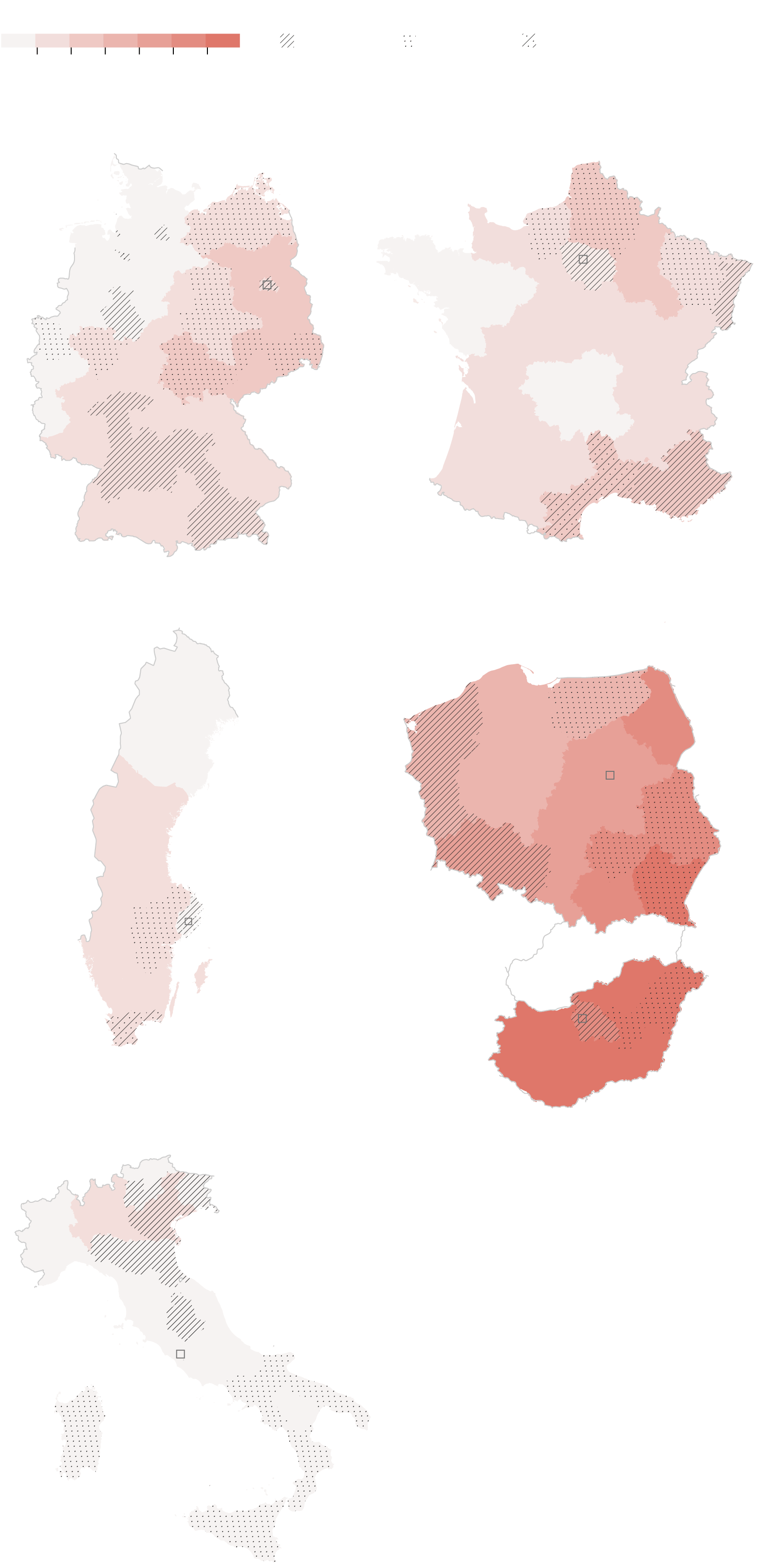
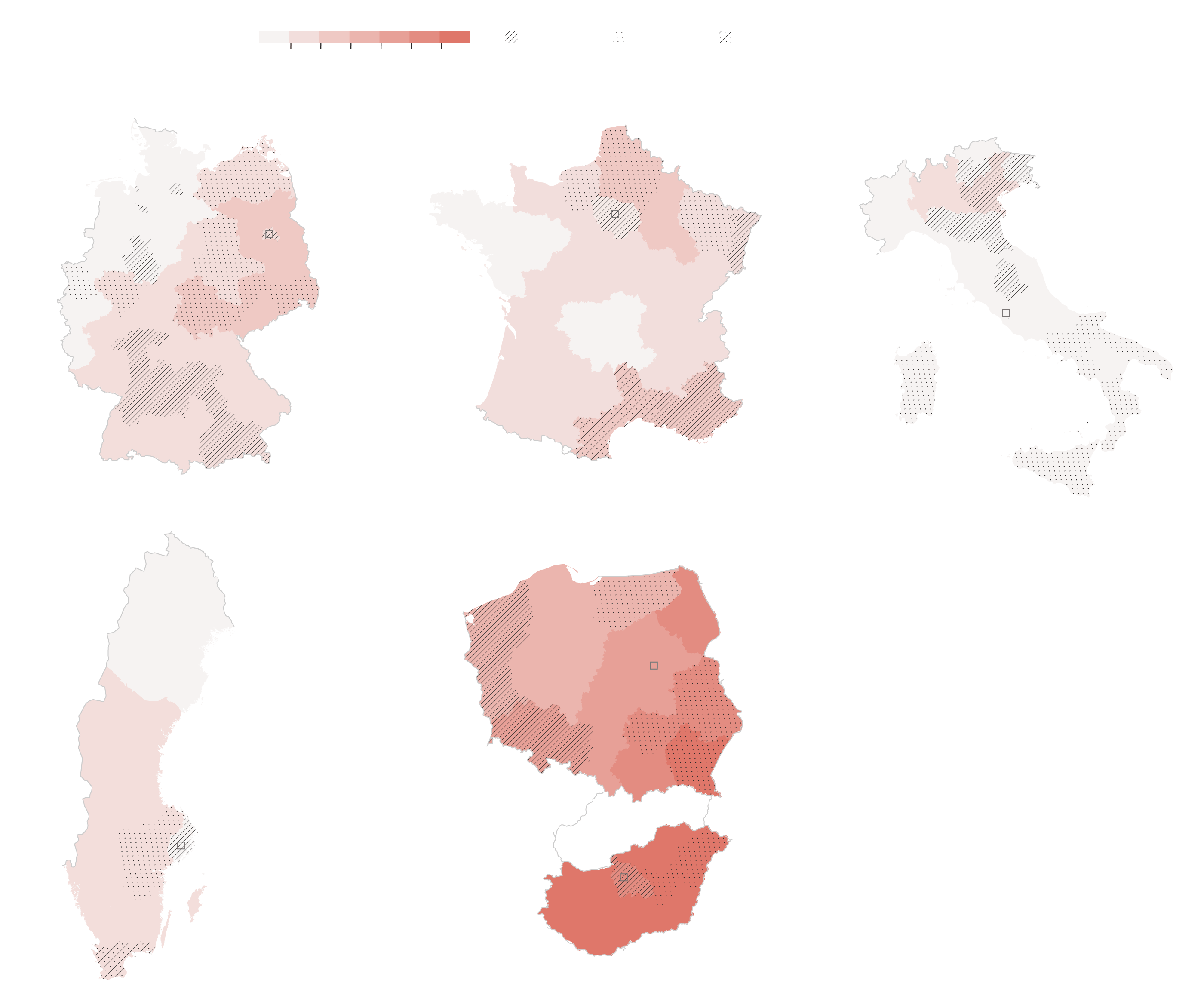
Interestingly, neither indicator displays a particularly consistent relationship with populist radical-right vote share across all countries. There are, however, clear statistical ties with unemployment in France (which voted this year) and Sweden (set to go to the polls in 2018), as well as with the foreign-born share of the population in Italy.

Latest vote share for populist
radical-right parties
10
20
30
40
50
60%
Strongest concentration of
Unemployed
Foreign-born
The anti-immigration Alternative for Germany party fared best in the country's east, where unemployment is highest.
Berlin
GERMANY
The National Front’s nationalist platform resonated in the parts of the country where anti-globalization sentiments are strongest.
Paris
France
Italy’s wealthier northern half, which attracts more foreign-born residents, is the Northern League’s stronghold. The party’s appeal is limited in the economically deprived south.
Rome
ITALY
The Sweden Democrats had their strongest showing in the country’s more urbanized south, where unemployment and immigration are highest.
SWEDEN
Stockholm
Eastern Europe’s history of ethnic nationalism means Poland’s Law and Order and Hungary's Fidesz were able to ride their nativist message into government. And yet in those countries immigration remains a fraction of what it is further west.
POLAND
Warsaw
Budapest
HUNGARY
Strongest concentration of
Latest vote share for populist
radical-right parties
Unemployed
Foreign-born
(both)
10
20
30
40
50
60%
The National Front’s nationalist platform resonated in the parts of the country where anti-globalization sentiments are strongest.
The anti-immigration Alternative for Germany party fared best in the country's east, where unemployment is highest.
Paris
Berlin
France
GERMANY
Eastern Europe’s history of ethnic nationalism means Poland’s Law and Order and Hungary's Fidesz were able to ride their nativist message into government. And yet in those countries immigration remains a fraction of what it is further west.
The Sweden Democrats had their strongest showing in the country’s more urbanized south, where unemployment and immigration are highest.
Warsaw
POLAND
SWEDEN
Stockholm
Budapest
HUNGARY
Italy’s wealthier northern half, which attracts more foreign-born residents, is the Northern League’s stronghold. The party’s appeal is limited in the economically deprived south.
Rome
ITALY
Strongest concentration of
Latest vote share for populist
radical-right parties
Unemployed
Foreign-born
(both)
10
20
30
40
50
60%
Italy’s wealthier northern half, which attracts more foreign-born residents, is the Northern League’s stronghold. The party’s appeal is limited in the economically deprived south.
The National Front’s nationalist platform resonated in the parts of the country where anti-globalization sentiments are strongest.
The anti-immigration Alternative for Germany party fared best in the country's east, where unemployment is highest.
Paris
Berlin
France
GERMANY
Rome
ITALY
Eastern Europe’s history of ethnic nationalism means Poland’s Law and Order and Hungary's Fidesz were able to ride their nativist message into government. And yet in those countries immigration remains a fraction of what it is further west.
The Sweden Democrats had their strongest showing in the country’s more urbanized south, where unemployment and immigration are highest.
Warsaw
POLAND
SWEDEN
Stockholm
Budapest
HUNGARY
Where Our Analysis Doesn’t Tell the Whole Story
The general election vote shares and parliamentary seats won by the more than 30 parties in this analysis don’t fully show the appeal of their ideas. In some countries, such as Austria, France, and Italy, populist radical-right parties have performed up to 20 percentage points better in presidential and regional elections. In others they’ve helped push more mainstream conservative parties to the right on policy or rhetoric. Thus the Tories in the most recent U.K. election adopted the banner of Brexit, while Merkel’s CDU/CSU in Germany has had to rethink its pro-refugee policy amid the rising popularity of the anti-immigration Alternative for Germany.
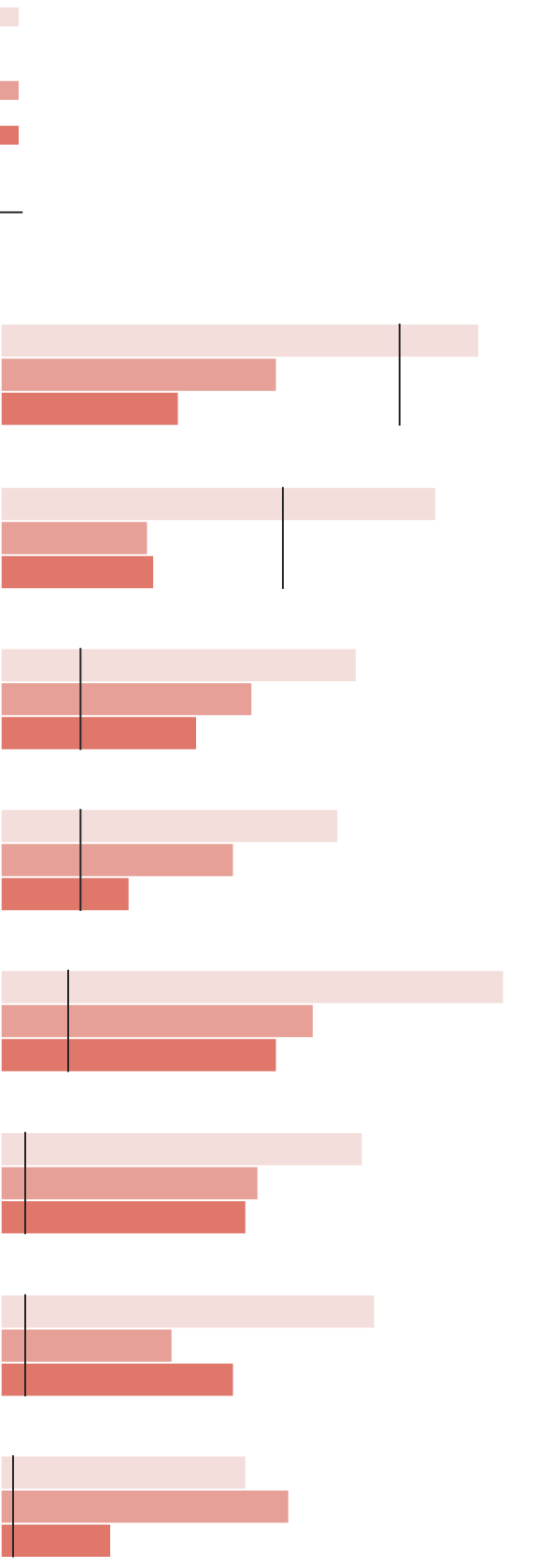
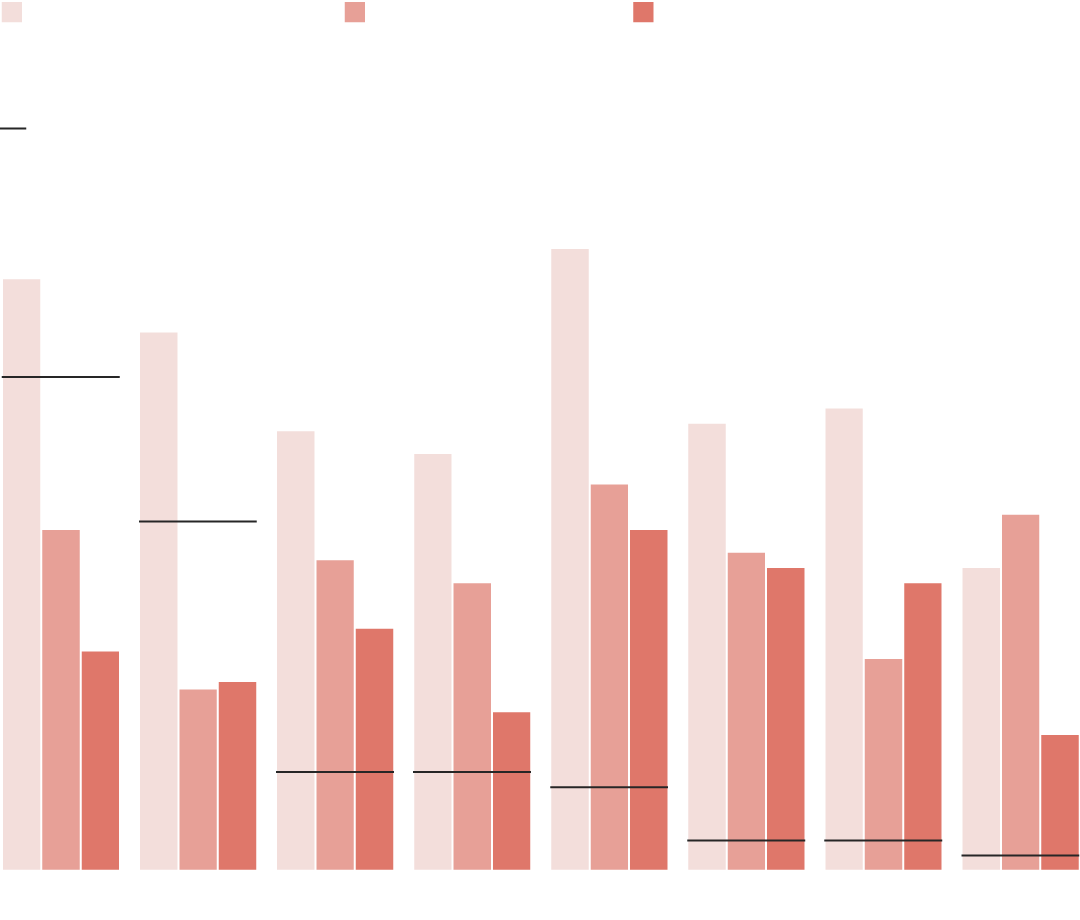
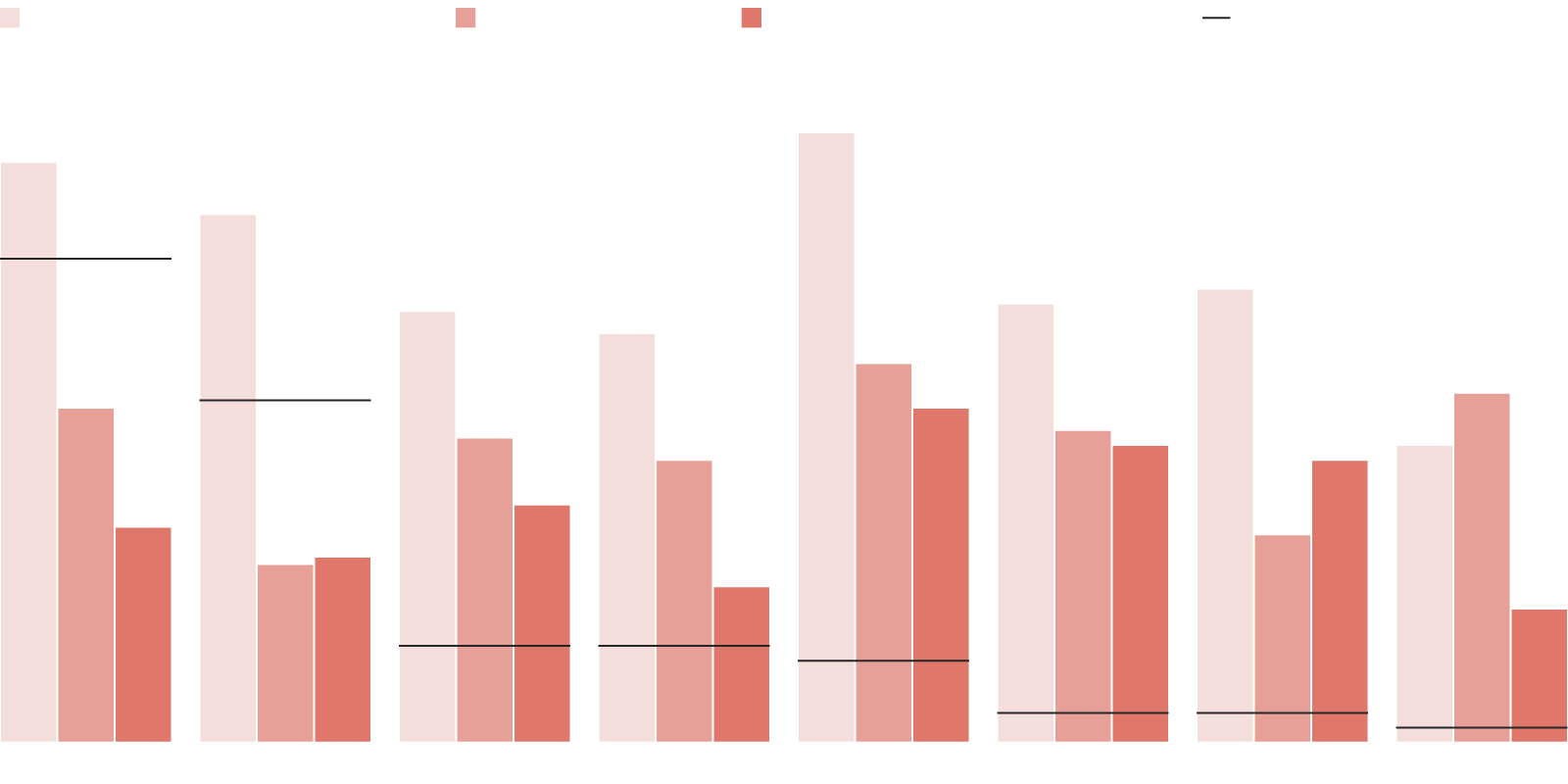
This shows up in the relatively widespread support for some of the extreme parties’ pet causes. Roughly 1 in 5 EU citizens said immigration is one of the two most important issues facing their country this year. Almost 2 in 5 were pessimistic about the EU’s future, and 1 in 5 felt globalization isn’t an opportunity for growth, according to the Eurobarometer’s May 2017 survey. On the national level in some countries, the response rates for some of these questions far surpassed the share of votes any local qualifying party recently received.
What the People Say
Responses from the May 2017 Eurobarometer survey
Negative feeling for immigration from
outside the EU
Pessimistic about future of the EU
Globalization not an opportunity for
economic growth
Latest populist radical-
right vote share
Hungary
78%
65
45
29
Poland
71
24
46
25
France
58
41
13
32
Germany
55
38
13
21
Czech Rep.
82
51
11
45
Italy
59
42
4
40
Romania
61
28
4
38
U.K.
40
2
47
18
Pessimistic about
future of the EU
Globalization not an
opportunity for
economic growth
Negative feeling for
immigration from
outside the EU
Latest populist radical-
right vote share
82
78%
71
65
61
59
58
55
51
47
46
45
45
42
41
40
40
38
38
32
29
28
25
24
21
18
13
13
11
4
4
2
Czech Rep.
Poland
Italy
U.K.
Hungary
France
Germany
Romania
Pessimistic about
future of the EU
Globalization not an opportunity
for economic growth
Latest populist radical-
right vote share
Negative feeling for immigration
from outside the EU
82
78%
71
65
61
59
58
55
51
47
46
45
45
42
41
40
40
38
38
32
29
28
25
24
21
18
13
13
11
4
4
2
Czech Rep.
Poland
Italy
Hungary
France
Germany
Romania
U.K.
How Might This Affect Next Year's Elections?
The emergence of this new and loosely cohesive party family—some of whose members would not necessarily have been recognized as following these ideologies in the past—speaks to a powerful shift in Europe’s political center of gravity and serves as an important backdrop to next year’s key elections.
- In Belgium, Vlaams Belang—also known as the Flemish Interest party—can regain some momentum in local elections heading into the 2019 general election.
- In Hungary, the ruling Fidesz party and opposition Jobbik party, both populist and radical right, collectively won 65 percent of the vote in 2014.
- In Italy, the Northern League has struggled for national relevance in the Five Star Movement’s shadow but can shine in regional Lombardy elections.
- In Sweden, the Sweden Democrats doubled their vote share in the last election.
The March of History
Vote share for populist radical-right parties over the past 30 years
Latest vote share for populist
radical right parties
60%
10
20
30
40
50
Election next year
1987
1997
2007
2017
Hungary
Poland
Switzerland
Austria
Denmark
Finland
Slovakia
Latvia
Norway
Netherlands
France
Sweden
Germany
Czech Rep.
Bulgaria
Italy
Greece
Belgium
Slovenia
U.K.
Romania
Croatia
Cyprus
Estonia
Ireland
Lithuania
Luxembourg
Portugal
Spain
Latest vote share for populist
radical-right parties
Election next year
60%
10
20
30
40
50
1987
1997
2007
2017
Hungary
Poland
Switzerland
Austria
Denmark
Finland
Slovakia
Latvia
Norway
Netherlands
France
Sweden
Germany
Czech Rep.
Bulgaria
Italy
Greece
Belgium
Slovenia
U.K.
Romania
Croatia
Cyprus
Estonia
Ireland
Lithuania
Luxembourg
Portugal
Spain
Latest vote share for populist
radical-right parties
Election next year
10
20
30
40
50
60%
1987
1997
2007
2017
Hungary
Poland
Switzerland
Austria
Denmark
Finland
Slovakia
Latvia
Norway
Netherlands
France
Sweden
Germany
Czech Rep.
Bulgaria
Italy
Greece
Belgium
Slovenia
U.K.
Romania
Croatia
Cyprus
Estonia
Ireland
Lithuania
Luxembourg
Portugal
Spain
Note: Includes active parties that currently qualify as populist and radical right, even if that may not always have been the case, as well as former parties that fit the classification when they were active. Cyprus, Estonia, Ireland, Lithuania, Luxembourg, Portugal, and Spain have no qualifying parties.
The Future of the European Union May Be at Stake
Anti-EU sentiment runs deep in the populist radical right: 28 of the 39 parties in Bloomberg’s analysis also show up on a list of euroskeptic parties compiled by University of Sussex professor Paul Taggart with funding from the U.K. Economic and Social Research Council. Several have joined ranks to form the Europe of Nations and Freedom Group in the European Parliament, which currently counts among its members the National Front in France, the Dutch Freedom Party, Italy’s Northern League, the Freedom Party of Austria, and Vlaams Belang in Belgium.
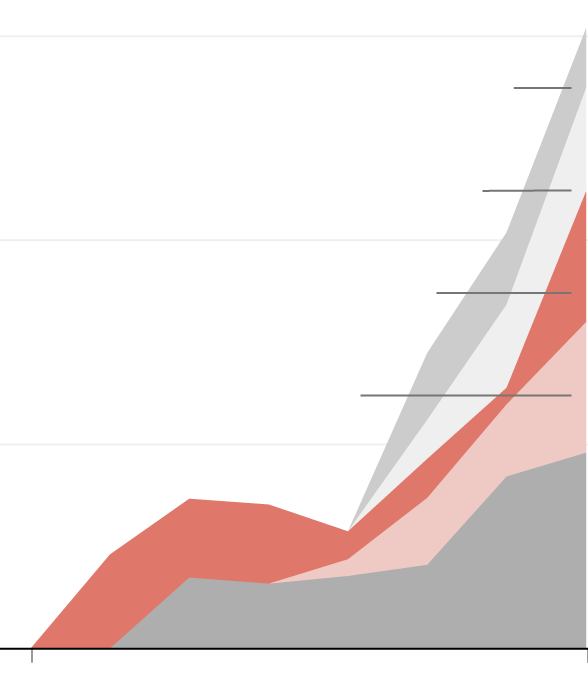
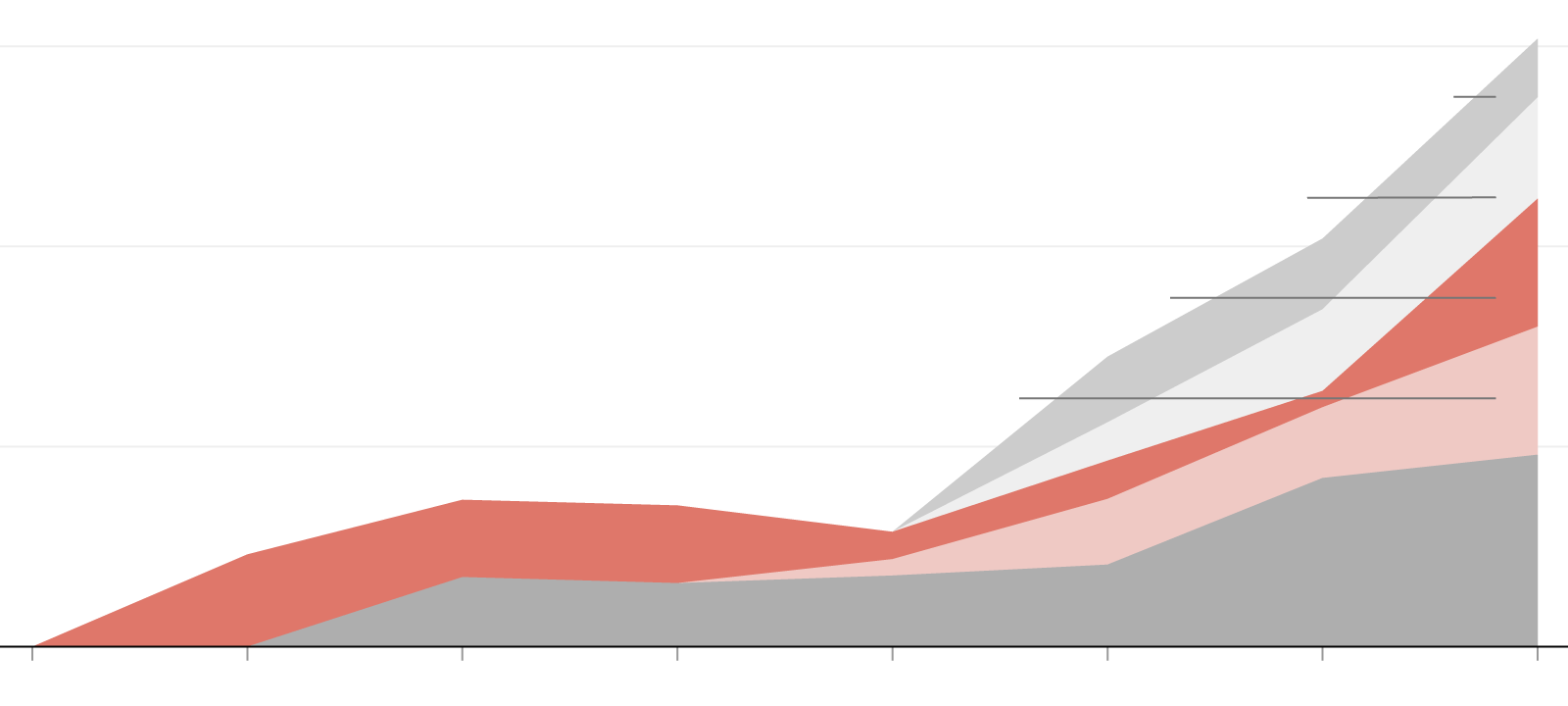
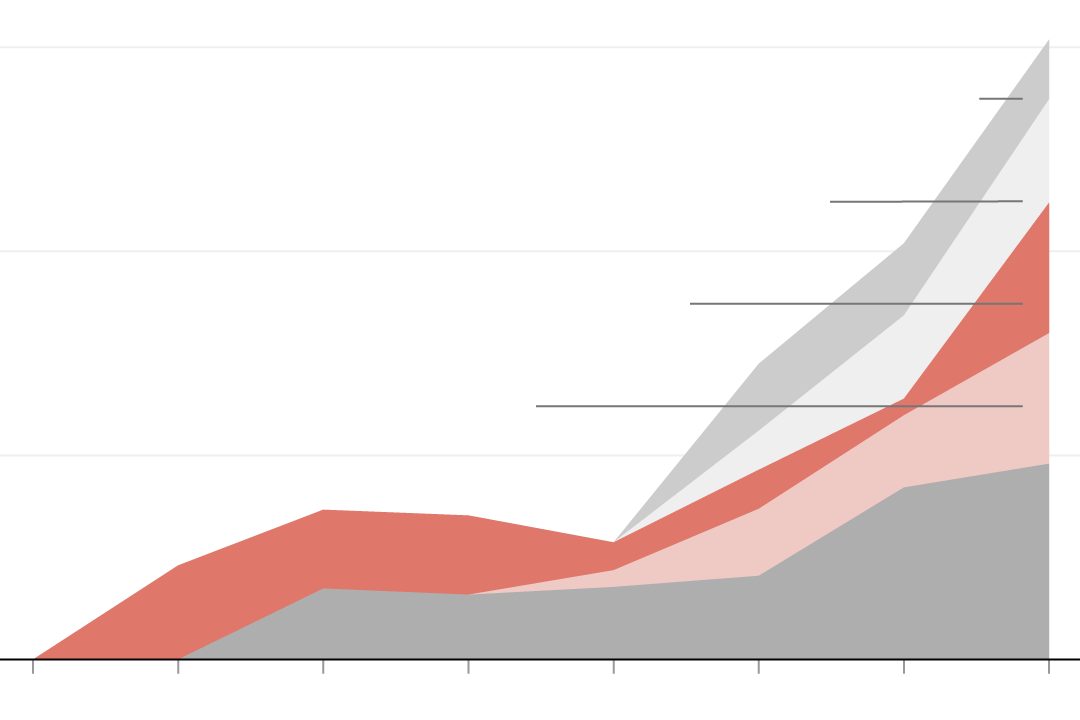
For mainstream political parties, it’s not just about taking note of these parties’ performance at the national polls. Europe’s leaders (and the bureaucrats in Brussels) should also worry about their gains in the European Parliament, which despite its unpopularity controlled a budget of nearly €160 billion ($188 billion) this year and will have the final say on any Brexit deal. In 2014 these parties collectively won 15 percent of seats, up from 10 percent in 2009 and just 3 percent in 1999. The next European Parliament elections are set for 2019.
Surging in Strasbourg
Parties’ share of seats in the European Parliament since 1979
15%
Fidesz Hungary
Law and Justice Poland
10
National Front France
UKIP U.K.
5
Other
populist
radical-right parties
0
1979
2014
15%
Fidesz
Hungary
Law and Justice
Poland
10
National Front
France
UKIP
U.K.
5
Other populist
radical-right parties
0
1979
1984
1989
1994
1999
2004
2009
2014
15%
Fidesz
Hungary
Law and Justice
Poland
10
National Front
France
UKIP
U.K.
5
Other populist
radical-right parties
0
1979
1984
1989
1994
1999
2004
2009
2014