

Where to Invest $100,000 Right Now
Investment experts see opportunities in stocks abroad, tech and art from a renowned sculptor
Sign up to get an email each time a new edition of our Where to Invest series publishes – you can expect it about once a month.
We live in head-twisting times.
Market watchers anticipate volatility this year with the new Trump administration’s wide-reaching shakeups and rapid-fire actions.
The rally in stocks is largely unbothered so far. The S&P 500 is up more than 3% since the election in November. Still, there’s a lot of anxiety over where the economy and markets are headed. To list off just a few concerns, there’s a bump in inflation threatening future interest rate cuts; there’s growing uncertainty the US tech sector will lead the AI revolution; there’s increased geopolitical risk; and it’s still unknown how higher US tariffs might affect both companies and consumers.
Figuring out what it could all boil down to for portfolios and whether it requires a new playbook is challenging, to say the least. So Bloomberg quizzed four money managers to get a range of ideas on where they’d put a $100,000 stake right now.
The opportunities explored by the experts range from the highly conservative — buy 10-year US Treasuries — to sticking with tech-centric US large-cap stocks. In between those polar opposites, experts point to areas including small caps, unloved international markets, municipal bonds and private credit.
Deciding how to spend $100,000 on something fun is a far easier call. A clever Lorenzo Quinn sculpture, a family trip to Egypt, recreational land in the US and a home on the Athens Riviera in southern Greece all got the nod.
For investors wanting to play on the expert’s themes using exchange-traded funds, Bloomberg Intelligence ETF research associate Andre Yapp highlights funds that can serve as rough proxies for their ideas.
Read more: Are you Rich?
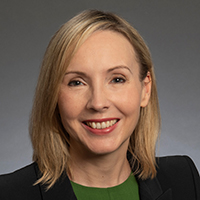
Sinead Colton Grant, chief investment officer, BNY Wealth
Tech Has Room to Run
The idea: We’re very constructive on the US economy in particular and on US large-cap stocks. For a taxable investor with a 60/40-type portfolio, we’d suggest 48% in public equities, 20% in private assets and 32% in public bonds.
The strategy:
Within equities, we’d put about 38% in US large-caps, 7% to 8% in international stocks and the rest in emerging markets ex-China. We’d invest in large-caps via a tax-managed equity solution, so you get capital appreciation and can also generate taxable losses to offset gains in other parts of your portfolio.
In the US large-cap sector, people concerned about tech valuations are thinking back to the dotcom bubble. But the sector looks very different today. Most of the margin expansion in the S&P 500 over the past 10 years has come from the tech sector, and the Magnificent 7 throw off a lot of free cash flow. To just look at price-earnings ratios and say tech is overvalued, we think misses the broader story. Make no mistake, 2025 is the “show me” year with AI. We need to see proof of how AI will be applied in different industries — perhaps drug development in health care or energy companies using AI to locate new energy sources.
In fixed income, we’d put 28% in municipal bonds with maturities of 10 years or more. In a high-tax state like New York, an AA-rated callable muni bond with a 12-year maturity yields over 3.3%, which is over 5.6% on a taxable-equivalent basis; in California, a similar credit yields around 3%, which is over 5% on a taxable-equivalent basis. It’s really important that the allocation to muni bonds be actively managed, because fixed-income volatility is not going away. The volatility brings with it a lot of opportunity. You need a research team, because there are over 50,000 individual securities and some really attractive options are unrated.
In the private asset part of the portfolio, we’d split 15% between private equity and venture capital and put 5% in private credit.
The big picture: We see the US economy growing maybe 2% or a little above that and inflation remaining relatively well-contained in the high 2s or low 3s. The economy and markets can do very well with inflation in the 3% to 4% range. Getting to a 2% inflation rate is a little harder but that doesn’t cause us to constrain our growth expectations in any material way.

Jerry Davidse, chief executive officer, Presilium Private Wealth
Go Abroad for Value
The idea: The S&P 500 has been the top-performing major asset class for the past two years and attracted record investment inflows. While its recent performance is impressive, studying history shows us that today’s leaders don’t remain at the top forever. We see this as an ideal moment to think differently, embrace diversification, and identify growth opportunities in underexplored areas of the market.
The strategy: We recommend allocating an additional $100,000 toward asset classes that significantly underperformed the S&P 500 last year but that show promising potential for the future. US stocks are now relatively expensive at 21x earnings, while international stocks trade at only 13x earnings. This price-to-earnings discount is now the largest it has been in the past 20 years. Consequently, we are increasing our positions in international stock ETFs including ones that focus on Europe (VGK), emerging markets (VWO) and Asia Pacific (VPL).
The big picture: History supports our approach. The last time the S&P 500 outperformed all other major asset classes two years in a row was in 1997 and 1998. It then took more than 20 years for it to regain its place as the top performer. This reinforces our commitment to broad diversification and disciplined rebalancing—strategies that often involve investing in underperforming asset classes with the expectation that they will become the future market leaders.
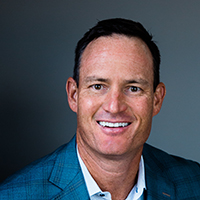
Michael Leverty, founder, Leverty Financial Group
Stick Close to Home
The idea: We’d recommend US investors maintain a home-biased allocation, leaning into sectors benefiting from the pro-business, deregulation-friendly momentum. While large-cap valuations remain elevated, small-cap equities present a compelling opportunity due to their relative underperformance and attractive pricing.
The strategy:
We’d keep 50% in US large-cap equities, as the US remains the dominant market with less regulatory pressure and stronger fundamentals compared to other international developed markets. The financial, industrial and energy sectors offer stability and growth, and are poised to benefit from lower compliance costs, corporate tax incentives and increased capital investment. We typically keep at least 70% of overall large-cap exposure passive, while selectively allocating the remainder to active strategies.
Small-cap stocks would get an allocation of 25%. The stocks have lagged large-caps, and the pricing disparity presents an attractive entry point. Many small-cap companies are less affected by global macro risks and poised to benefit from domestic economic strength and potential stabilization in interest rates. We tend to stay active within small-cap investing to take advantage of mispriced opportunities and higher upside potential in specific companies. We feel actively managed small-cap funds can enhance returns over a passive approach.
A more opportunistic move would be to put 25% in private credit. With traditional lending standards tightening, private credit remains an attractive alternative for investors seeking income and diversification. Rather than chasing yield, we focus on higher-quality, senior secured private credit and prioritize downside protection and consistency over riskier, high-yield opportunities. This approach allows us to capture stable returns while reducing default risk, making it a compelling allocation in the current environment.
The big picture: Although prices in some areas of the market are elevated, and we do anticipate more volatility, significant opportunities remain within US markets. AI will continue to be a focus for the market and we expect the stocks to rally, but other sectors that have not kept up with AI may start to catch up.

John Pantekidis, managing partner, TwinFocus
Focus on Safety
The idea: I’m playing on a safety theme. There is a case to be made that all of these tariffs and the threats of tariffs can have a dampening effect on the US economy. We can easily see a recession or material economic slowdown maybe not this year but maybe the start of next year with the Federal Reserve ready and willing to pull the trigger and lower rates. There are a lot of industries in the US that would really benefit from lower rates, real estate being one of them. President Trump being in the real estate business, he knows that as well as I do. Since I can see a strong case for interest rates going down, I would put the money into the 10-year Treasury, as yields have been as high as 4.66% this month after the most recent hawkish inflation report.
The strategy:
You could buy individual Treasuries or a Treasury ETF. With individual bonds, if rates go down after you buy, you can sell the bond for more than you bought it and could earn 8% to 10% in a bad environment. Meanwhile, the stock market could go sideways or down. There were years back in the great financial crisis when you could have made north of 30% on a 20-year Treasury bond ETF.
We also generally recommend our ultra-high net worth clients have at least 3% to 5% of a portfolio in gold. It’s done spectacularly the last several years, and we think there’s more upside, especially if there is a geopolitical event. We recommend owning a combination of bullion, coins and the SPDR Gold Shares ETF.
With stocks, we’re being a little bit defensive in that the last couple of years the big tech names, the large-cap growth stocks, have crushed it. Year to date, we see the more value-oriented stocks doing better. We’re not cutting our equity exposure but we are slowly, slowly recalibrating it, taking some profits in growth, and moving more toward value and mid-caps as a potential reversion-to-the-mean strategy.
The big picture: I see a world where Trump and the rest of the world implement tariffs and the world economy gets hit. Tariffs on and from China, Canada and Mexico — that alone could hit US gross domestic product by one percentage point. We’d have a weaker economy and a Fed that will try to pull rates down. In an environment like that, stocks might correct — we are long overdue for a healthy correction — and people might get more defensive and the 10-year Treasury might be the alternative place to park the money.
(Corrects Big Picture entry for Michael Leverty.)