Drone Boot Camp: Army Exercises Test Soldiers, Tech and Plans for Future
The training showed integrating new systems such as drones is not easy. Commanders are betting the often-frustrating lessons will pay off on the battlefield.
The US Army is pitting ideas born in Washington against battlefield realities, with the outcomes shaping how future wars will be fought.
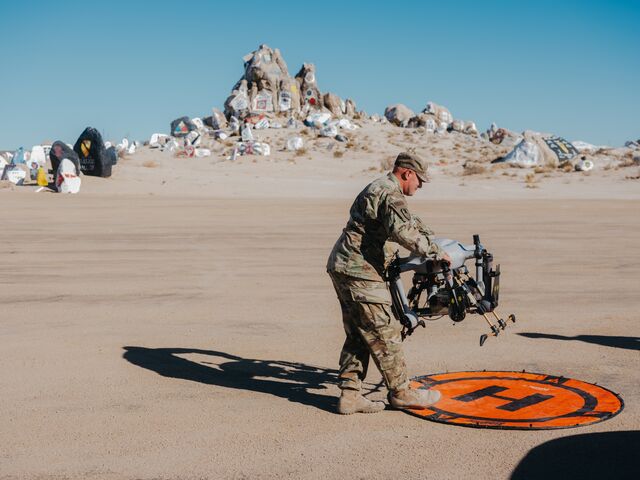
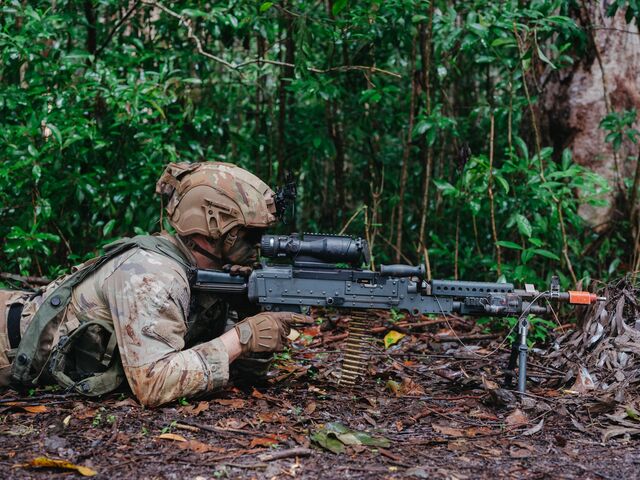
Recent exercises at the National Training Center in California and the Joint Pacific Multinational Readiness Center in Hawaii sent newly reorganized units of soldiers, artillery and armor onto training ranges equipped with cutting-edge drones and the means to defeat them.
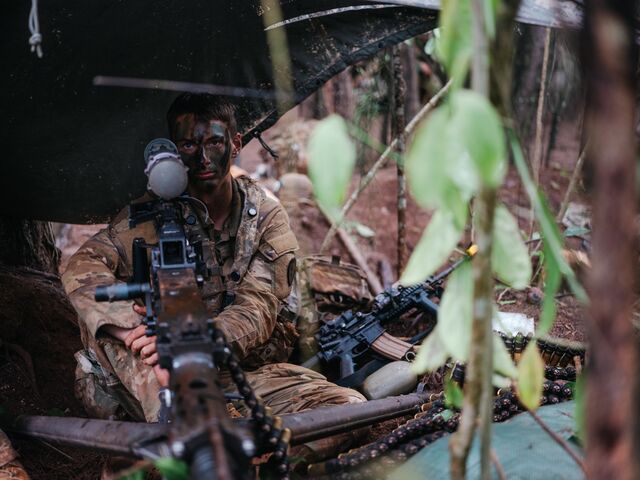
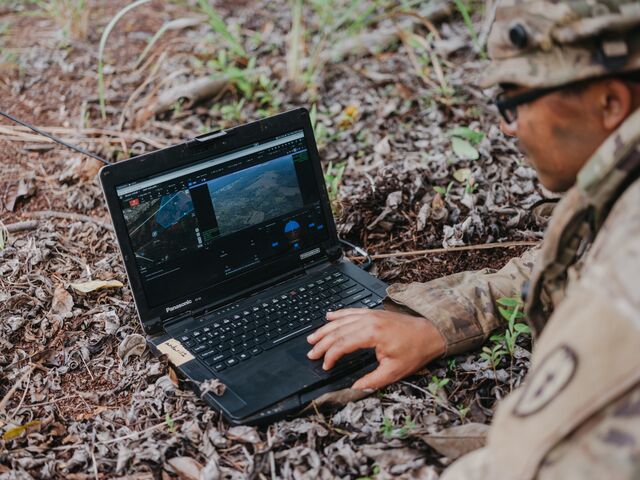
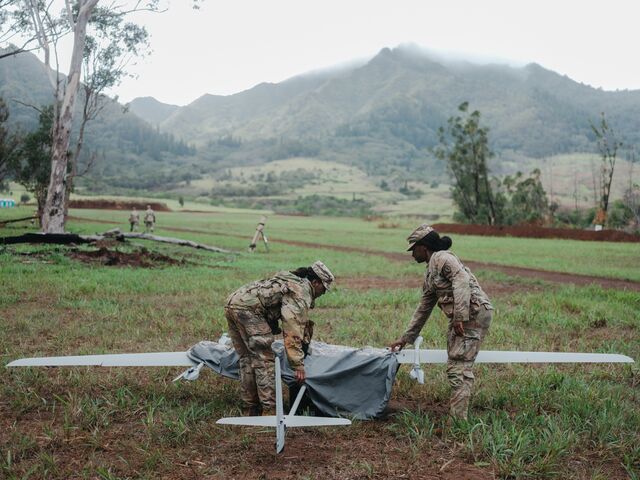
Among the thousands of personnel involved, some of the young soldiers had been with their units just a few days, as had the equipment they were learning to use. The learning curve is steep: one unit deep in the jungle watched its reconnaissance drone crash into a tree after running low on battery while struggling with a software glitch. Within minutes, however, they had it recharged, repaired and back in action.
Several thousand miles away in southern California, soldiers learned a similar lesson about keeping batteries charged and their drones in the fight.
“Power is the new weapon system on the battlefield,” Chief Warrant Officer 2 Trenton Huntsinger of the 1st Cavalry Division said at the National Training Center. “It will win and decide wars. I think whoever can generate power consistently and more often is going to win.”
The Army hopes wisdom like this will accumulate quickly as it transforms itself with new technology, while making even its heaviest units lighter and more mobile.
Changing the way it buys weapons is also key, leaders say, including allowing flexible funding so individual units can decide what types of drones they operate.
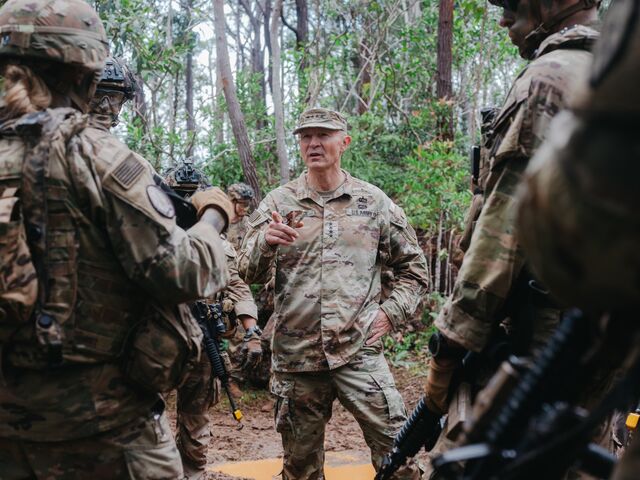
“We probably don’t have it perfect,” General Randy George, the Army’s chief of staff, told Bloomberg News after visiting soldiers in the field and speaking with the command team in Hawaii. “And we know that we’re going to make modifications and adjustments as we continue to move. I think that’s the biggest change.”
Drones that can be used for multiple tasks, including direct, lethal attacks, featured heavily in the exercises — sometimes operated by crews with just days of experience.
One platoon leader at the National Training Center said his team had only received the medium-sized Anduril Industries Inc. Ghost-X reconnaissance drone when it arrived at Fort Irwin, home of the National Training Center, following about a week of training.
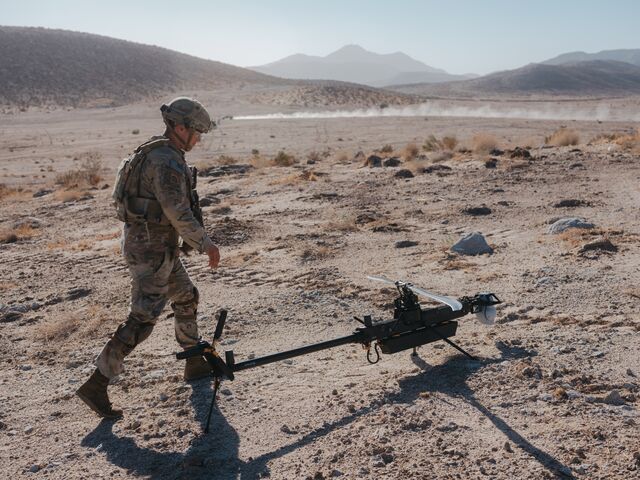
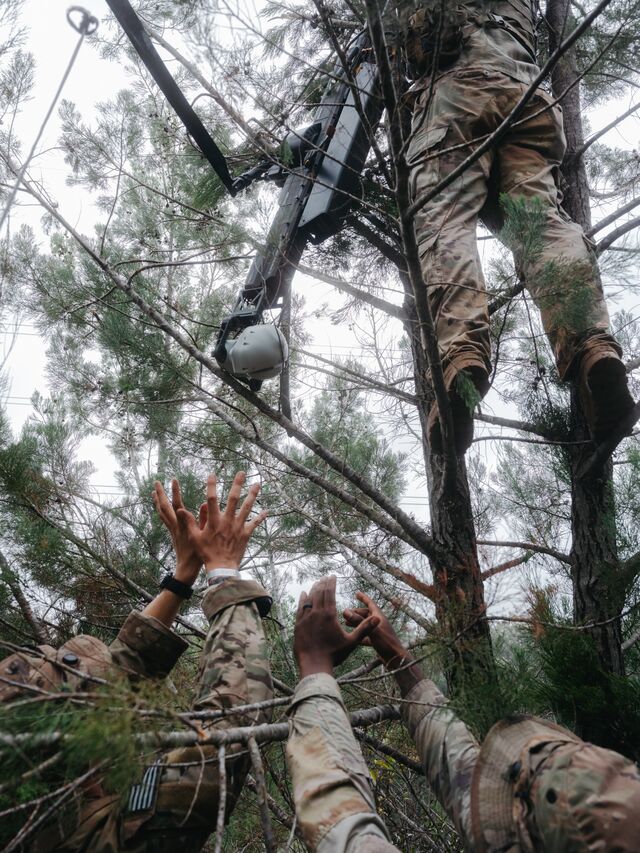
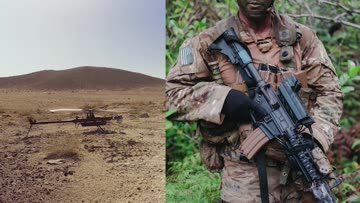
The 25th Infantry Division in Hawaii found shorter-range Performance Drone Works LLC C-100 drones to be highly reliable in many different roles, said Major General James Bartholomees, the division commander.
“We’re literally using it to fly ahead, clear terrain, allow a unit to move, observe, call fires,” he said, referring to an artillery strike.
Commanders tracked the drones’ performance to determine which units and missions they were best suited for. Systems from EchoMAV Technologies, FlightWave Aerospace Systems Corp., Parrot SA and Skydio Inc. were tested as well.
The exercise was also designed to drill into the soldiers that their enemies have advanced means of detection that go beyond eyes in the sky.
After one soldier posted on social media, he received a surprise late-night visit from senior noncommissioned officers who had used the post to track his location. Their warning: If we can find you, so can the enemy.
Elsewhere on the battlefield, commanders tried to work out the best ways to employ Maven Smart System, a Palantir Technologies Inc. product that helps plot locations of friendly and hostile forces. Experiments with integrating artificial intelligence also featured.
“We have AI that is beginning to help us write orders,” said Major General Thomas Feltey, commander of the 1st Cavalry Division, adding that the technology could shave hours from planning. “We look at our objectives and what the enemy’s doing and what we want to do. And we wargame against each other.”
Army Secretary Dan Driscoll said in October that the service aims to expand its use of additive manufacturing — commonly known as 3-D printing — as part of an effort to get systems to soldiers quickly, reasoning that even a partial solution can be better than waiting for the complete one.
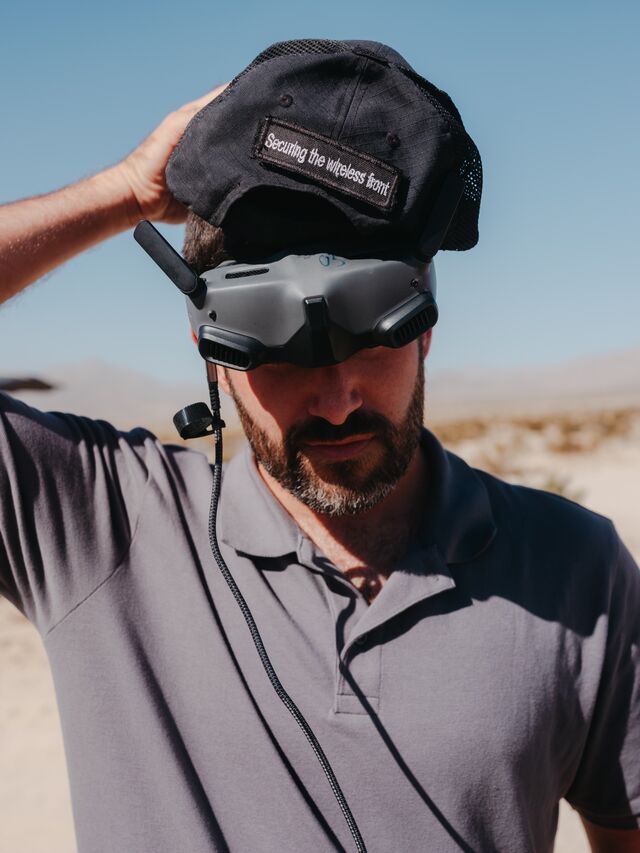
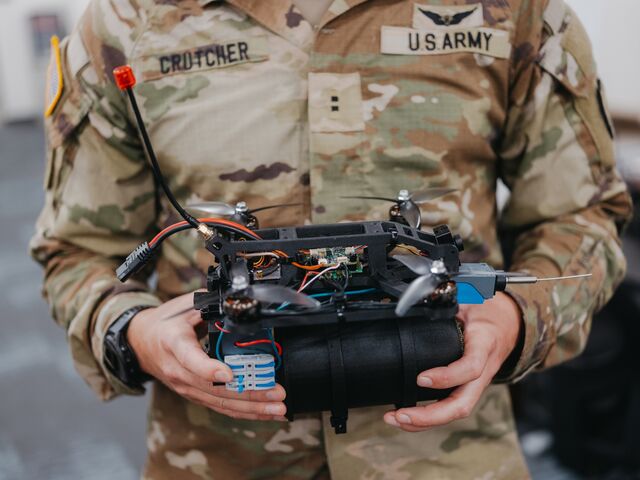
The 25th Infantry Division’s in-house 3-D printing shop, Lightning Labs, developed its own first-person view drone, the Kestrel, which for the first time on Oct. 17 in Hawaii dropped a live weapon on a target .
The soldiers in Lightning Labs produce other items, such as rifle parts, and share their plans and ideas with other units across the Army. The unit hopes to soon be able to 3-D manufacture in the field.
Kelly Grieco, a senior fellow at the Stimson Center focused on defense policy, said that there was a danger that the military was “engaging in innovation theater,” but that she was cautiously optimistic about the change in direction.
“The process that you might want for an Abrams tank or a helicopter, because those are bigger investments, might be different than what you want for a quadcopter,” she said.
For the 12-day “crucible” training event in Hawaii, called JPMRC 26-01, soldiers were tasked with defending an archipelago from attacks by air and sea, Bartholomees said. The exercise is meant to simulate a conflict in the Indo-Pacific region, where most of the contested territory is water.
That sort of war could mean an even larger shift for the Army, said Todd Harrison, a senior fellow at the American Enterprise Institute specializing in defense strategy and budgets.
“When you go to the Pacific, it’s not really about taking and holding ground,” Harrison said.
US allies participated in Hawaii, with some working alongside the training units and others incorporated into the opposing force, including a French reconnaissance company equipped with its own drones.
Bartholomees said that led to “drone-on-drone fighting that is a much larger scale than we’ve had before. Last year it was kind of tens on tens of drones. Now we’re at hundreds on hundreds of drones.”
Other international participants included Malaysia, the Maldives, Singapore and Thailand, while Australia and New Zealand acted as observers.
Despite all the new technology, the Army’s core mission — taking and holding territory — remains unchanged, its top leaders say, with armor, infantry, artillery and crewed aircraft vital on the battlefield.
“We’re still going to need tanks and we’re still going to need infantry fighting vehicles, and they’re going to be augmented by autonomous systems,” George said. “They’re going to have to be lighter. We want to have a more commercial solution so that we get the best of the commercial sector.”