Technicolor Goes Dark
An icon from the Golden Age of Hollywood adapted and grew for more than a century before things abruptly fell apart.
There are few companies as closely identified with Hollywood’s moviemaking magic as Technicolor. Its stylized name introduced storied films such as Gone With the Wind and Gentlemen Prefer Blondes, as well as the Saturday morning antics of Bugs Bunny and friends. When Gene Kelly, newly in love and singing in the rain, swings from a lamppost, he pops off the screen thanks to Technicolor’s novel three-strip colorizing process. When Dorothy steps out of her grayscale Kansas and into the vibrant land of Oz, she sees the world for the first time not just in color—but in Technicolor.
Once as important to the marketing of a picture as Imax is to today’s blockbusters, Technicolor had its hands in 110 years of filmmaking, from the Golden Age of Hollywood to the streaming era of today. During that time, the company—formally the Technicolor Group—transformed itself beyond color into a sprawling international visual and postproduction effects business, complete with motion graphics and animation. As recently as this summer, two of its films, Lilo & Stitch and Mission: Impossible—The Final Reckoning, helped drive Memorial Day moviegoing to a box-office record. But, in a saga worthy of the dramas it lavishly processed for decades, they would be its final two pictures to make it to the big screen: By the time they were released, Technicolor Group had already collapsed and been liquidated to little fanfare earlier this year.

People familiar with the company’s operations attribute Technicolor’s downfall to a series of debt-laden acquisitions and messy restructurings, which came on top of the broader film industry’s well-documented struggles. Although a number of Technicolor’s former units have found buyers, most creditors are likely to recover close to nothing. That’s according to court records and interviews with multiple stakeholders, advisers and former employees who asked not to be identified discussing the liquidation.
A spokesperson for FHBX, the firm that ran the sale process in France, where the group was headquartered, declined to comment. The company’s most recent chief executive officer, Caroline Parot, and general counsel, Stephanie Fougou, didn’t respond to requests for comment.
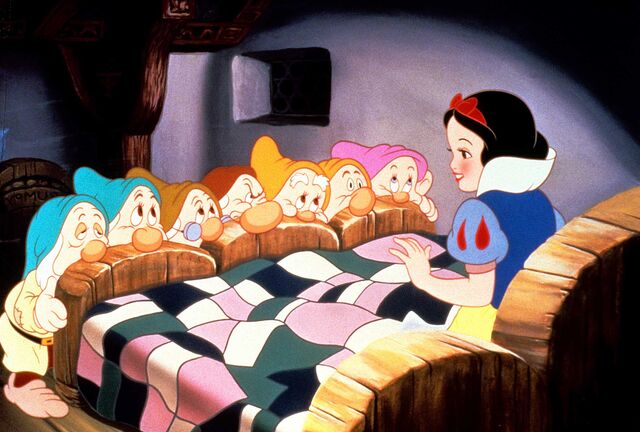
For decades, Technicolor ruled postproduction, thanks in part to its advanced technology, strong relationships and sheer size. In the 1930s the company was behind the color in Walt Disney Co.’s first feature-length film, Snow White and the Seven Dwarfs. It expanded into wider visual and postproduction effects in the decades that followed, eventually adding advertising and video games. In 2016, Technicolor got a star on the Hollywood Walk of Fame. “The bigger they got, the better they got,” says Daniel Jurow, the founder and CEO of management consulting firm Sevoir Group and Technicolor’s chief operating officer for film and episodic visual effects from 2019 to 2022. Jurow cited its strong research and development focus and ability to attract talent to its network of global studios.
During the 2000s and 2010s, under the ownership of French conglomerate Thomson Multimedia SA, the company had a growth strategy that hinged on big acquisitions, including the 2004 purchase of MPC—a visual effects company in London—for about $100 million and a 2015 deal for the Mill, a VFX studio in London mainly serving the advertising industry, valued at nearly $300 million. (In 2010, parent company Thomson changed its name to Technicolor SA to match that of its big subsidiary.) As the company grew, its debt load ballooned, but for a long time its revenue grew faster. “There was a virtuous circle to being bigger,” Jurow says, “until it reached an upper bound.”
That’s when things started to go south. As the company rushed to combine newly purchased units, management moved some workers out of their areas of expertise, triggering attrition. Merging the advertising businesses of the Mill and MPC resulted in a group that made less money combined, according to people familiar with the matter. “They were moving very rapidly through strategic restructurings on a very tight timeline, and it showed,” says Jurow, who was there when some of the reorganization took place. Technicolor had also been making a lot of money from DVD replication, which came to an end as technology changed.
When Covid-19 hit in 2020, upending production timelines, Technicolor filed for Chapter 15, a US bankruptcy process that allows foreign companies to protect their American assets while they restructure their debts at home. It emerged, restructured, that September. With a lighter debt load, plus unprecedented post-pandemic demand for visual effects services, Technicolor looked like it might make it for the long haul after all. In 2022 the company split into two separate entities. One, focused on visual effects and animation, retained the Technicolor name; it was led by longtime MPC executive Christian Roberton and took on a bigger part of the debt. A separate business, dubbed Vantiva, sold internet services and hardware; it was initially led by Richard Moat, the CEO of the combined business before the split. (Vantiva remains public and continues to operate.)
A few months before the split, Technicolor’s board rejected separate offers of about €1 billion ($1.2 billion) from private equity firms CVC and Advent to acquire Technicolor Creative Studios, as the visual-making part of the company was called, according to people familiar with the matter. The board said the value of that business was between €1.75 billion and €2 billion, according to a letter seen by Bloomberg. Instead, TCS went public in Paris that September at a valuation of about €1 billion. Two months after its IPO, Technicolor issued a profit warning, and the shares collapsed. The split of the company is under investigation by the AMF, the French market regulator, according to people familiar with the probe who asked not to be named because they’re not authorized to talk about it. A spokesperson for the AMF declined to comment.
Some of the issues dragging down Technicolor in recent years were hitting all of Hollywood: thinning margins, more studios developing in-house capabilities for visual effects and postproduction services, a pricey war for top talent and, in 2023, dual writers’ and actors’ strikes that dried up the pipeline of work.
US Film Industry Isn’t Quite Back From Covid-19
Domestic yearly box office, total gross

Other problems were more specific to Technicolor. For instance, figuring out how to merge the various, overlapping acquisitions was a nearly impossible task for Roberton and other managers. Technicolor also found itself running a little thin as it scrambled to hire people post-Covid to ramp up fast and meet client demands. The company started falling behind schedule and racking up costs, pulling staff from other projects to finish delinquent ones and missing vendor payments, people familiar with the work say. Clients weren’t happy. “Technicolor’s collapse offers several critical lessons,” Jurow says. The most important: “The speed of value destruction is accelerated when your primary assets are relationships and reputation.”

In November 2022 the board brought in a senior adviser, Parot, who’d recently overseen Europcar Mobility Group SA’s restructuring. Three months later, with at least one key client relationship in a rough patch—Disney was unhappy with the work at MPC, which appeared to have bitten off more than it could chew, people familiar with the matter say—Technicolor restructured yet again. This time, Parot became CEO and Roberton, who had strong relationships with Disney and other big clients, was made deputy; he was terminated the following year. (Roberton declined to comment.) Creditors including Angelo Gordon, Barings, Credit Suisse Asset Management, Sculptor Capital and Farallon Capital, some of which already had stakes after the previous restructuring, took control of the group.
To keep things afloat, the creditors-turned-shareholders injected more and more money into the business. They took the company private in 2024, and Parot looked for a buyer to release the ready-to-exit shareholders, court documents show. But no workable deals panned out, leading the company to announce in February that it would liquidate.
Even if everything hadn’t been the rosiest, that news still came as a surprise to many of Technicolor’s more than 5,000 global employees. After all, Parot had declared in a town hall meeting weeks before that after years of financial and operational restructurings, the company was back to playing offense, and employees were encouraged to seek out new projects, former employees say. But behind the scenes, the executive team had already instructed Technicolor’s finance department in December to halt payments to vendors that weren’t critical for the business, according to people familiar with the matter. (In 2024, Parot still received an extraordinary bonus of €540,000 for meeting certain goals, according to Michael Masset, chief people officer at the time the company went into liquidation. About 750 employees received a bonus as a retention premium that year, he added. No bonus was given in 2025.)
Staff in Canada, the UK, the US and India—where more than half of the employees were based—were promptly dismissed via an email. (The email address the company gave employees to ask questions about the layoffs almost immediately started sending bounce-backs saying it would no longer be monitored, former employees say.) At the Paris headquarters, Parot and the local staff were employed for an extra month, thanks to French labor laws.
One of the bigger-name assets from the now-defunct group that’s found a buyer is French animation and postproduction division Mikros Animation, picked up by Rodeo FX in Montreal, the creative company behind the visual effects on HBO’s Game of Thrones and Netflix’s Stranger Things. TransPerfect, a tech and translation provider in New York, bought Technicolor Games and the French operations of MPC and the Mill.
Even after those sales, though, most creditors are unlikely to get their money back. In Canada, for instance, there will be about C$2 million ($1.4 million) left to distribute after the company repays the federal government for what it disbursed to employees for unpaid wages and severance, court documents show. The only creditor that will likely see a distribution, other than the government, is a syndicate of banks owed C$200 million. In France, the US and India, the picture looks similarly ugly. UK creditors may have the best (if still deeply disappointing) results. (Technicolor also has a film vault, which holds 300,000 media assets that belong to major studios and independent filmmakers dating back to the 1940s. Hollywood Film Co. has been tasked with the herculean task of returning the content to its owners, if it can find them.)

As for the Technicolor name, which graced so many legendary films for decades? It was bought for €1.25 million by a company that owns a slew of iconic trademarks, including the classic RCA logo. Buyer Established may lend the Technicolor brand to future postproduction services or creative software companies, says CEO Hall O’Donnell. “There is very high brand awareness in the US and globally,” he says, noting that consumers might see the Technicolor name again on anything from apparel to consumer technology—maybe even a line of vibrant house paints. —With Thomas Buckley