
Climate Rules Threaten the Money Growing in Nordic Trees
Swedes and Finns have long monetized their forests. EU climate goals — seen as a threat to both family wealth and the two national economies — are fast becoming a lightning rod for anger.
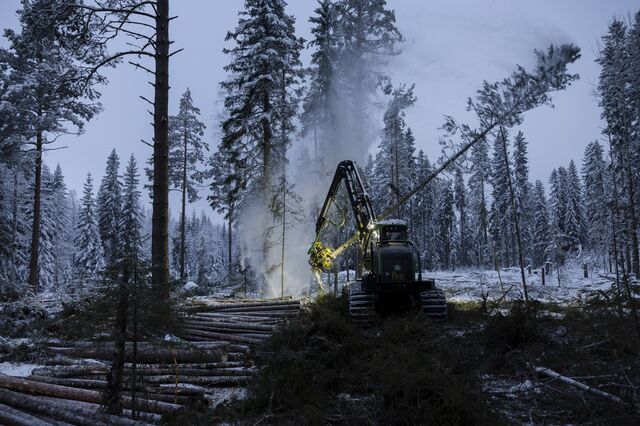
Birgitta Velander’s forest is her retirement fund, a source of income, and an inheritance she hopes to one day pass on to her children. The 81-year-old’s family has cared for the 200-hectare (500-acre) forest outside the northern Swedish town of Sundsvall since the 19th century, cutting down old trees and selling them to wood and pulp mills for extra cash before planting new ones.
In Sweden and neighboring Finland, forestry is, to all intents and purposes, a retail asset class. In Sweden, some 300,000 people own, in total, half of the country’s forests. In Finland, 60% of forests belong to 600,000 individuals. Owners like Velander have been able to work their land with relatively light regulations, generally free to harvest trees when and as they chose.
The way these small forest owners traditionally manage their land is, they contend, also good for the climate, as they say they plant more trees than they cut down. But this approach, along with their investments, is under threat from a growing number of European Union regulations aimed at protecting biodiversity and reducing the bloc’s carbon emissions. In Sweden and Finland these measures have been interpreted as a potential ban on logging trees because that’s the only way they will hit their decarbonization targets on time.
“The EU doesn’t understand how we manage and care for forests here in Sweden,” Velander said. “It’s a big responsibility to own a forest, and forest owners take that responsibility seriously.”
The Majority of Swedish and Finnish Forests Are Privately Owned
Share of woodland held by private individuals, by province

The EU regulations touch upon sensitive issues of culture, generational wealth — and big business. Forestry products made up 16% of Finland’s exports in 2023, a bigger slice than in any other European country. Some 25% of the world’s milk cartons are made from Swedish trees, as are iPhone boxes. Companies such as Sweden’s SCA AB and Finland’s Stora Enso Oyj — which buy from small foresters and own huge swathes of forests as well as mills and plants that turn trees into bioenergy or wood products.
That the rules have been set from distant Brussels adds to the sense of grievance. The governments in Stockholm and Helsinki have vehemently argued that forest policies should be decided domestically. But they have been slow to implement guidelines and have yet to introduce comprehensive programs to compensate or incentivize small foresters to cut down less trees. As a result, the loudest voices — anti-EU populists and pro-logging big industry — are driving the debate, leaving smallholders like Velander frustrated in limbo, according to Magnus Nilsson, an independent Stockholm-based environmental consultant.
“If we are to break this,” Nilsson said, “Politics need to step in.”
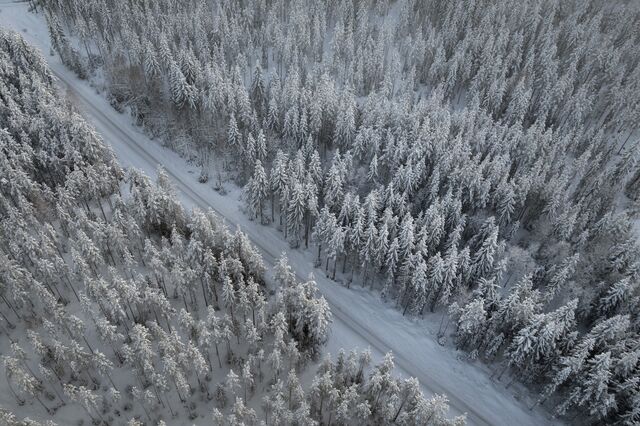
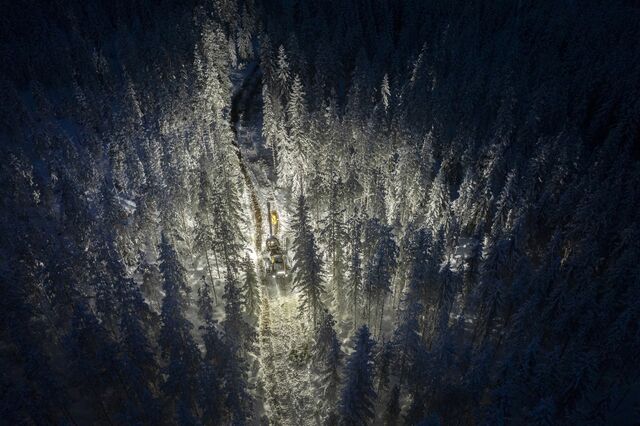
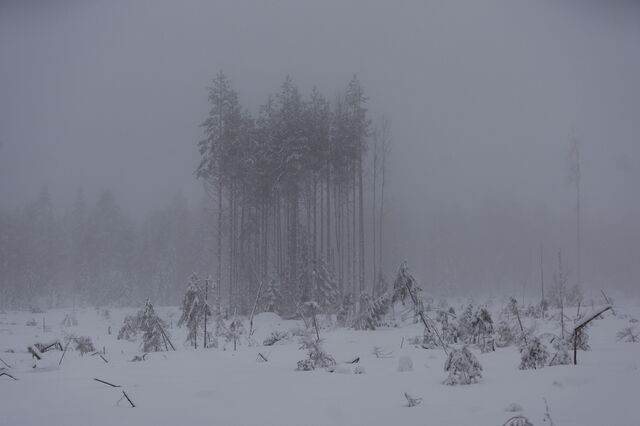
Both Sweden and Finland have a dizzying, and often overlapping, web of legislation that impacts forest owners. Some laws are the result of EU regulations. Others are completely separate, dating back to the early 1990s before either country joined the bloc, and some of which have since been revised to make it easier for foresters to log their land.
Those measures came up against an EU regulation agreed in 2023, known by its acronym LULUCF. It aims to expand bloc-wide carbon sink by 15% by 2030, on the way to the union becoming the world’s first “climate neutral” region by 2050. Sweden and Finland have a major role to play in this plan: Trees cover around two-thirds of both countries, an area about the size of the UK and Italy combined. The two Nordic governments must find ways to help the bloc reach a first set of goals within the year, to avoid a clash leading to the European Court, and potentially fines.
Sweden Is Europe's Largest Carbon Sink
The volume of carbon the top ten contributors to the EU's LULUCF climate targets are removing from atmosphere, in tons of CO2 equivalent

Swedish Environment Minister Romina Pourmokhtari said she preferred not to comment on the issue ahead of a parliamentary review of Sweden’s environmental targets, including LULUCF, due in mid-February. Sari Multala, who took over Jan. 24 as Finland’s Minister of Climate and the Environment, said that regulations must “enable the continued development of a viable and sustainable bioeconomy” in which logging restrictions “should always be a measure of last resort,” in an emailed reply to questions. The interests of small forest owners’ must be guaranteed, she added, noting that they must act responsibly.
Forest owners say they are already doing their part.
Bloomberg spoke to dozens of foresters — big and small — in both Sweden and Finland. Many declined to be quoted citing potential loss of reputation. The majority said they understood the role that trees play in carbon sequestration. But they want to keep logging old growth, pointing out that they reforest faster than they log.
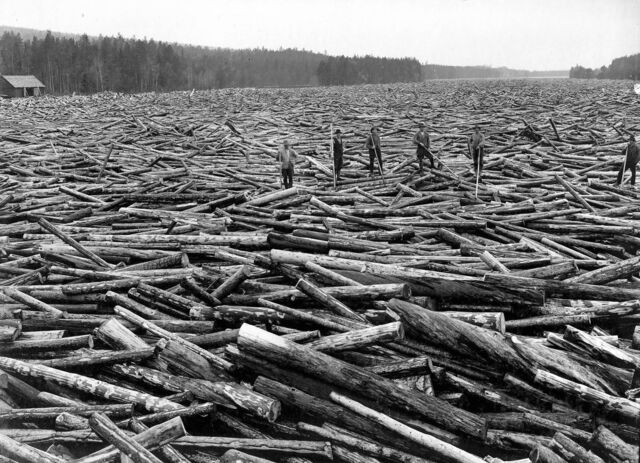
In Finland, as many as four new trees are typically planted for every one tree felled. In Sweden, it’s two-to-three trees. The country now has more forest than it did 100 years ago — albeit, coming from a low baseline: Scandinavian forests were logged intensely to fuel industrialization during the early 20th century.
“Environmentalists and small forest owners often appear at odds with one another,” said Beatrice Rindevall, chair of The Swedish Society for Nature Conservation, “but the reality is that many small forest owners are ardent environmentalists.”
Mostly absent from the debate are the indigenous Sami, who herd reindeer in the northern forests and in the mountains above the treeline in Lapland.
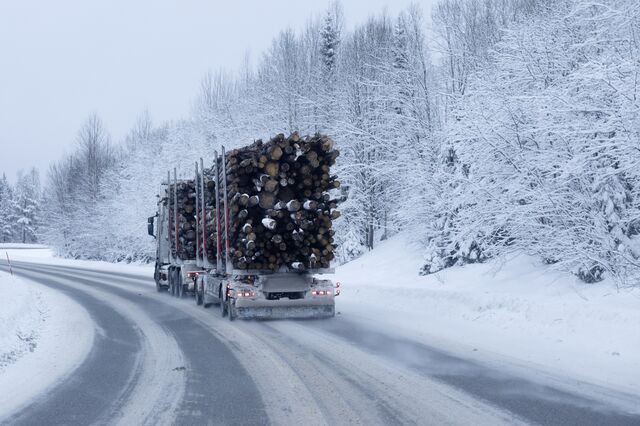
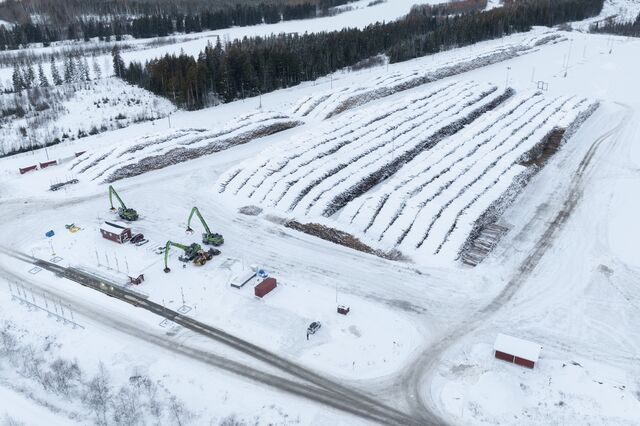
Since inheriting her property 40 years ago, Velander has been experimenting with forestry techniques — including rewetting peatland to help restore wildlife habitat and different logging methods. She has already set aside some 15% of her woodland for conservation.
But Velander says tightening legislation is a constant source of angst. The discovery of an endangered salamander or bird, for example, would oblige her to create a protected zone surrounding the spot where it first appeared — various rules aim to safeguard local wildlife, including Natura 2000, the cornerstone of the EU’s biodiversity policy. “How would it look if you told homeowners that they would not be allowed to use a third of their back yards?” she said.
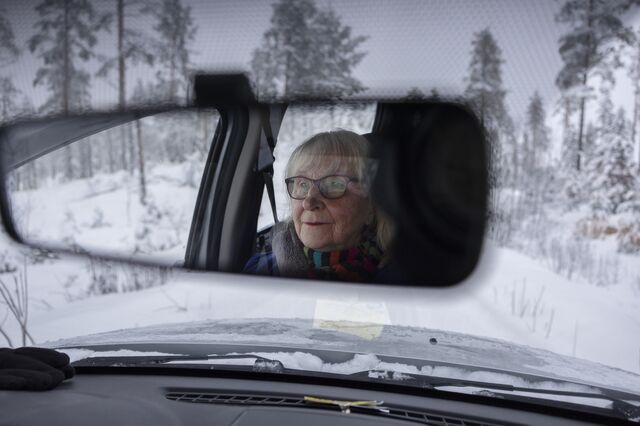
Nordic forest owners typically inherit their forest holdings, many of which have been in families as far back as the 1800s when farming in the region was modernized, and communal land was allocated to individuals. As well as logging for profit, a plot can act as security against a loan or mortgage. It can also be monetized in other ways, such as through the sale of hunting rights.
In Finland in 2023, the real return on investment in wood production in non-industrial private forests was 10.4%. That same year, Helsinki’s OMXH25 main stock benchmark fell 2.7%. In Sweden, 11% of all forest owners use their holdings as their primary income.
Carbon sequestration is complicated. Biodiversity, for example, has a role to play as removing old growth helps keep forests healthy, less prone to disease and fires. New trees become carbon sinks after up to 10 years in the arctic forest climate. Nordic foresters and their champions lean on these points as they argue that forestry is best left to local management.
A scientific consensus agrees with them. But Finland’s forests have been a carbon source since 2021, according to the latest findings from the Natural Resources Institute, a change that it attributed to increased logging, rising emissions in peatland forests and declining carbon sink of mineral soils. And, the EU says carbon capture needs to start happening now if it is to reach its goals on time. Keeping old trees standing is the best way to do that, according to local studies, particularly as around 80% of trees in Sweden are estimated to become short-lived products, such as paper cups or toilet paper, which don’t lock in carbon in the long term.
Some Swedish foresters said that they have already felled older trees because they expect logging to be severely restricted down the line, impacting their finances.
There’s an old Finnish word for such a practice — Aavistushakkuu. The term gained prominence in the late 1990s when early conservation programs were being discussed. Marko Maki-Hakola, forest director at Finland’s Central Union of Agricultural Producers and Forest Owners, said he doesn’t think that many Finns are currently doing this. He worries, though, that many of the hundreds of forest owners he speaks to each year will simply start giving up on reinvestments and maintenance of their holdings, leading to woodlands potentially being neglected.
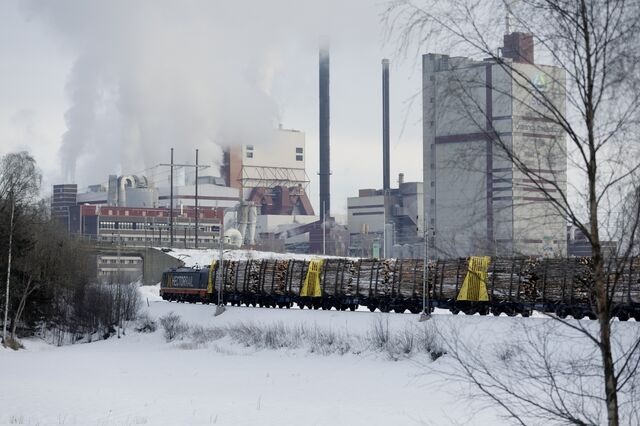
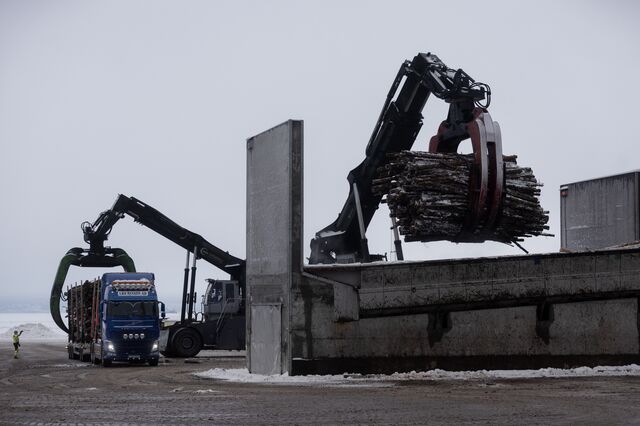
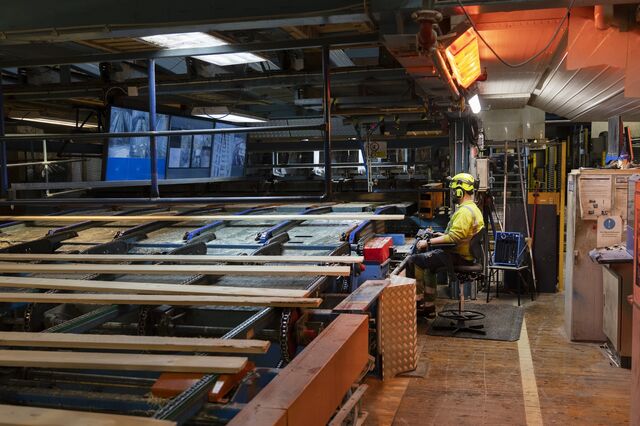
From its head offices outside Sundsvall, SCA is watching developments closely. The company is Europe’s largest private forest owner, with holdings covering over 2.6 million hectares, an area bigger than Slovenia or the US state of Maryland. It has invested billions of dollars in new pulp and paper machines. And at its softwood pulp mill in Ostrand — the world’s biggest for NBSK, the industry’s benchmark grade for pulp mostly made from conifers — SCA created 70,000 square meters of industrial land by filling in seabed to create space for a biorefinery to make airplane fuel. In 2024, its operating profit reached 5 billion kronor ($450 million).
Since big firms such as this also buy trees from small foresters, tighter regulations would likely exacerbate a supply crunch that began after Russia launched its full-scale invasion of Ukraine in February 2022. In Finland, about 10% of all the wood used by the forest industry came from Russia before the war, and the end of those imports sent costs up, leading to pressure on profitability.
SCA Chief Executive Officer Ulf Larsson — who planted saplings for forest owners around his hometown as a teenager before joining the company three decades ago — said that regulations shouldn’t prioritize old trees over more trees.
“On a climate level it’s undeniable: we need to maximize volume growth,” Larsson said. “Of course, we need to approach biodiversity with care, but we need to put the climate front and center, and to do that we need to manage our forests in a way to maximize the benefit for the climate.”
For Nilsson, the environmental consultant, small forest owners need to realize their voice also carries weight and that their interests aren’t aligned with big industry. He estimated that to reach LULUCF targets, logging volumes would need to fall by 3-5%, which would increase the price of timber, impacting pulp and paper companies’ bottom line while leaving small foresters better off.
“Let’s say the small forest owner reduces logging by 3% but the timber price rises 15% — it’s an economic win,” he said.
In 2023, when the EU voted to expand its carbon sink Sweden abstained, arguing it was doing so “to protect the Swedish forest sector” — a move opposition politicians said only pandered to anti-EU populists. In Finland, Sanna Marin was leading a pro-environment government, which has since been replaced by a center-right coalition that is more pro-business and less enamored with Green issues. The implementation of a bloc-wide forest strategy, the European Deforestation Directive, was postponed at the last minute in December for another year after industry demanded more time to adapt.
Changes to LULUCF are now virtually impossible as it has majority support across the 27-member bloc.
Resolving the thorny issue of compensation for forest owners, who feel they are being expected to give up income to help the EU meet its climate goals, will be of paramount importance.
In Bergsaker, a village 6.5 kilometers from the SCA offices, Anders Vestlund manages a 180-hectare forest he took over from his father in 2017.
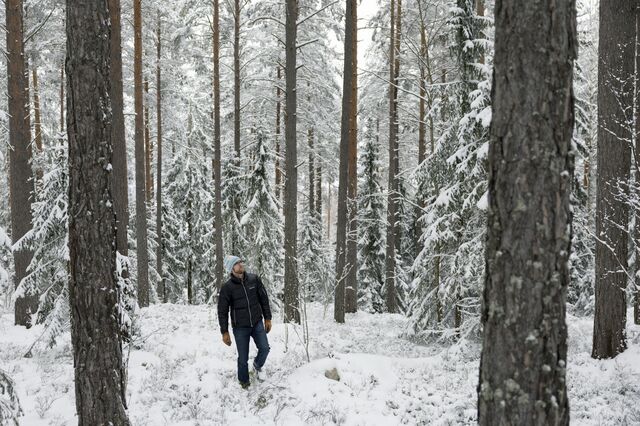
Drinking black coffee in his childhood home, Vestlund said that he has experimented with selling his forest holdings as carbon credits — but with little success so far. He added that forest owners should be paid for their contribution to the common good — be it for biodiversity or climate benefits, or both.
“Forest owners own forests so that we can manage them,” Vestlund said. “If I get paid more to let my forest stand and not cut it down, I will of course choose that option.”