‘NJ Transit Is Ruining My Life’: Commuters Reach Breaking Point With Aging System
Riders air a range of grievances with New Jersey Transit as trains and buses are snarled by crumbling infrastructure
President Donald Trump intends to put a stop to congestion pricing in New York — but a long-running headache for commuters to the financial capital is likely to drag on.
New Jersey Transit, which provides more than 721,000 passenger trips systemwide each weekday, suffered an onslaught of service disruptions and train breakdowns in 2024 — leading frustrated commuters to lodge nearly 59,000 complaints, according to information obtained by Bloomberg News via a public records request to the state-run agency.
Grievances ranged from hours-long delays on stalled, broiling train cars to vermin-infested buses, the complaints show, reflecting a mass transit system that’s been stretched to the breaking point by increased post-pandemic ridership, decaying shared infrastructure and a shortage of money.
“Everyday I go into the office my train is delayed and I risked being fired,” one complaint read. “NJ Transit is ruining my life.”
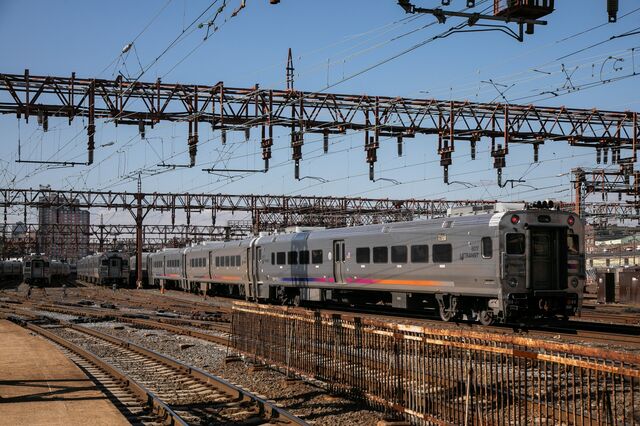
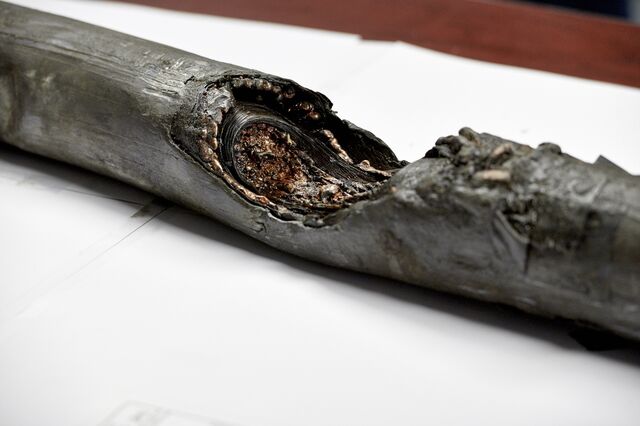
Last summer was especially trying for the state’s commuters, as extreme heat and heavy rains battered train equipment, including the overhead wires that power trains. Traffic choked the railways, roads and tunnels that link the world’s financial capital to its nearby suburbs, where legions of banking, finance, insurance, media and other workers reside.
From just nine separate days in the late spring and summer, the agency produced more than 450 pages of anonymous customer complaints.
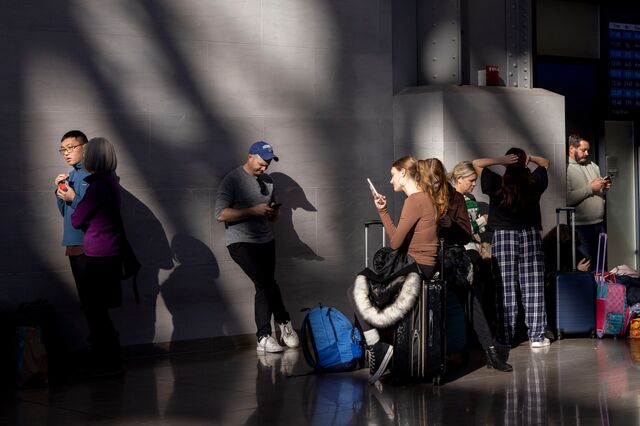
Frustrated riders told the agency some stalled trains became so hot they feared for their health. Others described feeling “tortured with anxiety” as they waited for interrupted service to resume. One customer said what is normally 20-minute ride to the airport became a three-hour ordeal after their train lost power – causing them to miss a flight to a family funeral.
“The situation deteriorated rapidly,” the disgruntled customer wrote in an online feedback submission viewed by Bloomberg. “The lights went out, the train became unbearably hot without any air conditioning or open windows.”
The service issues documented by riders aren’t just a matter of perception aggravated by extreme weather or amplified by social media — they are a reflection of wider strains on the system. The average distance traveled by New Jersey Transit trains before they experience a mechanical failure has plummeted since the pandemic, falling to just under 50,000 miles in October, from 75,000 miles in 2018, according to agency data.
NJ Transit Passengers Face Chronic Meltdowns
Distance traveled between every delay or cancellation is shrinking

The mechanical issues suffered by trains have been compounded by the fragile health of the tracks that they run on.
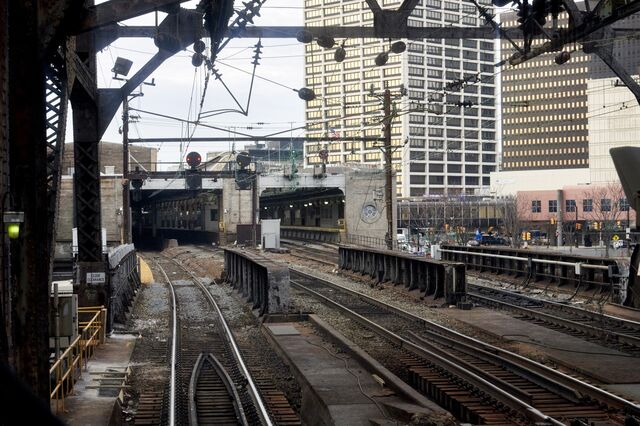
Most New Jersey Transit trains run on the Northeast Corridor, along tracks leased from or shared with Amtrak, the inter-city US passenger-rail service. Much of that infrastructure, including tunnels under the Hudson River that are more than a century old, is in need of upgrades or repairs and can be strained by extreme heat or winter weather. When trains break down in the area, it can bottle up service and cause delays to ripple as far south as Washington and as far north as Boston.
Those meltdowns have huge impacts on how riders see New Jersey Transit, even though the agency’s leaders say the ability to control the situation is largely out of their hands.
“Amtrak decides which train goes first and which train does not,” said New Jersey Transit Chief Executive Officer and President Kris Kolluri in an interview with Bloomberg. “We do not control our destiny on the Northeast Corridor.”
New Jersey Transit On-Time Performance Dipped in 2024
Percentage of trains reported on-time systemwide

Experts warn that the tenuous state of the railways and roads could cost New Jersey’s residents and businesses and threaten the state’s economy. Poor transit service could also make its bustling bedroom communities less appealing to home buyers in comparison with other New York suburbs, transit advocates argue, potentially hitting home values.
Former President Joe Biden, who rode Amtrak between Washington and his home in Delaware for decades, pledged billions to modernize the Northeast Corridor. Trump proposed slicing the railroad’s federal subsidy roughly in half during his first term — a move thwarted by Congress. As his new administration embarks on an aggressive, fast-moving hunt for deep spending cuts, Amtrak and other rail service could be targets for savings.
“Joe Biden has been probably the strongest transit president in the history of the country,” said Tom Wright, president and chief executive officer of the nonprofit Regional Plan Association. “But we shouldn’t expect anything like that to continue.”
Crumbling rail tunnels, bridges and tracks along the Northeast Corridor cause 4,000 hours of Amtrak delays each year, and the share of New Jersey Transit ride cancellations caused by Amtrak have crept up since the pandemic. But it isn’t always simple to allocate blame for congestion, delays and other problems, according to Laura Mason, executive vice president of capital delivery at Amtrak.
“The truth is always more complicated,” she said in an interview with Bloomberg. “Yes, we’re responsible for the infrastructure and there certainly were incidents that were Amtrak’s infrastructure that failed.”
New Jersey Transit operates more than 400 weekday trains on the Northeast Corridor, according to Amtrak data, about four times Amtrak’s volume. On the Northeast Corridor-New York division for January, Amtrak had nearly 82% on-time performance for its own trains and 91% for New Jersey Transit trains.
“We’ve been working closely with them to look at what changes they could make to their equipment, because they’re responsible for the equipment they run on the corridor,” Mason said. “To the extent that their equipment is breaking more often, that creates a problem for both of us.”
In November, Amtrak scored $300 million from the Federal Rail Administration to help overhaul its New Jersey rail system, including $112 million for upgrading infrastructure along the Northeast Corridor and improving service reliability. But more federal funding is needed to continue these repairs, and New Jersey Transit’s chief said securing it isn’t a given.
“My biggest concern is predictability of money from the federal government,” said Kolluri. Rolling back federal assistance would force the agency to pause long-term projects to improve service. “If I have to pull them off the shelf and not do them, you can imagine the cascading impact that will have on the Northeast Corridor and through the entire system.”
Reliable transit in and out of the city is as important to employers as it is to riders, especially as more businesses seek to bring workers back to the office full time, amid a widening rollback of pandemic-era remote work policies.
NYC's Top Industries Are Vulnerable to Train Delays
Share of NJ-to-NYC rail commuters in 2023

New York City employers stand to collectively lose nearly $6 million for every hour that New Jersey Transit commuters are delayed in getting to work, according to an economic impact analysis by the Partnership for New York City. Roughly half the workers who commute from New Jersey to New York via rail work in the financial services, professional services or information and media sectors.
“New Jersey’s economy is incredibly dependent on the health of Manhattan, and Manhattan is dependent on an effective transit system to get people in and out,” said Yonah Freemark, principal research associate in the Metropolitan Housing and Communities Policy Center at the Urban Institute.
Problems on the rails could push some affluent commuters to drive to work, according to Freemark. That, in turn, could increase hassles for commuters who rely on New Jersey Transit’s fleet of more than 2,300 buses.
Traffic has already made commuting via bus a difficult proposition. In September, a crash in the Lincoln Tunnel led to congestion for other Hudson River bridges and tunnels. A number of bus riders later asked for letters from New Jersey Transit to excuse tardiness to work. Some said delays had made them up to three hours late.
“Do you realize how FRUSTRATING this is for commuters???!!” wrote one bus rider in May. “There can’t be always unforeseen circumstances or traffic excuses EVERY SINGLE TIME I COMPLAIN. CAN YOU HEAR MY TONE? BECAUSE IF NOT, I AM ANGRY.”
Other riders said the delays added to other headaches they contend with on a daily basis, including unsanitary conditions.
“Honestly, where do I start?” one customer wrote. “There are cockroaches on the bus. The driver has her own personal roach spray. And we have to pay a 15% increase next month.”
Bloomberg first filed a public records request to New Jersey Transit’s custodian in October, asking for all customer-service feedback from 2018 to 2024. In response, the agency said fulfilling the request would “substantially disrupt” operations, as a search identified over 250,000 complaints and other comments from riders.
A revised request to retrieve records from May to September of this year was also rejected, because the search still yielded over 30,000 responses.
A 15% fare hike took effect on New Jersey Transit last summer, and fares will continue to rise by 3% a year each summer indefinitely.
That means riders traveling along some of NJ Transit’s busiest rail lines could be paying more than $10,000 a year for daily round-trip commutes to and from New York City, according to data compiled by Bloomberg. For example, a commuter traveling from Bay Head will spend $38.50 for a round-trip ticket to Penn Station for just one day in 2025, and dole out $10,010 a year if they commute in 5 days a week. That cost would be about 33% less if riders used an unlimited monthly pass.
Eric Goldwyn, program director at the Marron Institute of Urban Management at New York University, estimated the Northeast Corridor needs another $9 billion to $10 billion in order to maintain and modernize tracks, overhead wiring, substations and other components of the system.
“New Jersey Transit is increasingly becoming an unreliable mode of transportation,” wrote a rider in a complaint. “I no longer trust that getting on a train will get me to my destination on time. Why can’t NJT and Amtrak get it together?”
Assist: Shannon Harrington
Editor Responsible: Tim Annett
Editor: Danielle Moran
Photo Editor: Marie Monteleone