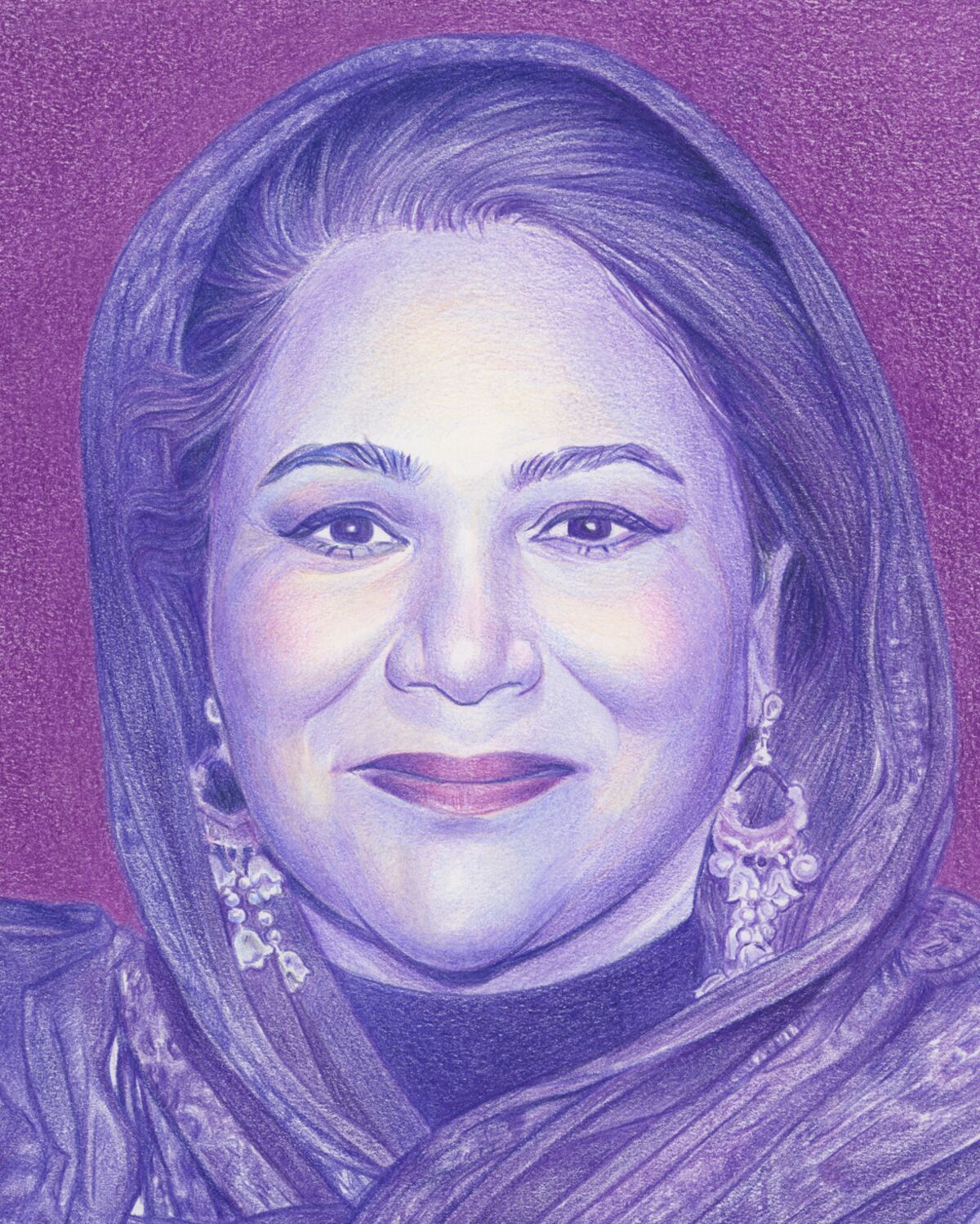
Nargis Nehan: ‘We All Share Responsibility’ for Failure in Afghanistan
The women’s rights advocate says the international community’s refusal to use its leverage is making the Taliban bolder.
On Aug. 15, it will have been four years since the Taliban regained power in Afghanistan, taking over the presidential palace in Kabul and sparking an exodus of foreigners and Afghans linked to the Western-backed government.
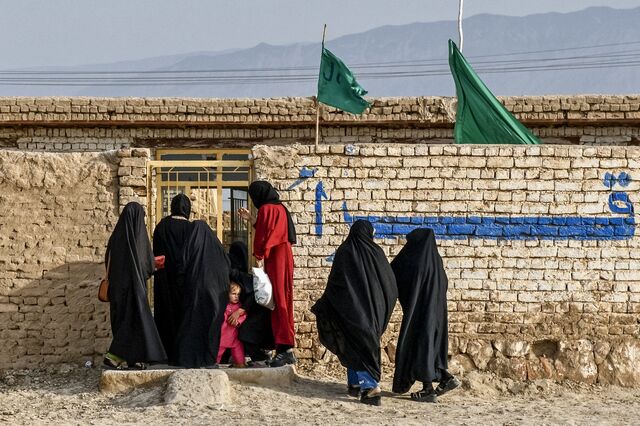
The return of the repressive regime has had dire consequences for Afghan girls and women. Restrictions that began with bans on education and work spread to travel and even speaking in public, in a near erasure of female presence outside the home.
Nargis Nehan is one of many Afghans whose dreams have been shattered in these past four years. She was driven from her country as a child after the Soviet invasion, then returned to work in the post-9/11 government and rose to be minister of Mines and Petroleum.
Evacuated from Kabul in the chaos of 2021, she now lives in Canada and describes herself as an Afghan women’s rights advocate in exile. We spoke about hope, disappointment, guilt, resilience and blame over the way a 20-year exercise in nation-building came to an end.
This interview has been edited for length and clarity.
What do you remember of this period in 2021, when you knew the Taliban were moving through large parts of Afghanistan and approaching the capital city, Kabul?
There was a high level of anxiety among the people about the political uncertainty we were facing. But there was also a bit of hope that the Taliban might have changed. There was also hope that the international community would not abandon us and would help us to get through this very tough moment of our history.
And if facing some restrictions and losing some rights meant the end of violence, end of bloodshed — many of us were ready for that. 1
1 Emboldened by US troop withdrawals, the Taliban took control of towns and provincial capitals in a lightning 10-day offensive and headed for Kabul. While their strict interpretation of Islam was well-known, many hoped they would reach an accommodation with the Afghan government, ending years of fighting.
In the last few weeks before the fall of Kabul, I was meeting [with] embassies. Their first question was: What are you doing? Don’t you think that, at least for a few months, you have to go somewhere out of Afghanistan? My answer was: Why should I go anywhere? If anything is happening, I want to be here, and be part of it. Even when the Taliban took over, Mishal, after a week, [I called] a group of 30 Afghan women and said: Let’s give it one more try before leaving.
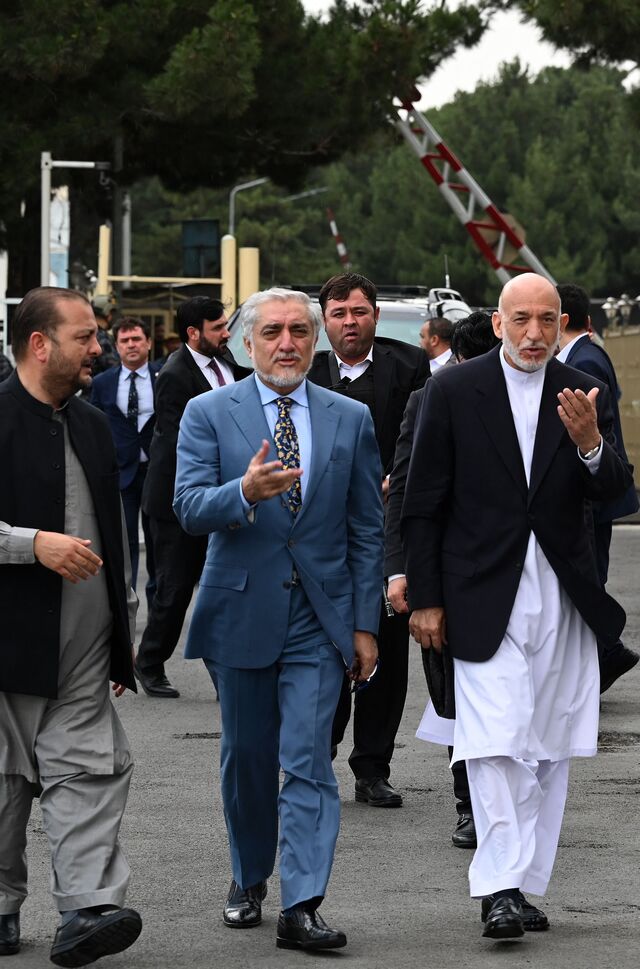
So despite all the restrictions, we put on our hijabs and we went and met [then-Chairman of the High Council for National Reconciliation Abdullah] Abdullah and [former President Hamid] Karzai. 2
2 Nehan went to the most prominent leaders who were still in Kabul after President Ashraf Ghani unexpectedly fled Afghanistan.
Our question [to them] was: Look, the evacuation has started. It’s going to be a huge brain drain that the country will not be able to afford. If you give us a little hope that we can work things out together, if you can get assurance by the Taliban that we can work, even if we are not in the government anymore, we are willing to stay. We don’t want to go anywhere.
You were essentially asking them to be an intermediary between your group of women and the Taliban?
Absolutely. They told us they did not have any information. Nobody had met them from the Taliban. Adbullah told us: If I were you, I would leave Afghanistan. But if we can work things out, there’s always a way for you to come back.
We were very vulnerable. 3
3 In February 2020, then US Secretary of State Mike Pompeo signed a peace deal with Taliban leaders, after a process that began with Trump’s election pledge to bring US troops home. A few women were part of the negotiating team, but the final agreement focused on security guarantees for the US and its allies. Later, President Joe Biden set Aug. 31, 2021, as the end of the US military mission in Afghanistan, saying it was up to the Afghan government to “work out a modus vivendi” with the Taliban.
You ended up on one of those evacuation flights out of Afghanistan. You first went to Norway and then to Canada. The reality of what has happened to Afghans, particularly women and girls, in the last four years is very stark.
Things have changed very drastically, Mishal.
Many of the people that I knew, most of them got evacuated to different countries. But we are still in contact with those that are inside Afghanistan. Most of them are working at the grassroots level, in the provinces. Every time we talk, there is not even one session that will end without crying, without praying for a miracle to change the situation for not only women, but also men.
In the last few weeks, around 2 million Afghans have been deported back to Afghanistan. There is, right now, a refugee crisis — unfortunately we don’t see anybody covering that. 4
4 Bloomberg has reported these actions, by both Iran and Pakistan. In the US, the Trump administration is seeking to end deportation protections for Afghans, many of whom arrived after August 2021. In the UK, the cost of resettling Afghans now stands at close to £6 billion ($8 billion).
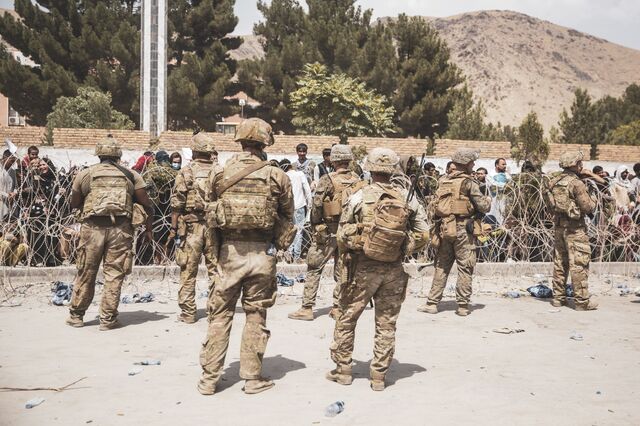
The figures are really striking: 78% of young Afghan women are not in education, employment or training. That’s four times the rate of Afghan men. There are no women in any positions of authority in government. It is such a sorry end to 20 years of Western engagement. 5 Who do you blame?
5 Between 2001 and 2021, more than 3,500 service personnel from the US and its allies were killed in Afghanistan, alongside more than 66,000 Afghan military and police personnel and 47,000 Afghan civilians.
We all share responsibility for the failure that happened in Afghanistan. There is blame on the Afghans’ part. But the country [had faced] decades of conflict. People had experience of resistance fighting — not politics, negotiation, governance, leading the transformation of a society.
But I think we achieved so much. I saw that with my own eyes. [Afghanistan] really did not deserve to fall apart so quickly.
The peace process and handover to the Taliban was affected by politics and elections in the US, and other Western countries. 6 We kept on warning them: Once you leave the country, it’s going to be very difficult for you to come back. You are leaving a vacuum.
6 The ‘handover’ characterization is controversial. In September 2021 the US general who oversaw the withdrawal told Congress the 2020 US-Taliban deal had a “pernicious effect” on the Afghan government and military. The troop reduction ordered by President Biden in April 2021 was, he said, “the other nail in the coffin.”
Today, we hear China has already started some operations in Bagram, a very strategic airport in terms of security, where the US had invested so much. 7 We also see them investing in the mining sector, and we also see recognition of the Taliban by Russia. For that, I blame the international community.
The government that you were a part of was notorious for corruption. Indeed, in all those years of Western engagement, Afghanistan remained very low on Transparency International’s corruption index.
As I said, we have to share responsibility.
I resigned from my position from the ministry in October 2019. 8 Despite being very close with President Ghani, I just felt that things were drastically falling apart from within. It wasn’t only corruption; it was a systematic attack on those trying to reform the system.
8 Nehan was profiled in Bloomberg Businessweek while she was running the ministry and described mines as “a totally messed-up sector” that she was determined to clean up. She later faced an accusation of corruption herself, which she rejected as false.
I was in charge of the Ministry of Mines and Petroleum, but many times, decisions were made about the mining concessions in the office of the president, and at the Ministry of Finance. I had to fight all of them. I said: I cannot sign anything if it’s not processed through the ministry, through the system.
Unfortunately, we had a number of people that had come from abroad. They thought it was an excellent opportunity to make money from Afghanistan, no matter what happens to the country.
The concessions you’re talking about are incredibly valuable, aren’t they? 9 Afghanistan has significant deposits of minerals and metals, and indeed the Taliban have been busy signing deals. There’s Chinese and Iranian investment.
9 In 2010, Pentagon officials estimated that Afghanistan had $1 trillion of unexplored mineral deposits, including vast reserves of lithium, rare earths and copper.
I remember when I started working in the ministry, I said that I needed at least two years to be able to reform. We needed to come up with a very clear and transparent legal framework to create certainty for investors. We also had to reorganize the ministry to be able to create more transparency.
I signed memorandums of understanding with different civil society organizations and opened the door of the ministry for them to come and monitor. You build the confidence of investors, but also the confidence of the people.
For six to eight months I had the full trust of President Ghani. After that, it became highly challenging. The challenge was not coming from the Taliban. The challenge was coming mainly from the president, the presidential palace and Ministry of Finance. 10
10 In 2016 a report for the US government found: “The United States contributed to the growth of corruption by injecting tens of billions of dollars into the Afghan economy, using flawed oversight and contracting practices, and partnering with malign powerbrokers.”
Can you ever see yourself going back?
You wouldn’t believe it. I have luggage in my closet I never totally unpack, because I feel that I’m waiting for a day that I’ll be able to leave for Afghanistan. I still have kept a few things in one of my cousin’s houses [in Kabul], because — I don’t know about the rest of my family — but I am coming back.

Get the Bloomberg Weekend newsletter.
Big ideas and open questions in the fascinating places where finance, life and culture meet.
By continuing, I agree to the Privacy Policy and Terms of Service.
What would entice you? Would it be a personal assurance of safety from the Taliban, or does it have to be after the Taliban government is no more?
There are a number of us that are leading the civil resistance against the Taliban. We get invitations all the time: The situation is good and you can do more for women if you’re inside the country.
But [that would] also give the signal that you have accepted the situation as it is. So for me, if I go back, that [would only be when] there are uplifts and girls can go back to school and women can go back to work. With the current situation, I can’t go, partly because of my insecurity, but partly because I don’t want to normalize what is happening in Afghanistan. 11
11 And yet, Taliban rule in Afghanistan is being increasingly normalized. Tourism has picked up, and there is a growing trend of Western social media influencers, often young men, visiting and engaging with the regime.
And that personal dilemma you feel, that is exactly the dilemma for aid organizations and international donors and Western governments, isn’t it? Do you try to change the Taliban through engagement, or do you isolate them?
There is a huge difference, Mishal, between us and the international community.
We are living in exile, and except for the advocacy that we are doing, we do not have any other leverage. But the international community, including aid organizations, they do have a lot of leverage. They are providing aid and feeding millions of people who will die in poverty if aid would not reach them. That is leverage they can use to engage in a more principled way with the Taliban.
Unfortunately, the way that the international community has engaged in the last four years with the Taliban has really emboldened them.
Are you saying that you would attach conditions on the next aid installment and be prepared to withhold it if schools are not reopened to girls?
I’m not saying humanitarian aid. But it’s not only humanitarian aid that’s going to Afghanistan. The World Bank has opened their office in Afghanistan, and, UNAMA [United Nations Assistance Mission in Afghanistan] has a huge operation that goes beyond humanitarian aid. They’re also engaged with the political discussion. 12
12 In response, the World Bank told us they do not “engage directly” with the Taliban. “Our office in Kabul oversees programs that deliver critical services such as health, education, community livelihoods and food security to support the poorest and most vulnerable people in Afghanistan.” UNAMA directed us to Security Council resolutions on its mandate and said, “Our engagement does not constitute recognition, which is a matter for Member States.”
I cannot comprehend why the World Bank will open their office during this situation, when the International Criminal Court is issuing arrest warrants against the leaders of the Taliban because of systematic violence against women. But the World Bank, an international institution, is going and opening their office in Afghanistan. They’re not providing any kind of humanitarian assistance. If you go through all their projects, all of them are infrastructure development, all of them are economic development.
Where do you think all of this is going? Do you believe that in five years’ time the Taliban will be internationally recognized as the legitimate government? There has just been this important milestone for the Taliban in that Russia has become the first major country to recognize them.
Recognition by Russia is something that should not shock any of us because we know the standard of Russia. The Taliban have much more in common with Russia than other countries.
It seems extraordinary to hear you say that because for so long the Mujahideen — forerunners of parts of the Taliban — were fighting the Soviet Union, as it then was. That was the war that drove you out of Afghanistan as a child.
This time the Taliban has come with [a] much more sophisticated plan of consolidating their power and trying to stay.
They copy the model of Iran. They have opened thousands of madrassas, they have changed the curriculum. Imagine, you are going to have millions of young boys after a few years that think exactly like the Taliban. They call non-Muslims ‘infidels.’ They call on you to commit suicide attacks in the name of Islam. 13
13 The Taliban “cloak their crimes in cultural and religious justification,” Nobel laureate Malala Yousafzai has said.
This is not going to be something that will stay inside Afghanistan. But knowing the history of our country, we know this is not going to last. Afghanistan is not Iran; the Taliban are not the Iranian regime. So that is making us hopeful that things will not stay as they are.
Do you think there could be a popular uprising? Is there opposition within Afghanistan to the Taliban?
There are pockets of resistance, but because they don’t get any support they have not been able to expand. Millions have already left or [been] displaced within Afghanistan. That shows people are not happy. They don’t want to live under the current regime.
But you cannot expect the kind of uprising that we had during Soviet [occupation]. At that point it was actually the West that supported it. Afghanistan is a very poor country. Even if people would like to resist, they don’t have the means.
One thing that we are sure of is that there is going to be soon a big threat coming from Afghanistan. This could be terrorism, God forbid, something like 9/11. Or a campaign by these extremely religious groups that the Taliban are training. The world will eventually come back and try to aid the situation of Afghanistan.
It feels like you are warning of a repeat of history — 9/11, the Taliban harboring Osama bin Laden, the Western-backed forces coming in, driving the Taliban out.
This time [the Taliban] are much more prepared. Throwing them out is not going to be as simple and easy as it was the first time.
This time Afghans have to come forward and decide the political order for the country, the kind of governance that we need, power sharing between different ethnicities and groups. Because leaving it for [the] outside means a quick fix. 14 None of us will be happy, and it’s going to fall apart.
14 Back in November 2001, a landmark international conference in Germany led to the post-9/11 government for Afghanistan, but the outcome was swiftly criticized by those who felt left out of the new order.
Can we close by talking about your own life and how you’ve come to terms with what happened four years ago? You live in exile, you’ve become a refugee again. Do you feel a certain amount of guilt that you are a woman who still has a voice, and work, and a profile, whereas so many of your countrywomen are confined to their homes?
Guilt is a big part of it.
Every day when you wake up and you have messages coming to you through WhatsApp, Messenger, Facebook, Twitter, LinkedIn, talking about misery inside of Afghanistan, you do feel: What can I do about it? Can I be happy I am safe? There is a lot of negative energy, a lot of trauma that many of us are going through. It is not an easy process.
We can do very little from far away. But we channel all that energy into working more and more. So many of us have forgotten about having a day off, forgotten about education, forgotten about investing in ourselves.
We are working day and night to be able to do something about Afghanistan. There is no day, there is no night. And it has also affected the health of many of us, and our wellbeing. But it is the least that we can do for Afghan women.
Mishal Husain is Editor at Large for Bloomberg Weekend.