
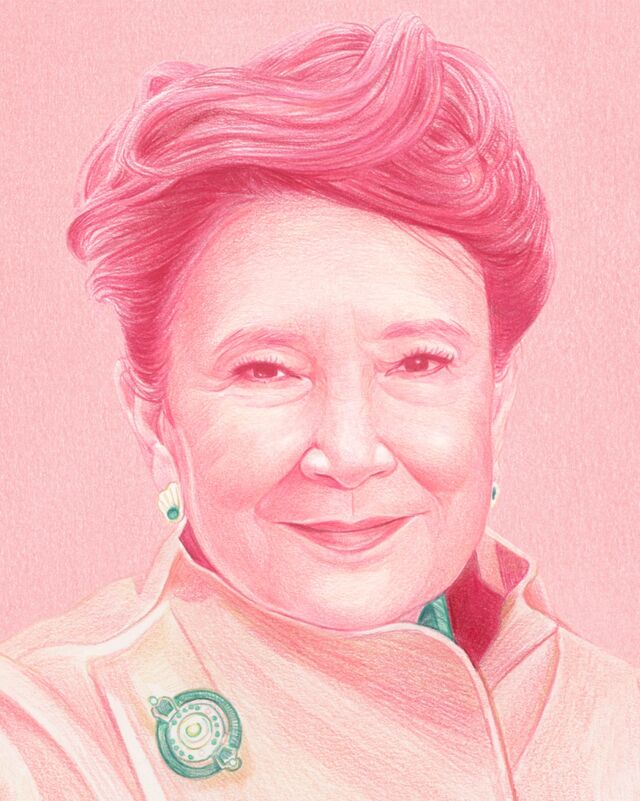
Jung Chang: ‘China Is at a Turning Point’
The historian talks about the follow-up to her book Wild Swans, witnessing famine and revolution, and her frustrations with modern China.
Jung Chang broke new ground in 1991 when her book Wild Swans received global acclaim for telling the story of China in an unprecedented way. Subtitled “Three Daughters of China,” it was a deeply personal exploration of the extreme times her grandmother, mother and she herself lived through, from foot-binding to famine, Communist purges to labor camps. Readers were able to connect with the tale of a Chinese family, and Chang went on to author other books, including a seminal 2005 biography of Mao Zedong she co-wrote with her husband.
Chang seemed to have the best of all worlds — the benefit of China’s opening up, the freedom of a home in London, and the ability to travel back and forth to her family. She had confidence, she said in 1993, that China’s economic prosperity was the best guarantee of future democracy.
Today, her sentiments are rather different, as she returns to the family story. Fly, Wild Swans (HarperCollins, Sept. 16) picks up where the original left off, in 1978, but is tinged with pain — because Chang says she can no longer return to China.
This interview has been edited for length and clarity.
How does it feel more than 30 years after Wild Swans, to have another book with Wild Swans in the title?
It was exciting to write this sequel. People have been asking me to write it for many, many years. I always felt it wasn’t the right time, and I didn’t have enough things to write about. Now I feel this is the right time to update the story of my family, and the story of China.
My life is very much linked with the story of China. Wild Swans ended in 1978, when China was at a watershed moment. The Mao years formally ended, reforms and an opening up to the world started. I became one of the first Chinese to come out of China to the West. 1
1 Chang is now 73, with a grace and poise linked, I think, to all she witnessed and internalized growing up in China. Her mother’s name contained the Chinese character “hong,” meaning “wild swan,” leading to her own given name of Er-hong, or “Second Wild Swan.” However, its sound was similar to the Chinese for “faded red,” which did not sit well amid the zeal to be fully “red” and Communist. She changed it to Jung, which had martial overtones.
Now, nearly half a century later, China is at another turning point. Mr. Xi [Jinping] is determined to turn China back to the Maoist days, and has set the West as his rival and, in a way, enemy.
It is a very stark image, turning China back to Maoist days. Because you saw the deprivation, forced labor, barbarity. Is that really what you mean?
All those awful things, to some people — hardened Communists, Maoists, Stalinists, like Mr. Xi — they are not that awful. I think people still admire the time when those things happened.
The defenders of communism often say, You can’t make an omelet without cracking eggs. They believe that for their ideology, it’s justified to do all these things. 2
2 The Communist Party formally distanced itself in 1981 from what it called “errors” and “fallacies” committed from the 1950s to 1976. But Mao remains revered, and Xi himself has stressed the importance of avoiding “historical nihilism” and focusing instead on achievements for the sake of party unity. While Xi is China’s most powerful leader since Mao and has been criticized for centralizing power in his own hands, China today is far wealthier and less restrictive of its citizens than it was 50 years ago.
We’ll talk more about contemporary China and how the world looks from your eyes, but I want to go back to the family part of the book, your childhood in the 1950s and ’60s in Chengdu. Your parents were, as I understand it, loyal Communists in the early years of the party’s control over China.
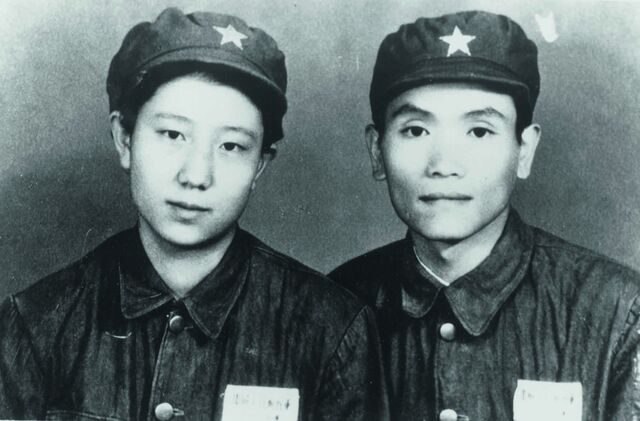
Yes. My mother had some reservations, but they both joined the Communists when they were teenagers. They disliked the injustice of society and my mother hated the system of concubinage.
My grandmother was a concubine and suffered tremendously. My mother was a feminist because of that, and the Communists promised women’s liberation. 3
3 Concubinage, the ancient practice of having “secondary wives” in addition to a legal wife, was outlawed in China when the Communists took control in 1949. Chang’s Wild Swans begins with her grandmother’s feet being broken and bound as a small child, as tiny feet were considered beautiful.
But the thing about the Communists is that once you join, there is no exit. To leave — which my mother wanted in the early days — would be regarded as desertion, and treated appropriately. Once you are forced to stay, you have to think the best of it. So I think they found various excuses to justify whatever happened that was unappetizing for them, in the early years.
But the Great Famine was the turning point. Between 1958 and 1961, around 40 million people died of starvation.
Which is extraordinary. Your parents wouldn’t have known the numbers, but they saw the impact?
They wouldn’t have known the scale of the famine; people generally didn’t know. A lot of people still don’t know. To write our biography of Mao, my husband [and co-author] Jon Halliday and I did some immense work to arrive at a figure.
My parents didn’t know the exact cause of the famine, but they did know their party was responsible for it. That was a turning point in their lives, and also actually in the lives of many Chinese Communists. 4
4 The cause of the famine was the so-called Great Leap Forward, a five-year plan begun in 1958 that aimed at rapid industrialization. It was a disaster, with agriculture disrupted as farmers were diverted into steel production. Estimates of the death toll range from 15 million to 50 million.
You wrote that their faith in the party was shattered.
Yes. When I was a child, one day my father said to me, with a very pained and agitated face, Why did we make revolution? We made revolution because people were starving.
That was one of his motives for joining the party. And when he saw that his party actually manufactured the famine, he was devastated. In fact, he wrote to Mao. He wrote a letter but he was persuaded by his friend — the governor of Sichuan province, where we lived — to withdraw it. But it weighed on him.
You saw the scenes of starvation, didn’t you? I know that your family, because your father was an official in the party, was relatively protected from the shortages. But I think a girl once snatched food out of your hand in the street?
Yes. One day I was going to my primary school, munching a bun, and this child rushed over, snatched the bun and disappeared. That evening, when I told my family this story, my father stroked my head and said, You are very lucky; other children are starving. So I did know.
I saw people there being pulled into hospitals on a cart. Instead of being thin, they were swollen, transparent. It was horrible.
Do you remember how it made you feel? It’s a very stark childhood memory.
I was very young, probably 7 at the time when I saw those signs, and I didn’t understand what they were.
Later, in the Cultural Revolution, when my father decided to speak and referred back to how he felt during the famine, I understood him perfectly. 5
5 Chang’s father had a very difficult life. He was subjected to denunciations and detentions, and suffered mental illness. “In 1975, the Party gave my father a verdict,” Chang writes in Fly, Wild Swans. “It said he was not exactly a counterrevolutionary but that he had committed ‘grave political errors’ by opposing Mao’s policies.” He died soon afterwards.
He was haunted, I think, for much of his life by disappointment, disillusionment at what the Communist Party had turned out to be. And yet your parents didn’t question Mao at home. That was not a conversation?
Few dared to question Mao at the time, particularly not to their children. The children might blab, which would have been disastrous for the whole family.
Also, many people thought, What’s the point of bringing up children who become dissidents? That would only wreck their lives. People who had reservations didn’t talk about it.
That period in the 1960s, at the height of the Cultural Revolution: Your parents were both sent to labor camps in different parts of China. You and some of your siblings were sent away. Describe that period.
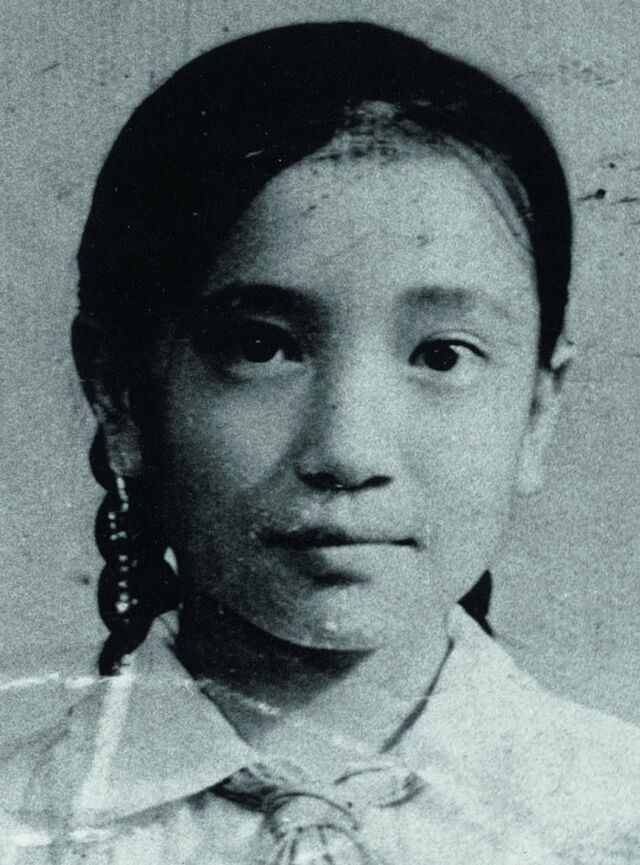
My life changed in 1966, when I was 14. My school, which was the oldest public school in China, was turned into the most horrible place. I saw pupils, mainly boys, knocking off the statues in various parts of the campus. There were huge stone slabs with Confucian teachings carved on them, and they were pulled down — with the help of trucks because they were so huge. So I saw my school being destroyed, much violence and many atrocities. 6
6 The Cultural Revolution began in 1966. Ostensibly about class struggle and ridding China of “old thought,” it was in reality Mao’s attempt to entrench his position, which had been weakened by the failure of the Great Leap Forward.
Who did you talk to about what was happening?
Well, I’m afraid [that] because it was a time you heard so many people being denounced for having the slightest unorthodox thoughts, you didn’t talk to anyone.
1976 was a really important year. Mao died. Soon afterwards, it was clear that a new era was going to begin, because his wife and other associates in the Gang of Four fell from grace. Do you remember then feeling that you had an outlet for your emotions? 7
7 Chang was 24 when Mao died; afraid her dry eyes were dangerous, she pressed her face into the shoulder of the crying student next to her. But a month later, she witnessed “spontaneous rejoicing” as Mao’s inner circle was targeted. “When I went out to buy drinks to celebrate with my family and friends,” she writes, “I found that shops had run out of liquor: There were so many parties.”
Well, in my own head, I [had] started to think the society I was living in was hell.
I [had written] a poem — my first decent poem — on my 16th birthday. My parents were in detention, my grandmother was sobbing next door because of the abuse my mother was suffering. I just thought to myself, If this is a paradise, like we were told in China, what then is hell? That was the moment I consciously thought I just loathed the society I was living in. But of course I couldn’t tell anyone.
And also I didn’t question Mao. I had grown up regarding Mao as our God. He was unquestionable and unmentionable. In 1976, I suddenly realized that Mao was responsible for all the horrors and misfortune. Before that, I blamed his wife, I blamed “bad eggs” in the Red Guards, but I didn’t blame him. It took me so long, from when I started to loathe all these things, to really question Mao.
And that is the power of brainwashing. Exactly like you mentioned earlier, we couldn’t talk to people. We had no information. We had to work all this out in our heads and that was very difficult.
Get the Bloomberg Weekend newsletter.
Big ideas and open questions in the fascinating places where finance, life and culture meet.
By continuing, I agree to the Privacy Policy and Terms of Service.
I wonder if your brainwashing lasted even longer? In your new book, you share your mother’s advice when writing Wild Swans. She said, Do not try to write a history book, keep it personal — because your knowledge had been influenced by indoctrination. I found that interesting because it was the 1980s, you knew a lot by then, but your mother feared you were still brainwashed because of how you grew up.
My mother is wise, and I agree 100%. In Wild Swans, historical background was kept to the minimum. Twelve years later, when I finished with Jon our biography of Mao, I was suddenly in a panic, because in those years of research I had discovered so many things. 8
8 Chang and her husband have had a remarkable partnership as writers. She met him in London in 1984 and it was his interest in her family story that unlocked her mother’s memories and led to Wild Swans. Mao: The Unknown Story was based on a decade of research, interviews, and access to archives in Moscow. Many of these files, she says, have since been closed by Russian President Vladimir Putin.
Can I take the story forward to your arrival in London as one of the first Chinese students to come to the UK? You’ve described it as like setting foot on Mars.
Yes, it was like landing on Mars; everything was different. The China I left behind was completely isolated from the outside world. I had read perhaps a few contemporary Western books in translation, and I had seen only one film, The Sound of Music.
We were quite a sight in London, all wearing Mao suits and not allowed to go out on our own. We had to move in a group. 9
9 Chang’s group had been sent to a special store in Beijing to be fitted with regulation blue jackets and Mao trousers. “Are we all going to have the same clothes?” she whispered to the tailor. He discreetly showed her a foreign newspaper supplement with pictures of models in coats, and she nodded at one. To her delight, her jacket arrived in a slightly different shade and cut.
Life was so exciting, everything was new.
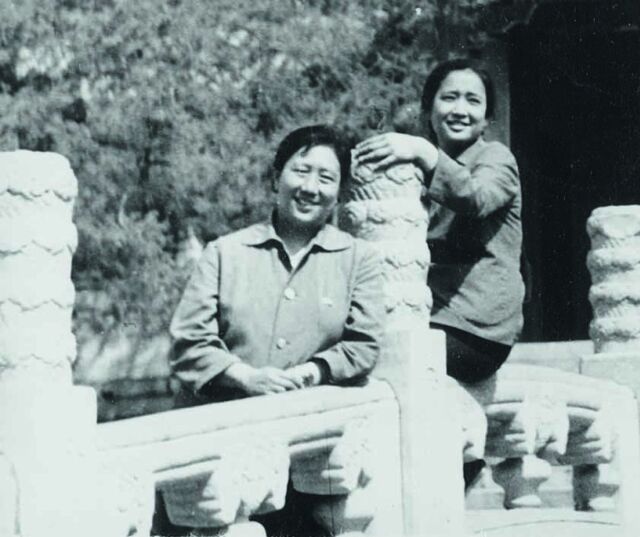
It was still a very controlled world. You were living under the control of the Chinese embassy.
For the first year, we were under the control of the embassy. But that year my life was very exciting because I spent all my time trying to go out, to sneak out [alone]. At one point we were asked to write essays, and I said I would write an essay about gas cookers. I was never interested in cooking, but to write about gas cookers I had to go to the Science Museum to do research. And none of my fellow Chinese students wanted to come with me.
This is the period of your life you are writing about in Fly, Wild Swans. What do you think about Deng Xiaoping, who succeeded Mao and whose reforms made it possible for you to study abroad? He’s also the man who was in power when tanks were sent into Tiananmen Square.
He was very much my hero when I was in China. My family were neighbors with Deng’s half-sister, so we knew the family.
My feelings [now] are mixed. He was certainly the liberator for China, and for myself. Without him, China after Mao’s death would have become another North Korea. But he decided not to repudiate Mao, and China continued to be a repressive society, with Tiananmen. And that also made it possible for China to try to turn back to the Mao days, the bad old days.
How do you feel about China today?
I’m of course full of apprehension. I feel very sad. I never thought it would come to this. I never thought that somebody who’s been through atrocities would want his country, his people, to revisit those horrors. But such is life, I guess.
You mean President Xi? He’s only a year younger than you; he lived through the Cultural Revolution, as you did.
Yes. His father was subjected to horrible denunciation meetings and he must have seen similar horrors. To imagine someone would just brush aside those atrocities… I never thought that would happen.
The comfort is, the door cannot be closed again. An open door is also advantageous to him, because that’s how China makes money, and he needs money for his world ambitions.
He cannot isolate society like Mao isolated China when I was growing up. And with that as a reality, he would be unable to generate the kind of terror that Mao generated. 10
10 China has come under fire for human-rights abuses during Xi’s rule, including suppression of democracy in Hong Kong, ethnic repression of Uyghurs and deploying Orwellian surveillance to snuff out dissent. Still, that’s a far cry from an era characterized by mass famine and political purges that led to tens of millions of deaths. International Monetary Fund data shows China’s per capita GDP reached $13,000 last year — roughly double that from when Xi took power in 2012 — and he’s set a target to have it on par with a mid-level developed economy by 2035.
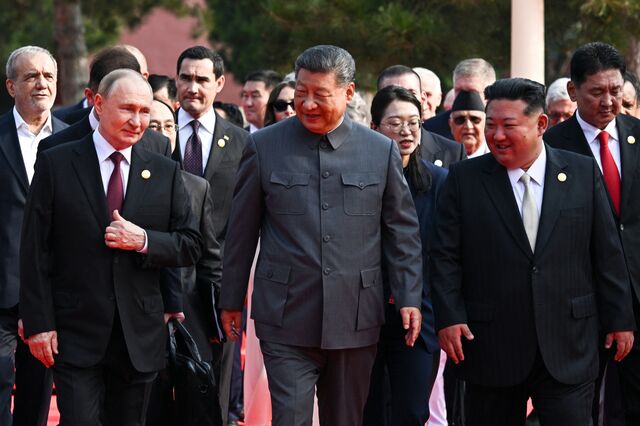
The big military parade in Beijing — Xi in the middle, Kim Jong Un on one side, Vladimir Putin on the other. When you see images like that, what do you feel?
I am revolted. I don’t like that sort of military parade to start with. It happens in North Korea; it happens in Russia. That sort of goose step [is] associated with the German army, before and during the Second World War.
And I’m full of dread that China might take over the world, in which case where would I run? And where would everybody else run?
Some of what is happening, like India and China moving closer together, is linked to the Trump administration’s actions on the global stage. With all your life experience, what do you feel when you look at its actions in the United States, for example against universities?
I’m disappointed with so many things, I don’t know where to begin. I don’t like the style, the bragging. The values, it seems, are so different from the values I associate with the West.
So I can only use the word “dismayed” to describe my feelings. But in America, and in the West, there are many clever people. I can’t believe it will go on like this.
In so many ways, you are the lucky one in your family, the one who had the chance to live in the West. Your mother gave you wings, which is why the book’s title is Fly, Wild Swans. And yet here you are feeling dismayed, feeling like your own country is going backwards. And America right now isn’t what you thought either.
But I think fundamentally, I’m an optimist. If you sink into pessimism, you might as well be dead. I can’t believe that Maoism, in whatever form, will beat Western democracy. I know Western democracy is having all sorts of problems, and this quasi-Maoism is only one of those. But I do have faith in democracy, because with democracy, so many talented, moral, principled people can thrive.
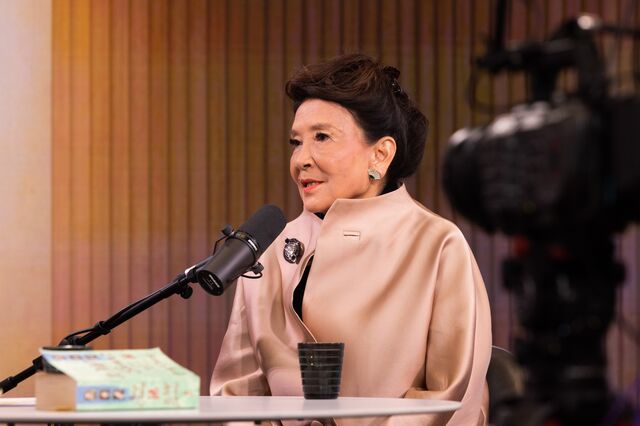
I want to come back to your writing, and say something about what it’s meant to me. You were the first to show me that you could write about the lives of ordinary people and they mattered. I went on to write my own family story, and I’m not sure I would have done that had it not been for you.
Oh, well that’s very kind. For me, the human stories are the most interesting, and the ones that I want to write about.
You’ve called the new book a tribute to your mother. She’s now 94. You haven’t been able to visit her for a while. How is she?
She’s hanging in there. Sometimes we can communicate, sometimes we can’t. We use video calls, so I call her carer. It’s an enormous comfort to be able to see her.
I owe my mother a lot. I owe her my freedom, to be in the West, to write. And also I owe my mother who I am, because she was the one who most influenced me in how to be a human being.
When you can talk, what do you talk about? Do you reflect on current events?
No. My mother is past that stage of having a discussion. In any case, I couldn’t talk about anything sensitive in front of her carer.
For many, many years I tried to go back to China to see her. I had to fight every year to get a visa to go back and see her. But then, in 2018, I realized that I probably could go back to China, but I would not be let out. And that’s when I stopped going.
My mother understood this — not through talking about it explicitly, just through our understanding of each other. I couldn’t talk about all those things in front of [her] carer anyway, because I was afraid that she might become afraid and leave my mother, or she might mistreat her, God forbid. So, that’s life. 11
11 In Fly, Wild Swans, Chang says the key moment was Xi’s order of May 2018, decreeing that any insult of “heroes and martyrs” was a crime punishable by imprisonment. Mao was the number one hero of the nation, she writes. “As a biographer of Mao who had documented his misrule,” she writes, “I faced incarceration when I was in China.”
There have been many complex times in your life, and I want to mention one, which you describe in the new book. In London in 2005, after your biography of Mao came out, there was a disturbing incident where you found that the plants on your balcony had all been cut down in the middle of the night. And all the leaves and branches taken away.
Yes. It was very disturbing. I didn’t go into a panic. By then, when there were extreme things, disastrous things happening, I was calmer than usual. But I think there was deep fear, subconsciously, because I never told my mother about this particular incident.
It was a place suspended in the air; you could only get to it through the house, but nothing was disturbed. The locks, the windows were not opened. 12
12 Even massive shoots around a trellis and those attached to the house had been carefully cut away with a serrated knife, Chang writes. Police said it was not the work of vandals but highly skilled professionals, working silently. Beijing “decided to do something about me,” is the way Chang puts it in her book. China’s Foreign Ministry said it wasn’t aware of the situation, when asked to comment on the incident.
You saw it as a warning from China?
Well, I guess. It reminded me of this thing in The Godfather — for the uncooperative man, the mafia put the head of his favorite horse in his bed while he was asleep under his sheet. That was taken as a warning: We can get you. I think it might be a similar, gentler warning.
But when I was writing the biography of Mao, I knew dangerous things would happen. I had made a decision not to let these things get to me and to push the worries to the back of my head.
This is the Weekend Interview and therefore I wondered if you could let us into your weekend. And also how you keep a sense of connection with China.
Well, my husband and I don’t go to work – we are too old now. The weekend is a good time to write. Offices are closed; I don’t get emails, admin, things I have to deal with.
And my house is full of Chinese sculptures, paintings, almost entirely decorated like a Chinese world. I have a particular fondness for those things because I saw how Chinese culture was destroyed in my childhood. The copper animals [statues] on which I had climbed as a child, those were fed into furnaces to make steel. I saw my school being destroyed, all the things I loved were destroyed. And so I have this ache for visible signs of Chinese culture.
Could there be another Wild Swans book? What do you think you might be writing about China in 10 years’ time?
I don’t know. I doubt whether there will be another Wild Swans, because obviously my mother is near the end of her life. The Fly, Wild Swans idea came to me fairly recently, in 2023. So we’ll see.
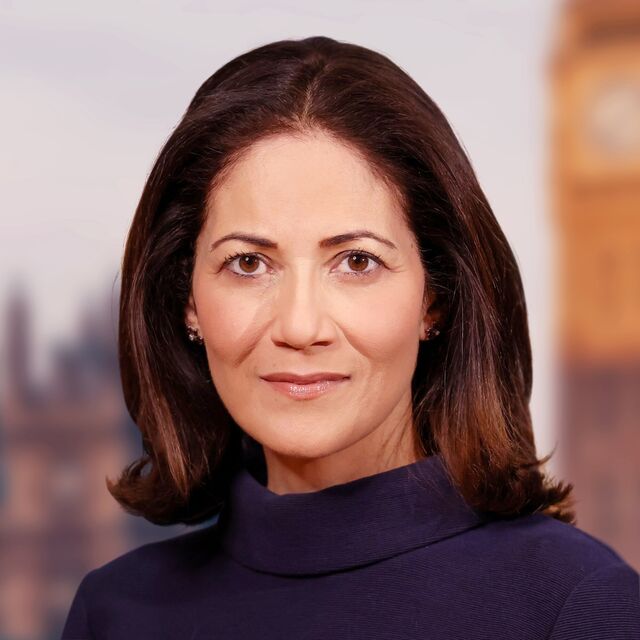
Mishal Husain is Editor at Large for Bloomberg Weekend.