Regrowing the Amazon
Brazil is pouring money into saving one of the world’s most vital carbon sinks, and startups are rushing in.
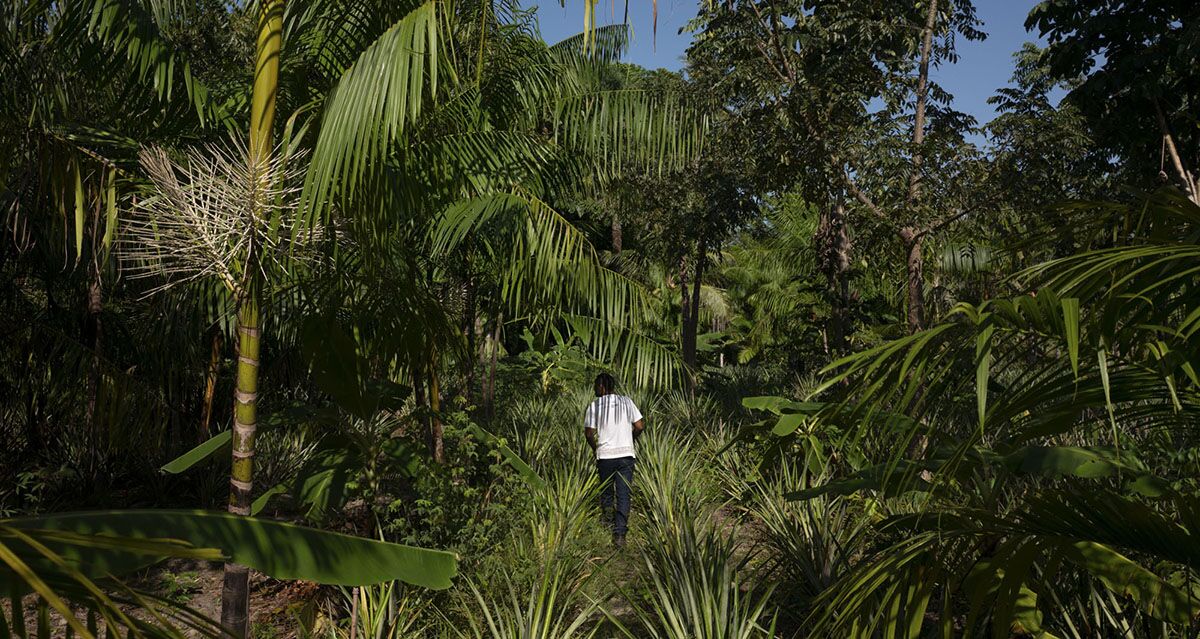
Ronildo Pacheco’s land on the eastern side of Marajó, an island that sits where the Amazon River meets the Atlantic Ocean, is a riot of crops that seem to change every few steps.
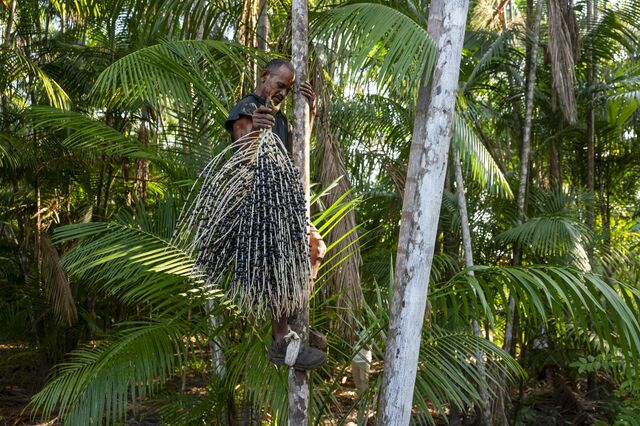
His pineapple field is also home to young banana, acerola and cacao plants, giving way to towering açaí palms that thrive on the moisture from the nearby Aroaroa River. There are native trees such as cupuaçu, which produce large, fragrant fruit that feed capybaras, toucans and dusky-legged guans.
All this takes place on less than 5 hectares (12 acres), a fraction of the family’s land. The rest has been left to be reclaimed by nature.
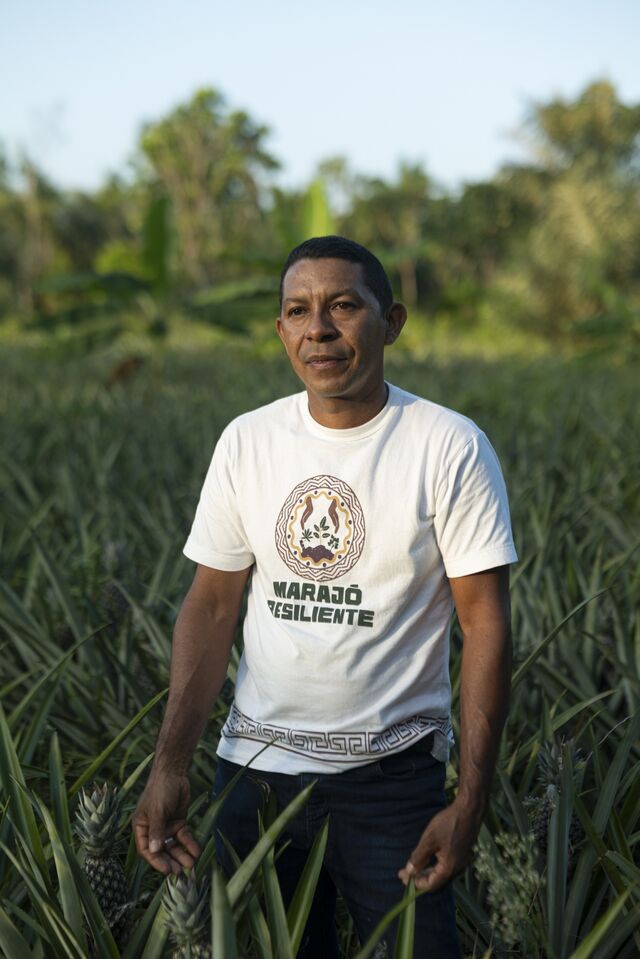
The Pacheco family didn’t know it until recently, but by managing a mix of plant species that both produce food and benefit the ecosystem, they’re pioneers of so-called agroforestry. It’s a forest restoration model that Brazil is betting on to help eliminate deforestation as it races to stop the Amazon, one of the world’s most vital carbon stores, from morphing into a source of planet-warming emissions.
The approach seeks to balance two competing needs: farming and conservation. “When it’s fully implemented in the region, it will reduce annual slash-and-burn [rates] and food shortages,” Pacheco said.
Deforestation has wiped out an area the size of France in the Amazon and accounts for almost half of Brazil’s emissions. A similar story is playing out in other tropical forests around the world, threatening the Earth’s ability to counteract the planet-warming carbon dioxide spewed by humanity.
New estimates released this month showed an alarming trend: An overheating planet is causing forests and land to absorb 25% less carbon dioxide than they would without climate impacts, with the tropics driving the reduction.
Climate Change Shrinks Carbon Sinks
Land and ocean are absorbing less of humanity's CO2 emissions, leaving more in the atmosphere

At the United Nations-sponsored COP30 climate talks underway in Belém, a few dozen miles from Marajó, Brazilian officials are fundraising for a new $125 billion vehicle that will pay developing countries to keep their trees standing. So far, countries including Norway and Indonesia have pledged to contribute $5.5 billion, falling short of a $10 billion investment target that has already been reduced by 60% from Brazil's initial ambitions.
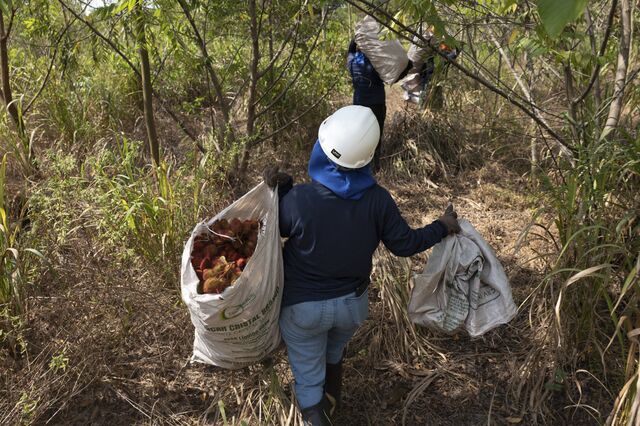
Brazil’s push to rehabilitate the Amazon is spurring a rush of startups pitching for-profit solutions. One of them is Belterra, which showed Pacheco how to use climate-friendly fertilizers and add soil cover to his pineapple trees so he can replant on the same land, allowing him to maintain yields without clearing new areas.
These companies are trying to generate economic value — often from selling crops or credits for captured carbon — while they restore forests. With behemoths from Amazon.com Inc. to Microsoft Corp. investing in higher-quality carbon credits and growing demand for sustainable commodities such as cacao and palm oil, conserving the rainforest is shaping up to be a big business.
How much money is at stake depends on what companies and governments are willing to pay for each ton of carbon dioxide saved. Preserving the Amazon has the potential to generate $320 billion in economic benefits over the next three decades, two Brazilian economists argued in a recent report, if credits can be sold for more than $20 per ton of CO2. Reforestation offsets currently sell for around $17 per ton on average.
It’s also unclear if these solutions can scale quickly enough to make a difference before time runs out. Scientists have warned that extreme weather and rampant deforestation are pushing large swaths of the rainforest toward a tipping point, after which restoration projects may no longer be effective. In 2024, a historic drought fueled record wildfires that eliminated 3.3 million hectares of the Amazon, releasing as much carbon dioxide as Canada does in a year.
“We are reaching a point where climate change is beginning to endanger the very solutions we are proposing,” said Joice Ferreira, a Belém-based researcher at the Brazilian Agricultural Research Corporation.
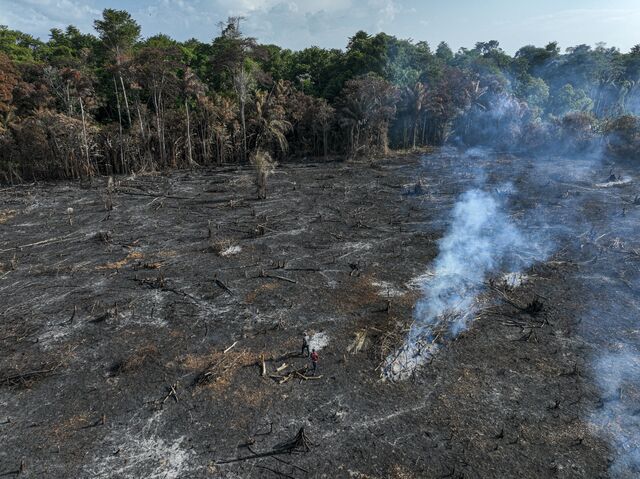
The large-scale destruction of the Amazon began in the 1970s. Brazil’s military dictatorship opened thousands of kilometers of roads, encouraged settlers to populate the region and turned a blind eye to land-grabbing. Other parts of the rainforest, which stretches across nine countries, have also faced widespread deforestation.
President Luiz Inácio Lula da Silva has made restoring the Amazon a key part of his agenda. Deforestation in Brazil’s share of the rainforest has declined roughly 50% during his third term.
But it is an uphill battle. While forests can grow back on abandoned land — and absorb carbon at a rate 20 times faster than old-growth trees — those new shoots are susceptible to logging and blazes. There’s been “an escalation of fires and also other degradation processes in tropical forests, and this undermines the forest capacity to be a carbon sink,” said Thais Rosan, a geographer at the University of Exeter.
Our atmosphere holds 885 billion tons of carbon, an increase of 5.6 billion tons a year in the last decade. That’s just a small fraction of the carbon stored in the world’s biggest sinks.
This is the second story in a Bloomberg Green series exploring the fate of the world’s most important carbon sinks.
Some places, such as the southeast portion of the Amazon basin, now emit more carbon than they absorb. With about 20% of the entire Amazon deforested, the risk of an irreversible systemic change has risen. Global warming is delaying the rainy season and lowering how much precipitation falls, leaving the forest riper than ever for fire. Researchers fear that feedback loops may eventually transform the Amazon from a rainforest into something closer to a savanna.
Carbon sinks all over the world have absorbed about half of humanity’s carbon emissions since industrialization, and many are on the brink of failure. The impact on the planet has been drastic. Global carbon levels increased by a record amount last year, largely driven by carbon sinks becoming less effective.
The Congo Basin, which absorbs the equivalent of Germany’s annual emissions, is at a “crossroads,” according to a major study released this month. By some measures, the Arctic has become a driver of global warming as permafrost thaws at a dangerous rate. Since 2016, northern boreal and temperate forests — largely untouched by local communities — have been releasing more carbon than they absorb, according to a June study.
The Amazon Is Losing Its Ability to Capture and Store Carbon

“We still see that for every ton of CO2 that we put into the atmosphere, about half disappears,” said Pep Canadell, executive director of the Global Carbon Project who helped oversee the chapter on carbon sinks in the UN’s major IPCC climate science report. “On land, forests are the big sinks,” he said. “The first thing we need to do is to stop deforestation.”
Brazil has pledged to restore 12 million hectares of forest by 2030 as part of its commitment to the Paris Agreement. With five years to go, the country has increased the amount of money it’s spending toward that goal.
Belterra is one of the roughly dozen companies supported by the Climate Fund of Brazil’s development bank, known as BNDES, which has allocated $1.3 billion to forest restoration since 2023. On Marajó, it operates as a nonprofit and teaches quilombolas — people of African descent — such as Pacheco new farming techniques to plant a mixture of crops. Its work is supported by a $9.4 million grant from the UN-backed Global Climate Fund.
Outside Marajó, Belterra operates as a for-profit company and takes a different approach. It uses capital raised from banks, private investors and philanthropy to fund agroforestry projects that generate returns through the sale of crops and carbon credits.
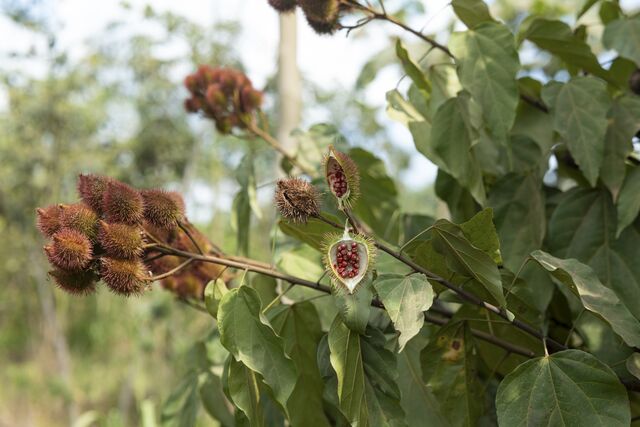
In Tomé-Açu, a municipality neighboring Belém, the company has leased 51 hectares of land and planted palm oil, cacao, banana and cassava, along with several native tree species such as ipê and bacuri. Brazil nut trees create shade to protect the palm oil crops and help the soil retain water. The increased biodiversity helps reduce the risk of pest outbreaks.
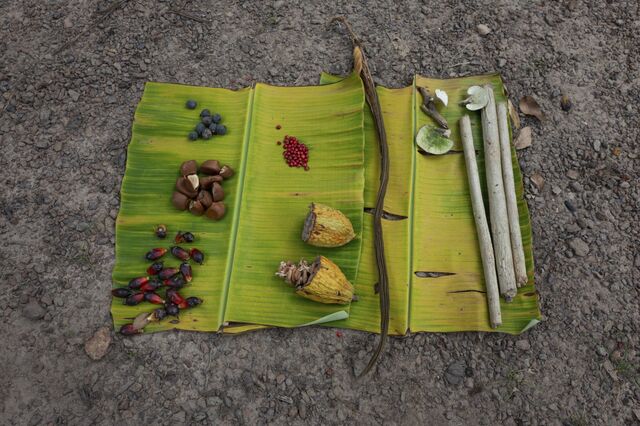
Belterra also works with producers of cacao and palm oil — crops typically planted in large, monoculture plantations — to add other fast-growing plants and trees that can enhance the land’s productivity and ability to sequester carbon. These crops, founder Valmir Ortega said, represent scalable market opportunities.
The approach “goes against everything agriculture’s Green Revolution has done over the last 40 years,” Ortega said. “There’s been a Fordist mentality of simplifying, homogenizing, standardizing. Now we’re going back to the producer and saying, ‘let’s take a step backward,’ which, in my view, is actually a step forward.”
One of the most lucrative ways to monetize forest protection is to sell carbon credits. Belterra is pursuing that in negotiations with Amazon to implement 10,000 hectares of agroforestry, according to the reforester.
Brazilian startup Mombak has also found tech buyers for its offsets. The company has sold carbon credits to companies including Alphabet Inc.’s Google and Microsoft, the latter of which signed a deal for 1.5 million credits in 2023. Google signed a second deal earlier this month for 200,000 tons of CO2 removal, an amount four times the size of its first purchase.
Companies that have set net-zero targets often buy offsets to compensate for the CO2 that they generate. However, many experts warn that the practice can obscure the true extent of corporate pollution because some projects don’t deliver on their promised climate benefits and relying on credits can delay changes that would clean up a business’s operations.
Those concerns have sparked a crisis of credibility in the carbon offsets market, which has shrunk by more than two-thirds since 2021. Amazon wrote in an October strategy document that “the voluntary carbon market is retooling to address pervasive deficiencies in carbon credit quality.”
Gabriel Silva, Mombak’s co-founder and chief executive officer, said the tainted projects are tied to conserving forests, not restoring them. He argued that reforestation offsets, which are more expensive, are more reliable.
“In the past, buyers looked for the cheapest option,” he said. “Today, they look for the best.”
Mombak has planted 3.6 million trees across 3,000 hectares of degraded pastureland that it bought from a local farmer in Mãe do Rio, a two-hour drive from Tomé-Açu. In just over two years, some trees have already surpassed 20 meters (65 feet) in height.
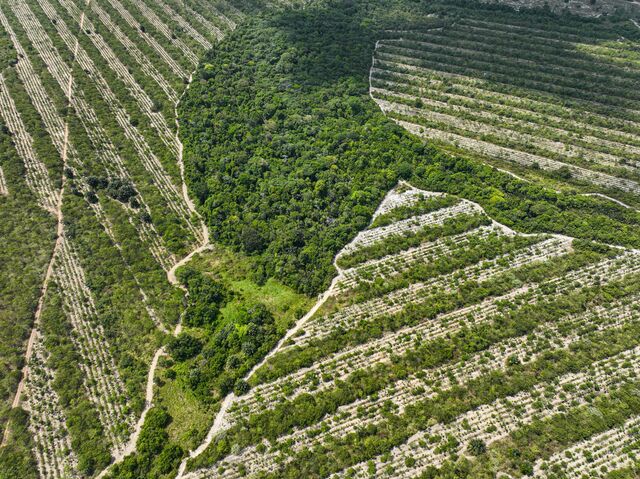
To reach that scale, the company initially trucked in millions of young trees from Sao Paulo state, about 2,500 kilometers (1,550 miles) away, though it said the carbon emitted from transportation was minimal. It now has local sapling providers.
Mombak’s “pure-play restoration approach,” which earns revenue solely by selling credits, was a draw for Microsoft, said Phillip Goodman, who oversees the tech company’s carbon removal portfolio. Planting trees in deforested areas “can buy us valuable time as we develop other forms of carbon removal that are much more technologically complex,” he said.
The company said separately it’s working to reduce its carbon pollution and buys credits from companies such as Mombak to offset any “residual emissions” it can’t cut.
Mombak is currently restoring some 20,000 hectares across Pará state, where Belém is also located. Within two years, it aims to restore up to 100,000 hectares. It has a $30 million loan from BNDES and issued $225 million worth of bonds with the World Bank. Other investors include Axa Investment Managers, Union Square Ventures and Bain Capital.
For Brazil’s government, the hope is that the patchwork of projects it’s investing in will act as band aids to help the Amazon heal before it loses its ability to store CO2 at the scale it has in the past. While deforestation is declining, the Brazilian Amazon still lost 5,796 square kilometers (2,238 square miles) of rainforest in the 12-month period ending in August — several times larger than the combined area of Mombak’s and Belterra’s reforestation projects.
To reach the country’s net-zero deforestation target, a key focus needs to be regenerating illegally deforested private land, said Thiago Belote, director of the environment ministry’s forest department.
“The goal is achievable,” Belote said. “What we need now is to integrate the entire restoration ecosystem.” That means combining grants and credit lines; professionalizing the supply chain from seed collectors to technical advisers; and directing resources based on more accurate mapping of areas with restoration potential.
Juliano Assunção, one of the economists who wrote the report on the economic potential of Amazon restoration, said a key step will be integrating Brazil with global carbon markets. In Belem, Brazil successfully lobbied China and the EU to join a coalition that will unify trading standards. The market has the potential to grow to $731 billion by 2050 if high-quality credits are accepted as a legitimate way of offsetting carbon by corporate net-zero standard setters and governments, according to analysts at BloombergNEF.
If that happens, Assunção estimates that, at a carbon price of $50 per ton, the rainforest could generate about $30 billion in revenue annually. “Such an amount could change the fate of Amazon,” he said.