Name
Ambani
Company
Reliance Industries
Wealth
90.5bn
Industry
Conglomerate
Location
India
Generations
3
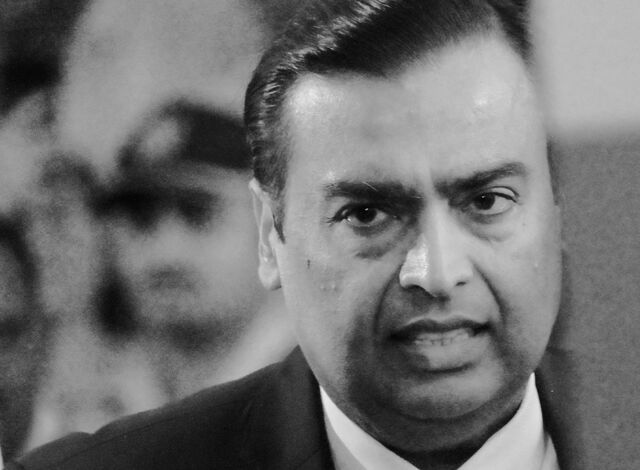
Dhirubhai Ambani, the father of Mukesh and Anil, started building Reliance Industries’ precursor in the late 1950s. After Dhirubhai died in 2002 without leaving a will, his widow brokered a settlement between her sons over control of the family fortune. Mukesh is now at the helm of the Mumbai-based conglomerate, which owns the world’s largest oil-refining complex and has been expanding into tech, retail, financial services and green energy, with his children in charge of those different business units. He lives in a 27-story mansion that’s been called the world’s most-expensive private residence.
Did you know?
Ambani is leading the charge on artificial intelligence, robotics and deep tech in India by investing in data centers, enterprise software and AI-enabled apps.
Timeline
1957: Dhirubhai Ambani returns to India from Yemen, soon starting the precursor to Reliance Industries.
2002: Elder son, Mukesh, takes over the chairmanship.
2014: Mukesh’s twin children, Isha and Akash, join the boards of the retail and mobile-carrier units. Their younger brother, Anant, takes on leadership of the green energy business in 2022.
Name
Chearavanont
Company
Charoen Pokphand Group
Wealth
42.6bn
Industry
Conglomerate
Location
Thailand
Generations
4
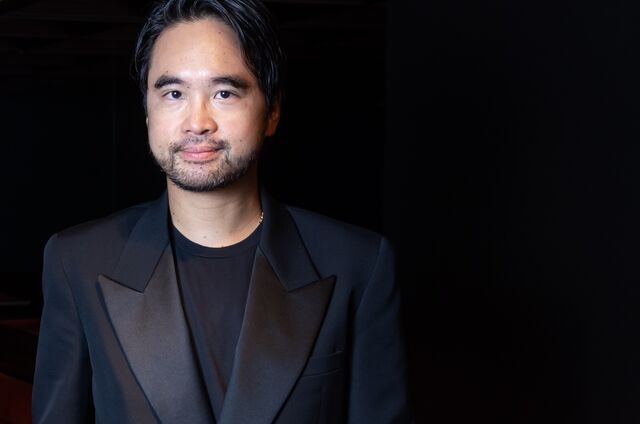
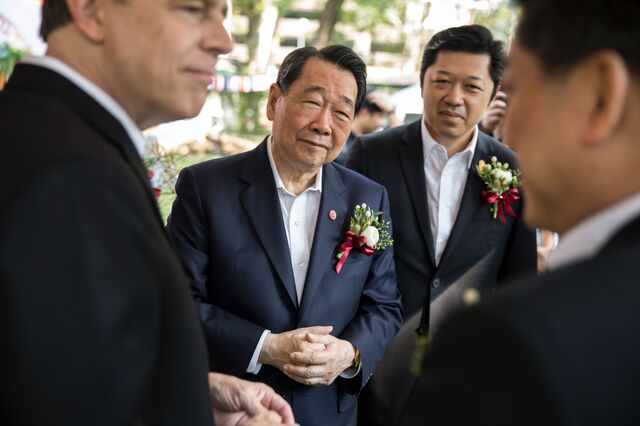
Chia Ek Chor fled his typhoon-ravaged village in southern China and started a new life in Thailand, selling vegetable seeds with his brother in 1921. A century later, Chia’s son, Dhanin Chearavanont, is senior chairman of Charoen Pokphand Group, a conglomerate with food, retail and telecom units.
Did you know?
The Chearavanont clan considered a Hong Kong family office to answer the city’s Wealth for Good call.
Timeline
1921: Chia Ek Chor and his brother set up a seed shop in Bangkok.
1970: Dhanin Chearavanont, the youngest of four brothers, becomes the group’s president after joining when he was about 25.
2017: Two of Dhanin’s sons become CEO and chairman of the group.
2020: Dhanin’s grandson, Korawad, founds Amity, a tech startup whose clients include some of CP Group’s units.
Name
Hartono
Company
Djarum, Bank Central Asia
Wealth
42.2bn
Industry
Tobacco, Finance
Location
Indonesia
Generations
3
Oei Wie Gwan purchased a cigarette brand in 1950 and renamed it Djarum. The business grew into one of the largest cigarette makers in Indonesia and, after Oei died in 1963, his sons diversified by investing in Bank Central Asia. That stake now makes up most of the family’s fortune.
Did you know?
Djarum bought a stake in Italian football club Como 1907 in 2019, when it was facing financial trouble. The club made its way back to Italy’s first tier Serie A last year.
Timeline
1950: Oei Wie Gwan buys the cigarette brand that would become Djarum.
1963: Oei dies, leaving the company to his two sons, Michael Bambang Hartono and Robert Budi Hartono.
2016: Armand Wahyudi Hartono, Robert Budi’s son, becomes deputy president director of Bank Central Asia.
Name
Mistry
Company
Shapoorji Pallonji Group
Wealth
37.5bn
Industry
Conglomerate
Location
India
Generations
5
The family business was founded in India in 1865, when Pallonji Mistry’s grandfather started a construction enterprise with an Englishman. Shapoorji Pallonji Group now spans various business areas, including engineering and construction. Most of the family fortune is illiquid, though: It’s held in Tata Sons, the main holding company behind $400 billion Tata Group, one of India’s largest conglomerates. Noel Tata is now at the helm of Tata Trusts following the passing of patriarch Ratan Tata.
Did you know?
Shapoorji Pallonji Group last year listed its construction firm Afcons Infrastructure on the stock exchange, raising $646 million.
Timeline
1865: The Mistry family starts its business.
1921: Founder Pallonji passes away and son Shapoorji Pallonji takes over.
1947: Shapoorji’s son, Pallonji Mistry, joins the construction business at age 18.
2012: Shapoor Mistry, the grandson of Shapoorji, becomes chairman of the group.
2019: Shapoor’s son, Pallon Mistry, joins the board of the group holding company.
Name
Kwok
Company
Sun Hung Kai Properties
Wealth
35.6bn
Industry
Property
Location
Hong Kong
Generations
3
Kwok Tak-seng listed Sun Hung Kai Properties in 1972. The company has since become one of Hong Kong’s largest real estate developers and the basis of the Kwok family fortune. His sons, Walter, Thomas and Raymond, assumed control when he died in 1990, though Walter lost his chairmanship in 2008 after a feud with his brothers. Raymond now chairs the business.
Did you know?
Sun Hung Kai Properties’ new development in West Kowloon will rent an entire 14-story building to UBS Group, which will house all the bank’s staff in the city.
Timeline
1972: Kwok Tak-seng, a grocery wholesaler, incorporates Sun Hung Kai.
1990: Son Walter Kwok becomes chairman after his father’s death.
2018: Walter’s son, Geoffrey, is appointed non-executive director of Sun Hung Kai.
Name
Tsai
Company
Cathay Financial, Fubon Financial
Wealth
30.9bn
Industry
Finance
Location
Taiwan
Generations
3
The Tsai brothers founded Cathay Life Insurance in 1962. In 1979, the family decided to split up the business, with Tsai Wan-lin and Tsai Wan-tsai taking control of Cathay Life Insurance and Cathay Insurance, respectively. Cathay Insurance was later renamed Fubon Insurance. The family now owns stakes in two large financial-holding companies in Taiwan and has diversified into sectors including real estate and telecom.
Did you know?
Cathay Financial’s Cathay United Bank is ramping up headcount in Singapore to cater to clients’ needs to expand in Southeast Asia.
Timeline
1962: The Tsai brothers found Cathay Life Insurance.
2001: Tsai Wan-lin’s son, Hong-tu, becomes board chairman of Cathay Financial.
2005: Tsai Tzung-han, Hong-tu’s son, joins Cathay Life Insurance.
Name
Jindal
Company
OP Jindal Group
Wealth
28.1bn
Industry
Industrial
Location
India
Generations
3
Om Prakash Jindal started a single-unit steel plant in 1952 and grew it into OP Jindal Group, a conglomerate that spans sectors from steel to energy, cement and sports. By the time he died in a helicopter crash in 2005, he had become power minister in the northern Indian state of Haryana. His wife, Savitri, took over as the group’s chairwoman, with four of their sons managing the businesses.
Did you know?
Sajjan Jindal’s JSW Group is doubling its efforts in electric vehicles and renewable energy, and could explore copper and aluminum production. Younger brother Naveen’s Jindal Steel is investing in green hydrogen.
Timeline
1952: Om Prakash Jindal starts a single-unit steel plant in Hisar, a city in India’s Haryana state.
1982: Son Sajjan Jindal becomes the manager of a loss-making steel plant in Tarapur, near Mumbai.
2001: Sminu Jindal, Om Prakash’s oldest granddaughter, takes over as managing director of Jindal Saw.
Name
Yoovidhya
Company
TCP Group
Wealth
25.7bn
Industry
Food & Beverages
Location
Thailand
Generations
2
Chaleo Yoovidhya established T.C. Pharmaceutical in 1956 to sell medication. He later diversified into consumer goods and in 1975 invented an energy drink he called Krating Daeng, Thai for “red bull.” After Austrian marketer Dietrich Mateschitz discovered the beverage on a business trip to Asia, he teamed up with Chaleo to modify the recipe and market Red Bull globally. The fortunes of the Yoovidhya and Mateschitz families can be largely attributed to the success of the energy drink.
Did you know?
TCP Group plans to start operations at its third manufacturing plant in China in early 2025, more than three decades after opening the first Red Bull factory in the country.
Timeline
1956: Chaleo Yoovidhya founds T.C. Pharmaceutical.
2012: Chaleo dies, paving the way for his son Saravoot to become TCP Group’s CEO.
Name
Birla
Company
Aditya Birla Group
Wealth
23.0bn
Industry
Conglomerate
Location
India
Generations
7
The Aditya Birla Group is one of India’s oldest family-owned businesses, with interests in industries including metals, financial services and retail. It started as a cotton-trading company in the 19th century before Ghanshyam Das Birla, who financed Mahatma Gandhi’s fight for independence from British rule, created what has become one of the nation’s biggest aluminum makers. His great-grandson, Kumar Mangalam Birla, is now the business’s chairman.
Did you know?
Birla entered the jewelry and paints businesses last year. Its telecom arm, Vodafone Idea, is aiming to make a comeback and roll out 5G services in 2025.
Timeline
1857: Seth Shiv Narayan Birla begins trading cotton.
1887: His son, Baldeo Das Birla, sets up a business in Calcutta.
1918: Baldeo’s son, Ghanshyam Das Birla, establishes Birla Jute Mills, which eventually becomes Birla Group.
1936: Basant Kumar Birla, Ghanshyam’s son who by 15 was already active in Birla companies, becomes chair of Kesoram Industries.
1965: Basant’s son, Aditya Vikram Birla, joins the group to work in textiles.
1995: Kumar Mangalam Birla, Aditya Vikram’s son, becomes chairman at the age of 28 after his father’s death.
2023: Ananya and Aryaman Birla, Kumar Mangalam’s children, join the boards of family-run firms.
Name
Lee
Company
Samsung
Wealth
22.7bn
Industry
Technology
Location
South Korea
Generations
3
Lee Byung-chull started Samsung in 1938 as a trading company exporting fruits, vegetables and fish. He got into the tech industry by setting up Samsung Electronics in 1969, which has become the world’s largest maker of memory chips and smartphones. When he passed away in 1987, his third son, Lee Kun-hee, took over the business. He died in October 2020 after years of hospitalization following a heart attack in 2014. Jay Y. Lee, who has cemented control over the conglomerate since, spent time in jail for bribery charges in a scandal that led to the impeachment of former President Park Geun-hye in 2017. He was released on parole in 2021 and pardoned the following year.
Did you know?
With Jay Y. Lee’s focus on AI and Robotics, Samsung is currently invested in more than 200 startups, including humanoid robot maker Rainbow Robotics.
Timeline
1938: Lee Byung-chull starts a company exporting fruits, vegetables and fish.
1987: Lee Kun-hee becomes chairman of Samsung Group.
2022: Son Jay Y. Lee is promoted to executive chairman of Samsung Electronics.
Name
Zhang
Company
China Hongqiao, Shandong Weiqiao Textile
Wealth
21.9bn
Industry
Base Metals
Location
China
Generations
2
Zhang Shiping started the predecessor of China Hongqiao in 1994. The veteran Communist Party member made full use of the market reforms ushered in by former leader Deng Xiaoping to turn his company into a major aluminum maker in China. After his passing, his son Zhang Bo became chairman of the aluminum business while his daughter Zhang Hongxia took charge of the textile enterprise, Weiqiao.
Did you know?
Weiqiao plans to invest at least 60 billion yuan ($8.2 billion) in new energy and electric vehicles by 2027.
Timeline
1994: Shandong Hongqiao is founded as a sino-foreign joint venture, with Zhang Shiping holding a majority stake.
2011: Son Zhang Bo becomes China Hongqiao’s CEO.
Name
Cheng
Company
New World Development, Chow Tai Fook
Wealth
21.8bn
Industry
Property, Jewelry
Location
Hong Kong
Generations
4
The Cheng family fortune started with Chow Tai Fook Jewellery, a Hong Kong-based jeweler. Its stock symbol is 1929, the year it was founded. The Chengs also control New World Development, one of the city’s biggest real estate and infrastructure companies.
Did you know?
Adrian Cheng, Henry’s eldest son, resigned as chief executive officer of New World in September after a series of management reshuffles in the family’s businesses.
Timeline
1929: Chow Chi-yuen establishes Chow Tai Fook.
1970: Son-in-law, Cheng Yu-tung, sets up New World Development.
2011: Elder son, Henry Cheng, is appointed chairman and executive director of Chow Tai Fook.
2007: Adrian joins New World Development’s board.
Name
Bajaj
Company
Bajaj Group
Wealth
20.1bn
Industry
Conglomerate
Location
India
Generations
4
Jamnalal Bajaj, known as Mahatma Gandhi’s adopted “fifth son,” founded the Bajaj Group in 1926. His son Kamalnayan began the precursor to Bajaj Auto and expanded into new businesses, including cement and electrical appliances. The company started manufacturing its own brand of scooters when Italy’s Piaggio didn’t renew Bajaj’s license in the 1970s. In 2008, Kamalnayan’s son Rahul split Bajaj Auto into three units to boost shareholder returns and give more management control to his heirs.
Did you know?
Bajaj Auto is expanding production of its electric vehicles including scooters and three-wheelers, while Bajaj Finance completed a initial public offering of its mortgage arm last year.
Timeline
1926: Jamnalal Bajaj creates the Bajaj Group.
1942: Bajaj’s son, Kamalnayan, succeeds him.
1968: Rahul becomes Bajaj Auto’s CEO at age 30.
2005: Rahul’s son Rajiv joins Bajaj Auto as a managing director.
Name
Pao / Woo
Company
BW Group, Wheelock
Wealth
19.6bn
Industry
Shipping, Property
Location
Hong Kong
Generations
3
Pao Yue-kong started a shipping business when he bought his first vessel, the Golden Alpha, in 1955. By 1979, the company had more than 200 ships, making it the world’s largest independently owned bulk-shipping fleet at the time. Adapting to market conditions, Pao diversified into real estate, using proceeds from ship sales. When he died in 1991, his businesses were divided among his four daughters and their families. A sizable portion of the current family wealth is derived from Hong Kong property developer Wheelock, which was taken private in 2020.
Did you know?
Douglas Woo, an avid swimmer, joined a marathon swim challenge to raise funds for oyster reef restoration.
Timeline
1955: Pao Yue-kong buys his first vessel.
1986: Pao retires and son-in-law, Helmut Sohmen, becomes chairman of World-Wide Shipping.
2014: Douglas, Pao’s grandson, becomes chairman of Wheelock.
Name
Kwek / Quek
Company
Hong Leong Group
Wealth
17.9bn
Industry
Property
Location
Singapore / Malaysia
Generations
3
Kwek Hong Png and his three brothers founded Hong Leong in Singapore in 1941. His eldest son, Kwek Leng Beng, runs operations in the city-state that range from property development to hospitality and finance. Nephew Quek Leng Chan was sent to Malaysia to lead that part of the family business, which has become one of the country’s largest conglomerates.
Did you know?
The family’s City Developments bought the 268-room Hilton Paris Opéra hotel for €240 million ($247 million) in 2024, its third hotel in Paris.
Timeline
1941: Kwek Hong Png sets up Hong Leong in Singapore.
1995: Kwek Leng Beng takes over from his father as executive chairman of Hong Leong Group.
2018: Sherman Kwek, Leng Beng’s son, becomes CDL’s group CEO.
Name
Kadoorie
Company
CLP Holdings
Wealth
17.1bn
Industry
Energy Supply
Location
Hong Kong
Generations
4
Elly Kadoorie and his older brother Ellis arrived in Hong Kong in the 1880s to work for the Sassoons, a prominent family of the Baghdad Jewish diaspora. The brothers later set up a brokerage and amassed stakes in banking, real estate and power-generation facilities. Major investments include CLP Holdings, the electricity supplier to Kowloon and the New Territories, as well as Hongkong & Shanghai Hotels, the group that owns the Peninsula Hotel chain. Michael, Elly’s grandson, now chairs both businesses.
Did you know?
Philip Kadoorie became the deputy chairman of Hongkong and Shanghai Hotels in January.
Timeline
1880s: The Kadoorie family arrives in Hong Kong, later starting a brokerage business.
1944: Elly Kadoorie dies, leaving the business to sons Lawrence and Horace.
1997: Lawrence’s son, Michael, is appointed chairman of CLP’s board.
2018: Philip Lawrence Kadoorie, Michael’s son, becomes non-executive director of CLP.
Name
Chirathivat
Company
Central Group
Wealth
15.7bn
Industry
Conglomerate
Location
Thailand
Generations
4
The Chirathivats control Central Group, which is now one of Thailand’s largest private commercial conglomerates with more than 50 subsidiaries. The clan of Chinese descent was originally headed by Tiang Chirathivat, who migrated from Hainan to set up a small family shop in Bangkok in 1947. His sons ran the empire for about half a century before his grandson Tos took over.
Did you know?
Central Group struck a deal with Saudi Arabia’s sovereign fund PIF to co-own luxury British retailer Selfridges in 2024.
Timeline
1947: Tiang Chirathivat sets up Central Group as a small family shop in Bangkok.
1956: Son Samrit Chirathivat opens the group’s first department store, which at that time was the biggest in Thailand.
2013: Grandson Tos Chirathivat becomes group CEO.
2020: Great granddaughter, Pimpisa Chirathivat, is appointed corporate director of design and technical services at one of the group’s hotel businesses.
Name
Hinduja
Company
Hinduja Group
Wealth
15.2bn
Industry
Finance, Property
Location
India
Generations
4
Parmanand Hinduja, originally from Shikarpur, now in Pakistan, traveled to Mumbai to establish a business in trade and banking in 1914. Five years later, he opened an office in Tehran, where the group’s headquarters remained until 1979. Parmanand died in 1971, and his sons Gopichand and Srichand left for London eight years later while Prakash moved to Geneva and Ashok remained in Mumbai. The Hinduja Group currently has businesses in industries such as energy, automotive, finance and health care. The family owns real estate in India and in cities including London, and was involved for years in a dispute over a letter dividing their fortune.
Did you know?
The Hinduja Group is looking to grow its financial services business.
Timeline
1914: Parmanand Hinduja starts the family business.
1952: Srichand Hinduja joins his father in the enterprise.
2010: Dheeraj Hinduja, Srichand’s nephew, becomes chairman of Ashok Leyland.
2020: Srichand’s grandson, Karam Hinduja, takes charge of what is now SP Hinduja Banque Privee.
Name
Sy
Company
SM Investments
Wealth
15.1bn
Industry
Conglomerate
Location
The Philippines
Generations
3
Henry Sy was born in China and immigrated to the Philippines when he was 12. He helped his father sell rice, sardines and soap before he opened his first shoe store in 1958. From a tiny shop in downtown Manila, the business has grown into a conglomerate with interests including retail, banking and property. Today, the group runs thousands of retail stores and banking branches.
Did you know?
The family’s philanthropic arm SM Foundation has helped more than 4,000 college graduates through its scholarship program since its inception in 1993.
Timeline
1958: Henry Sy opens a shoe store called Shoemart in Manila.
1993: Harley Sy, the founder’s son, joins SM Investments’ board.
2018: Hans Sy Jr. takes over as president of SM Engineering Design and Development.
Name
Lee
Company
Lee Kum Kee
Wealth
15.0bn
Industry
Retail
Location
Hong Kong
Generations
5
Lee Kum Sheung invented oyster sauce and founded Lee Kum Kee in 1888. When the original oyster sauce factory in Guangdong province burned down in 1902, the business was rebuilt in neighboring Macau, where it remained until it relocated to the more prosperous city of Hong Kong. Third-generation member Lee Man Tat consolidated his control of the company, buying out his uncles and brother. The family ventured into the health-supplements business in 1992 with LKK Health Products, a manufacturer and seller of herbal remedies. The clan also owns substantial real estate assets, including the Walkie Talkie tower in London. Lee Man Tat died in 2021 at the age of 91, and his son Sammy is now the group’s executive chairman.
Did you know?
The family’s venture capital arm Happiness Capital invests in startups from sectors including food, health and the environment.
Timeline
1888: Lee Kum Sheung invents oyster sauce and establishes Lee Kum Kee.
1920: Second-generation member Lee Shiu Nan takes over the business.
1972: Lee Man Tat, the founder’s grandson who was known as the “Sauce King,” becomes chairman of Lee Kum Kee.
1985: Lee Man Tat’s son, Charlie, joins the business.
2014: The Lee Kum Kee Family Council, established in 2002, appoints three members of the fifth generation to the board.