THE A.I.
ROMANCE FACTORY
Genre fiction publisher Inkitt has influential backers and a vision for infinitely customizable A.I.-driven content. What would be left for the human creators?
Manjari Sharma hadn’t written much when she decided to start a novel. She’d graduated from university during the Covid-19 pandemic and was reading romance stories to quell her restlessness while locked down in her parents’ house in Lucknow, India. One day she settled into bed and started typing one of her own.
Sometimes in the months that followed, her parents would drift into the yellow-walled bedroom where she liked to work, and she’d scoot over so they could get on the bed and watch the epic series Mahabharat on TV. They knew she was writing but didn’t know the details. Sharma—whose pleasure reading had made her an expert on American romance—was drafting a novel that started with an overweight, insecure American high schooler named Keily being tormented by a hot football player. (“‘You’re fat and dumb,’ James had said with a condescending smirk, ‘like a pig. I should call you Piggy.’”) It would end with them falling in love.
Sharma started publishing installments of the novel on Wattpad’s free platform, titling it Fat Keily; after it was done, seven months later, she also put it on another free platform called Inkitt, based in Berlin. In both places, the novel attracted lots of readers and rapturous comments—“Punctuation be damned! I absolutely love this story!”—and before long, Inkitt was proposing that she move the novel from its free platform to its premium subscription-based platform, Galatea, where Sharma would receive a share of sales. She agreed, and her novel, renamed Keily, took off again. In early 2024 she learned Inkitt wanted to turn it into a series.
This time there was a catch. Sharma recalls being told that she was welcome to write the next books if she could get them done within a few weeks. Otherwise, Inkitt would hire a ghostwriter to do it, though her name would still be on the cover and she’d still get royalty payments.
Sharma had no real choice; her contract with Inkitt gave it the right to do just about anything it wanted with Keily, including come up with sequels. Plus, her life had gotten busy in the years since she first drafted the novel. She’d gotten a master’s degree in mathematics and started an internship in artificial intelligence at the Royal Bank of Scotland. She accepted the ghostwriting offer.
The second and third books came out on Galatea in close succession a few years after the first. This time, some readers were underwhelmed. “IMO it is poorly written, has a different vibe completely, and just doesn’t go in any direction that I would have expected,” one person commented.
The criticism bothered Sharma, who read the sequels only after they were published, but she appreciated the extra money. Soon, Inkitt told her it was adapting Keily for a new video app called GalateaTV; again, no work would be required, and she’d still collect royalties. The launch of that series in September 2024—there were 49 episodes, each no more than a couple of minutes long, meant to be watched on a phone screen—brought in even more income. By then, Sharma was working full time for the bank, but the Keily money was starting to outpace her generous salary. “Keily was just a fun lockdown project with no big publishing aspirations,” she told me over Zoom one morning last fall. Its success had been “a wonderful surprise.”

For Inkitt, this was a manifestation of its vision, a decade in the making, to use technology to discover unknown authors and turn their creative output into revenue. The platform began in the mid-2010s as a friendly place for anyone to share their writing. Over the years, though, its ambitions expanded as it bet that technology could help it extract significant value from a catchy narrative premise—especially with the advent of AI technologies that could generate text and images.
On the company’s free platform, Inkitt, amateur writers still share their stories: lots of romance, often spiced with werewolves, vampires or billionaires. The company offers to publish the most successful stories on Galatea, which costs $69.99 for an annual subscription. From there, Inkitt can create sequels and spinoffs, while also adapting stories for other formats such as GalateaTV (also $69.99 a year), with or without the author’s involvement. For some popular novels, including the Keily series, it also produces print editions. Writers receive a small share of the revenue attributed to their stories. For most, it’s well below what they’d make with a traditional publisher, but then, finding a traditional publisher requires connections that Inkitt authors tend not to have.
Sharma understood that Inkitt chose titles for Galatea by relying on in-house software that tracked readership metrics. What she didn’t fully grasp when Inkitt began serializing Keily was that its employees were using large language models—AI technologies trained on human-authored text and capable of generating their own—in the writing and editing process. Since then, AI has only become more prominent at Inkitt, to the point that staff is “heavily using AI to iterate on the stories,” Chief Executive Officer Ali Albazaz said in an interview. Inkitt relies on AI for tasks such as copyediting manuscripts and suggesting plot developments, as well as producing translations, audiobook narration and covers. Freelancers hired to edit and ghostwrite novels also aren’t barred from using LLMs for their text. All of that allows Inkitt to employ remarkably few editorial employees (whom it prefers to call “content” employees): Galatea’s catalog of titles from some 400 authors is overseen by just one head of editorial and five “story intelligence analysts,” plus the stable of freelancers.
“AI makes it possible not only for everyone to access the inner author within but to also democratize the publishing process,” Vinod Khosla, the founder of Khosla Ventures, wrote on social media last summer, sharing an Inkitt post. At the time, established authors were growing furious about the use of their work to train LLMs and expressing concern that these models threatened their livelihoods. But Khosla is well known for his all-in bullishness on AI: His investment firm was one of OpenAI’s first funders, and his grand statements about AI’s potential to replace human labor have been known to go viral. (He once predicted that 80% of the work in 80% of jobs could someday be performed by AI—doctors, farmworkers, assembly line workers—“and mostly, AI will do the job better and more consistently!”)
Not long before Khosla shared that post about Inkitt, his firm had led a $37 million round of Series C funding for the company; according to people familiar with the deal who requested anonymity because its details were supposed to be confidential, the round valued the company at about $300 million. Inkitt’s investors also include other major Silicon Valley venture capital firms such as Kleiner Perkins and New Enterprise Associates Inc., along with high-profile figures in traditional media and publishing, including Michael Lynton, the former CEO of Sony Entertainment and Penguin Group, and Stefan von Holtzbrinck, the CEO and co-owner of Holtzbrinck Publishing Group, the parent of Macmillan Publishers. Jane Friedman, the former CEO of HarperCollins Publishers Worldwide, is an adviser.
What these supporters have in common, to varying degrees, is an interest in the company’s tech-centric vision for the $151 billion global book publishing market. “There will be new types of publishers and Inkitt is likely going to be one of them,” Khosla said in an email.
Even some traditional players are cautiously opening up to AI. Holtzbrinck Publishing Group has funded an AI startup called Chaptr. The world’s biggest and second-biggest consumer publishers, Penguin Random House and HarperCollins Publishers, have made internal versions of ChatGPT available to their employees for brainstorming and other purposes, though neither company has used it to produce or edit text in books. (Penguin Random House’s Pantheon imprint is the publisher of my book Searches.) While Penguin Random House doesn’t allow AI companies to use its authors’ books to train their models, HarperCollins struck a deal last year with an unnamed technology company to provide text for that purpose if the authors give permission and receive compensation. HarperCollins CEO Brian Murray has also mused about the prospect of a “talking book” that could let readers converse with the AI-driven replica of an author. For even these tentative explorations, the publishers have been widely lambasted by authors, including some they’ve published.
But Inkitt’s CEO, Albazaz, doesn’t seem to worry much about what established authors think of him or his platform. His business model doesn’t need them.
Albazaz was born in Baghdad in 1989 and moved to Berlin at age 10. He got interested in entrepreneurship and, by the time he was 14, had a business reselling used phones he’d bought on eBay. He dropped out of university at 19 to found a startup, a freelance marketplace resembling Taskrabbit. That failed, so he started an Uber competitor, which also failed. He descended into a weekslong funk, struggling to get out of bed, until he was saved, in his telling, by a book: the inspirational fable The Alchemist, by Paulo Coelho, about following your heart despite your struggles. After reading it, he started a platform where people could share their own stories. In 2015, it opened to the public as Inkitt, with $1.1 million in seed funding led by the VC firm Speedinvest.
At first, Albazaz’s plan was to use Inkitt’s software to do the work of a literary agent, finding potential hits by tracking readership metrics and connecting authors to publishers. When that model proved less than lucrative, he switched tactics, turning Inkitt into a publisher and selling e-books on Amazon.com. But that wasn’t viable, either.
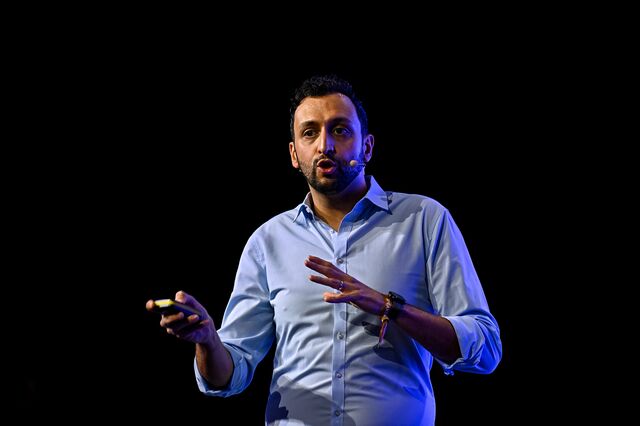
By 2018, Inkitt was running out of cash when two employees and Albazaz came up with the idea to have the company build its own reading app—Galatea. That way, Inkitt wouldn’t have to depend on Amazon or other booksellers for sales, and it could directly reach customers and acquire data about their reading habits. “It was the last hope, really, for Inkitt. We’d tried so many things,” said Oliver Holle, the CEO of Speedinvest and an Inkitt board member. “Almost nobody believed it was going to work.”
But it did. Within five years, Galatea had an estimated 1.1 million monthly active users, according to market researcher Sensor Tower Inc. Within six years, it had launched GalateaTV. By then, Inkitt had relocated its headquarters to San Francisco. Though the company isn’t profitable—the TV operation costs a lot—Albazaz told me in September that it was bringing in revenue of more than $8 million a month, up from $3 million a month one year earlier; in March he said monthly revenue had risen to $10 million. Albazaz said Inkitt aspires to be the “Disney of the 21st century.” It wants to turn content into “blockbuster franchises” (books, TV and, sure, maybe even theme parks), and to do it by replacing the one factor he sees as leading to “bad or incorrect or inefficient” decisions: “human gatekeepers” and their subjective taste. He argues that AI-based technologies can better attract lots of readers.
In interviews, Albazaz has the solicitous warmth of a tour guide or a door-to-door salesman—the kind that inspires a reflexive mirroring of the other person’s affect, tempered by a vague suspicion. I’m a fiction writer myself, and I asked him at one point whether ceding some editorial work to AI might hurt literature. It’s been known to produce factual errors and biases, and algorithmically prioritizing sales could easily leave other priorities—originality, diversity—by the wayside. Albazaz didn’t disagree: “That’s exactly why human oversight is essential,” he told me. And he expressed sympathy for authors’ more existential concerns about LLM training and exploitation, saying, “Using content without the proper license is both unethical and illegal.”
None of this seemed to impede his ambitions for his own AI startup. He said that Inkitt focuses on romance because it’s the most popular genre but that he plans to branch into thrillers, science fiction and more. He added: “We will be also expanding into more highbrow literature. The market size of that is much smaller, so we’re starting with the largest market share and then going smaller and smaller.”
Most of the eight current or former employees I spoke to (four on condition of anonymity for fear of professional retribution) described Albazaz as an extremely hands-on and opinionated CEO. Some appreciated this, saying it reflects his passion and has helped get others invested, including high-profile supporters such as Khosla. Others said it led him to meddle with employees’ decision-making and force them to shift strategies according to his whims. Some questioned his investment in literature itself, noting that he seemed more interested in impressing Silicon Valley funders. One former employee noted that Inkitt’s core users—its readers and writers—tend to prioritize human authorship and never cared about all the technical bells and whistles; many of them, in fact, bristle at the AI experimentation. “Ali’s not really listening to what the readers really want, what the authors really want,” the employee said.
Asked about this, Albazaz said that he takes seriously “any concerns about over-involvement” and that his decisions “are never made on a whim—they are the result of careful analysis and collaboration.” He said that he welcomes feedback to improve his leadership style and that deeply understanding readers and authors is one of Inkitt’s core values. “While interest from Silicon Valley funders is welcome,” he said, “it is merely a byproduct of our greater goal of building a company that will matter for the next 100 years.”
In the Galatea app, thumbnail images of book covers are lined up in tight rows of suggested titles, arranged by categories: No Teens, No Virgins!; CEO; Brother’s Best Friend; Witches; Vikings; Historical Romance. That last one, on a recent visit, included The Great Gatsby and several Jane Austen novels, whose authors were listed, inexplicably, as “Galatea.” Dami Ekpe, Inkitt’s vice president for content, later told me that those titles were part of a small test to gauge interest in classics in the public domain; since their dead authors hadn’t been entered into Galatea’s system, it defaulted to listing itself as the author.
The Great Gatsby had amassed 20,000 reads on the app. Keily, which sat in a row labeled Body Positivity, had nearly 25 million. (Albazaz didn’t explain what Inkitt counts as a “read”; it’s not clear if it requires completing a novel.) The first chapter opens with an encounter at a party between Keily and her bully—“I looked up to find him staring down into my eyes, anger in every line of his stupidly handsome face, in the rigid cut of his jawline”—and ends with James, the bully, calling her fat. The reading experience is basic, with short paragraphs, each chapter ending with a prompt to continue on to the next one and eventually to the next installment in the series.
Ekpe explained that the editorial process at Inkitt doesn’t end with a novel’s publication. While Keily was first published on Galatea before LLMs entered the mainstream, the head of editorial later copyedited the novel using one. A story intelligence analyst used Inkitt’s software to flag where readers of the novel seemed to be losing interest, then came up with ideas for improvement with help from an LLM. OpenAI’s GPT-4 and Anthropic’s Claude are favorites among Inkitt’s editors, though Ekpe wasn’t sure which had been used for Sharma’s book. “It’s almost as if you asked which exact pen from a pot was used to write the editorial notes,” he said. The analyst tested dozens of possible improvements (some crafted by the analyst with LLM assistance, and some by a freelance editor), sharing the existing version of Keily with some readers and the changed version with others, then kept the more successful one online—the sort of A/B testing that’s common in web design and marketing, if not in literature.
With some titles, Inkitt might repeat the process hundreds of times, making a novel as dynamic as a Wikipedia entry without the messiness of crowdsourcing; for Keily, it had made more than 30 changes to date, including adding nuance to Keily’s first encounter with her bully and starting the novel by flashing forward to an especially tense moment in the plot.
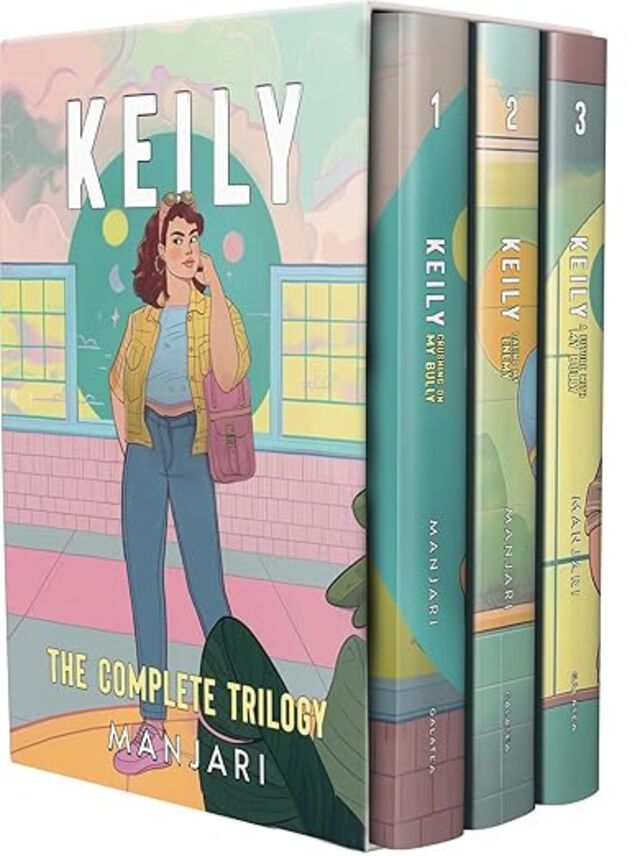
Scrolling through Keily, I found the storytelling in the first book to be genuinely engaging, shot through with palpable emotion. Sharma, who has struggled with her body image, had adapted some experiences from her own life, like a time in her youth when she’d overheard a friend of her mom’s saying she needed to lose weight. The book also has some cute punch lines: “I was still having a hard time believing that James Haynes, my former nemesis, was fondling my butt.”
From the start, though, the sequels read differently. They were generic, distant. “His lips met mine in a tender kiss that sent sparks flying through my veins,” went one line. And later: “He made me feel desired, wanted, and most of all, loved.”
I admitted to Ekpe that I’d enjoyed Sharma’s installment of Keily much more than the sequels, which had brought to mind the stiff, bloodless style I associate with LLMs. He explained that, with the sequels, Inkitt story intelligence analysts had generated plot ideas with the help of an LLM. Then they came up with outlines based on those ideas, also aided by LLMs, and sent them to a freelance ghostwriter. Ekpe acknowledged that Inkitt had “no objection” to ghostwriters using LLMs in their own process and said that Sharma’s might well have done that. Sometimes, when sequels come back, Inkitt’s analysts paste samples of the original writer’s prose into a language model and ask it to adapt the ghostwritten text’s style to sound more like it, though Ekpe wasn’t sure if that happened for Keily.
As we spoke, I struggled to understand where in the process human and artificial intelligence each began and ended. “The distinction’s kind of a false dichotomy,” he eventually said in response to one of my many follow-up questions, a little impatience spiking his generally congenial vibe. “The idea is that it’s a back-and-forth.”
The use of AI extends to Inkitt’s corporate materials, he noted. Inkitt relies on AI-generated sales language and images in marketing Keily, including in social media ads. It also uses AI-generated narration for its Keily audiobooks, AI-generated translations for its foreign-language editions of Keily and AI image generation—the tool Midjourney, among others—for its Keily covers. I offered that I liked the covers, which had a pastel-colored, graphic-novel-like style. Ekpe grinned a little sheepishly: “It’s in an A/B test now, so I don’t know which cover you’re seeing.”
Albazaz characterizes all this technological decision-making as positive for authors, who can share in the payouts from successful books and shows with minimal effort after submitting an initial draft. He told me that some authors have earned upwards of $10,000 from their books in a single month and that screen royalties for those whose stories are adapted can add up to $1,000 a day, though he declined to tell me how common such success is.
A handful of the dozen Galatea authors I spoke to, including Sharma, agreed that Inkitt’s business model benefits them financially and said they can retain creative influence if it’s important to them. “There are times I have been very strict with certain things,” S.S. Sahoo, the author of a big Galatea hit, The Arrangement, told me. She recalled objecting when Inkitt wanted, for example, to have a ghostwriter add more sexually explicit material; Inkitt didn’t push it. “If they tell me something, and I do not like it, no means no,” she said. Sahoo wouldn’t disclose details about her compensation beyond saying that it had allowed her to quit her job for a while and live well on her Inkitt income.
I met both Sharma and Sahoo through Albazaz. But as I encountered more authors through him and on my own, the narrative grew more complicated. Inkitt’s standard contract for Galatea writers—which I reviewed myself and discussed with multiple people who’ve seen it—offers them less compensation than is typical of publishing contracts, while giving Inkitt far more control over the stories it acquires. (Some authors’ contracts differ from the standard one, but this is rare.)
For one thing, writers don’t receive advances against their royalties, as they would in traditional publishing. On top of that, Inkitt apportions only 6% of Galatea’s net readership revenue for e-books and audiobooks to royalties, with each author’s share based on readers’ engagement with their work. This doesn’t provide for a neat comparison to traditional publishing, but the rate itself is far lower than the 25% and up an author typically receives from e-book or audiobook sales. Inkitt’s standard rate for a GalateaTV adaptation is 5%.
“There are many parameters at play, and comparing this with traditional publishing—which operates under an entirely different process—is like comparing apples to oranges,” Albazaz said of these details. He noted that authors get significantly higher royalties—70%—when they bring traffic and customers to Galatea using unique tracking links, though writers told me this isn’t common. And he said that, with GalateaTV exceeding performance expectations, Inkitt is considering changing the TV royalty rate.
Money aside, Inkitt’s standard contract gives it the exclusive right not just to produce books in all forms and languages, along with film and TV adaptations, but also to exploit the creative material for plays, games, merchandise and “any other rights” it deems important. And it doesn’t require the author’s consent for editorial changes and additions. Albazaz told me the company seeks this nonetheless. “We always work closely with our authors”—including on sequels, spinoffs, and TV adaptations—“because the story is their baby, and we have immense respect for their creative vision,” he said, noting that having authors write their own stories, rather than relying on freelancers, is “usually the best outcome.”
But many authors, some of whom requested anonymity for fear of professional retribution, told me they’d felt largely left out of the editorial process. Some called Inkitt’s approach exploitative and said they felt bereft that they’d signed away creative control in a process they considered confusing, misleading and rushed. I heard tales of inexplicable holes introduced into plots; ghostwriters producing bad, artificial-sounding sequels; stories bastardized for TV adaptations that bore little resemblance to the original. Most authors made far less than the $10,000 a month or more that Albazaz often cites; it was more common, among those who were willing to share royalty numbers with me, for the figure to be hundreds per month, if that. “They prey on new writers who have no idea what they’re doing,” said the writer of one popular Galatea series. “The Inkitt platform is literally for new, undiscovered talent, so that’s how they get you.”
In response to this, Albazaz said he hadn’t known that some authors felt sidelined and exploited, adding that the writer’s characterization doesn’t reflect how Inkitt promises to operate. “We take all feedback seriously and are always learning and improving our practices to ensure that our approach remains mutually respectful and supportive,” he said.
It’s true that many of Inkitt’s authors might not have otherwise been published at all. None of the ones I spoke to had an agent when they signed on. Many were barely adults at the time. “They don’t have any connection to New York or literary agents,” one person familiar with Inkitt’s contract process said. “It’s exciting that someone even reads their book.”
Inkitt’s biggest hit is The Millennium Wolves, a werewolf romance series that first appeared in 2019. It was in a sense the product of old-fashioned publishing luck—finding gold with a first novel that readers genuinely seem to love (191 million reads, to date). But Albazaz downplayed the role of its author, Sapir Englard, in its ongoing success. “If you look at the books at this point, there is quite a lot of it written by us,” he said, adding that Inkitt employees made deep edits to the first book in the series and wrote the rest of them. “The root storyline is still the same that the author wrote. But there are a lot of edits that went into it in order to turn it into that big hit.”
When I noticed that Englard had published a new series called Cloak of the Vampire on Amazon’s romance imprint, Montlake, rather than on Galatea, I wrote to her, hoping to find out why she’d left. She told me she was grateful that Inkitt helped launch her career but admitted that the experience had left her feeling taken advantage of. After publishing the first novel, Inkitt asked for sequels. When Englard said she didn’t have time, she said Inkitt informed her it would write them on her behalf while also editing the original novel.
She said she later gave her opinion about all the additions and revisions but felt ignored. “It’s like someone took something that I created from a very deep part of me and completely twisted it,” she said. In response to Albazaz’s comment about Inkitt’s role in making her series a hit, she added, “As much as I give Inkitt credit for what they’ve done, I would appreciate if they gave me the same respect.” She said the more traditional contractual and editorial experience with her new series, which she sold with the help of an agent, was “massively different” than it had been with Inkitt.
Albazaz disputed Englard’s characterization. “During the first four years of our collaboration, her feedback was overwhelmingly positive,” he said. “As her royalties started to approach the millions of dollars, differences in our recollection of past agreements emerged.”
The author of Galatea’s next most popular series, who writes under the pseudonym Annie Whipple and asked that her real name not be published, also described a mixed experience. In Kidnapped by My Mate, the first book of a series by the same name (63 million reads and counting), a woman is taken from an airplane by a werewolf who marks her with a bite; clearly, they’re destined to be together forever. Whipple said she’s been thankful for the chance to work with publishing professionals and learn how to engage readers.
Still, some decisions have bothered her, including the name Inkitt gave the novel. She originally called it something else, not considering the werewolf’s spiriting away of her heroine to be a kidnapping. Then she learned that Inkitt was creating a version of her book in which the werewolf was a mafioso instead, so that it could be adapted for TV; she was told putting werewolves onscreen would have been prohibitively difficult. Whipple had no choice but to accept it. She doesn’t plan to watch the adaptation. “It’s not my story,” she said. “I’d love to see them advocate for their authors more.”
When I ran this by Albazaz, he said he wasn’t familiar with those specifics and would investigate, adding that if it was true Whipple felt taken advantage of and was uncomfortable with the title and the mafioso adaptation, Inkitt would “take immediate steps to address and correct it.”
For a couple of years, the company employed a woman named Kylie Koews in what it called “author relations.” Koews seemed almost universally beloved by writers I met, who credited her with improving communication and advocating for them to have more creative control. In November, though, she quit, writing pointedly in her farewell email, “I leave you with the friendly words to never forget that authors are the reason we’re here!”
Inkitt has yet to replace Koews—as of early April, its website had two listings for editorial positions, an “author experience manager” and a “content strategy lead.” The rest of the 20-odd open jobs were in areas such as operations, marketing, product and engineering, including a director of AI, who could make up to $320,000 annually.
If we start by acknowledging that the medium is the message—that the form in which literature is delivered shapes the literature itself—what, in the age of the algorithmically powered smartphone feed, is a publisher for? If a business can not only discern a reader’s real-time reactions to a text but also use AI to quickly adapt it in response to those reactions, then that business might well conclude that literature should be a dynamic technological product, infinitely adaptable to a consumer’s desires. And in that view, the traditional book, a static human-authored document, starts to look like a relic.
This was the emerging thinking at Inkitt when Albazaz and Khosla, the investor, began talking in earnest after meeting at a conference. They both felt AI could dramatically lower the cost of creating content. Last April, several months after Khosla’s firm led Inkitt’s Series C funding round, he wrote that the relative inexpensiveness would open the door to entertainment that could be “personalized for you and your mood.”
The pair started meeting quarterly to brainstorm about Inkitt’s future. From those sessions, Albazaz said, a vision of infinite technological transformation emerged, with Inkitt representing “a kind of publisher where everything is automated.”
Pavel Murnikov, Inkitt’s vice president for engineering, explained to me how this could work in practice. “If you want a really fast-paced story with lots of action up front and not much character building, that’s what you get,” he said. “If you want the opposite—you want to know as much detail as possible about not even the main character but all the side characters, and then the plot kind of comes in later—we do that.” This could extend into storytelling details. Murnikov described a hypothetical conversation taking place in a room. “Say you love coffee,” he said. “That room will be a coffee shop.” Harald Nieder, a general partner at Redalpine, which has invested in Inkitt, suggested that existing stories could be dynamically updated with references to current events, such as upcoming elections.
A novel might not even need to be a novel at all. If a customer prefers video, the novel could transmute into a movie; if the customer prefers games, the novel could morph into a game. “At some point it would be amazing if we publish a universe and it’s available in every medium,” Murnikov said.
That could play out in other formats, too. One of the big challenges holding Inkitt back from profitability is the high cost of TV production. The company is trying to keep costs down, including by relying on nonunion actors, but in the future it hopes to use AI to generate video featuring synthetic actors. (This could, among other benefits, make werewolves more feasible.)
What emerged from my conversations was a vision of human-created art becoming the raw material for AI-powered, corporate-owned content-production machines—a scenario in which humans would play an ever-shrinking role. The former employee who questioned Albazaz’s investment in literature told me, “The moment Ali is able to figure out how to use AI to generate stories, the authors are going to be done.”
When I asked Albazaz about that prospect, he was emphatic in calling AI a tool for enhancing human storytelling rather than a substitute for it. “The first thing Vinod and I agreed on is, nobody ever is going to pay money for AI-generated content,” he said. “They will not want to. It does not have any value.” It seemed at first that he was affirming that people crave art with a human touch, and refuting the notion that Inkitt would ever want to replace human authorship. But then, Albazaz continued. “You need to have a brand, you need to have a persona behind the book,” he said. “However, that can be generated by AI. If you tell customers, ‘Hey, this is AI-generated,’ nobody’s going to read it. ... You need to make it plausible that this is a human.”
He envisioned people creating multiple “AI-generated personas” credited as the authors of different AI-assisted oeuvres, which could then be adapted into various formats using AI. “Everybody’s going to be able to be a writer, right?” he said, adding, “Imagine if hundreds of thousands of authors could just spitball a few bullet points, and then that bullet point turns into a book. And then they write another bullet point, and that turns out another book. And then suddenly each author is writing 1,000 books.”
This notion is one my author friends have speculated about in horror. Reactions like theirs could be part of what’s holding traditional publishers back from going all in on AI. Redalpine’s Nieder argued that the incumbents, besides perhaps lacking the expertise, technology or data needed to pursue a strategy like Inkitt’s, are somewhat constrained by their existing relationships with authors and their agents. “You’ve got different constituents with different interests,” he said. “For a lot of these stakeholders, I mean rightly so, AI is a threat.” Traditional publishing companies, by that logic, have to tread lightly in a way that Inkitt, in dealing directly with inexperienced authors, doesn’t. When I ran this by Holle, of Speedinvest, he agreed. “But then again, they will have to react,” he said. If they don’t, they could be outrun.
In the speculative future Albazaz described, the owner of any AI publishing platform—and ultimately the owner of the models underlying it—could be expected to claim almost all the financial rewards. The author’s share would no longer represent payment for their creation, or even for their name and likeness. It would merely be compensation for helping the publishing platform scale the one part of the writing process that remained labor-intensive: the mass production of bullet points to feed the machines.
That’s one vision, anyway. But when I described Albazaz’s musings to Inkitt authors, readers and former and current employees, most were skeptical, at best, that he could pull it off—or that he should. Nor were all of Inkitt’s investors as full-throated in their embrace of the technology as Khosla. Offered a description of Albazaz’s idea for AI avatars generating AI novels, Lynton, the former Penguin and Sony executive, seemed surprised: “That feels like a complicated thing for AI to do,” he said. Friedman, the former HarperCollins executive, said, “I can’t buy the concept yet.”
Even Holle, the board member whose firm led Inkitt’s seed funding round and who continues to support Albazaz’s vision, said: “Ultimately what an author is doing is, he’s touching something in the real world. The machine will never feel it.” When I ran all this by Albazaz, he equivocated: “I completely agree—a machine can’t replicate the unique touch of a human author,” he said. But he added, “I see a future where we’ll have human-written stories, AI-assisted stories and fully AI-generated stories. Each format will offer its own strengths and limitations.”
Lately, Sharma has been moving on from Keily. She told me she’d set the novel at an American high school because she figured more readers would relate to it than to a locale drawn from her life in India. But now that she’s established herself, she’s posted a new novel on Inkitt, Unsuitable Proposal, that’s set in her hometown of Lucknow. The protagonist, Kashvi Acharya, is a computer programmer whose parents are forcing her to decide between her career and an unwanted marriage. Maybe Inkitt will pick up Unsuitable Proposal for Galatea, or maybe Sharma will sell it to a more traditional publisher. Or maybe it will just stay on Inkitt’s free platform, available for anyone to read.
Sharma still works in AI, and she’s excited about its possibilities. When writing fiction, she said, she’ll sometimes use ChatGPT to clean up her grammar or refine her language. Still, she never uses its prose or its suggestions for plotting or characters. The current models, she said, just don’t write well enough.
It isn’t only a question of their capabilities. Human beings do all kinds of things machines could do more efficiently. We get from one place to another. We chop vegetables for dinner. We create music. We tell stories with language and images. We also appreciate seeing other human beings move, cook, play songs, express themselves. It’s fun. It’s interesting. It’s moving. It makes us feel connected to other human beings and to the experience of being alive and conscious.
Sharma wrote Keily for a simple reason: “I was enjoying it.” She said she understood that in the future she might be able to train an AI model to copy her style. She might be able to get it to produce an infinite catalog of Keily sequels. And she might, therefore, never have to write another novel again.
As she imagined all this, her expression grew befuddled. She could do all this, it was true. “But then,” she said, “I guess, what’s the point?”