Businessweek

Where NFL History Is Made

This is a dek.

Wilson has been sewing NFL footballs by hand since 1955 in Ada, Ohio. The factory recently underwent a $15 million expansion.

Every throw a quarterback makes on an NFL field starts in Ada, Ohio. Every year, a Wilson Sporting Goods Co. factory in the town, about an hour south of Toledo, creates more than a half-million footballs and sends 27,000 of them to the league, whose players toss nothing else at practice and on game days.

Most other mass-market Wilson goods—volleyballs, pickleball paddles, tennis rackets—are produced abroad in manufacturing hubs such as Vietnam and China. But the NFL requires its game balls to be made in the US. Wilson has been fulfilling that mandate since 1955 at the Ada facility, which recently underwent a $15 million expansion. The company signed a new deal to extend its rights to make NFL footballs this year, and also produces balls for college and high school programs. The constant whir of sewing machines diffuses through the 80,000-square-foot space, which in June replaced a smaller facility next door.
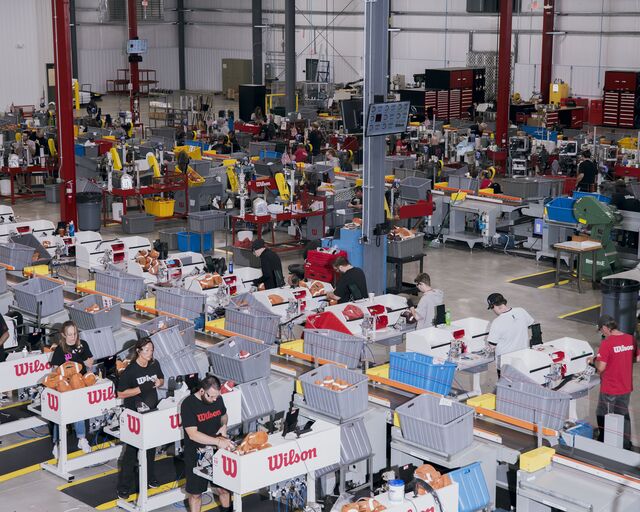
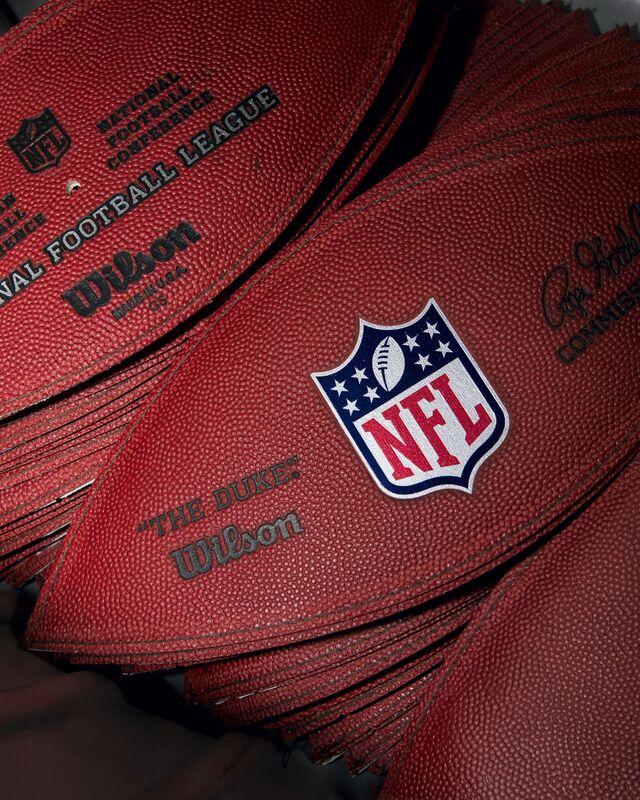
About 140 union workers carefully combine cowhide leather panels into different types of footballs, including the $150 Duke, the only model the NFL uses.

About 140 union workers carefully combine cowhide leather panels into different types of footballs, including the $150 Duke. Prized for its fine leather craftsmanship, it’s the only model the NFL uses.


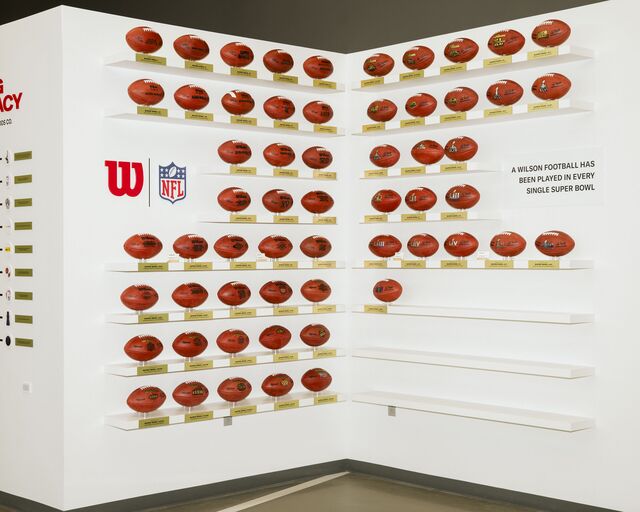
Wilson has been at every Super Bowl since the very first, in 1967, when the Green Bay Packers defeated the Kansas City Chiefs at the Los Angeles Memorial Coliseum.


In the 1800s, football players used balls made from inflated pig bladders acquired from meatpackers, hence the “pigskin” moniker. By the turn of the 20th century, the development of a vulcanized rubber liner allowed manufacturers to create a more durable football with a more precise shape. Wilson’s predecessor, the Ashland Manufacturing Co., specialized in turning animal by-products into tennis rackets, golf balls, baseball shoes and other items. In 1914 the company reorganized into Wilson Sporting Goods and started making footballs in the 1950s with the acquisition of the Ohio-Kentucky Leather Co. Wilson is now owned by publicly traded Finnish sports equipment maker Amer Sports.
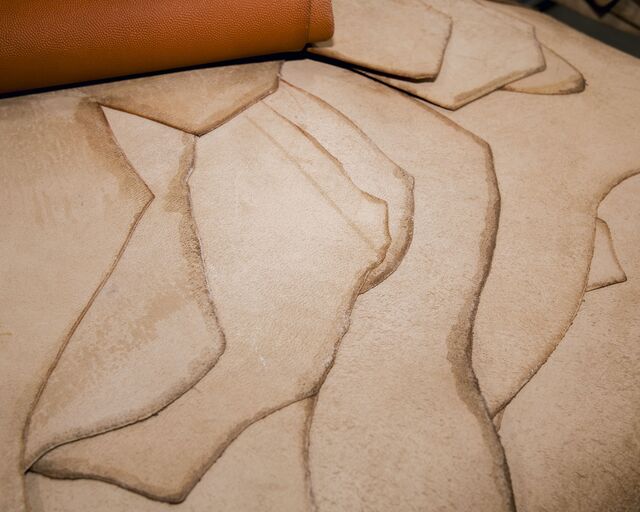
Stacks of tanned leather bought from Horween Leather Co. in Chicago, used to make Wilson Duke footballs
Making Duke footballs begins with stacks of tanned leather bought from Horween Leather Co. in Chicago.
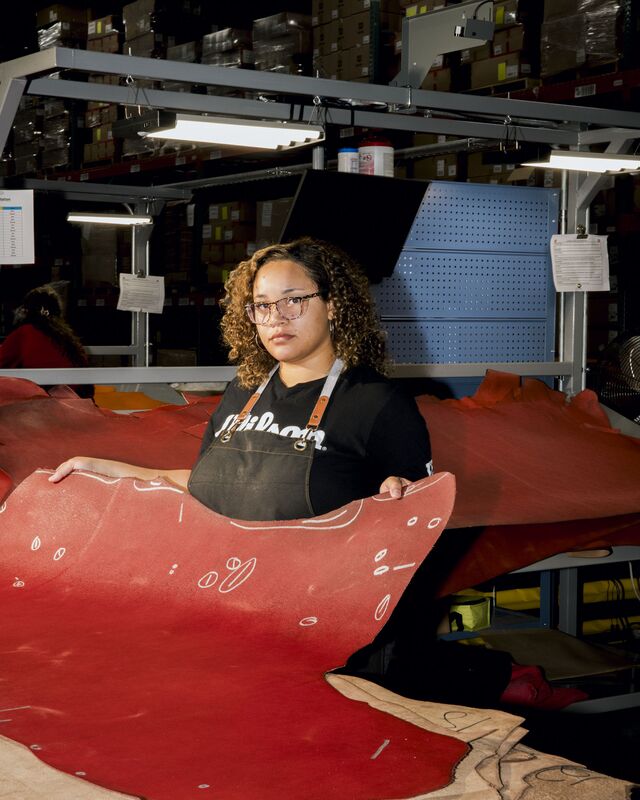
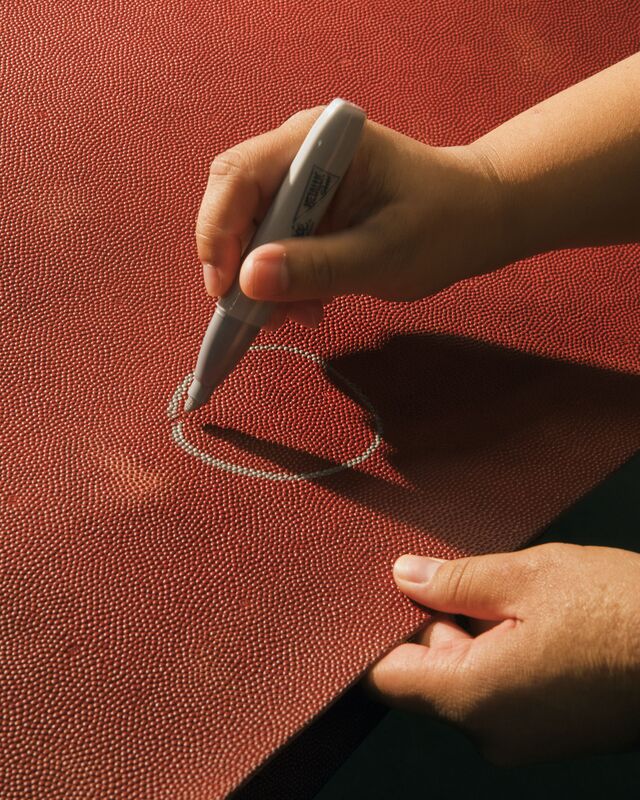
A worker draws a circle on the material, checking for any scars or blemishes
Workers check the material for any scars or blemishes, using a Sharpie to mark flaws.
A quality control auditor shows her work before the marked-up leather is cut.
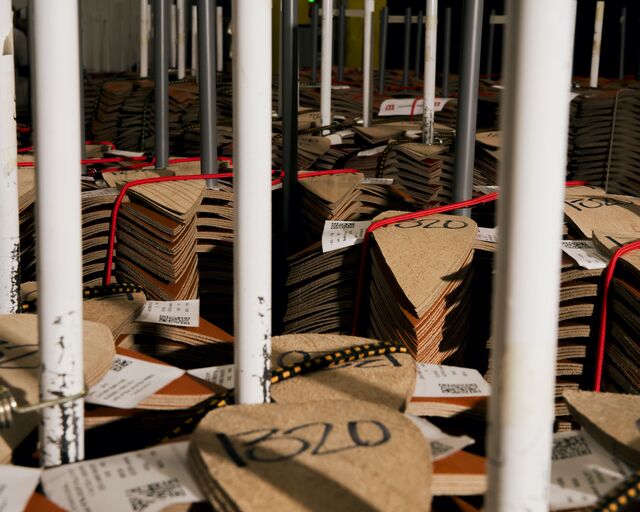
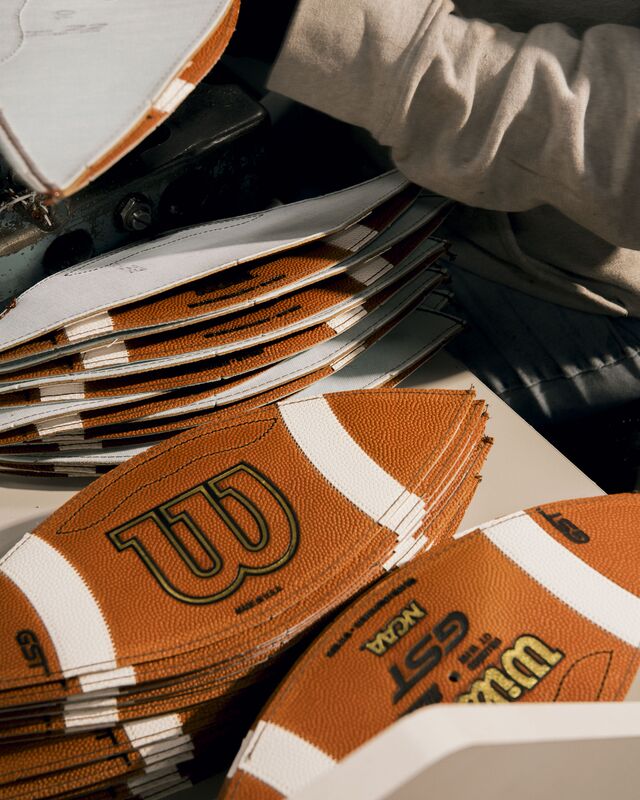
Cut and stamped panels are sorted into stacks based on order specifications before they get stitched together.

Bladed stencils known as dies slice around the imperfections to create the panels that form the football’s shape.


Factory presses, some decades old, stamp on logos and graphics. Many of the machines Wilson uses for its footballs are custom-made, mostly in the US.


Cut and stamped panels are sorted into stacks based on order specifications before they get stitched together.


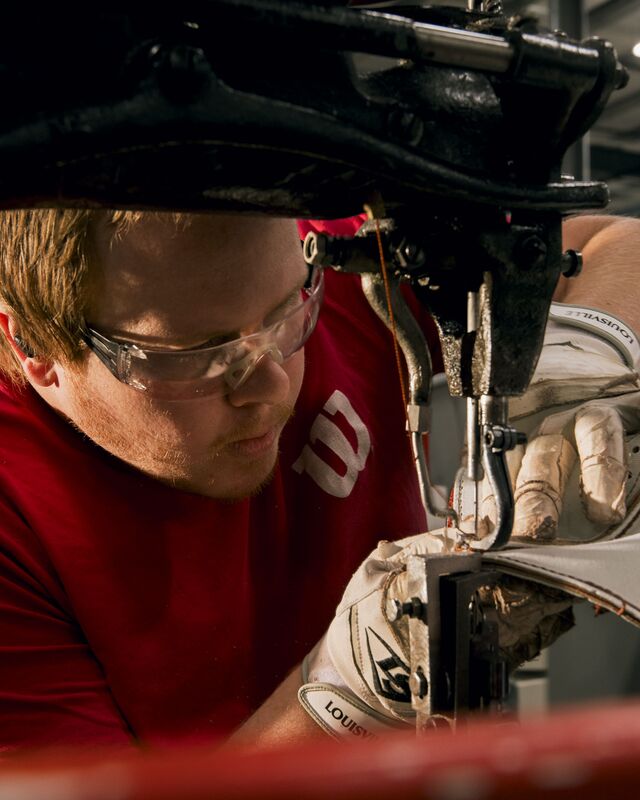
Workers sew fabric liners onto the back of the leather panels to strengthen the ball. It takes about three minutes of sewing to make the elongated shape players battle over on Sundays.


Workers train for as many as six months to sew Wilson footballs, which require a high level of precision to line up everything just right.
Workers train for as many as six months to sew Wilson footballs, which require a high level of precision to line up everything just right. “That’s the most difficult part of the job to master,” says Kevin Murphy, vice president and general manager of team sports at Wilson.
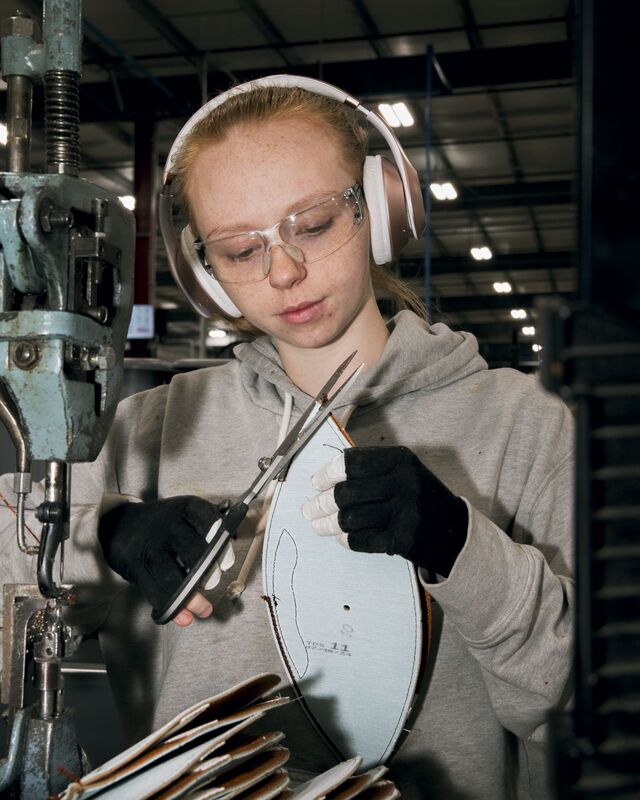
A worker trims the edges of a lined football panel.

A sewing machine reinforces the leather where the football’s laces—integral to throwing a perfect spiral—will eventually be added.


The Ada factory also produces Wilson’s $110 GST model, used by NCAA teams and high schools.
In addition to Duke footballs, the Ada factory produces Wilson’s $110 GST model, used by NCAA teams and high schools.
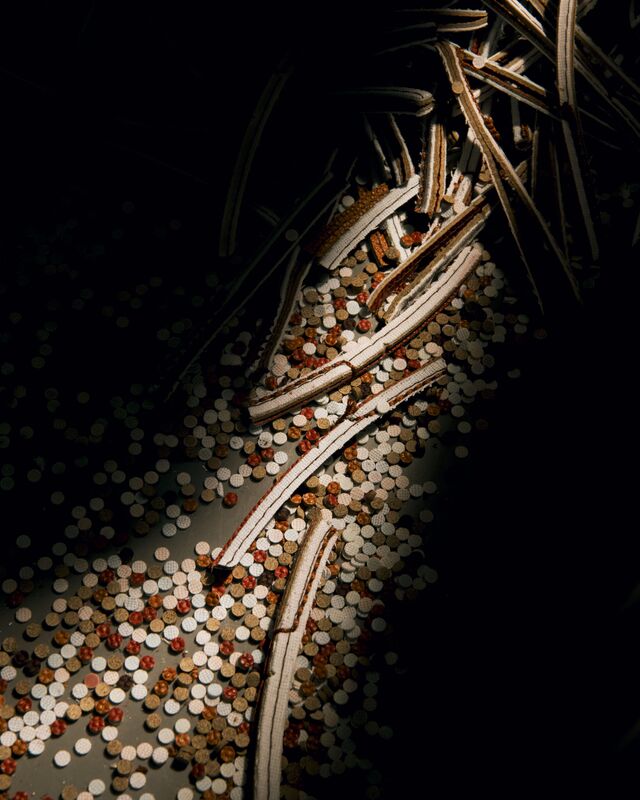
Leather scraps are repurposed for use in smaller items whenever possible
Wilson says it repurposes leather scraps for use in smaller items, such as key chains, whenever possible.
NFL game balls are numbered, dated and implanted with a nickel-size microchip that allows a team to track movement metrics such as speed and distance.
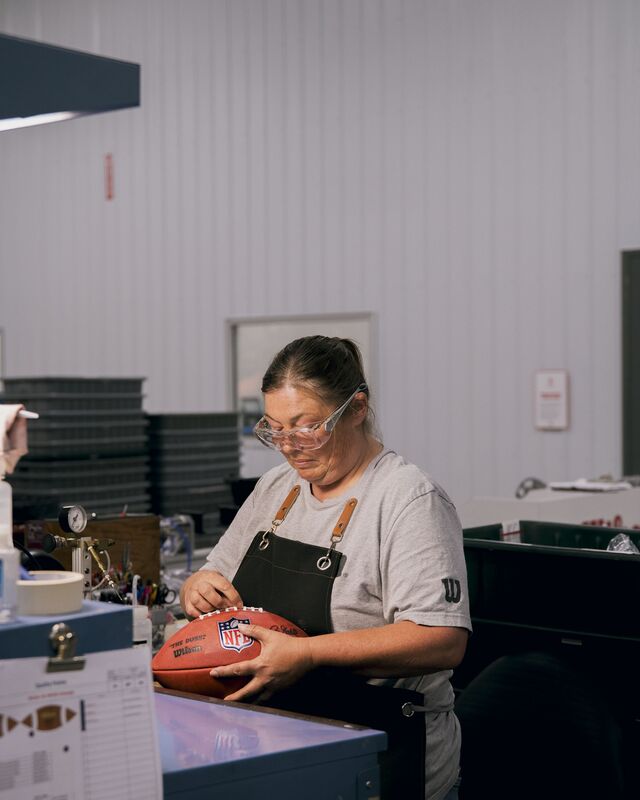
Duke balls receive a quality check before they’re shipped out.
Each NFL team gets 780 Duke footballs yearly for the regular season. Equipment managers break in the balls using special leather conditioner and a silty substance known as football mud, which improves grip.

The leather is sewn inside-out; to flip the ball outside-out, workers steam it to soften the leather before muscling it into place.


After placing the urethane bladder inside, workers put the ball into a vise and use an awl to pull the laces, which are made of polyester cord enveloped by moldable plastic, through the holes. Later, balls are placed in a pressure mold to reach their final, pointed form.


NFL game balls—the ones designated for use in competition—are numbered, dated and implanted with a nickel-size microchip that allows a team to track movement metrics such as speed and distance.


Duke balls receive a quality check before they’re shipped to one of the NFL’s 32 franchises.


Each NFL team gets 780 Duke footballs yearly for the regular season. Equipment managers break in the balls using special leather conditioner and a silty substance known as football mud, which improves grip.


Not all footballs come out perfect. Inside the factory, a chart on the wall shows the top defect of the month: In July it was stamp alignment, ahead of errors like skipped stitches and imperfectly shaped tips. The company stands by its handmade construction process just the same, and there aren’t any robots at the Ada facility. Years ago, Wilson brought in digital scanners to detect flaws on the leather sheets. But they found that approach was slower and not as accurate as the human eye. “We’ve looked at mass-producing,” Murphy says. “But you can’t do it with this product.”
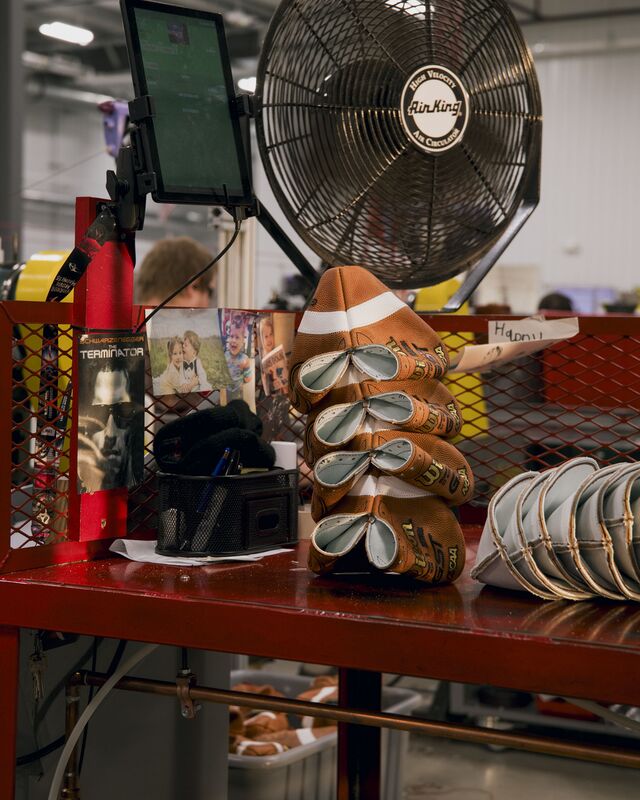
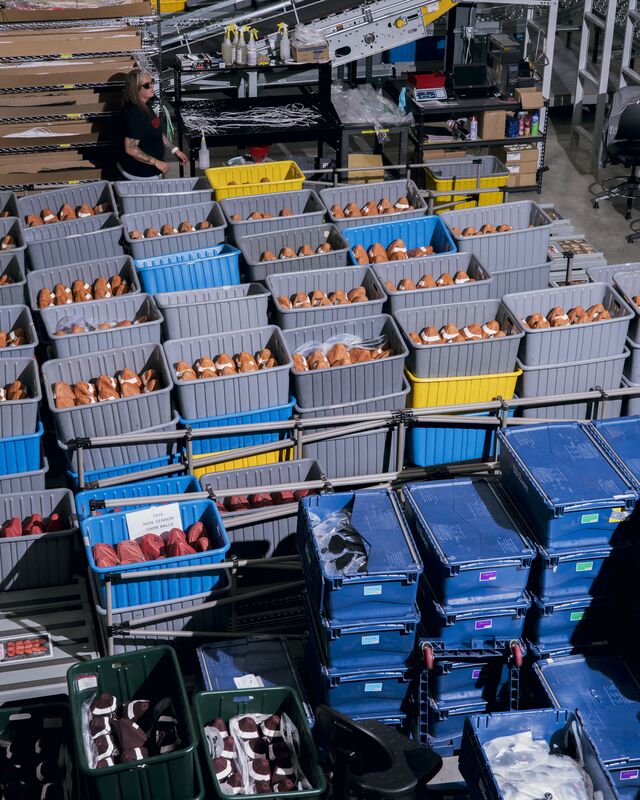
Assembled footballs stacked at an employees work station at the Wilson factory in Ada, OH on August 22nd, 2024.

More On Bloomberg