How Vail Resorts Sparked the Great Northeast Ski Revolt
The ski giant has purchased dozens of regional resorts, but when the mountains didn’t receive a Park City-like upgrade, the backlash began.
With just four weeks until the start of the ski season, Attitash Mountain is still without a chairlift to its summit. At the base of the rural New Hampshire resort, pieces of a new high-speed quad—tall steel towers, stacks of chairs—lie in a parking lot as a construction crew mills about in the 26F (-3C) November cold. Attitash senior mountain operations manager Deirdre Riley is trying to get word from her helicopter pilots on whether they can fly in the gusty, cloudy conditions to begin hauling the parts up the craggy slopes. The airdrop was already scrapped the previous two days because of ugly weather, and the forecast looks uglier tomorrow. “Delays like this make us really nervous,” Riley says.
The quad’s predecessor, the Summit Triple, a rickety three-seat lift dismantled last spring, dated to 1986 and was a 17-minute lug to the top, where it dispensed frigid riders like an ice machine. Industry newsletter the Storm Skiing Journal called it “the most hated lift in New Hampshire, and possibly in America.” After seven months of foundational work to replace it, missing this season’s installation window would be a disaster, cutting off access to a large chunk of the already compact ski area and further infuriating locals who’ve been complaining about pretty much everything—poor snowmaking, understaffing, overcrowding, infrastructure breakdowns—at Attitash, now owned by the snow-sports behemoth Vail Resorts Inc.

Vail is known for destination properties such as Park City in Utah, Whistler Blackcomb in British Columbia and its flagship Colorado namesake, where $1,000-a-night hotels and slope-side restaurants teeming with Moncler jackets are the norm. Après-ski at Attitash, by contrast, is chicken fingers at a school-cafeteria-like lodge and a performance by funk cover band Motor Booty Affair. A good vibe, but not quite the chalet lifestyle Vail markets with its Epic Pass. The blockbuster subscription upended the US ski industry in the late aughts, with its unlimited access to a bunch of famed mountains in the West, and helped usher in an era of consolidation as rivals sought to build out their own multiresort packages.
Then the Colorado-based company ventured into the Northeast, a bastion of schuss culture sneered at by the Aspen crowd for its shorter, oft-frozen peaks. In 2017, Vail acquired Vermont’s Stowe Mountain Resort for $50 million. It gobbled up two more New England mountains the following year, then spent $264 million in 2019 on 17 resorts, including Attitash and other locations in New Hampshire, New York and Pennsylvania. (The company has since purchased three more in the Keystone State.) About two-thirds of Vail’s North American properties are now east of the Rockies, with the highest concentration in the Northeast.
The bet was that these tinier footprints would create what Vail executives refer to as a “feeder” network for the Epic Pass, which now has more than 2 million members and starts at $909 at its top tier for season-long access to all its locations. (A cheaper version for $676 comes with blackout dates or geographic restrictions.) A skiing addiction rarely begins atop a Lake Tahoe double black diamond; newcomers tend to learn on smaller mountains and eventually graduate to an expensive trip out West, where Vail can upsell them on food and lodging. “Local and regional ski areas in the East are a big part of how the passion for this sport begins,” says Kirsten Lynch, Vail’s chief executive officer.
Vail promised serious investments upfront to “elevate the guest experience,” but it didn’t exactly deliver a deluxe overhaul to these old-timey getaways. In recent years there’s been carping about the eroding conditions at Northeast properties ranging from Crotched to Hunter to Wildcat. Even at higher-end Stowe there’s been a backlash about traffic jams at the base and abysmal parking. Things got so dire at New Hampshire’s Mount Sunapee that Governor Chris Sununu weighed in, publicly accusing Vail of overselling passes and griping that its customer service “stinks.” With guests livid on social media about trail closures and chairlift dysfunction, Attitash came to symbolize Vail’s struggles in the East. (A Vail spokesperson says that these criticisms are specific to one extremely challenging ski season during the pandemic and global labor shortage, and that the company has invested significantly to resolve the issues and has since seen a tremendous increase in positive guest surveys.)
But if the millions of skiers and snowboarders in the region aren’t convinced Vail is as committed to the East as it is to the West, its feeder strategy risks turning them into haters. Lynch has initiated major infrastructure and hiring projects to combat perceptions that Vail is treating these Epic members like second-class citizens, but there’s a sense that executives may have underestimated what it would take to win over the market. “The East Coast execution has been mixed at best,” says Patrick Scholes, managing director for lodging and leisure research at Truist Securities, noting climate change will only make the challenge harder as snowfall declines. “I question if it’s worth the aggravation for Vail for the New Hampshire resorts.”
One of Vail’s big steps in showing it’s serious at Attitash? Installing that expensive new chairlift. Unfortunately for Riley, a dense fog forces the helicopter to call off its flight that November morning. She informs her team they’re pushing the installation back a week, and later she shoots a quick video for the resort’s Facebook and Instagram feeds reassuring passholders that they’re still on track. “No need to worry,” she tells followers. “The resort is gonna open. The lift is gonna open. The stoke is still high.”

Long before resort-town Airbnbs and multimountain megapasses, New England skiing was considered a destination vacation. So-called snow trains chugged droves of skiers north from Boston and New York before and after World War II. In 1958, Wildcat opened the first gondola in the US, and a few years later Attitash planned a heated monorail to chauffeur guests to the summit. Although it never got beyond a prototype, Jeff Leich, former executive director of the New England Ski Museum, says it was part of a push to establish Attitash as a “red-carpet ski area” synonymous with upscale service.
In the mid-1990s the resort experienced a boom under American Skiing Co.’s founder, Les Otten, with a new hotel and peak expansion. Trails such as Tim’s Trauma and Idiot’s Option swarmed with bright jumpsuits, as did bars with names like Red Parka Pub and Horsefeathers. Otten snapped up a bunch of Northeast mountains before moving west with risky acquisitions of Colorado’s Steamboat and California’s Heavenly. “I’d be in meetings with Les, and in my head I’d go, ‘Jesus Christ, this guy is out of his mind.’ Then 10 minutes later I’d be thinking, ‘Holy shit, this guy is a genius,’” recalls Tom Chasse, the former president of Attitash under ASC.

The insanity won out, and ASC unraveled in the 2000s as new management grappled with debts. (Otten says he was building a forerunner to Vail’s model and just needed more time to prove the business.) In 2007, Attitash was offloaded to a Missouri-based owner of a group of mountains in the Midwest and Northeast. The company made important upgrades to snowmaking equipment, but Attitash veterans generally remember the post-Great Recession years as a period of stagnation. Lifts were in perpetual disrepair, the hotel was sold, and trails appeared narrower and narrower each season. Some assumed this was a way to save on snowmaking costs, which experts estimate can run into the high six or low seven figures per season for a typical mountain in the region. “For the decor in the lodge, they brought in the cheapest possible furniture,” says local real estate developer Alec Tarberry. “It felt like you were in a diner from 30 years ago, but not in a cool way.”
The momentum and money was out West. Vail’s novel Epic Pass, introduced in 2008 at $579 with a five-resort portfolio, cost half as much as some big single-mountain season tickets and made New Englanders rethink why they were spending so much to scrape down ice when a powder holiday was a cheap flight away. In the 2010s skier and snowboarder visits to the Northeast fell 7.5% from the prior decade, whereas they jumped 6.6% in the Rockies during the same period, according to data from the National Ski Areas Association.
Locking up so much revenue in advance of the ski season—the cutoff date for buying the nonrefundable Epic Pass is usually in early December—also gave Vail the financial stability to keep swallowing up competitors. Operators relying more on daily ticket sales were vulnerable to bad-weather years when customers stayed home. Yet in 2012, after the lowest snowfall in decades, Vail still managed to increase annual sales for its mountain segment, which includes lift passes, retail, dining and ski schools.
The same year, Rob Katz, a former investment banker who was Lynch’s predecessor as CEO, announced that Vail would start targeting “smaller ski areas located near major urban markets.” It acquired a 2,300-acre resort in California, which made sense to Epic subscribers, and then two properties in Michigan and Minnesota—hills more than mountains—which seemed bizarre. Katz told shareholders the new Midwestern footprint would give Vail access to almost half a million active skiers and boarders in and around Detroit and Minneapolis.
Lynch, who was then Vail’s marketing head, recalls the company receiving a ton of pushback on the strategy but was personally invested in the idea that it was the best way to convert newbies. She says she “grew up in downtown Chicago as a total city kid surrounded by skyscrapers and concrete,” and only fell in love with skiing thanks to family drives to Wilmot Mountain, 65 miles north, in Wisconsin. That eventually led to winter trips to Colorado. In 2016, Vail acquired Wilmot for $20 million—a pittance compared with the $1 billion it spent on Whistler that same year.
Even as Western giant Alterra Mountain Co. launched its archrival pass—the unsubtly named Ikon Pass—in 2018 with access to mountains including Aspen Snowmass and Deer Valley, Vail continued its aggressive march east. Dotting the map with enough Vail properties would make it seemingly impossible for residents around Boston, Philadelphia and New York to resist an Epic subscription. But in acquiring Masshole-reachable resorts such as Attitash, Vail was also now in business with a particular type of customer who’s intensely demanding despite living in a region notorious for less glamorous conditions. “It really is inspiring whenever I’m out there when I see someone skiing with a trash bag over their jacket,” says Tim Baker, Vail’s chief operating officer for the Eastern region. “I never knew how enjoyable skiing in the rain could be.”
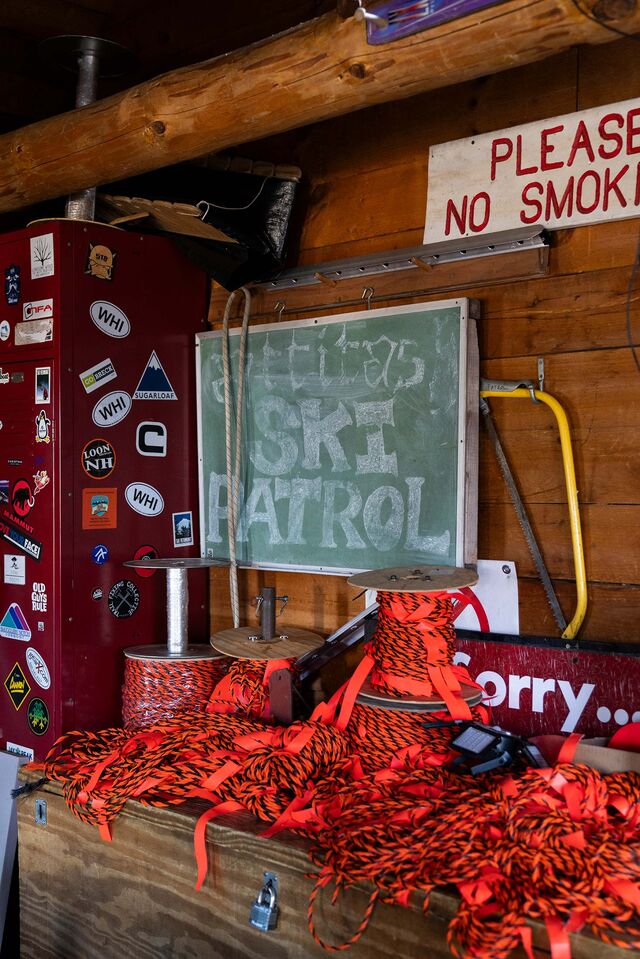
Six months after Vail completed its purchase of Attitash and 16 additional properties, the pandemic hit. Mask rules, social distancing and other safety protocols made the new owner an easy target in the “Live Free or Die” state, where such restrictions were annoying for many trudging around in boots at a congested resort.
Leading up to the pandemic, the company had implemented several rounds of layoffs and reorganizations across its portfolio to move more local positions—in finance, marketing and human resources—to its headquarters near Denver. Losing a handful of administrators might not have been a big deal at a larger resort, but at a small mountain those staffers could help bus tables or scan tickets in crunch times. With a labor shortage across the ski industry, Attitash was so strapped on busy weekends that general manager Greg Gavrilets and Riley, the operations leader, had to load and unload lifts themselves. When the dated lifts inevitably broke, repair parts were a pain to source in the supply chain crisis. “We’d order things, and they’d show up a month later,” Riley says.
At times during Attitash’s winter 2020 season, barely a fifth of its 68 trails were open. Vail blamed historically warmer-than-usual temperatures and Covid-19 hurdles, but many complained that nearby independent mountains had more terrain open. Stuart Winchester of the Storm Skiing Journal says these operators had more institutional knowledge and Vail struggled to adapt to snowmaking in the Northeast’s chaotic weather. “They need to stop budgeting snowmaking from 2,000 miles away,” he says. (Vail says operational decisions about day-to-day snowmaking are made by local resort GMs.)
As Attitash’s quality seemed to decline, Matt Braun, owner of Matty B’s Mountainside Cafe across the road from the resort, noticed new Epic Pass holders getting angrier about “this big evil corporate entity,” almost making Vail sound like a villainous developer from a ’90s ski comedy. “People were like, ‘This is bullshit. Half the mountain is closed. I should get money back on my pass,’” says Braun, who thought the grumbling was a tad melodramatic.
The following season was worse. Looking to win back goodwill, Vail cut prices of its Epic Pass by 20%. Worldwide sales jumped to 2.1 million, up from 1.4 million the year before. But hiring was difficult. Some portfolio properties were competing for the same temporary talent and offering only mediocre pay, while starting wages and overtime were substantially better at Stowe a few hours away. Vail also didn’t seem to grasp the messy reality on the ground, where longtime residents were used to asking about a gig in person rather than dealing with an online HR system. One of the more effective job listings turned out to be ads in the local Conway Daily Sun newspaper with a phone number. Sometimes new hires had to come to Attitash’s offices merely to fill out a web application for the position they’d already gotten.
Lacking enough active lifts and trails, Attitash saw wait times stretch more than 30 minutes on some days, only for the old Summit Triple chair to break and keep riders bobbing for another half-hour. In one instance, when a furious husband and wife recognized Gavrilets and a Vail executive visiting from Colorado stuck in line behind them, the couple gave them an earful, which was becoming a trend. “My wife was getting yelled at in the dog park,” recalls Gavrilets, who resigned that season. “Grocery stores were tough.” Even Stifel Financial analyst Jeff Stantial received cantankerous emails about Vail’s bungling in New Hampshire and elsewhere. “I’ve never seen this in my career covering the stock,” he says.
There was a growing feeling that Vail either didn’t care as much about its Eastern resorts or didn’t know how to run them right. Until just recently, Attitash was listed in the wrong place on the map of properties on Vail’s website, as if execs didn’t know where it was located. Skier Josh Kernan remembers rejoicing one day when an army of snowmakers arrived from the West wearing slick Vail jackets and began blasting snow over closed tracks. Then, inexplicably, the trails remained roped off. “It was almost turning the knife in the back, ’cause you could see all these tall whalebacks [of snow] on the unopened trails,” Kernan says. (Vail says that an extreme cold snap meant the resort could make snow faster than the piles could be pushed out, and that Attitash’s map mislabeling was due to a graphic design issue.)
Baker, Vail’s Eastern COO, disagrees with the notion that the company took these resorts’ customers for granted. He says that the pandemic made for a complicated transition and that Vail always planned to upgrade mountains like Attitash lest its Epic Pass lose favor with locals. “In order to drive loyalty, we have to do our side of the bargain,” he says.
The momentum began to shift in 2022. Vail announced a new minimum wage of $20 an hour—a 53% increase for its New Hampshire resorts—and by then had completed or was moving ahead on 11 lift upgrades in the Northeast, including the replacement of a Nixon-era chair at Attitash. That June the company at long last said it would replace the dreaded Summit Triple, too. Lynch, who’d become CEO the previous November, makes a point of stressing that Vail is empowering regional resorts to retain their own identity. “The goal isn’t that somebody in the corporate headquarters is making operations decisions,” she says.
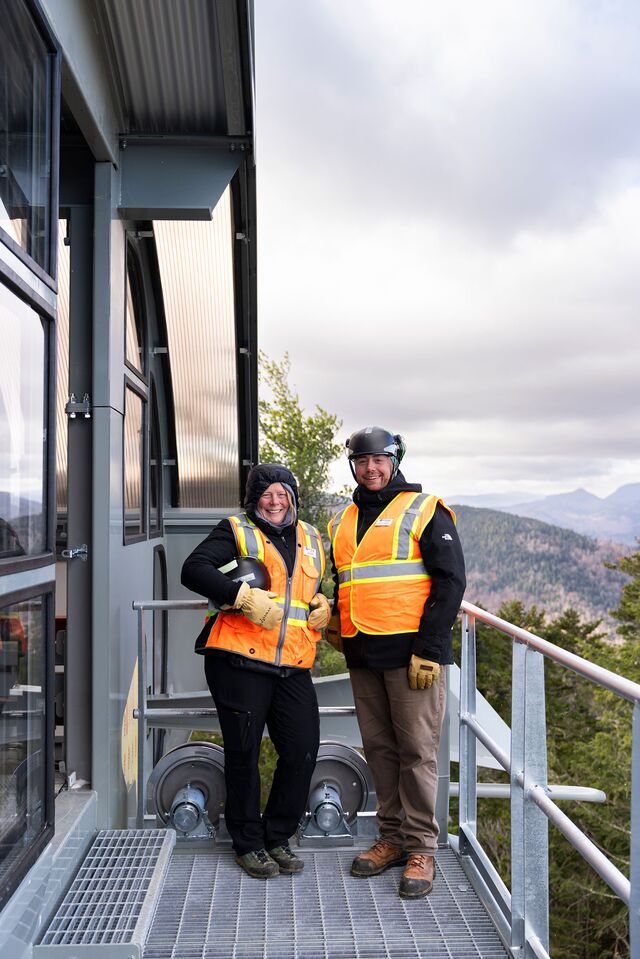
Brandon Swartz, who took over from Gavrilets as GM, says his goal is to make Attitash the best version of itself, embracing its rustic heritage and classic New England vibe. The mountain is never going to be Whistler. “You’re not gonna see a five-star Michelin restaurant,” he says. He and Riley spent much of last year doing a lot of rehab, like “triaging” infrastructure. They boosted staff, stockpiled spare parts and did a deep clean of the electric motors in all their lifts—things guests likely expected Vail to do back when it first acquired Attitash. “Lots of gunk,” Riley says.
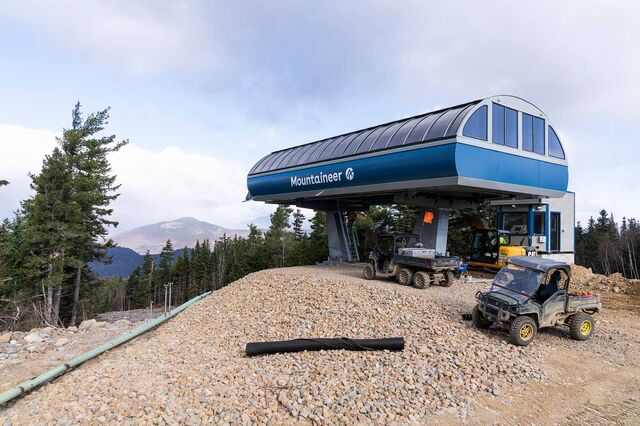
Swartz says guest satisfaction scores soared the next ski season. Then construction began on the new summit lift, christened the Mountaineer. One neighbor says she could tell there was major progress simply by the number of workers who showed up at Matty B’s bar in the summer to take shots of Jägermeister after their shifts.
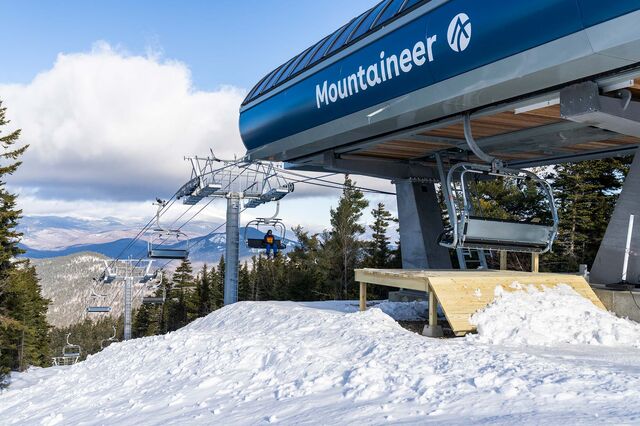
A week after the helicopter flight was postponed in November, the chopper was finally able to erect 21 towers of the new lift during a window of clear weather. Then followed a month of wiring all 6,023 feet of it, installing 125 chairs and performing load tests. The Mountaineer was on target to open after Christmas—until a freak storm deluged the area with almost 7 inches of rain, ruining the snow and delaying the lift launch until January.
The erratic conditions are just a preview of what it’s like to run a ski business amid climate change. One University of New Hampshire analysis projected that, with hotter winters and heavier rain, snowfall in the state will decrease 20% to 50% by 2099. Nationally the window for winter recreation is expected to shrink as temperatures rise; a US Department of Agriculture report found that the seasonal duration of snowpack declined an average of 18 days in the Western US from 1982 to 2021. Although every resort operator is grappling with these concerning patterns, Lynch says the “geographic diversity” of Vail’s roster is an advantage. If conditions are crappy at one mountain, Epic customers could conceivably drive or fly to another. “Last year we had some really extreme weather impacts where we had too much snow in Tahoe, the Rocky region was fantastic, and then some parts in the East were so warm that we were down to grass,” she says. “Our guests have options.”
Weather volatility also means pricey snowmaking is going to become ever more crucial. Brian Suhadolc, Vail’s general manager for Vermont’s Mount Snow, which boasts 83% of its terrain within range of snowmaking equipment, says disruptive weather has forced his team to “constantly resurface the product” with 12- to 16-hour sprays. But that’s only possible at the right mix of humidity and cold, usually around 28F. At lower-elevation peaks such as Attitash, temperatures tend to be higher.
The future success of Vail’s gamble on the East will depend as much on its ability to deliver as it does on the weather. Analyst Stantial says it’s hard to quantify how the bet is faring so far. Vail added almost 5 million more people to its member database from 2019 to 2023, with Eastern acquisitions likely being the largest growth driver. But that region’s customers buy a significantly higher proportion of day-to-day tickets versus an advance, season-long Epic Pass. It’s possibly either a sign that snowfall is already too unpredictable in the area for such a commitment or an indication that Vail has to invest a lot more in amenities to win the locals’ loyalty. In its most recent earnings call, Vail noted regional products, such as its $555 northeast value pass, were one of its strongest-growing offerings.
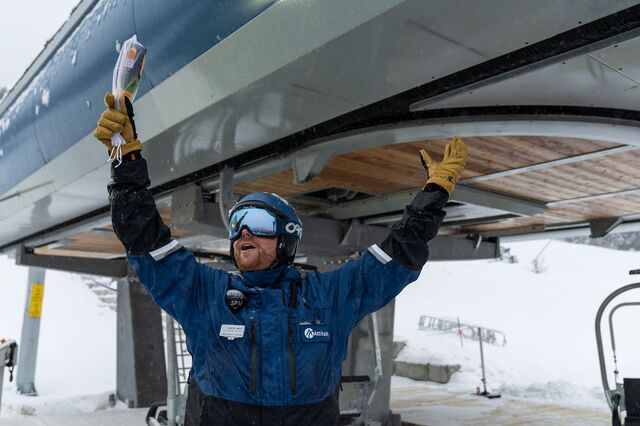
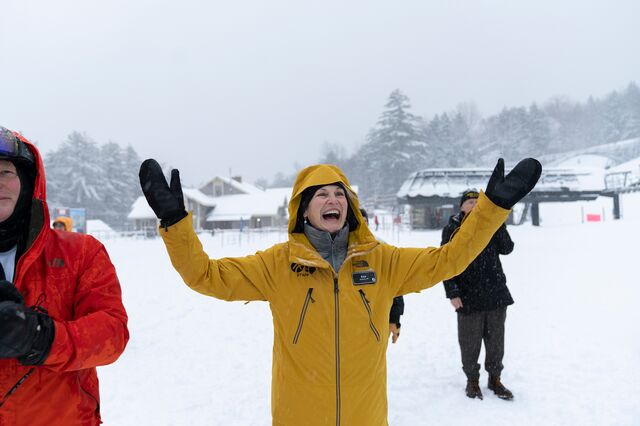
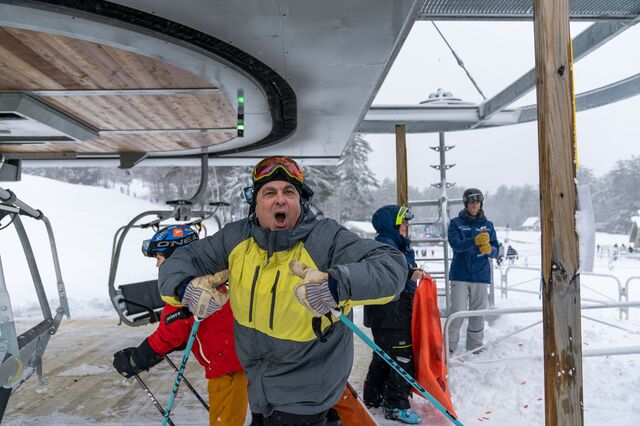
On the Martin Luther King Jr. holiday weekend, at least, the snow is dumping at Attitash. For an 8 a.m. celebration for the new Mountaineer, Vail staffers pass out cider doughnuts and hot cocoa to the early risers. Swartz breaks a mini bottle of Champagne to open the chair, which zooms up to the summit in just seven minutes. With speed and capacity thrust into the modern age, there are barely any lines all morning, and guests praise Vail for plowing money into the mountain. One rider with a “Ski the East” sticker on his helmet jokes that clearly all their complaining has worked. Rain is forecast for the afternoon, but for now the skiing is looking pretty darn good.