How Matzo Is Made
At Streit’s matzo factory, production follows strict Jewish law. But the meaning of the Passover staple is still up for debate.
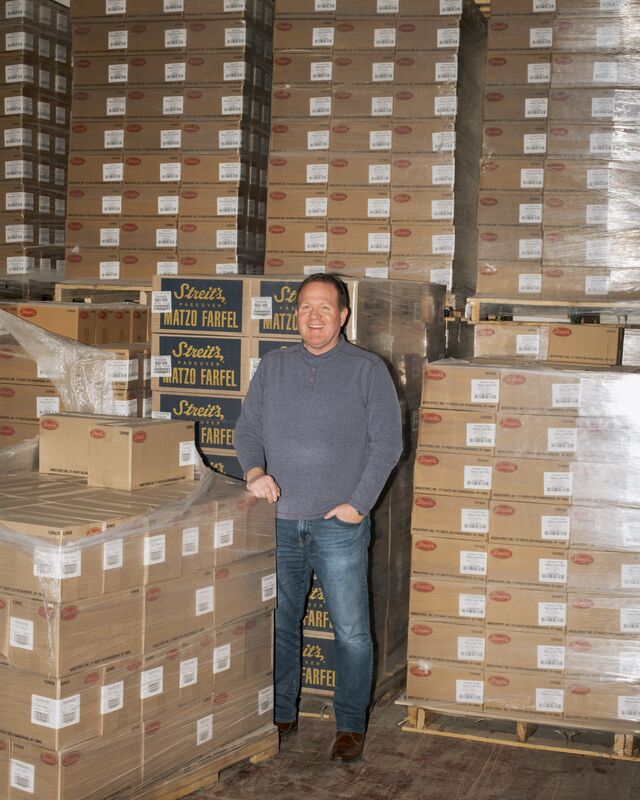
When Aron Yagoda started working in the family matzo business in 1990 at 23 years old, his first assignment was taking orders over the phone and handling complaints. Since then, a fair amount has changed at Aron Streit Inc., better known as Streit’s, most notably the company’s location: It moved from Manhattan’s Lower East Side to a larger factory in upstate New York in 2015. But a lot has stayed the same, including Yagoda’s commitment to responding to unhappy customers. “We always get a letter from someone in Florida,” says Yagoda, the executive vice president and fourth-generation co-owner. (One recurring complaint: the spelling of “matzo.”)
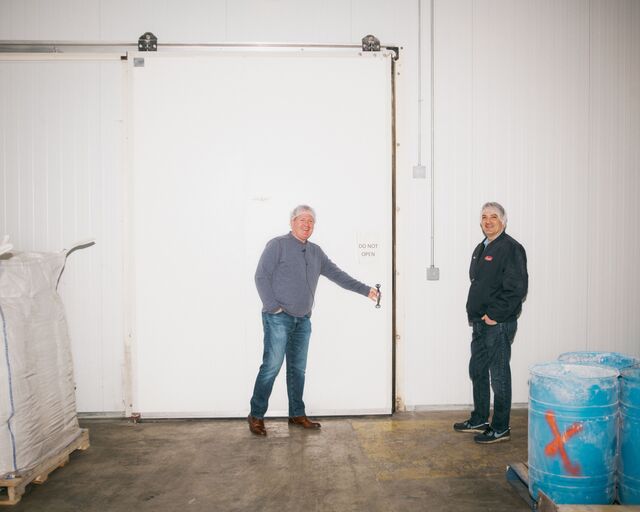
The 100,000-square-foot facility in Orangeburg is a modern version of what the company opened in 1925. It’s also the only kosher-for-Passover mechanical matzo factory still running in the US. While there are still matzos being made by hand domestically, kosher food powerhouse Manischewitz acquired matzo brands Goodmans and Horowitz Margareten years ago, and in 2019 it moved production to Israel. (Manischewitz was later acquired by family-owned kosher food distributor Kayco.)
Streit’s old operation on Rivington Street, which took up four tenement buildings, was turned into condos. (“I don’t like seeing it, so I don’t go back that way,” Yagoda says.) Most of the work takes place on a single floor now, but the recipe for Passover matzo is exactly as it always was. As Yagoda puts it: “It’s flour and water. It’s in the Bible.”
There is perhaps no food more Jewish than matzo. While it’s available all year long and non-Jews eat it, too, the large, usually square, bland-tasting cracker is the most recognizable symbol of one of the most important Jewish holidays, one also known as Chag HaMatzot, or Holiday of the Matzos. Fleeing their Egyptian enslavers, the story goes, the ancient Israelites baked their bread in such a hurry that they didn’t have time to let it rise. Hard and flat—unlike the fluffy challah found on Sabbath tables the rest of the year—matzo is considered the bread of freedom. Eating it every year at Passover is an act of commemoration.
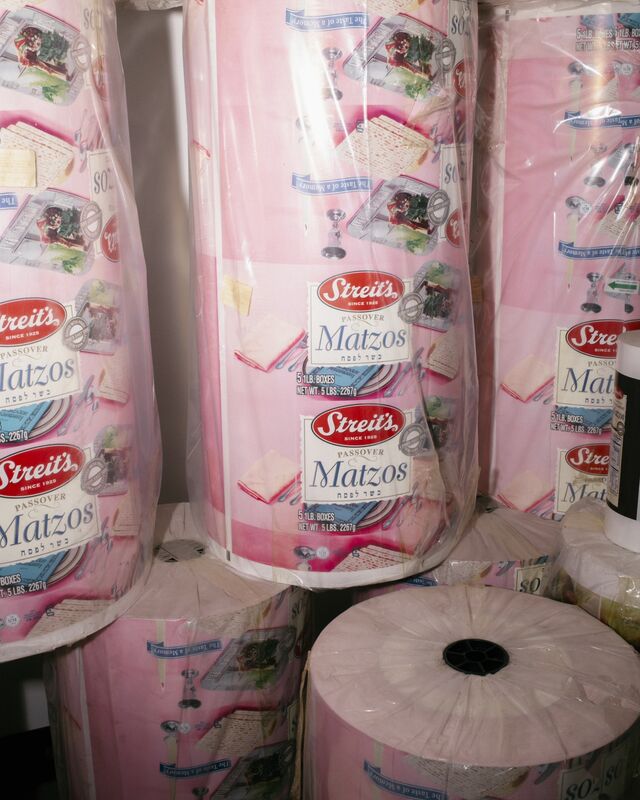
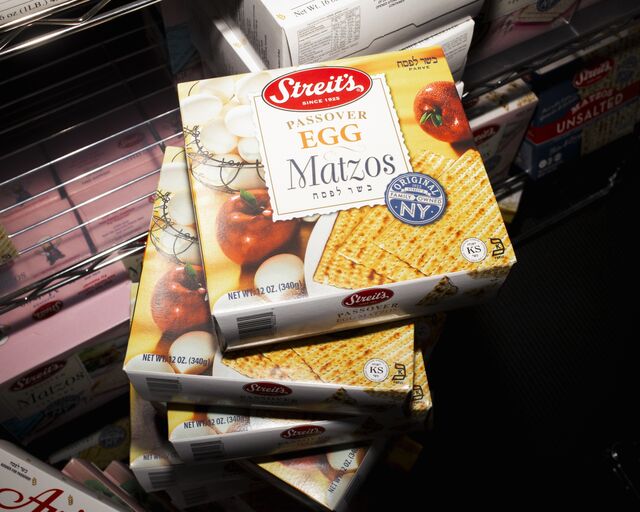
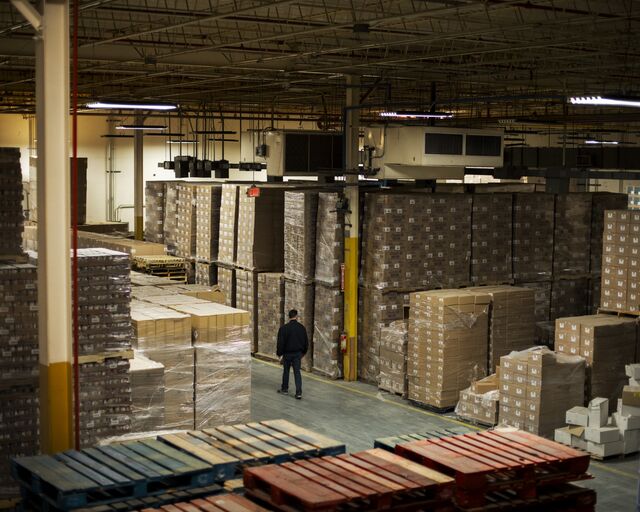
Streit’s generally sells about 2.5 million boxes for the eight-day holiday (or seven-day, for those celebrating in Israel), which this year starts on the evening of April 22. In the months leading up to Passover, the matzo factory runs all day and night, from Sunday morning through Friday morning, with a break for Sabbath. Streit’s Passover products–which go far beyond matzos and include chocolate-covered macaroons and jellied “fruit slice” candies made at a separate facility in New Jersey–drive about 60% of annual sales. During the rest of the year the company produces several flavors of matzo, such as egg-and-onion and lightly salted. But traditionally, for Passover matzo, not even salt is allowed, because any extra additive could cause the matzos to rise.
The Ingredients are Mixed — and the Clock Starts
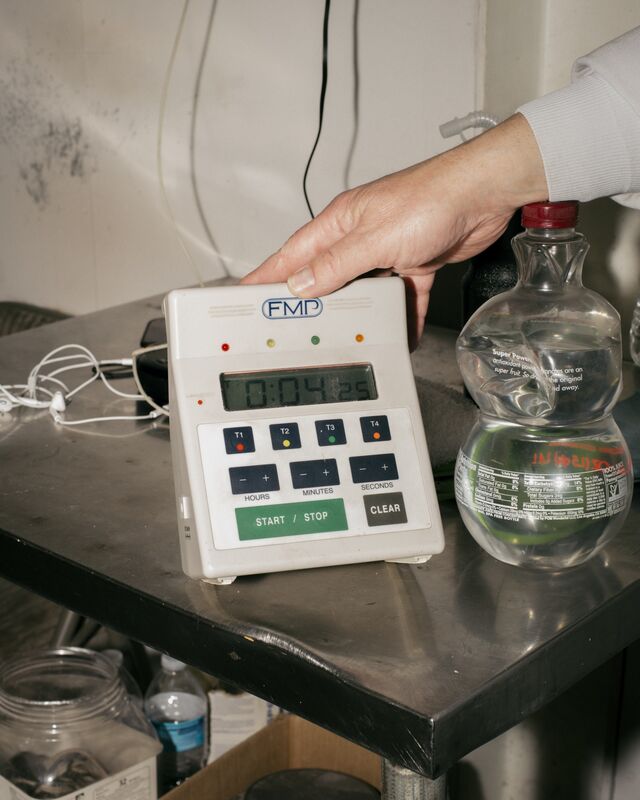
Jewish law strictly regulates the matzo-making process. Five mornings a week, as Passover preparation is underway, tankers deliver 50,000 pounds of white flour, which are then piped into silos inside the factory. The flour is sifted before it proceeds into the mixing room, a small lofted space. There’s “a lot of religious stuff happening here,” says Danny Kaplan, vice president of operations. The flour is combined with room-temperature water in large bowls, and from that moment, only 18 minutes can pass until the matzo comes out of the oven.
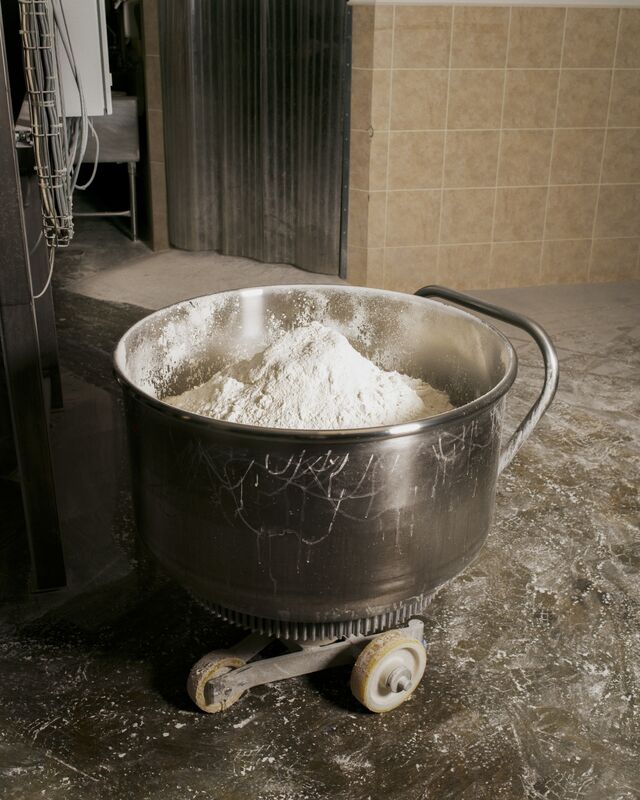
The time limit is meant to prevent any leavening (which would make the matzo chametz, the Hebrew word for foods forbidden during Passover). But it also carries a spiritual symbolism, says Rabbi Jeffrey Bienenfeld, in a phone interview from Jerusalem, where he retired in 2006 from his synagogue, Young Israel of St. Louis. A slave has no control of his time—but someone with too much time isn’t really free, either. “It’s that very discipline that triggers freedom,” Bienenfeld says. Passover “comes once a year to say, ‘Look, you need to sit down with yourself and reevaluate, What are we doing with our time?’”
Rolled, cut and sent through the stippler
After mixing, the two-ingredient dough is dropped into a “hopper,” essentially a large funnel that releases it downstairs to the main floor. The dough is then rolled out into four thick sheets that are layered on top of one another in a staggered pattern, which gives it a flakiness. From there the dough is rolled into one thin layer, which is sent through a machine called a stippler to create the familiar corrugated look and texture.
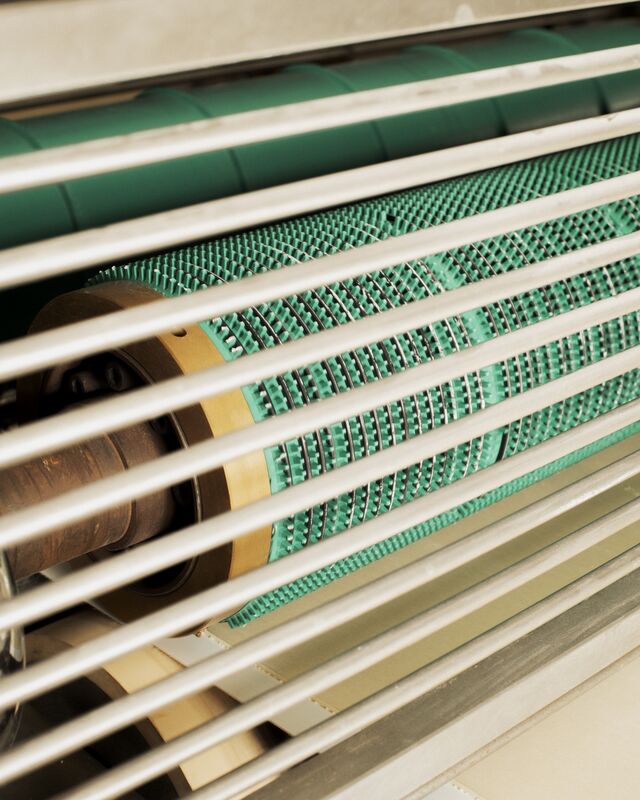
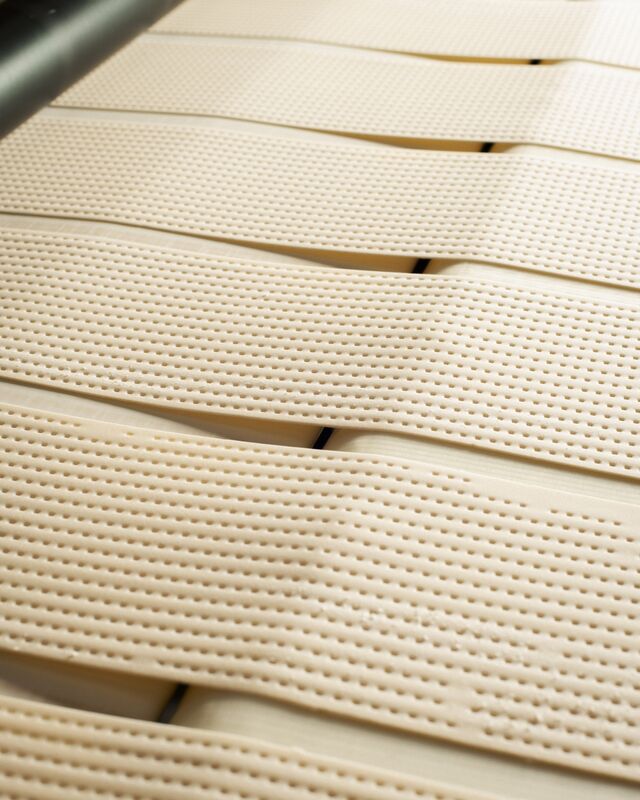
This single sheet is then cut into six strips—and then into perfectly stippled squares, which roll along a wide conveyor belt monitored by two employees looking for imperfections. Folded pieces or pieces flopped on top of one another are fixed with a long metal spatula—the raw matzo either flattened or, if deemed irreparable, flung onto a pile of discards. (Excess matzo dough becomes animal feed, Kaplan says. “Chickens really like our matzo.”)
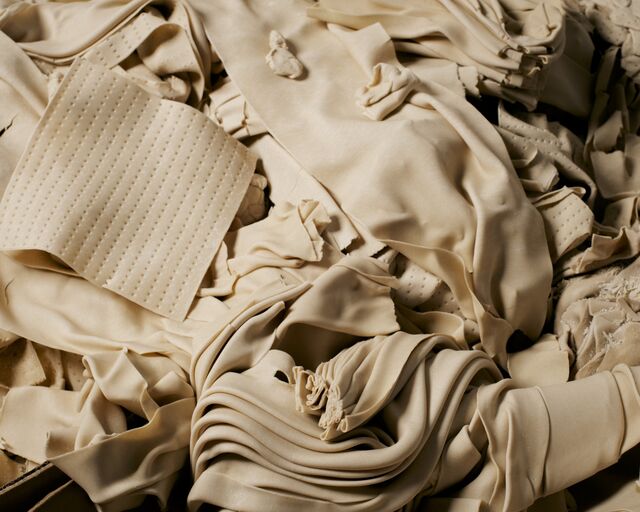
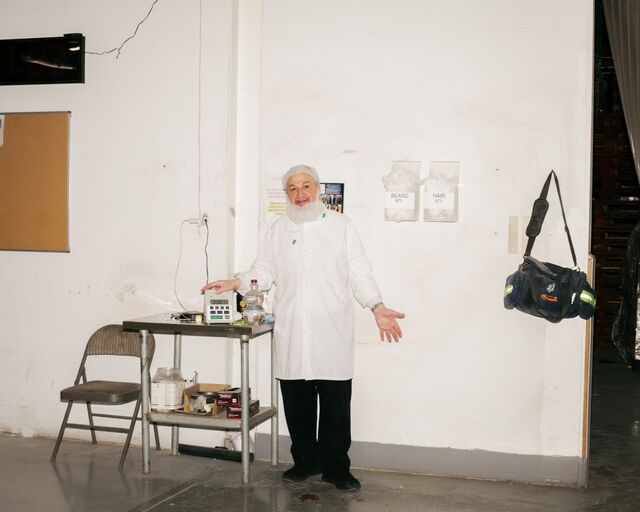
All the while, a mashgiach—a religious supervisor who ensures all Jewish laws are being followed—walks the area with an air gun to blow out stray bits and pieces of matzo from old batches, whose presence would represent an extension of the 18 minutes, thereby invalidating the kashrut, or dietary rules, of the Passover process. Of the 35 daytime shift employees, five are mashgiachs.
Baked and Boxed
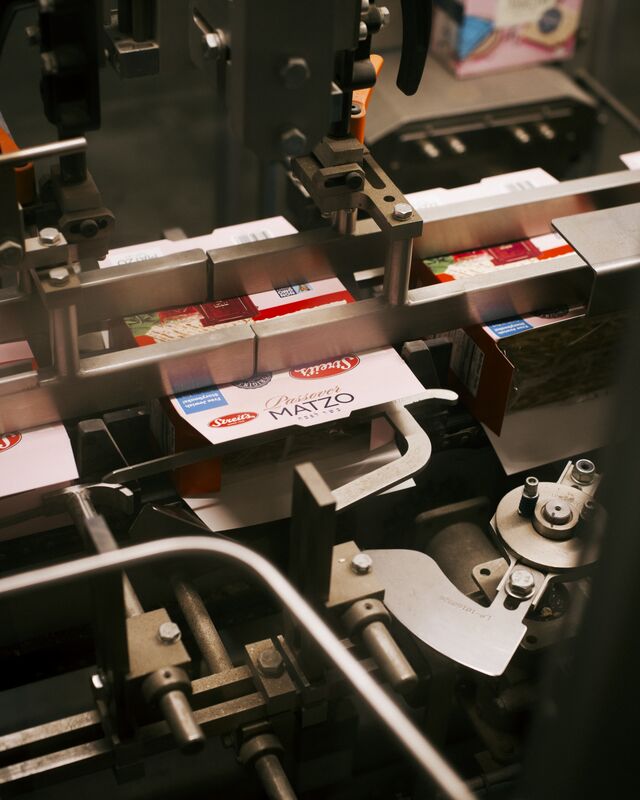
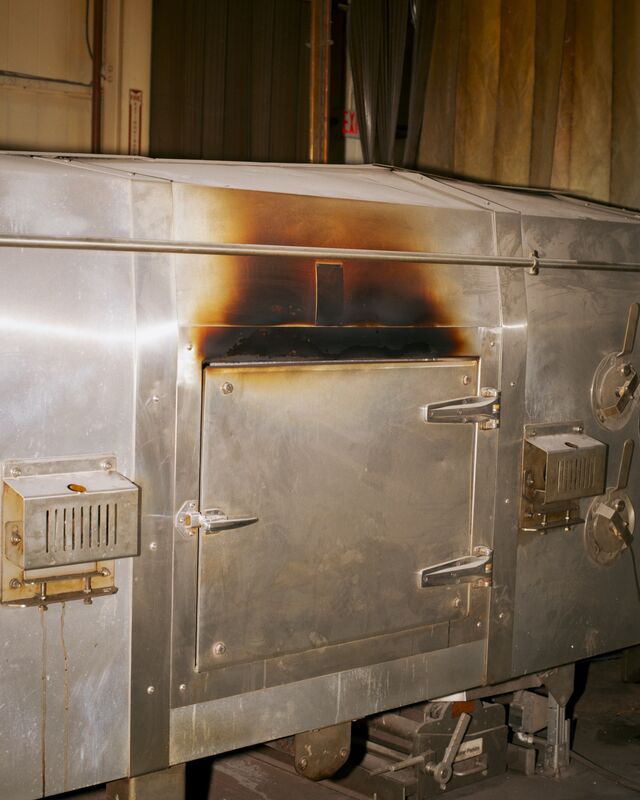
Finally, the matzos make it into a 735F, 110-foot-long oven—by far the longest this food reporter has ever seen. They are in and out in 90 seconds flat, completing their entire production time in 14.5 minutes, well within the 18-minute mandate. On the way out, a final mashgiach eyes every matzo one last time. A mechanical scanner then does the same, allowing only perfect matzos through. Robots, another upgrade from Rivington Street, lift, stack, wrap, weigh and package the matzos into 16-ounce boxes. Anything broken is relegated to matzo meal, a flour-ish substance that Streit’s also sells.
(That attention to detail hasn’t kept complaints from coming in when a matzo, brittle by nature, shows up in fragments in a box. “I say, ‘Oh, we knew one piece got out broken! We’re so glad you called!’” Yagoda says.)
Human workers place 30 boxes into a case, five at a time, and then they are off to their final Seder table destinations.
Something to chew on
But there’s another, equally important side to matzo. It’s also known as the bread of affliction, because it’s what the Jews ate not just when they fled slavery but also while they were shackled by it. “We used to eat that while we were in servitude, because it was slow to break down,” says Rabbi Mordy Kuessous of the Benaroya Sephardic Center at Congregation Ahavath Torah in Englewood, New Jersey. In other words, matzo stays in the system longer than other foods. Anyone who has eaten matzo for the week of Passover knows what this is like.
This dichotomy of slavery versus freedom, the journey from one to the other—embodied in the matzo—is at the center of the Seder, which implores participants to discuss these themes and their complexities. “One walks away from the Passover story with two incredibly divergent ways of thinking,” says Rabbi Marc Katz of Temple Ner Tamid in Bloomfield, New Jersey, and the author of The Heart of Loneliness: How Jewish Wisdom Can Help You Cope and Find Comfort. On the one hand, Jews were slaves, so they must help others in need. On the other, Jews have been oppressed for generations, so they must take care of themselves. Says Katz: “Each of us needs to forge our own path between those two poles.”
As for Yagoda’s thoughts on the meaning of matzo, 34 years into churning out millions of boxes? “We go by ‘bread of affliction,’” he says.
Read next: Where Gummi Bears Come From