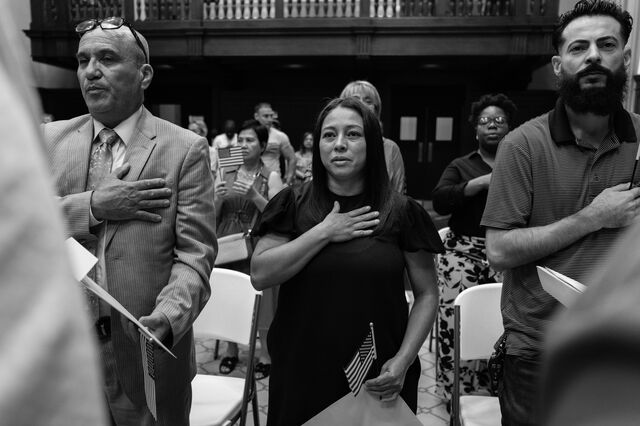
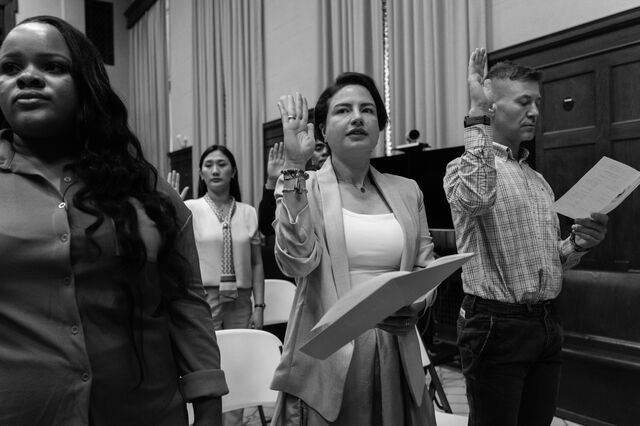
Rocio Nunez, middle, a new citizen from Mexico, recites the pledge of allegiance with other new citizens during their naturalization ceremony at the US District Court in Columbus, Georgia, in September 2024.
Economics
The New Americans
Millions of recently naturalized citizens are eligible to cast their first presidential ballots this fall. These four new voters show how varied the paths to that milestone can be—and how the economy factors into their choice.
By Jonnelle Marte and Marie Monteleone Photography and video by Krisanne Johnson for Bloomberg News
Share this article
In Georgia, one of the key battlegrounds in the US presidential election, at least 61,000 people have been naturalized since the 2020 race—a figure that far exceeds the nearly 12,000 votes by which President Joe Biden won the state that year.
That gap puts into sharp relief how new Americans are poised to have a notable impact on who wins the White House, bringing their personal experiences to the ballot box in a tossup election where immigration policy has been a central campaign issue.
Not all of these new citizens will vote. But with polls showing another tight race in Georgia, their opinions could help decide the outcome.
Arizona is another swing state where the number of citizens naturalized between October 2020 and September 2023 is greater than the number of votes that separated Biden and Donald Trump in the last presidential election, according to a Bloomberg News analysis of the most recent data available from US Citizenship and Immigration Services. In Nevada and Pennsylvania, those figures are nearly equal.
Bloomberg News spent time with new voters in Georgia, learning about their lives in America, their roads to citizenship and the obstacles they’ve faced as they strive to establish themselves in the middle class. For some of them, the right to vote is a milestone achieved after living in the country for decades. And like many Americans born stateside, the new voters point to the economy and inflation as top concerns in the election.
Rocio Nunez saw some of her major goals fall into place this year. In the spring, her family moved into a home that she says took two years to construct—twice as long as they expected due to rising costs and limited financing options. And in September, Nunez stood in a courthouse in Columbus, Georgia, raised her right hand and took an oath of citizenship.
Nunez’s naturalization ceremony came more than two decades after she says her parents told her and her siblings to pack up their things because they were moving to the US from Mexico. “Nos vamos al Norte,” she remembers being told suddenly. “We’re heading north.”
Becoming a citizen gives Nunez more peace of mind as she raises her three daughters, ages 10, 15 and 17, who were born in the US. “I also became a citizen for them,” said Nunez. “In the future, if something happens, I can stay here with them.”
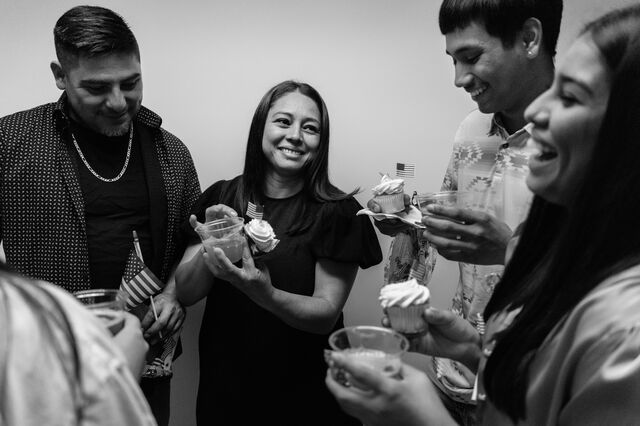
Nunez, center, with her husband, her two oldest daughters, and her daughter’s boyfriend, have cupcakes at a reception to celebrate her naturalization ceremony at the US District Court in Columbus in September.
Nunez said she and her family relocated to Southwest Georgia from Oklahoma four years ago to be closer to her husband’s relatives. They built a house next door to his mother, who owns a restaurant in the area and loaned them money to help them finish the construction.
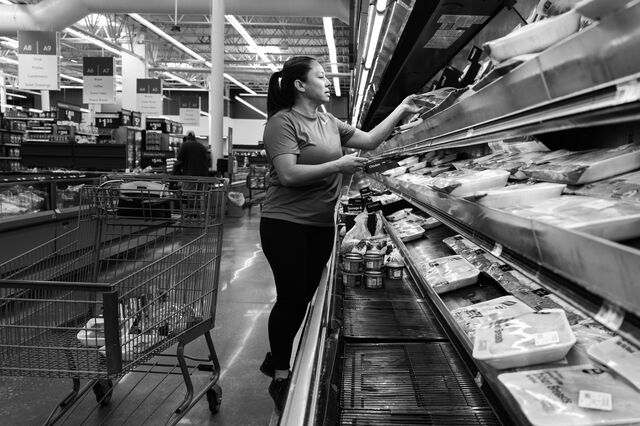
The rising price of groceries and other items were on her mind when she voted for Trump last month. “You go to the store, and then with two or three things that you buy, you’ve already spent $70, $100,” said Nunez, adding that she’s especially noticed the change in the cost of meat. She said she is not much into politics, but said she thought the economy was stronger and prices were lower when Trump was president.
Nunez is a stay-at-home parent and spends much of her time with her children, helping them get ready for school and making sure they have what they need.
Nunez was 17 when she moved from Mexico and had to start high school over when her family settled in Oklahoma, where she says her father worked in maintenance at a golf course. “That was a big blow,” she said. “Four years lost.”
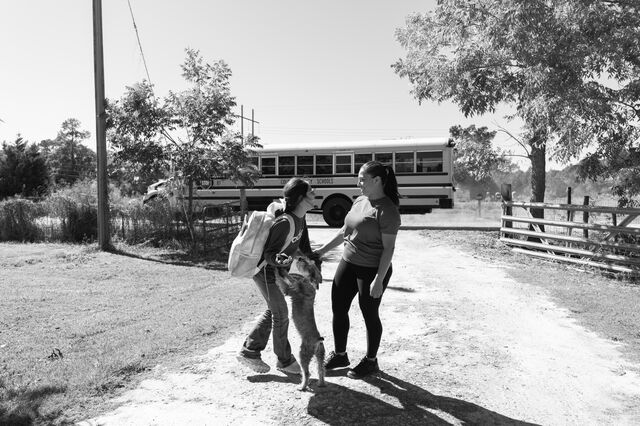
Nunez picks up her daughter Isabelle, 10, from the school bus stop.
Abraham Nunez, Rocio’s husband, has built up an arborist business in Georgia, doing work similar to what he did in Oklahoma. Still, their finances were tight while the house was under construction.
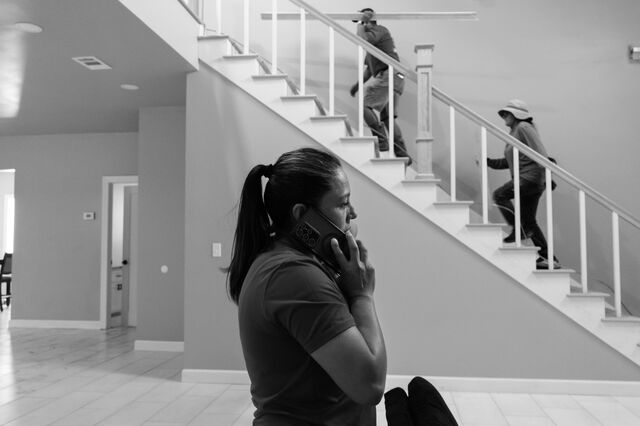
Contractors work on minor projects on the house.
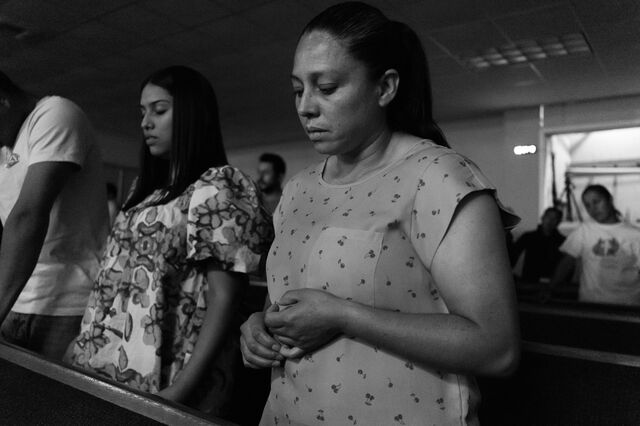
Nunez joined a small church in the area, where she has found friendship and support since moving to Georgia. “It’s a good community,” said Nunez, who goes twice a week with her family.
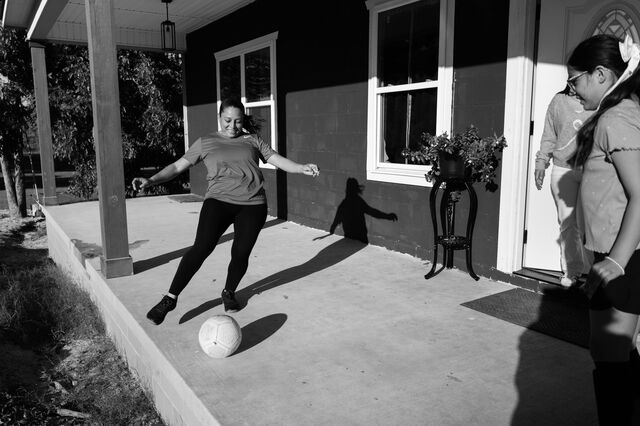
Nunez plays soccer with her daughter Isabelle before taking her to a scrimmage.
In the two years that their house was being constructed, the Nunez family lived in a trailer home that was too cold in the winter and too hot for cooking in the summer. On those hot days, the family made more frequent visits to Nunez’s mother-in-law’s restaurant.
Now that the house is nearly complete, Nunez is concentrating on helping her children graduate from school and find good jobs.
“For me, the only thing that’s missing is for my children to accomplish what they want,” she said. “I would like for them to find a good job. What I could not accomplish, for them to accomplish.”
Nunez, center, with her husband, her two oldest daughters, and her daughter’s boyfriend, have cupcakes at a reception to celebrate her naturalization ceremony at the US District Court in Columbus in September.
Nunez said she and her family relocated to Southwest Georgia from Oklahoma four years ago to be closer to her husband’s relatives. They built a house next door to his mother, who owns a restaurant in the area and loaned them money to help them finish the construction.
The rising price of groceries and other items were on her mind when she voted for Trump last month. “You go to the store, and then with two or three things that you buy, you’ve already spent $70, $100,” said Nunez, adding that she’s especially noticed the change in the cost of meat. She said she is not much into politics, but said she thought the economy was stronger and prices were lower when Trump was president.
Nunez is a stay-at-home parent and spends much of her time with her children, helping them get ready for school and making sure they have what they need.
Nunez was 17 when she moved from Mexico and had to start high school over when her family settled in Oklahoma, where she says her father worked in maintenance at a golf course. “That was a big blow,” she said. “Four years lost.”
Nunez picks up her daughter Isabelle, 10, from the school bus stop.
Abraham Nunez, Rocio’s husband, has built up an arborist business in Georgia, doing work similar to what he did in Oklahoma. Still, their finances were tight while the house was under construction.
Contractors work on minor projects on the house.
Nunez joined a small church in the area, where she has found friendship and support since moving to Georgia. “It’s a good community,” said Nunez, who goes twice a week with her family.
Nunez plays soccer with her daughter Isabelle before taking her to a scrimmage.
In the two years that their house was being constructed, the Nunez family lived in a trailer home that was too cold in the winter and too hot for cooking in the summer. On those hot days, the family made more frequent visits to Nunez’s mother-in-law’s restaurant.
Now that the house is nearly complete, Nunez is concentrating on helping her children graduate from school and find good jobs.
“For me, the only thing that’s missing is for my children to accomplish what they want,” she said. “I would like for them to find a good job. What I could not accomplish, for them to accomplish.”
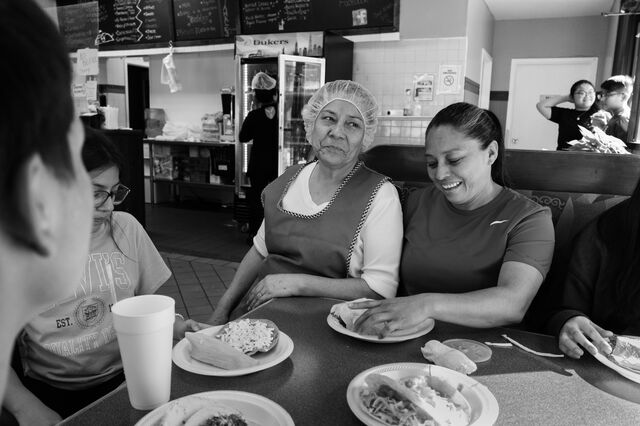
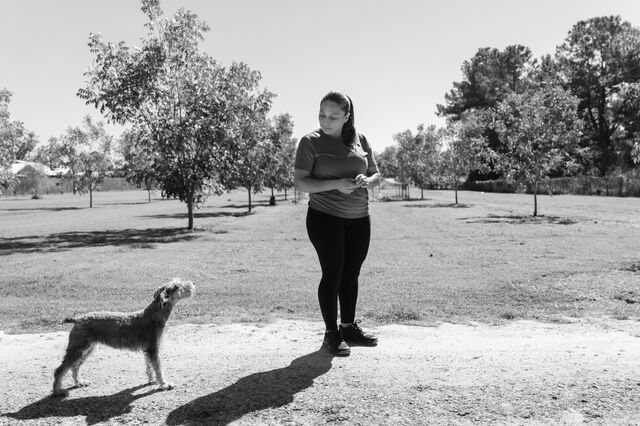
When Cinthia Ovares and her family moved to Florida in 2019, she said they sold their house in Georgia with the hopes of fulfilling a lifelong dream of living close to the beach. But after the onset of the pandemic, her husband, Ricardo Montoya, 52, lost the job he had with a youth soccer league. They returned to Georgia in 2021, but have since been struggling to regain what they had before they left.
After home prices surged and mortgage rates rose, Ovares and Montoya have found it difficult to get a home in their budget with enough rooms for their three children—who are 22, 20 and 11. Their previous home, by some estimates, is worth nearly double what they sold it for. And the couple say they feel they have to choose between older homes that need renovations or newer homes that have smaller yards.
In addition to the economy and immigration, another top election issue for Ovares is gun violence in schools. They live about 15 minutes away from the Georgia school where a shooter in early September killed two teachers and two students. “I’m always thinking about my son, where is he?” said Ovares.
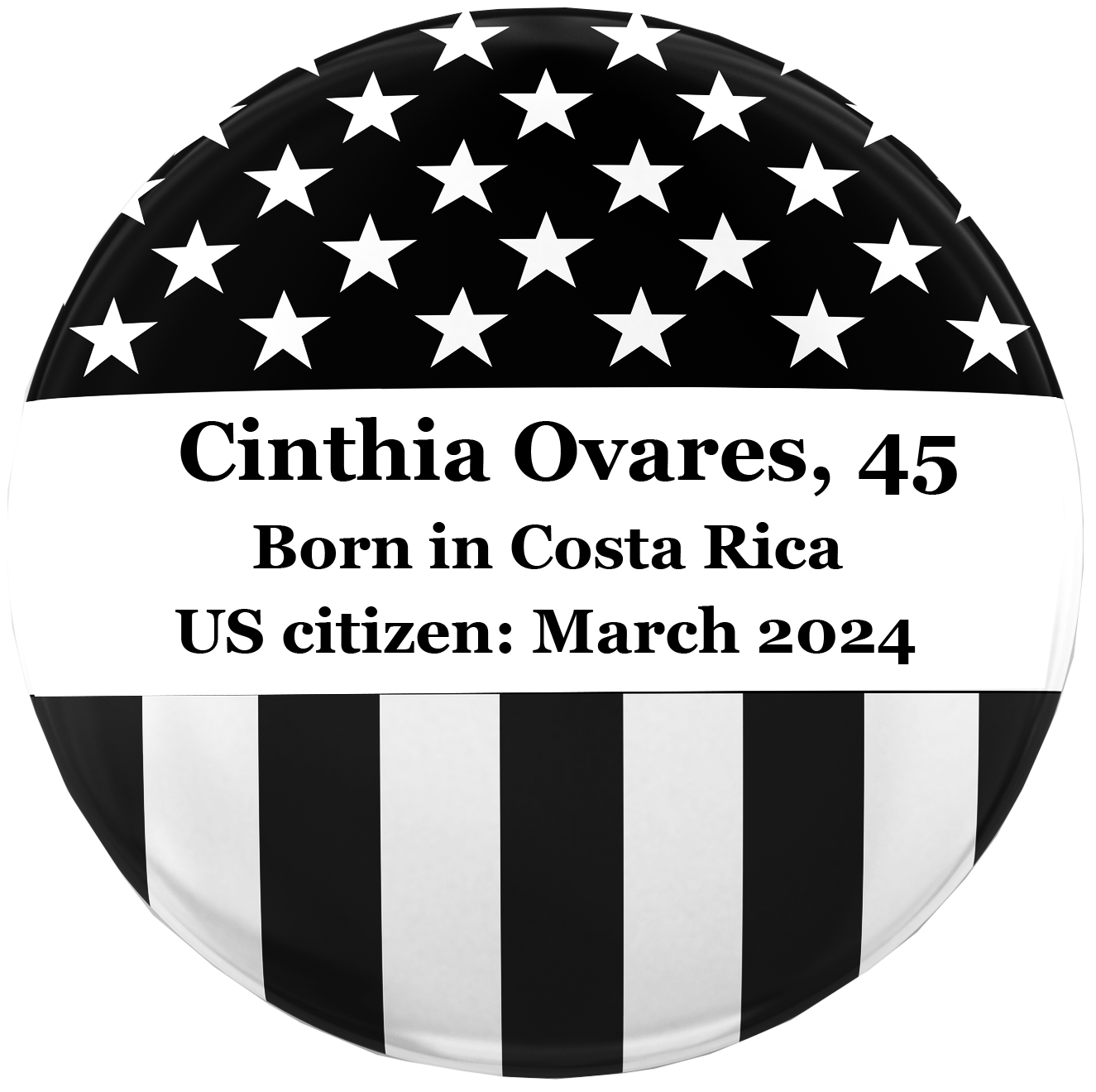
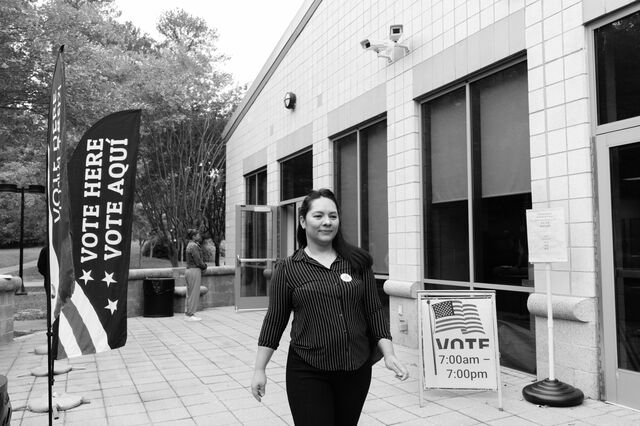
Ovares, who became a citizen in March, was thinking about immigrants like herself when she voted for Kamala Harris in October. She said she thinks the Democrats have an agenda that is more sympathetic to immigrants, in contrast with Trump’s calls for mass deportations.
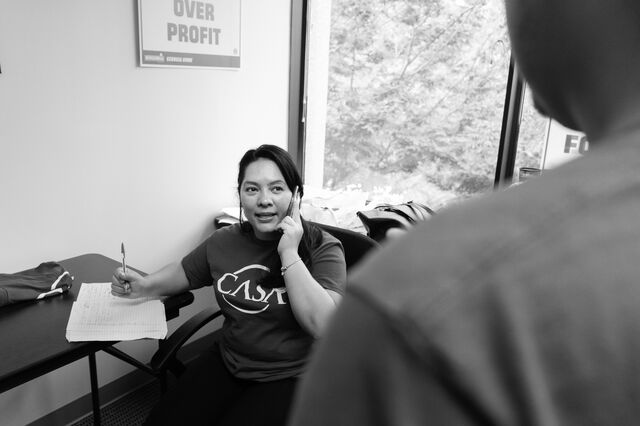
“There are a lot of immigrants who are very honest, they came here to have a new life that they can’t have in their home countries,” said Ovares, who works part-time with CASA, an organization that advocates for Black, Latino and immigrant communities.
Many immigrants have been contributing to the economy by working difficult jobs in construction, at restaurants and elsewhere, she said. “They’re just like anyone else looking for a better life for their families, for their children.”
Through her job, Ovares works to raise awareness about CASA. She also helps communities, including some immigrants, organize to fight for housing improvements, fair rent increases and other causes.
She keeps thinking about an encounter she had in September, when she met a mother with a son the same age as hers. The woman said she is constantly worried about what would happen to her child if she got deported. “As a mother, you feel that strongly,” said Ovares.
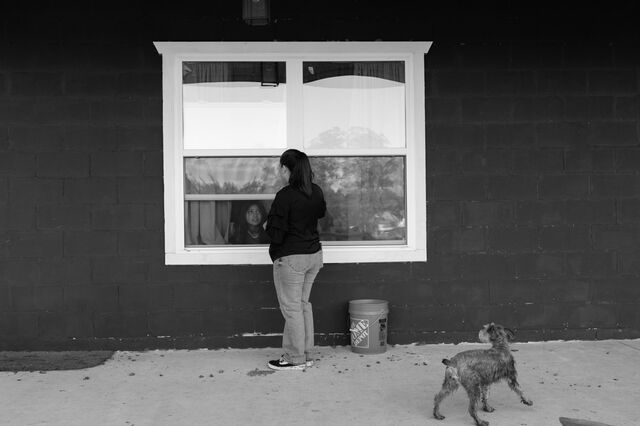
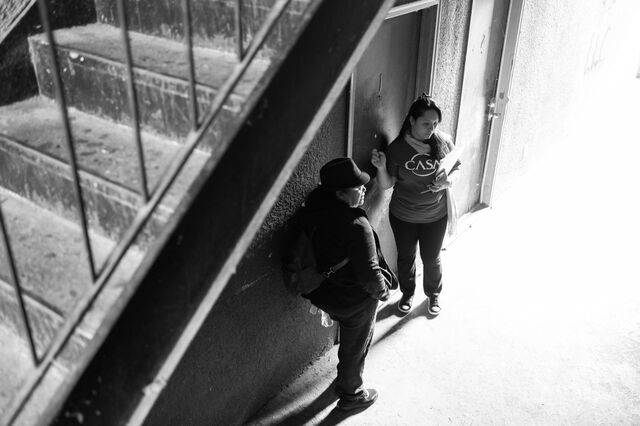
Ovares and her coworker knock on doors at an apartment building in October to provide information about CASA.
Ovares and her husband are grateful to have become citizens this year, more than two decades after they moved to the United States from Costa Rica. Montoya initially moved to attend college, but stayed after finding work as a coach for youth soccer, a sport he has always loved. Ovares followed soon after.
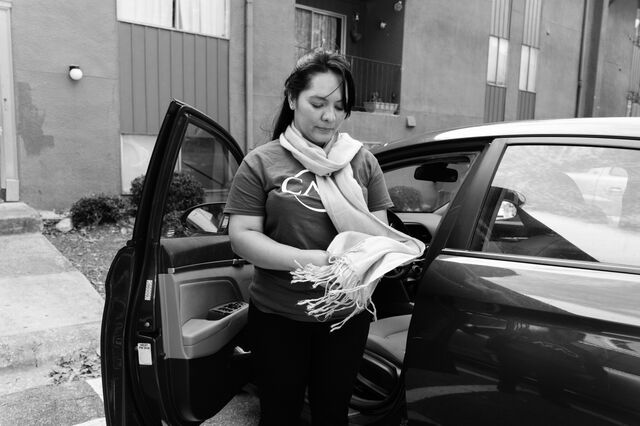
During a visit to Costa Rica last year, Ovares’ mother gave her a scarf that used to belong to her grandmother. “When I wear the scarf, I remember her,” Ovares said of her grandmother, who died about three years ago.
The hardest part of living in the United States is being away from family, said Ovares.
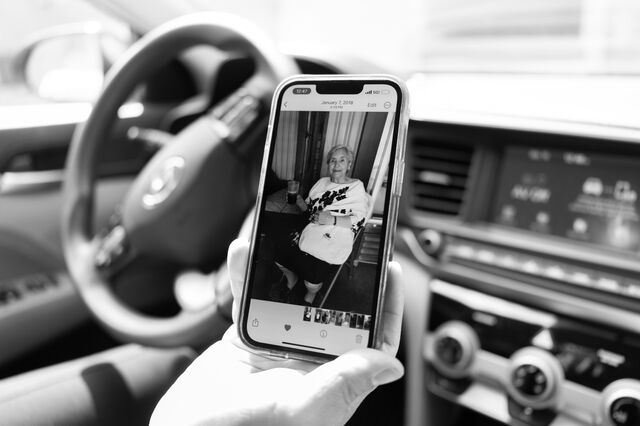
Ovares keeps this photograph of her late grandmother on her phone.
Like the people in the communities she advocates for, Ovares has also felt the sting of rising rents. She says her family’s monthly rent increased to nearly $2,500 after they moved to a month-to-month lease, up from about $2,000 when they moved into their place in 2022.
Ovares, who became a citizen in March, was thinking about immigrants like herself when she voted for Kamala Harris in October. She said she thinks the Democrats have an agenda that is more sympathetic to immigrants, in contrast with Trump’s calls for mass deportations.
“There are a lot of immigrants who are very honest, they came here to have a new life that they can’t have in their home countries,” said Ovares, who works part-time with CASA, an organization that advocates for Black, Latino and immigrant communities.
Many immigrants have been contributing to the economy by working difficult jobs in construction, at restaurants and elsewhere, she said. “They’re just like anyone else looking for a better life for their families, for their children.”
Through her job, Ovares works to raise awareness about CASA. She also helps communities, including some immigrants, organize to fight for housing improvements, fair rent increases and other causes.
She keeps thinking about an encounter she had in September, when she met a mother with a son the same age as hers. The woman said she is constantly worried about what would happen to her child if she got deported. “As a mother, you feel that strongly,” said Ovares.
Ovares and her coworker knock on doors at an apartment building in October to provide information about CASA.
Ovares and her husband are grateful to have become citizens this year, more than two decades after they moved to the United States from Costa Rica. Montoya initially moved to attend college, but stayed after finding work as a coach for youth soccer, a sport he has always loved. Ovares followed soon after.
During a visit to Costa Rica last year, Ovares’ mother gave her a scarf that used to belong to her grandmother. “When I wear the scarf, I remember her,” Ovares said of her grandmother, who died about three years ago.
The hardest part of living in the United States is being away from family, said Ovares.
Ovares keeps this photograph of her late grandmother on her phone.
Like the people in the communities she advocates for, Ovares has also felt the sting of rising rents. She says her family’s monthly rent increased to nearly $2,500 after they moved to a month-to-month lease, up from about $2,000 when they moved into their place in 2022.
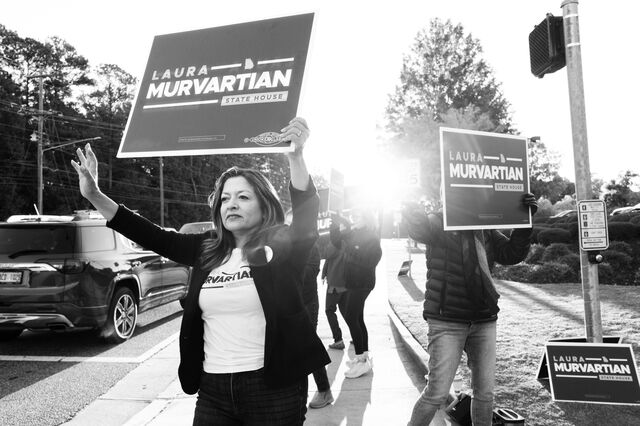
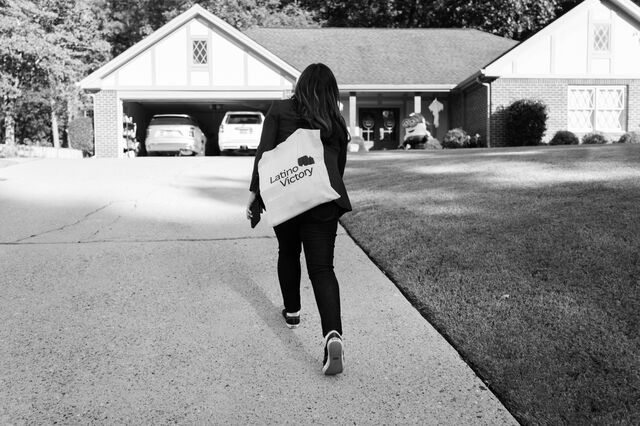
When Laura Murvartian casts her first presidential ballot on Election Day, she will also get to vote for herself. Murvartian said she has been engaged in politics behind the scenes for years—volunteering for Hillary Clinton’s 2008 primary campaign, then later campaigning for local candidates and eventually hosting events for politicians such as Stacey Abrams. After becoming a citizen, Murvartian is taking her involvement to another level by running as a Democrat for a seat in the state legislature.
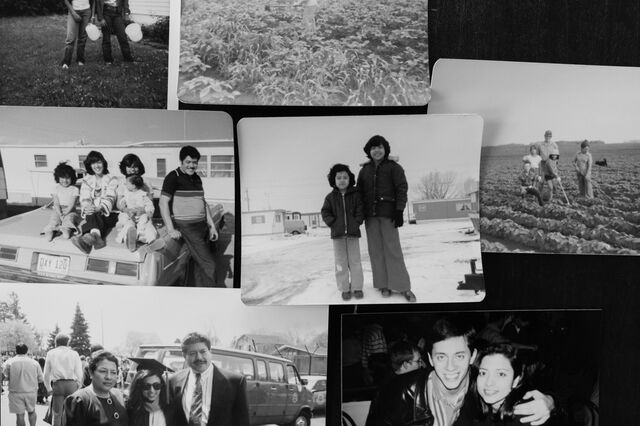
Murvartian has seen her finances change dramatically since she moved from Mexico to Minnesota at 8 years old with her family. When she was younger, she said she and her family lived in a mobile home and they worked together detasseling corn and picking up eggs from a chicken coop. As a teen, she worked at a chicken processing plant, a grocery store and restaurants. Then the Immigration Reform and Control Act of 1986 allowed her to earn legal status after more than a decade of being undocumented.
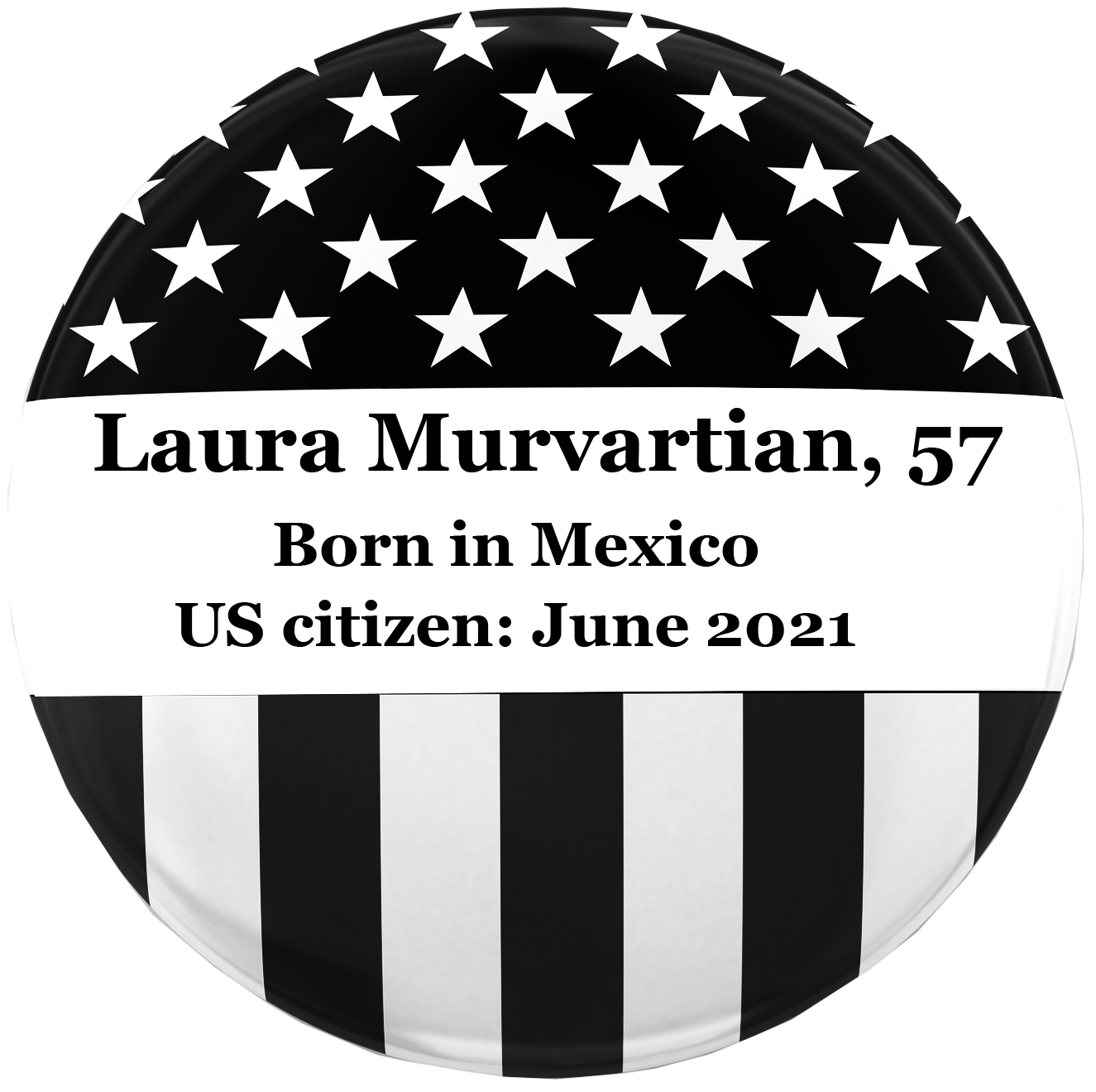
“That completely changed the course of our lives,” said Murvartian, who became a citizen in June of 2021. “That’s when I realized the power of politics."
Murvartian says she took her sister’s advice and enrolled in Hamline University and later was awarded a fellowship to go to graduate school at the University of Michigan.
Those degrees opened doors for her, leading to a career in corporate America, reaching director level roles at a media company and a credit reporting agency. She has worked in the wine business, buying the rights in Georgia for a wine franchise. And she has launched two nonprofits, including a community library and an organization to support Latino artists.
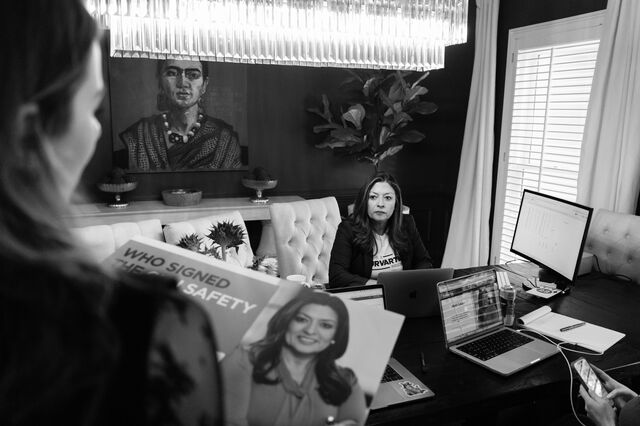
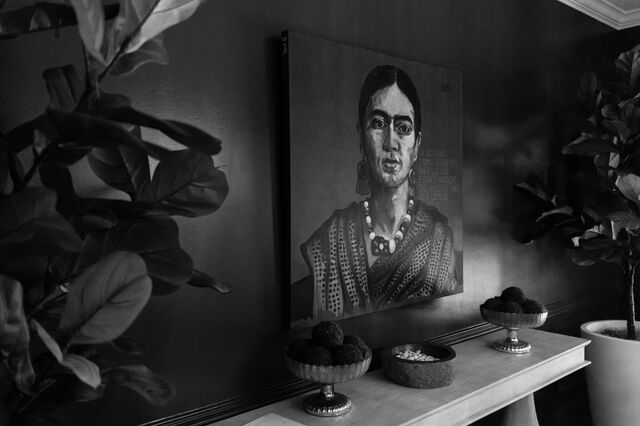
Murvartian says she purchased this portrait of Mexican artist Frida Kahlo at a local gallery. It hangs in her dining room and was painted by Nemesio Diez Arce.
“I have lived the American dream,” said Murvartian, who plans to vote for Harris. “I have had so many opportunities.” That is true not just for herself, she said, but for her siblings, her children and others in her family.
If elected, Murvartian wants to take steps to help other people access medical care and afford health insurance. She hopes to see Georgia expand access to Medicaid and lower families’ health-care costs.
Another important cause for Murvartian is to advocate for women’s reproductive rights against the backdrop of Georgia’s strict abortion law. “I’ve always felt that you have to give a voice to people who don’t have a voice,” said Murvartian, who is running to unseat a Republican incumbent.
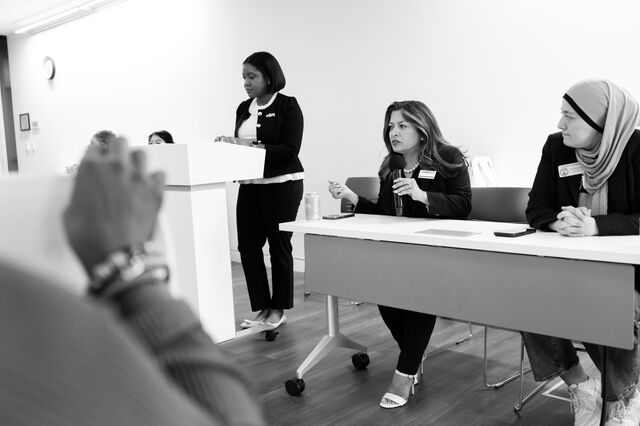
She speaks at a forum in October with other candidates running for the Georgia House of Representatives hosted by the Alpha Kappa Alpha Sorority’s Psi Omega Omega chapter.
Murvartian has distinct memories of when her family moved to Minnesota. She remembers wearing matching coats with her sister and seeing snow for the first time.
She loved her school there, which she says was stocked with musical instruments and more books and supplies than her school in Mexico. “My punishment was, ‘if you don't behave, you won't get to go to school,’” she said.
Murvartian and her husband, Michael Rhim, met as students working for the same dorm at the University of Michigan. She joined Rhim in the Atlanta area in 1995, while he was attending law school at Emory University. They got married shortly after in 1997.
Both Murvartian and Rhim, who is now a partner at a law firm, are grateful for the career opportunities they’ve had in the US and the resources they’ve been able to provide for their children.
Their son recently started working in finance after graduating from Northwestern University and their daughter is studying now at the University of Michigan, their alma mater. “My entire family has been able to thrive and succeed in this country,” said Murvartian.
“That completely changed the course of our lives,” said Murvartian, who became a citizen in June of 2021. “That’s when I realized the power of politics."
Murvartian says she took her sister’s advice and enrolled in Hamline University and later was awarded a fellowship to go to graduate school at the University of Michigan.
Those degrees opened doors for her, leading to a career in corporate America, reaching director level roles at a media company and a credit reporting agency. She has worked in the wine business, buying the rights in Georgia for a wine franchise. And she has launched two nonprofits, including a community library and an organization to support Latino artists.
Murvartian says she purchased this portrait of Mexican artist Frida Kahlo at a local gallery. It hangs in her dining room and was painted by Nemesio Diez Arce.
“I have lived the American dream,” said Murvartian, who plans to vote for Harris. “I have had so many opportunities.” That is true not just for herself, she said, but for her siblings, her children and others in her family.
If elected, Murvartian wants to take steps to help other people access medical care and afford health insurance. She hopes to see Georgia expand access to Medicaid and lower families’ health-care costs.
Another important cause for Murvartian is to advocate for women’s reproductive rights against the backdrop of Georgia’s strict abortion law. “I’ve always felt that you have to give a voice to people who don’t have a voice,” said Murvartian, who is running to unseat a Republican incumbent.
She speaks at a forum in October with other candidates running for the Georgia House of Representatives hosted by the Alpha Kappa Alpha Sorority’s Psi Omega Omega chapter.
Murvartian has distinct memories of when her family moved to Minnesota. She remembers wearing matching coats with her sister and seeing snow for the first time.
She loved her school there, which she says was stocked with musical instruments and more books and supplies than her school in Mexico. “My punishment was, ‘if you don't behave, you won't get to go to school,’” she said.
Murvartian and her husband, Michael Rhim, met as students working for the same dorm at the University of Michigan. She joined Rhim in the Atlanta area in 1995, while he was attending law school at Emory University. They got married shortly after in 1997.
Both Murvartian and Rhim, who is now a partner at a law firm, are grateful for the career opportunities they’ve had in the US and the resources they’ve been able to provide for their children.
Their son recently started working in finance after graduating from Northwestern University and their daughter is studying now at the University of Michigan, their alma mater. “My entire family has been able to thrive and succeed in this country,” said Murvartian.
Tatiana Kosareva had a rough time adjusting to the small town way of life when she moved to Columbus, Georgia, from Moscow eight years ago following her husband’s transfer for work. She missed her friends, family and job. But she and her husband, Vladimir Volodin, 47, said they began to enjoy having more space after they took advantage of ultra-low mortgage rates to buy a house in 2020.
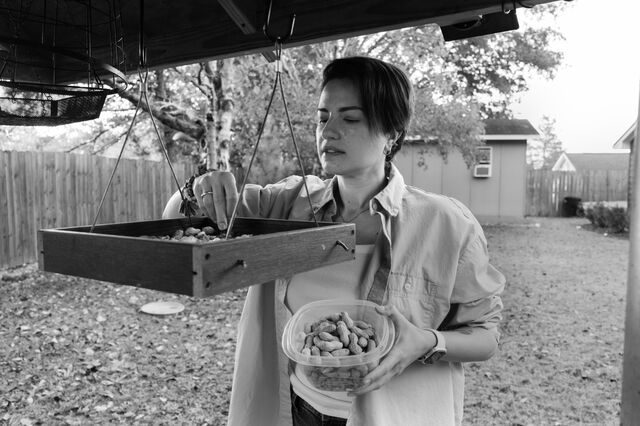
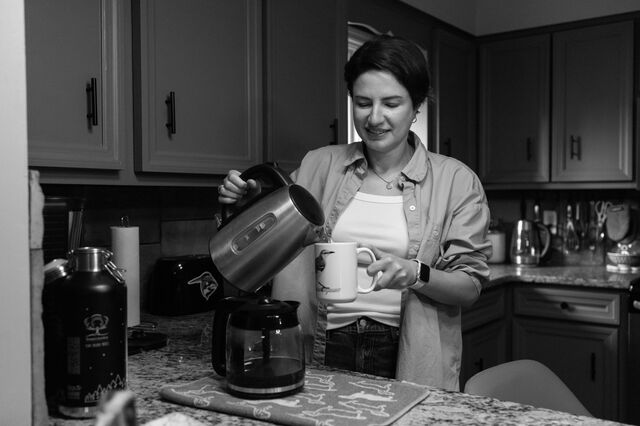
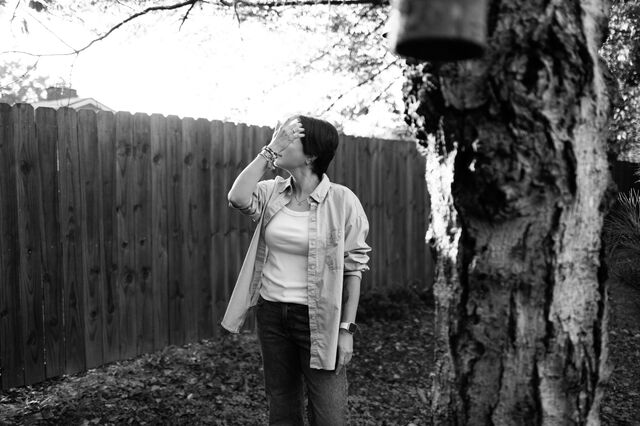
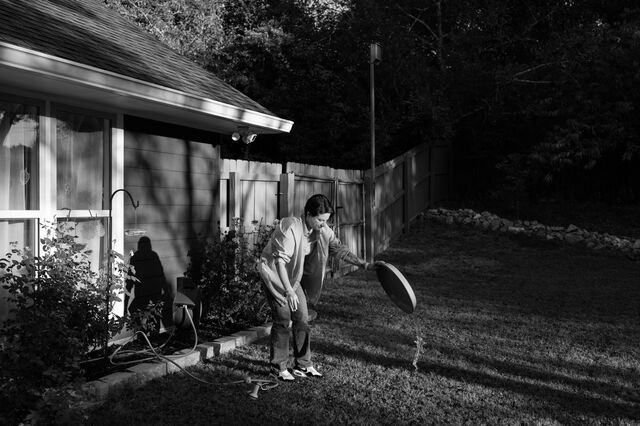
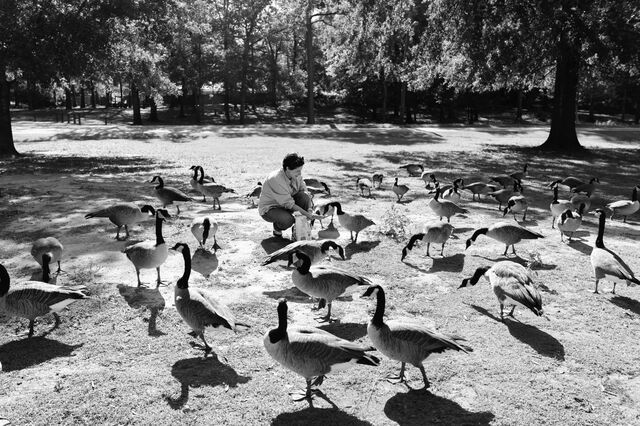
Now that they aren’t dealing with Moscow’s frigid winters or commuting more than an hour each way to work, they have more time to enjoy their backyard and have gotten really into bird-watching. They also found a new community thanks to their neighbors and through a running club. While Kosareva had to stop running because of an injury, she still volunteers at events and says it’s how they met some of their closest friends.
Kosareva and Volodin took the step of becoming US citizens together in September and registered to vote immediately after the ceremony. Deciding who to support hasn’t been clear cut. She didn’t expect she would be able to vote so soon after becoming a citizen and is still researching.
“I see huge benefits, but huge minuses—if I can say so—in both candidates,” said Kosareva, who doesn’t feel allegiance to any political party and is still undecided. “So, it’s really tough.”
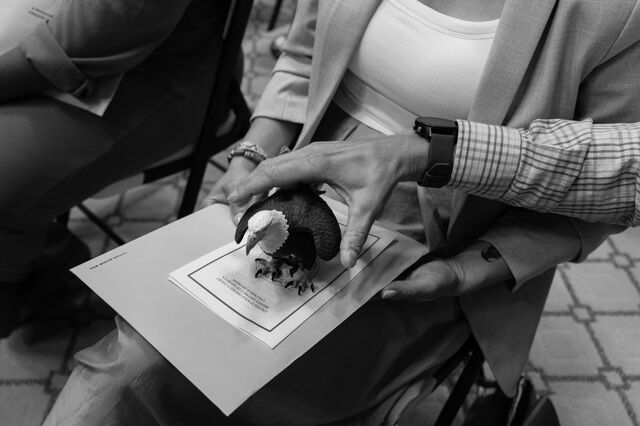
The couple brought a miniature statue of an American bald eagle with them to the court house. They are both fascinated with birds and have been following eagles’ nests on YouTube.
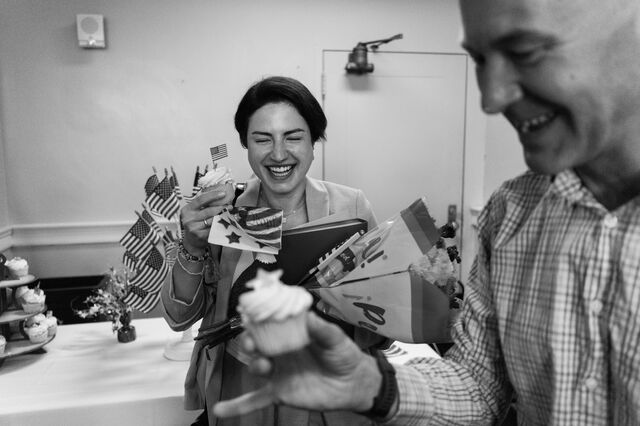
At a reception after the ceremony, Kosareva and Volodin had cupcakes and mingled with other people who had recently become citizens.
“Living in your own house with a backyard requires a lot of effort,” said Kosareva, adding that she and Volodin are often busy painting, gardening or making other repairs. “I never feel bored.”
Finding work has been challenging for Kosareva since she moved to the country. A pharmacist by education, she says she worked in Russia for a scientific center that evaluated medicinal products.
Kosareva would need to meet federal and state criteria to work as a pharmacist in the US. After the US put sanctions on Russia over its invasion of Ukraine, Kosareva says she no longer has a remote job she had with a private pharmaceutical company based in Russia.
Kosareva hopes becoming a citizen will open up more employment opportunities. She is looking into science and health care-related employers in the area.
Like many other voters, Kosareva thinks the next administration should find a way to bring relief for people dealing with rising costs.
Without the frigid climate of Moscow, Kosareva now enjoys gardening in her backyard.
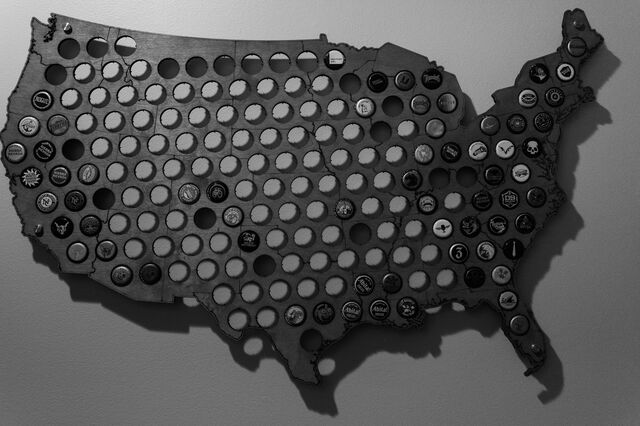
She and her husband, fans of craft beer, have cut back on how often they go out with friends. Their wall is decorated with a wooden map of the US meant to hold beer bottle caps from each region.
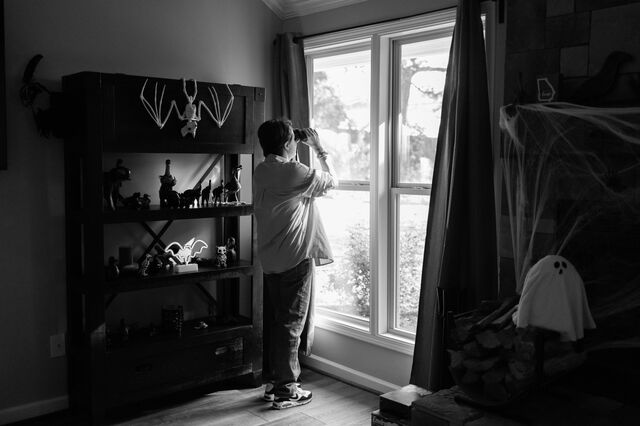
Kosareva uses her binoculars to watch birds in her backyard. When she can't recognize a bird, she uses an app to help identify it based on the way it sings.
Their grocery bill is one of the areas where they see the impact of inflation most clearly. “We buy pretty much the same goods all the time, same groceries,” said Kosareva. “And suddenly the bill grows from, let’s say, $75 per shopping up to $120 per shopping. You don’t understand what’s going on.”
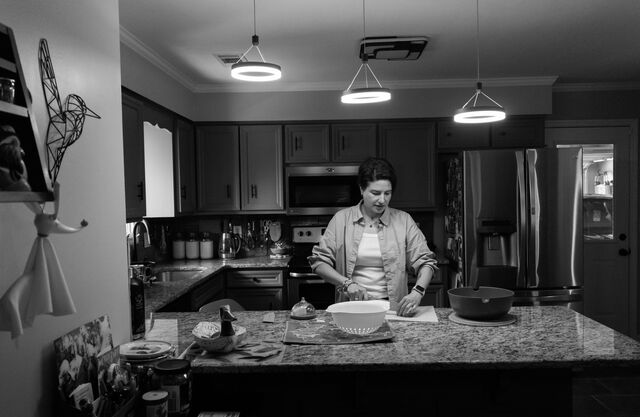
Kosareva and Volodin are both vegetarians and cook a lot of their meals at home. They also share their culture with friends by preparing traditional Russian dishes for them, using spices from home, and introducing them to Russian music and jokes. “The community here is one of the main reasons we really decided to stay,” said Kosareva. “People are super welcoming.”
Kosareva would also like to see the next president take a prominent role in helping to ease geopolitical tensions, including in the Middle East and the conflict between Russia and Ukraine.
“America always has an influence on the whole world,” she said. “I would hope that all the leaders, including the US, would help with negotiations.”
Kosareva and Volodin took the step of becoming US citizens together in September and registered to vote immediately after the ceremony. Deciding who to support hasn’t been clear cut. She didn’t expect she would be able to vote so soon after becoming a citizen and is still researching.
“I see huge benefits, but huge minuses—if I can say so—in both candidates,” said Kosareva, who doesn’t feel allegiance to any political party and is still undecided. “So, it’s really tough.”
The couple brought a miniature statue of an American bald eagle with them to the court house. They are both fascinated with birds and have been following eagles’ nests on YouTube.
At a reception after the ceremony, Kosareva and Volodin had cupcakes and mingled with other people who had recently become citizens.
“Living in your own house with a backyard requires a lot of effort,” said Kosareva, adding that she and Volodin are often busy painting, gardening or making other repairs. “I never feel bored.”
Finding work has been challenging for Kosareva since she moved to the country. A pharmacist by education, she says she worked in Russia for a scientific center that evaluated medicinal products.
Kosareva would need to meet federal and state criteria to work as a pharmacist in the US. After the US put sanctions on Russia over its invasion of Ukraine, Kosareva says she no longer has a remote job she had with a private pharmaceutical company based in Russia.
Kosareva hopes becoming a citizen will open up more employment opportunities. She is looking into science and health care-related employers in the area.
Like many other voters, Kosareva thinks the next administration should find a way to bring relief for people dealing with rising costs.
Without the frigid climate of Moscow, Kosareva now enjoys gardening in her backyard.
She and her husband, fans of craft beer, have cut back on how often they go out with friends. Their wall is decorated with a wooden map of the US meant to hold beer bottle caps from each region.
Kosareva uses her binoculars to watch birds in her backyard. When she can't recognize a bird, she uses an app to help identify it based on the way it sings.
Their grocery bill is one of the areas where they see the impact of inflation most clearly. “We buy pretty much the same goods all the time, same groceries,” said Kosareva. “And suddenly the bill grows from, let’s say, $75 per shopping up to $120 per shopping. You don’t understand what’s going on.”
Kosareva and Volodin are both vegetarians and cook a lot of their meals at home. They also share their culture with friends by preparing traditional Russian dishes for them, using spices from home, and introducing them to Russian music and jokes. “The community here is one of the main reasons we really decided to stay,” said Kosareva. “People are super welcoming.”
Kosareva would also like to see the next president take a prominent role in helping to ease geopolitical tensions, including in the Middle East and the conflict between Russia and Ukraine.
“America always has an influence on the whole world,” she said. “I would hope that all the leaders, including the US, would help with negotiations.”