China’s Arctic Dreams Make a Tiny Port a Global Prize
Not far from the top of the world, a Norwegian town of 3,600 people is becoming an unlikely hotbed of East-West rivalry.
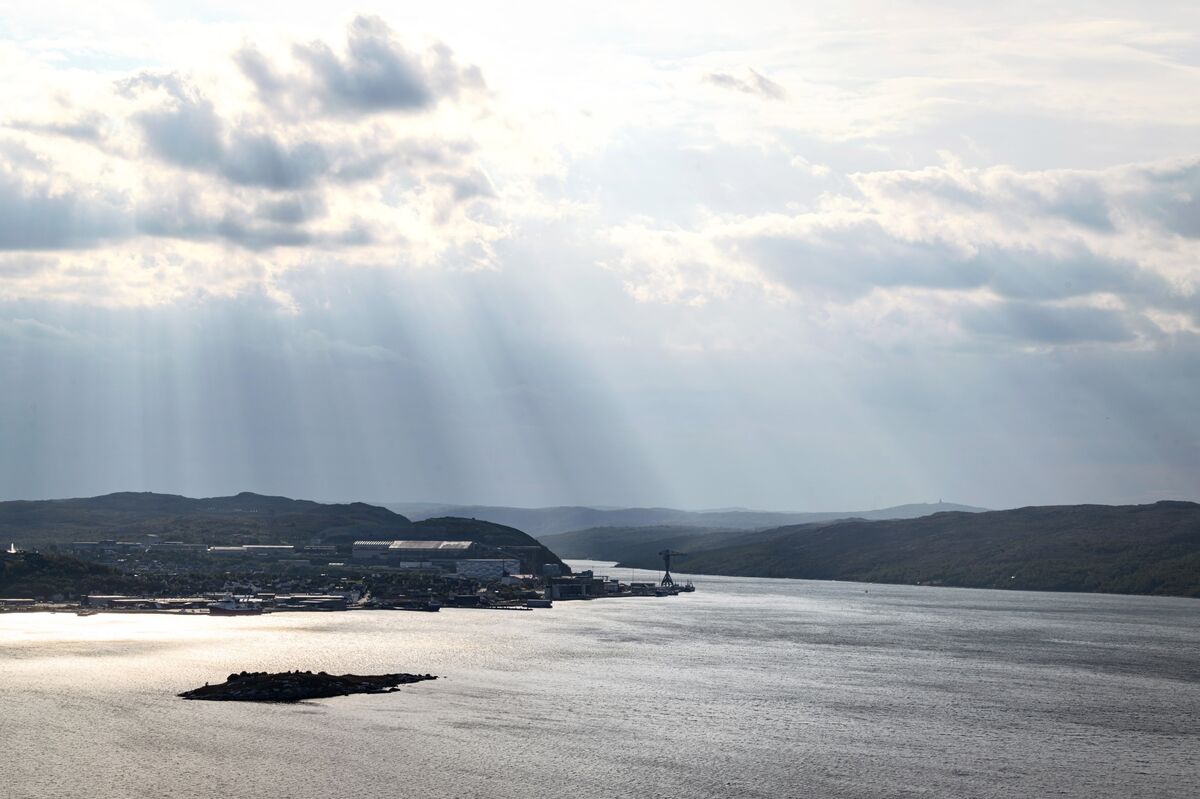
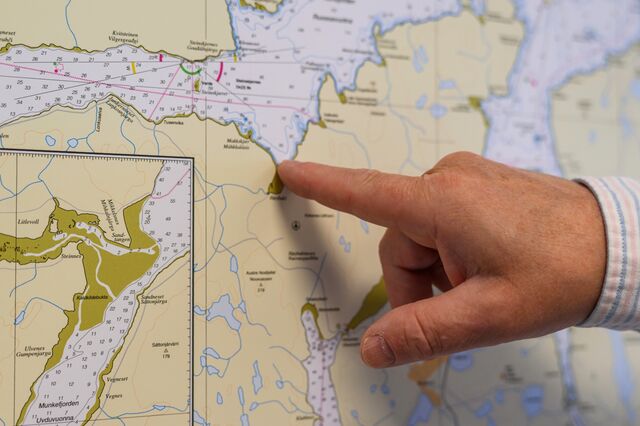
Sandwiched between Finland and Russia 250 miles north of the Arctic Circle, Kirkenes rests near the opening of the most viable polar shipping route linking China to Europe.
As the sea ice retreats, that’s turned it into a major prize in Beijing’s ambitions to gain a foothold in the Arctic.
China has studied options for a deep-water port at the western end of the Northern Sea Route, or NSR: a key leg on its proposed Polar Silk Road. As the closest town with unfettered access to European markets, Kirkenes is the first logical stop for Chinese ships once they leave Russian waters.
Once united in efforts to keep China at arm’s length, the Arctic club of eight nations was fractured by the war in Ukraine, leaving Russia on one side and seven NATO members on the other. At the same time, climate change is opening the region to companies and governments many latitudes away.
Chinese companies have signaled they want to help make Kirkenes the biggest port in Northern Europe. But Norway and its allies are wary of handing Beijing any control over facilities that could be crucial to trade and even military purposes.
China’s growing interest in the region is “concerning given it’s the only strategic competitor with the will — and increasingly the wherewithal — to remake the international order,” US Deputy Secretary of Defense Kathleen Hicks said in July, in a sign other Arctic nations are closely studying its moves.
For its part, Beijing categorizes the Arctic as among the “new frontiers” where it sees opportunities for future influence, along with the deep sea, outer space, cyberspace and artificial intelligence.
China’s Ministry of Foreign Affairs said in response to questions that the country would be willing to strengthen cooperation with regional states to promote the development, utilization and environmental protection of Arctic shipping routes.
“As for Sino-Norwegian port cooperation,” its spokesperson added, the country’s pleased to see its companies “deepen cooperation with Norway and other countries in connectivity projects such as transportation and shipping.”
Mistrust between the US and China has surged in recent years for reasons that include rising military tensions over Taiwan. At these latitudes, North Atlantic Treaty Organization members’ reluctance to allow China greater involvement has been stoked by the ‘spy balloons’ Beijing says were weather instruments, the science vessels NATO believed to be carrying military scientists, and the listening devices placed in the ocean by Chinese researchers.
The opaque nature of Xi’s Communist Party has added to concerns among the US and its allies about China’s strategic intentions, both in the Arctic and globally.
But China’s longer-term hopes for the region make it attractive for it to maintain an interest, even at a moment when political winds appear to have turned against it.
“China views the Arctic as a future area of competition between great powers, and an area where global norms and rules have not fully formed yet,” says Patrik Andersson, an analyst with the Swedish National China Center.
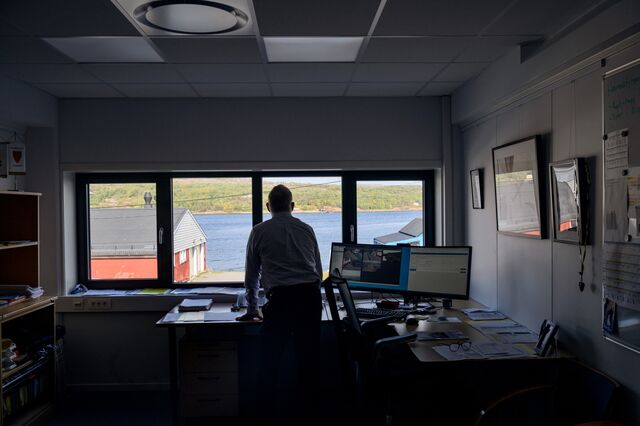
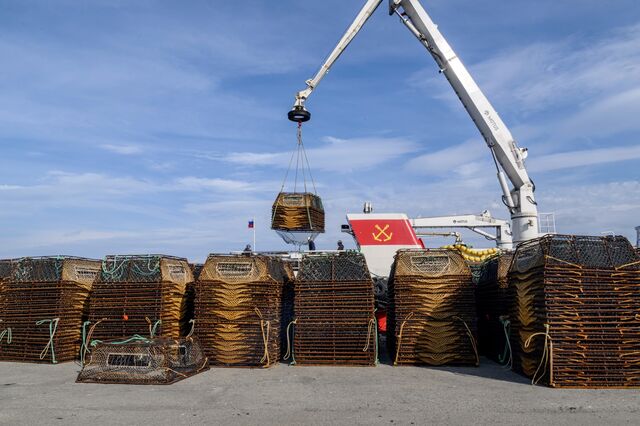
On a clear sailing day in early June, Kirkenes’s harbor sparkles under a sun that won't set until the end of July. Over coffee in his office overlooking the fjord, Port Director Terje Jorgensen is listing the revolving door of Chinese visitors who have come knocking since 2022 — including three groups just since October. The visitors include, he says, “business delegations, car manufacturers, heavy machine manufacturers, textile manufacturers, power businesses…”.
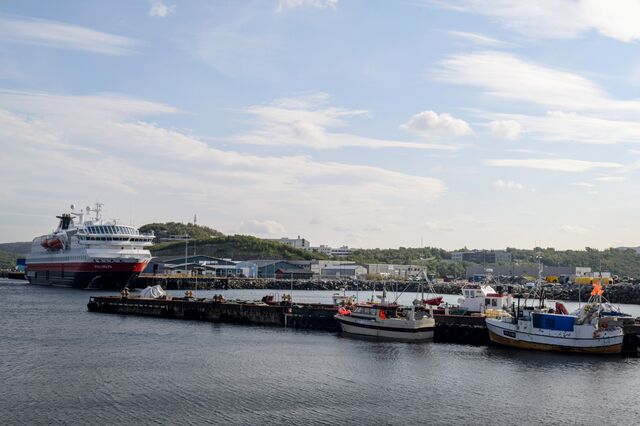
All of them came hoping the Kirkenes port will be expanded to handle international goods transport, he says. Making that happen has been Jorgensen’s top priority since taking the job in 2021. “We’re trying to build the biggest multinational goods trans-shipment harbor in northern Europe.”
A graduate of Norway’s Royal Military Academy who served 20 years in the military, Jorgensen envisions a port capable of handling more than a million 20-foot shipping containers of cargo a year within his lifetime.
As recently as 2022, China Communications Construction Co. Ltd. (CCCC) expressed a willingness to contribute to the roughly $2 billion port expansion, he said, citing other parties who weren’t authorized to speak about the matter; but nothing came of it. For any such investment to go ahead he says the Norwegian government first needs to provide more clarity on the rules.
The government, whose prime minister is heading to Beijing next week, declined to confirm if it had squashed a proposal by CCCC: “The Norwegian government is aware of the interest of various actors in building an expanded port to serve traffic through the Northern Sea Route,” Marianne Sivertsen Naess, Norway’s minister of fisheries and ocean policy, said by email, adding, “there are no decisions by the Norwegian government regarding Chinese funding of a possible port expansion in Kirkenes.”
CCCC did not respond to requests for comment.
There is no question the mood has shifted in the years since Rune Rafaelsen was mayor. He said a major priority of his tenure was building closer ties with China — efforts that showed up in everything from Chinese companies’ welcomed use of the Kirkenes port as a base for seismic exploration to the twinning of the town with Harbin. A 2019 festival celebrated the town as the home of “The World’s Northmost Chinatown,” with the Chinese ambassador in attendance.
Since then, Beijing’s tacit support of Russia’s war effort has exacerbated western mistrust of the Xi Jinping government at the same time that administrations on either side of the Atlantic have been trying to extricate themselves from Chinese supply lines — with varied success.
“We cannot be naive and expect these new routes to solely be used by commercial vessels,” NATO Admiral Rob Bauer told an audience of Arctic experts in Iceland late last year, underlining the suspicions that shadow Chinese overtures in the region.
As relations have chilled, Chinese interest in Kirkenes has played out more quietly, even though both the port director and a local outfit called High North Development Group have been keenly receiving business delegations.
Last year, Norway's domestic intelligence service warned that Chinese investment in businesses here could pose a security risk and widened the government’s authority to prevent acquisitions.
Since then, relations between the two nations have got even more explicitly strained — making next week’s Norwegian delegation to Beijing pivotal. In June, Norwegian Prime Minister Jonas Gahr Store called China the country with the greatest capacity to undermine its interests and values; in July Norway’s security service arrested a local politician in Store’s own Labour Party on suspicion of spying for Beijing. The intelligence service has said it is looking into “both open and covert” Chinese property purchases in the north.
All this may explain why subsequent Chinese delegations seem to be lowering their expectations: they’ve expressed more interest in the trade and manufacturing potential of Kirkenes, rather than in funding the port. They want either to offload goods from the ice-capable vessels onto regular cargo ships for transport beyond, or to finish the goods in Kirkenes for shipping out with a made-in-Europe label, Jorgensen says.
But the latter would require the port’s expansion and before that can happen, Oslo needs to clarify exactly what else it considers critical infrastructure. “A Western company today is Chinese-owned tomorrow and that is an issue for the government,” the port director says.
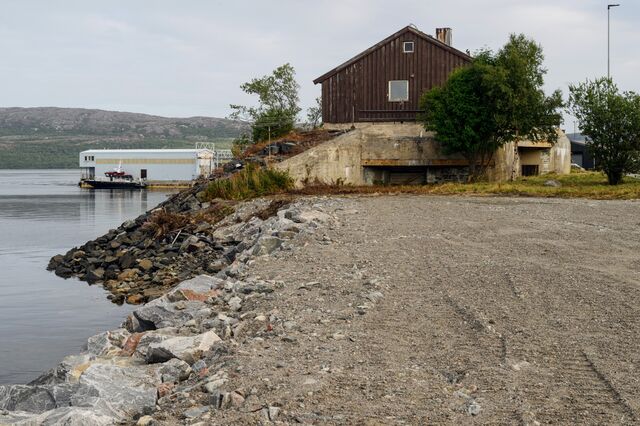

Asked if the new legislation, which came into force in June, would prohibit Chinese companies from setting up manufacturing facilities in Kirkenes, Norway’s Sivertsen Naess said the government is continuously assessing which businesses are key to safeguarding national security, and is in the process of determining which infrastructure should be secured. That work’s “been intensified following Russia’s war of aggression against Ukraine and the general security policy situation.”
And yet from China’s perspective, the geographic logic for investing here is irrefutable and, as the ice retreats, only getting clearer: the NSR shaves weeks off traditional shipping routes when compared to navigating to Europe through the Suez Canal or around the Horn of Africa.
Norway’s Kirkenes Port Vies for Arctic-Shipping Role
As the ice melts and Arctic shipping routes become more viable, Kirkenes is pitching itself as a major pit-stop for future traffic from China
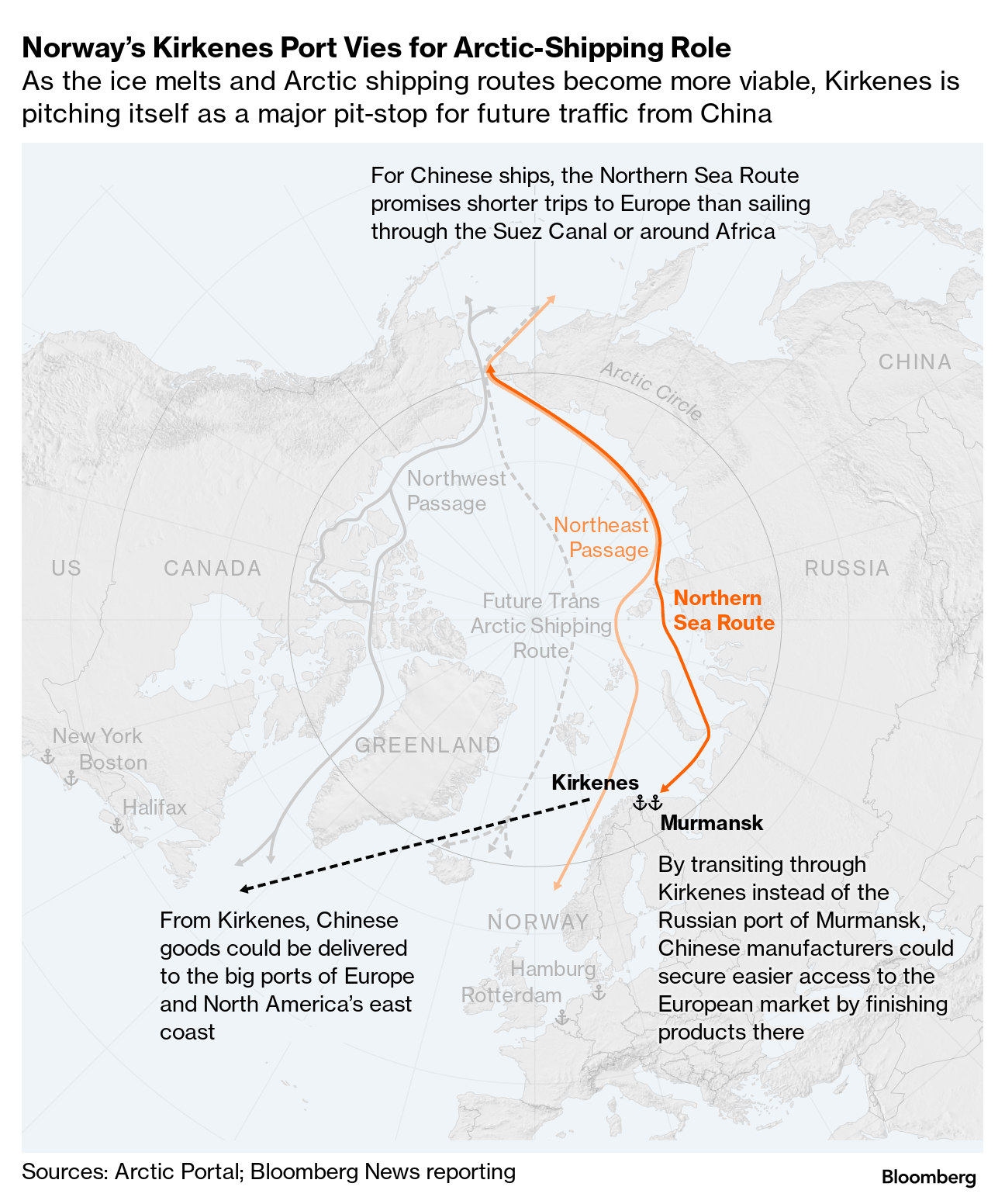
“You have to look at all three continents to see the benefits from an environmental and financial perspective,” Jorgensen says. “The distance from Kirkenes to the east coast of Canada and the United States is a big part of that picture.”
In the eight years after COSCO, or the China Ocean Shipping Company, first sent a transit voyage through the NSR in 2013, the company dispatched 26 ships on 56 voyages, including 14 in 2021 alone, according to a presentation made last year by Feng Chen, a visiting professor at China’s Icelandic Research Center at the University of Jinan.
After Russia’s February 2022 invasion of Ukraine, those passages stopped, says Natsuhiko Otsuka, a former professor at Hokkaido University’s Arctic Research Center, who studies sea traffic and navigation in the region. The state-owned company may be deterred by the political sensitivity of using the Russian route right now, but it has the ability to ramp voyages back up quickly when the time is right.
“They are thinking more long term,” he said of COSCO. “They are waiting for the time when the international geopolitical conditions — and the Arctic sea ice conditions — become more feasible.” COSCO didn't respond to requests for comment.
That Norway is part of the broader European market without being a member of the EU may offer other advantages for Chinese manufacturers keen to set up shop, since they can skirt some of the bloc’s more onerous legislation while still being able to label goods as made-in-Europe.
In 2023, China’s NewNew Shipping sent four container ships along the Arctic route between July and November, logging a total of seven transit voyages from ports in East Asia to St. Petersburg, High North News reported. One of those, Hong-Kong flagged NewNew Polar bear, dragged its anchor hundreds of kilometers, rupturing a pipeline between Finland and Estonia in an act Finnish authorities are still investigating as possible sabotage. NewNew Shipping didn’t respond to a request for comment.
The same year, warming seas helped Russia send the first non ice-class ship, laden with iron ore concentrate, through the passage from Murmansk to China in a move widely condemned as reckless.
Together, the events heightened NATO concerns about Russia-China cooperation in the region. It’s yet another reason why the so-called Arctic Seven — its littoral states, excluding Russia — have turned increasingly chilly toward China’s initiatives on their patch.
Multiple attempts by Chinese state-owned companies to buy Arctic assets have been thwarted, including attempts to invest in airports and rare-earth minerals in Greenland, and a gold mine in Canada. In 2018, Finland nixed a proposal by China’s Polar Research Institute to invest in an airport next to a military zone, according to state broadcaster Yle, although it did manage to open its second Arctic research station in partnership with Iceland that same year.
That’s rattled Arctic nations who are now pushing back against the internationalization of their region, as a host of non-polar countries have released their own Arctic strategies. Nations with Arctic coastlines have long maintained they are best placed to oversee the region, primarily through the soft power of the Arctic Council.
Although both China and Russia remain wary of being too tied to each other, they have nevertheless developed “a kind of mutual dependence,” Andersson says, in which Russia is increasingly reliant on Chinese funding for Arctic projects — primarily related to Russia's Yamal oil and gas operations — and China is increasingly reliant on Russia for Arctic access.
While its cooperation with Russia is still “somewhat superficial” it is “very noticeable and concerning,” the US’s Hicks said in July. She was speaking at the launch of a Pentagon report which highlighted concern over a “growing alignment” between the pair. The US said it would be expanding its military readiness and surveillance activities.
A European port at the end of the NSR would provide more visibility into what’s being shipped through the passage by China and everybody else, argues Jorgensen, the director of Kirkenes port— as well as the ability to impose European safety and environmental standards on ships that want to dock there. Far better that cargo transition through Norway’s Kirkenes than the nearby Russian port of Murmansk, which China favored before the Ukraine war, he says, and better for Kirkenes that it reap the profit. “Business with China should not be a problem. It's just a matter of how you do it.”
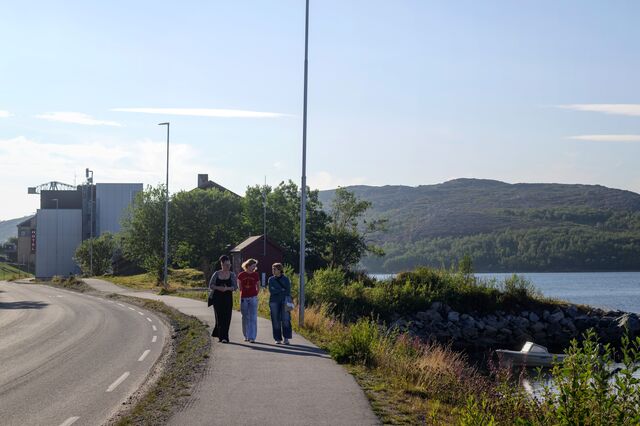
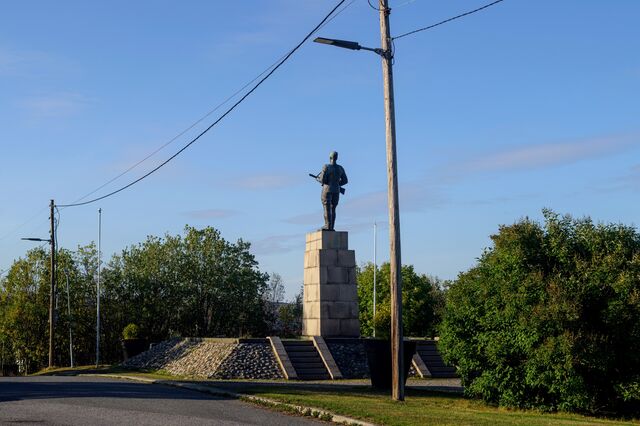


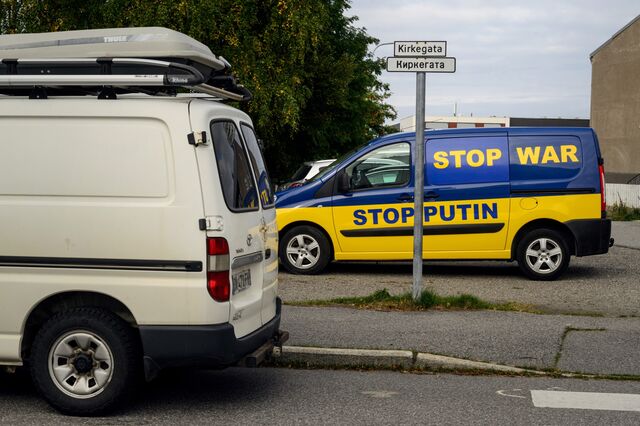
The tussles wreaked by China’s interest in Kirkenes aren’t the first time the town’s found itself at the center of political currents playing out many miles away. A makeshift memorial to Alexey Navalny, the Russian opposition figure who died in police custody earlier this year, often appears on the pavement directly opposite the Russian consulate where it’s by turns silently removed and rebuilt.
Russia’s invasion of Ukraine forced European governments to rip up old certainties and reorganize everything from their energy supplies to defense. It also left its mark on life here: like so many places further south, Kirkenes received a share of Ukrainian refugees after Russia’s invasion.
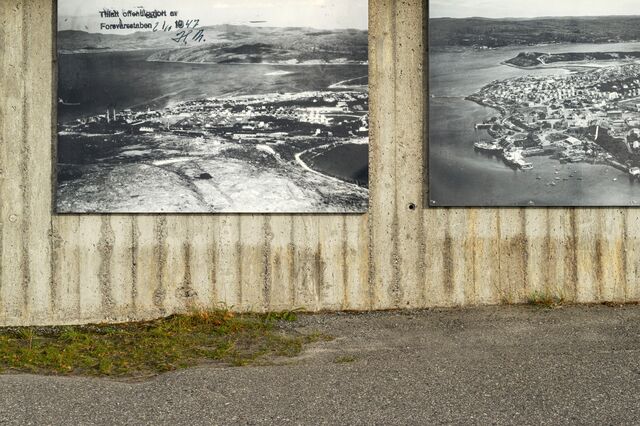
At times, Russia has been the town’s savior, liberating it from the Nazis during World War II and providing crucial economic opportunities. Even when the relationship between Norway and Russia’s governments has soured, at the local level proximity and history work to soften the edges.
The closest big city to Kirkenes is Murmansk, a three hour drive into Russia. By comparison, driving to the Norwegian capital of Oslo would take eight times longer. Under an agreement that allowed those living near the border to travel back and forth with a special visa, Russians came to Kirkenes for diapers and boat repairs while residents of Kirkenes bought their petrol in Russia. Friendships and marriages spanned the border without impediment. Since the war that freedom of movement has been progressively curtailed.
The impact on this town of 3,600 people has been profound which is why developing the port, and closer ties with another superpower, is seen as something of a lifeline. “It is tough,” said Camilla Carlsen, curator of the town’s Borderland Museum. “We are feeling farther away from everything now than we have been.”
Kirkenes Town Hall is a 30-second walk from the Russian consulate and the on-again-off-again Navalny memorial. A carving on the outside of the building depicts the town’s traditional sources of income: fishing, agriculture and mining.
“You’re in the hotspot of global geopolitics,” proclaims Mayor Magnus Maeland, gesturing to the 12-seat oval table next to his desk, where he says scores of representatives from Russia, the US, China and Europe have sat over the years. As the nearby border with Russia has tightened, the residents of Kirkenes have learned the hard way the danger of being too dependent on one partner. ''You have to be able to have two thoughts in your head at the same time when you're dealing with countries that we do not have security cooperation with,” he says.

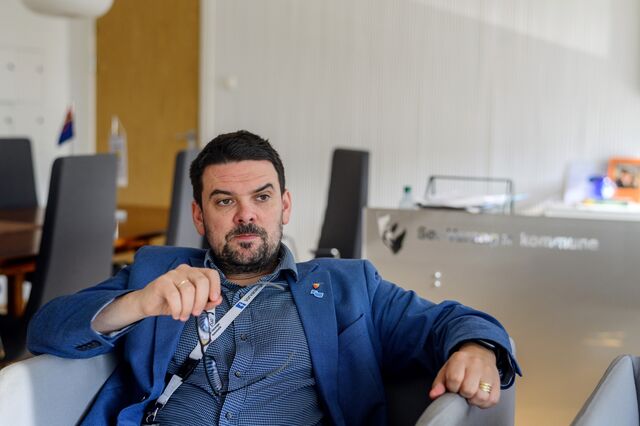
Maeland is a former teacher who has been in the job since October 11. He slips quickly into lecture mode when talking about China. Yes, it’s an authoritarian country but it also thinks 100 years ahead, produces most of the goods people use, and cannot be ignored. If Norway waits 30 years to decide how to engage, it will be surpassed by other, more nimble nations. “The world is global, whether we like it or not.”
He met a representative from the US embassy this past spring. “I said: I think it’s funny that as a mayor for six months then, I'd had three delegations from China but not yet one from America.”
One of the delegations included the head of a clothing company, Zhijing Technology, whose CEO was interested in shipping pieces of pre-cut fabric to Kirkenes to finish into garments for export abroad. The latest visitors, this past spring, were affiliated with private venture group Fosun Group, he says. Fosun Group didn't respond to a request for comment. Several calls to Zhijing Technology went unanswered.
The common denominator among the Chinese delegations meeting with the mayor and port director is a local company, High North Development Group. Operating mainly in the Arctic, the firm’s biggest venture appears to be the development of the old hospital in Kirkenes into a business hub. It was inauspiciously named ‘Nothing Hill’ by its 5% owner, Peter Vesterbacka, best known for his work marketing the Angry Birds game.
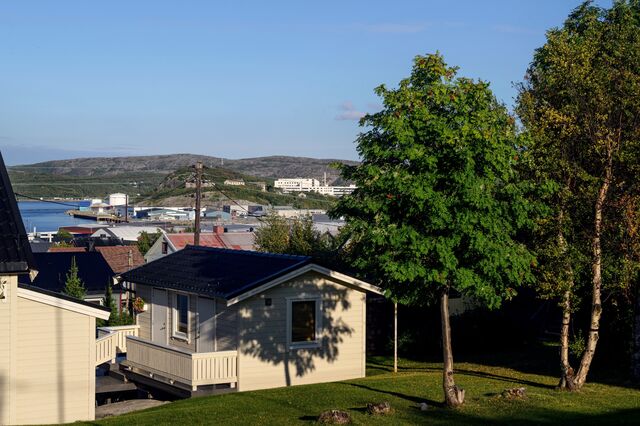
In June most of Nothing Hill was deserted, as if waiting for the boom to arrive. Chief Executive Niels Roine had only helmed High North for six weeks but was formerly CEO of Kirkenes’ Chamber of Commerce. The property developer has been acting as a facilitator for talks with the Chinese for years but the Norwegian government isn't making things easy, he says. He’s evangelical about the economic potential of an expanded port: 'This city is, at the moment, one of the most interesting places in the Western world. This Arctic border city.”
In May Roine and Jorgensen flew to COSCO’s offices in Helsinki to meet with senior representatives from the company, including General Manager Yibin Yu. ”They are convinced that the Northern Sea Route will come,” Roine said. They’re trying to get into “the best possible position for trade in the world we're living in now.”
Jorgensen, who delivered a presentation on Kirkenes’ port potential at the meeting, was likewise encouraged but said discussions will need to take place at much higher echelons of government before the town can be part of the impending development of the Arctic which he views as inevitable.
“Traffic through the Northern Sea Route will come. This is not decided in Oslo, Brussels or Washington. It will come.”
(Updates with details on a planned meeting between Norwegian and Chinese leaders. A previous version of the story corrected the date Mayor Maeland took office in Kirkenes.)