Chick-fil-A’s Lemon-Squeezing Robots Are Saving 10,000 Hours of Work
The company is outsourcing a tedious job that caused countless injured fingers to an automated factory
Squeezing 2,000 lemons a day was such a pain for staff at Chick-fil-A Inc. that the company enlisted an army of robots to do it.
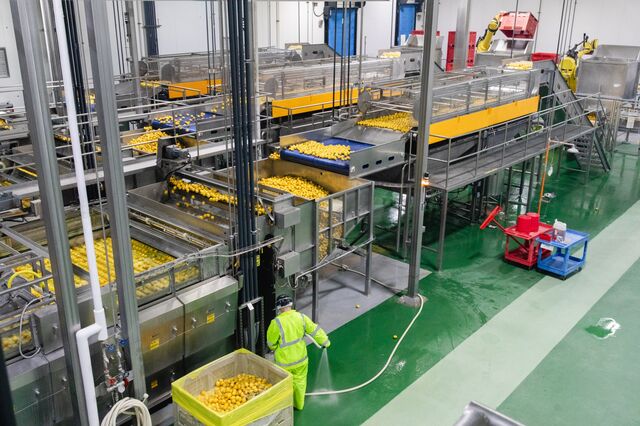
In a plant north of Los Angeles, machines now squeeze as many as 1.6 million pounds of the fruit with hardly any human help. The facility, larger than the average Costco store at roughly 190,000 square feet, then ships bags of juice to Chick-fil-A locations, where workers add water and sugar to whip up the chain’s trademark lemonade.
The automated plant frees up in-store staff to serve customers faster, according to the company. Squeezing lemons was a tedious task that added up to 10,000 hours of work a day across all locations and resulted in many injured fingers. Removing the chore aims to make working at Chick-fil-A more appealing – key for a company looking to add hundreds of new locations while contending with a fast-food labor crunch.
“You start doing the math, and there’s not going to be enough team members,” Mike Hazelton, Chick-fil-A’s vice president of supply chain procurement and operations, said during a recent visit to the California plant.

The lemonade factory shows how restaurants are using automation to improve efficiency and wring more sales out of their stores as competition intensifies for diners and labor. Nearly half of quick-service chains say they’re understaffed, according to polling by the National Restaurant Association. The shortage is expected to persist for years.
Chick-fil-A restaurants are some of the busiest among quick-service chains, according to data compiled by research firm Technomic. The average Chick-fil-A rang up about twice as much in annual sales as the typical McDonald’s in 2023, according to the latest available data.
Other restaurants are also turning to automation in all its forms. Chipotle Mexican Grill Inc. is testing in-restaurant machines that cut, core and peel avocados while Wendy’s Co., Taco Bell and others are doing trials of AI to take drive-thru orders. Cava Group Inc., a fast-casual Mediterranean chain, is piloting the use of cameras and generative AI to monitor how fast ingredients get used up.
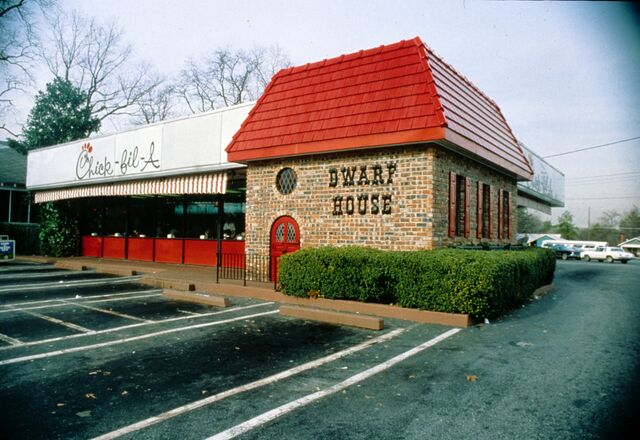
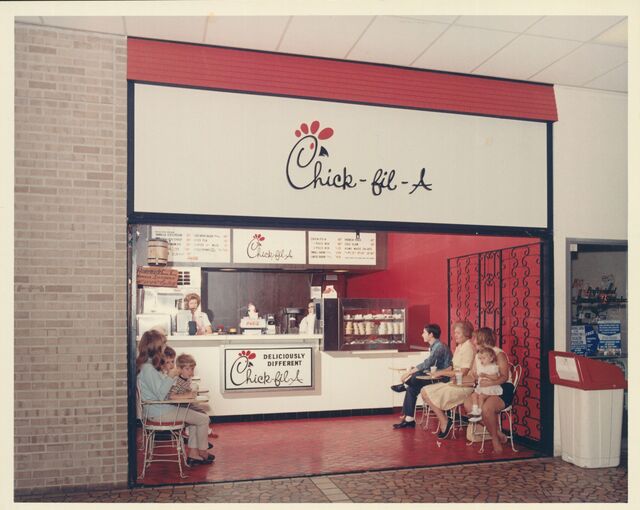
At Chick-fil-A, workers unburdened from lemon squeezing can dedicate more time to food preparation and interacting with diners, Hazelton said. The company has roughly 3,200 locations, operating in the US, Canada and Puerto Rico. It’s also pushing into new international markets. The lemonade, including a diet version sweetened with Splenda, is one of the chain’s most popular beverages.
“Squeezing lemons was not a fun job,” said Kurt Cahill, a Chick-fil-A senior leader who played a key role in developing the plant. “Nobody liked doing it.”
A citric smell permeates the air at the lemonade facility, dubbed Bay Center Foods, which opened in 2020. It receives 30 to 35 daily truckloads of lemons, each carrying 50,000 pounds of fruit. Once a dock attendant signs off on the shipment, the robots take over.
Driverless forklifts unload the lemon bins, guiding themselves with sensors that bounce a signal off black squares on the walls. A pair of yellow robotic arms then dumps the lemons into metal chutes, stopping when the load hits 3,000 pounds.
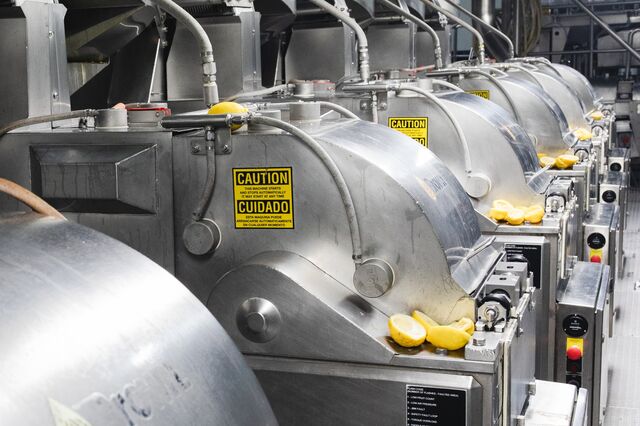
The lemons are washed and travel over rollers with tiny teeth that extract their oils, which are processed on site and sold to the fragrance and cosmetics industry – a whole new revenue stream for Chick-fil-A. Virtually all of the lemon gets used, up from about 40% when employees did the squeezing.
There’s little human intervention, except to pick out busted lemons as they move down a conveyor belt. The fruit is then sorted by size as it drops into extractors to be sliced and reamed. Rapidly spinning drums and other machines cleanse the resulting liquid until it comes out as pure juice that is later mixed back with pulp, which must account for 12% to 14% of the final product.

In the next step, mechanical jaws press two film sheets together to form bags that get piped with juice. They’re sealed with a hissing sound. A conveyor belt then brings the bag through an X-ray machine that detects any unwanted foreign objects. So far, none have ever been found, Cahill noted with relief.
With the help of robotic arms, the bags get funneled into a pasteurizer that uses high pressure instead of heat, which Cahill said could ruin the final product. The machine applies 75,000 pounds of pressure for 90 seconds, killing harmful microorganisms and releasing with a bang when it’s done. The pasteurized juice has a shelf life of more than 40 days, meaning it can be shipped as far away as Hawaii.
Robotic arms – including one with cowhide decals in honor of the mischievous cows behind the chain’s “eat mor chikin” campaign – gently position the bags in cardboard boxes for shipping. Another robot arm places the cases onto pallets, which are stored in a giant automated rack until they need to be delivered.
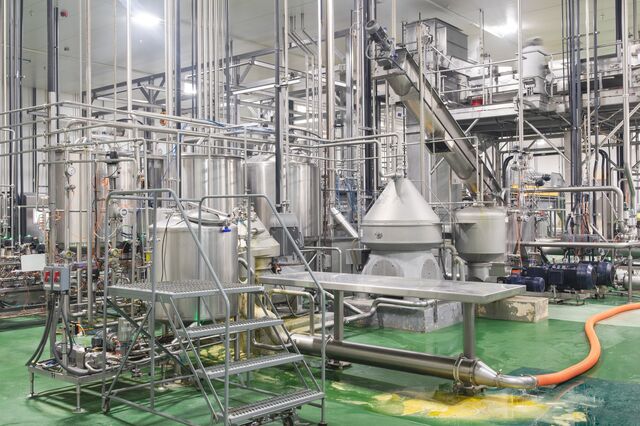
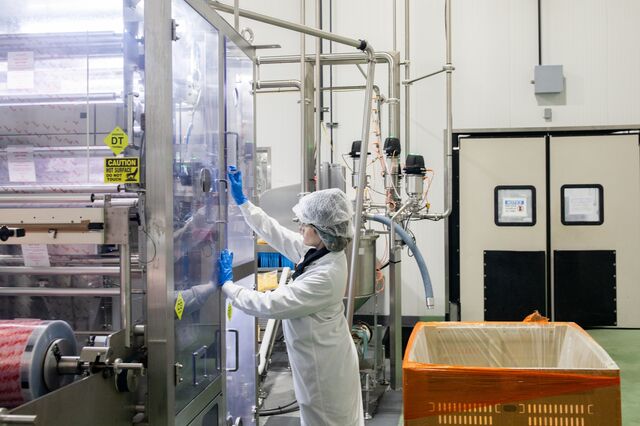
In total, the process takes about 45 minutes, Cahill said. Production runs Monday through Thursday, with cleaning happening in the interim. The plant employs about 120 workers, whose tasks include maintenance and quality control. Chick-fil-A declined to disclose the cost of the facility.
Chick-fil-A’s process is “very cutting edge,” according to Matthew Chang, an engineer who helps companies design and install automation and who wasn’t involved in building Bay Center Foods.
He estimates that only about 5% of manufacturing plants in the US have similar levels of automation, in part because it’s hard to retrofit existing facilities. While many food plants automate production and packaging, he said, they often lack elements such as the driverless forklifts and systems that stack boxes on pallets.
The complexity of food preparation has made automation challenging for restaurants. For example, Chipotle in recent years tested a chip-making robot but decided against deploying it because it was too hard to clean. Chains including Burger King still do tasks such as slicing onions by hand.
Chick-fil-A isn’t planning more plants on the scale of the lemonade facility, but there are other tasks it would like to take out of its restaurants. It’s considering prechopped salads that would free workers from slicing heads of lettuce every day. Chick-fil-A is also mulling a switch to a bagged premade egg-and-milk mix for breading fried chicken. The goal is to speed up service while addressing complex tasks that have held back the company’s growth.
“Anything we can do to reduce turnover, improve efficiency, move prep up into the supply chain will really help," Hazelton said.
Edited by Jonathan Roeder
Photo Edited by Marie Monteleone