California Wildfire Rules Will Reshape Urban Neighborhoods
Officials are drafting regulations to enforce a law that prohibits vegetation within five feet of homes in high fire risk zones that include the state’s most privileged communities.
Along the sylvan streets that wind through the Berkeley hills overlooking San Francisco Bay, the spires of towering redwoods punctuate the sky and the scent of eucalyptus and bay laurel lingers in the summer sunshine. Coyotes wander past century-old Arts and Crafts wood shingle homes that sit nestled among majestic coast live oaks just feet from bougainvillea-draped Spanish Revival haciendas and mid-century modern dwellings garlanded with juniper and rosemary.
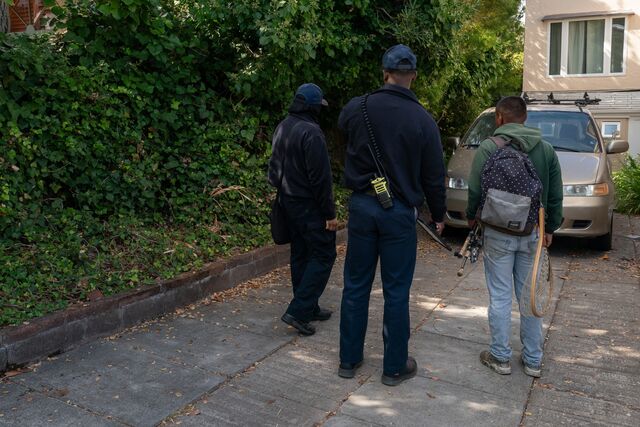
But this gorgeous riot of greenery and eclectic architecture is a potential deathtrap in a landscape primed to burn. That’s why the Berkeley Fire Department is in the hills on a May morning to inspect homes and ensure they’re as wildfire-safe as possible. The inspectors are telling residents to cut back high-risk vegetation and recommending that all flammable material be removed within five feet of homes.
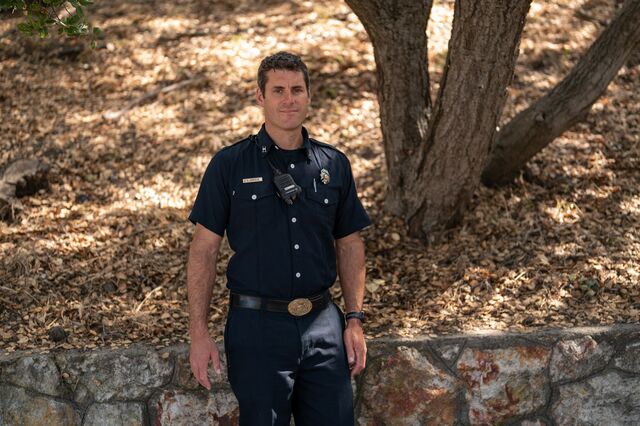
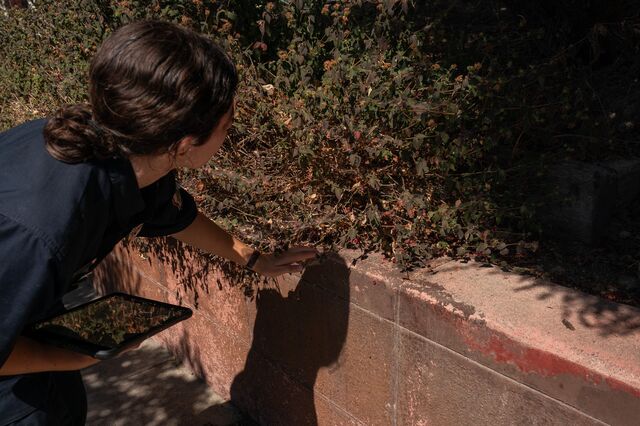
Colin Arnold, the Berkeley Fire Department’s interim assistant chief for the wildland-urban interface, is standing outside a Tudoresque house with Jesse Figoni, a fire inspector. Like most other homes in the hills, it sits close to its neighbors and is enveloped in verdant foliage. This house is made of stucco, far more fire-resistant than wood, but the small front yard is carpeted in a thick mat of juniper shrubs surrounding an overgrown Italian cypress tree. The juniper—nicknamed “green gasoline” for its high flammability—looks healthy. But when Arnold pulls back the bush, the undergrowth is dead and dry.
“That’s a huge concern,” says Figoni. “It doesn’t take much for embers to accumulate on the juniper and get a fire going. Not only is it going to be a risk to this house, but it’s a risk to other houses.”
Since 2017, one catastrophic climate-driven wildfire after another has ignited in California on hot, breezy days like this one and massive fires are currently burning across the state. Officials worry that during ever-more frequent heat waves, wind-carried embers from a wildfire miles away will ignite a firestorm that roars through the heavily vegetated Berkeley hills, feeding on thousands of homes before racing downslope through the city of 120,000. (Just two weeks ago, a grass fire broke out nearby when a vulture collided with a power line in Tilden, a huge regional park that borders the Berkeley hills.)
Fire Hazard Severity Zones


To help forestall such a cataclysm, California is currently drafting regulations, called Zone Zero, that could transform the landscape of some of the state’s most iconic and privileged communities. Existing regulations require homeowners in high-risk areas to create “defensible space” from five to 100 feet around their dwellings by thinning out vegetation and removing dead or dying plants and trees. Zone Zero ups the ante, prohibiting vegetation, wood fences and decks and other combustible matter within five feet of homes in areas classified as “very high fire hazard severity zones.” That includes the densely populated East Bay hills and large swathes of urbanized Southern California – Malibu, Bel Air, the Hollywood hills. Cities like Berkeley aren’t waiting for the state regulations to take effect, making its efforts to prepare residents for Zone Zero a preview of the challenges to come.
A growing body of research shows that establishing such ember-resistant spaces is crucial to saving homes in a wildfire. It could also help homeowners keep their property insurance as insurers flee California due to wildfire risks. But Zone Zero will test Californians’ ability to adapt to climate change and the aesthetic price they’re willing to pay to protect their neighborhoods.
Scott Stephens, a professor of fire science at the University of California at Berkeley, says without dramatic alterations to landscaping around homes, high-risk urban areas “inevitably are going to burn” as a warming climate intensifies wildfires. “I think it’s going to require a reconfiguration of what a neighborhood is, a wholesale change in how it looks.”
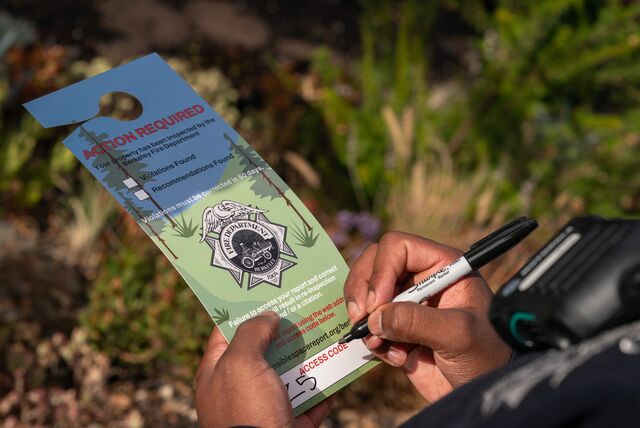
In 2020, Berkeley voters approved funding for annual wildfire inspections of every home in the hills. That’s about 8,000 houses, and the fire department is telling homeowners it’s not yet enforcing Zone Zero but compliance is “strongly recommended.” When inspectors spot a violation of existing regulations, like at the Tudoresque house surrounded by juniper, the firefighters issue a report and say they’ll visit again in 60 days. In this case, the homeowner must remove dead undergrowth and break up the juniper so there’s at least six feet of space between shrubs.
“They got that juniper probably trimmed so that they don’t see the street but they still have a beautiful view, so complying is going to be really challenging for them,” says Arnold.
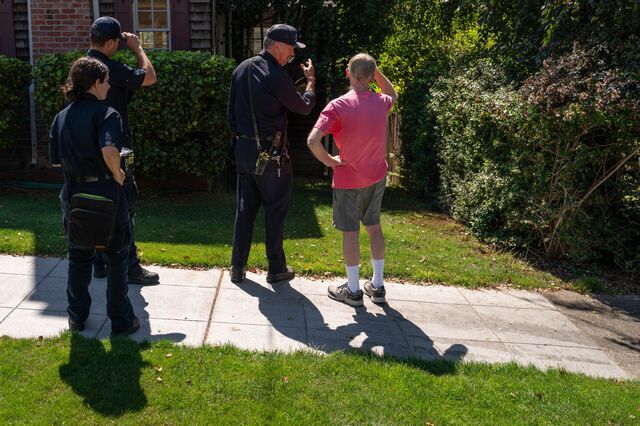
If violations persist, the owner can be charged $98 for every 15 minutes of re-inspection time and additional fines. Each report also makes suggestions for voluntary “home hardening,” including installing vent covers to block embers from entering a house as well as changes that will likely be required by Zone Zero, such as replacing wood fencing and decks. As of Sept. 9, the fire department had conducted 5,693 inspections, finding 1,908 violations.
The Berkeley hills have burned before. On Sept. 17, 1923, a wind-driven wildfire blazed out of a canyon in Tilden and incinerated nearly 600 homes before firefighters stopped the conflagration on the edge of downtown. Over the decades, memories of the fire faded and urban woodlands rose from barren hillsides. Then in October 1991, a wind-fueled grass fire exploded into a firestorm that killed 25 people and destroyed some 3,000 homes in the Oakland and Berkeley hills.
“That’s absolutely our nightmare scenario and we are not just anticipating but expecting a wildfire to be on the edges of the city in any given year,” says Arnold.
The state subsequently adopted “defensible space” regulations.
Then came Coffey Park. The neighborhood in the Wine Country city of Santa Rosa wasn’t in a fire hazard zone and was miles from a fast-moving wildfire that broke out in October 2017. But near hurricane-force winds rained embers down on the neighborhood, obliterating some 1,500 homes. That disaster helped prompt passage of California’s Zone Zero law in 2020 and regulations to implement the requirements currently are being developed.
It’s estimated that embers cause up to 90% of structure fires. But even if you have a fire-resistant roof, windblown embers can roll off and ignite vegetation, fences, patio furniture and anything else flammable next to a home, according to Michele Steinberg, director of the wildfire division at the nonprofit National Fire Protection Association.
“We know from not only experiments and research but actual post-fire investigations that where people had cleared out vegetation just a little ways from the house and put down gravel or rock mulch, that fire never had a chance to get to the house,” she says.
Arnold says that kind of mitigation allows firefighters to focus efforts on extinguishing a wildfire rather than trying to save homes from wind-driven embers while evacuating residents.
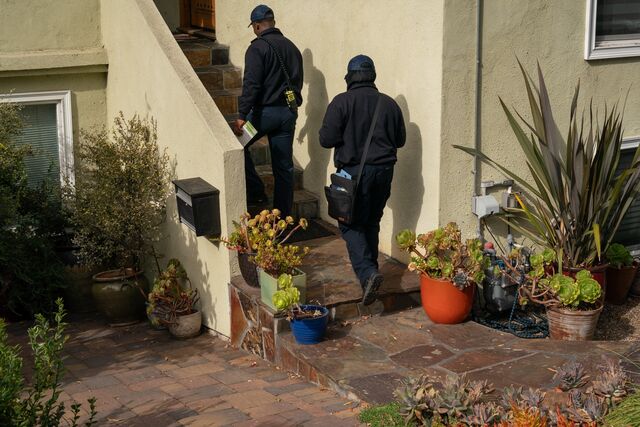
But Zone Zero presents a particular challenge in places like the Berkeley hills, according to Stephens, where there’s often just five to 10 feet separating homes. “Within five feet of a house is a prime landscaping place,” he says. “People have these beautiful homes and views but the lots are smaller and they want privacy.”
How stringently California will implement and enforce Zone Zero remains to be seen. The regulations were supposed to be issued in January 2023. Now draft regulations are due to be finished by the end of this year, according to Lisa Lien-Mager, deputy secretary for forest and wildfire resilience at the California Natural Resources Agency.
She says officials are considering phasing in the regulations to give homeowners time to make necessary and potentially costly changes. “We want to put together something that we think can really work,” says Lien-Mager.
Experts say that Zone Zero will only work, though, if homeowners cooperate to create what amounts to a neighborhood firebreak. Even a well-protected house will likely go up in flames if the rest of the street’s homes are burning.
“The only way we’re going to be successful is if 90% of the folks up in the hills are willing to do what we need them to do,” says Duncan Allard, a wildland-urban interface inspector for the Berkeley Fire Department.
Some homeowners aren’t taking the inspections well. “No one will have the cash to make these changes to old Berkeley structures that have all of these issues!” wrote a homeowner on the social media site NextDoor, prompting nearly 300 comments.
Berkeley hills resident Steve Taylor says Zone Zero “would require removing some vegetation and I’d rather not remove it because I like being surrounded by greenery.” Taylor, a writer who’s lived in the Berkeley hills for most of his life, says he’s most concerned about a requirement that mandates 10 feet of space between the crowns of trees. “To do so would denude the hills of our beloved trees and could really change the nature of the Berkeley hills.” Arnold says the fire department currently is enforcing that requirement only for homes exceptionally vulnerable to wildfire.
Other East Bay hills residents, however, are transforming their yards.
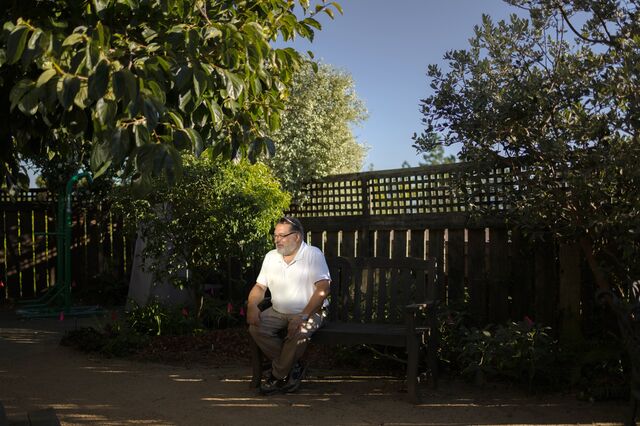
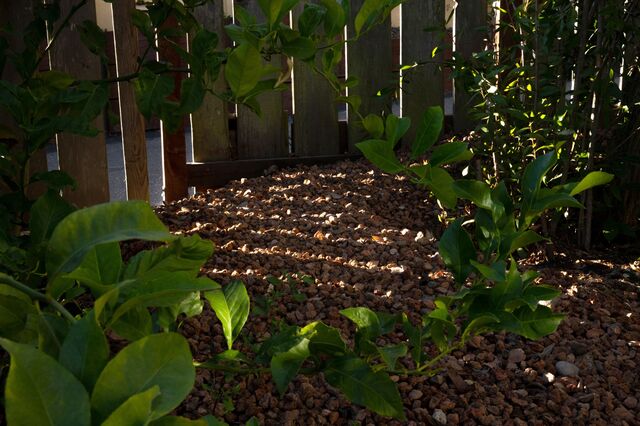
Michel Thouati, a Berkeley hills homeowner and chief executive officer of a local nonprofit, began re-landscaping his park-like property even before his neighbors started losing their home insurance. State Farm, California’s largest insurer by market share, this summer declined to renew 30,000 homeowner policies, mainly due to wildfire risks. The company dropped 13.2% of policies in Thouati’s zip code.
As Thouati walks around his yard, he points out where he’s removed juniper, bamboo, shrubs and trees, like three 40-to-50-feet tall liquidambars that shaded a Japanese garden. “I have an emotional relationship to my trees and, and it’s very difficult to let go,” he says. He passes by fig and persimmon trees growing up against the house. “I’m going to have to take them out, it’s killing me.”
When Thouati’s roof needed replacing, he had a metal one installed. His front door is fire-safe and he just replaced wood deck furniture with metal. He’s proposed to his neighbors that they join a National Fire Protection Association program called Firewise that helps residents make entire neighborhoods wildfire-resilient.
The San Diego County community of Alpine has already incorporated Zone Zero into its local regulations and fire marshal Jason McBroom says fear of losing insurance “is a huge motivator” driving compliance. He provides homeowners with a certificate and a detailed inspection report that they can show their insurers.
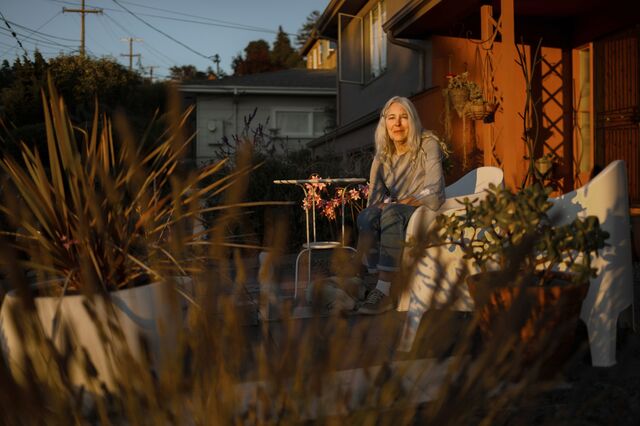
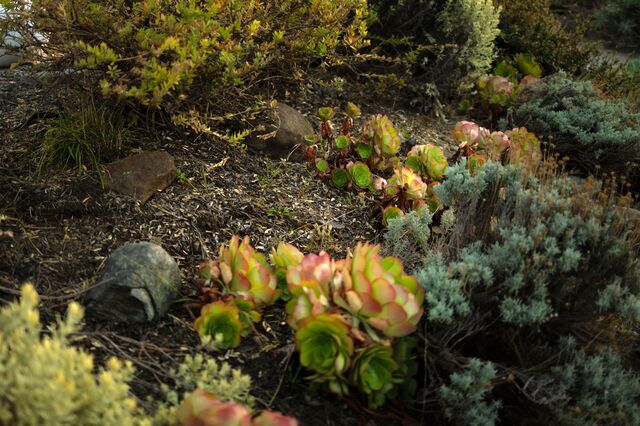
Artist Nelda Barchers’ front yard in El Cerrito, another East Bay town, was once an ocean of juniper standing three feet tall. Now it’s a rock garden filled with succulents and other fire-resistant plants. She hopes that creating an ember-resistant zone around her house will help retain her property insurance.
“The juniper was great because it looked very tailored and it was always green, but when I started reading about things you could do to protect your home they called it the gasoline plant,” says Barchers, who also worked with her neighbors to replace an ivy-covered wood fence with a metal one.
Stephens says those East Bay hills residents’ willingness to adapt to a new climate reality is cause for optimism. “There really is great hope that if we make our houses better, make our landscapes better, we’ll make them less prone to wildfires from embers thrown for miles,” he says. “But it’s going to take decisive action.”