The US Is Building Factories Again, But Who Will Work There?
America's drive to compete with China in manufacturing requires lots more skilled workers. Tennessee’s experiment with free technical school, and its close partnerships with business giants like Volkswagen and Nissan, offer a glimpse of the future.
Back in the mid-2010s, when there were only a few thousand electric vehicles on the roads of Tennessee, the state launched an initiative — unique in the US at the time – offering free community and technical college to nearly every adult.
Half a decade later, with EVs at the heart of the most ambitious US industrial policy since World War II, that landmark decision is paying off – and also pushing up against its limits. The state has approved a $1 billion boost for technical colleges.
Federal incentives are driving investments in the electric-car industry worth more than $100 billion. Every state wants a piece of the action, and Tennessee is getting plenty. It’s a lynchpin of the new Battery Belt that stretches from Michigan to Georgia. More than $16 billion in EV capital has poured into the state since 2017. Last year, Ford Motor Co. broke ground on a giant new plant near Memphis that’s slated to open in 2025 and churn out half a million electric trucks per year.
But the drive to reboot manufacturing and claim national leadership in strategic technologies is about to crunch up against a shortfall in trained workers — and impose new demands on technical education all across America.
Conversations with more than two dozen people — including executives, policy makers in federal, state and local governments, educators and students — highlight the challenges involved, even in states like Tennessee that got ahead of the curve. They include how to pitch manufacturing as a career to digital-age teenagers, and tailor trade schools to the needs of business. It’s an area where economists reckon the US, after decades of de-industrialization, lags behind powerhouse manufacturing nations like Germany.
US Battery Cell Manufacturing Activity (GWh)

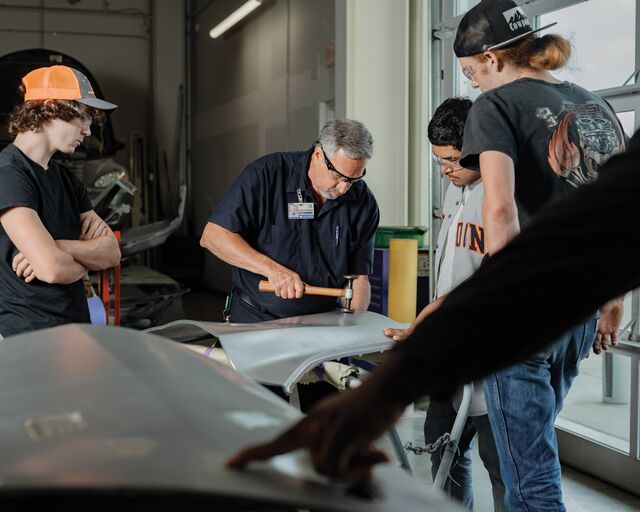
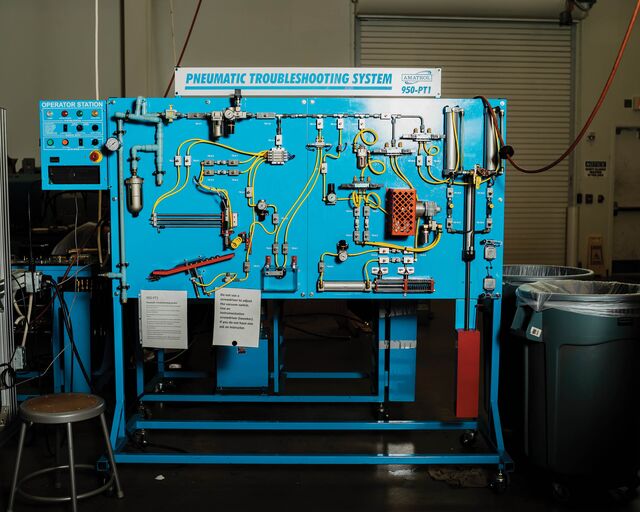
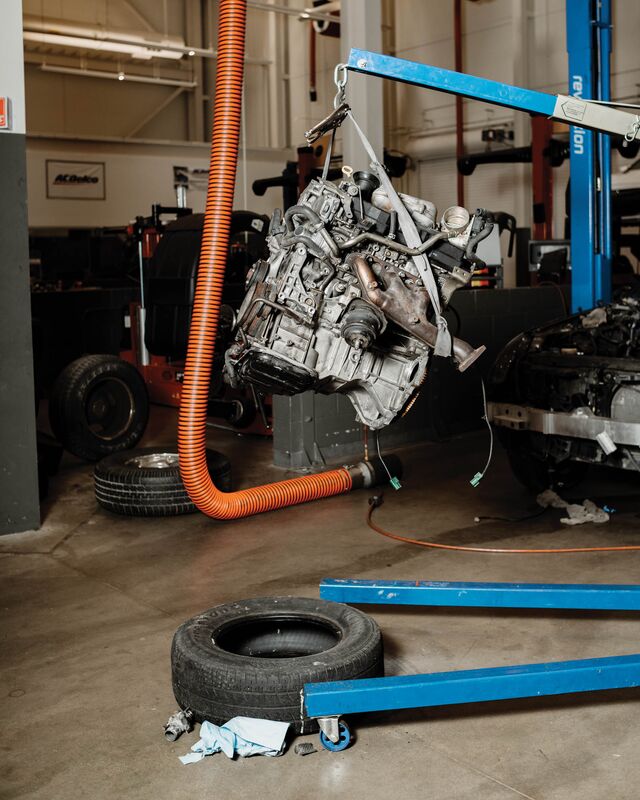
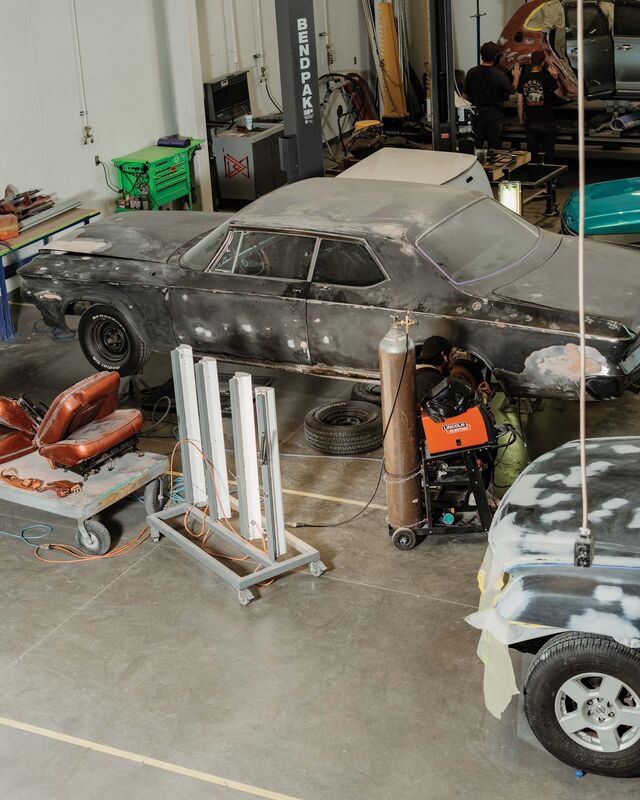
The Tennessee College of Applied Technology campus in Smyrna — where one classroom resembles an auto body shop, and another has robots twice the height of the instructors — offers a glimpse of what playing catchup might look like.
The TCAT system has been around since the 1960s. Tuition was made free for new high-school graduates in a 2014 bill, and for older adults around the same time. It has some 34,000 students at more than two dozen separate schools.
Now the state is about to pump in almost $1 billion more, and the collaboration with business is becoming ever-closer.
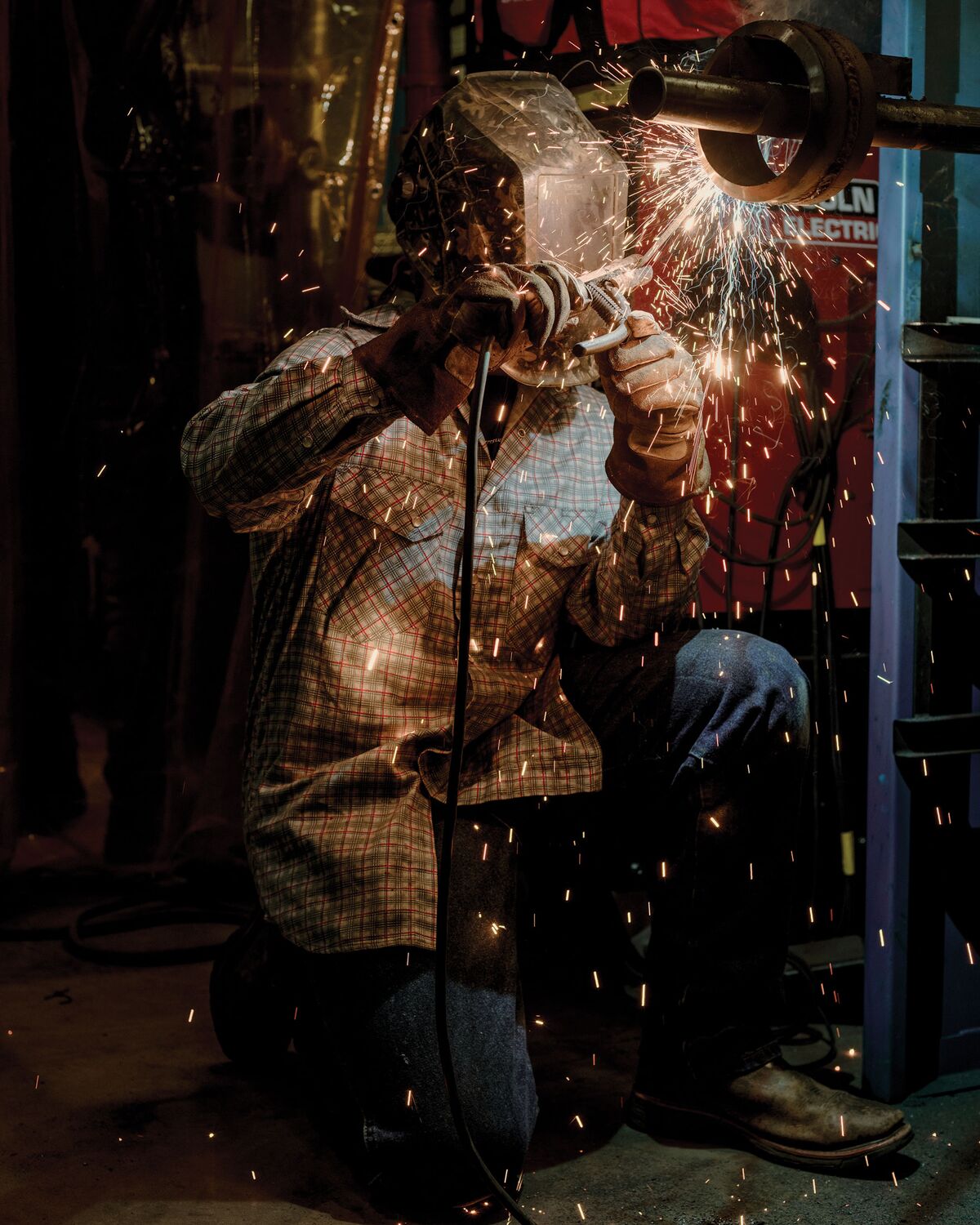
The TCAT campus in Smyrna, for example, opened in 2017 in partnership with Nissan Motor Co., which makes its Leaf electric cars nearby. Company trainees and traditional students split their time between lectures and the shop – learning the theory and practice of welding pipes, troubleshooting hydraulic power systems, or programming robots to move battery parts. The Ford plant will take things a step further, with a brand-new campus built on-site.
Scaling up the colleges so they can meet industry’s demand for trained workers requires a growing supply of would-be students keen on the kind of programs that lead to a factory career. And that’s proving a challenge.

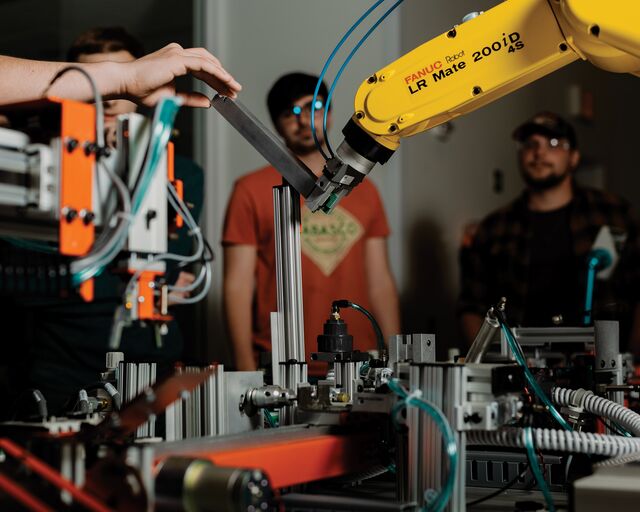
“It’s got a stigma,” Matthew Overbay, director of manufacturing strategy and planning at Nissan, says of the industry. “Everybody sees it as, that’s what my grandparents did,” he says. “There’s an image of what a factory is, and nobody wants to go do that.”
That’s after decades of declining factory employment, as production of the stuff that Americans buy shifted to Asia. Manufacturing now accounts for just 8% of the US workforce, half what it was at the start of the 1990s. Europe faced similar challenges, but countries like Germany have long invested in technical training to boost industry at home.
In Tennessee, Nissan became the state’s EV pioneer when it started making the Leaf in Smyrna, half an hour outside Nashville, about a decade ago. Now the plant is facing a shortfall of workers, Overbay says.
The local TCAT needs more candidates like Alexander Nunez-Patino. The 19-year-old says he felt some pressure to go to a traditional four-year college – from his father, who took him along on landscaping gigs as a warning of what awaits without a degree, and from friends who wanted him to join them at Tennessee Tech. Other high-school peers went right into the labor market to earn ready cash. Neither path felt quite right.
“I just wanted to get straight to the point of working,” he says. “But I also didn’t want to just completely drop education.” He toured a TCAT campus and thought “the classroom looks amazing. I feel like I’m going to get some great hands-on experience.” Now he’s studying industrial electrical maintenance. “I could be an electrician if I wanted to,” he says. “I could actually work on building machines if I wanted to. I could try repairing machines. There’s a lot I could do.”
Nunez-Patino, like several other young students, says he didn’t hear about the TCAT colleges via his high school — it was his sister who tipped him off. That suggests there’s plenty more work to do for the state’s outreach programs.
By one metric, they’re already bearing fruit. Dual enrollment at TCATs — where students take college courses while they’re still finishing off high school — has roughly tripled since 2016, and Tennessee recently approved an expansion to 9th and 10th graders. Ultimately, the goal is to create a longer-run talent pipeline that starts around coloring-book age, says Matthew Gann, the chief marketing officer for the state’s Board of Regents that governs public colleges.
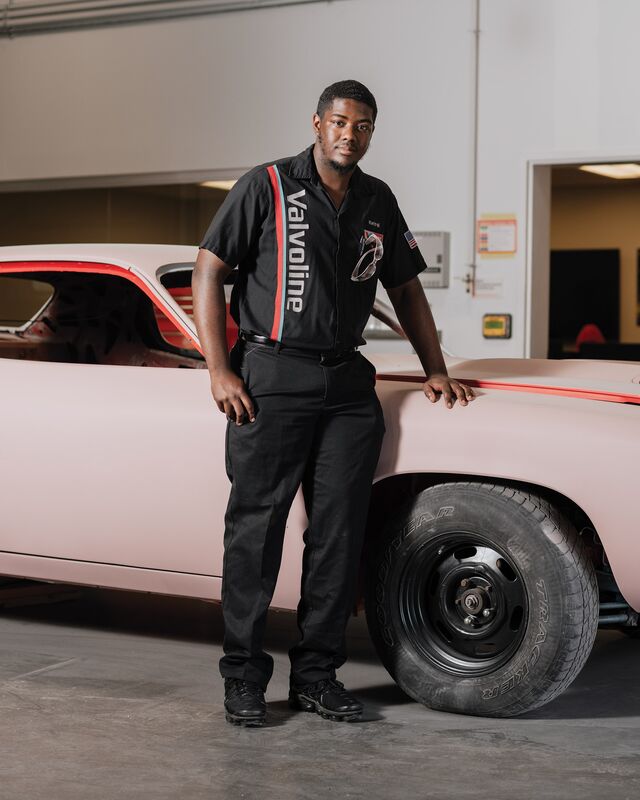
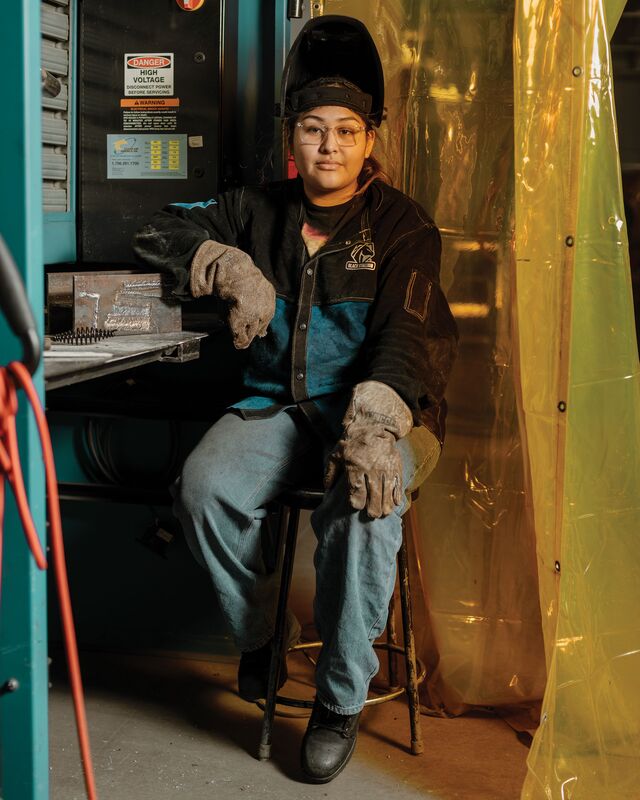


In the tight post-pandemic labor market, high-school graduates have a range of well-paid options like they’ve rarely enjoyed in recent times. Unemployment is just 2.6% in Chattanooga, where Volkswagen AG has a plant, and historically low across the state. Wages, especially for people without college degrees, have been climbing fast.
Jeff Sisk, head of the center for workforce development in Tennessee’s college system, says that in the race to attract young people, he’s accustomed to competing against other types of educational institutions, like universities or community colleges. But “for the first time in a long time I’m competing against employers” too, he says, citing the kind of entry-level pay on offer at places like gas-station chain Buc-ee’s. “You can make it in rural Tennessee, relatively speaking, on $22 an hour.”
The TCAT course offerings go well beyond manufacturing, with programs in subjects from nursing to cosmetology. Some programs across the state have waitlists, but traditional adult enrollment has broadly flatlined over the past five years or so. There's been a jump in TCAT’s workforce-training programs since the pandemic, though, and a growing share of students are apprentices already on the books of local manufacturers.
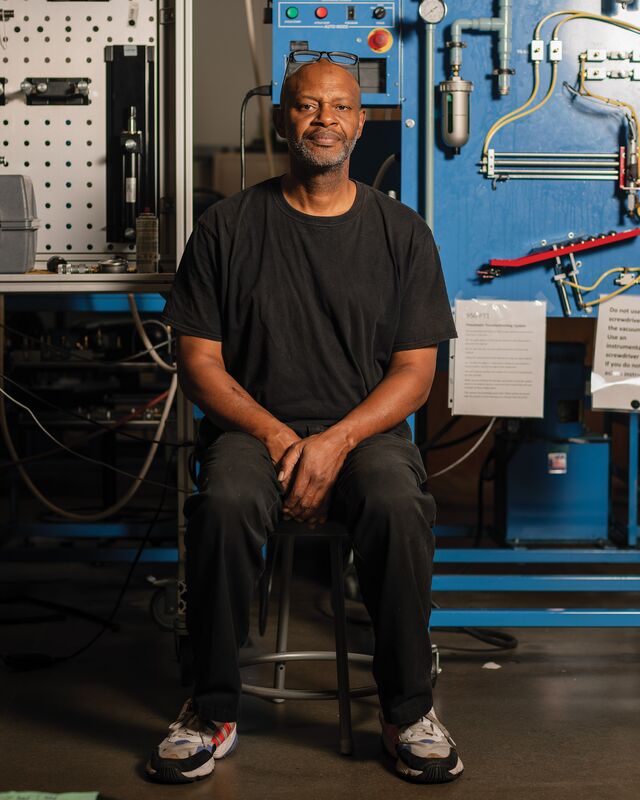
Richard Lambert has worked at Nissan for 13 years – mostly as a stamper, fitting large sheets of metal to molds for car doors and hoods. “After a while, that specific job that I was on, you kind of just start feeling like a robot,” he says. “I liked the idea of pretty much having to put your brain to use, and critical thinking.”
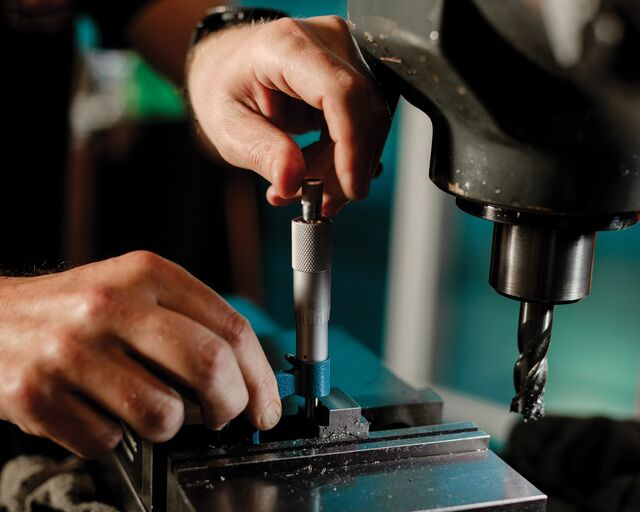
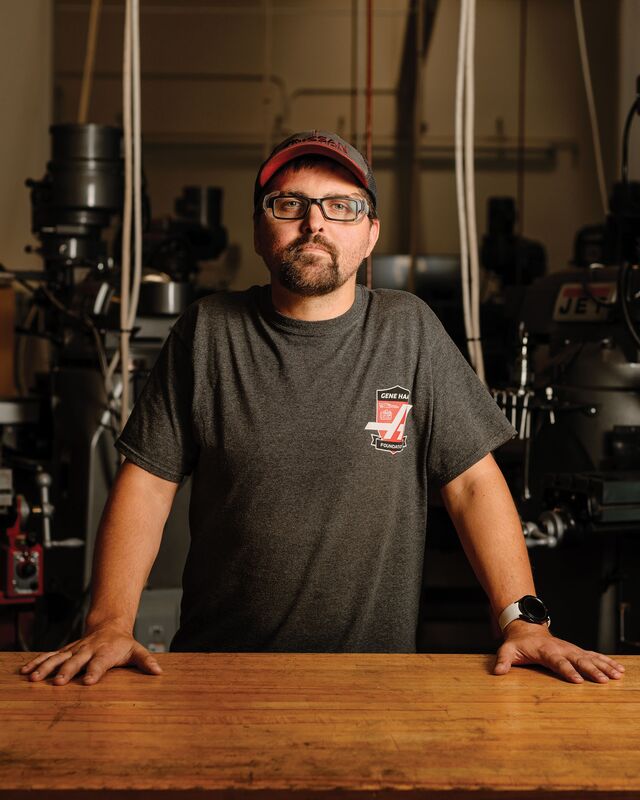
Now Lambert, 37, is enrolled in the TCAT’s rapidly growing machine-tool technology program. Completing it will enable him to become a tool and die maker — creating and maintaining the molds used to produce car parts — and earn an extra $10 per hour.
That earning potential is a key selling point for TCAT — an argument that has some sway with parents otherwise skeptical of trade school, administrators say. Lambert’s instructor Mike Schoen — who rotates his students around a warehouse-size classroom to the clanking soundtrack of a couple dozen lathes, mills and metal-cutting robots — outlines the deal. He says every program graduate leaves with $1,200-worth of donated tools, a starting salary between $40,000 and $65,000 (with the opportunity to go much higher), and no student debt. The job placement rate is 100%.


Demographics are a longer-term problem. Tennessee, like much of the US, recorded more deaths than births in 2022. The labor-force participation rate – at 59.2% – is in the bottom 10 out of 50 states. In Rutherford County, where the Nissan plant is located, almost half of high-school students are neither moving on to further education nor entering the workforce, says Cheryl Williams, vice president of student services at TCAT Murfreesboro.
Tennessee can pull in workers from outside – and it is. Good weather, affordable prices and lively cultural centers helped attract record numbers of movers from other states last year, more than 81,000 on net. That’s great for its status as a southeastern hotspot – but those aren’t necessarily the people regional leaders want to see getting the new jobs at places like the new Ford plant, dubbed BlueOval City.

“We’ve been very clear to our incoming manufacturers and abundantly clear to the Ford team that our expectation is that locals come first,” says Amity Schuyler, senior vice president of workforce development at the Greater Memphis Chamber.
That means not just tapping young talent but also giving local people — including those from inner-city Memphis, a disproportionately Black and lower-income group — “the opportunity to upskill and claim the jobs,” she says. To help them do that, officials plan to open a 104,000 square-foot skills training center in Memphis that will also offer services like transportation and daycare.
The years-long efforts by Tennessee’s policymakers and industrial chiefs to develop the manufacturing workforce were put to the test last year when Volkswagen embarked on a hiring spree in Chattanooga, after deciding to open a third shift at the plant and ramp up output of its all-electric ID.4.
Drawing on its German experience, Volkswagen had already been working closely with local education systems. It helped put digital fabrication studios in schools. High-school juniors and seniors can take classes at the Volkswagen site at their Mechatronics Academy, and there’s an apprenticeship program with Chattanooga State Community College that blends classroom and first-hand experience at the plant.
On top of all that pre-laid groundwork, the company hosted job fairs, reached out to military veterans, created targeted advertising campaigns and offered bonuses for hiring and retention. It ended up getting more than 14,000 applications, or roughly 10 per job. Most came from within a 50-mile radius of Chattanooga.
If Tennessee passed that test, there are plenty more to come. The state wants to attract not just individual companies but whole chains of economic activity, from makers of parts for giants like Volkswagen or Nissan, to high-paid work in research and development. “It doesn’t help you as a company if you attract all the talent and then your supplier doesn’t have enough people,” says Burkhard Ulrich, senior vice president of HR at Volkswagen Chattanooga. “We have to uplift the whole community.”

Stanton is a tiny community about 50 miles from Memphis that’s on the cusp of a huge transformation. Mayor Allan Sterbinsky is preparing for its population – 417, at the last count — to balloon to 10,000 in 2035, by which time Ford will have been producing trucks there for a decade.
Stanton needs many things: housing, sewage systems, a new highway exit, places to go downtown. And Ford needs about 6,000 workers. That’s why, as part of a $2.4 billion incentive package, Tennessee offered to establish its first-ever onsite TCAT at BlueOval City. It will teach some 300 specific skills identified by Ford and not otherwise offered in the state, Sisk says, and bump TCAT’s capacity in the region up by about one-third, to around 2,000 students per year.
Stuart McWhorter, commissioner of the state’s Department of Economic and Community Development, says that’s part of an increasingly tailored effort to partner industry with education. If the drive to kickstart US manufacturing is to have staying power, in Tennessee and beyond, that may be the shape of things to come.
Industry partners “are telling us, ‘Hey, in 12 months or 24 months, this is the skills that we want inside of our plants’,” and the next step is to put the training facilities “right inside the gates,” McWhorter says. “You’re going to see more of that.”