Businessweek + CityLab
THE CITIES ISSUE
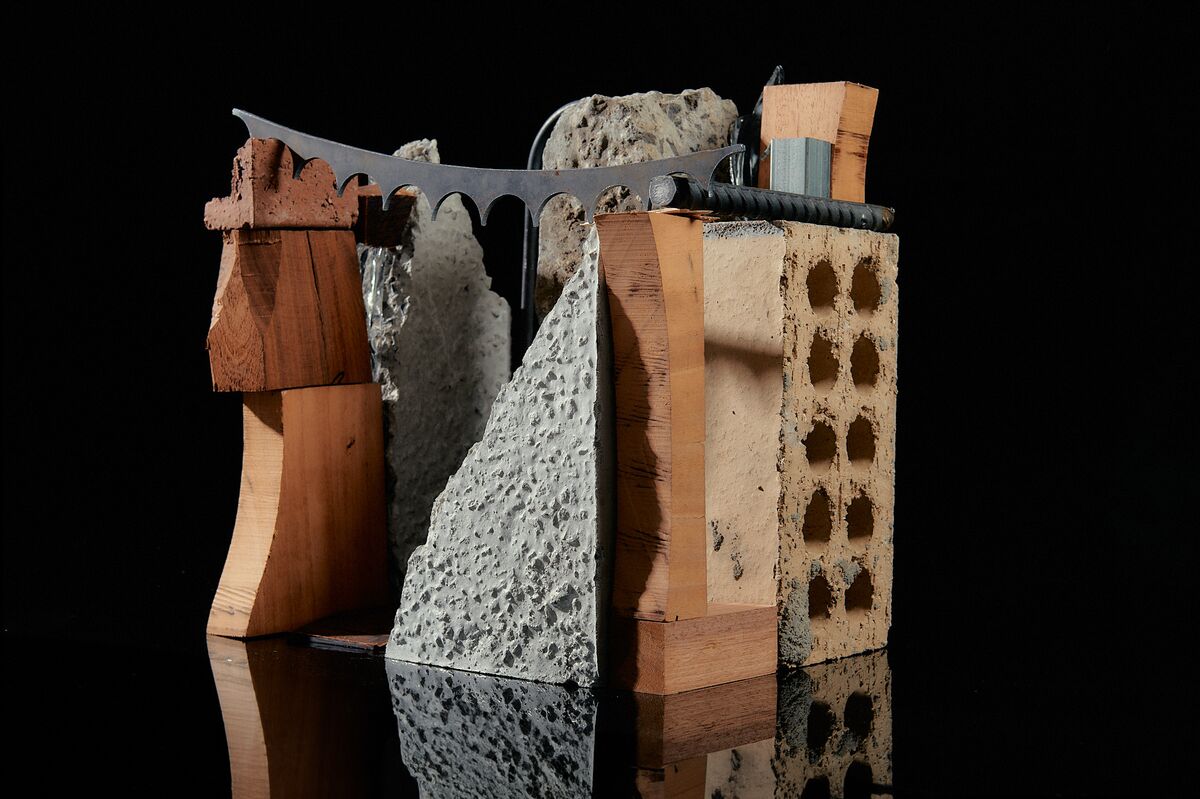
THE STUFF OF CITIES
From steel to asphalt, the building blocks of modern life are improving to meet a challenging future.
The city exists as a hub of culture; as a vessel for human problems, desires and solutions; as an economic force; and as a metaphor. Then there’s the city as stuff. From Seoul to São Paulo, urban areas are fashioned from the same handful of essential elements: brick, concrete, steel, glass, asphalt and wood. The qualities and characteristics of these common building materials have profoundly shaped the societies that consume them—and the scale at which they’re being consumed has destroyed vital ecosystems and altered Earth’s climate. Now there’s a race to produce the physical building blocks of our society using methods that limit their environmental toll. In some ways the new materials will resemble the old ones; in others they’ll be fundamentally different. To build the cities of the future, we’ll need new stuff. —David Dudley, Bloomberg CityLab
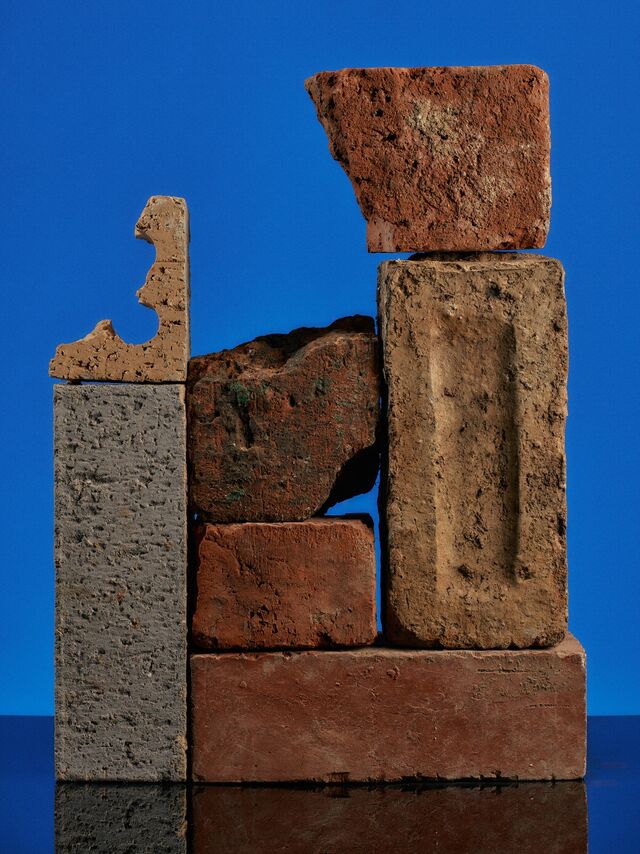
Once you learn what to look for, it’s easy to tell the difference between a hand-molded, wood-fired brick and a mass-produced industrial one.
“You get a texture to the surface of the brick, called a sand crease,” says Jim Matthews, running a finger along the mottled exterior of a fresh brick. Before it’s thrown into the mold, the soft clay that forms a new brick is rolled in sand, leaving a telltale pattern on the finished product that machine-made bricks lack.
The artisanal brick Matthews is holding comes from H.G. Matthews, a brickyard northwest of London founded by his grandfather in 1923. They’re baked for days in kilns heated by wood chips. The lengthy exposure to wood smoke gives them a vibrant, slightly uneven glaze and color, ranging from pale gray for those that were in the hot center of the kiln to rowan red for those on the cooler edge.
There’s a healthy market for bricks such as the ones Matthews makes. Buildings designed in the New London Vernacular, the dominant architectural style for recent construction in London, often call for distinctive yellow-brown London stock bricks that evoke the Georgian and Victorian eras.
Matthews holds tight to tradition, but he’s also thinking about the next chapter for one of the world’s oldest building materials, searching for approaches to reduce the climate footprint of a heavily fossil-fuel-dependent product.
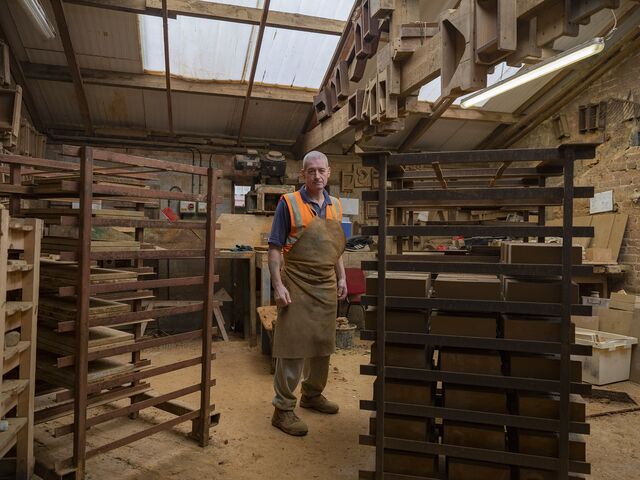
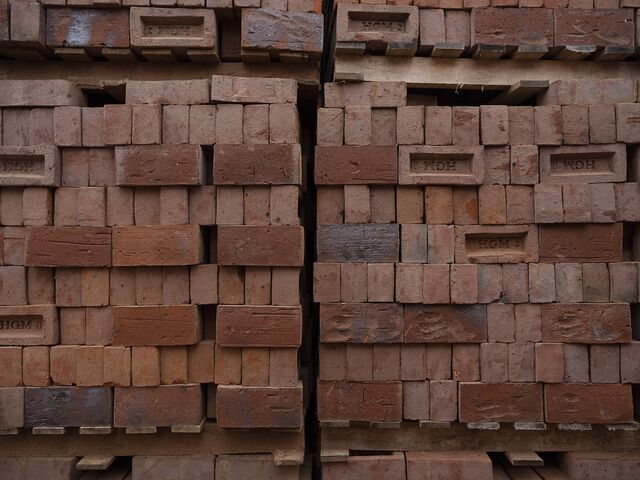
Introduced to the UK by the Romans, then reintroduced from Germany around 1400 after a long lull, brick dominated British construction for centuries. No other building material came close in adaptability or cost: The ubiquity of clay deposits and the ease of stacking and transporting bricks made them cheaper than stones, and their durability and insulating properties easily outdid wood. After the Great Fire of London in 1666, a royal proclamation mandated brick or stone for new construction, enshrining in law the virtues of these flame-resistant materials.

Brick became the face of Britain’s rapidly industrializing cities, fed by the introduction of the vast Hoffmann kiln in the 19th century. The ruddy blocks formed the base not only for housing but also for massive infrastructure, including viaducts and bridges that remain some of the largest brick structures on Earth. Many grand London edifices that appear to be made of limestone are really brick structures with a stone cladding.
Although the Industrial Revolution sparked a brick building boom, brickmaking itself remained a relatively unmechanized process. “There was a huge increase in brick production between 1750 and 1850,” says James Campbell, author of Brick: A World History, “not because you can make bricks better or are using mechanical devices, but because there was a huge expansion of building and housing to accommodate all of these people, and brick was the only really viable material.”
Now, massive extrusion machines can turn out thousands of identical bricks per hour, fired in kilns heated with natural gas or electricity. That’s the norm for Britain and other places, but many brickworks in China and India, which dominate an industry that makes 1.5 trillion bricks annually, still rely on manual methods and inefficient coal‑burning kilns.
The global brickmaking industry contributes 2.7% of the world’s carbon emissions. New techniques promise to cut emissions by integrating ingredients such as fly ash, recycled glass, plastic, mining waste and other industrial byproducts, which demand less firing and reduce the amount of raw materials needed. More efficient modern kiln designs, ideally heated with electricity from renewable sources, can also generate considerable energy savings.
H.G. Matthews takes a hyperlocal approach to sustainability by harvesting clay from deposits in nearby fields, reducing the impact of extraction and transport. The land can also be restored as pasture or woodland afterward. And the company is experimenting with unfired bricks made of cob, a mix of clay and straw more commonly called adobe in the US. Used since prehistoric times, cob is not always suitable for external walls in Britain’s damp climate. But unfired bricks nonetheless can make an effective internal layer.
Such measures might not scale enough to solve brick’s environmental issues, but they show that there’s a role for past practices in the industry’s future. “Taking clay, mixing it with straw, casting it into blocks and then just leaving it there is biblical-level technology,” Matthews says. “There’s snobbery attached to not being futuristic. In fact, the old ways were fine.” —Feargus O’Sullivan
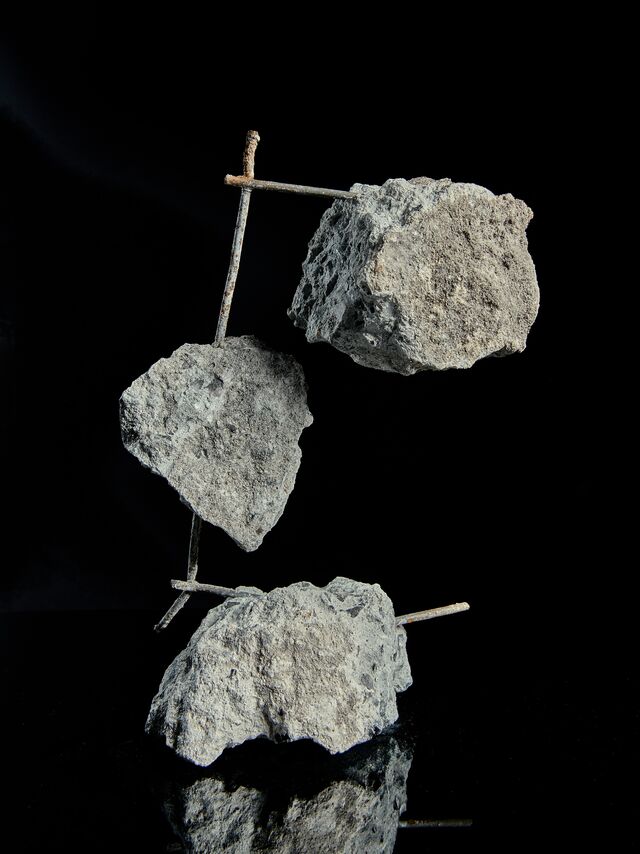
Central Concrete Supply Co.’s factory in San Francisco looks like an industrial playground for gravel. The little rocks, known here as coarse aggregate, are dumped onto a ramp, forced through a set of grates and sent up on an incline belt before tumbling into a tank that resembles the inverted leg of an AT‑AT walker, the armored combat vehicles used by the Imperial forces in Star Wars. In the tank they’re mixed with water, sand and cement to make the final product—concrete—which gets fed into the spinning barrel of a truck bound for a construction site.
At the factory, you barely see the concrete itself. But everywhere else, its presence is unavoidable. Humans use more than 4.4 billion tons every year—enough for almost 700 Hoover Dams—to pave sidewalks, hold up buildings and support bridges. It’s cheap, abundant and easy to use, and there’s no sign that anyone has plans to stop. China poured more concrete in the three-year period starting in 2011 than the US did in the entire 20th century.
This high usage comes at an enormous planetary cost. Cement, concrete’s essential binder, requires the baking of quarried limestone and clay at ferociously hot temperatures, a process that releases almost 3 billion tons of carbon dioxide into the atmosphere every year, accounting for about 8% of global emissions.
Architects and engineers have recently begun to get serious about reducing that number. One way to do so is by tweaking the recipe. If you think of concrete as cake batter, cement is the eggs. Roughly speaking, the more that goes in, the tougher the construction. The mix for a high-rise will probably demand a lot of cement; material for a parking lot needs less and could even use a partial substitute such as slag or fly ash, industrial byproducts of coal and steel production. They’re not as strong, but they’re cheaper and recently have been promoted as eco-friendly alternatives.
At San Jose-based Central Concrete, every mix includes an environmental product declaration that explains its atmosphere-warming impact. Slag and fly-ash blends make up enough of the San Francisco factory’s output to get their own special silos. But the decline of steel and coal means it doesn’t make sense to count on those byproducts for low‑carbon concrete in the long term.
Researchers are exploring alternative chemical processes, as well as how mushrooms, hemp, discarded oyster shells and other organics can be manipulated into cement-like binders. A particularly encouraging alternative is limestone calcined clay cement (LC3), which uses clay and limestone to supplement ordinary cement and can reduce emissions by as much as 40%.
Many builders overprescribe the cement content for their projects to be on the safe side, especially in developing countries such as India and Brazil, where people often mix concrete on-site using bags of cement, making it difficult to match structural needs precisely. “It’s really hard to control for that overuse,” says Radhika Lalit, who leads a cement and concrete initiative at the environmental think tank Rocky Mountain Institute in Colorado.
Lalit says better building design can help, and some jurisdictions are now requiring developers to pay more attention. In 2019, California’s Marin County passed what may be the world’s first low-carbon building code, mandating builders to restrict cement content or to use low-carbon mixes. A 2021 California law requires net-zero greenhouse gas emissions from cement production by 2045, with at least a 40% reduction from 1990 levels by 2030. In 2022 the Biden administration announced that virtually all federally funded construction projects would require the use of low-carbon building materials, drawing on $5 billion from related subsidies in the Inflation Reduction Act.
Another trick would be to use building material to store carbon that would otherwise be emitted. Central Concrete uses a product called CarbonCure to inject liquid carbon dioxide into a barrel of concrete. It’s enough to offset 4% to 6% of a building’s carbon emissions, according to CarbonCure Technologies Inc., which has had its methods verified by third-party auditors. Also promising is the process of mineralizing captured CO2 and injecting it into an aggregate. One company pushing that concept, Blue Planet Systems Corp. in Los Gatos, California, is building its first production facility in the San Francisco Bay Area.
It’s going to be hard to export the kinds of construction regulations and manufacturing technology coming out of places such as the Bay Area to parts of the world most hungry for concrete, and global demand is projected to increase to more than 5 billion tons a year over the next 30 years. Persuading people to use less is no easy task, says Adrian Forty, professor emeritus of architectural history at University College London. It’s hard to see a world without concrete, he says: “We have an addiction to this material.” —Laura Bliss


The last free-standing structure of what was once the world’s largest steel mill is still perched on a peninsula southeast of Baltimore. Dating to 1918, two years after Bethlehem Steel acquired the facility at Sparrows Point, Maryland, it smelted iron ore into the girders that support the Golden Gate Bridge and the armor plates for World War II warships. At its peak, in the 1950s, more than 30,000 people worked in the 4-mile-long complex.
But one result of globalization was the relocation of much of the industry to Asia. Bethlehem Steel went bankrupt in 2001, and a decade later Sparrows Point shut down for good. Its 32-story blast furnace, once the most advanced in the Western Hemisphere, was demolished in 2015.
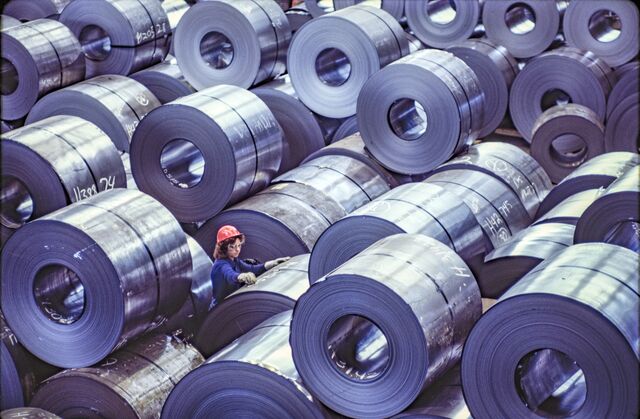
The surviving site is now home to an initiative called Sparrows Point Steel; there, workers will soon begin assembling 300-foot-tall undersea monopiles—each one requiring 1,800 tons of pure steel—on which offshore wind turbines will sit. “It’s almost like pulling a ghost from the past,” says Tim Mack, a manager at US Wind, which develops offshore wind farms and has invested in Sparrows Point.
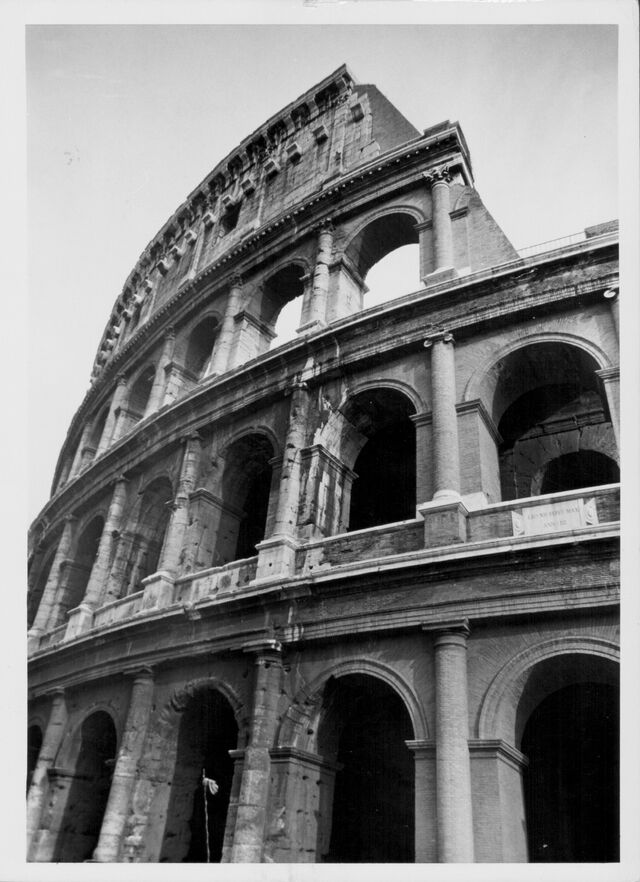
The steel industry’s future depends on such reinvention. The material is at once a major source of carbon emissions—production pumps out roughly 9% of global emissions each year—and a desperately needed ingredient to help build the climate-conscious cities of the future.
Scientist Vaclav Smil once dubbed steel one of civilization’s four basic pillars. The material’s roots go back to about 1,800 B.C., when the Chalybes people began plunging ore into superheated hearths to make malleable iron; metallurgists later stumbled on steel when they found that introducing carbon delivered a stronger substance. Mass production became possible in the 1800s with British engineer Henry Bessemer’s egg-shaped converter, which could produce five tons of steel in only 20 minutes.
Steel’s enormous tensile strength allowed builders to reinforce concrete structures and raise towers with steel skeletons, leading to modern city skylines. It also supported a sturdy profession. “The feeling was, get a job at Sparrows Point and you’re set for life,” says Jim Strong, a former steelworker and current representative for the United Steelworkers union. “You’ll make good wages. They got good health care. They got a pension. Spend 20 years in that facility, and you’re set.”
The environmental downsides were never a secret: James Parton, writing in the Atlantic in 1868, described Pittsburgh as “hell with the lid taken off.” Workers and residents alike endured savage conditions in and around mills; deaths and injuries from falling slag and other accidents were common, while iron ore dust coated the streets and fouled the air of steel towns.
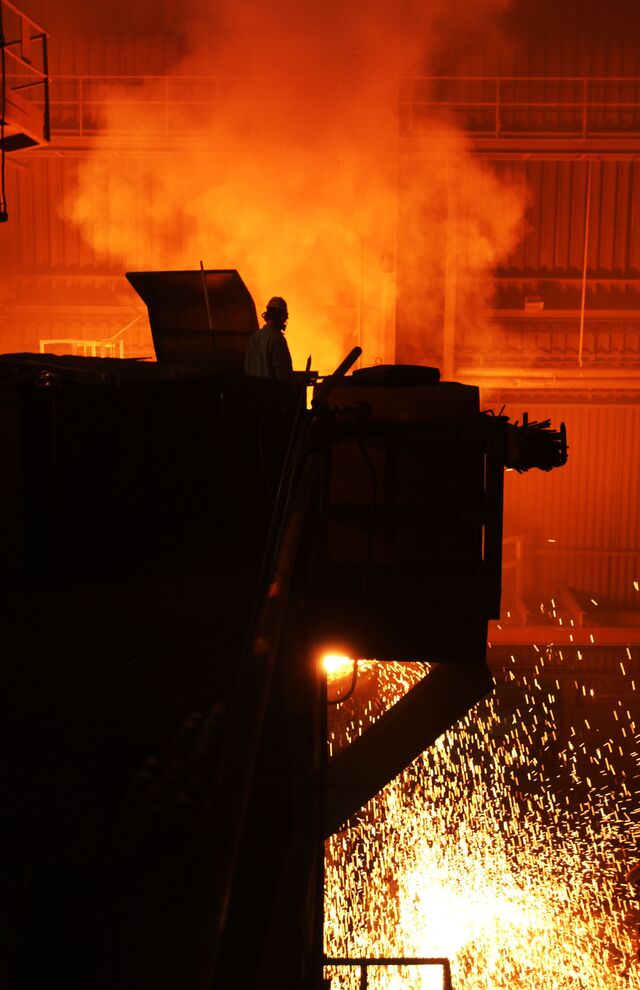
The World Steel Association points out that the energy needed to produce a ton of steel has dropped 60% since 1960 as the industry adopted more efficient furnace technology. “There’s been, in the last 45 years, a real effort on behalf of the industry to try to clean up coke ovens, to try to clean up basic oxygen furnaces and blast furnaces,” says David McCall, international vice president of United Steelworkers.
One major change is a pivot away from coking coal, a key ingredient in traditional steelmaking. More than two-thirds of the 90 million tons of fresh steel now made in the US annually is produced from scrap in electric arc furnaces, a kind of recycling that requires far less energy than so-called primary production. The drawback is a potentially weaker product, though a process called direct reduction can boost its strength.
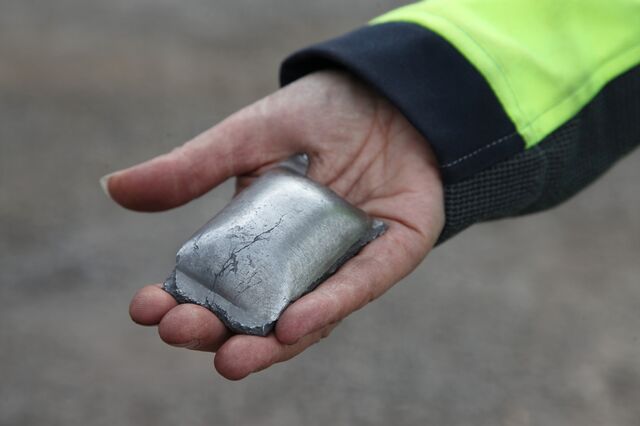
The industry’s ultimate objective is carbon-neutral “green steel.” The Swedish company SSAB has a project called Hybrit, for Hydrogen Breakthrough Ironmaking Technology, that aims to bring fossil-fuel-free steel to the market by 2026. Instead of burning coke in a process that releases carbon dioxide, it uses hydrogen, generating water instead. But SSAB’s pilot plant can produce only 24 tons of steel per day, and the hydrogen it uses is still produced primarily from burning fossil fuels. Ultimately, the goal is to obtain hydrogen for steel production via an electrolysis process powered by renewable energy.
Similar decarbonization efforts are underway in other major steel-producing regions. One way or another, the infrastructure for a greener economy will likely have to be built from steel, because it’s an ideal material for making, say, the housing for batteries for electric vehicles, or those wind turbine towers at Sparrows Point.
Mack predicts there could eventually be 500 workers on-site. It would be a far cry from the scale of Bethlehem in its heyday, but it would give new life to a place with deep local roots. “Offshore wind is going to challenge the domestic steel industry to rise,” Mack says. —Andrew Zaleski

When Apple Inc. opened its eye-catching retail outlet on New York City’s Fifth Avenue in 2006, the building’s audacious entrance—a transparent 32-foot cube—didn’t just wow gadget shoppers: It changed the way people thought about glass. US builders weren’t making glass structures of that size; no American glaziers worked at this scale.
Apple Chief Executive Officer Steve Jobs’ fascination with glass was well known. Balking at a plastic iPhone prototype, he pressed glass manufacturer Corning Inc. to deliver material strong and thin enough for mass-produced smartphones, creating a vast market for glass touchscreens. Manhattan’s Apple Store had a similar effect on the use of glass in architecture. Bavarian glazier Gerhard Seele’s namesake company was able to deliver the see-through ceilings and stairways Jobs craved, and other European manufacturers found their services in demand. “The technology was in Europe,” says architect Thomas Phifer, whose credits include the Corning Museum of Glass expansion in Corning, New York. “They had the wherewithal and the knowledge and the research.”
Architects like glass for its natural interplay with light, allowing them to enclose space with a material that seems to disappear. Once restricted largely to cathedrals, palaces and grand civic buildings, clear windowpanes came into wider use in the 1600s. In the 19th century, manufacturing moved from artisans’ workshops to factories, setting the stage for London’s Crystal Palace, a colossal exhibition hall assembled in 1851 from 60,000 panes of plate glass. In the US, glassworks emerged in towns along the Ohio River and in upstate New York, where the raw materials—sand, soda ash and limestone—were abundant, and rivers, canals and rail lines could safely ship the delicate product to urban markets.
Ludwig Mies van der Rohe proposed an all-glass skyscraper for Berlin in 1921. Dismissed as too abstract and extreme, his concept was never built. But it nevertheless changed the way people thought about towers. Concurrent with advances in technology, in 1951 the United Nations General Secretariat Building in New York became one of the world’s first towers to employ all-glass curtain walls. (And it was entirely air-conditioned.)
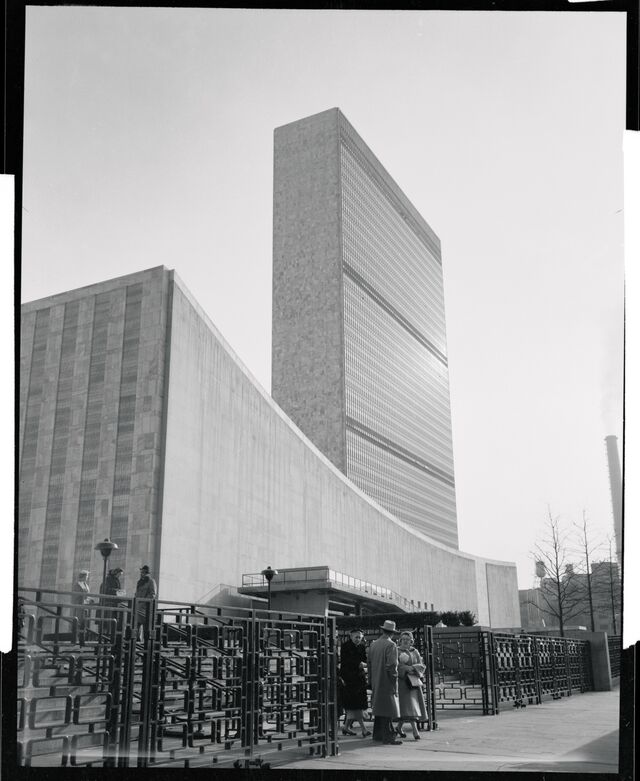
Glass has dominated construction ever since, despite major drawbacks that make it something of an environmental villain. It’s carbon-intensive to manufacture. As a facade material, it’s cheap but inefficient—an excellent conductor of heat, glass is a poor insulator. It’s also brittle, capable of reflecting glare intense enough to melt plastic and kill grass, and responsible for the deaths of untold millions of birds. And curtain walls of non-opening windows have fueled the mass adoption of energy-hogging air conditioning.
Yet its allure is undeniable. Architectural glass was a $53 billion industry in 2022, according to the venture firm Insight Partners, and it’s set to grow to $76 billion by 2025.
Improvements in manufacturing have helped boost the material’s energy efficiency and strength. Architectural glass must be coated with an invisible layer of metallic oxides to reflect ultraviolet and infrared light. This low-emissivity (or low-E) coating cuts solar heat gain and protects fabric, furniture and anything else located inside a glass building. Through a process called lamination, which involves bonding multiple lites (or panes) of glass together with a polymer layer, glassmakers can manufacture windows that resist impact, reduce noise and even help hold the building together. “The larger these pieces of glass, the more structural they become,” Phifer says. “Rather than using the metal—the mullions—to support the wind loads, to support the dead loads, to keep it from warping—the glass is taking on that role.”
Developments in architectural glass technology are still arriving: Triple-glazed windows with near-vacuums between layers can deliver efficiency needed for ultra-low-energy buildings. Windows with embedded photovoltaics can generate electricity from UV light. Even simple fixes, such as adding patterns of ceramic dots (called frit) to glass to make transparent buildings more visible to birds, represent big shifts in the way buildings work.
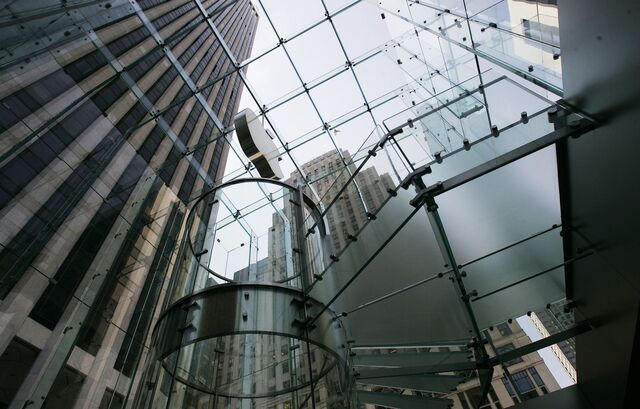
But for designers and the general public, the core appeal of architectural glass remains its transparency. In daylight, structures skinned in walls of windows can all but disappear; at night, illumination transforms a cityscape into an iridescent display of light and color.
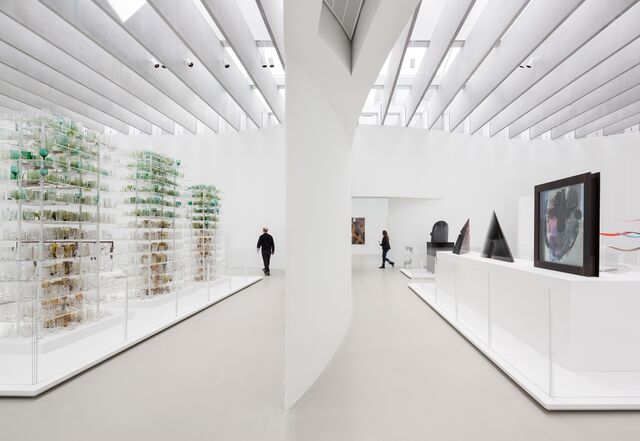
Phifer’s Corning Museum exemplifies these characteristics. Clad in enormous glass panels, a 100,000-square-foot expansion completed in 2015 looks like a perfect cubic prism. Designing with glass means finding balance for the limitations of the material, Phifer says, but the results are worth the challenge. When he got the museum commission, the first thing he did was take a modernist glass vase out of his office and into the street, to study the material in the sunlight. “All of a sudden,” he says, “that glass came alive.” —Kriston Capps
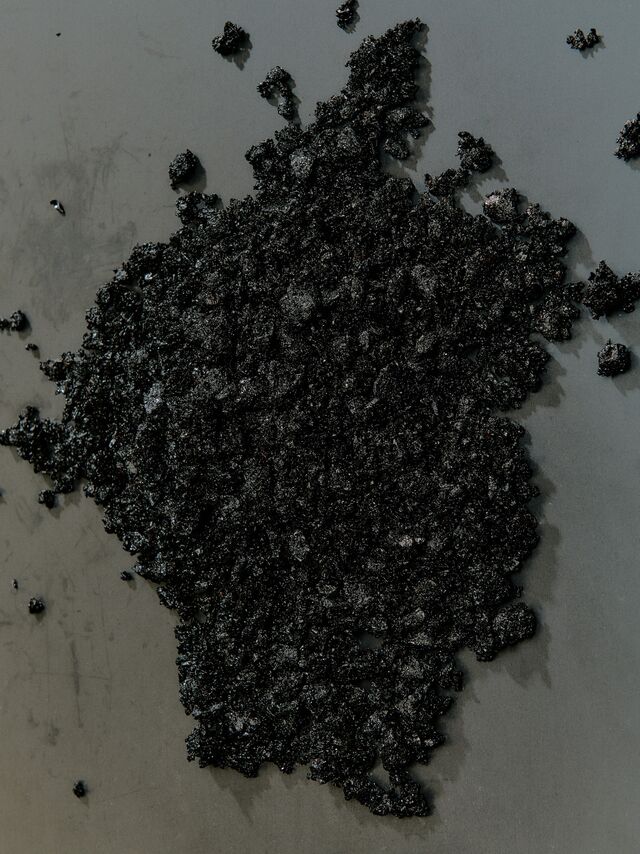
Most people probably wouldn’t include asphalt—the jet-black stuff associated with the unpleasant smell and extreme heat of highway surfaces in midsummer—on a list of eco-friendly building materials. But when it comes to its relationship to climate change, well, that’s complicated.
The tarlike substance, also known in the natural world as bitumen, is a binding agent that’s long been useful to builders. It’s also an oil byproduct not meant to be burned, which means it can actually store carbon that might otherwise end up in the atmosphere.
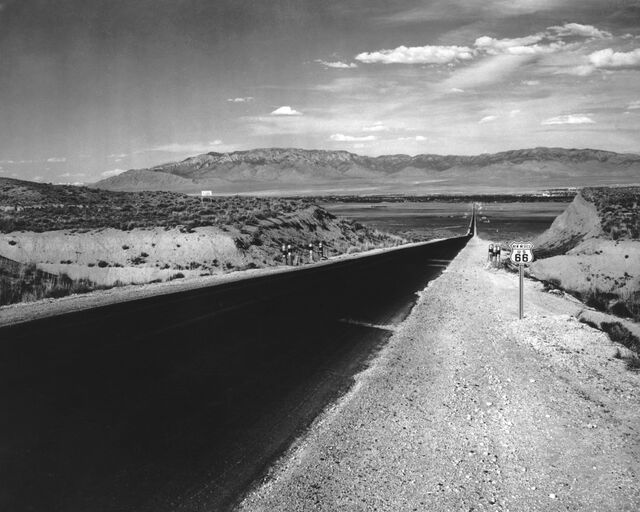
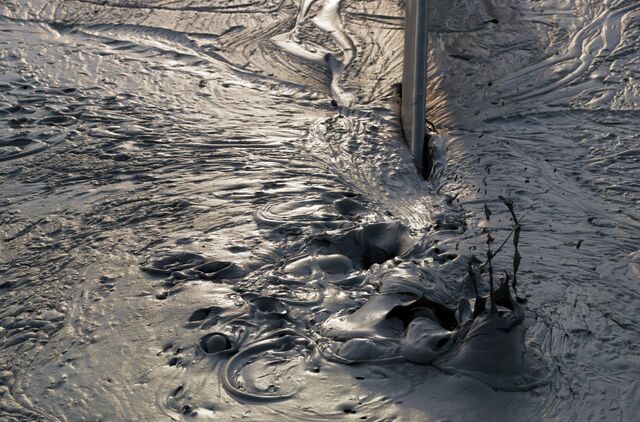
Today, asphalt mostly serves as a way to make it easier for drivers to use their gasoline-powered automobiles. But it’s shown up in the buildings of Carthage, the mummies of ancient Egypt and—according to lore—the waterproof basket that floated Moses through the reeds of the Nile. Asphalt rock has been used for roads since the early 19th century; the Champs-Elysées was an early example. But the modern version of blacktop became ubiquitous in the 1950s, when the US Interstate Highway Act created the conditions to build lots of roads, and fast. Today, 94% of America’s 2.8 million miles of roads use asphalt—crushed rock bound together with the petroleum-sourced goo.
Although asphalt had once come primarily from natural sources such as tar pits and rock mines, the increased demand led to better-engineered alternatives. Producers started scraping the bottom of barrels of oil to make the asphalt that state departments of transportation would need to meet the federal government’s ambitious highway goals. Compared with concrete, asphalt was cheap, quick to set and easy to repair. It was also flexible enough to adapt to shifting environments and grippy enough to provide traction for a smooth, quiet ride.
The US isn’t the only place where asphalt dominates; 90% of roads in Europe and expressways in China are surfaced with it. But historian Kenneth O’Reilly says the building material is as American as the open road itself. In addition to highways, asphalt has been key to US war efforts. Almost 18,000 tons of it landed with US troops on D-Day, for the runways needed for battle. “If you look at the US, what are we all about? We’re about cars at home, bombs abroad. In both cases, what dominates? Asphalt,” says O’Reilly, the author of Asphalt: A History.
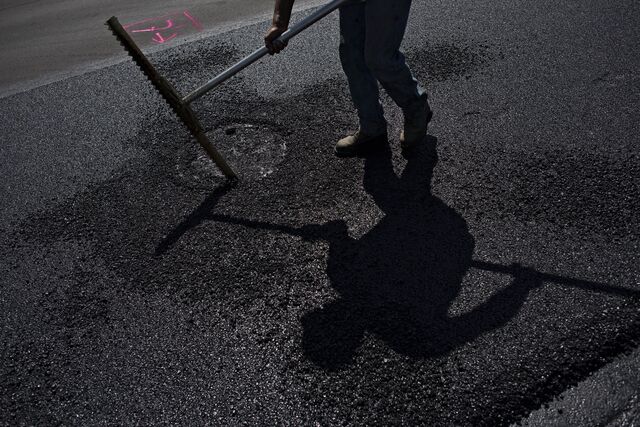
Asphalt advocates say it can be an ally in the climate change battle, however unlikely that might seem. Paving a road with asphalt is less carbon-intensive than using concrete, a key alternative. What’s more, asphalt acts as a “carbon sink,” a way of using petroleum waste—as the surface of the Long Island Expressway or Route 66—rather than allowing it to be emitted as a greenhouse gas.
Still, there’s been a steady succession of experiments to make alternatives. In Spain, for example, attempts are being made to pave roads utilizing a mixture of traditional asphalt and byproducts of olive oil and recycled vegetable oil. Because the substitute can be made at lower temperatures, emissions from the production process are reduced.
But even traditional asphalt has one significant environmental advantage: It can be used and reused, practically forever. When it’s pried off the ground and melted, as much as 94% of the reclaimed asphalt pavement (RAP, for short) can be reapplied to roads. Producers simply add RAP to a drum along with the usual cocktail of “virgin asphalt” and aggregate rock. Mix it in the right proportions at the right level of heat, pour it out and apply it with paver, then run it over with a compactor, and voilà. “We don’t have to keep reinventing this product. It’s already sitting there, whenever you want to re-mill and put it back down again,” says Nile Elam, head of advocacy for the National Asphalt Pavement Association (NAPA).
Recycling has been growing, but at a slower pace than the industry would like. RAP accounted for an estimated average of nearly 22% of asphalt mixtures in 2021, according to a survey by NAPA and the Federal Highway Administration. That year the country used 94.6 million tons of material, up almost 70% from a decade earlier. The FHA is encouraging states to use RAP more.
The blend of aggregate and binder is designed to make asphalt pavement resilient in the climate where it’s laid, preventing, for instance, Texas’ roads from oozing every summer. That becomes a problem when the climate changes faster than infrastructure is upgraded. Engineers are working on these challenges and treating roads with lighter coatings that can reflect sunlight rather than absorb it. The hope is to cool cities such as Phoenix, where during heat waves like this summer’s, the asphalt can reach 180F.
Asphalt will always be an awkward fit as a climate solution. Its main legacy is its help in ushering in the automobile age and enabling the easy movement of internal combustion-powered vehicles, which produced 1.5 billion metric tons of carbon in the US in 2021. Then again, if electric vehicles eventually replace all those cars, they’re going to need smooth roads, too. —Sarah Holder

A decade ago, Chicago architects Ray Hartshorne and Jim Plunkard tried to tell developers and construction companies why they should make new apartment and office buildings entirely out of wood.
The responses were incredulous. Wood was too flimsy, too old-fashioned. What happens if the wood warps or rots? And—keep in mind this was in a city famous for a massive conflagration of wood buildings—what if it burns?
Hartshorne and Plunkard had heard all this before. They started their careers rehabbing old wood-beamed warehouses and factories for new condos and offices in the 1990s, developing a soft spot for the material’s history and the aesthetic appeal of its grains, knots and whorls.
They also discovered an emerging family of engineered construction products called mass timber. Often referred to as cross-laminated timber, or CLT, it’s created using layered boards of wood that are stacked at 90-degree angles and glued together to create superstrong beams capable of supporting taller buildings, even skyscrapers. In the past decade, Hartshorne Plunkard Architecture has focused on mass timber structures, designing warehouses, offices and homes. Adherents of this approach say it could displace the steel and concrete that dominated 20th century infrastructure, while also ushering in a healthier future of natural interiors, human-scale cities and dramatically reduced carbon emissions. People tend to view wooden buildings as homemade, Plunkard says. Given the current taste for artisanal style, “the old school of these buildings feels so much more modern.”
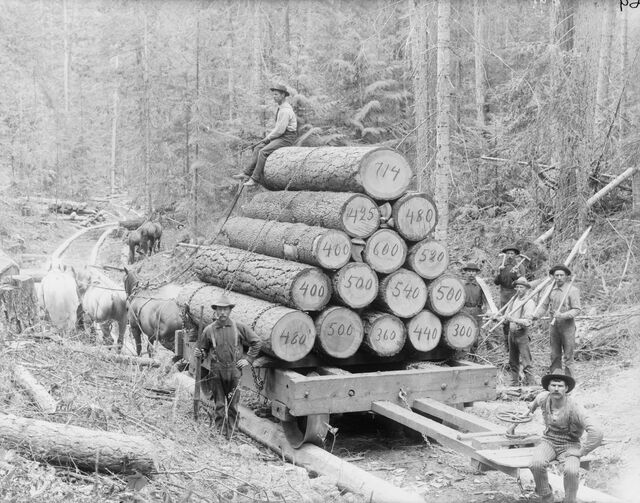
Wood has sheltered humanity since the beginning. We only came out of the trees because we learned to take wood with us and build our own shelters, according to Roland Ennos, author of The Age of Wood: Our Most Useful Material and the Construction of Civilization. “Cities couldn’t exist without wood,” Ennos says. “It’s in our genes.”
In the preindustrial age, cities were almost always situated near rivers that gave them ready access to forests. And to colonists in North America, the continent’s 820 million acres of virgin woodlands represented an almost endless supply of timber for future towns and cities.
One of wood’s main vulnerabilities eventually forced urban areas to find alternatives. London’s massive 1666 blaze led to the world’s first building codes, calling for a rebuilt metropolis of brick and stone, and the charred districts left in the wake of Chicago’s 1871 fire became the birthplace for the steel-bodied skyscraper.
Still, wood remained at the heart of the city: Strip the brick or terra cotta facades off older buildings and you’ll find lumber from trees tracking decades of economic expansion. Sturdy longleaf pine harvested from Florida forests fills Brooklyn brownstones. Chicago was built using the logs of the north woods of the upper Midwest. California’s redwoods were clear-cut and fashioned into bungalows and streetcars for Los Angeles.
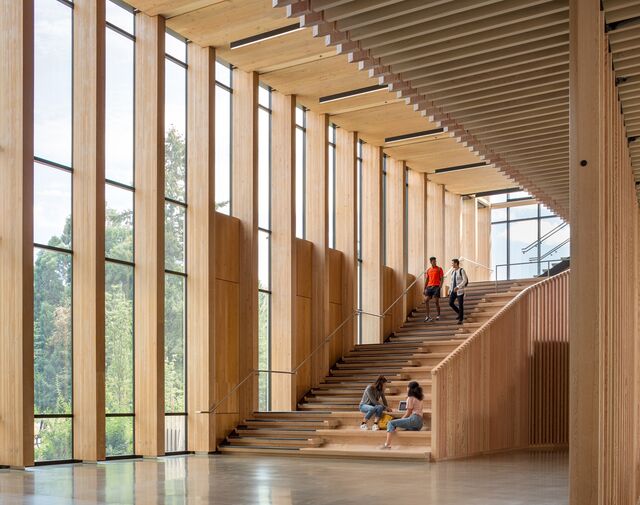
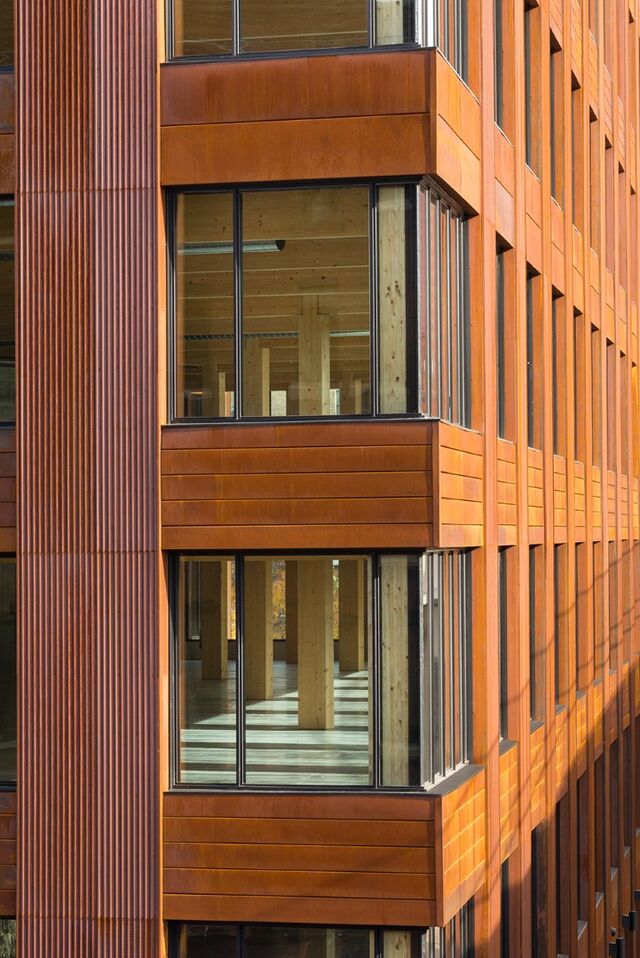
The deforestation this process brought was an environmental catastrophe for many ecosystems. But in an age of climate change, proponents of mass timber say it’s a responsible choice compared to steel or concrete. Estimates of its eco-friendliness vary, but architect Anders Carpenter of Perkins&Will says mass timber structures would reduce embodied carbon by 65%, while costing 10% less and taking 15% less time to build—because there’s no concrete to dry—compared with conventional methods. The engineered beams are lighter than alternatives and fire-resistant, as well. “Wood can now compete with concrete and steel in a way that it couldn’t before,” Carpenter says.
Supply chains across Europe and North America are forming to meet the expected demand. One project, 619 Ponce, bills itself as Atlanta’s first locally sourced mass timber office building. It’s using wood harvested in Columbus, Georgia, sawed into lumber in Albany, Georgia, and turned into CLT in Dothan, Alabama, before being assembled in Atlanta.
Michael Green, a Canadian architect and mass timber pioneer, calls it a “back to the future” story: A material once seen as the antithesis of modernity is being transformed into a symbol of innovation and sustainability; what was practical has turned fashionable. It’s another chapter in the consistent reinvention of wood as both a resource and an aesthetic.
Plunkard sees the rising demand for timber and its enduring sensory appeal as a signal of the direction urbanity is turning and the hunger humans retain for the material that so long defined their surroundings. “I think people want to live in that memory of what a city used to be,” he says. —Patrick Sisson