NYC’s $23 Congestion Charge Stirs Debate in Every Neighborhood
Drivers may soon be paying as much as $23 to drive into central Manhattan. Some worry the new toll will hobble a city still recovering from the pandemic.
New York may soon become the first US city to enact what London, Singapore and Stockholm have had for years: congestion pricing.
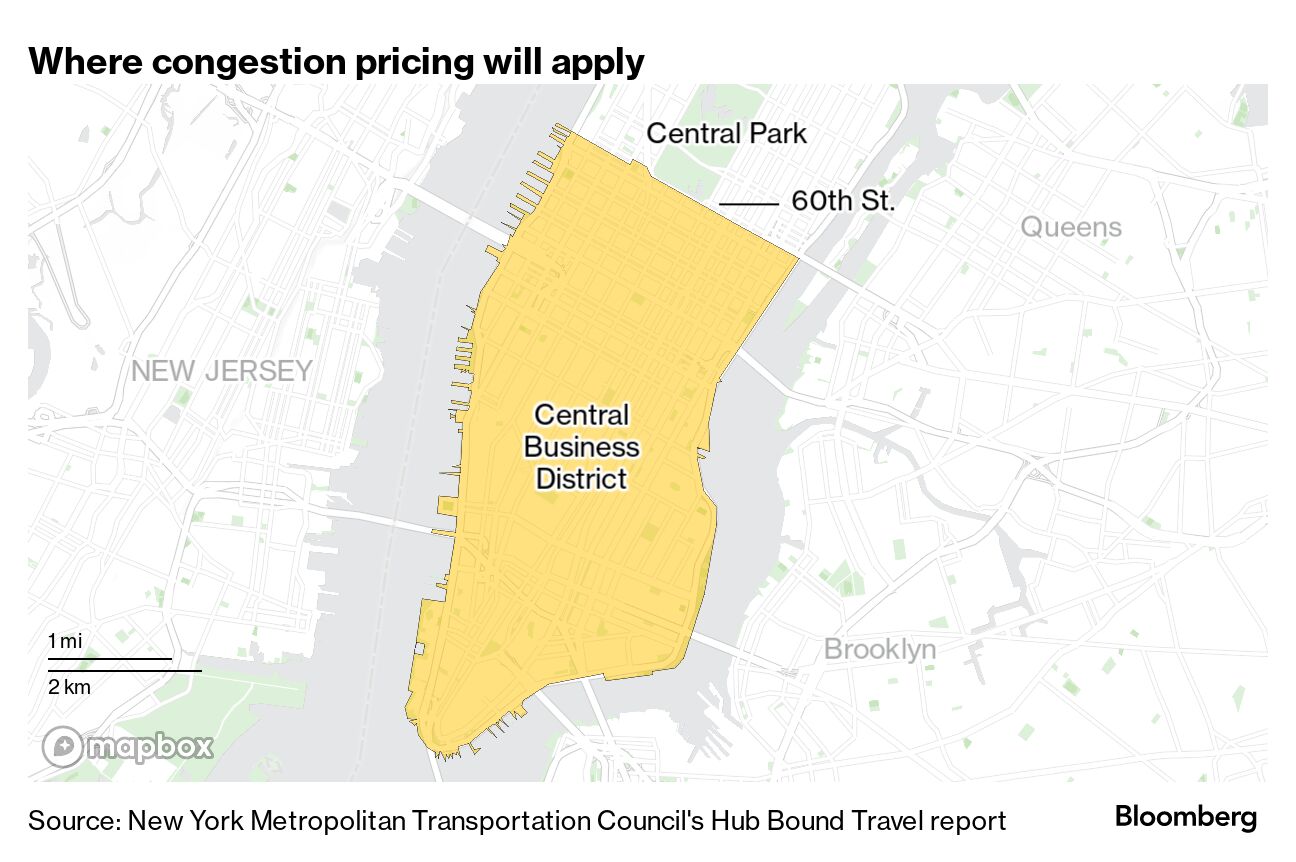
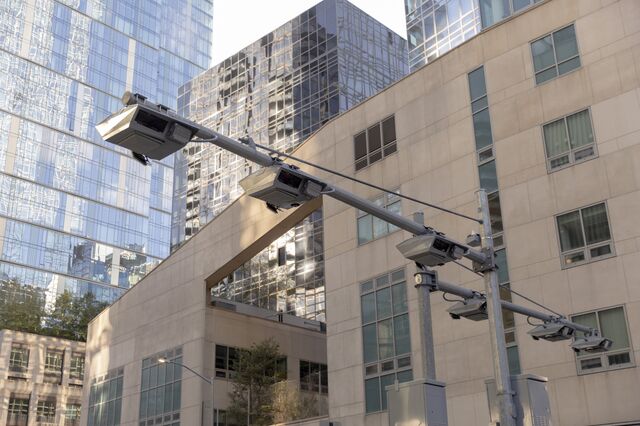
To reduce bottlenecks and raise billions for much-needed public transit improvements, the state and city are putting a ring around everything south of 60th Street in Manhattan (excluding the highways) and charging vehicles that enter.
The once-a-day toll could be as much as $23 during peak periods and $17 off-peak, with higher rates for trucks and those without E-ZPass. Vehicles that enter the central business district—from the southern tip of Central Park to the Battery—could be charged as soon as the second quarter of 2024.
Proponents—environmentalists, urban planners and transit advocates among them—argue that congestion pricing will improve air quality and pedestrian and biker safety, while making it easier for emergency vehicles to get around. Others worry a charge will hobble a city still recovering from the pandemic, and make an already expensive place even more expensive.
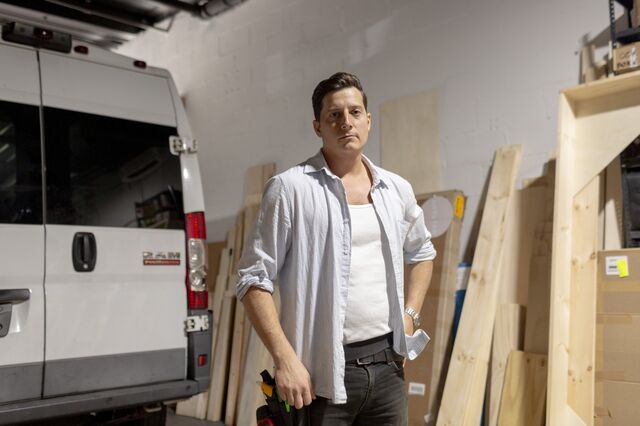
One of them is Gian D’Angelo, 35, who manages a small fleet of Brooklyn-based vehicles that transport art and furniture into Manhattan.
Where congestion pricing will apply
“If you’re charging delivery guys like me, we’re just, in turn, going to charge people who maybe don’t even have a car,” said D’Angelo, co-founder of Art Handler Collective. “Everyone’s paying this fee. Not just the drivers.”
Officials expect the new toll will generate revenue of about $1 billion a year, which will back bond issues giving the Metropolitan Transportation Authority $15 billion for capital improvements.
Upgrading the US’s largest transit system—which delivers 1.3 million commuters into the central business district every weekday—is necessary for New York to thrive well into the future, the plan’s backers argue. They say it benefits millions, outweighing the negative impacts it may have on the many groups that have lobbied for exemptions, including medical patients, teachers, workers hauling equipment, yellow-taxi drivers as well as residents of the district.
Congestion pricing comes as the city struggles to rebound from some of the pandemic's deepest cuts, with employers trying to lure back workers and violent crime on subways making headlines.
Number of vehicles in the CBD on an average weekday in 2021

Still, the tolling plan may be arriving at the right moment as habits and routines are changing. And while the effects will likely be noticeable, they won’t necessarily be dramatic, according to models presented by the MTA. The number of vehicles on the road could decrease by 15% to 20%, while transit ridership may rise about 2%.
The effects on individual commuters, residents and business owners, however, will vary greatly depending on circumstances. Here’s a look at what some people who rely on vehicles to get in and out of the district had to say about it.
Bertha Cherisme, 35
Hairdresser
Queens resident
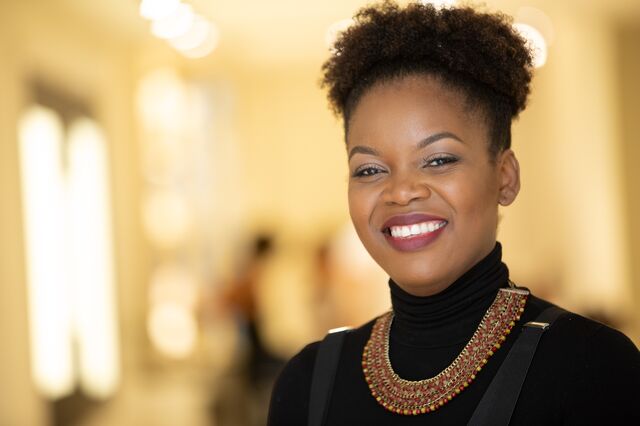
Bertha Cherisme spends her day with models, lawyers, financiers and an occasional Miss Universe.
That’s the fun of working as a stylist at Adel Atelier, a swank hair salon located in an East 58th Street brownstone.
What’s not so fun is getting to work by public transportation from her home in Rosedale, Queens. She has to take a bus to the subway, then walk a few blocks to the salon. The trip can take two hours door-to-door.
“The train, honestly, people are talking, talking in your face,” she said. “It’s not relaxing.”
In her red Toyota Corolla, the trip on the Brooklyn-Queens Expressway and across the no-toll 59th Street bridge takes about an hour.
Cherisme watches her budget and doesn’t use the car every day. But she relies on it when she has to be at the salon for a 7 a.m. client, as well as on the weekend.
“Especially on Saturday, there’s always problems with the MTA,” she said. “I feel like when you drive, you know you’re going to get there.”
Parking at a garage across from the salon costs $20—the discount rate for being in early and not staying more than 12 hours.
This summer, late in her first pregnancy, she took the car more often, with air conditioning making the trip a lot more comfortable.
While traffic doesn’t bother her, congestion pricing does give her pause, though she said it’s unlikely to change her habits.
“If the price doubled, I’d have to think about it,” she said. “I think you would probably do it on days that made more sense. Which is what I do now.”
But she can’t see driving the car and incurring the toll as a long-term solution, and may have to consider taking the Long Island Rail Road to Grand Central.
“I don’t know exactly what I’m going to be doing,” she said. “But paying $50 just to come in the city is insane.”
Aaron Tabackman, 51
Manhattan tour guide
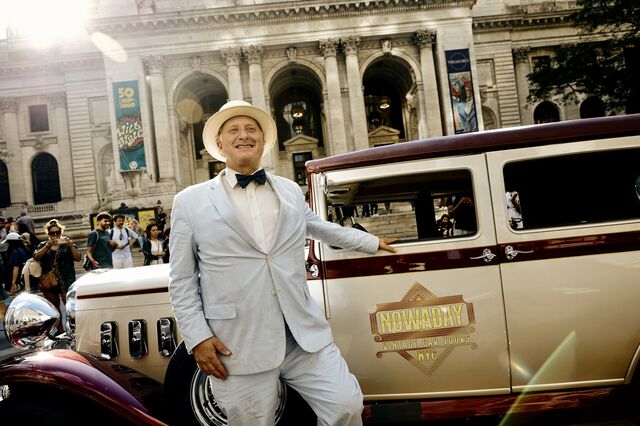
For Aaron Tabackman, gridlock means telling more gangster stories.
Behind the wheel of a wood-paneled 1928 Model A Ford, the actor-tour guide tries to keep his passengers fixated on a bygone New York, not the honks and hassles of today.
So congestion pricing sounds like a boon.
“These tours need the flow,” Tabackman said. “Traffic completely kills the vibe.”
And the timing is good. After being halted by the pandemic, the tour business is still getting back on its feet, and is an essential part of New York’s economy.
“We’re one of New York’s top industries along with finance and media,” Tabackman said.
Tabackman’s tours stay within the central business district, so his use wouldn’t incur a toll, but Nowaday, the company where Tabackman works, will pay the congestion fee to take its vintage fleet into Manhattan across the 59th Street bridge.
Tabackman, 51, who lives in Williamsburg, greets customers in a tweed suit and hat, before setting out in the Model A, retrofitted with power steering and automatic transmission.
On the ride, he drives past Broadway theaters, the Waldorf Astoria, the former 21 Club, all the way down to the Woolworth Building and back. If traffic really does clear up, he might take passengers as far as the Battery.
Less dense Manhattan streets wouldn’t necessarily harken back to the 1920s: The city’s roads have always been chaotic, he said. Rather, it would be more like during the pandemic or a snow storm.
“It’d be probably like Amsterdam with more people biking,” he said.
Sean Hudson, 55
Health-care executive
New Jersey resident
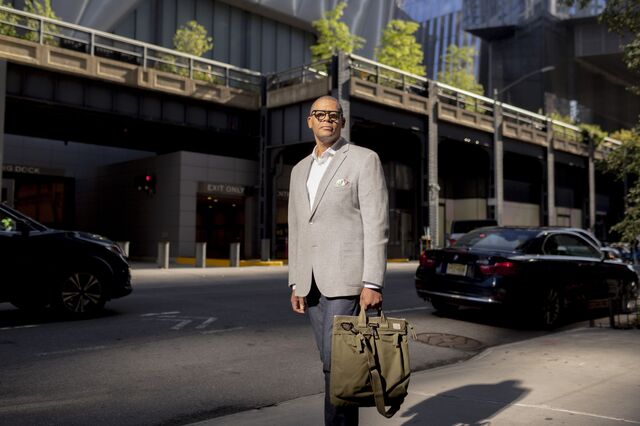
Sean Hudson was once a committed New Jersey Transit user. Now the health-care executive drives his car the three days a week he goes to the office.
The trip from Maplewood to Manhattan was never sweeter.
“What I like about it is the opportunity to binge listen to NPR, music or whatever,” he said. “Driving helps my disposition be ready to rock when I got into the office, because I have some control over what my commute experience is gonna be.”
Hudson’s commuting calculus is also influenced by what he calls NJT’s increasing unreliability and cost.
His own peace of mind takes priority over the expense. He doesn’t look at his E-ZPass bill, and pays $50 to park in a garage at Hudson Yards. He’s also prepared to fork over the congestion toll.
“I’ll willingly pay because it’s my payment back to the city,” Hudson said. “I need New York to exist and to be viable.”
But he has concerns.
He worries whether it makes sense to force more people on an already burdened public transit and isn’t clear on how the money is going to be used to improve the trains and buses.
All in all, congestion pricing feels “like a stick, not a carrot,” he said.
“I’d rather see a portfolio of solutions,” he said. “Like what’s the whole plan, instead of piecemeal tactics. What I hate is a tactic chasing the strategy.”
While there’s a lot to like about car commuting and a hybrid schedule, it does leave him isolated from the grit and bustle of the city he dreamed of living in when he was a kid in Georgia, he said. Now it takes effort to be immersed in that city.
After he parks his car in the morning, “I still have to go and get my coffee and let the city wake up around me.”
Naider Henry, 65
Taxi driver
Queens resident
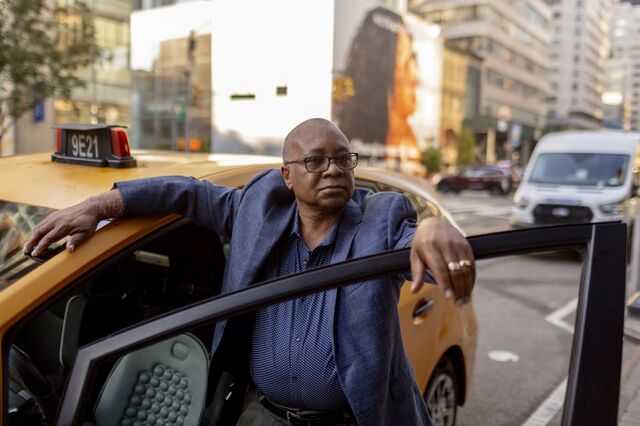
Naider Henry has heard the request hundreds of times: “I’m late for work, or lunch, or the doctor. Can you get me there faster?”
The yellow-taxi cab driver, who learned to drive on country roads in Haiti, knows his way around the city after 24 years on the job. And he doesn’t think congestion pricing is going to speed up his fares, given all the obstructions: dedicated bus and bike lanes, construction, double-parked delivery trucks.
His main concern about congestion pricing, though, is the drain on his personal finances.
“That’s going to be a real disaster for me,” he said.
Avoiding the central business zone isn’t an option: It’s his main source of business.
On a good day he’ll take in $400 to $500 in fares, especially if he gets a few airport runs. But the money passengers pay doesn’t all go to him: tolls get deducted, as do other fees, including an existing $2.50 congestion surcharge.
“The money I make right now is not mine,” he said.
His main burden is the loan on his taxi medallion. He owes almost $700,000 and his monthly payment is $3,000 (other medallion owners got some relief from a city program reducing loan amounts, but his lender didn’t participate.)
After paying the loan, and monthly expenses for his home in South Ozone Park, Queens, health care and food, there’s little left. He’s fortunate his children are grown. But at age 65, he’d like to be able to save for when he can’t drive.
When Henry started driving a cab, he supported his family. “There wasn’t GPS, or Uber,” he said. “When the cabs went on strike, the streets were empty!”
But he doesn’t want to give it up, even though it’s changed.
“The yellow cab is part of New York City’s culture,” he said. “When I pick up tourists in the taxi, they’re calling back home, and saying, ‘I’m in a cab in NYC!’ They’ve only seen yellow cabs in movies, and they come in the city and they get in one, and that’s why they feel so happy, and I feel happy for them.”
Joan Brothers, 53
Real estate investor
Midtown resident
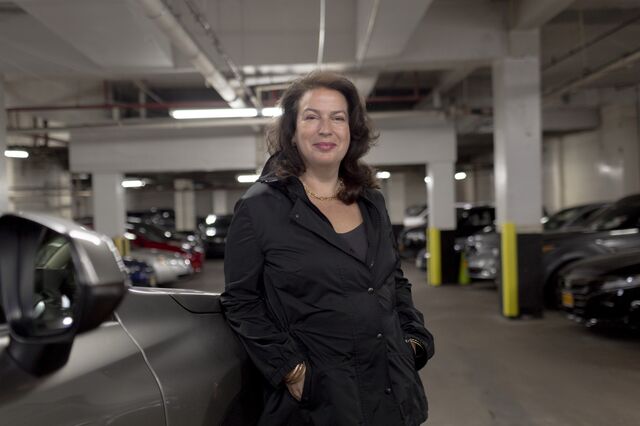
When Joan Brothers moved to the Sutton Place neighborhood in Midtown right out of graduate school, she relied on subways, buses and her own two feet.
Then she got married and had a kid, and soon a car became a bigger part of their lives.
Over the years, they’ve relied on it to scout properties and shuttle their son to activities, and more recently, college.
The most frequent use of the family car, and the way it most feels like a luxury, is when she uses it for social purposes.
“I’ll go down to Soho at 6 and meet a friend for a cocktail and then drive back,” she said. “And just be able to have this freedom with the car that I wouldn’t have had, it’s a lovely way of being.”
Brothers is especially inclined to drive when she knows she’ll be returning late in the evening. “Let’s say I want to go to Brooklyn and meet some people for dinner,” she said. “At midnight I might not want to be on a subway back.”
Congestion pricing seems like a “weird tax on being able to get out of the area.” She worries it could affect property values if people say, “I don’t want to have to pay to come back to my house.”
One fix could be parking the car in a garage outside the central business district, though Brothers doesn’t think that’s a long-term solution. Eventually, the toll zone “is going to be pushed up above 60th Street.”
“With the fee, I would really think twice about making an effort to go somewhere in my car,” she said. “It’s really redefining how you live your life and where you go.”
Mary Ann Strandell, 64
Artist
New Jersey resident

Mary Ann Strandell grew up in a town of 20,000 people in South Dakota, so learning to drive in New York was an adjustment.
“It’s tough to get around there,” she said. “It’s fun though too. I’m a driver. I don’t mind.”
An artist, Strandell creates her paintings at her home studio in North Bergen, New Jersey. But she relies on her car for getting around the city to sell her art and tap into her community.
For the past 14 years, Strandell has had a studio in Chelsea, where she meets collectors and curators. It’s also near art supply stores where she shops. She uses her minivan—with the back seats ripped out to better carry large pieces of art— two to five times a week.
“I often work late, and I don’t like to take any other transportation home but my car,” she said. “I’ll make a special point to have the car right in front of my building, so when I leave at midnight, I can get going.”
The trip takes about 22 minutes, which she tries to do during off hours. The parking garage she uses charges $42 to $65, though sometimes she gets a break. After 6 p.m. and on weekends she looks for a spot on the block outside the studio.
Congestion pricing will force her to make “very conscious choices” about her work-related trips, she said. “I can stack my appointments and meetings so that I’m saving money.”
But she sees a much bigger impact on her non-work travel. “It will really curb my use of the car to go to dinner, to meet people, to go to museum events. So much of the culture is why we want to be in the city.”
For that, she said, she’ll be using the ferry and the bus more—or going out less.
Generally, she supports congestion pricing. “I think it’s a great idea—despite the impact on me—to have fewer cars in Manhattan.”
She says she’s fortunate she has the flexibility as an artist, but acknowledges many don’t. “With these huge changes, it’s going to put so much pressure on the other sources of transportation that are already packed.”