Inside the Fight to Keep Japan’s Last Underground Coal Mine Open
Workers at the century-old facility in Kushiro are passing on skills and technologies to groom a new generation of coal miners.
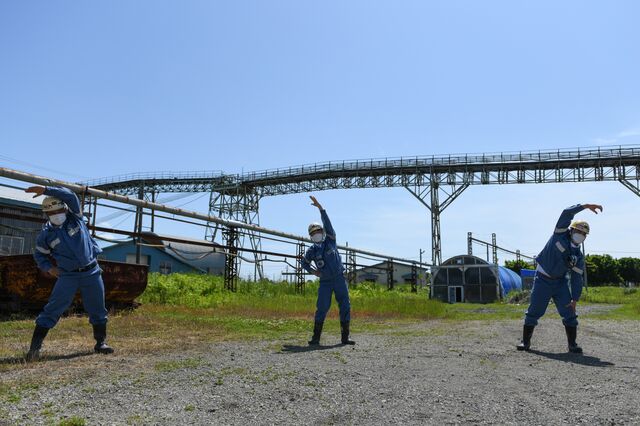
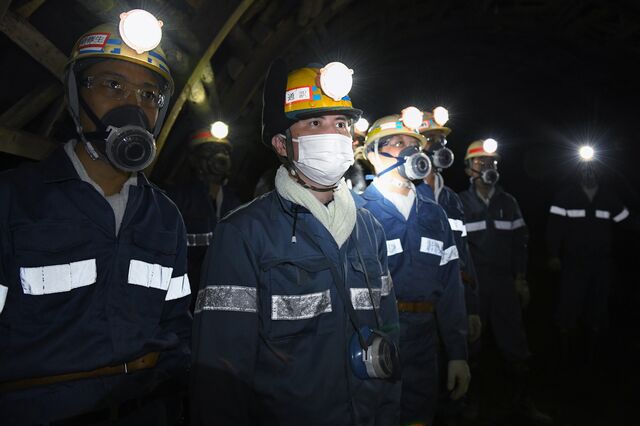
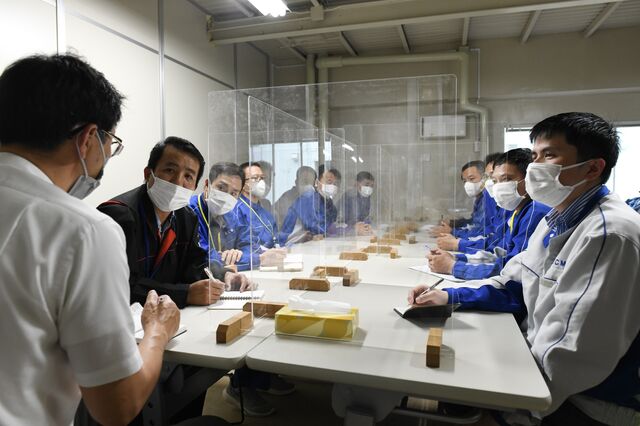
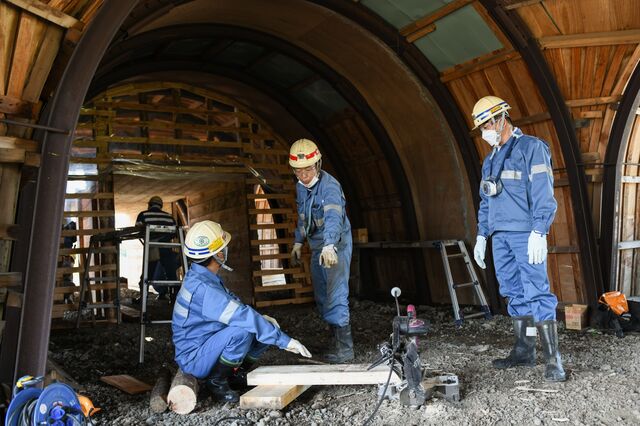
Tadamichi Ikeda watches with folded arms as seven trainees work by the light of their headlamps inside Japan’s last underground coal mine. The students had come from Vietnam to learn from master miners who, speaking through interpreters, explained how to safely assemble a wooden structure to protect against falling rocks: Watch your surroundings. Keep an eye on your teammates. Small mistakes can be deadly.

“They’re like kids to us,” says 62-year-old Ikeda.
The last-of-its-kind mine and its government-funded program for overseas workers, both operated by Kushiro Coal Mine Co., should no longer exist. At least not according to the spirit of international climate commitments and the economic logic that’s put the rest of Japan’s mines out of business. Climate scientists and researchers at the International Energy Agency are clear that coal infrastructure needs to go extinct soon, with no new facilities built, in order to slow rising temperatures. More than 200,000 next-generation miners who have passed through the Japanese training program on their way to jobs in China, Indonesia and Vietnam need to have short careers if the world is to avoid the worst effects of global warming.
But Japanese politicians and executives have done everything they can to keep the mine running, insisting a net-zero future can accommodate the world’s dirtiest fossil fuel.
The push to preserve coal, reflected in the billions of yen in subsidies KCM receives, has irked Japan’s developed-nation peers. Like the rest of the Group of Seven, Japan has pledged to virtually eliminate planet-warming carbon emissions by 2050, but it refused to join a pledge to end the use of coal by 2030. Japan, which accounted for more than half of the $6.6 billion G-7 nations invested in coal in 2019, also got the group to agree to a loophole that allows it to invest in some coal facilities at home and overseas as long as they are fitted with emissions-reducing technologies.
The Japanese government plans for coal — mostly imported — to make up almost a fifth of the country’s energy mix by 2030. Its leaders argue that Japan needs coal and gas to serve as backup energy sources, and mixing it with other fuels such as wood and ammonia, and capturing carbon dioxide, will help limit its warming impact. Large solar farms are also out, they say, due to space constraints, and nuclear power still faces opposition after the Fukushima disaster.
The residents of Kushiro, a city of about 160,000 on the northern island of Hokkaido, are more ambivalent about the continued reliance on coal. Ikeda is proud to pass his skills to his Vietnamese students; he also wants his son to stay away from a physically punishing industry that’s in decline. “I wouldn’t want him here,” he says, “We are struggling to get new hires. Even if we do, they don’t last long.”
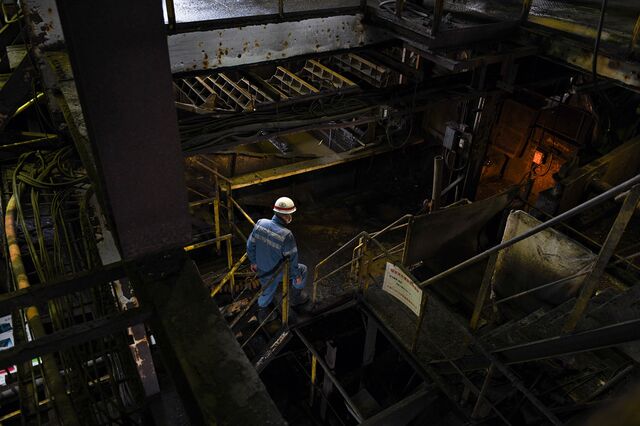
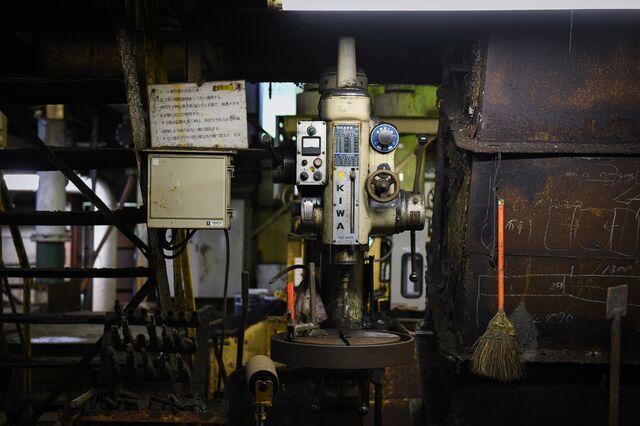
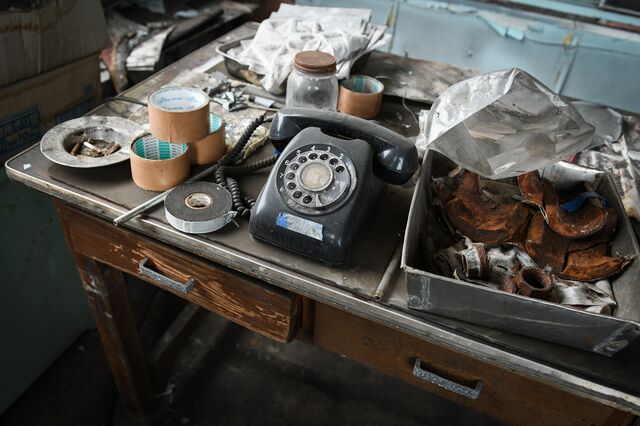
Yasunori Kikuchi, KCM’s president, traces the coal mine’s improbable longevity to the local community’s determination, strategic reinvention and a couple of lucky breaks.
The facility, established in 1920, helped fuel Japan’s post-war economic ascent and thrived during the 1973 oil-price shock. But cheaper imports from countries such as Australia and the US were a constant threat. When Japan shut down the mine in 2002, eliminating 1,500 jobs, dozens of local businesses pooled money to revive it, with about one-third the workforce. Kushiro officials got the government to formalize the training program, then in its pilot phase, securing subsidies that today total 1.4 billion yen ($9 million) a year.
KCM found a new lifeline at the end of 2020, just as the Covid-19 restrictions shut down Kushiro’s crucial tourism industry. A 45 billion yen coal-fired power plant, owned by a Tokyo-based private fund, started up next to its former slag heap and became its biggest customer. To abide by the government’s rules that new coal plants have to be more environmentally friendly, the facility burns coal alongside wood pellets from Vietnam and palm oil shells from Malaysia and Indonesia.
In theory, the trees that produced that fuel absorbed carbon dioxide before they were cut down, lowering the total emissions from the plant. But experts question the wisdom of burning so-called biomass for energy. The process still generates CO2 and it can take decades to replace the trees that were chopped down — not to mention the pollution created from transporting the alternative fuels from overseas.
Still, Japan is banking on this kind of co-firing to meet its climate goals. It’s also betting that ammonia, an alternative fuel that’s still too expensive to be used on a large scale, can be co-fired widely with coal. Japanese companies including Mitsubishi Heavy Industries Ltd., JERA Co. and IHI Corp. are helping to construct coal plants capable of handling both fuels in Vietnam, Indonesia, Malaysia and Thailand.
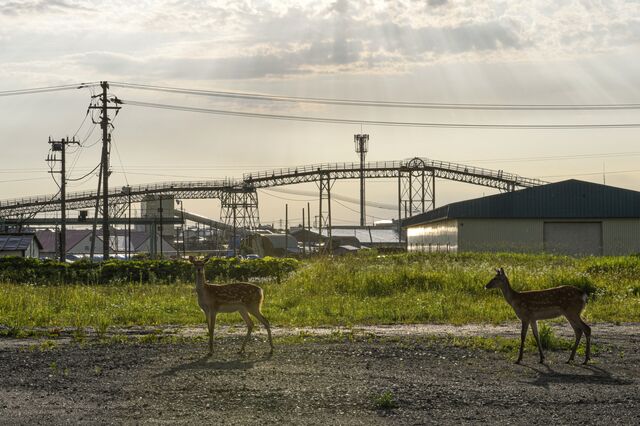
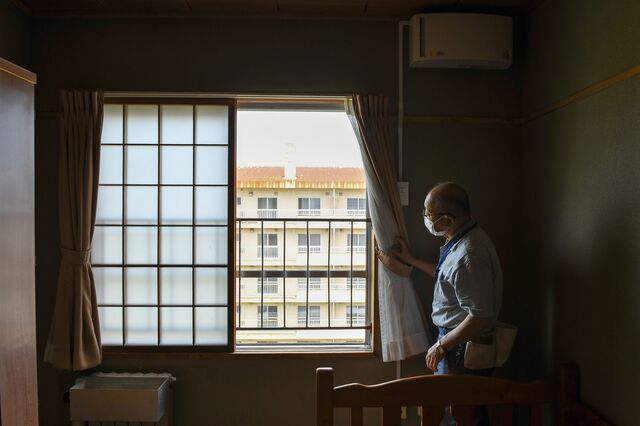
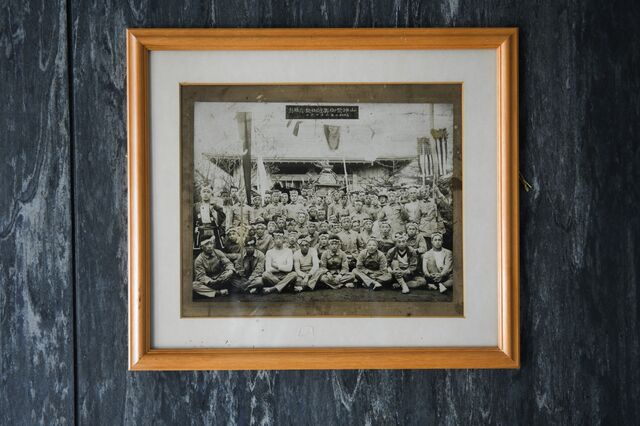
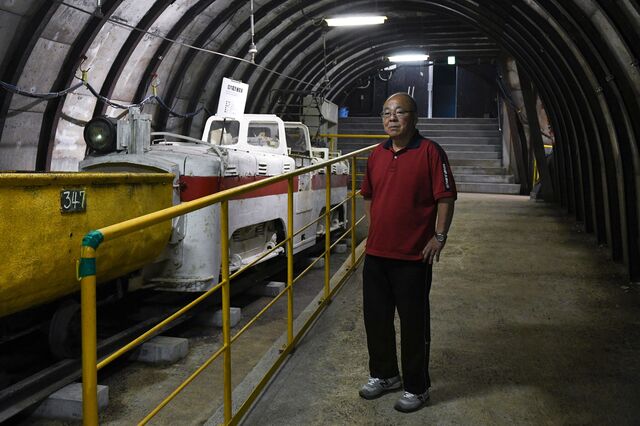
Hironori Ishizaka, the former economy ministry official who runs the Kushiro plant, acknowledges that trying to mitigate emissions from burning coal, rather than eliminating them, is an imperfect solution. But he says it’s a necessary compromise for resource-poor Japan. “It’s impossible to quit coal completely under the current circumstances,” he says.
Kikuchi estimates that there’s enough coal in the ground below the Pacific Ocean for KCM to remain open for another six decades. Realistically, however, it will be closer to 30 years as emerging nations push it out of the market. “People say we don’t need coal any longer, which totally makes sense,” says the 66-year-old Kushiro native. But “we can carry on with a mission to provide our skills to China and Vietnam.”
Naoe Kiyota wonders if the next generation of coal miners knows what they’re getting into.
Born and raised in Kushiro, she used to frequent Sky Land, an entertainment complex built by the mining company that included a swimming pool, a hotel, a wedding hall and bowling alley. But the 2002 layoffs hit the community hard. Many of those who lost their jobs suffered from depression. Today, the hilltop overlooking KCM is barren — all that remains is a gymnasium, a museum dedicated to the history of coal mining, and an empty funeral home.
Kiyota is frustrated by the many workarounds devised to keep the mine open. “It all comes down to addiction and obsession” with coal, she says. “We’ve got to realize that.”
The latest effort is a government-subsidized pilot project to return carbon to the ground. KCM mixes liquified CO2, captured by a local gas company, with coal ash and water to make a slimy substance and uses it to plug old mine tunnels. If it proves successful, the plan is to export that technology.
The training program, new power plant and now this carbon-storage project have kept the town from charting a new future, Kiyota says. She isn’t convinced that the fumes emitted from the plant are any less toxic, and the building blocks the view of the sunset from her cafe. Her small shop, filled with organic coffee and produce, shakes as trucks carrying coal and wood pellets rumble by.
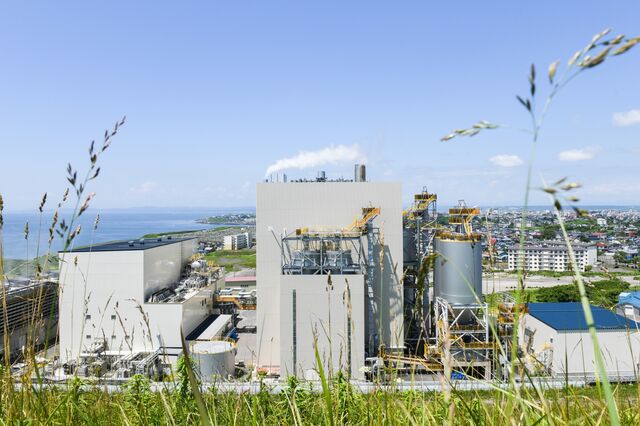

Most of all, it bothers her that KCM is setting up young miners in poorer nations for the same fate as laid-off miners in Kushiro, perhaps in an even shorter amount of time. KCM’s workforce has dwindled to 141, with an average age of 53, as the mine cuts its output and young people migrate to bigger cities. One young worker quit because he wasn’t allowed to use his smartphone underground.
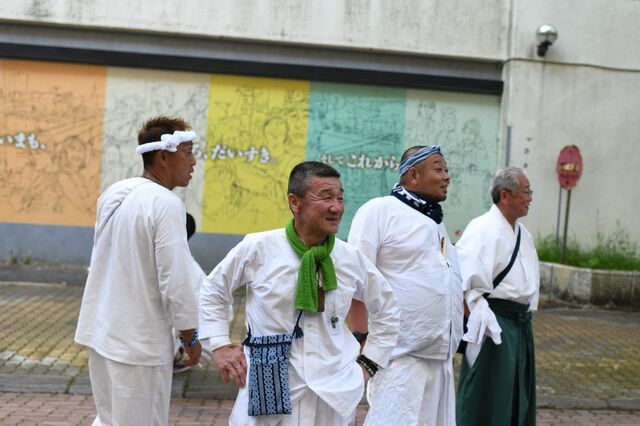
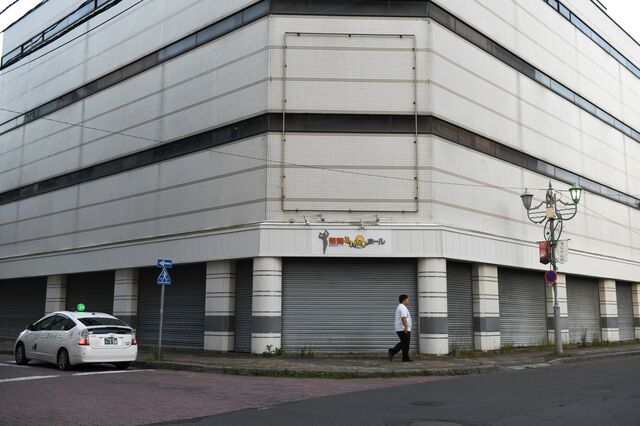
Kiyota’s concerns led her to Hideto Koyama, who was elected to Kushiro’s city council this year on an anti-coal platform. Walking along the river in downtown Kushiro, Koyama points out hotels and buildings left empty by the decline of coal. Still, on a July afternoon, the main street bustled with tourists as people chanted to the rhythm of whistles and children carried a portable shrine to celebrate a summer festival.
Mingling with them was Takako Suzuki, a high-ranking national lawmaker of the ruling Liberal Democratic Party. Her posters are plastered all over Kushiro, including at the entrance to KCM, alongside those of Prime Minister Fumio Kishida and her father Muneo Suzuki, a well-known lawmaker. Suzuki has been a vocal supporter of the Kushiro coal mine for years, and helped secure 550 million yen in subsidies for the project to bury CO2. She says the training program helps make mining abroad safer and that Japan wants a diverse energy mix that includes coal and emissions-cutting technologies.
Suzuki stopped to take some questions from me about the future of the mine and referenced an upcoming trip to Tokyo where some residents will accompany her to make the case for more funding. “The budget for KCM comes from the economy ministry,” she says. Turning to address the crowd, she declared, “I’m going to lobby for more soon with Kushiro’s people!”
After Suzuki and the children move on, Koyama surveys the quiet street. On one side sits an empty department store building; on the other a painting of locals with a coal miner and the message: “Past, Present and Future, We Always Love Kushiro.”
“Now that I’m elected, I realize how strongly the town supports coal,” Koyama says. “You can’t resist that force easily. It may be impossible to beat it during my lifetime.”
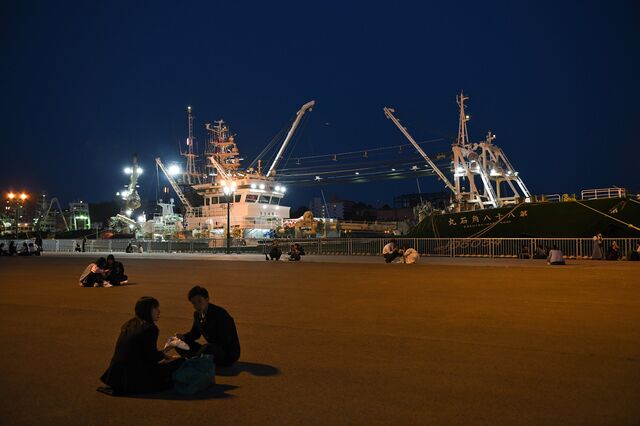
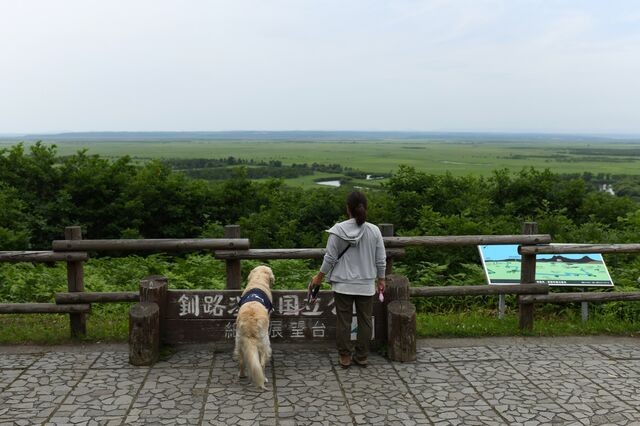
On the outskirts of Kushiro sits a sprawling marsh that helped lure more than 8 million tourists a year before the pandemic. When three typhoons hit within a single week in August 2016, the wetlands soaked up runoff water and helped protect communities downstream, says Shigeharu Terui, a researcher of small creatures who runs a local nonprofit environmental organization. That protection will be increasingly important as rising temperatures lead to more frequent heavy rains.
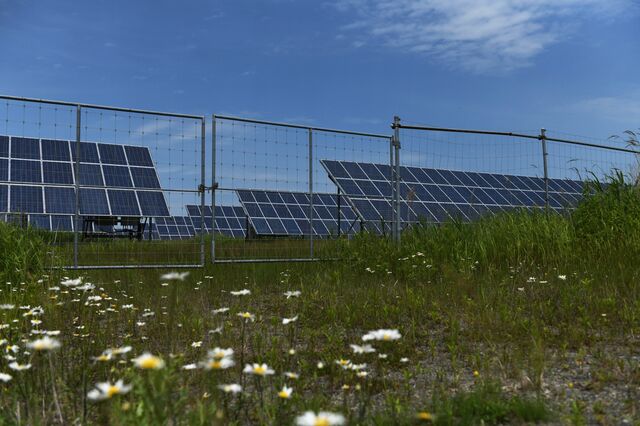
That’s why, despite their conviction that Kushiro needs to find a greener alternative to coal, local activists like Terui are also conflicted over a renewable energy push that’s encroaching on the marsh. Off the paved road along a river, thousands of solar panels stand in neat rows on a green field. Terui points at the elevated ground beneath the panels — it indicates new dirt was brought in for the project, which risks drying out the ground.
“I’m not saying solar-panel builders shouldn’t be making money,” Terui says, but he argues that the local government needs to do a better job of managing the land and balancing the demands of nature conservation and renewables deployment.
It’s a problem across Japan, which has struggled to put in place a cohesive strategy for ramping up green energy. The country has relied heavily on solar to clean up its energy mix while lagging on offshore wind power — a potential game-changer given the vast oceans that surround Japan. As a result, renewables only account for about 20% of the nation’s energy mix.
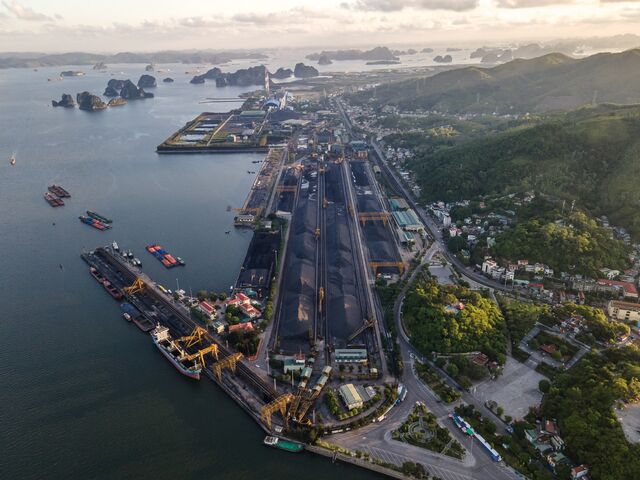
Kushiro’s conundrum is a glimpse of the future for Cam Pha, the coal-rich Vietnamese region from which KCM’s trainees hail. The Southeast Asian nation has pledged to phase out coal in order reach carbon neutrality by 2050. Solar is already booming in Vietnam as international banks, under pressure to go green, decline to fund new fossil fuel projects.
Yet there is one source of funding that’s still going strong: Japanese lenders and conglomerates. Part of the reason Japan invests in KCM’s training program — a common setup in the coal industry — is to build ties with coal producers overseas. That helps ensure more efficient extraction of the type of coal found in places like Cam Pha which Japan needs for steel-making. It also provides a steady pipeline of coal construction projects for Japanese companies, and a growing market for its emissions-reducing technologies.
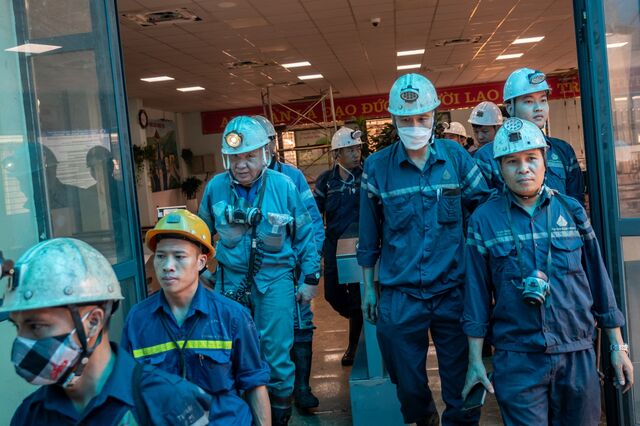
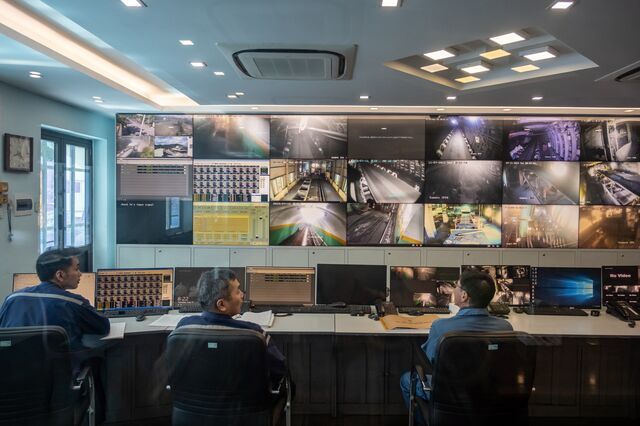
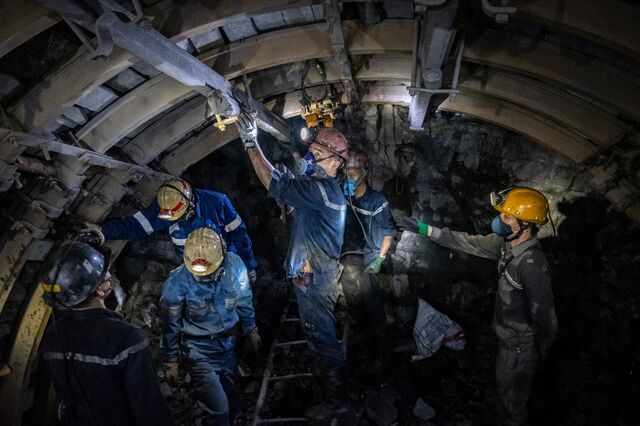
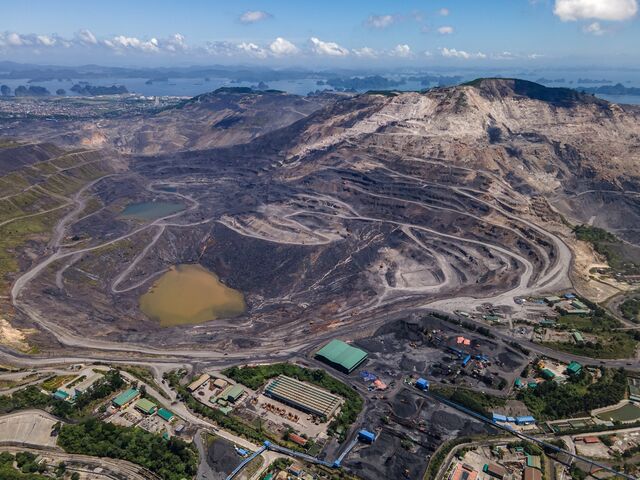
The July training sessions had their desired effect on Nguyen Bui Hung, one of the seven workers overseen by Ikeda and his colleagues. The 34-year-old manages more than 100 miners back home and was impressed by the machines in Kushiro that reduced physical labor. He works at a mine controlled by state-run mining giant Vinacomin, whose chairman Ngo Hoang Ngan also trained at KCM years ago.
Everything Nguyen learned in Japan reaffirmed his decision to stay in the industry. The pay is good, he says, and now, according to his teachers, there will be ways to minimize its pollution. His job will enable him to build a better life for his daughter, who was born in May. “There’s plenty of demand for coal,” he says. “I don’t know about the distant future, but I’m not worried about the near future.” —With Shoko Oda and Aaron Clark