Heat Pumps Need
Better Branding
Three design studios offer fresh visions for what is a truly powerful, clean energy fix.
In December a survey in the UK asked 2,500 homeowners whether they would consider getting a heat pump at home in the future. Only 2% said they had one, and 18% said they’d likely make the switch. But 39% of respondents weren’t interested, and another third didn’t know enough to answer the question.
By transferring heat from one place to another rather than generating it through the burning of fossil fuels, heat pumps are more versatile, several times more energy-efficient and more affordable over time than a boiler or an electric heater. Widespread heat pump adoption could nix 500 million tons of greenhouse gas emissions by 2030, according to the International Energy Agency.
But heat pumps also have a problem: Pretty much everything about them is a puzzle to the public. They can’t boast the sleekness of solar panels, the awesome power of wind turbines or the zip of electric cars. Their power is instead humble, hidden and a little mysterious. And anyway, boosting adoption isn’t as easy as tapping into environmental anxiety; knowing something is better for the planet rarely changes consumer behavior.
So how do you tout the benefits of a critically important but relatively boring technology? How do you make heat pumps sound cool to consumers? We sought out three studios to help us design heat pump advertisements that might appeal to a range of potential buyers: the Early Adopter, the Purist and the Pragmatist.
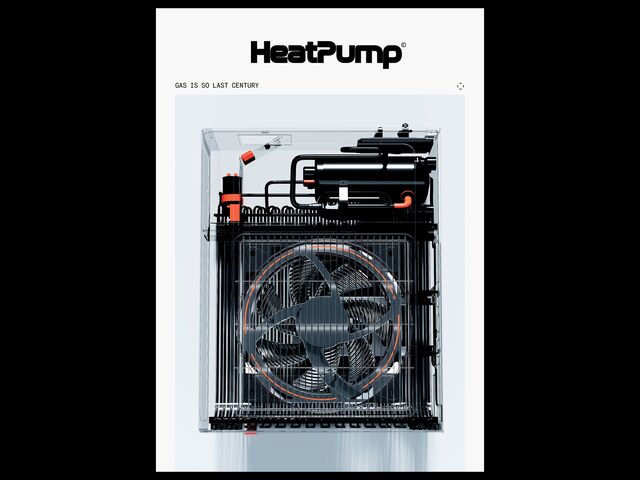
Making new technology desirable often hinges on getting consumers to feel anxious about missing out. Advertisers call this “social proofing”: copying the actions of others to project “correctness.” Examples of social proofing include looking for reviews before buying a product, copying influencers’ purchases and chuckling along with sitcoms’ canned laughter. In green tech, there’s evidence of this behavior when it comes to solar panels.
“There’s good research showing that solar panels are literally contagious,” says Toby Park, head of energy, environment and sustainability at the UK’s Behavioural Insights Team, a research group focused on techniques for prompting behavior change. “If other houses around you have solar panels, you are more likely to install them yourself.”
Another clear and recent example of social proofing comes from electric cars. EVs’ journey to the mainstream was largely paved by the rise of Tesla as a high-end car for cool people. “Tesla totally transformed what that car looked like, and the way that that car was framed was, ‘This is super exciting, sexy, the car of the future,’ ” says Clare Hutchinson, chief strategy officer at advertising agency VCCP.

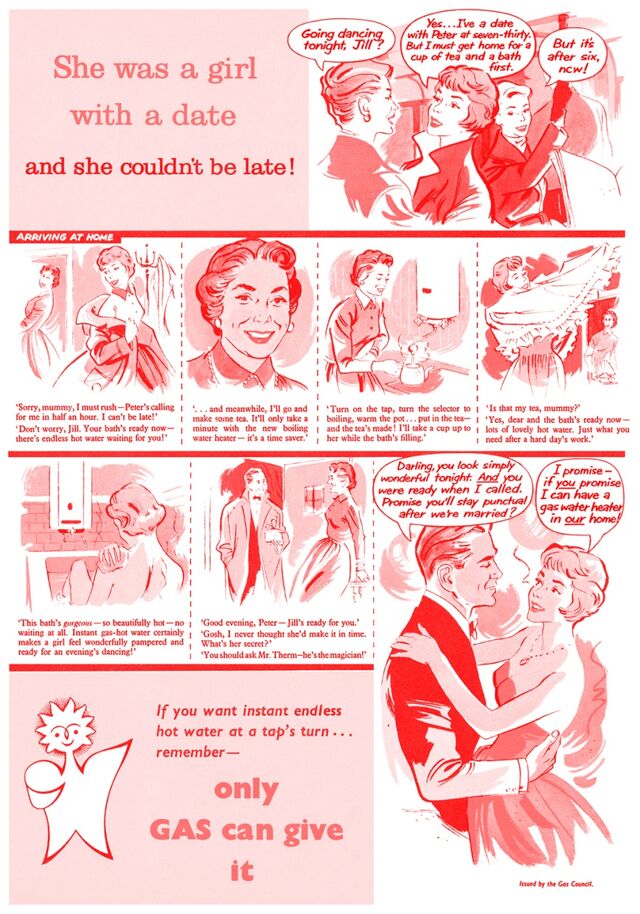

Heat pumps may not have the same inherent cool factor, but efforts to promote them could highlight the first-mover advantage of installing one now: emissions reductions, cost savings and the possibility of being first. “There’s definitely something about trying to create a sense of desirability,” says Madeleine Gabriel, director of the sustainable future mission at Nesta, a charity in the UK that runs “heat pump show homes” to let people see the technology in action. It’s “a signal that you have a certain type of lifestyle that represents something aspirational.”
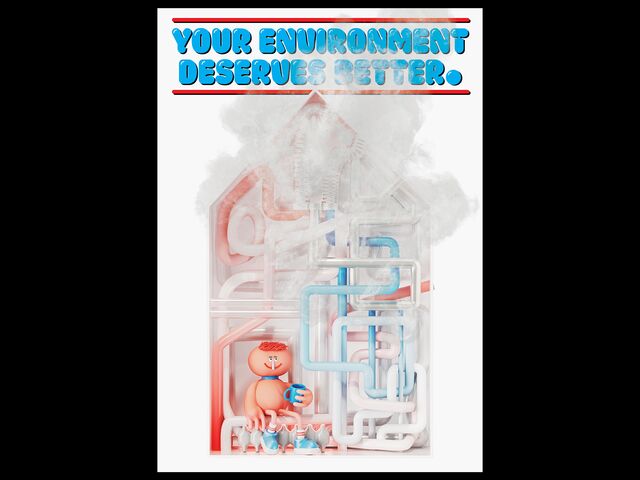
The simple incentive of being greener does motivate some people—or at least they claim it does. A 2022 survey by the Energy & Climate Intelligence Unit, a think tank in London, found that 1 in 3 Brits would be more likely to get a heat pump if it would free the UK from dependence on Russian gas supplies. Four in 10 said learning about the air pollution that gas boilers produce made them more likely to switch.
The difficulty is in overcoming the “value-action gap,” or the gulf between what people claim to care about and what they actually do in practice. One way to do this: Set out the broader consequences of inaction. “As humans, when bad things happen we’re more likely to try and make things good,” Hutchinson says, “whereas when good things happen, we don’t really change.” In other words: Loss aversion is powerful.
Denormalization, in which previously acceptable behaviors are made taboo, has also been used to combat behaviors such as drunk driving and indoor smoking, though there is a debate over whether shame is a useful way to get people to adopt more environmentally friendly behaviors.

1. Inconvenience for the greater good? One of the best-known UK advertisements Hutchinson created was a harrowing film depicting a boy accidentally killing his mother in a car crash. The goal was to show people that not wearing a seatbelt in the back seat could be fatal to others, and Hutchinson says it improved seat belt adoption rates by 20% to 30% “almost overnight.”
2. Emphasize the urgency. Roughly a quarter of the world’s carbon emissions currently come from heating and cooling buildings. Although heat pump adoption is picking up, many countries are still behind. In the UK the government has targeted 600,000 installations per year by 2028; the first estimates for 2022 suggest current levels are one-tenth of that.
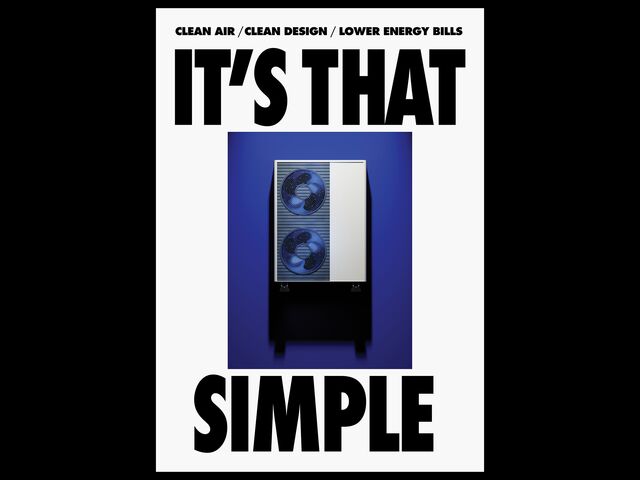
The ad industry offers a number of basic principles for capturing consumers, based on decades of trial and error. One model, the “four I’s,” zeros in on the need to introduce, inform, inspire and involve. Another principle is even more straightforward: Emphasize lower prices.
In a number of countries, including the US and the UK, government subsidies are available for consumers interested in making the switch to a heat pump. Hutchinson says a campaign could use that to reframe some of the common reasons people cite for waiting, including cost, for example, by comparing the lifetime expenditure rather than the upfront price, and highlighting the availability of free money. “If you put [an] air-source heat pump in the context where something else is more expensive, it will suddenly start to feel more reasonable,” she says.
Perspective is important when name recognition doesn’t exist. Ben Mitchell, co-founder of UK marketing agency Red Brick Road, says pushing heat-pump adoption is an unusual challenge because it’s selling a category rather than a brand. “You’re selling the heat pump ‘thing’ versus ‘Heat Pump Inc.,’ ” he says. Highlighting price is a good way to neutralize the distinction.

1. Heat pumps can’t pull heartstrings. Among the UK’s most iconic advertisements are the annual Christmas spots from department store John Lewis. They’re beautifully shot and wildly popular, but the campaign explains almost nothing about the store. “If you went out and tried to be the John Lewis of heat pumps, and you had some brilliant personality and some beautiful advertising, everyone would be left going, ‘What is it and how does it relate to my world?’ ” Mitchell says.
2. A spokesperson helps. “You might want [them] to be caring and nurturing and nod to nature,” Mitchell says. “Alternatively you might want to be really scientific, like a university lecturer, talking to people’s rational minds.” He suggests TV physicist and professor Brian Cox (not to be confused with Scottish Succession actor Brian Cox) as a potentially suitable figure. “Keeping people warm is a massive responsibility,” Mitchell says, “so you don’t want to be too lightweight about who your personality is.”