Golf Courses, Wave Pools and Gucci: Sao Paulo’s ‘Greenwich’ Has it All
A Brazilian developer wants to make Boa Vista a one-stop shop for the country’s ultra rich.
When Elon Musk visited Brazil last year, he never touched down at Sao Paulo’s international airport, nor did he set foot in the financial district of Faria Lima. In fact, he never set foot in the city at all.
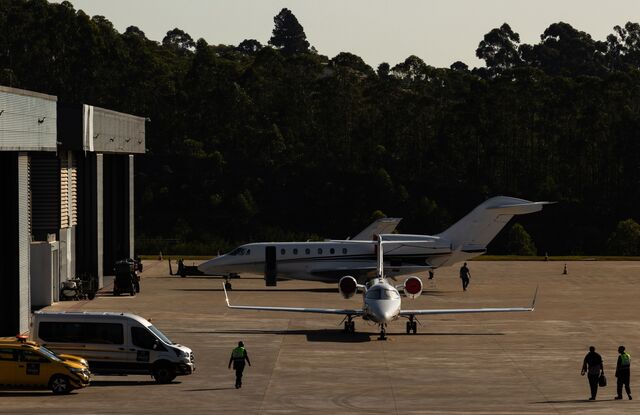
Instead, his entire visit took place in Boa Vista, a gated community for the ultra rich that spans nearly half the size of Manhattan and sits 62 miles west of Sao Paulo. Musk landed at Catarina Executive International Airport, which caters to executive jets, and was whisked to Fazenda Boa Vista for lunch at the Hotel Fasano with then-President Jair Bolsonaro and some of Brazil’s wealthiest businessmen including billionaires Andre Esteves, Rubens Menin and Rubens Ometto.
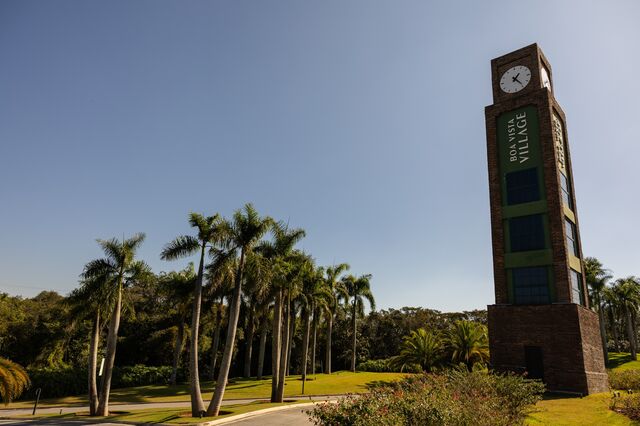
The luxury community is one of the largest and most exclusive — in a country where the super rich have historically built ever higher walls around their compounds and move around in armored vehicles to fend off kidnappings and robbery attempts. Lawns and landscaping are carefully manicured, and the homes grow in size as you move deeper into the property.
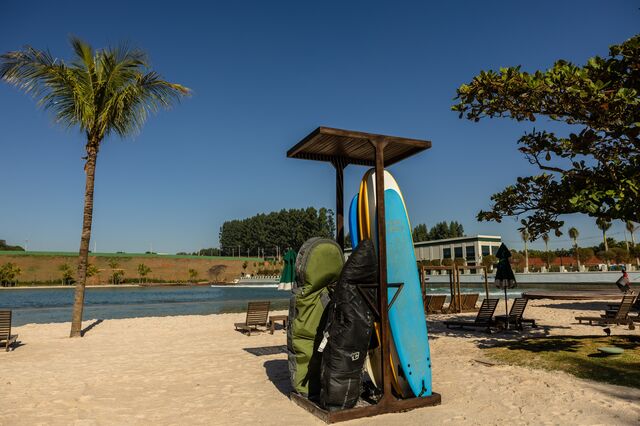
Local developer JHSF Participacoes SA hosted an inauguration for the property’s 720-foot wide wave pool a few weeks ago, with world champion surfer Italo Ferreira in attendance. It’s also breaking ground on the third phase of the development and starting the sale of plots. Once the project is completed, JHSF envisions up to 45,000 high-income people living, working and playing in the vast expanse of once-rural land. Already, residents include Central Bank President Roberto Campos Neto, XP Inc. founder Guilherme Benchimol, Nubank co-founder Cristina Junqueira and former communications minister Fabio Faria, according to people with knowledge of the matter. JHSF declined to comment on homeowners.
JHSF’s Community for Brazil’s Ultra Wealthy

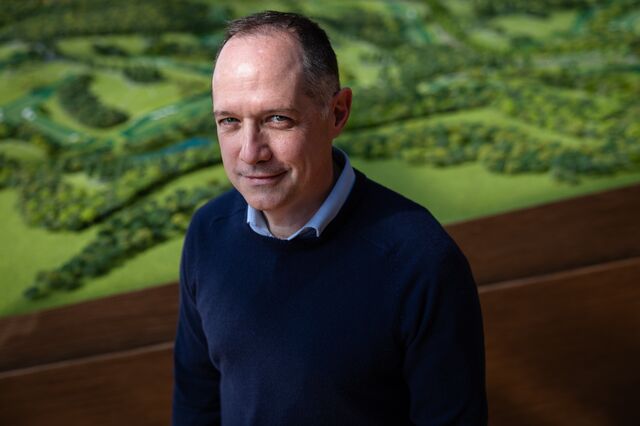
As Thiago Alonso de Oliveira, JHSF’s chief executive officer, toured the grounds on a recent Wednesday in late June, he repeated certain mantras that he deems central to the culture of his company with some 4,000 employees.
“Elegance, discretion, comfort,” he said as he carefully navigated an SUV through the streets of the Fazenda, which has speeding fines upwards of $400. “We wake up early and sleep late to deliver excellence.”
Boa Vista’s origins begin with a farm owned by the Auriemo family, the founders of JHSF, who then began to buy surrounding plots, Jose Auriemo Neto, the company’s chairman, said in an interview. It’s taken 15 years to assemble all the land, and JHSF first broke ground back in 2007.
The project, which touches two municipalities and has two zip codes, is split between three areas called Fazenda, Village and Estates.
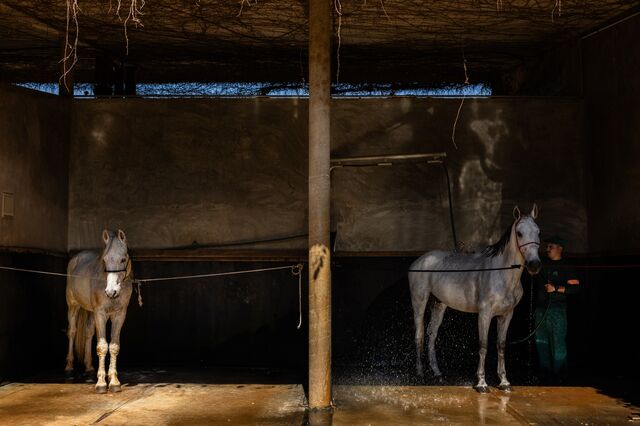
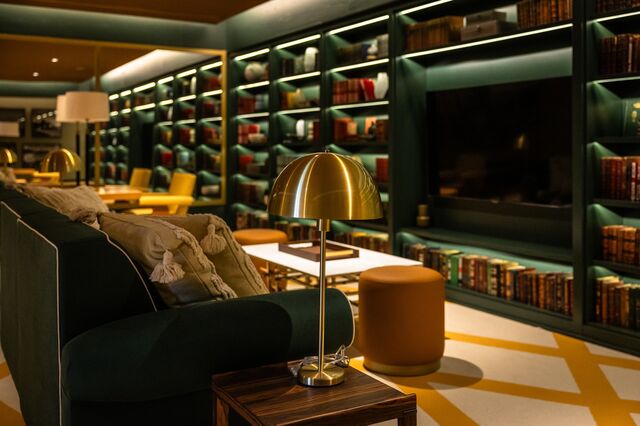
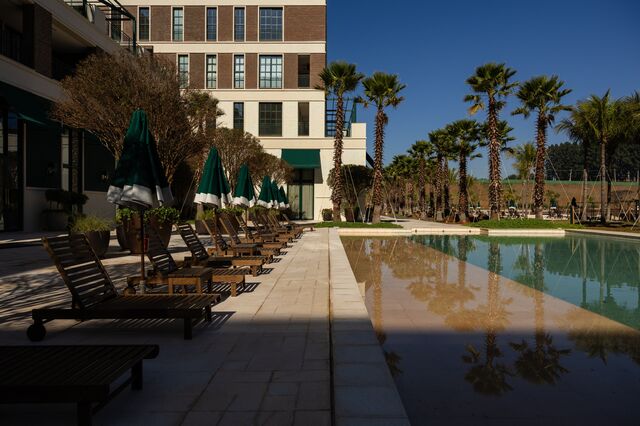
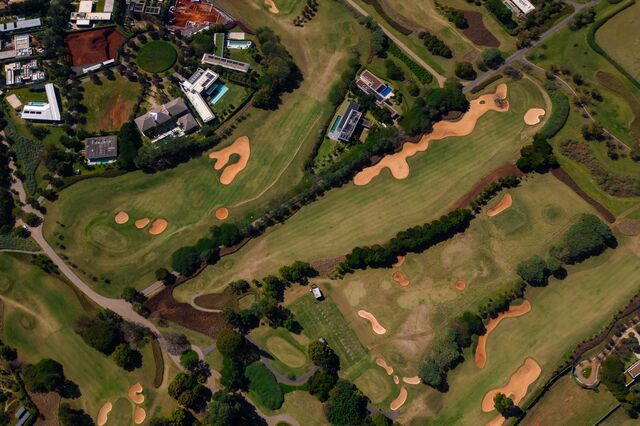
Fazenda, which is the most developed, has 900 plots, a restaurant, supermarket, health clinic, two golf courses, polo fields and a triathlon training center. Nearly every house has an electric golf cart parked in front — chargers are prevalent throughout the property. JHSF’s Hotel Fasano, which opened in 2007, charges upwards of $1,000 a night. There’s a helipad, where residents and visitors can be shuttled from the gated community to JHSF’s Catarina airport, 31 miles away, in just 10 minutes. There are also horse stables, which Alonso pointed out, “have no foul smells.”
Plots of land go for $2 million, homes for sale online average more than $8 million, and JHSF rents out some properties for $21,000 a month.
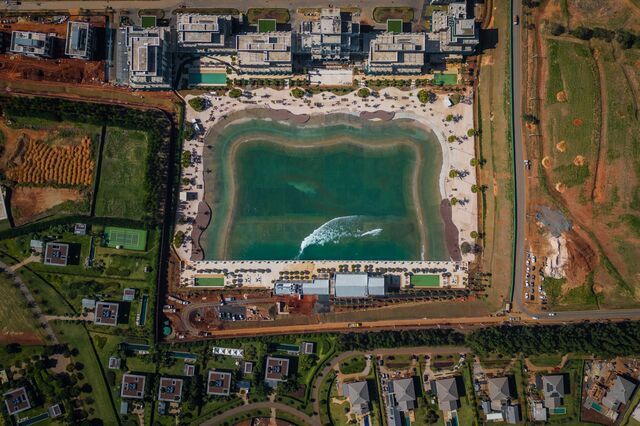
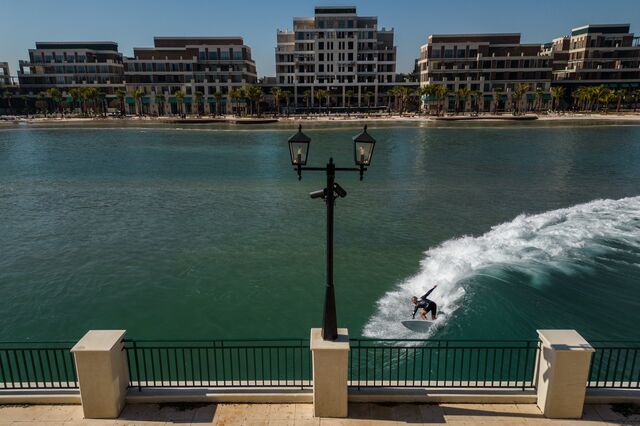
The Village, which is still being completed, has the wave pool for surfing, apartments as large as 5,400 square feet, planned shops, restaurants, work spaces called “family offices” and another hotel. The morning of the visit, Alonso said new plots were snapped up within an hour of going on sale.
Estates, which will be the most exclusive, is just breaking ground with 300 plots.
Alonso likens the project to Greenwich, Connecticut, in its distance from a major financial hub and the levels of comfort for wealthy families. There are plans for a school and hospital to be constructed soon. There are no short-term rentals permitted.
“There’s a snowball effect,” he said. “People come here for the weekend because their friends are here, the friends of their children are here, their wives’ friends are here, their business community is here.”
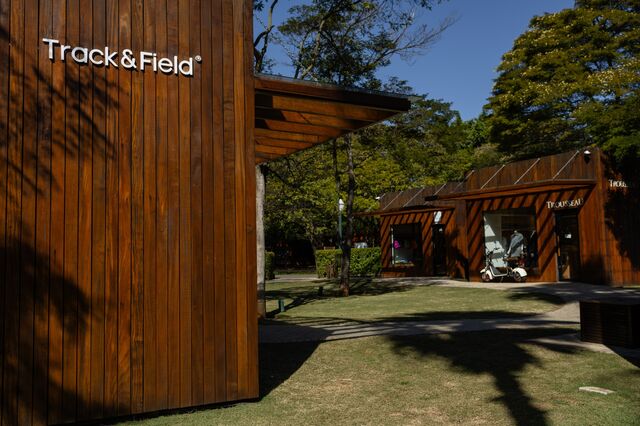
The pandemic was an accelerator for sales as wealthy Brazilians looked to move out of big cities into homes with more space and reliable communications for remote work. In Boa Vista, JHSF lays its own fiber cable. They added a toy store, pet shop, electric bike vendor and designer clothing boutiques to the property as people held private parties during lockdowns.
“During the pandemic, the cost of homes and land there doubled,” said Amir Makansi, CEO of Anglo Americana Consultoria de Imoveis SA, a boutique brokerage that specializes in upscale properties. “The Sao Paulo elite moved inland.”
While there are no billboards indicating the exact location of the complex, there are signs of its impact. During the visit, JHSF was building an underpass on a public road to cut travel times and is constructing a new exit ramp off the main highway that will be the main entrance to Estates.
The privacy of the location highlights the exclusivity of Boa Vista — but it also underscores more than ever the massive divide between the haves and have nots in one of the world’s most unequal places. The top 1% of Brazil’s population owns about half of the country’s total wealth, according to the latest annual Wealth Inequality Report. The top 10% of the population makes 29 times as much as the bottom 50%, on par with Chile and only surpassed by Mexico and South Africa in the report of 26 major economies.
Alonso is unapologetic about their business and says Boa Vista has cut unemployment and crime in surrounding cities while boosting incomes by employing an ever-greater number of people for service jobs. A review of government figures with data only as recently as 2018 showed that in Porto Feliz, one of the two municipalities that Boa Vista crosses, employment, gross domestic product, GDP per capita and household incomes have all grown over the last decade, in many cases outpacing state levels. In neighboring Iperó, some key metrics lagged.
Many owners use Boa Vista as a home base as they commute into Sao Paulo or Rio de Janeiro for business trips. Longer-range jets that cost up to $100 million are parked in the airport’s 12 hangars, ready to fly owners off to Dubai, London, New York or more exotic locations for family holidays. Alonso envisions flying cars being a reality for trips back and forth to the city in a matter of years.
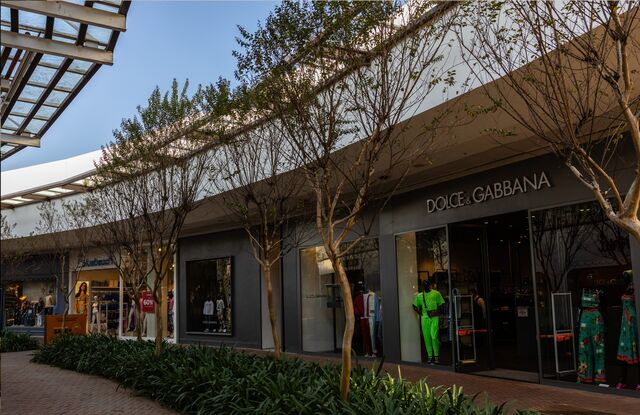
In JHSF’s interconnected web of businesses servicing the elite, a client could land their private jet at Catarina airport, be taken for a weekend at the Fazenda, and return to shop at the fashion outlet in front of the airport with brands like Gucci, Dolce & Gabbana, Burberry and Montblanc.
JHSF, founded by the Auriemo family in 1972, has been growing its footprint outside of Brazil — where it develops apartment towers in Sao Paulo, and operates high-end malls as well as hotels and restaurants under the Fasano brand.
There’s a Fasano hotel and restaurant on Manhattan’s Fifth Avenue and 63rd street, while construction is underway for a location in Miami. A building was purchased this year to house their first hotel in London. In Uruguay, a project similar to Boa Vista caters to the ultra rich with private homes, a hotel, restaurant and air strip.
“Our projects go beyond real estate,” said Auriemo, the son of one of the founders. Zeco, as he’s known, began interning at the company when he was 12 and became CEO at the age of 27 in 2003, helping drive the firm into shopping malls and other new businesses. The family has a 58% stake in the company worth about $430 million.
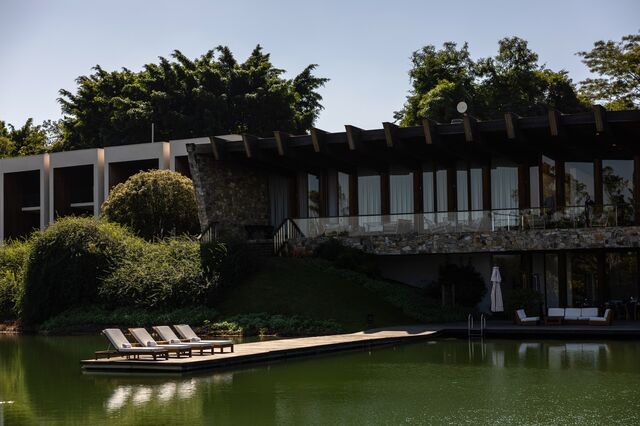
Back in Brazil, few residents were seen midweek at the Fazenda and were far outnumbered by cleaning crews, gardeners, construction workers and horse trainers. One house under construction employed a crane and some lots span 1.1 million square feet.
In its latest wealth report, Knight Frank estimates that the number of Brazilians in the ultra-high-net-worth category — a fortune of $30 million or more — grew 11.2% between 2021 to 2022, the third-biggest increase globally in that period. That group could grow nearly 30% over the next five years to 8,000 people, the report said.
When asked about the demand for these types of projects over a long period of time, real estate expert Makansi said that he continues to be surprised with the resilience in the market around Sao Paulo, the megacity of close to 22 million people.
“Wealthy people from other places want to be with rich people here,” Makansi said, citing a billionaire family he knows from the northeast of the country with a house there. “And they don’t spend the weekend there to just relax — it’s also to keep making money.”