
These Are the Top 25 UK Startups to Watch This Year
Bloomberg unveils innovative companies reinventing medicine, entertainment, finance, autonomous driving, data analysis and more.
Bloomberg set out to find 25 UK startups that were thriving in 2023, and we were a little nervous. The year did not begin well, as we noted when we kicked off the search in June. Fears about a recession were rising, expenses were going up, and the venture capital firms and investors that provided fuel for the country’s startups had scaled back. Arm Holdings Plc, the Cambridge-born semiconductor designer that’s put its technology in almost every smartphone, decided to list in New York, in what felt like an existential crisis for London’s 300-year-old exchange.
But the country’s startups showed up in force. More than 1,500 applications came in for this inaugural list. The final 25 companies were created by people with a vast array of experiences and backgrounds from all over the UK. We have London-based fintechs, AI-generated avatars, data science that helped map the Covid-19 pandemic and a group building quantum computers in Haywards Heath. There are names you’ve seen in the shops and in the news, as well as some you’ve probably never heard of. They’re all working on new, innovative ideas that have caught the eye of investors and customers and impressed us with their plans to improve everything from the environment to kids’ entertainment.
In no particular order:
Tom Blomfield, Jonas Templestein, Jason Bates, Paul Rippon and Gary Dolman
2015
Mobile-first digital bank with savings tools, investments and loans
The digital bank has 8.4 million users in the UK who access bank accounts, invest money and take out loans via a smartphone app. Revenue more than doubled last fiscal year, and the company said it’s been profitable since March. Investors have taken note. The company’s last fundraising round in 2021 valued it at $4.5 billion, and it’s been backed by Tencent Holdings, Coatue, the Abu Dhabi Growth Fund and Passion Capital.
Chief Executive Officer TS Anil has said Monzo doesn’t need any more capital, but he hasn’t ruled out raising money for a big opportunity. The London-based company has plans to expand beyond the UK, and it already operates in the US, supported by Sutton Bank.

Philip Belamant and Sean O’Connor
2018
Buy now, pay later, but make it free
Zilch describes itself as “buy now, pay later 2.0.” The company offers debit card payments and zero-interest lending to 3.5 million users in the US and the UK via a virtual Mastercard. It’s able to offer the loans through its ad-subsidized payment network, which presents Zilch customers with “hyper-personalized” deals from retailers.
The lender was last valued at $2 billion in a fundraising round in 2022. It’s weighing an initial public offering, and CEO Philip Belamant told Bloomberg Television earlier this year that he’s spoken to more than 15 banks and is considering listing in New York or London.
Nader AlSalim
2019
IVF insurance that covers treatments until the baby comes
Nader AlSalim and his wife spent five years and £50,000 ($61,000) trying to conceive their son via in vitro fertilization. Their four failed cycles highlighted the financial gamble of IVF treatment to AlSalim, a former executive director at Goldman Sachs Group Inc. He founded Gaia to help people going through fertility treatment manage their financial risk.
Customers undergoing IVF treatment pay an initial fee to Gaia, which then handles ongoing payments to the fertility clinic. Users repay the company only when they have a child, via monthly installments. If they don’t have a child after three cycles of IVF, customers don’t owe any of their treatment costs. At the heart of the business is a machine-learning model trained on millions of clinical datasets that predicts the outcome of fertility treatments and the number of rounds likely needed to successfully deliver a baby.
Scott White and Richard Price
2010
Cheaper chips
The University of Cambridge spinoff is working to reinvent the process for making semiconductors—producing chips that are thinner than a human hair and more environmentally friendly than silicon.
Pragmatic also lets customers rent chip-manufacturing lines for projects or buy a “fab-in-a-box” that can be installed at a cost that’s as much as a hundred times less than a traditional silicon-manufacturing facility. The company has raised $190 million from investors including industry heavyweight Arm as well as private equity fund In-Q-Tel, Cambridge Innovation Capital and packaging maker Avery Dennison Corp.
Simon Thomas, Colin Humphreys and Ivor Guiney
2018
Graphene
Another good idea from Cambridge—researchers from the university’s department of materials science and metallurgy developed a new method to deposit graphene on semiconductor wafers, in a breakthrough that would ultimately form the basis for Paragraf Ltd.
Graphene is particularly useful for making highly sensitive devices that measure magnetic fields or identify biological components. The material makes chips that have the potential to perform faster and are 10,000 times less power-hungry than silicon-based semiconductors that do the same thing. The company’s products have been used by Rolls-Royce, CERN and Oxford Instruments, and it’s raised more than $85 million from investors.
Winfried Hensinger and Sebastian Weidt
2018
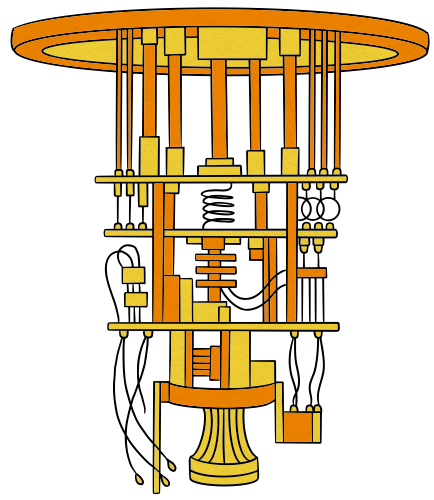
Taking quantum computing up to 11
Quantum bits, or qubits, are the building blocks of quantum computers and are measured in dozens or, rarely, hundreds. International Business Machines Corp. wants to build a 100,000-qubit machine within a decade. But this University of Sussex spinoff isn’t impressed. It says it will build a 1 million-qubit computer to help humanity solve some of its most complex challenges.
Universal Quantum Ltd. won one of the largest-ever government quantum computing contracts last year when the German Aerospace Center awarded it a €67 million ($71 million) deal.
Victor Riparbelli, Matthias Niessner, Steffen Tjerrild and Lourdes Agapito
2017
AI avatars for business
One look at a video by Synthesia is enough to understand why artificial intelligence is a central issue for actors in Hollywood. This unicorn uses generative AI to create bespoke videos that can feature more than 150 avatars in over 140 languages for training and marketing.
The product, which can churn out high-quality videos in minutes, has already been used by more than 50,000 companies and attracted early investors including Mark Cuban. Synthesia raised $90 million in its June round, led by Accel and with investment from Nvidia Corp.’s venture capital arm, NVentures.

Paul Newman and Ingmar Posner
2014
Self-driving for industry
Some of the most interesting use cases for self-driving vehicles will be a world away from the streets of San Francisco—try the farm, the shipping yard or the airport. Oxford University professors Paul Newman and Ingmar Posner co-founded Oxa in 2014 to develop software for autonomous agricultural and industrial vehicles.
The company has raised $225 million to date, including $140 million in a January round. Oxa announced in August that it had reached a deal with US shuttle bus company Beep, and the company also has partnerships with ZF Friedrichshafen and grocery delivery platform Ocado.
Richard Potter, David Leitch and Atul Sharma
2015
Boring AI
Ever since OpenAI Inc.’s ChatGPT made its debut a year ago, generative AI has been hailed as either a transformative tool that liberates workers or the thing that will kill us all. Manchester-based Peak co-founder Richard Potter says the truth is more prosaic.
His company is working on AI solutions for the boring stuff, such as optimizing inventory and pricing. Peak’s customers so far include Nike Inc., Molson Coors Beverage Co., Marshalls Plc and Eurocell Plc. It raised $75 million in a round led by SoftBank Vision Fund 2 in 2021, taking its total fundraising to $119 million.
Sarah Crawley and John Ryan
2021
Slack for builders
Co-founder Sarah Crawley spent several years overseeing construction projects involving highly specialized mechanical and engineering refurbishments of intensive care wards. In the role, she said she watched “everything that could go wrong, go wrong,” and realized the industry needed a better way to communicate.
Soon after, she and her husband, John Ryan—a chartered mechanical engineer who’s helped manage megaprojects such as Crossrail and the Tideway Super Sewer—founded SymTerra in their spare bedroom. It’s a communication app for construction sites that’s already been used by Thames Water, Lanes Group and MTR Corp. Last year it raised $1.7 million in seed funds from VCs including Samaipata, Nemetschek, Pi Labs and Accel.
Ali El Kaafarani
2018
Cryptography for a post-quantum world
If there’s one thing quantum computers are good at, it’s cracking codes. PQShield founder Ali El Kaafarani, a cryptography researcher at Oxford University, realized that without help, legacy encryption systems would be rendered worthless against quantum computing’s number-crunching powers.
The company has found a willing audience, and last year it raised $20 million in a round led by Addition, the venture capital firm formed by former Tiger Global investor Lee Fixel.
Vishal Marria
2016
The context for better business
Quantexa’s platform maps relationships between billions of data points across multiple sets and sources to help companies battle money laundering and fraud and find ways to improve their business.
Clients include HSBC Holdings Plc, Vodafone Group Plc and the UK Cabinet Office. Quantexa was valued at $1.8 billion in its latest funding round, led by Singapore’s sovereign wealth fund, GIC.
Timothy Stokely, Guy Stokely and Thomas Stokely
2016
Subscription services for adult content and more
The online platform that lets content creators make money directly from subscribers may be best known for allowing racy photos and adult videos. But OnlyFans CEO Keily Blair is building up its other genres, encouraging athletes, comedians, musicians and chefs to sign up.
The OnlyFans formula caught fire when Leonid Radvinsky, a Ukrainian-American entrepreneur with a background in adult entertainment and direct marketing, bought OnlyFans in 2018. More than 200 million users and 3 million creators use the platform, and both metrics are growing fast. Revenue jumped 17% in 2022, and the business paid Radvinsky $338 million in dividends last fiscal year.

Ben Drury and Filip Denker
2015
Screen-free audio fun for kids
Don’t want to pry if someone has children? Ask them if they’ve heard of Yoto instead. This interactive smart speaker is a parent favorite, keeping kids engaged with songs, stories and activities that don’t involve a screen.
Yoto, which in 2017 raised money through crowdfunding on Kickstarter, has content partners that include Universal Music Group, Warner Music Group Inc. and the Walt Disney Co. The company raised $17 million in a 2021 funding round led by Acton Capital to expand beyond the UK to Europe, Canada and the US.

Nate Macabuag
2020
Comfy prosthetics for kids and adults
Koalaa has developed uniquely soft and affordable artificial limbs that are designed to fit like clothing, making them ideal for children and for use in war zones, such as Ukraine.
The prosthetics can be fitted just hours after surgery, helping amputees begin their recovery as soon as possible. Founder Nate Macabuag developed Koalaa’s first model with a £140,000 grant from Innovate UK in 2020.
Tania Boler and Alexander Asseily
2013
Women’s health and wellness tech
Women’s health expert Tania Boler co-founded Elvie a decade ago with consumer-electronics veteran Alexander Asseily. They sell a wireless, smartphone-controlled pelvic floor trainer and an ultra-quiet, connected breast pump for new moms. Although the company initially struggled to attract investment from VCs, who shied from women’s health startups, in 2017 it landed $6 million in funding led by Octopus Ventures.
Elvie last raised a $97 million round in 2021 from investors including BGF, BlackRock and Blume Equity. In the four years through 2022, the London-based startup says it saw 1,800% revenue growth, and its products are now available in 20 countries.
Lee Cronin
2022
Digitizes chemistry for drug and materials discovery
Chemistry professor Lee Cronin’s vision for a “chemputer” was spun out from his lab at the University of Glasgow in 2022. Chemify’s platform combines a purpose-built “chemical programming language,” robotics and artificial intelligence to aid drug design and development, synthesis of new molecules and materials discovery.
In August the startup raised $43 million, led by Triatomic Capital, and in September announced a partnership with biotechnology company Dewpoint Therapeutics.
Peter Donnelly, Gil McVean, Gerton Lunter and Chris Spencer
2014
Genetic risk assessments for common diseases
Precision medicine and therapeutics company Genomics Plc analyzes people’s genetic information to evaluate their risk of developing a number of common diseases. Founded by four academics in 2014, the Oxford University spinout has raised $82 million in total from investors including IP Group, Lansdowne Partners, Oxford Sciences, Foresite Capital and F-Prime Capital.
Genomics piloted a genomic risk assessment program for the National Health Service that looked at cardiovascular disease, and the company says revenue for 2023 has doubled from a year ago, thanks to new deals with pharmaceutical and insurance companies in the UK and the US.
David Woolger, Matt Brookes, Elena Boto, Ryan Hill, Niall Holmes and Richard Bowtell
2020
Wearable, low-cost brain scanner
This small brain scanner can be worn in a helmet to offer more convenient and less space-intensive medical imaging. The device works by sensing the magnetic field created when neurons fire in the brain and is used to assess a wide range of neurological and psychiatric conditions. Patients can move around freely when wearing the device, which makes it particularly useful for children and babies.
The University of Nottingham spinout’s scanners have been used by researchers in the UK, the US and Canada to investigate autism, epilepsy and cognitive function in elderly people. The equipment could theoretically be used to scan other organs, or the spine, and to monitor fetuses. The company has three patents pending and is working to achieve regulatory approval for the device in the European Union and the US.
Nadine Hachach-Haram
2016
Surgery, virtually
NHS surgeon Nadine Hachach-Haram created the virtual health-care platform in 2013. Growing up in postwar Lebanon, Hachach-Haram witnessed firsthand the necessity for surgical care and availability. The cloud-based hub hosts and records video streams from the operating room, alongside integrated health data and analytics, to enable surgeons to be “telepresent” for training and remote collaboration and analysis.
In April, Proximie launched a wearable headset for surgeons to stream their first-person perspective from the operating room. Proximie’s systems have been deployed in more than 800 hospitals in over 50 countries, with rapid expansion in the US. The health-care company raised $80 million in funding last year, led by Advent Life Sciences, with new investors SoftBank, Emerson Collective and British Patient Capital. Global Ventures has also invested.
Tim Guilliams and David Brown
2014
AI-powered drug discovery for rare diseases
Biochemical engineer Tim Guilliams and Viagra co-inventor David Brown spun out the drug discovery company from the University of Cambridge in 2014 with the ambition to accelerate treatment discovery for rare diseases. By applying machine learning and AI to large biomedical datasets, Healx Ltd. has been able to more efficiently predict promising drugs and compounds, particularly for rare diseases.
Incubated by Accelerate Cambridge, the spinout has raised more than $90 million from investors including Balderton, Amadeus Capital Partners and Intel Capital. This included a $56 million round in 2019 led by Atomico. Healx has collaborated with GW Pharmaceuticals, Boehringer Ingelheim and Ono Pharmaceutical. The company’s system has identified promising treatments for more than 16 different disease programs. Compounds to treat genetic nervous system disorder neurofibromatosis Type 1 will begin clinical trials next year.

Glen Slade
2017
Saving strawberries with sterile male insects
Reading-based computer scientist Glen Slade has developed robotics and AI to automate the rearing of sterile male insects to provide affordable, chemical-free pest control for agricultural and public-health purposes. Sterile male bugs mate with wild females to reduce the population of the species near crops. BigSis, which launched its first commercial product this year, was founded in 2017, informed by Slade’s Cambridge University education in computer science and 25 years’ experience in agribusiness.
The ag-tech company formed a partnership with one of the UK’s largest berry suppliers, Berry Gardens, as well as the National Institute of Agricultural Botany, to conduct a field trial in 2021 that reduced the population of the invasive and particularly destructive “spotted wing drosophila” fruit flies in a strawberry crop by as much as 91%. Last year, BigSis raised £4.5 million, led by UK agritech fund Regenerate Ventures.
Leonidas Howden, Rob Harris, Fred White, Geoff McNamara and John Murray
2018
Salvages the gold from your old phone
Descycle uses a type of eco-friendly solvent discovered at the University of Leicester to recycle precious metals from electronic waste. Mineral processing researcher Rob Harris founded the e-waste recycling company alongside geologists Fred White and Geoff McNamara, engineer and finance professional Leonidas Howden, as well as natural resources adviser John Murray.
Last year the London-based startup was awarded £1.2 million by government science-funding agency UK Research and Innovation. In April it raised £4.85 million, in a round led by TSP Ventures and with investors including metals industry veterans Ian Cockerill, Mark Cutifani and Steve McIntosh. Next year, Descycle plans to open an e-waste recycling plant in the North East of England, in a joint venture with GAP Group.
Kat Bruce
2014
Biodiversity monitoring using DNA traces
Ecologist Kat Bruce’s Guildford-based biodiversity-monitoring company analyzes traces of DNA found in soil and water samples to help organizations plan and track the progress of conservation efforts. The testing kits and bioinformatics platform provide monitoring that the company says is 10 times cheaper and identifies five times the number of species compared with traditional survey methods. The company, founded in 2014, has laboratories in the UK and Canada and says its platform is used by more than 500 companies in over 100 countries. Customers include EDF Renewables, Anglo American and Nestle SA’s Purina.
NatureMetrics raised £11.9 million in May last year, led by climate investors 2150, with funding from Systemiq and BNP Paribas. A further £9.8 million was secured this August. In September the company won an ag-tech startup competition run by Tesco Plc, which grants access to the supermarket giant’s suppliers. Just this month it launched a “nature intelligence platform” to help businesses meet nature impact reporting obligations.
Rasmus Bech Hansen
2015
Disease-forecasting platform that tracked Covid-19
Airfinity specializes in capturing and structuring fragmented data to predict disease outbreaks—in a similar way to how financial markets and the weather are forecast—to help inform public-health decisions. When the pandemic hit in 2020, the health-intelligence startup built a Covid-19 data platform that became a widely cited source for tracking the spread of the virus. By charging pharmaceutical companies and government agencies a subscription fee to access its platform, Airfinity’s revenue grew by more than 160 times from 2019 to 2022, the company says.
Founded in 2015 by health security expert Rasmus Bech Hansen, the machine-learning-driven data analysis company now allows customers to track and simulate population-level outcomes for 150 diseases and conditions, including noninfectious cardiovascular conditions.