Ukraine’s Fight to Rebuild in Face of Unrelenting War
Premature cease-fire could make frontline economy uninvestible. Hopes set on new infrastructure, strengthened Ukraine ‘brand.’
The reality of Russia’s invasion hit Yuriy Sinitsa the day a plane bombed one of the pet stores he had refused to close in Chernihiv, two hours north of Kyiv. He left the besieged city of around 280,000 soon afterward for the relative safety of western Ukraine.
Four months later, Sinitsa and staff from his $20 million a year pet accessories company, Collar, are back at work in a heavily damaged city that relies on a pontoon bridge for access. They kept the company going in exile but they struggled to operate at more than 10% of capacity, let alone grow.
And Ukraine needs to grow. While the military has been remarkably successful in stopping a vastly more powerful foe from taking control of the country, its farms, industries and businesses like Collar need to rebuild under fire if the leadership in Kyiv is to end the war on its own terms.
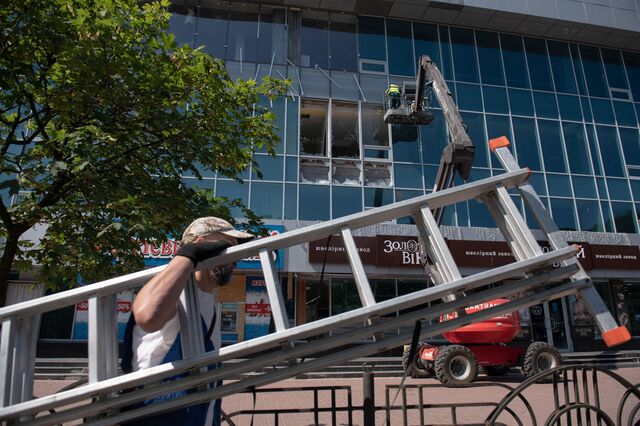
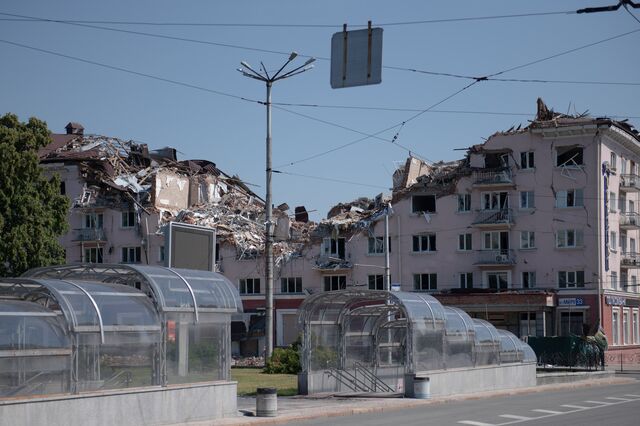
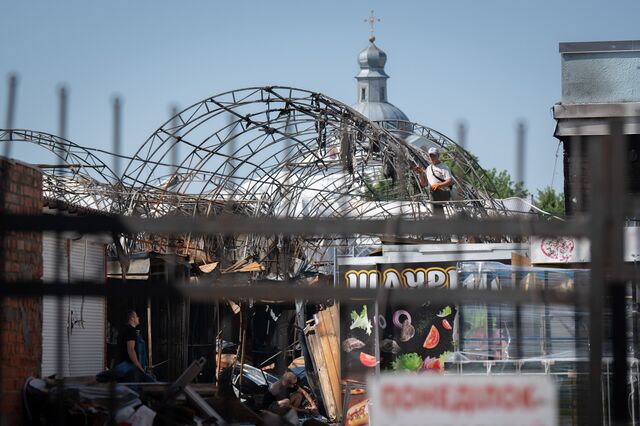
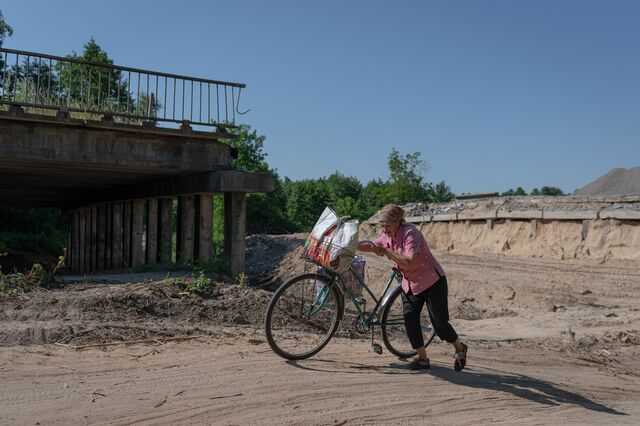
A tour of farms, strip mines and factories along the Dnipro river, which carves a path up to a mile wide through the nation, makes clear the scale of the challenge facing Volodymyr Zelenskiy’s administration as it tries to revive the economy while land locked and at war.
“Part of our mission is just to show entrepreneurial spirit,” Sinitsa said. When he arrived near the Polish border in the far west of Ukraine there was almost no damage, yet businesses were shuttered for fear of what might happen. “If we do that now we will never recover.”
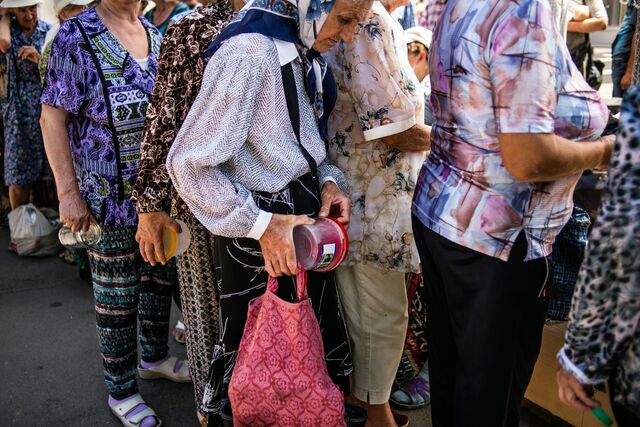
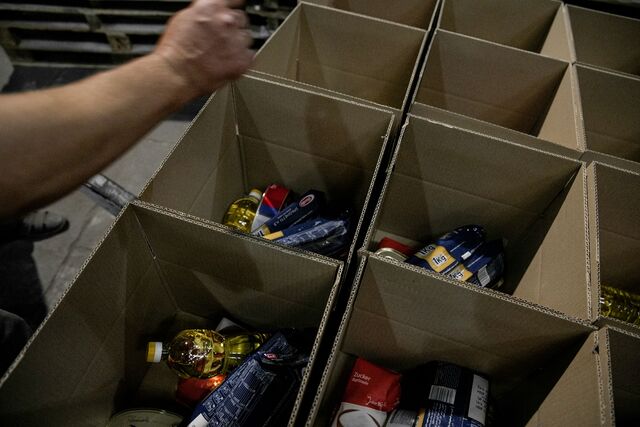
Transport costs have soared and production stalled as Russia chokes off access to the Black Sea, through which Ukraine used to send as much as 80% of exports before the war. Factories face the unfamiliar tasks of hosting refugees, equipping staff fighting at the front, and acting as distribution centers for aid.
The International Monetary Fund projects Ukraine’s gross domestic product will shrink 35% this year, shriveling tax revenue and leaving the state dependent on international donors to fill a monthly budget deficit that Finance Minister Serhiy Marchenko has put at $5 billion. Without that aid, Ukraine would quickly struggle to support the millions of people displaced by war, pay public salaries, or sustain the costs of its military campaign.
The risk, as Russian forces grind forward in the east, is that Ukraine gets ripped from that financial lifeline going into a difficult winter. Already there are signs of donor fatigue as the European Union squabbles over further aid, while the recent exits of British and Italian prime ministers Boris Johnson and Mario Draghi highlight the potential for policy change. Maintaining unity is likely to become harder as the conflict’s impact on energy markets triggers inflation and recessions around the globe.
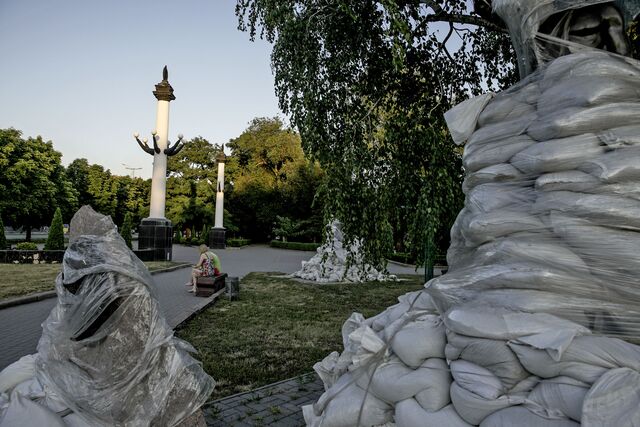
“That’s definitely his plan,” Ukraine’s Foreign Minister Dmytro Kuleba said of Russia’s President Vladimir Putin, in a recent interview at his office in Kyiv. Like so many officials since the war began, Kuleba eschews a suit for casual dress, keeps his curtains drawn and sandbags outside the door.
The Kremlin, he said, “counts on creating an economic crisis in the countries that are Ukraine’s partners, cabinet reshuffles and bringing to power people who will be more loyal to him.”
Rebooting the economy while reducing the dependency on allies will be especially hard in places like Chernihiv. Though Russian troops abandoned their siege to move east in mid-April, the city is vulnerable, sitting less than 50 km (31 miles) from the border with Belarus, and 100 km from Russia.
The highway to Kyiv relies on a makeshift floating bridge to cross the Desna, a major tributary to the Dnipro river that divides Ukraine east from west.
On the Front Lines
Ukraine’s key industrial centers are either occupied or too close to Russian forces to be safe
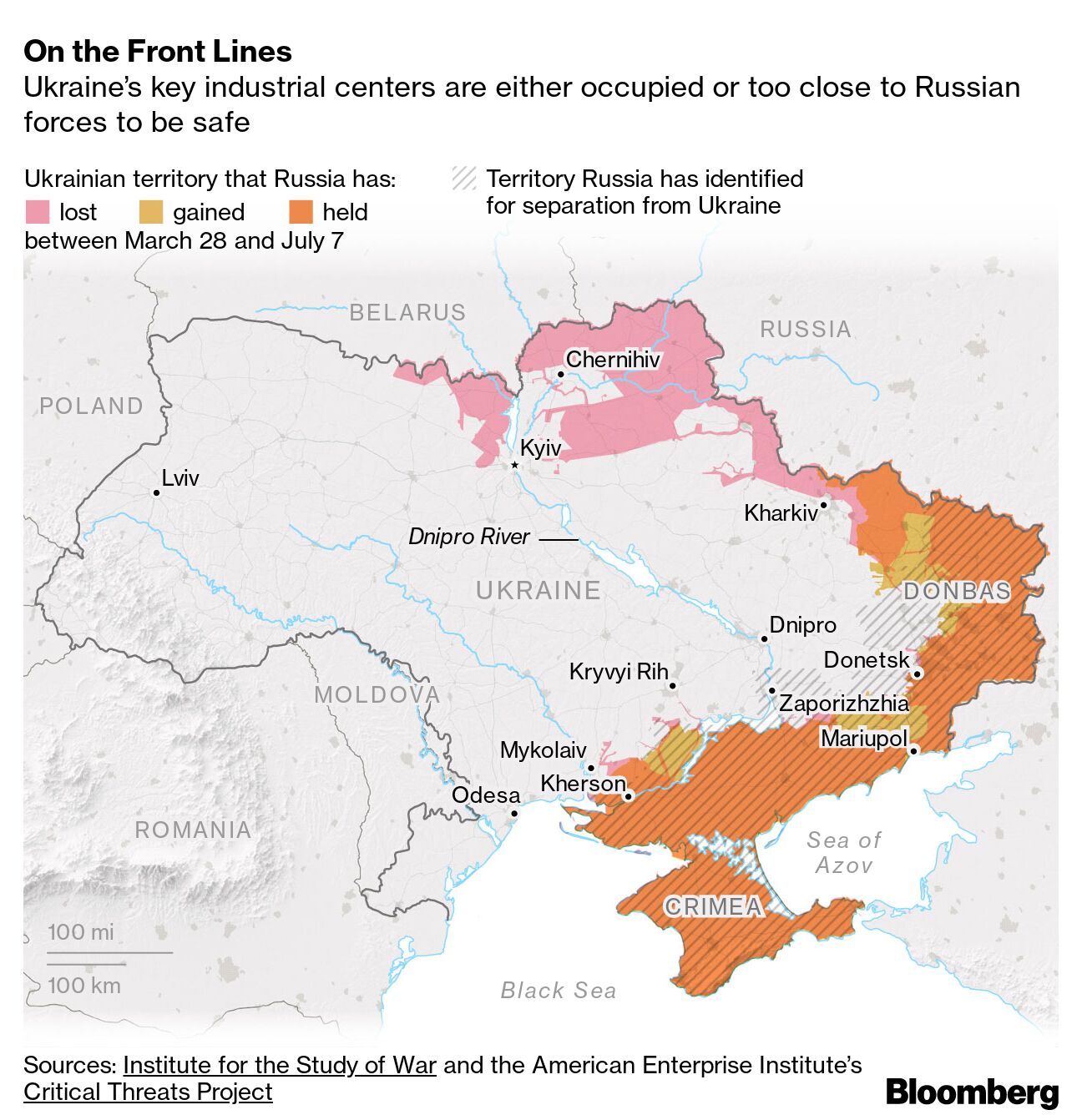
It’s no easier further south in Ukraine’s remaining industrial and agricultural heartlands, where the Dnipro turns toward the ports of the Black Sea. In some areas, Russian forces occupy both banks of the river, a trade artery on which the medieval federation of Kievan Rus and the Zaporizhzhian Cossack state, twin roots of Ukraine’s national identity, were built. Russia claims those territories and national myths for its own, a key driver of the invasion that Putin shows no sign of abandoning.
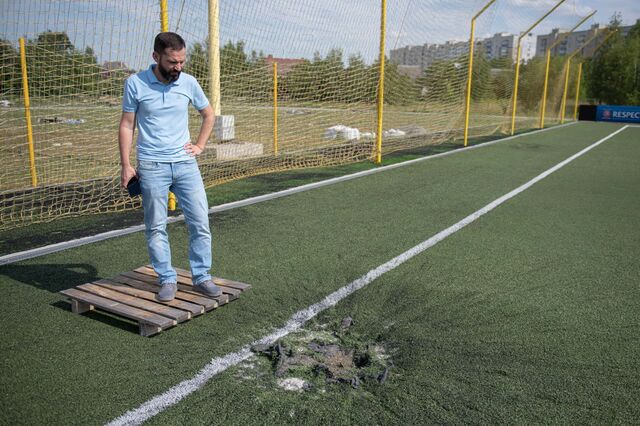
“The bombing could restart any day,” Sinitsa said as he watched children play at the soccer school he built before the war. It now has trenches dug at one end. Hundreds of pieces of gray duct tape cover shrapnel holes in the clubhouse walls. Wood pallets lie scattered over the pits left by seven Grad rockets that landed nose first in the main playing field. The Astroturf’s sand bedding was too soft for them to detonate.
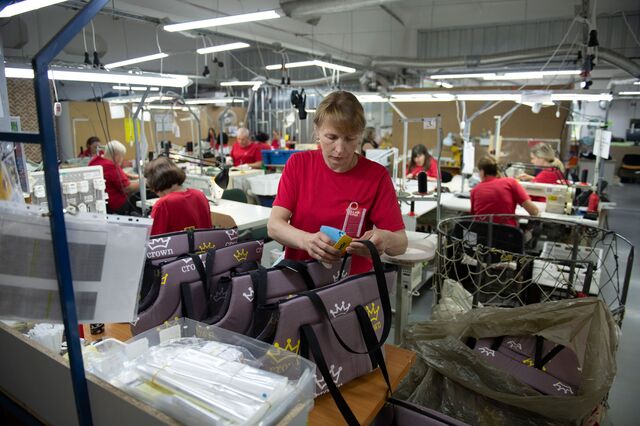
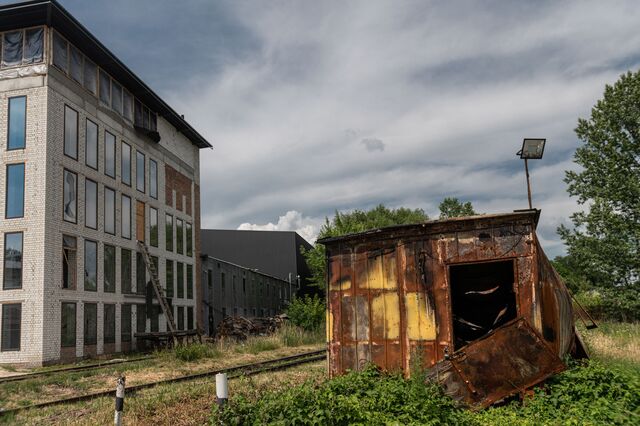
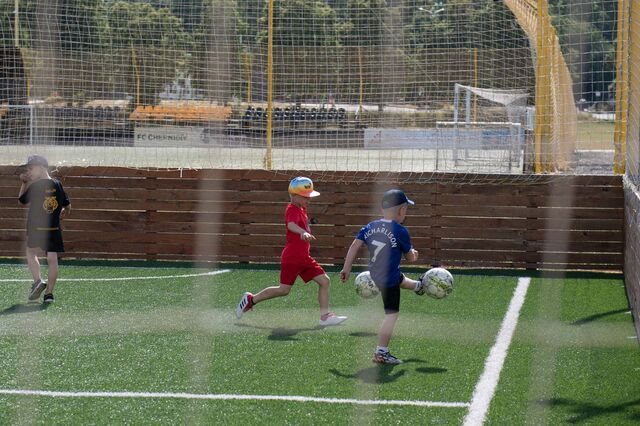

At his factory, shrapnel-perforated roofs have been replaced, power and water restored, and about 70% of the company’s 600 staff are back at work. From 10% of production in April and 50% in June, Sinitsa says his goal is to recover to pre-war levels by the end of August, shipping everything from NASA dog collars to reversible, glow-in-the-dark canine puffer jackets to China, Europe, the US and beyond.
Ukraine's Pain
Exports have fallen below half of prewar levels

Still, just getting goods to the Polish border, where congestion can last for days and rail cars have to reload onto Europe’s narrower gauge tracks, can add more than 1,000 km, lengthy delays and upwards of four times the pre-war cost of delivery.
Back when people thought the conflict might be short, ideas about reconstruction took the shape of a post-war Marshall plan, said Infrastructure Minister Oleksandr Kubrakov, arguably the busiest Ukrainian out of uniform. Now there’s more urgency. “Everybody realizes the war will be longer and nobody can predict how long it will be,” said Kubrakov, who toured the same heartland industrial cities on the Dnipro in March and April, trying to persuade companies to reopen their mines and steel mills.
They did so, but factory bosses also had “a lot of questions” about how they’d get supplies into the country and product out, said Kubrakov, speaking at his headquarters in Kyiv, as staff monitored key roads across the country on a super-sized wall of flat screens. Those questions remain.
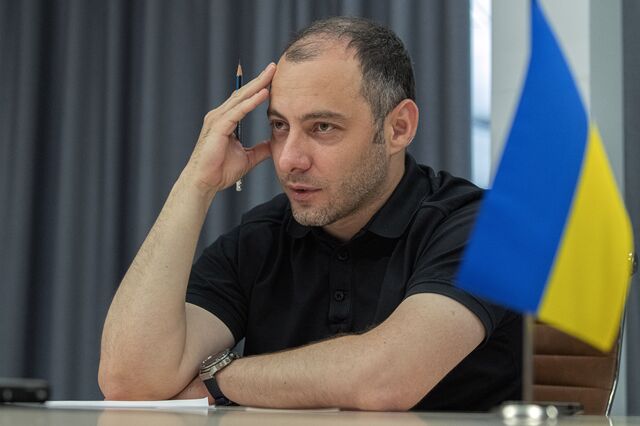
Kubrakov added capacity at existing border posts and is opening two new crossings on Ukraine’s frontiers with both Poland and Romania. Last month, he negotiated a deal with the EU so truckers only have to clear customs once. A second ferry went into operation across the Danube to carry more grain to the Romanian port of Constanta, and fuel back.
A defunct railway line through Moldova is also being reopened to feed traffic, while the river port of Reni - all but abandoned after the 1991 Soviet collapse - has returned to its 11 million metric ton per year capacity, from just 200,000 tons before the war, according to Kubrakov.
That’s got Ukraine’s exports to about 30% of what they were, and there’s more to come, said Kubrakov. Yet it’s nowhere near enough to get the economy out of intensive care, and time may not be on Ukraine’s side.
The shortfall in transport is forcing people like Mykola Melnyk, a forward looking, 31-year-old farmer near Kryvyi Rih, to make decisions that have implications not just for Ukraine, but food prices and hunger levels worldwide.
“We’re sending all this into storage,” Melnyk said on a recent day, as three massive 350,000 euro John Deere rigs began their first day harvesting barley on his 3,000 hectare farm.
The cost of grain may be soaring abroad, but at home the market is flooded with product that farmers can’t export. That has collapsed the price Melnyk can get for barley on the domestic market, to 2,000 hryvnia ($54) per metric ton, from 8,000 hryvnia before the war. Wheat’s down to 4,000 hryvnia from 10,000 hryvnia, he said, and with production costs above 5,000 it makes no sense to sell. Exporting would be profitable, but there’s massive competition for the rail cars needed and he can’t get them.
If the situation doesn’t change, Melnyk said, “we won’t plant any grains for next year, just rapeseed and sunflower.” Those seeds can be made into oil, a far less bulky product to transport.
It may not come to that. On Friday, Russia signed a three-month deal allowing Ukraine to resume grain exports from the Black Sea, even if subsequent missile strikes on the port of Odesa underscored the agreement's fragility.
Some farmers have it worse, Melnyk said. Though he can sometimes hear the fighting about 100 km away his fields were never occupied, so he doesn’t have to remove land mines in order to harvest and sow.

One hurdle to growth Russia didn’t cause is the corruption that has dogged Ukraine since it gained independence in 1991.
In some ways “it seems that the war is over and we are back to the pre-war problems,” said Kateryna Glazkova, executive director of the Union of Ukrainian Entrepreneurs. Officials already are up to old tricks, she said, such as fining companies for minor filing mistakes, including new documentation required when employees are wounded or killed at war.
“There are businesses who are ready to invest now as they can calculate risks of the war, it is more understandable for them,” she said. “But how to protect your business if it is not under attack of missiles but from a possibility that some bureaucrat will come and hurt you?”
In Kryvyi Rih itself, Zelenskiy’s hometown, ArcelorMittal SA’s steel plant is running just the smallest of its four gas and coke-fired blast furnaces to make pig iron. As a result, said Deputy Chief Executive Artem Filipyev, some mines and coking plants that feed the plant also must remain dormant. “Without the ports,” he said, “it doesn’t work.”
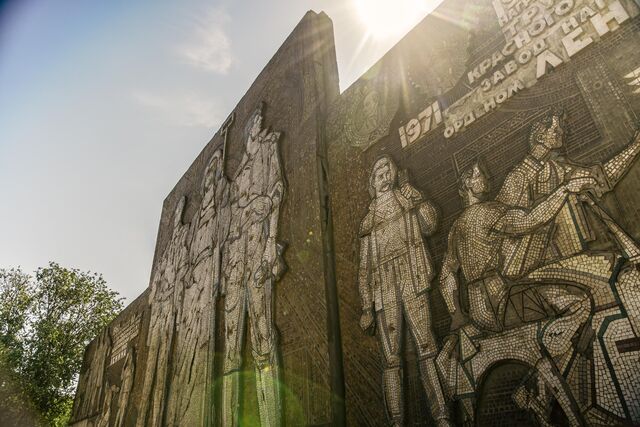
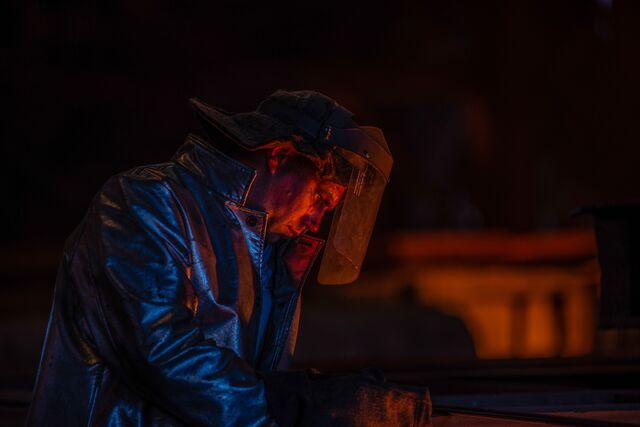
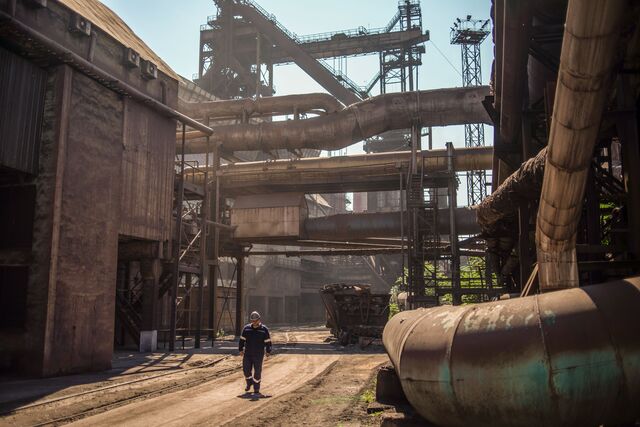
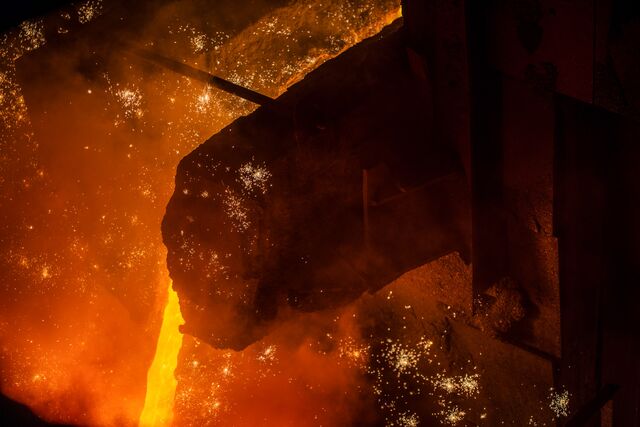
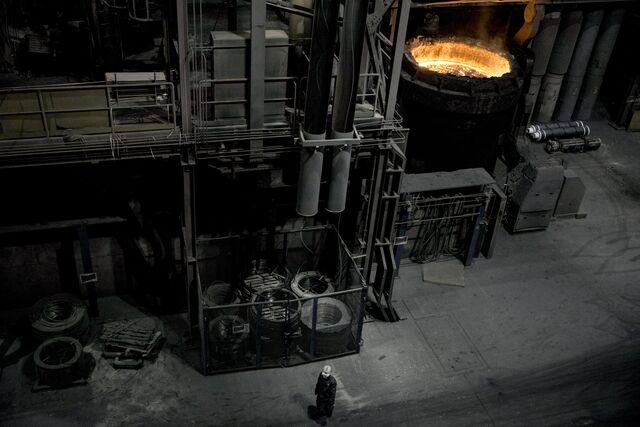
Upriver at Zaporizhzhia, physical risks loom larger, with Russian artillery just out of range. The rolled steel plant here, Zaporizhstal, has two blast furnaces working and the thought of a direct hit prompts furnace manager Sergiy Safonov to throw his hands behind his head, estimating a 5 km blast radius should that happen. “Hollywood hasn’t imagined it,” he said, as a 1,300-degree channel of molten steel glowed through cracks between the steel floor plates under his feet.
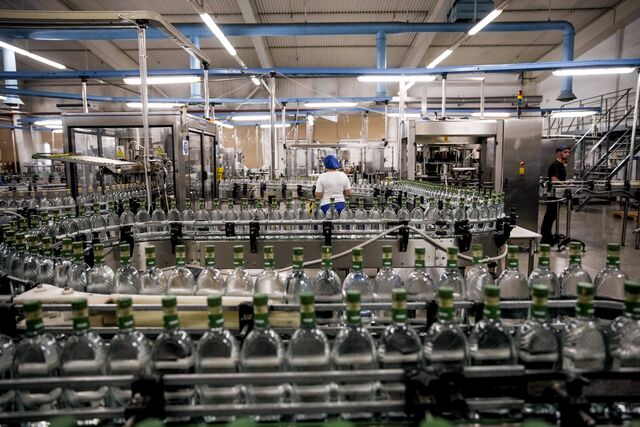
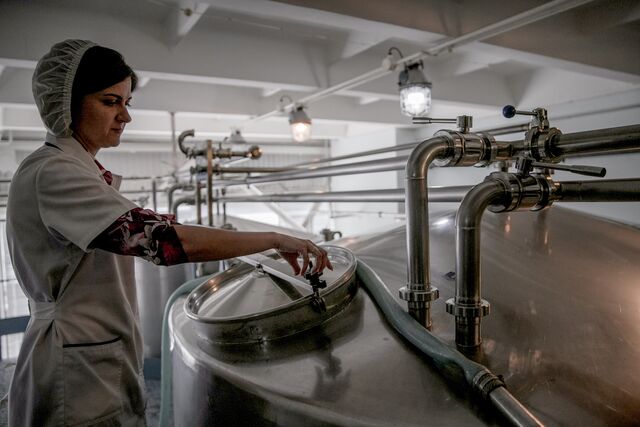
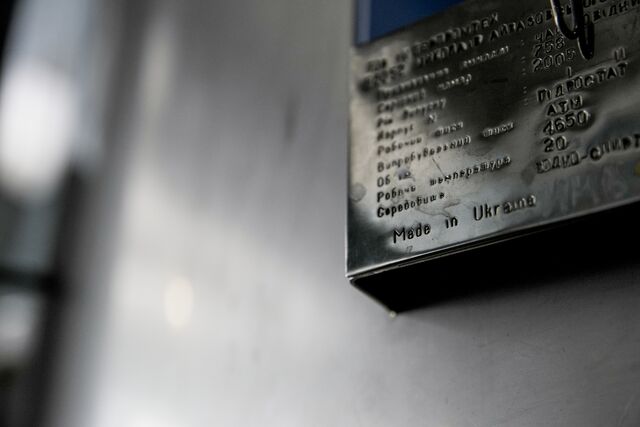
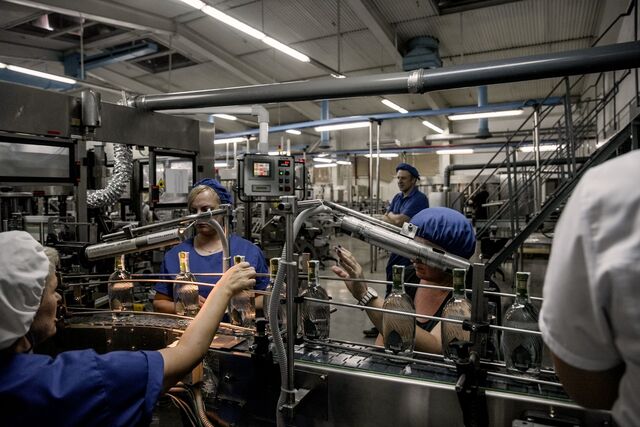
A missile strike on the nearby Khortytsa vodka distillery, which boats Europe’s largest alcohol storage among its rows of 10,000 liter stainless steel vats, would also be deadly. Owner Evgeny Chernyak said he signed a deal on July 8 to move half the company’s production to Rivne, in western Ukraine, to ensure the business wouldn’t evaporate if Zaporizhzhia were overtaken by the fighting, currently 55 km away.
“Believe me, I know the distance to the front lines down to the meter,” said Chernyak. He now lives in Warsaw, where on a recent day he was at a warehouse with his teenage children and other volunteers, shifting pallets of humanitarian aid for Zaporizhzhia onto trucks.
Khortytsa (sold as Khor in the US) has maintained production through the war, having overtaken Absolut last year to become the world’s second biggest selling vodka brand worldwide after Smirnoff (vodka is known in Ukraine as horilka). “It’s the thing I’m most proud of,” said Chernyak, although margins have shrunk. Just the cost of getting a truck from the distillery to Poland has risen from $1,500 to $4,000, he said.
All of this helps explain why proposals to end the war by negotiating an early cease-fire, fixing the front lines where they are today, is unthinkable to Zaporizhzhia’s regional governor, Oleksandr Starukh. “Who would invest here?” he asked.
Most of the region is under Russian occupation, including the deep river port at Kherson and Europe’s largest nuclear power plant. Its safety procedures are now unknown and, according to Ukraine, Russian forces have positioned artillery batteries in the protective shadow of its reactors. That leaves swathes of industry at risk of any renewed Russian offensive.
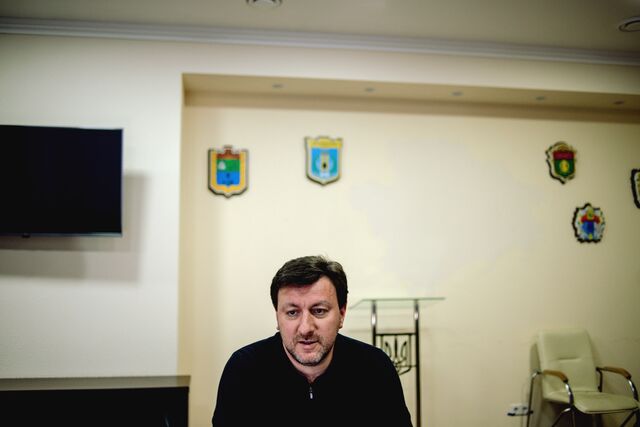
Starukh compared Zaporizhzhia to the destroyed eastern city of Mariupol, which for eight years until the Feb. 24 invasion existed just 30 km from a front line set by a previous cease-fire. “We are too big for Russia, but if they can slice us like a salami then they will be back in eight years to fight again and Zaporizhzhia would become the next Mariupol,” said the 49-year-old historian, interviewed in the city’s sand bagged and darkened regional administration.
Zaporizhstal belongs to Metinvest Holding LLC, owner of Azovstal, the massive steel plant in Mariupol that was destroyed by artillery and bunker buster bombs as Russian forces dislodged the city’s last defenders. Steel that used to take eight days to deliver by sea is now taking 40, a problem not just for cost but also lost orders, said Metinvest’s chief executive, Yuriy Ryzhenkov. Clients start to look elsewhere for suppliers.
For a volume commodity such as rolled steel, the recent Ukrainian Railways decision to increase the price of a rail car by 70% is a real problem, said Ryzhenkov. But there’s a bigger, Catch-22 style issue: The plant can only work at 50% because it can’t transport more to sell, yet it’s a business that depends on volumes higher than that to make sense financially. Eighty percent capacity is “the magic number” in the industry, said Ryzhenkov - fall below that and you’re in trouble. The company recently announced it was shutting some of its iron ore enrichment plants.
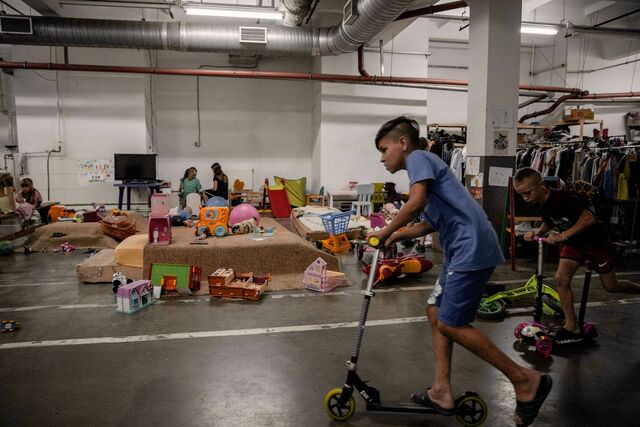
The war also brings new costs. At the vodka distillery, a basement shelter houses as many as 200 people seeking refuge from the fighting in the east. Metinvest has spent 1.7 billion hryvnia on the war effort so far, including the provision of 100,000 bullet proof vests, 600,000 tank traps, 450 drones and 20 ambulances.
Perhaps because of his brutal experience in Mariupol, though, Ryzhenkov is a more optimistic than most. Zaporizhzhia, he said, may be close to the front lines but it would be much harder than Mariupol to encircle. And having had to secure new rail access to Azovstal after the previous war in 2014 cut its traditional routes, he’s also hopeful that enough land transport capacity can be added to replace what’s been lost at sea.
Further upriver, about 160 km from the nearest Russian guns, in Dnipro, a mix of luck, investment in efficient blast furnaces and strong margins has allowed Interpipe Holdings PLC – a maker of seamless steel pipes for oil wells and wheels for trains - to boost production above 60% of pre-war levels.
At the company’s modern factory, the main production line is back to extruding red hot, 10 m long tubular steel billets. Giant ladles swing overhead, tipping out 90 tons of molten steel at a time.
Logistics are a struggle here, too, as is the fact about 10% of the plant’s 835 workers are fighting at the front. Fourteen have died so far, according to spokesman Liudmyla Novak.
Still, with a higher margin product selling into strong global demand as US and other buyers avoid Interpipe’s sanctioned Russian competitors, the company has better prospects than many, according to Marina Bozkurt, senior analyst at consultancy Rystad Energy and the author of a June report on Interpipe’s return to market.
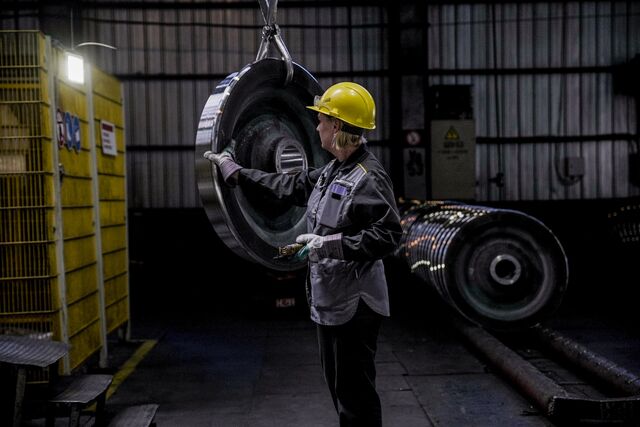
Stacks of gleaming discs in the plant’s wheel shop could also play an important role more widely, should proposals advocated by Ryzhenkov for Ukraine’s railways to commission new rail cars with variable wheel sets come to fruition. Those would allow cargoes to cross the borders to Europe, without having to be reloaded onto new rolling stock, slashing wait times and adding capacity.
If there is a secret weapon Ukraine can use not just to recover but regrow its economy, it’s the new global branding that the war has provided, according to Sinitsa, the pet accessories maker from Chernihiv. “Ukraine itself has become a brand,” he said, marveling that “my US friends don’t ask where Ukraine is anymore, or whether it’s part of Russia. That’s an opportunity and we need to use it.”
Sinitsa has begun already, producing a new line of the collars and leashes he sells under the WAU DOG label. Made in the yellow and blue colors of Ukraine, they’re marked with a single repeating word in large capital letters: “BRAVERY”. —With Volodymyr Verbyany